Plant Collector: Lilium regale

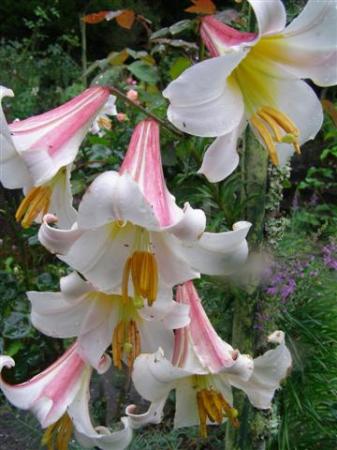
Lilium regale - often called the Christmas lily in New Zealand

Lilium regale - often called the Christmas lily in New Zealand

There seems to be a little confusion as to whether Lilium regale or Lilium longiflorum is the Christmas lily in New Zealand, but I can’t see that it matters. My guess is that florists may refer to the latter as the Christmas lily because it commonly comes with pure white flowers and is a reliable standby for picking, much favoured in floristry. But many gardeners associate the regal lily with this festive time of year. It too has the wonderfully fragrant white trumpets but usually with deep red or purplish markings on the back of the petals. L.regale comes from the Szechuan area of China whereas L.longiflorum is from Japan.

There is nothing too difficult or rare about either. L.regale gets to just over a metre tall and generally we get away without needing to stake it, especially when it is grown in the rose garden and has some taller plants around it to prop it up if it starts to list too far. If you have both sun and good soil, you are fine and it should reward you with eminently pickable flowers to adorn the Christmas table. Like most lilies, the bright pollen falls off rather freely and will probably stain the white damask Christmas tablecloth. Apparently you can brush the pollen off the stamens if you are working in dry conditions. Alternatively, nip the tops off the stamens but leave the anthers in the centre. Don’t harvest the flower stem right back at bulb level. It needs some length left because the stem contains both leaves and flowers and the bulb needs its energy replenished through its foliage or it will waste away.


Tikorangi notes: Friday December 24, 2010

Latest Posts: Friday December 24, 2010

1) Lilium regale is flowering this week and is often referred to as the Christmas lily in New Zealand.

2) The DIY Christmas tree with a Polynesian flavour – Outdoor Classroom.

3) In between the excesses of Christmas eating and drinking, the garden still calls – tasks for the week.

Kevin, Sharon and our Christmas tree

Kevin, Sharon and our Christmas tree

Construct your own Christmas tree (version one)

1) Inspired by a tree she saw in London, presumably made with pampas plumes, Camilla fancied trying an alternative to the traditional pine branch or the tacky tinsel alternative. As pampas is now banned in this country, we used toetoe plumes. Gathering the toetoe was the most difficult part of construction, especially with all the recent rain.

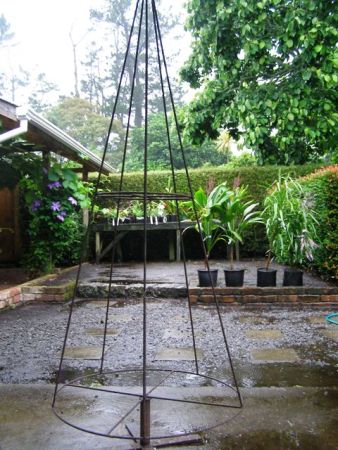
2) We were fortunate to be given a permanent metal base in the shape of a pyramid but you could construct your own from bamboo or a similar material. It needs to be fairly stable to work with easily. You need five or six vertical struts in order to be able to achieve a circular effect. Do not make it too wide if it needs to fit through a conventional door to get it inside when finished.

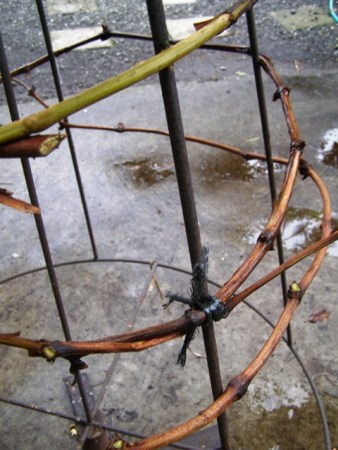
3) We wove additional horizontal supports into the frame at 20cm intervals using flexible lengths of old grape vine prunings.

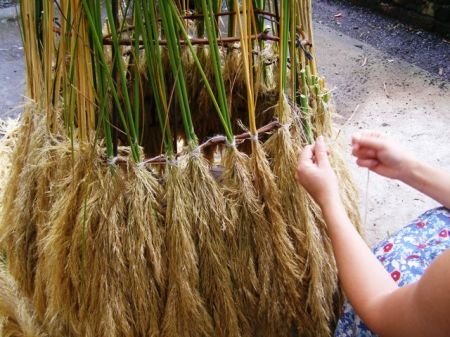
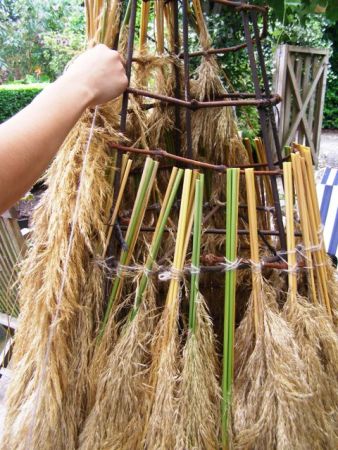
4) Starting from the base, tie groups of about three toetoe plumes at a time, forming the bottom layer of the skirt. It needs to be sufficiently dense not to see through. We tied firmly with neutal coloured wool, securing the plumes to the frame and the rings of grapevine.

5) Layer additional skirts on top. Trim the surplus stems of each layer. It took us four layers to reach the top.

Kevin, Sharon and our Christmas tree

Kevin, Sharon and our Christmas tree

6) When it came to decorations, we decided less was more and just adorned our tree with a Trade Aid angel, the historic Jury family Christmas lights which need rewiring each year to work and the red and silver Spotlight reindeer (known here as Kevin and Sharon) at the base.

Postscript
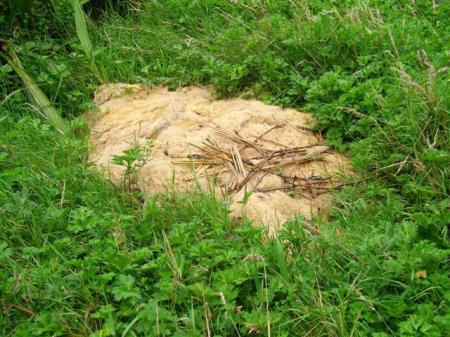
I recall the “Christmas is over in London” photo blog our daughter Camilla wrote as she wandered the streets of Maida Vale recording the slightly sad sight of Christmas trees put out for green waste collection. I found “Christmas is over in Tikorangi”. Mark said he would dispose of the carbon content of the toetoe Christmas tree. It looked disturbingly like a dead sheep when I came across it.

The second model DIY Christmas tree using the same frame but covered in grape vines is less inclined to moult and lacks the Pacifica charm of the toetoe, but is a more durable option.

In the Garden this week: Friday December 24, 2010

• Dear Santa, thank you for the pre-Christmas gift of rain. But enough is enough. Water tanks are overflowing, the grass is growing again and we really could do with a return to sunshine and warmer temperatures for the Christmas and New Year break.

• Watch for an explosion of fungal ailments in the humid conditions, especially on tomatoes, cucurbits and potatoes. Roses will also suffer but they can grow out of it whereas vegetables can succumb entirely. It will almost certainly be necessary to get a copper spray on when the weather dries out. If you would rather try baking soda, a level teaspoon per litre is the recommended dose. The big problem with baking soda is that you have to spray a great deal more frequently – probably weekly.

• The wet weather means that you can still lift and divide many clumping perennials even now. Most of them are in full growth, so as long as you make sure they don’t dry out, they will recover quickly. Replant into well cultivated, tilled soil enriched with compost.

• Grapes need thinning out. We keep to one bunch per side branch. More is not better and you can over crop grapes, leading to inferior fruit. Trim back laterals. If they get too heavy, they can break away too easily and you will lose your bunches of fruit. You also want the plant to concentrate its energy on the fruit, rather than the excessive leafy growth.

• If you have not mulched your garden beds and were alarmed at the recent dry spell, this week’s rain has probably raised the moisture levels sufficiently for you to get a layer of mulch on now. We much prefer vegetative mulches which break down and get incorporated into the soil over time – compost, leaf litter, bark or shredded wood waste and the like. Inert mulches like stones, gravel or lime chip do work to keep the soil moist and suppress weed seeds to some extent but they are not suitable for gardens that you want to dig over or replant at any time and they certainly do nothing to add nutrients or texture to the soils. They are best for areas you don’t actually garden and even then, they are a bit of a mission to keep clean unless you have a handy blower vac.

• Keep up with deadheading (basically anything that has finished flowering) and try and stay on top of the weeds which will have been triggered into rapid germination and growth by the rains.

• If you had a problem with silver leaves on rhododendrons last year and haven’t sprayed this spring, check underneath the leaves for something that looks like dirty threads. These are the thrips which suck the chlorophyll out of the leaves. Photinia and honeysuckle both harbour thrips too. If you are going to spray, it needs to be a systemic insecticide so the plant sucks it into its system (as opposed to a contact one which only kills insects where it touches). Bands soaked in neem oil secured around the trunk are getting good reports. If you want to make your own, soak a strip of old woollen carpet in neem and then secure it around the main stem with the carpet pile inwards. Thrips don’t usually go away of their own accord. You either need to change the growing conditions, kill the insects or remove the host plants altogether.

Plant Collector: Cornus kousa var. chinensis

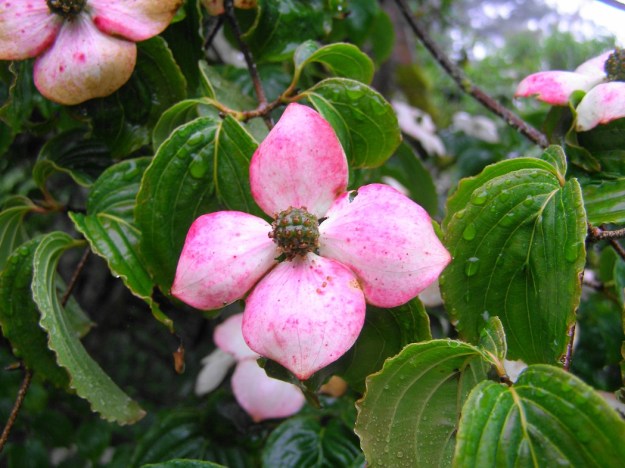
Pink and white all over - Cornus kousa var. chinensis

Pink and white all over – Cornus kousa var. chinensis

The cornus are a big family, commonly referred to as dogwoods. In our climate where we can grow most plants, cornus are not as widely featured as in other areas of the world because we are really too damp and too mild for most of them. They perform much better in a drier, continental climate with hot summers to ripen the wood, sharp seasonal change to trigger the autumn colours for which many are renowned and a good winter chill. Our C. kousa has had its hiccups in life (dieback threatened it a couple of years ago, possibly due to wet roots) but it battles on and in early summer the pink and white flowers are a seasonal delight, albeit a little brief. The welcome rain this week shortened its season.

Curiously, the flower is actually the dull, nubbly bit in the centre. What look like four pink and white petals are actually bracts – in other words specialised leaves which protect the flower buds, so not petals at all. This is common to all the dogwoods and to many other plants as well, including lacecap hydrangeas. Kousa is common in Japan and also found in Korea but Glyn Church tells me the form we grow in New Zealand is actually the one from central China, collected in 1907. After several decades, ours is a narrow, columnar tree about six metres high. When we were last in England, we saw many hybrids between C. kousa and C. nuttallii, some with spectacular, large flowers which were very showy indeed. Kousa shows resistance to anthracnose which has decimated the cornus display overseas and the new hybrids are, in part, an attempt to breed resistance to the disease.

Cornus kousa can age to deep pink

Cornus kousa can age to deep pink