In the Garden: December 3, 2010

• The lack of rain is really starting to bite now. Our garden is looking more like February than the beginning of December and there appears to be no respite in sight. Mow your lawns less frequently with the height set up a notch or two to reduce stress. Never fertilise a dry lawn. Most Taranaki gardens are fine without water so don’t water just for the sake of it. However, recent new plantings will need water every few days. Container plants need daily watering, hanging baskets twice daily. Watch the level on fish ponds and top them up as required.

• Vegetable gardens are the one area that may need regular water, especially for leafy greens and quick growing crops. Don’t blast water out at high volume with your hose. Try and copy the action of a sprinkler – going over and over areas with a light spray so that the soils can absorb it gradually. Wetting the top merely keeps down dust. Gentle soaking is the answer to getting the water lower down to root level where it can be absorbed. Mornings and evenings are better watering times because there is less evaporation.

• Declare war on convolvulus and wandering jew. Both can rocket away and stage a takeover bid if you turn your back. For non organic gardeners, the recommended sprays are still Woody Weedkiller for convolvulus and Shortcut for wandering jew. Organic gardeners have few options other than hard graft, hand pulling, digging and careful disposal of the waste – because any bits not killed will regrow.

• There are times I think that the only thing separating wisterias from the previous two noxious weeds are their pretty flowers. Give them a summer prune now. Hedgeclippers are fine or, if you are more precise, cut back the wayward growths to four leaf buds from the main stems. If you prize your wisteria, check for borer holes and pour some oil down any you find. A spray of CRC works or fill the hole with flyspray. Borer can kill even substantial branches on a wisteria.

• Main crop potatoes can still be planted, as can pumpkin, tomatoes, kumara and corn and all the leafy greens. Make sure you water your kumara runners and any small plants in or they will fry.

• If you plan on planting up containers of annuals to give as Christmas gifts, try and get them done soon for a better display. This is a great activity with children. Plain terracotta pots are cheap to buy and easily painted by even very young children using acrylic paints. A 20cm pot (measured by the diameter of the top) only needs about three small plants to fill it so two punnets are sufficient for maybe four pots. Cheap potting mix is fine for annuals. Keep the water up to them every day and watch out for slugs and snails. By Christmas, you can have pots brimming over with flowering pansies, petunias, lobelias, ageratum or similar show stoppers.
Book review: A Green Granny’s Garden, by Fionna Hill.

There was a collective groan here when this book arrived for review. Subtitled: A Year of the Good Life in Grey Lynn – The confessions of a novice urban gardener, it immediately placed itself into that genre of self deprecating wit written by somebody with very little gardening experience. That particular genre has been done to death in this country in recent years. And indeed the author owns up to planting the entire garlic bulbs, rather than individual cloves, into heavy, water-logged soil. But as long as you don’t expect it to be a gardening reference book (although it is written as a monthly record, it lacks an index and there is no attempt to organise the information), then it may be fine as a holiday read. Along the way you may pick up some ideas (the author has ranged widely across a whole range of crops) and there are a few recipes interspersed in the text along with some anecdotes of her overseas travels. Generally the book trips along in an entertaining enough fashion, most likely to appeal to a readership of middle aged and middle class women. Though it should be said that her self justifying anecdote of foisting her friend’s unwanted agapanthus on Hollard Gardens plant share and swap simply beggars belief.
(Harper Collins; ISBN: 978 1 86950 847 0).

Tikorangi Notes: Friday 26 November 2010

Latest Posts:
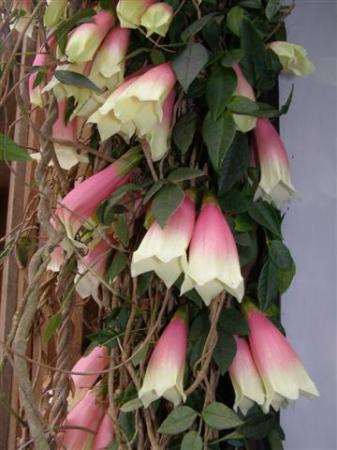
1) The pretty bells of Tecomanthe Montana, a sub tropical climber from New Guinea.
2) Recommended garden tasks for the week as our unusually dry spell continues and talk of drought escalates.
3) Hints on staking and tying plants in Outdoor Classroom.

A barrow load of wine

A barrow load of wine

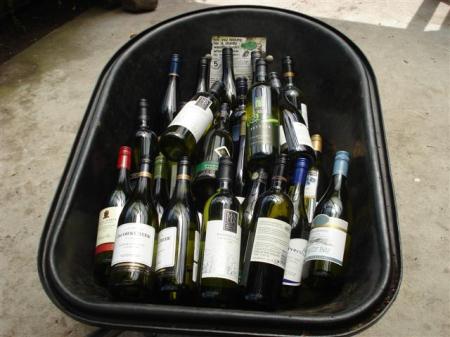
Tikorangi Notes:It was not a barrow full of monkeys but a barrow load of wine here last week. Over the past three years, we have been gently winding down the nursery, scaling it back to a more easily managed operation which would free us up to garden more. But, as Mark has observed often, it takes a long time to kill off a nursery and his patience ran out. He wanted at least half of one side empty so he could start his new vegetable garden and orchard. Can we get rid of the plants, he asked. So I emailed a few friends, colleagues and the garden openers from our recent Taranaki Rhododendron Festival. Free plants, I said. Just bring us a bottle of wine (dry white preferred) if you are going to take lots. They did. On the designated day, we were stripped out by about 10.30am and we were wheeling the wine over the house by the barrow load. Now work is starting at last on one of the new gardens we have planned.


Plant Collector: Tecomanthe montana

Pink and cream hanging bells of Tecomanthe montana

Pink and cream hanging bells of Tecomanthe montana

Most visitors tend to think that the dainty pink and cream trumpets mean this climber is a lapageria (Chilean bell flower) but far from it. Tecomanthe montana is a tender climber from New Guinea. We tried it in the garden and it survived a couple of years before it succumbed to winter. This plant is grown under complete cover though it has its roots in the ground. It is by far the showiest tecomanthe when in flower.

Apparently there are only five species of tecomanthe. Our own native form, T. speciosa, was found as a single plant on the Three Kings Island and has been saved by commercial production. It has much bigger leaves and is a very strong grower. Unless you train it along a horizontal frame, it tends to shoot up the tallest tree where it will produce its pale lemon trumpets right on top where you can’t see them. We also grow T. venusta under complete cover but it is even more tropical than T. montana and only occasionally flowers for us. When it does, its pink trumpets appear out of the gnarly bare wood of the climbing stems. We gave up on the Queensland species, T. hillii because it mildewed badly with us. All of the tecomanthes are forest climbers from the tropics or sub tropics. Montana came to us from former Pukeiti director, Graham Smith, who gathered the seed in New Guinea. It is not the easiest plant to get established but if you can find the right conditions, it is a winner in spring.

In the Garden this week: November 26, 2010

· It is looking dangerously like drought territory so start battening down the hatches just in case. The word from the chief garlic grower here is to water your garlic regularly. After many years of growing it with unpredictable harvests, he has come to the conclusion that very dry conditions at this time of the year can stunt growth badly.

· If your container plants are not getting watered every day now, they will suffer. If you are getting behind, move them to a shady area near an outside tap or relocate them by your outdoor living area or doorstep where their poor, sad, droopy appearance is more likely to remind you to look after them.

· You shouldn’t put mulch on to dry gardens – it can act as a barrier to stop moisture getting in as well as out. If you were intending to mulch before summer, make it top priority this weekend but you will need to get the garden free of weeds first, then give it a really good soak (not just wetting the top surface) and then get the mulch on.

· Lift the level of your lawnmower a notch. You do not want to stress the lawn by scalping it in the dry conditions or you will lose your desirable lawn grasses and risk an invasion of hardy weeds. A reminder – deal to onehunga weed straight away and don’t let it get hold and go to seed. It is the seed that is prickly.

· At least with the sun, you can push hoe or hand pull weeds and leave them on the surface to wither and die. Just make sure that you remove any seed heads first, or you are merely sowing the next crop of weeds. It is what pockets are for (to store the seed heads) or have a bucket nearby.

· Keep up the successional sowings of corn, green beans and salad greens – a little very two weeks is the key to ensuring continued supply.

· A correction to Plant Collector from two weeks ago – the little shrub with the lilac blue pouch flowers is in fact Jovellana punctata, not Jovellana violacea. Both are from Chile but the true violacea has larger leaves and deeper coloured but smaller flowers. The friend and plantsman, who pointed out the error, also brought me a plant and flowers from violacea to compare and the differences were obvious. He has seen them growing in the wild. He was kind enough to note that it is a widespread error in this country to misname punctata which is more common here than violacea. I was, apparently, in good company with my mistake.