Plant Collector: Jovellana punctata

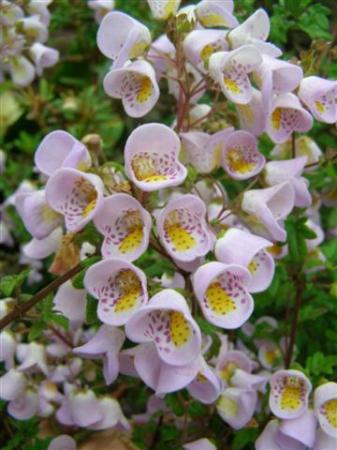
The little flower pouches of Jovellana punctata

The little flower pouches of Jovellana punctata

The jovellana has been flowering away cheerfully over recent weeks. This soft lilac one is a small shrub from Chile and fits very well into a whole range of garden situations. It only has small leaves which are in scale with its abundance of lilac pouched flowers with burgundy freckles and a yellow flare inside. The flowers are small – think finger nail proportions. When it has finished blooming, I will give it a pass over with the hedgeclippers to keep it reasonably dense and about 75cm in height. It can get a bit sprawling over time if not trimmed.

We had thought this was Jovellana violacea until very recently when a friend turned up with a plant of the true violacea and told me, in the nicest possible way, that in fact what we have is Jovellana punctata. Apparently it is a common error in New Zealand to refer to J. punctata as J. violacea but he had seen them both growing in the wild. The true violacea has a larger leaf, though of similar form, a smaller flower – though also similar – and the sample he brought was a deeper colour.

The jovellanas belong to the foxglove family and some of you may recognise their close relatives, the calceolarias. We have a native jovellana with white flowers – J. sinclairii – which gently blooms throughout summer. It has much bigger leaves and I would have described it as an herbaceous perennial (leafy, not woody) but I see it is technically described as a sub-shrub. Punctata is a shrub and is rated internationally as only half hardy at best but we have never seen it tickled up in winter at all. It is not difficult to root from cutting if you know somebody with a plant. The native sinclairii can generally be found layering along the ground so is easy to take a piece from.

Tikorangi Notes: Friday 12 November, 2010

The very pretty Tecomanthe montana

The very pretty Tecomanthe montana

Latest Posts:

1) Jovellana punctata has been particularly charming in flower in recent weeks.

2) In The Garden This Week – recommended tasks for home gardeners this week as the weather warms up in late spring.

3) Hosta combinations that work – our latest Outdoor Classroom.

Tikorangi NotesThe end of our annual garden festival saw us wandering around like zombies on Monday – talked out and exhausted. It is amazing how 10 days of standing on concrete all day and meeting and greeting can take its toll. The festival is so important to us, delivering up half our annual total of visitors in a quick burst. The weather smiled on us again this year –sun every day and mild temperatures. This is not to be sneezed at in a situation where we start to feel personally responsible for the weather as we host out of town and overseas visitors. The offshore visitors were noticeably dominated by Australians this year.

The Tecomanthe montana which we grow in our meet and greet area was perhaps a little later with its blooming but it had sufficient blooms open to attract attention from visitors, many of whom look at just the flowers and assume it is a lapageria. No, it is a climber from New Guinea and rather tender. The plant we used to have in the garden succumbed to winter cold years ago but this one is under cover and performs consistently every year. The same can not be said of Tecomanthe venusta, which is even more tender. It flowers just often enough to justify our keeping it, but never rivals montana in flower power.

In the Garden: November 12, 2010

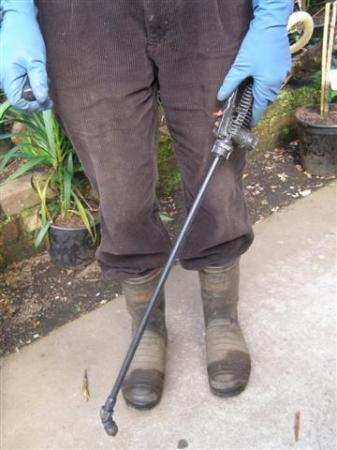
Gloves and covered footwear should always be worn when spraying

Gloves and covered footwear should always be worn when spraying

• Mark was unimpressed to see public sector employees who were not wearing protective gloves, out with knapsack sprayers recently in Waitara. As far as he is concerned, even with safer modern chemicals and modern spray units which do not leak like the old ones, gloves and covered footwear should always be worn when spraying. It is a good rule for the home gardener too.

• It is getting late for planting out woody trees and shrubs and we are into an unusually dry spell (after an unusually wet, early spring). If you are still planting, make sure you plunge the whole plant into a large container of water and hold it down until the bubbles stop rising, or leave it there for an hour so the whole root ball can get wet before planting. And be prepared to water for the next couple of months. Better practice is to heel such plants into your vegetable garden where the soil is already friable and well cultivated and plant them out to their final location in autumn. This includes fruit trees as well as ornamentals.

• Herbaceous plants (those without trunks and woody stems) are more forgiving and can be planted out at pretty well any time as long as you are willing to water for the first two or three weeks.

• The vegetable garden should be calling you. Plant everything now for summer harvest. Successional planting is what extends the season – getting repeat crops sown every couple of weeks. This works for green beans (great crop in our climate), corn, peas and all the salad greens and leafy greens. Radishes too, if you grow them – fun for children to grow because they are a quick crop but few will enjoy eating them.

• If you feel compelled to grow celery, get it in now as it needs a long growing season. We prefer Florence fennel which is easier to grow and fills a similar niche in the diet.

• Keep an eye on roses for aphid infestations. Digital control is usually all that is required if you catch them early enough (in other words, gently running your finger and thumb over the infested areas and squashing them). I have used fly spray in the past (pyrethrum) and I am told soapy water works. Get rid of any flowers or seed heads on hellebores to reduce breeding grounds for aphids.

• Winter pruning is all but over now. Spring deadheading should be happening – rhododendrons, azaleas, pieris and roses. Truly dedicated gardeners (usually those in small gardens) also deadhead perennials and annuals to extend the flowering season.

• Snip back the laterals on your grapes to prevent them breaking off in the wind and you can start summer pruning apple trees by nipping back the over long growths.

Hosta combinations that work: step-by-step

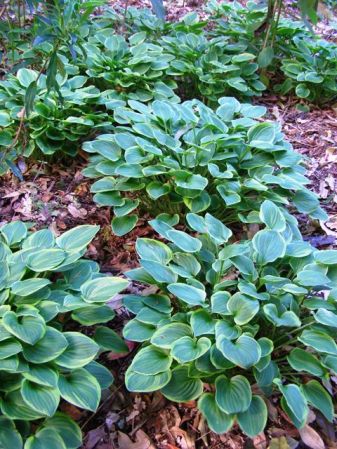
1) The single biggest mistake is buying an assortment of large, fancy hostas and putting them all together. It is the variation in leaf size, plant size and the combination of plainer, single coloured leaves with the fancier and variegated leaves used only as a highlight which makes hostas work together.

2) As a general rule, a variegated hosta needs the foil of single coloured leaves on a ratio of two or three plants to one. Going for size and leaf shape variation adds more drama as in this combination of the little frilly variegation of Kabitan with the large, rounded single coloured foliage of Goldrush.

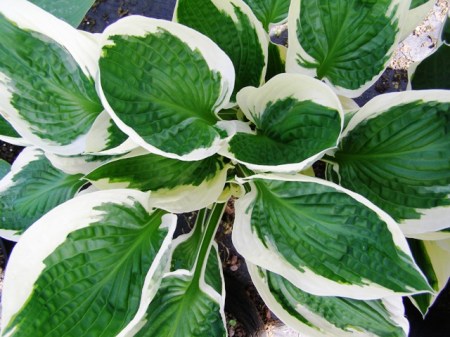
3) Hostas come in gold, blue and green with variegations in white, cream, blue and gold. A blue and yellow variegated hosta will look better set against plain blue hostas or maybe a plain blue and a plain gold. Green and yellow variegated hostas will look best set alongside plain yellow or plain green hostas. Green hostas with sharp white variegations need lots of plain green to set them off.

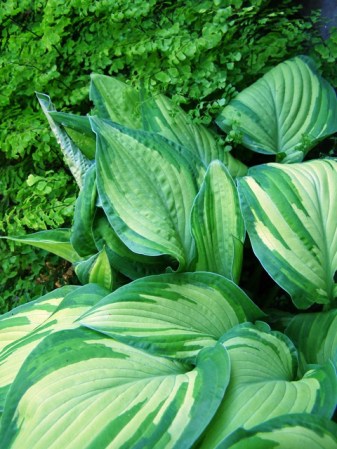
4) Large swathes of hostas look better if they are kept to just one variety. This one on the left is Golden Tiara. We prefer hostas integrated with other plants, rather than only associating them with their own kind. This combination of a variegated hosta on the right with a froth of maiden hair fern adds interest in a narrow border.

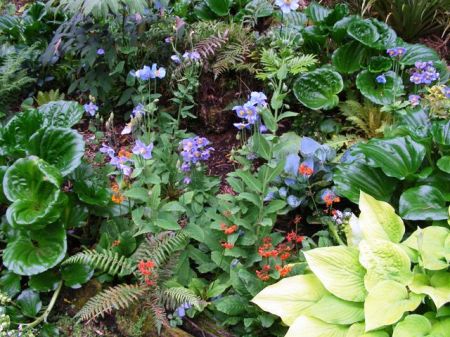
5) In a complex herbaceous planting, the golden hosta adds light and a solid presence amidst Chatham Island forget-me-nots, Inshriach primulas, meconopsis and other plants.

6) Paler variegations – the golds, creams and whites – need more shade. They will be the first to burn in the sun.

Tikorangi Notes, Friday November 5, 2010

The wonderfully strident azalea mollis

The wonderfully strident azalea mollis

Latest posts:
1) My unlikely global observations on the takeover of polyester resin outdoor furniture by the corporate giants.
2) The fragrant delight of Rhododendron Loderi Venus, in flower this week.
3) Garden tasks for this week.
4) The final Countdown to our Festival which is in full swing this week.
5) A little late in the season now, but Lachenalia aloides is a tried and true, reliable performer in winter.

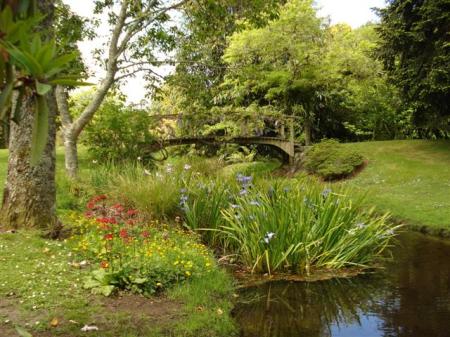
The park is at its prettiest

The park is at its prettiest

Tikorangi Notes, Friday November 5, 2010
As our annual rhododendron and garden festival enters its last few days, our park is looking particularly fetching. The azalea mollis are such an OTT plant family – often bold and strident in their statement of bright colour. In a garden where we love colour, scent and flowers (forget all this restrained good taste which says form and foliage is most important – in a large garden we want flowers and to be able to go out each day and see something else coming in to bloom), the azaleas are a seasonal delight.

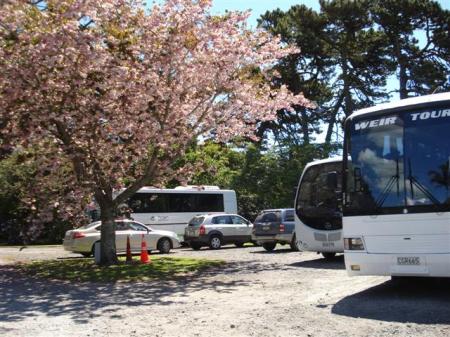
Parking can be a mission during Festival

Parking can be a mission during Festival

But in this ten day period which delivers up a hefty swag of our annual garden visitors, the logistics of handling visitors takes precedence. We have a visitor carpark which is perfectly adequate for 51 weeks of the year but is often woefully inadequate in that 52nd week. Poor Lloyd, our ever versatile and adaptable garden assistant, gets to double as carpark attendant. While we can sink a relatively large number of people in our garden without a sense of being overcrowded, the need to manage vehicles and to get coaches and camper vans off our busy road tends to become a bit of a mission at times. I was a little taken aback at the coach driver who suggested that if we cut out the Prunus Pearly Shadows in the middle, we would make it much easier to turn the coaches, but we were even more amused by the garden visitor who commented about our carpark that it was just like Sissinghurst. In miniature, perhaps.