- The season of panic for gardeners is nigh. The slow moving cold days of winter are over and the rush of spring means the pressure is on to get everything done. Priority number one has to be pruning grapevines if you have them – their sap is on the move already. If you are not sure what you are doing, our Outdoor Classrooms on the topic (both winter and summer pruning) show how – click on the Outdoor Classroom topic to the right or type into the search box immediately below the photo of yours truly on the top right.
- Kiwifruit are pruned in a similar manner to raspberries – take out old fruiting canes and weak growths, leaving the best of last season’s new growth to set fruit for next season. It is usual to tie kiwifruit along horizontal supports to increase crop yield and to keep them under control.. We saw them trained to cover pergolas in northern Italy where they were regarded as rather more exotic than here. They were very effective and we are thinking of trying it.
- Keep sowing peas fortnightly and sow onions from seed.
- Get a mulch onto the asparagus patch if you are lucky enough to have one. It is the optimum time for feeding this crop as it breaks dormancy and comes into growth.
- It is the last call for using hormone sprays on the lawn, if you feel you must. After this next week or so, put the spray right away to back of the cupboard until all deciduous plants in your own and your neighbours’ gardens have put on their fresh foliage later in spring. You can cause terrible leaf damage which can last until leaf drop next winter, or even kill the plant in bad cases, with even the slightest whiff of spray drift at the wrong time.
- It is the time for digging and dividing spring and summer perennials which will be coming into growth.
- Do not delay on sowing new lawns or patching balding old ones. The lawn we showed in the last Outdoor Classroom is now a pleasing swathe of green though still very fresh.
- Apparently the use of Cold Water Surf as a moss killer is widely known, judging by the calls I received after last week’s Countdown to Festival. And it is quick – I tried it on a mossy path and within three days it had turned brown. Don’t be too generous lest you be like the person who told me she laid it on so thick that her lawn foamed when it rained. Another caller told me it does not have to be CWS – any washing powder will do so I have bought the cheapest I can find to experiment. Be a little cautious though – it will either be the alkaloids or the phosphates or something caustic that causes the moss to die. In moderation, septic tanks show these are not a problem but you probably don’t want to carpet your environment in them. Vinegar also works.
Grow it Yourself Vegetables, by Andrew Steens.
In that great surge of garden books on growing edible plants, it is a relief to see one from an author who is doing more than just documenting his or her first year of trial and error, or relying on other people’s research. Andrew Steens brings experience, enthusiasm and qualifications right across the spectrum of gardening and horticulture, focussing in this case on growing vegetables. Readers of the Weekend Gardener will recognise him as one of the panel of fortnightly contributors charting activities (of the fruit and veg persuasion) in their own home gardens. That level of hands on experience does shine through. He has written a book which will pretty much tell you what you need to know about how to grow vegetables and which crops to grow and how to manage your productive garden in a sustainable way. Unusually, he has also given his personal picks for top performing selections by name which is helpful.
On the downside, it is by no means the sharpest designed reference book I have seen. It is a little busy and cluttered which makes it harder to use. There were times I felt that more rigorous editing would have sharpened the writing and cut out some of the extraneous detail which includes preaching to the converted. The author’s recent experience is from Point Wells, north of Auckland. Writing a book to cover all of NZ, which has huge climatic variation, is a big ask. He has made a good fist of it, but I think that southern gardeners may pick more holes in it than we spotted. The big problem that Mark noticed immediately is that the diagrams showing sowing times for marginal crops are way out. If you sow your melons or aubergines in December and January here, you won’t get a crop. They need a long growing season. This appears to be another design flaw. If you read the detail of the text, Steens is absolutely correct when he says they need to be sown from seed and started in small pots well in advance for planting out when the soils have warmed. But that is not what the dinky diagrams on each page tell you because they fail entirely to differentiate between sowing seed direct into the garden or using plants that you started under cover two months earlier.
Despite those reservations, this is certainly one of the better recent publications on the topic full of practical advice and a useful reference.
(Published by Bateman; ISBN 978 1 86953 761 6.)
Planting an easy-care hanging basket of succulents: step-by-step with Abbie Jury and Chris Sorensen
If you are an admirer of other people’s hanging baskets but lack the resolve to feed weekly and water up to three times a day in the height of summer, you may enjoy constructing one from easy-care succulents.
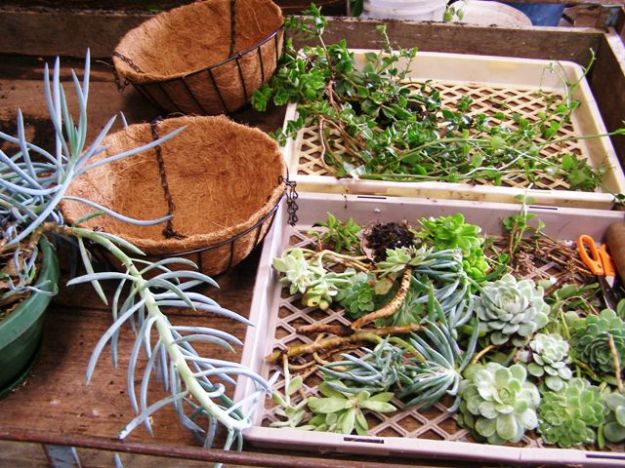

1) You can use solid plastic hanging baskets or you can chose to use wire baskets with a coconut fibre lining which allow you to plant all around the basket surface. You can even tie two hanging baskets together to create a round ball. It doesn’t matter whether your pieces of succulent plants have roots or not but if they are just cuttings, it can help to cut them a day or two early and let them dry
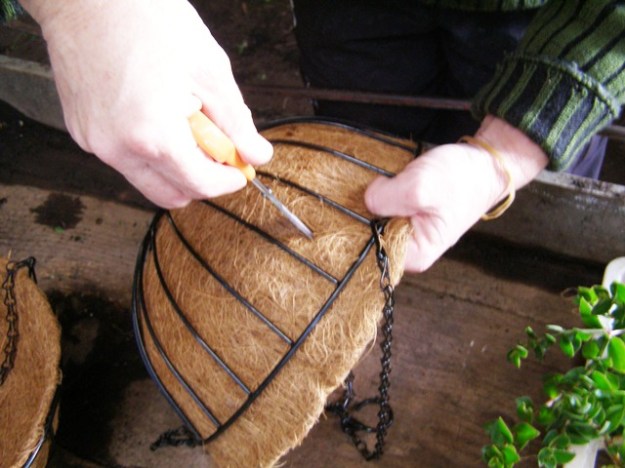
2) Cut slits or holes at random intervals all over the basket lining. Turn the basket upside down for planting.

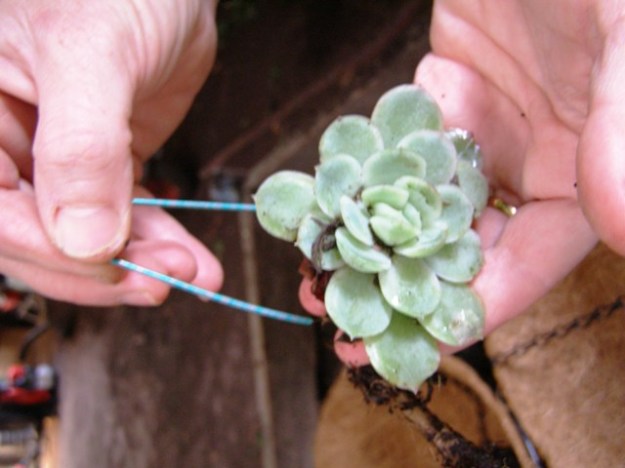
3) Poke the stems of the succulents through the holes. If you have rosettes without stems, bend flexible wire to make hoops around 8cm long and use these to skewer the rosettes into place. Smaller rosettes are not as heavy so are less likely to fall out.
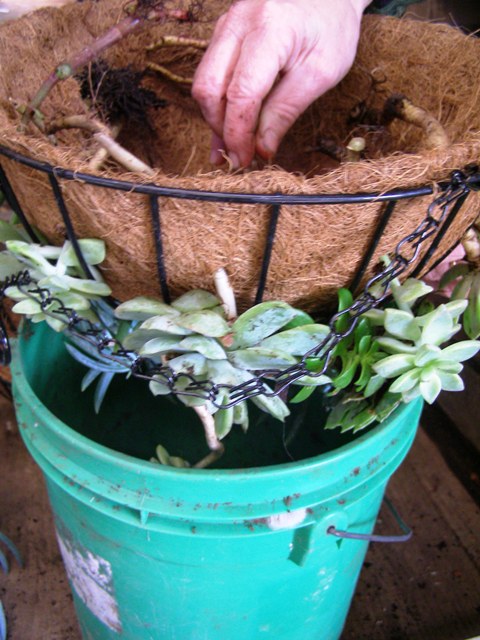
4) Supporting the plants with your hand, turn the basket up the right way and gently hold it in a suitable sized bucket. Fill the basket with a free draining potting mix containing slow release fertiliser. Succulents can survive in poor, dry conditions but they will grow better with food and water. However be mean, rather than generous if you are adding the fertiliser yourself.
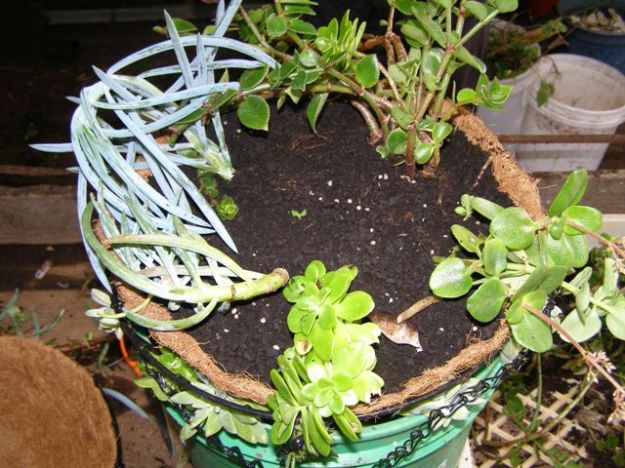
5) Plant the top of the basket with some trailing types of succulents so they can hang over the side. You may wish to include one or two flowering plants such as impatiens to add seasonal colour.
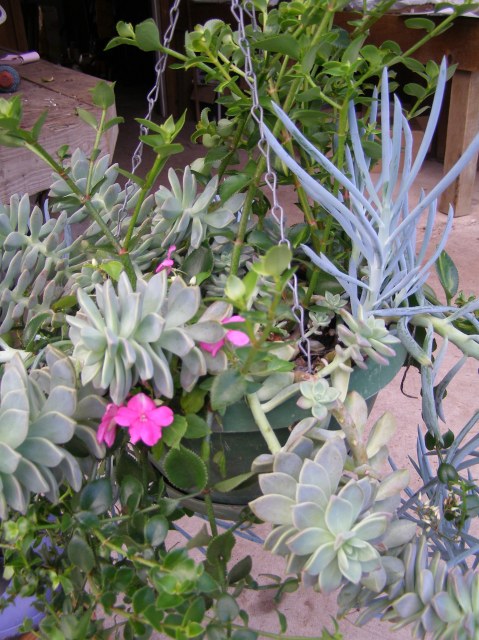
6) This basket was planted about three months ago and already looks well furnished and healthy.
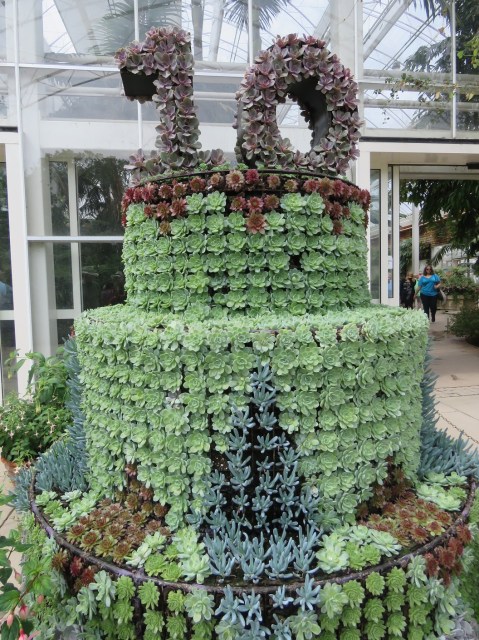
Finally, as a modern postscript from 2017 (because I see people are still looking at this post), I give you the succulent display to celebrate the 10th anniversary of the new glasshouse at RHS Wisley Gardens in the UK. Not exactly a hanging basket but showing a similar basic technique.

Plant Collector: Magnolia Lanarth
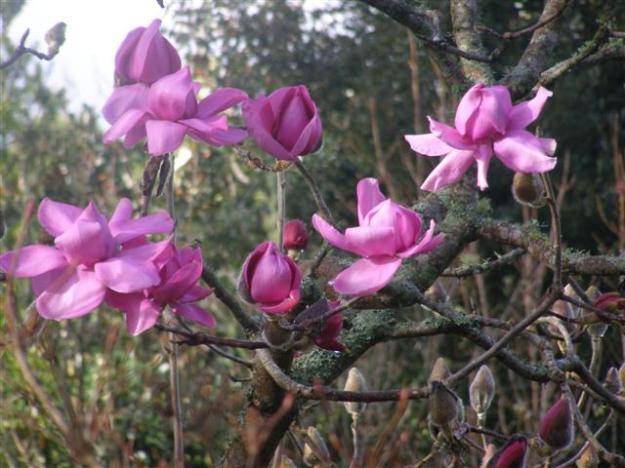
Magnificent in its purple splendour - Magnolia Lanarth
It is magnolia time and Lanarth is always one of the early bloomers and still sets the standard for pure stained glass purple colouring. We have yet to see a modern hybrid match the colour, flower form and size of Lanarth. So it is a bit of a shame that it is hard to propagate, so rarely offered and not that easy to establish so there can be a fall-out rate amongst those that are produced. On top of that, it takes a few years to flower (sometimes a decade or so), it makes a fairly large tree and the flowering can be short-lived. Get a storm at the wrong time and the season is pretty much over not long after it began. But in full bloom, it is a magnificent sight and that is why it is a collector’s plant.
Its full name resembles a stud animal – Magnolia campbellii var. mollicamata Lanarth – but it is usually just referred to as Lanarth, sometimes with the mollicamata in front to impress. Lanarth refers to where the seed was raised which was a garden in Cornwall. Intrepid plant collector George Forrest collected the seed in North West Yunnan in China back in 1924 where it was growing at a fair altitude of over 3000 metres. Only three seeds were grown and Lanarth was selected as the best of them. The usual pink and white campbellii magnolias come from the more westerly areas of China, Tibet and Burma whereas the mollicamata variants come from the more easterly side of that magnolia habitat.
Tikorangi notes: August 13, 2010

Magnolia Lanarth
LATEST POSTS:
1) The wonder of Magnolia Lanarth in flower.
2) Hints for tasks in the garden this week as we race headlong into spring.
3) Beware the bangalow palm – our deep reservations about the weed potential of Archontophoenix cunninghamiana (Abbie’s column).
4) Tried and True for autumn colour where space allows – tree dahlias.
5) Counting down to our annual Taranaki Rhododendron and Garden Festival.
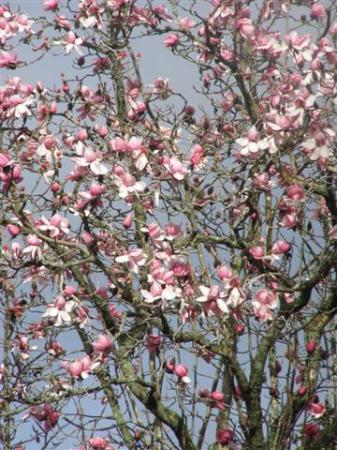
Magnolia campbellii in full flower this week
TIKORANGI NOTE:
Magnolia time here is our absolutely favourite time of year. At this stage, the spectacular performers are M. campbellii and Magnolia Lanarth, with Vulcan just starting and some of Mark’s unnamed seedlings putting on an early show. With the dwarf narcissi also at their peak (the snowdrops are largely over), there is something particularly delightful about the big and small pictures running simultaneously. The big-leafed rhododendrons in our park are opening, the earliest michelias are flowering and our garden visitor season started this week with an early visit from a local garden club. The pressure is on to get the garden groomed up and the planting out up to date. The pressure of spring is upon us.

