Camellia Diary 4, July 27, 2010

Click to see all Camellia diary entries

Click on the Camellia diary logo above to see all diary entries

The ugly devastation of camellia petal blight

I suspect there has been a bit of a conspiracy of silence about the devastating impact of camellia petal blight in this country. Between camellia enthusiasts, growers and retailers, nobody has really wanted to own up publicly to the fact that it must irrevocably change the types of camellias we plant and they way we use them. The sad thing is that when it was first discovered in Wellington over a decade ago, it was only in two or three locations and if there had been a will, it could probably have been eradicated.
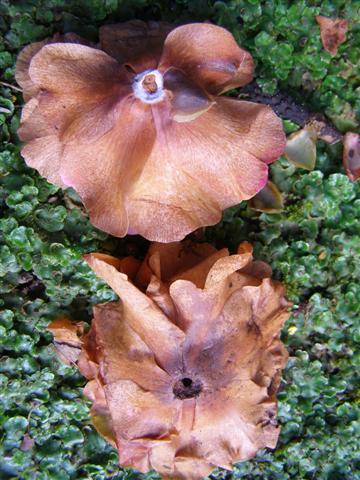
Camellia petal blight at the top, showing the distinctive white ring, merely botrytis on the lower flower

Camellias used to be the second biggest plant seller in this country (roses were number one) and it was the wide use of them in relatively large numbers which aided the spread of petal blight. It is a fungal spore which can travel, apparently, up to 5km on the winds as well as being transferred by infected blooms and soils. The overseas advice to rake up and burn all infected blooms to reduce the spread was simply impractical in a country where they are heavily used in informal hedges and windbreaks. Camellias are seen as utility garden plants in New Zealand and not as show blooms so people were never going to get out with the leaf rake to clear up every single affected bloom.
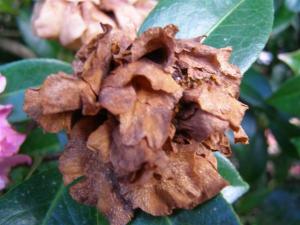
Botrytis shows up as a darker brown on the bush and has been with us for a long time but nowhere near as devastating as the more recently arrived petal blight.

Botrytis shows up as a darker brown on the bush and has been with us for a long time but nowhere near as devastating as the more recently arrived petal blight.

So petal blight has turned the annual flowering into something of a disappointment, particularly on the japonicas where mass display is a thing of the past. We have always had botrytis here, which can turn blooms to sludge on the bush but the combination of botrytis and petal blight has dramatically reduced the display. Botrytis shows up as darker brown markings whereas petal blight is a paler discolouration. When you turn the blooms over and flick off the calyx (the little hat that holds the petals together on the back), petal blight is revealed as a powdery white ring. Botrytis does not show that white ring. As the affected blooms reach the ground, they give rise to the mushrooms which form at the base of affected plants – these release the spore and the petal blight continues its self contained cycle. Alas the self grooming characteristic (where camellias drop spoiled blooms) so determinedly sought by Les Jury in his days of breeding, no longer apply. Blight means the blooms hang on way past spoiling.

Mark put camellia breeding on the backburner and is only now returning to it as the picture becomes clearer on the directions to pursue. They are still a wonderful and versatile plant but we need to explore different ways to use them in the garden.
Tikorangi Notes

Latest Posts:

1) July 23, 2010: The yellow Lachenalia reflexa midst English snowdrops – the delight of the early bulbs.

2) July 23, 2010: Recommended tasks for this week in the garden – our winters do not last long here.

3) July 23, 2010: Heucheras are a tried and true plant, readily available from every garden centre in an ever increasing colour range but they do need a little attention if the clumps are to grow larger, rather than smaller.

4) July 23, 2010: Outdoor Classroom – the hows and wherefores of long overdue pruning of elderly apple trees. Our step by step guide.

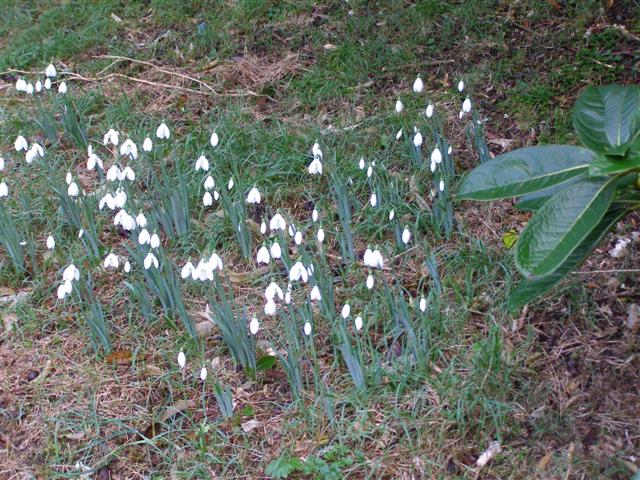
Naturalising the snowdrops takes some special efforts here. The rhododendron leaf belongs to a sino nuttallii

Tikorangi Notes: July 23, 2010

While there is considerable anticipation looking at the early magnolias laden with big, fat furry buds (sleeping bags for mice, our children used to describe the furry casings in years gone by), it is the tiny vision of the English snowdrops with which we are currently delighted. We can understand why these pretty, dainty little flowers give rise to such passion in dedicated collectors (are they called galanthophiles?) We are hardly good snowdrop territory here so we confine ourselves to the few varieties which will keep performing happily in our mild conditions. Managing to get some drifts established in a meadow situation is no mean feat. Meadows are not easy here. Our grass growth is so rampant we mow the lawns all year – weekly for most of it and fortnightly in the depths of winter when the growth slows. It is a bit much to expect bulbs or wildflowers to compete with such vigorous growth. In order to get this bank of bulbs started, Mark has had to discourage the stronger grasses and encourage a much slower growing, less competitive native microlina grass which won’t swamp the little treasures.

The galanthus only flower for a few weeks, but for that short time they are one of the most charming of all seasonal bulbs.

The Plant Collector: Lachenalia reflexa

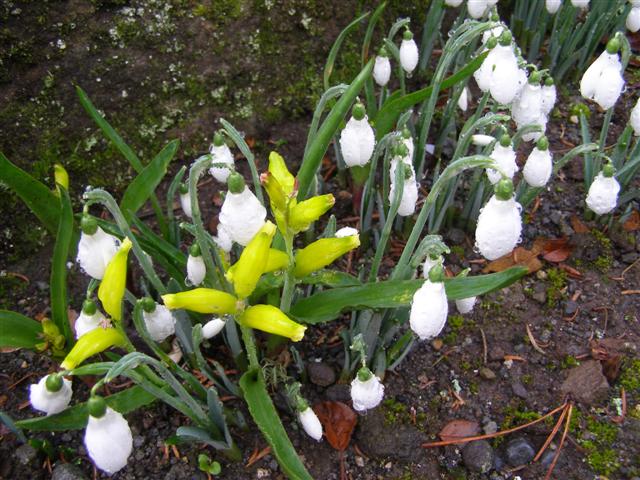
The earliest bulbs are in flower - Lachenalia reflexa midst the snowdrops

The earliest bulbs are in flower - Lachenalia reflexa midst the snowdrops

I have this little self-imposed rule which is that I can’t repeat a plant (at least, not yet) so the plant this week is not the delightful English snowdrops (this form is Galanthus S. Arnott which is the most reliable performer in our conditions), even though the clumps and drifts we have in full flower throughout the garden are an absolute delight. No, we are looking at the yellow flowers coming through with the snowdrops. This is Lachenalia reflexa. It is the yellowest of the lachenalias we grow here, all of which are native to South Africa. There are well over 100 different species, often taken for granted in their homeland where they are just wild flowers. Not all are easy to grow. Reflexa isn’t too difficult though it is not particularly vigorous, which is why it is not common. The yellow is a pure bright lemon shade, sometimes with green markings which fade out as the flower matures. Like most lachenalias, it doesn’t hang onto its foliage for particularly long after flowering. These plants are growing on the edge of our gravel driveway beside a low stone wall. Many of the species bulbs (which is as they occur in the wild) are used to surviving in quite harsh conditions with little soil and low fertility. If you try and treat them like choice garden plants, they don’t always cope. The critical issue, as always with bulbs, is to ensure excellent drainage, even more so when they are dormant (in summer for reflexa), to avoid them rotting out.

In the Garden: July 23, 2010

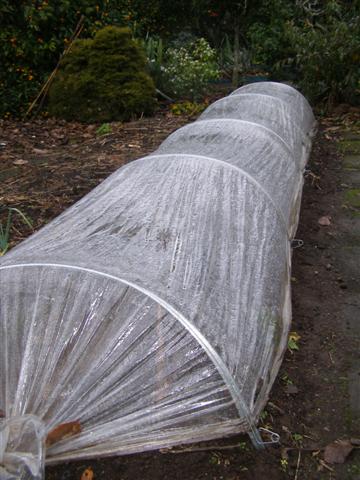
The cloche, not as Spike the dog briefly thought, a dog agility tunnel

The cloche, not as Spike the dog briefly thought, a dog agility tunnel

• In response to the many search engine terms I see coming through on line most days, if your buxus (box) hedge is looking brown and the leaves have fallen off, it is dead. If it is still in the mid stage with extensive browning and many areas with no leaves, it is dying. In the vast majority of cases, the problem is buxus blight. It can be treated in its early stages by repeated spraying but you will have to continue spraying because it is a fungus that does not go away. There is no point in replacing the dead sections with more buxus because they will just get infected too. That is it in a nutshell.
• It is time to address problems with lawns. If you insist on using hormone sprays (and some common lawn sprays are hormone based), get it on straight away. If you delay too long, you risk causing severe damage to deciduous plants just breaking dormancy. It doesn’t matter how careful you are – spray drifts invisibly and the slightest whiff can damage other plants at critical times. Our next Outdoor Classroom topic will be on renovating a tired lawn but often all lawns need is a minor bit of attention. Fill hollows and dips with top soil, over sow bare patches, dig out flat weeds, use a garden fork to lift compacted and solid soils.
• Mark is particularly brassed off at the sparrows which have destroyed his freshly germinating peas. He is constructing a moveable frame from split giant bamboo to be covered in netting in an attempt to beat the critters.
• A cloche in the vegetable garden is particularly valuable at this time of the year to protect young crops. Our microgreens are doing very well under cover, though Spike the dog had a brief time when he found the ends unsecured and thought that the cloche resembled an agility tunnel.
• The advice for the ornamental garden is the same as it has been for weeks on end – prune. Time will start to run out for heavy pruning soon. You want it all done before the plants start their spring spurt. Then dig and divide overgrown clumping perennials.
• Onions can be sown now. These are generally done from seed (except for shallots which are grown from segments). Onions are gross feeders and the usual rule of thumb is to plant them where you had a green leafy crop which was heavily fertilised last summer. Where space is limited, any onion types other than spring onions or shallots are probably a low priority because they are cheap to buy and widely available. However commercial onions are usually one of the more heavily sprayed crops so if you are shunning sprays, you may like to give them space at home. Red onions are easy to grow but have a shorter storage life.
• It is time to prune grapevines. We covered this in Outdoor Classroom last year.

Tried and True – heucheras

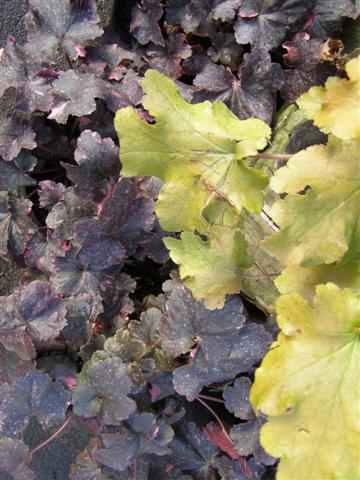
Heucheras - burgundy and lime shades

Heucheras - burgundy and lime shades

• Widely available in garden centres.
• Evergreen and generally hardy.
• Interesting range of colours and foliage markings.

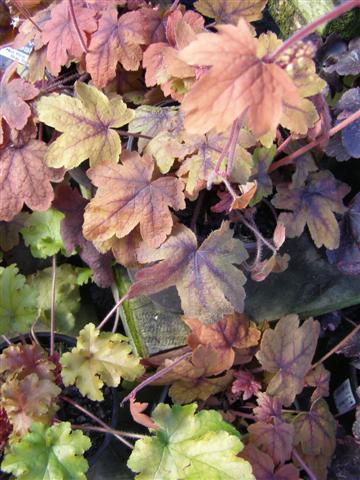
Heucheras have gone through something resembling a makeover in recent years, thanks mainly to American plant breeders, and are now a stock line in every garden centre. I have never heard them go under a common name in this country, but they are the clumping perennials with frilly, maple-shaped leaves often with mottled or frosted markings. They do flower but the tiny blooms are secondary to the wonderful foliage. Being native to North America, heucheras are reasonably hardy, even though they are evergreen. It was the lovely burgundy and purple shades which made most of us take notice of this plant genus here. Since then there have been a range of amber, gold and almost ginger shades as well and there is a lovely little lime green.

Heucheras in autumn tones

Heucheras in autumn tones

It took me a while to learn how to grow heucheras successfully. It was a little irritating to admire them in other people’s gardens and to have their owners smile smugly and say that they had no difficulty with them, all the while seeing my own plants get smaller, not larger. The secret, which they did not tell me at the time, is that heucheras are not a perennial that you can plant and leave for years. They thrive on being lifted and divided regularly (late winter to early spring is the best time for this) and replanted in well cultivated soil with plenty of humus added. I also find they do better in a colder, open area of the garden where they get plenty of light but they are not baked in the summer sun. In good conditions, the divisions reward you by making satisfyingly big clumps within the season with foliage which keeps its colour well and is generally untroubled by pests and diseases.