Tag Archives: galanthus

Is it spring yet?

The early magnolias and bulbs are telling us that winter is waning and spring is starting. I noted last month that May and June were quiet months for bulbs. July is not, but it is mostly the daintier bulbs that are opening.
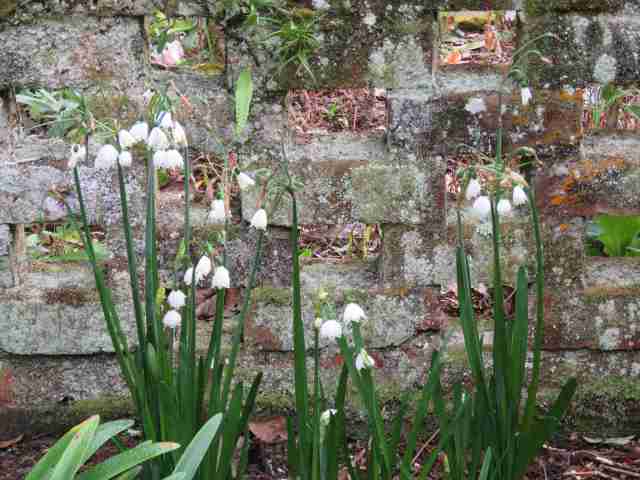
Leucojum vernum ‘Gravetye Giant’ has a very long season in bloom but is more useful than choice

Is this particularly early? Some of us ask that question; others boldly declare, based on ‘vibes’, that this is very early.  I thought it was early but it really isn’t. I have checked photo dates from my files and the snowdrops and narcissi are right on cue, as are Magnolias campbellii and ‘Vulcan’.
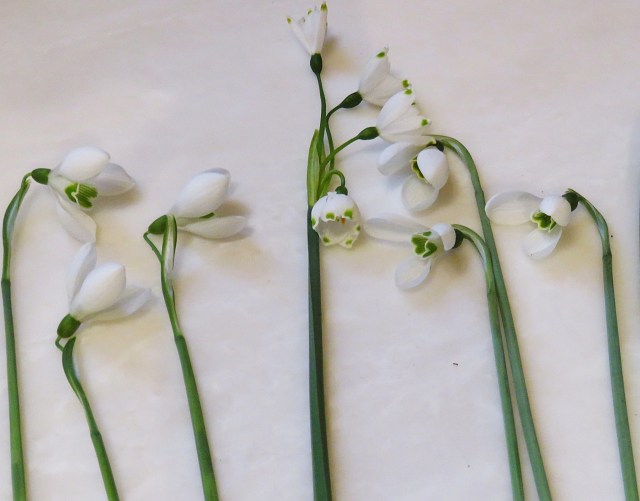
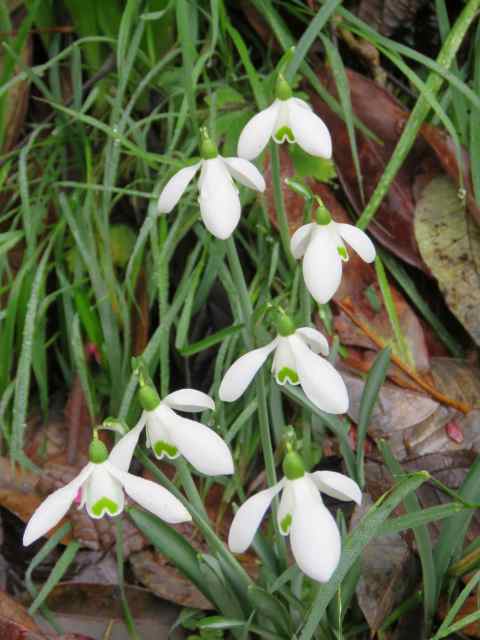
left to right: Galanthus nivalis ‘S Arnott’, Lecojum vernum (snowflake) and Galanthus elwesii

It is indeed peak snowdrop time which is but brief in our area which has only once ever had snow that we know of. I can tell you very specifically that it was on August 15, 2011, quite possibly between the hours of 6.00am and 7.00am. Out of all the snowdrops – and there are many, many different ones – we have ended up relying on just two different ones that perform well and actually increase in our warm temperate conditions. People in colder climates will have a much larger range that they can grow and they will have a longer season. We are confined to Galanthus nivalus ‘S. Arnott’ and Galantus elwesii and we really only get a couple of weeks out of them. The snowflake or Leucojum vernum ‘Gravetye Giant’ flowers over a couple of months.
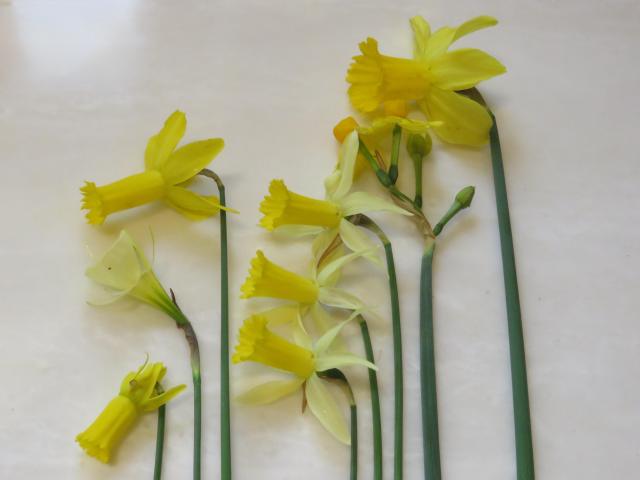
‘Twilight’ as a set of 3 in the centre, ‘Peeping Tom’ on the right

What we lack in range on the snowdrops, we make up for with the daffies. We grow a wide range of dwarf narcissi, both named varieties and cyclamineus seedlings,  and the season is just starting. ‘Peeping Tom’ is in full swing. It has an interesting name – maybe it was peeping out as snow melted? Or maybe somebody felt obliged to name it Tom but didn’t wish to? No matter, it is a bold and reliable performer and it certainly doesn’t skulk around quietly. So too is Felix Jury’s ‘Twilight’ a mainstay performer for us. It is sterile so it puts its energies into flowering for a long time and increasing its bulbs rather than setting seed. Next month will see an explosion in the narcissus varieties in bloom and ‘Twilight’ will continue to bloom alongside them.
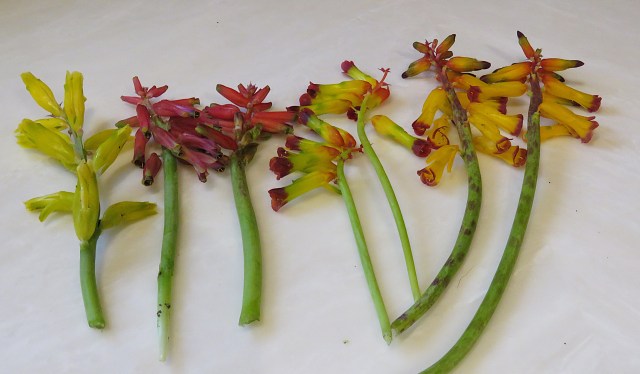
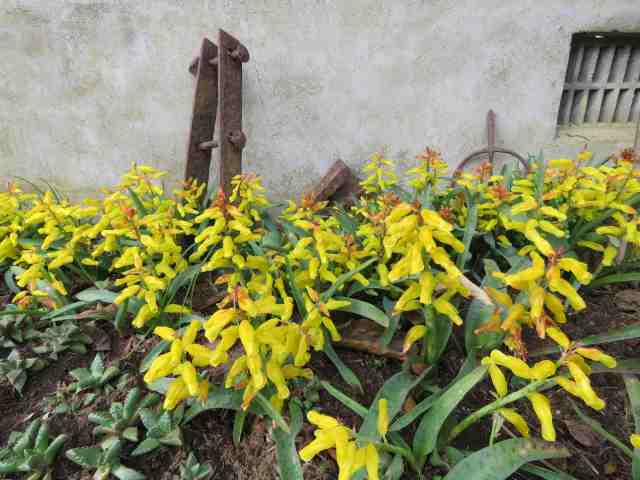
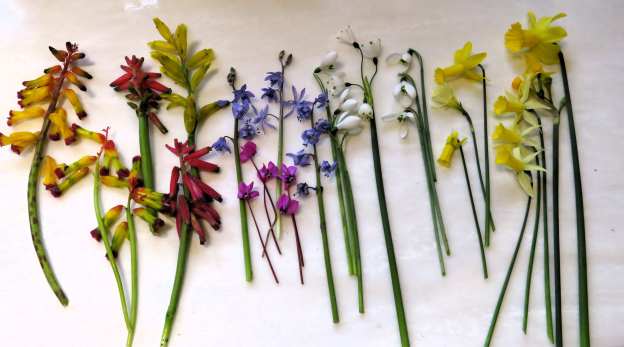
L to r: Mark’s reflexa hybrid, red L. bulbifera, L aloides quadricolor and the common old L. aloides var aloides.
Mark’s Lachenalia reflexa hybrid which has proven to be a good early performer

The other group starting its season is the lachenalias. The more desirable pink, blue and lilac ones will come later but these early ones are very cheerful and some have a long season in flower.
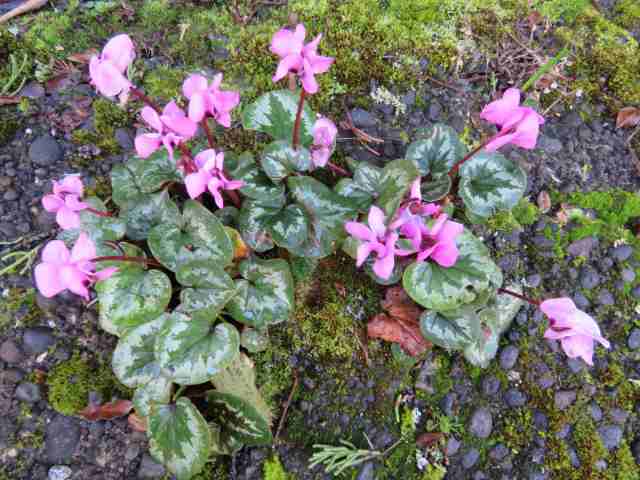
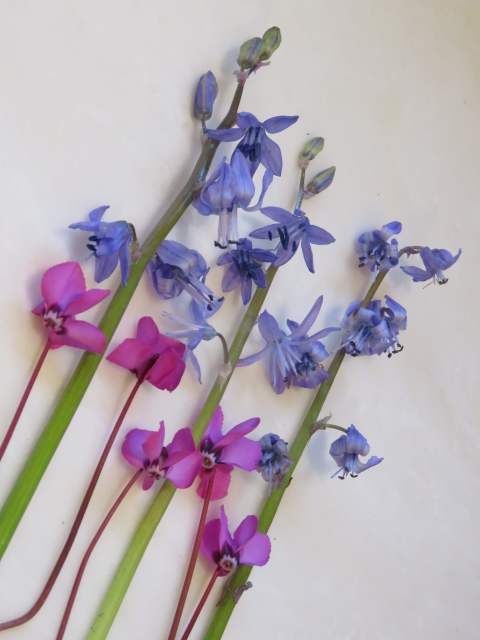
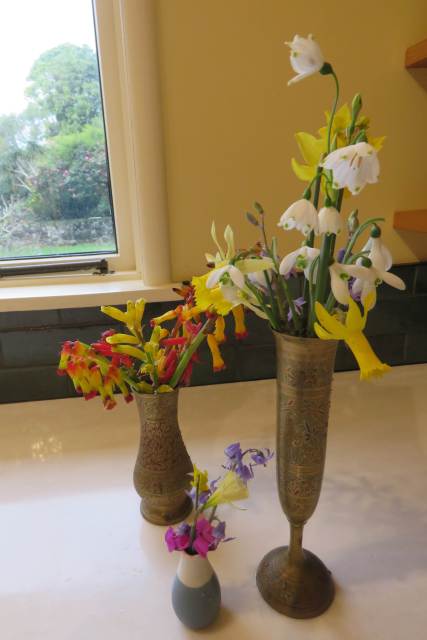
Cyclamen coum
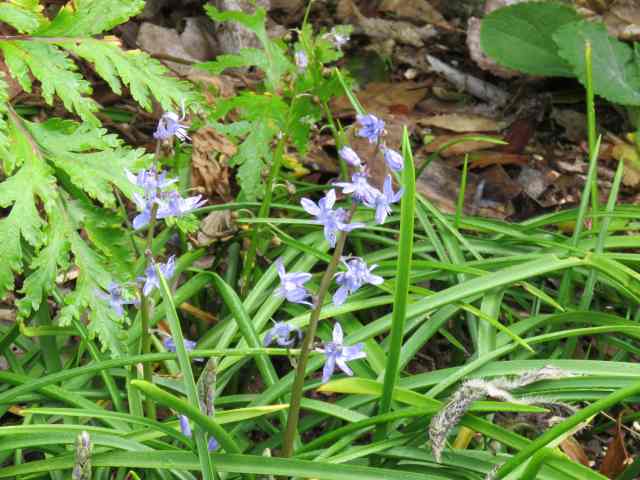
A winter flowering scilla. It will have a species name but I don’t know what it is and, to be honest, don’t care enough to go searching through back catalogues of ours and online.
Cyclamen coum and scilla

Cyclamen coum flies the flag for this plant family all winter and we have enough to set seed freely. It is smaller growing than the earlier C. hederifolium, and the dominant form we have is more cerise pink. The blue is an early season scilla, charmingly referred to as meadow squill, but I have no idea which one. We will have had a species name on it at some point. I wouldn’t get too excited about it. It is a pretty blue but has too high a foliage to flower ratio and is more suited to meadow planting than rockery. Not choice.

Overall, there is nothing much out of the ordinary but for mid-winter, the earliest bulbs are a very cheerful sight. July is the early harbinger of the peak bulb season of spring. I should give an honourable mention to Oxalis purpurea alba (still!), Oxalis versicolor and the simple blue anemone seedlings that have gently seeded down as survivors from a packet of De Caen mix I planted maybe 25 years ago.
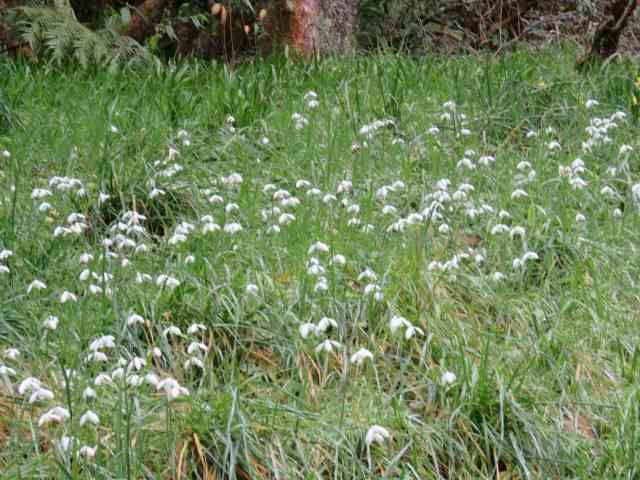
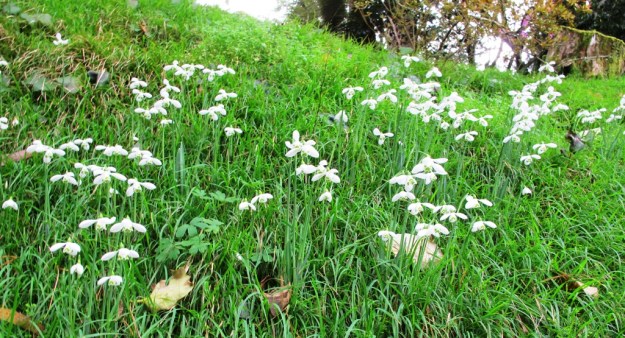
The gentle charm of snowdrops in a meadow situation

In the ‘you need to be here to really appreciate it’ category, July opens up our season of bulb hillsides down in the park. We don’t have actual acres of snowdrops yet but we do have extensive plantings and they are in flower now. The meadow narcissi are also opening their flowers. We rely on the stronger dwarf forms – particularly Narcissus ‘Twilight’ and cyclamineus seedlings which Mark raised to get high enough numbers to have an impact. Meadow bulbs bring charm through being an unexpected surprise and that is a little visual treat in early spring each year.
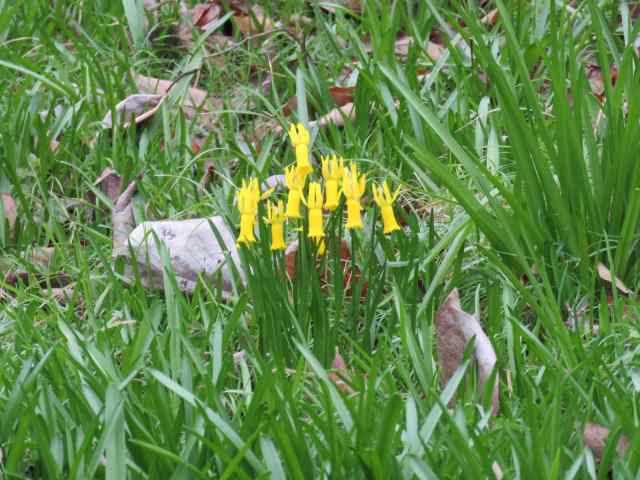
Dainty Narcissus cyclamineus competing well with bluebells and grass in the park
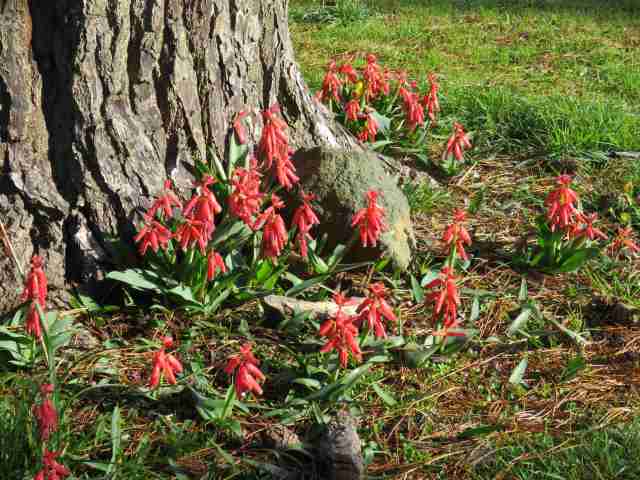
Lachenalia bulbifera at the base of an old tree amidst a grassy area that gets mown. Around bare tree trunks is often a good place to start planting bulbs for a meadow of sorts.

Magic carpet

Snowdrops on a hillside

Snowdrops on a hillside

July may be the bleakest month of winter for us but it is also snowdrop time and these little charmers brighten the greyest of days. You can never have too many snowdrops in my opinion, and the varieties that do well with us are building up to a satisfying level. By definition, that is when we have enough to move them out of optimal garden or nursery conditions and start establishing them in carpets.

It is our interest in what we call “romantic gardening” – others refer to it as “naturalistic gardening” – that we derive as much, if not more pleasure from plants naturalised in meadow conditions as we do from cultivated, tightly maintained garden beds. It is a blurring of the edges in gardening, exploring how far we can replicate the simple charm of wildflowers but in a managed situation.

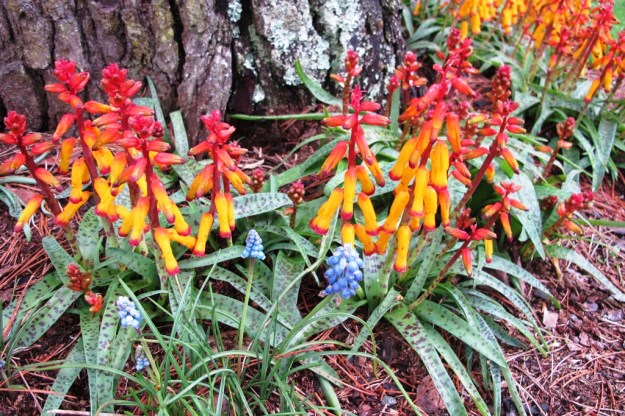
Lachenalia aloides and grape hyacinths (muscari) at the base of Pinus muricata

Lachenalia aloides and grape hyacinths (muscari) at the base of Pinus muricata

It is not as easy as it sounds. Many of the charming bulbs in their natural environment have conditions which are much harsher than here. Winters that are very cold and often dry mean that most growth stops, as do summers that are hot and dry. But in our dairy-farming heartland, soft conditions keep grass growing all year round and that growth will simply swamp most bulbs. It has taken us some years to learn to manage this. Selecting bulbs that will cope in our conditions has been trial and error.

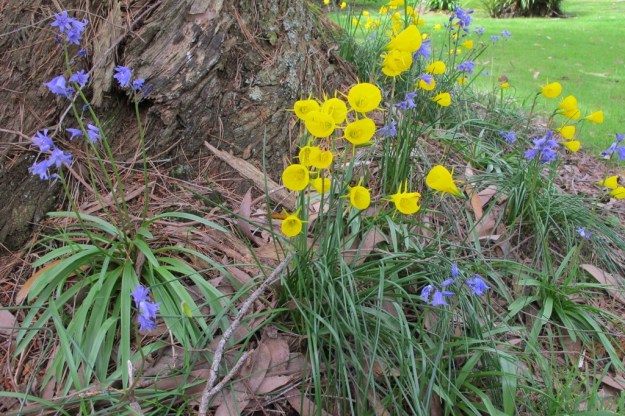
Bluebells and hooped petticoats (Narcissus bulbocodium) planted at the base of a eucalypt

Bluebells and hooped petticoats (Narcissus bulbocodium) planted at the base of a eucalypt

It also takes eleventy thousand more bulbs than you think it will. Even bulk buying a couple of hundred bulbs is not going to create much of a carpet in the short term. To get a quick result using large bulbs like daffodils or bluebells, planting at one every 10 square centimetres means 100 per square metre. I worked this out because I was planting a little mixed area. Using dainties like erythroniums, dwarf daffodils, snowdrops, crocus and rhodohypoxis, it took about 4 of these small bulbs per 10 square centimetres – or 400 per square metre. That is a large number and may explain why we don’t see many bulb meadows in this country, beyond well established fields of daffodils dating back many decades. Obviously, if you plant at greater spacings, you can cover a larger area but you will wait longer for the carpet effect.

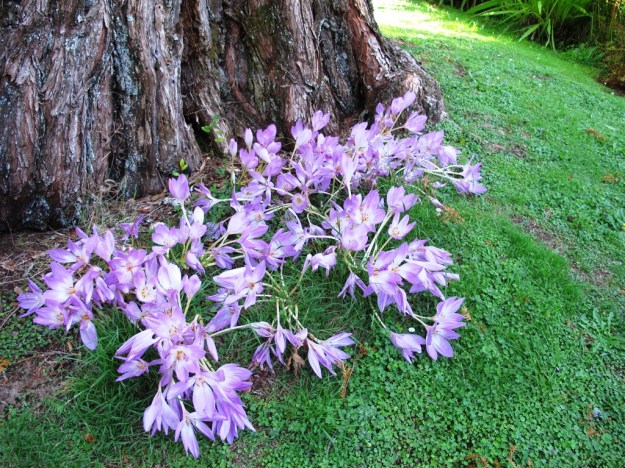
Colchicum autumnale flowering at the base of a metasequoia

Colchicum autumnale flowering at the base of a metasequoia

While planting around tree trunks is not the same thing as naturalising bulbs in a meadow situation, it proved to be a good place to start for us. We have many trees in fairly open situations where it is possible to establish easy bulbs beneath. Most bulbs need sun so these need to be trees with a higher canopy to allow light below. Planting amongst the exposed roots of established trees ensures the bulbs don’t get mown off or trampled as they surface and generally they get established with little competition. It is also an effective way of controlling some of the invasive bulbs like ipheions and ornamental oxalis.

Scattering seed is hit and miss and slower to give any results but much easier. We were delighted this year to see Cyclamen hederafolium showing its colours where Mark had scattered fresh seed several years ago. He had given up hope that it would work but lo, there are rewards for patient gardeners and the older we get, the more patience we seem to be developing.

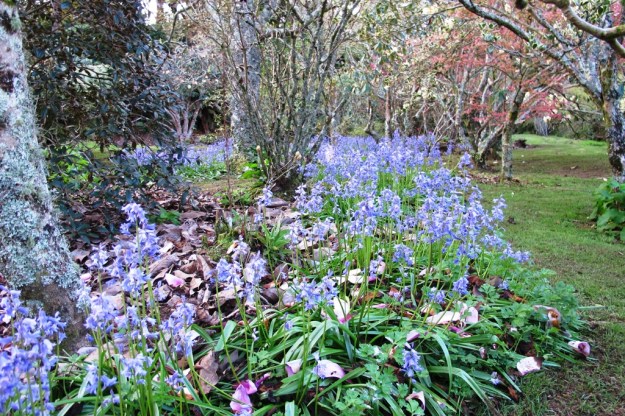
 Bluebells planted on the margins, drifting through our park area

Bluebells planted on the margins, drifting through our park area

Bluebells are easy and we have used them in swathes around shrubs in the area we call our park. Because they are flowering at the same time as the full flush of spring grass growth, we have to keep them to the side of areas we need to mow. Bluebell, and indeed snowdrop, woods that we have admired in Britain are carpets beneath deciduous trees. Our woodland areas are heavily dominated by evergreens so we don’t get enough light to replicate those carpets here. That is why we have to opt for the margins instead.

The triumph of experience has been getting grassy banks with dwarf narcissi and snowdrops naturalised. To do this, Mark spent some years establishing the native grass, microlina. It is finer and less vigorous so doesn’t swamp the bulbs and can be controlled with minimal cutting – just a pass over with the weedeater from time to time. It is not quite the same as a bulb meadow, but we have learned to work with what we have here.

Carrying a tray of Nerine pudica, in case you are wondering (which I admit I planted in the rockery, not in meadows)

Carrying a tray of Nerine pudica, in case you are wondering (which I admit I planted in the rockery, not in meadows)

First published in the July issue of New Zealand Gardener and reprinted here with their permission.

Tikorangi Notes

Latest Posts:

1) July 23, 2010: The yellow Lachenalia reflexa midst English snowdrops – the delight of the early bulbs.

2) July 23, 2010: Recommended tasks for this week in the garden – our winters do not last long here.

3) July 23, 2010: Heucheras are a tried and true plant, readily available from every garden centre in an ever increasing colour range but they do need a little attention if the clumps are to grow larger, rather than smaller.

4) July 23, 2010: Outdoor Classroom – the hows and wherefores of long overdue pruning of elderly apple trees. Our step by step guide.

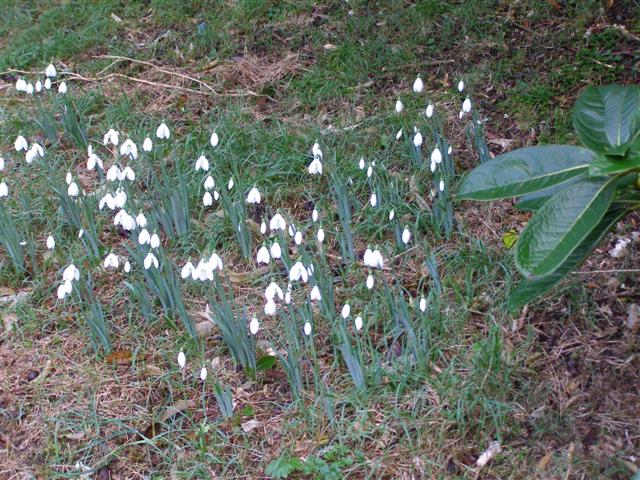
Naturalising the snowdrops takes some special efforts here. The rhododendron leaf belongs to a sino nuttallii

Tikorangi Notes: July 23, 2010

While there is considerable anticipation looking at the early magnolias laden with big, fat furry buds (sleeping bags for mice, our children used to describe the furry casings in years gone by), it is the tiny vision of the English snowdrops with which we are currently delighted. We can understand why these pretty, dainty little flowers give rise to such passion in dedicated collectors (are they called galanthophiles?) We are hardly good snowdrop territory here so we confine ourselves to the few varieties which will keep performing happily in our mild conditions. Managing to get some drifts established in a meadow situation is no mean feat. Meadows are not easy here. Our grass growth is so rampant we mow the lawns all year – weekly for most of it and fortnightly in the depths of winter when the growth slows. It is a bit much to expect bulbs or wildflowers to compete with such vigorous growth. In order to get this bank of bulbs started, Mark has had to discourage the stronger grasses and encourage a much slower growing, less competitive native microlina grass which won’t swamp the little treasures.

The galanthus only flower for a few weeks, but for that short time they are one of the most charming of all seasonal bulbs.