Tikorangi notes: April 6, 2010

Latest posts:

1) April 1, 2010 Garden tasks for the week, from buying bargain woody trees and shrubs from last season to autumn harvests.

2) April 1, 2010 Trimming and clipping formal hedges, our latest Outdoor Classroom. There is no doubt if you are going to have the sharp definition of a formal hedge, it might as well be done properly. We can’t do the traditional English yew in our climate – we have too high a rainfall and they get phytophthora and tend to die young.

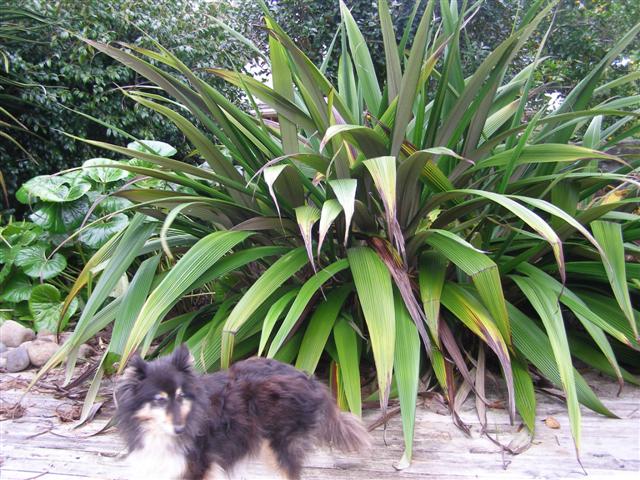
Spike, to the left, ate the Easter bunny. Zephyr would have but he is no match for the speedy Spike

Easter has been and gone. Alas, few Easter eggs here as Spike ate the Easter bunny. Buffa the cat has probably eaten a fair number of the Easter bunny’s brothers and sisters too. We are dealing with a rabbit explosion and would have preferred the early settlers from Britain to have left the rabbits back in their homeland rather than introducing them to this country back in the 1800s. We would have been better off had they also left the possum in Australia. While on the subject, one wishes they had spent the long voyage at sea ridding the plants of the slugs and snails that hitched a ride.

Our autumns tend to be long and mild here, drifting slowly from summer to winter, which makes for brilliant gardening conditions.

Awaiting the mulcher machine, nikau palm to the fore.

The latest project is redeveloping an area of woodland. Most large gardens have messy patches – the areas one walks through quickly with eyes averted but I could no longer ignore this particular area. Lots of lifting and limbing and the removal of surplus plants have allowed more light in, the rediscovery of lines long blurred by too much growth and a feeling of open space again. The piles for the mulcher (chipper) have been prodigious and even the occasional nikau palm (Rhopalostylis sapida) has been sacrificed. This may seem too much for those who treasure the world’s southernmost palm, but they self seed freely here and while very beautiful, there is a limit to how many we need in the garden. Similarly the tree ferns, known here as pongas, seed all round the place and are often removed with the chainsaw. Having seen these greatly prized in Italian and English gardens, we are always a little amused that they are taken completely for granted in this country.

In the garden: April 1, 2010

  • If you have harvested potatoes with a nasty brown split and blemish inside tubers which look perfect from the outer (our Agria are particularly badly afflicted this year), Plant Doctor Andrew Maloy says the most common cause is a fungal blight. As the spores remain active in the soil, make sure you plant your potatoes in a new area next time where you have not grown solanums (potatoes, tomatoes, aubergines, capsicums etc) for several years. Fungal diseases are exacerbated by heavy soils, too much water and too little air movement so free drainage, full sun and space will reduce dependence on fungicides.
  • Easter, like Labour Weekend, is a big time for garden centres – long weekends and the change of seasons gets people focussing on gardening. Quite often there are clearance sales of last season’s woody plants and if you are tempted by these, they may need some TLC to thrive. Water, water, water to combat our dry soils. Make sure the root ball is saturated because if it is very dry it can actually repel water, even after planting. That is why you soak the root ball before planting. Cultivate the soil well – don’t just dig a hole that fits the plant. Dig at least twice the size and break up clods of dirt well so the roots have some good soil to extend into. Make sharp cuts down the root ball if it is really congested, cutting through any roots which have wound round and round the pot or bag. Cut the bottom of the root ball if it has folded in to its planter bag (like an envelope). Resist the temptation to tease out the roots – you will do more damage than good. Put any fertiliser around the roots at the side, rather than sprinkling on top and mulch with compost.
  • Sow your new lawns this weekend and over sow bare patches in existing lawns.
  • It is time to do the big autumn clean up in the vegetable garden. Remove any badly blighted or mildewed plants altogether to reduce future infestations. Don’t dig them in and only compost them if you are very confident that you make a hot compost mix. Ditto any seed heads.
  • Save seed of crops as you harvest – beans, peas, corn, tomatoes, capsicums, melons etc. Most experienced veg gardeners agree that saving your own seed is a most satisfying part of the cycle. Always save the seed from the very best, strongest, healthiest specimen not some poor thing that is hardly worth eating.
  • There was an alarming news item at the weekend to the effect that fresh fruit and vegetable sales dropped by over 30% during our latest recession. While I hoped that this might be an indicator that more people were growing at home (it is enormously satisfying to walk briskly through the produce section at the supermarket without needing to stop because you are self sufficient), the fact that takeaway food sales increased massively tends to suggest this is not the case. So be virtuous and get out to the garden this weekend to plant winter vegetables while there is still a month or longer of warm weather to get them growing. All the brassica family except Brussels sprouts, winter leafy greens, broad beans and even a late crop of beetroot can be planted.

Clipping formal hedges – step-by-step with Abbie Jury & Lloyd Sorensen

A step by step guide by Abbie and Mark Jury first published in the Taranaki Daily News and reproduced here with permission as a PDF.

New Outdoor Classrooms are uploaded fortnightly.

Flowering this week: Colchicum autumnale

Autumn flowering colchicum, robust growing bulbs suitable for the garden or naturalising

Now that the temperatures have dropped noticeably and I am reconciled to the thought that summer has been and gone for another year, I am prepared to welcome the sight of the colchicums in flower. These are often called the autumn crocus because their simple six petalled cup-like flowers resemble those bulbs but they are distant relatives at best. They have their very own botanical family which is colchicaceae. Their flowers are considerably larger than most crocus and they flower well before their foliage appears. Because they have very large bulbs and grow quite vigorously, they are not shy delicate little things you will lose in a garden situation. In fact they can be naturalised in grass. The flowers are more lilac than pink and are hardly long lived but you can get a succession of them from a single bulb. When the leaves appear, they are relatively large, lush and green but the downside is that the foliage hangs on for a long time into early summer by which point it no longer looks attractive at all. Autumnale is native to quite large areas of Europe.

Colchicums are the source of colchicine, a controlled pharmaceutical of considerably potency used in cancer treatments and also to cause mutations in living cells, which is sometimes advantageous but does need to be handled with care. These bulbs are also the true Naked Ladies though we more commonly refer to belladonnas as bearing this politically incorrect epithet.

Tikorangi notes: March 26, 2010

Latest posts:
1) March 26, 2010 The colchicum autumnale are at their very best this week.
2) March 26, 2010 I think it is a myth that the mixed border is easier to maintain than a proper herbaceous border – Abbie’s column.
3) March 26, 2010 Dealing to the dreaded cabbage white on brassicas and other garden tasks for this week.

The small pictures of autumn - Moraea polystachya

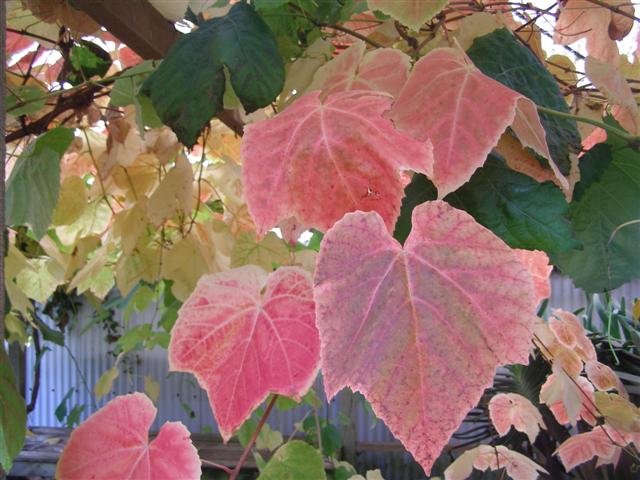
Autumn is the season that makes us feel just a little forlorn here. In winter (which is fairly short and certainly not cold by international standards) we are always busy preparing for spring. Spring is abundant with flowers and certainly the prettiest time here. Summer is for sitting in the shade sharing conversation and a bottle of wine while enjoying the warmth. But autumn just means it is going to get colder and wetter sooner than we would like. It is not even as if we get good autumn colour, or much autumn colour at all for that matter. New Zealand’s native flora is all evergreen so our landscapes are dominated by green foliage twelve months of the year. And good autumn colour requires sharp changes in temperature as a trigger, best complemented by forests of deciduous plants. We just drift so slowly and imperceptibly from one season to another, particularly in our mild coastal location, that few plants get the message right.

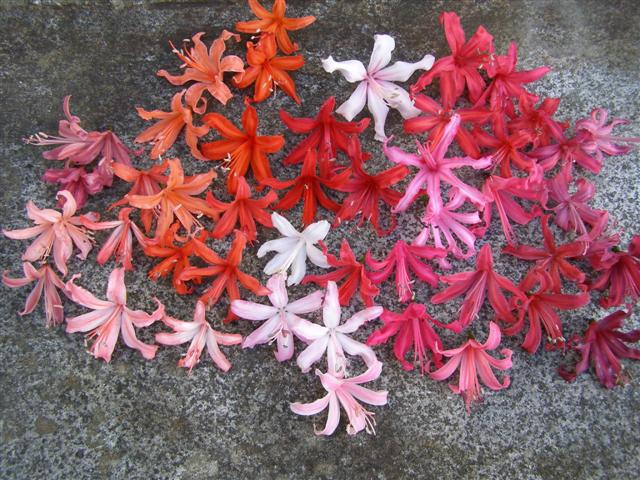
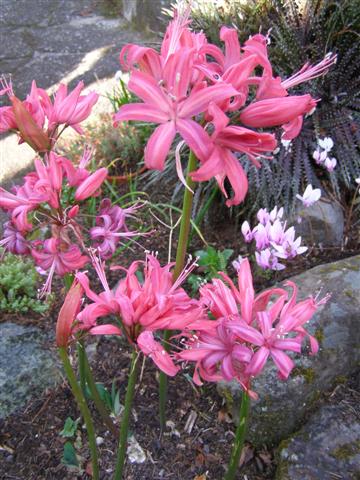
But what we do have are autumn bulbs. Cyclamen hederifolium, Moraea polystachya, the nerine sarniensis hybrids, colchicums, Haemanthus coccineus and ornamental oxalis are coming into their own and make very pretty pictures. They offer some compensation for the fading summer and remind us why, in a large garden, we treasure the very small seasonal pictures that the bulbs contribute.

The autumn cyclamen flower for a satisfyingly long time