Tikorangi notes 24/2/2010

Latest updates

February 24, 2010 A guide to T budding, shown on an apple tree. Outdoor Classroom.

February 23, 2010 The bulbs section of Plants for Sale has been updated with many offerings which are very hard to source in New Zealand.

February 20, 2010 Magnolia Diary 14 – a summer update on the fragrant Michelia alba and magnolias.

February 20, 2010 Flowering this week – Michelia alba again, as published in the Taranaki Daily News.

February 20, 2010 In the Taranaki garden this week. Our weekly diary of garden tasks – from stratifying bulbs to the pros and cons of growing vegetables in raised beds

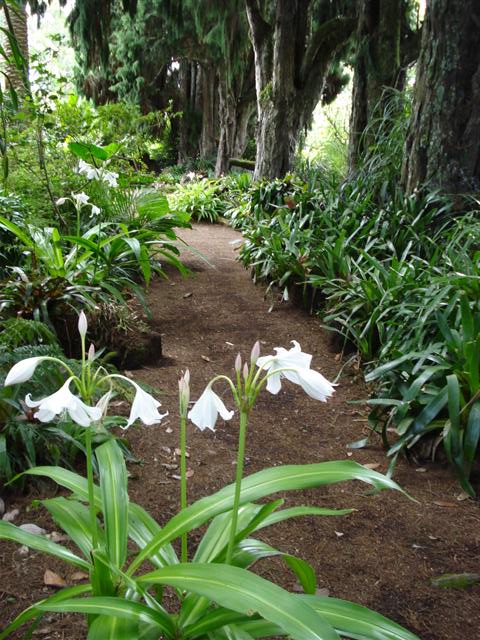
Summer flowering Crinum moorei in our rimu avenue, February 24, 2010

Magnolia Diary 14, February 19, 2010

Click to see all Magnolia diary entries

Click on the Magnolia diary logo above to see all diary entries
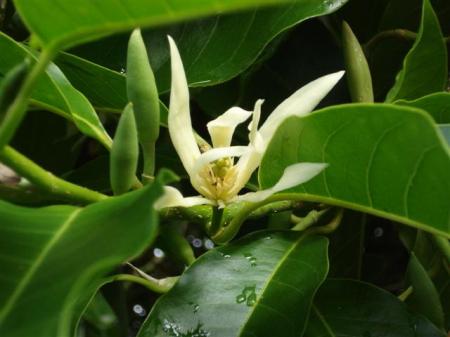
Magnolia alba - hardly spectacular flowers but an intoxicating fragance

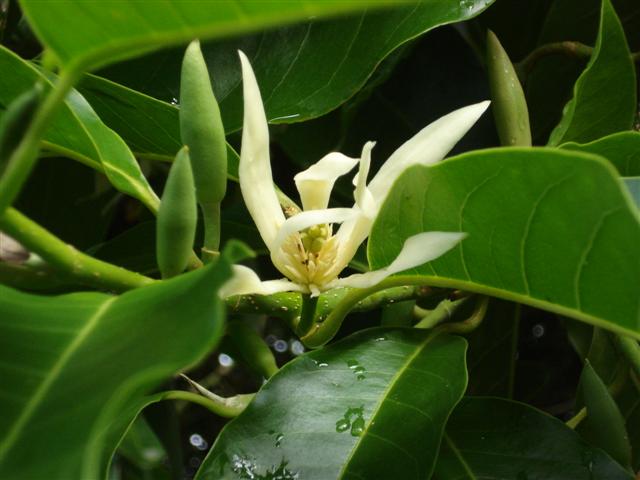
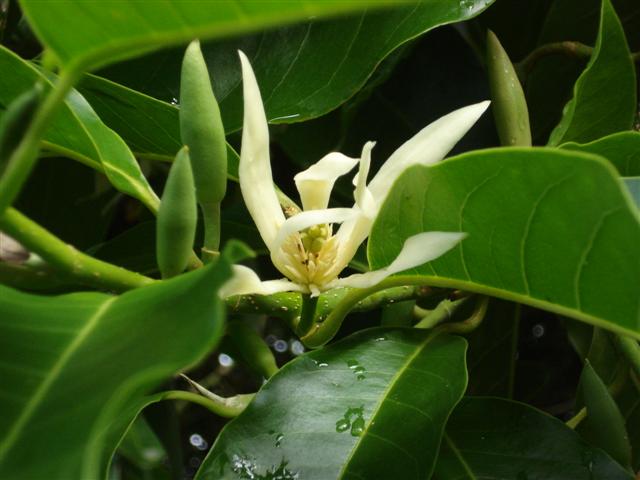
In our southern hemisphere summer, Michelia alba is in flower. One could never describe alba as being in full flower – it just gently flowers over a long period without ever putting on a mass display. We planted it near our swimming pool so it could perfume the air in the summer months but as it grows ever larger, we are wondering if we have made a mistake. After about eight years, it is already around eight metres tall and showing no sign of slowing down. It has splendid foliage for those in warm enough climates to grow it and the flowers make up for their rather understated (almost insignificant) appearance with their heady fragrance. We have never seen any evidence that alba is fertile, either as seed parent or pollen donor and lean to the belief that it is likely that there is only one clone in existence and that is sterile. We have champaca (believed to be the seed parent of alba on the premise that alba is most likely a natural hybrid) which has attractive colour in the flowers but the forms we have seen are scruffy as garden plants.

Michelia alba, in the centre rear of the photo, has lush foliage but is growing at an alarming rate in our garden

Michelia alba, in the centre rear of the photo, has lush foliage but is growing at an alarming rate in our garden

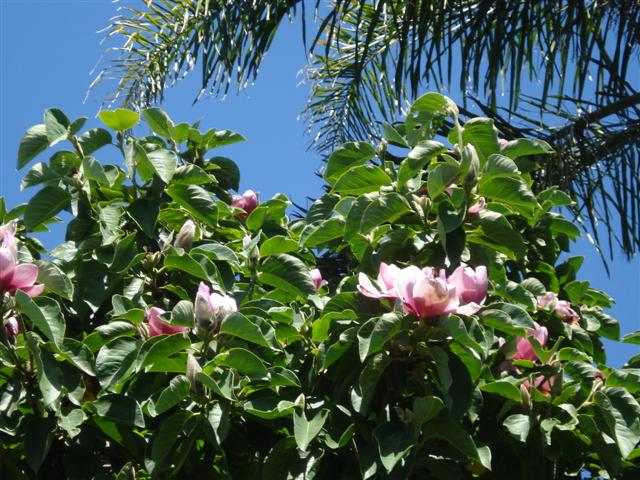
Mark’s Fairy Magnolia Blush (the first of his michelias to be released) is also summer flowering but these are random blooms which lack the colour of the main spring season. We have decided that the move to lump all magnolia relations, including michelia and mangletia, into the magnolia group is not helpful so we are going to remain with the former nomenclature at this stage. Mark is of the view that michelias are a distinct group which warrants being kept separate. As far as he knows, nobody has yet proven that they can successfully cross michelias with magnolias, or indeed mangletias although some have claimed hybrids. We will wait for proof because we doubt that it is possible to achieve crosses between distinctly different groups without scientific intervention.

Many of the deciduous magnolias are summer flowering at this time but we never get particularly excited about these. They are bonus flowers, tucked in amongst the foliage, and they lack the impact of the spring flowering on bare wood though it should be said that Black Tulip has put up some fine dark flowers this year. Iolanthe, Apollo and Serene all have summer flowers – in fact most soulangeana hybrids will do so. With our very strong sunlight (blame the depletion of the ozone layer along with our clear atmosphere) summer flowers tend to burn.

Summer flowers on Iolanthe

Magnolia Serene has stand out dark foliage. Generally speaking, the foliage on deciduous magnolias does not excite much interest and in summer, most of them are just green trees with relatively large leaves. But when we cast our eyes around a number of trees in our garden landscape, Serene stood out as having deeper colour and appearing glossier than the others nearby. We think it has considerable merit as a specimen tree for its summer foliage as well as its form and spring flowering. Some magnolias stand the test of time and this is one of Felix’s where we are surprised that it has not been picked up more widely in the marketplace. With its later flowering (ref Magnolia Diaries 11 and 12 to see the flowers) it should perform well in cooler climates.

Flowering this week: Michelia alba

Michelia alba - grown for fragrance and foliage rather than any spectacular floral display

Probably the most fragrant tree we know, Michelia alba is in flower now and will be for most of summer. The flowers are definitely not spectacular to look at, being small and rather sparse for the size of the tree, spidery in form and cream. But for a knock you down fragrance which permeates the air all round, alba is amazing. In fact it is apparently the fragrance of Joy perfume. The tree gives us a few worries because it is growing considerably larger and faster than we anticipated and we wonder if we have it planted in the right place. Glyn Church tells us he had to cut one of his out because it outgrew its position. At least it is upright, rather than spreading and its foliage is lush tropical green all year – possibly because it comes from tropical and sub tropical areas of Asia.

Michelias have now been reclassified as magnolias – a somewhat arbitrary decision with which we do not agree so we will continue to use the former names. Alba was given to us by an elderly Chinese gentleman who told us that it was sacred and we could sell one to every Chinese family in NZ. We tried, believe me we tried but it does not set seed and it very rarely strikes from cutting so it has to be grafted and it is not easy to reproduce that way either. We have seen it used as a street tree throughout Asia and we think they aerial layer it.

For the botanically interested, current information is that alba is probably a natural hybrid from the orange flowered Michelia champaca and all alba plants throughout the world are therefore the one clone. Champaca sets seed freely but we have yet to hear of anybody who has proven experience with alba showing fertility. The plant appears to be a genetic dead end.

For a photograph of the tree in our garden, check out Magnolia Diary 14.

In the garden, February 19, 2010

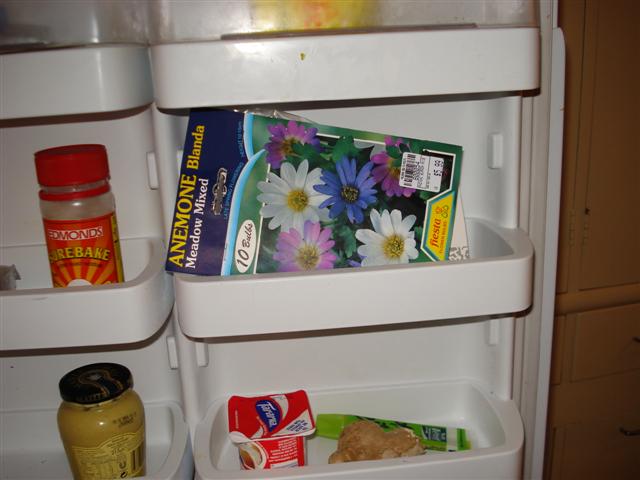
Simulating winter chill before planting out the anemones

Simulating winter chill before planting out the anemones

  • The distinct cooling of temperatures this week and intermittent rain has me fearing that summer may beat an all too early retreat after a late arrival. Mark delights in pointing out that technically we have under two weeks of summer remaining because March officially signals the onset of autumn. But generally we can look forward to settled, summery weather until April.
  • If you have been tempted into buying anemones and ranunculus, remember to plant the former pointy side down and the latter with the claws down. The advice from Aorangi Bulbs is to place the bulbs in a paper bag (not plastic) and refrigerate for a few weeks – six weeks for anemones and four weeks for ranunculus. Then soak them overnight in tepid water before planting. The refrigeration is to simulate the winter chill so that they spring into growth with the warm water. If you have bulk-bought bulbs (and some are ridiculously cheap in quantity), staggering the planting over several weeks is likely to extend the flowering season this year. The chilling process is called stratification.
  • Unless you are willing to refrigerate your hyacinth bulbs every year, you need to treat them as annuals in our climate. Bulbs purchased this year have already set their flowers so you will get one season of lovely blooms. But they need a winter chill to trigger them each year and few gardeners in our area will have sufficiently cold conditions to have them continuing to flower year after year. By no means all bulbs need that winter chill, but hyacinths and many tulips do.
  • The rains this week will trigger winter and autumn flowering bulbs to break dormancy so you are running out of time for lifting and dividing congested clumps.
  • The rains and mild temperatures will also see an explosion of fungal disease in vulnerable plants. Dig main crop potatoes as soon as it appears they are ready, to avoid losing them to blight. You may have to get a spray applied for mildew on crops such as grapes, tomatoes and cucurbits. If you don’t want to use proprietary sprays or copper, you could try baking soda – a level teaspoon to a litre of water.
  • If you have been seduced by the current fashion for growing vegetables in raised beds (ideal for over 70s, those with bad backs or otherly abled but otherwise over-rated in our area with wonderful friable soils and drainage) don’t fill the beds to the top. If you do, you can’t dig the soil without much of it spilling over the edge which makes a mess of the surrounding paths. Nor can you keep adding compost and humus to enrich the soils unless you dig the level lower each time and barrow away the excess.

T-budding an apple tree: step-by-step with Abbie and Mark Jury

A step by step guide by Abbie and Mark Jury first published in the Taranaki Daily News and reproduced here with permission as a PDF.

New Outdoor Classrooms are uploaded fortnightly.