
- We were shocked by the infestation of onion weed on the local Lepperton roadsides, spread we suspect by road works. Onion weed is a thug and not easy to get rid of. Any small bulblets that you leave will respond with renewed vigour and the most common weedkiller spray, glyphosate, doesn’t touch it in our experience. If it is a small patch in your garden, you can dig it (and then let it heat and rot in a black plastic rubbish bag left in the sun). If you are not averse to using sprays or if you have a massive swathe, try treating it like wandering jew – which usually means spraying with Amitrol. Add a surfactant to encourage it to stick to the shiny leaves.
- With asparagus season starting, if you covet your own patch remember that asparagus is a permanent crop and grows from underground crowns which are best left undisturbed. To establish a few plants, dig the area really well, then dig it a second time and dig deeper than usual and add plenty of compost and humus. Do not harvest anything for the first couple of years because you want the crown to build up strength and size. Asparagus is a long term commitment. While bare root divisions were sold earlier in winter, what is available now will be more expensive potted crowns. You may well have more success with buying potted crowns than smaller bare root divisions.
- Strawberries are still available and these are a cheap and cheerful crop to try with children. Planted right now, they will crop later in early summer so it is a quick turn around. If you have ever been to a PYO place, you will know that they want full sun, well tilled soil and if you plant them on a little mound, it improves the drainage and heats up faster for early growth. However it isn’t necessary to mound and it does increase drying out later. Laying some straw beneath the plants later will help keep the fruit clean and reduce disease caused by splashing. Pine needles work equally well as a mulch.
- If you go to the garden centre and get tempted to buy little pots of tomatoes, peppers, pumpkins, courgettes, cucumbers or similar, don’t be too fast to plant them out in the open. You won’t gain anything and you are more likely to lose them when we get a cold, wet spell (which we will – it is still only early spring). Labour Weekend is the traditional time for getting these crops into the ground. Experienced gardeners may put them in earlier but usually only under a cloche (plastic or glass covers). If you have already planted them, you can salvage the situation by cutting the bottom off a 2 litre plastic bottle for an individual cloche (clear plastic or opaque will work). If you are looking at the little pots still waiting to be planted, pot them on instead to larger sized pots and keep them in a sheltered, warm spot on your verandah for a few more weeks.
- If you feel they need it, the usual time to feed bulbs is immediately after flowering. However, many bulbs come from poor, impoverished natural environments so to be honest, we don’t feed them here as a matter of course. If you have bulbs which failed to flower this year, it may be that they are badly overcrowded and need thinning, or that their position has become too shaded.
- Resist the temptation to tie bulb foliage into tidy knots after flowering. Nothing shouts out your ignorance more. Tying them in knots greatly reduces the bulb’s ability to store away energy through its foliage to keep its strength up, forcing it into early dormancy. If you are trying to tidy up and the foliage looks untidy, make a mini fence out of twigs or short pieces of bamboo.
Magnolia Diary 12, 15 September 2009

Click on the Magnolia diary logo above to see all diary entries
It is Magnolia Serene which is the stand out plant here in full flower this week. Big, beautiful and very pink and signalling the impending close to the deciduous flowering season for this year. This is the original plant, as bred by Felix Jury here (liliiflora x Mark Jury). The original Iolanthe may shade our vegetable garden; the original Serene drops most of its leaves and flowers into our swimming pool. Such is life when you live surrounded by trees.
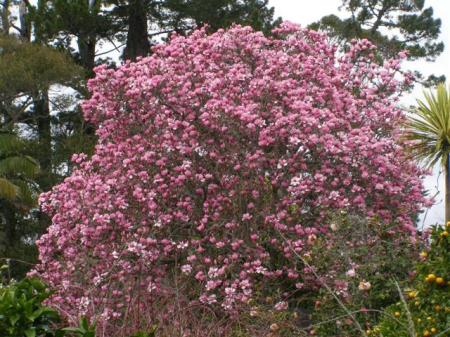
Impressively pink - the original Serene
The early yellows are in flower. While still reasonably sought after in this country as novelty plants (New Zealanders take red magnolias completely for granted but yellows are seen as unusual), the problem with most magnolias with acuminata in the breeding is that they flower too late in the season for us and the leaves have already appeared. Elizabeth, Yellow Fever and Sundance will at least flower on bare wood and are attractive enough, but what most people here expect is a butter yellow Iolanthe (ie very large, bright flowers on bare wood) and that is not anywhere to be seen yet. Instead we have pale primrose, small flowers and strappy flower form on plants that tend to rival timber trees in their rates of growth.

Magnolia Yellow Fever planted on our roadside
In New Zealand we have a harsh, bright light and the dreaded hole in the ozone layer down near Antarctica is usually getting larger at this time of the year so our sunlight is not well filtered. We are noticing quite bad burning on the late flowers on a number of magnolias. Liliiflora burns, as do liliiflora hybrids (though not Serene at this stage). It may be that extended flowering characteristics are not all they are cracked up to be here – crispy brown blooms are not a good look.
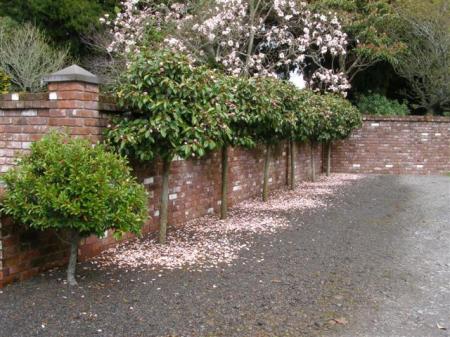
Interlocking circles of pink michelia petals
Finally, when conditions are right (no wind and light rain), we are always delighted by the sight of rings of pink petals that fall naturally around the base of our row of Fairy Magnolia Blush (Mark’s pink michelia). It is eyes down for a change, to catch this pretty sight.
Flowering this week: Gladiolus tristis
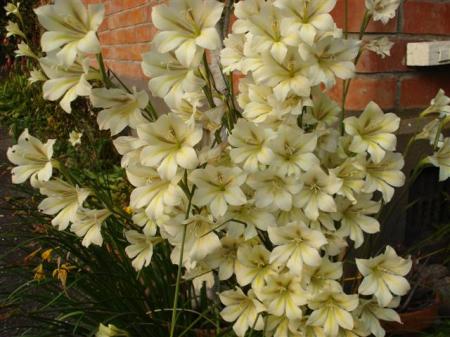
Gladiolus tristus - the charm of the species
Dame Edna Everidge with her love for gladdies would not agree with me, but I say there are some plants which have not necessarily been improved by hybridising and the gladiolus is one of them. The modern gladdie sits alongside nasty overblown marigolds and over bred cyclamen and chrysanthemums. But go back to some of the species and they are infinitely charming in their purity and simplicity and can easily justify a place in the garden. Gladiolus tristis hails from southern Africa, as do so many of our good garden bulbs here. It grows from a corm and with wiry thin stems, it supports itself without staking. The display of pale lemon flowers is delightful. It is night scented (often a sign that the pollinators are moths but I have no idea if this is true for tristis). Sniff it in the morning and there is no hint of scent but come evening, the fragrance is a divine. Because it also has very thin leaves which are almost anonymous, once flowering has finished for the season, tristis is unobtrusive in the garden while it builds up its strength before going dormant for summer. There are others species gladiolus which are equally charming.
Prunus Awanui
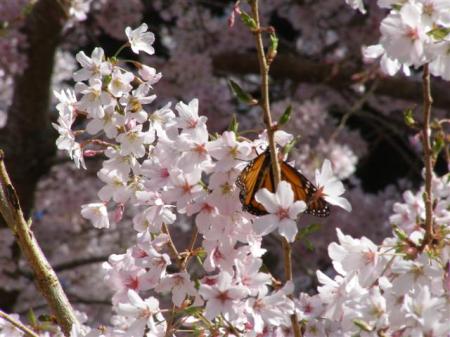
Prunus Awanui feeding the monarch butterflies this week
Prunus Awanui is pretty as a picture at our place. This flowering cherry looks like fine lace against the sky, a mass of softest, palest pink, small flowers with not a leaf in sight. We have it underplanted with Rhododendron Elsie Frye which is the same colouring but has considerably larger flowers (and fragrant) and when looked at from further away, we have a Magnolia Iolanthe framed in the view too. All tone in together very well. On a sunny day, Awanui is alive with monarch butterflies, honey bees and waxeyes.
It popped up in a garden where eagle-eyed local nurseryman Keith Adams thought it had potential. It has now become a market standard. It roots easily from cutting, remains healthy and is easy and reliable. With our high rainfalls in Taranaki, we are not the best territory for most flowering cherry trees which tend to be short lived as they develop root problems. Awanui does not appear to be so pernickety despite the fact it probably has subhirtella in its parentage. In good growing conditions, it can get quite large. Our tree is maybe nine metres across and six metres high and would have been larger had it been left to its own devices, but it is a light and airy tree and it flowers faithfully every year and looks completely charming. This is a plant that is generally readily available on the market in New Zealand.
September 11, 2009 In the Garden
- We are getting quite dry here although there is rain forecast. Keep an eye on container plants which can dry out while your back is turned. If you have permanent plants in tubs, troughs, containers or pots and you haven’t done anything with them for ages, get onto any repotting straight away if you want them to survive summer. Today’s Outdoor Classroom is on this topic. If you don’t plan to repot them, give them a feed.
- It is countdown on digging and dividing clumping perennials. Most of these are in growth now and will make a speedy recovery from being divided but it is best not to delay.
- Daphnes and luculias can be pruned now. The Himalayan Daphne bholua can get pretty scruffy and will take hard pruning but go easy on the more common odora types. A light trim or thinning is more advisable for them. Look for fresh shoots or buds on the luculias and trim back to these without delay. Dichroas (related to hydrangeas but evergreen and often with a flower for the better part of the year) can be pruned back to a pair of leaf buds.
- If you have a glasshouse, be very cautious with its ventilation now because temperatures can soar and it would be disappointing to fry the treasures you are housing so carefully.
- Get onto planting out annuals if you want a display in spring. Leave it any longer and they will be a summer display instead.
- The advice in my column last week on copper sprays was not a complete veto on their use, but a warning bell on their over use. There are times copper sprays are enormously useful and one of those times is to combat leaf and fruit drop on citrus trees.
- Wandering jew (tradescantia) is on the move. Do not let this weed get away on you. If you use sprays, Amitrol, Grazon or Tordon Gold should deal to it. Glyphosate doesn’t touch it. If you shun sprays, there is no alternative to hand pulling every last skerrick of it and putting it to rot inside a black plastic rubbish bag in the sun. Any piece you will miss will grow again.
- If you still plan to plant fruit trees this season, stop talking about it and do it right now. Full sun is the rule for fruit trees.
- In the vegetable garden, it is full steam ahead with pretty well everything. Hardy crops and root crops can be sown from seed directly into the garden – peas, carrots, parsnips, potatoes, lettuce, spinach and silver beet. You may want to try a late crop of broad beans sown now. Slightly more tender crops are started in pots or trays for planting out in six weeks time. These include corn, cucurbits, most beans, tomatoes and all the summer vegetable delights. In warm, protected, coastal areas or under a cloche, you can start direct sowing dwarf beans.

