

We weren’t worried when the warnings came through that Cyclone Dovi might hit land in New Zealand. We are in the middle of vast ocean and mostly these storm events end up passing by. Besides, we are well sheltered here and it can be howling a gale elsewhere and we are relatively calm.
We were wrong last Sunday.
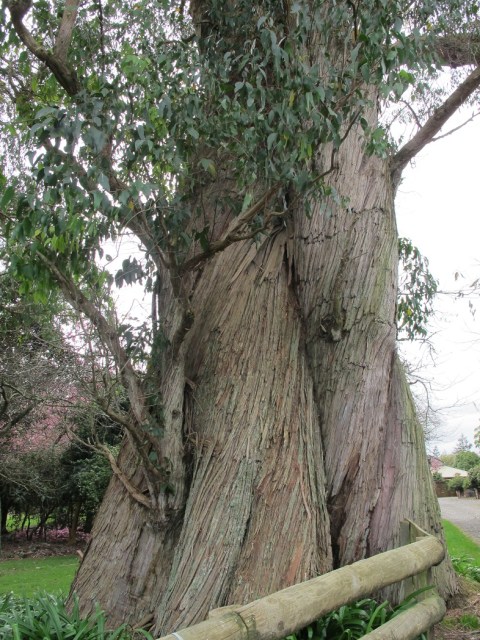
Cyclone Dovi hit us with the worst winds we have ever experienced. The peak lasted for hours and was frankly terrifying and sounded as though we were surrounded by roaring trucks. Believe me, we were grateful that two years ago we dropped the one tree that would threaten our house if it fell. Our house came through Dovi unscathed.
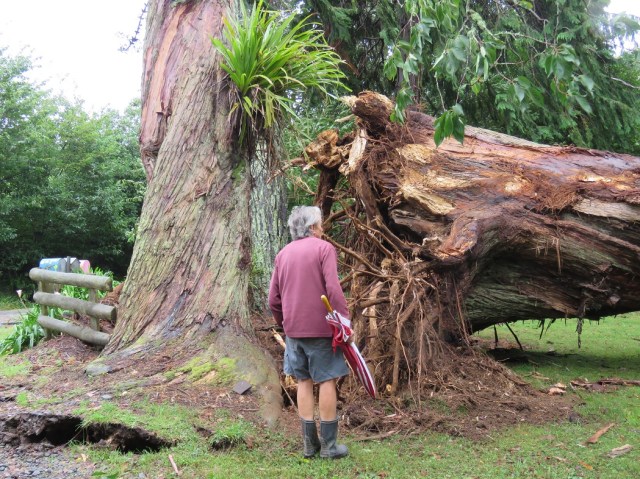
The first big tree I was aware of falling was the massive gum tree (eucalyptus) at our gate. It was around 170 years old, planted by Thomas Jury in the 1870s. We were lucky it fell inwards and not across the road. There is still a dead half of it left, leaning against the next tree and it will have to be felled with some urgency. The specialist arborist is currently thinking his way into how best to do that safely.
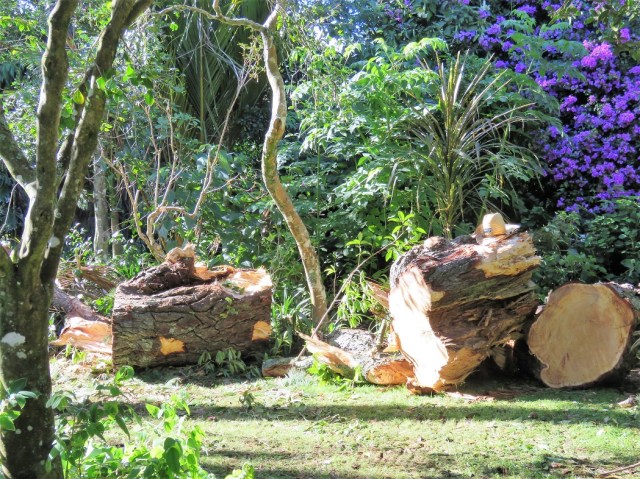
We didn’t dare walk around the property but I was standing on the doorstep when one of our largest pines broke off in two pieces causing massive damage as it came down in the Avenue Gardens. Because it came down in two pieces, it effectively did the same amount of damage as two trees falling. The jacaranda which had a splendid flowering this summer is now a broken stump and pretty much all the mid layer of trees and shrubs in the area have been taken out.
That was the pine that did the most damage. There are another two massive pine trees uprooted, also in the Avenue Gardens. Even though much larger with all the trunk and roots – up to 45 metres of tree each – their damage is more localised and they have fallen in places where we can leave the bulk of the trunks. Mark just about wept the next day when he found the handsome abies in the park had also fallen.
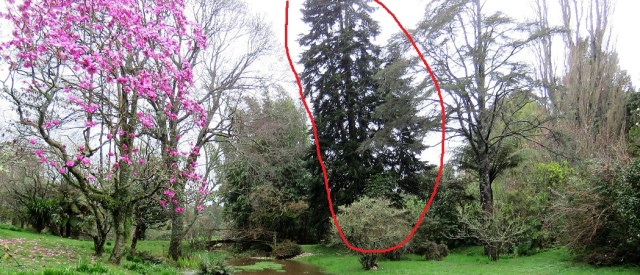

That was just the big trees. There are branches and smaller trees down but they seem minor in comparison.
There are three roads that give access to our place. As the initial fury abated, I drove around to make sure none of our boundary trees had fallen to block the road. I had walked out earlier to the road and found passers-by efficiently dealing to one of our branches without even coming in to tell us. How handy to live rurally where people just happen to have chainsaws. It was the last road open and to drive it meant driving under power lines further down the road which had a tree resting on them.
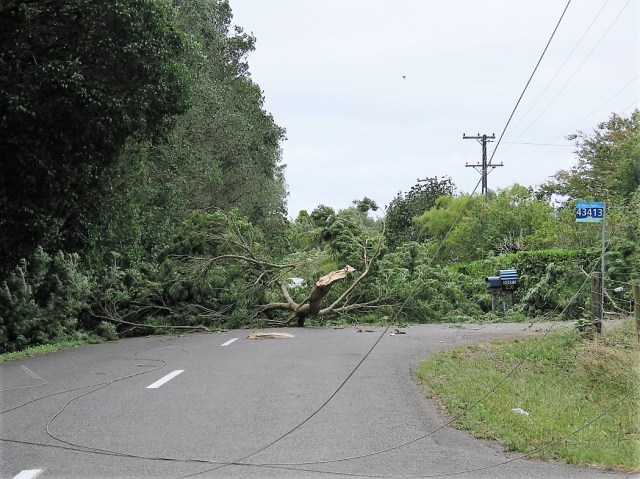


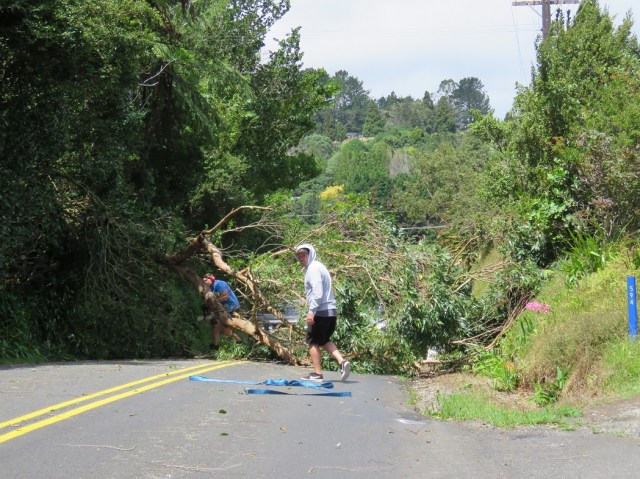
Mark and I were completely numbed for the first two days by the sheer enormity of the damage. It wasn’t helped by having no electricity and when the power goes out, we lose running water. Like most rural people these days, we depend on electric pumps to get water to the taps. 36 hours without water and electricity is difficult but everything looked more manageable when they were restored.

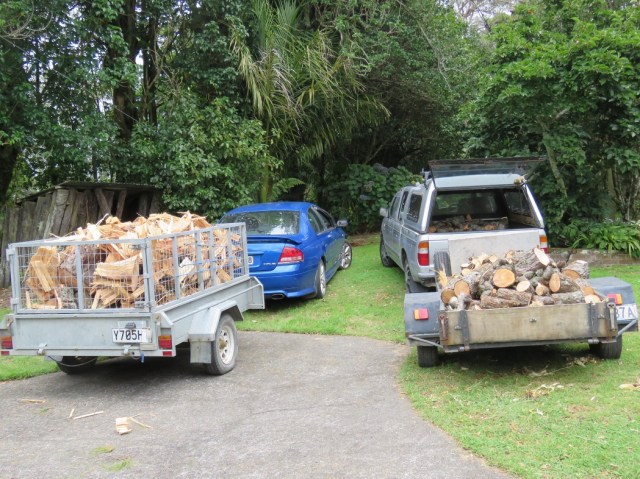
Our arborist and his apprentice gave us priority and were here by 8am on Monday. Lloyd and Zach have thrown themselves into the task of cleaning up and we are making progress. There is a long way to go but at least we are not in as bad a situation as we were last Sunday.
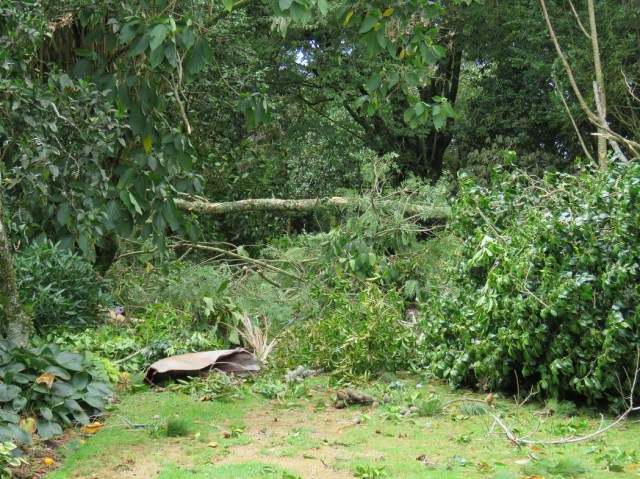
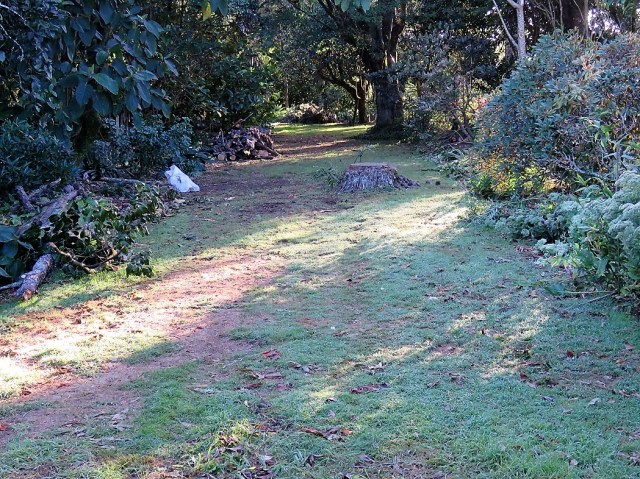
Three things I have learned this week: firstly that it is harder to have no running water than no electricity. Never have I been so grateful that we are a five loo establishment…
Secondly, when people are in in immediate shock at what has happened, well-intentioned comments from Pollyannas are not helpful. Comments like, ‘look at this as a new opportunity’ or ‘at least nobody died and your house is not damaged so it could have been worse’ carry a high irritation factor. We do not need to be told that. The time comes soon enough to look forward but it takes time to process what has happened first.
Thirdly, in a crisis and its aftermath, people are very kind. I can get Pollyannaish over that. More than once, the kindness of others, including strangers, has brought tears to my eyes.
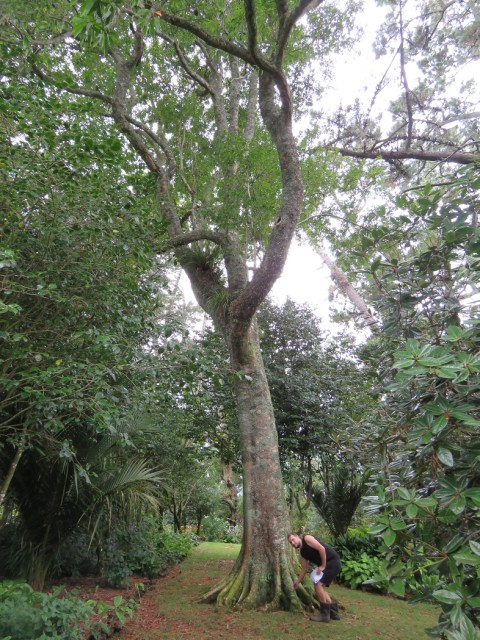
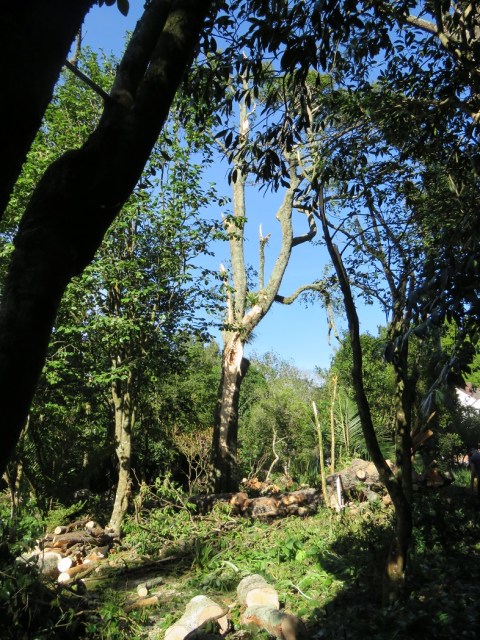
It has been a tough week but the final word probably rests with the neighbour who had walked over and was talking to me at the back doorstep when the largest pine snapped and fell before our eyes. “This is a taste of what is to come in the next 20 to 25 years,” she said. Climate change. I fear she is right.

Postscript: Technically, Cyclone Dovi is usually described in NZ as either ‘ex-tropical cyclone Dovi’ or ‘the remnants of Cyclone Dovi’ which means it is way more intense when cyclones hits full force on Pacific islands. I have to keep reminding myself of this. I looked up the difference between a cyclone, a hurricane and a tornado and it is geographic. South of the equator we call them cyclones, north of there they are called hurricanes except north west where they are often called typhoons. So now you know.
Post postscript: I saw screen shots of extreme right conspiracist chat pages who worked out that Cyclone Dovi = C Dovi and – OMG – C Dovi is an anagram for Covid. To them, this is proof of a conspiracy by our government to create a cyclone event to try and dislodge the ‘convoy occupiers’ blocking roads in Central Wellington and taking over Parliament grounds. So now you know that too.






 Tikorangi The Jury Garden