
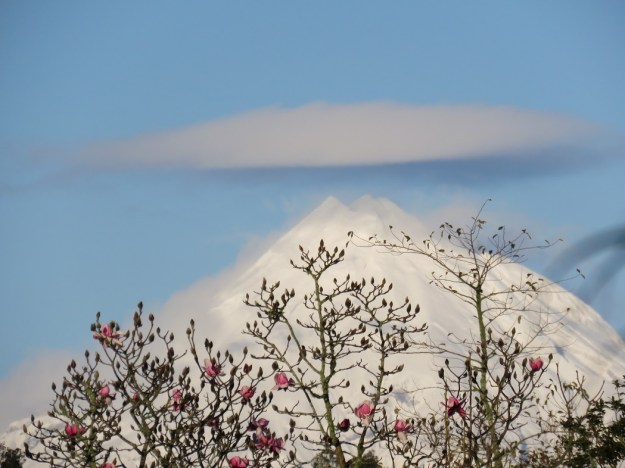
Thursday July 9 at 8.40am
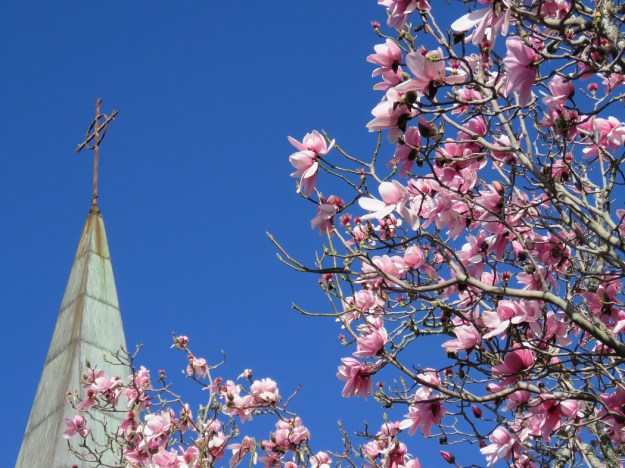
The first photo opportunity of the year to capture our Magnolia campbellii and Mount Taranaki came this week and it reminded me of a funny story. Well, I think it is funny.
It was only last year, I think, that a creative from a Sydney advertising agency contacted me. She had found a photo of mine on the internet of this very scene and she was enquiring whether we would agree to let a film crew visit to film it for a product – unspecified. She wanted permission and to negotiate a fee so she could pitch the concept to the client.
I briefly thought it might be fun. But only briefly, until I worked out the logistics of the exercise. That is a very specific view shaft and a scene that is visible for just a few days each year. I imagined the crew flying in, some from Sydney and maybe the film crew from Auckland and me feeling personally responsible for the weather. That is a mountain. In midwinter, it is more often shrouded in cloud than in clear view. I can go out at 8am and it may be fine and sunny here but 40km away, on that mountain peak, the cloud is moving in and by 8.03 there is nothing left to see. We can go a week, maybe ten days, without a clear view of the peak. With a film crew hanging around waiting for the moment? I think not.
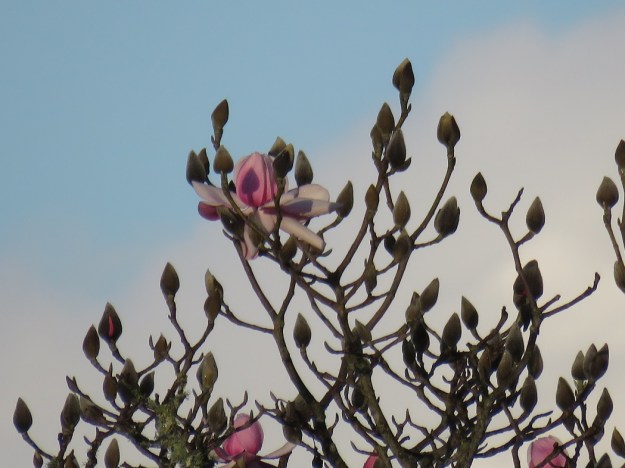
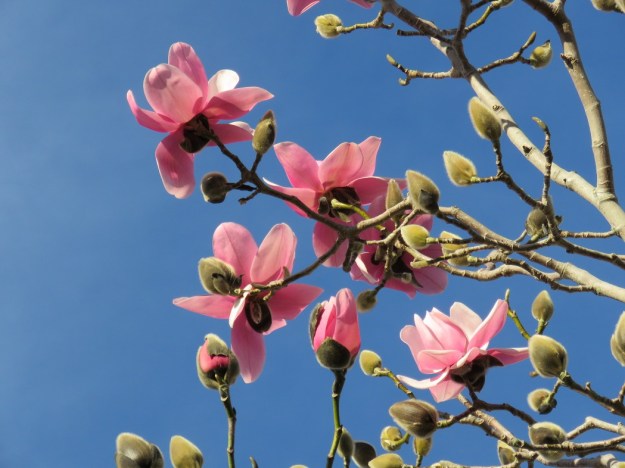
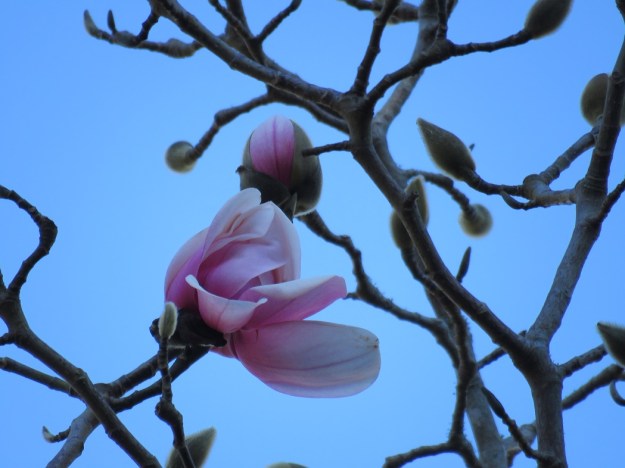
Magnolia campbellii var campbellii
Then I shuddered at the thought of the crew capturing that view and then asking me where they could get other angles on the scene. They can’t. There is only one, highly specific view shaft and that image is taken right on the limits of my camera zoom function.
I said no. Undeterred, she asked me if I recommend other locations. I pointed out that they do grow magnolias in Australia, very well in fact in the Dandenong area outside Melbourne. I have seen them there. No, she replied. She wanted a setting that looked like Chinese countryside. Reader, I cringed. Our maunga can, at a pinch, pass for Mount Fuji in Japan – and has done in the movie ‘The Last Samurai’. The magnolia actually comes from Darjeeling, which is in northern India. I have been to China and seen a bit of their countryside. I do not think she had.
I suggested Auckland Regional Botanic Gardens and there our correspondence ended.
I did not think any more of the matter until my Canberra daughter emailed me saying: “Is this the advert you missed out on providing the pics for?” I am guessing so. It fits the brief. Air freshener? That is not a product I ever buy. We have plenty of the natural product here. Besides, as those blooms on our Magnolia campbellii are about eight to ten metres up in the air, I have no idea at all whether they are even scented.
Postscript: Mark tells me that he is pretty sure M. campbellii has no scent. Perhaps they were thinking of the Yulan magnolia, M. denudata, he hypothesized. We don’t have it in the garden so I looked it up and yes, it is renowned for its lemon fragrance. That is not the magnolia used in the advertisement. It seems botanical accuracy matters more to us than it does to air freshener manufacturers and Sydney creatives.
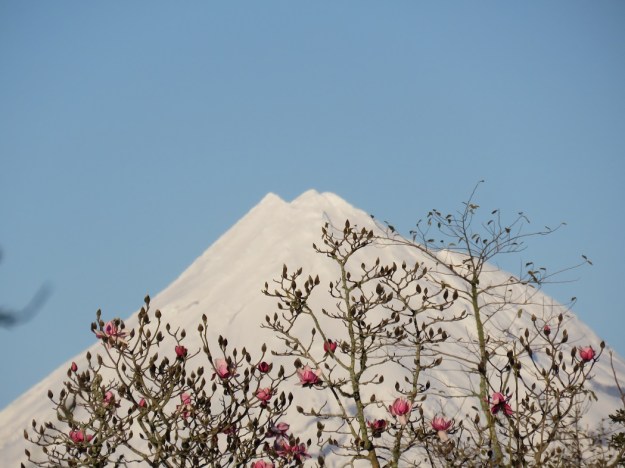
A perfect, cloudless morning – Friday 10 July at 8.40am
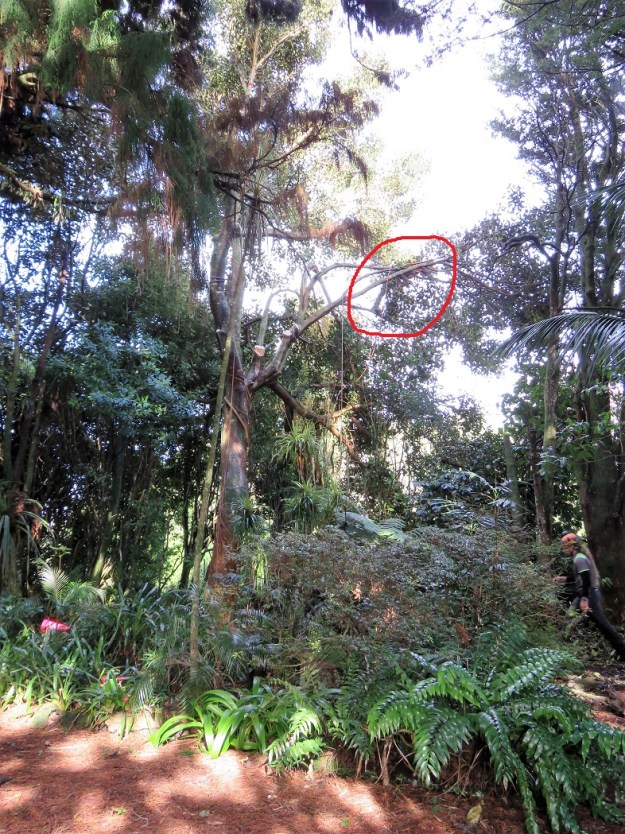
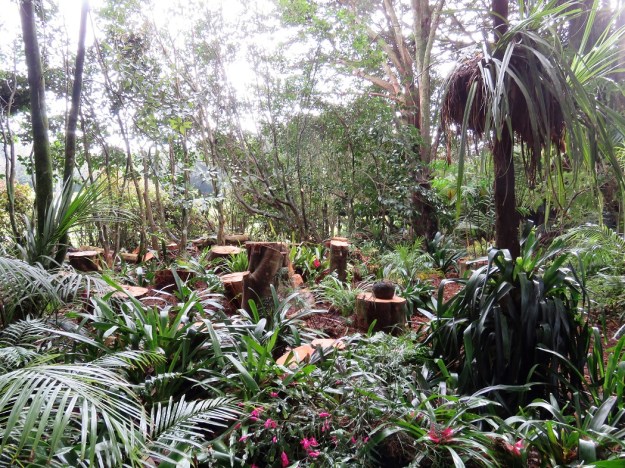
 The pile of woodchip mulch has grown further. It is clearly generating some heat on this frosty morning. It represents a handy resource, even if we don’t want to use fresh woodchip mulch everywhere in the garden.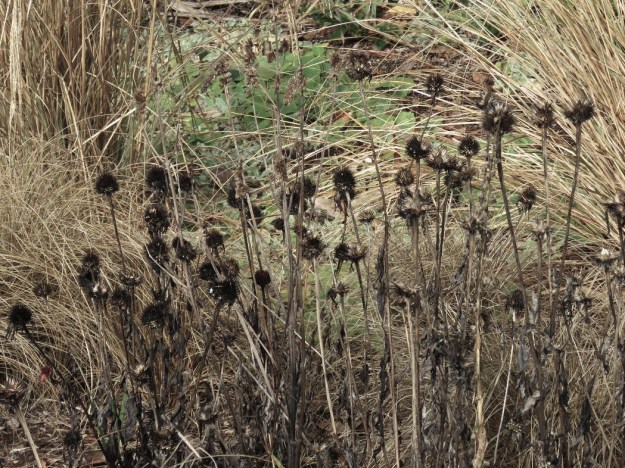
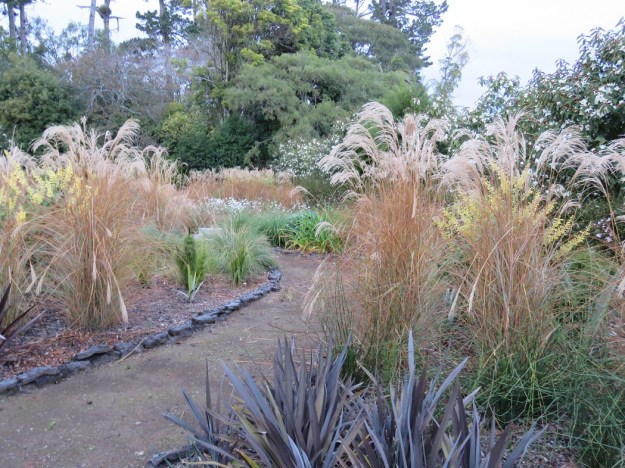
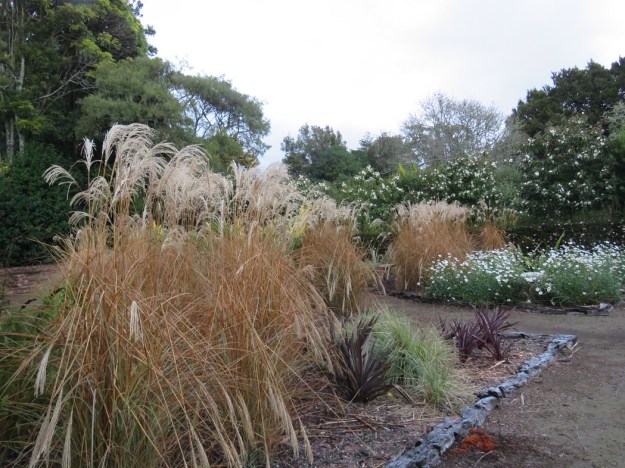
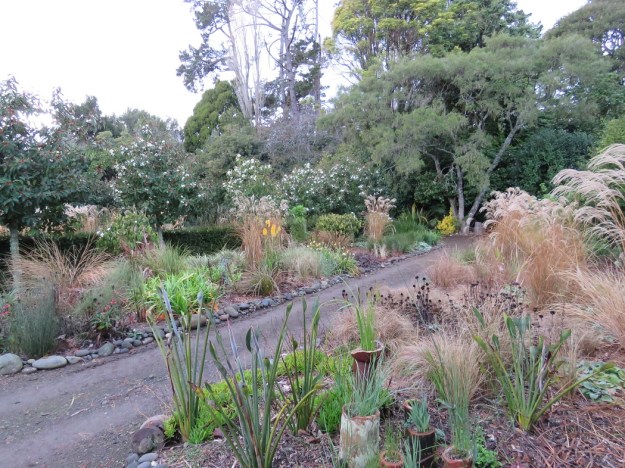
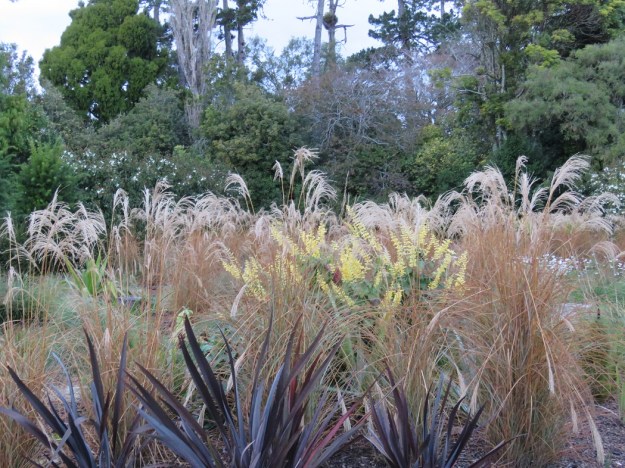 We will go through the Court Garden in the next week or two and cut down all the miscanthus, the six remaining Calamagrostis ‘Karl Foerster’ and the salvias. A frost this week finally hit the foliage of the salvias the day after I took these photos. The calamagrostis is evergreen but very scruffy at this time of the year and I think it will look better in spring with all fresh foliage.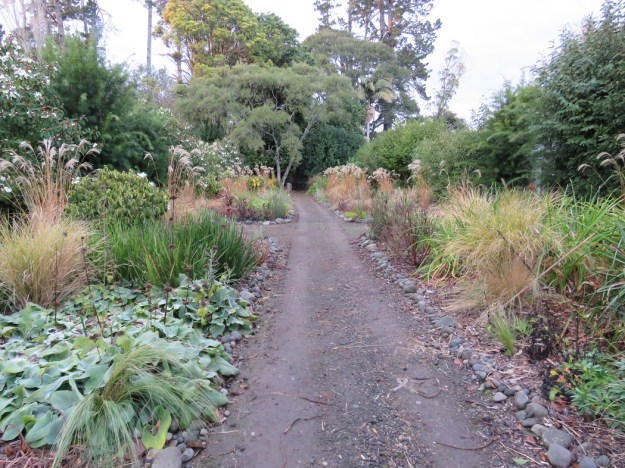


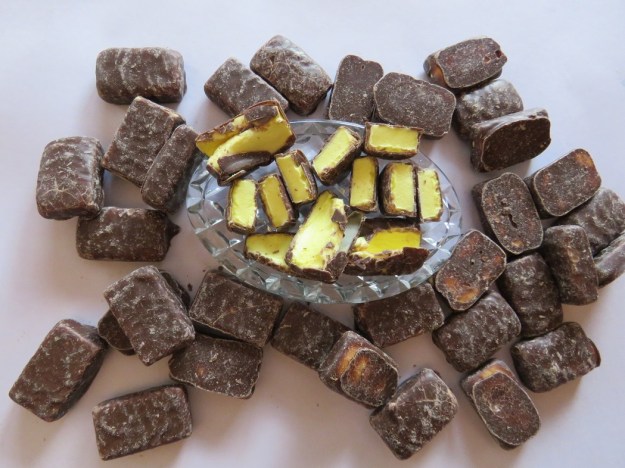
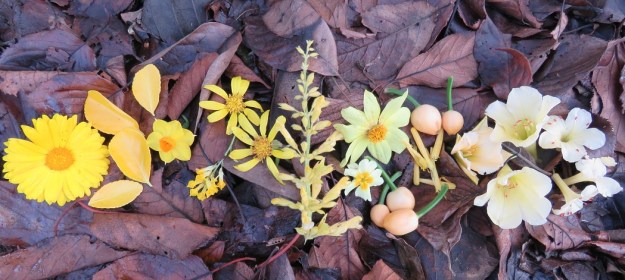 Inspired by the pineapple lump, on a bed of spent magnolia leaves we have yellow blooms of midwinter. Left to right: calendula, some yellow leafed shrubby plant I have little interest in so do not know the name, the first jonquil, corydalis, ligularia, salvia, primrose, the last of the dahlias, tubes of kniphofia, clivia seed, hemerocallis and vireya rhododendrons.
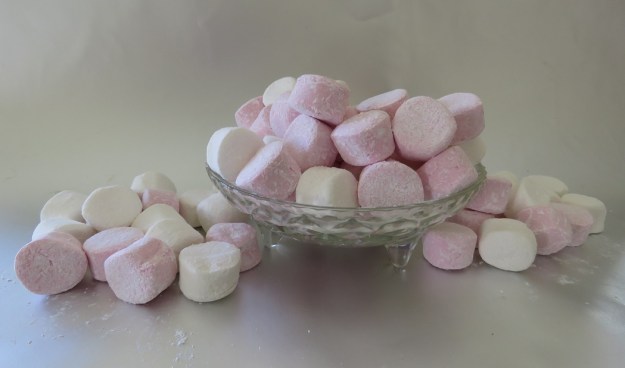 Following on from my post last week on the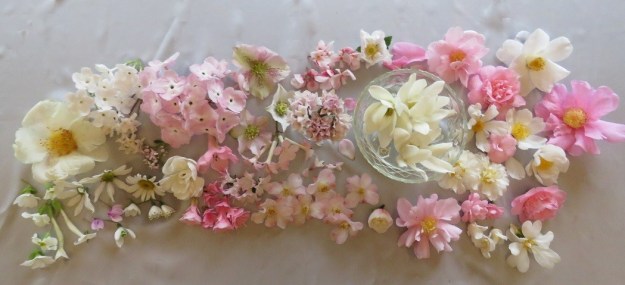
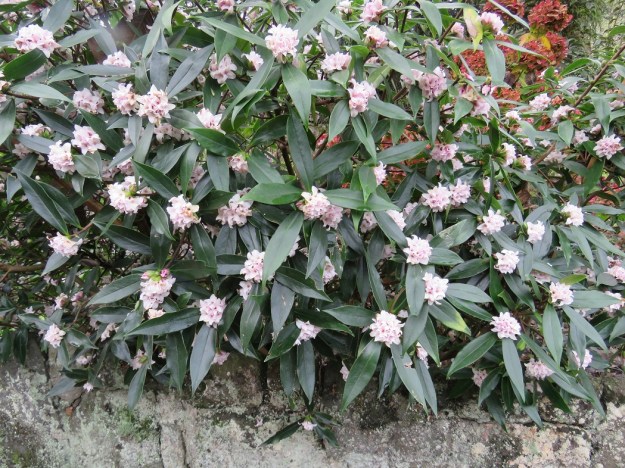
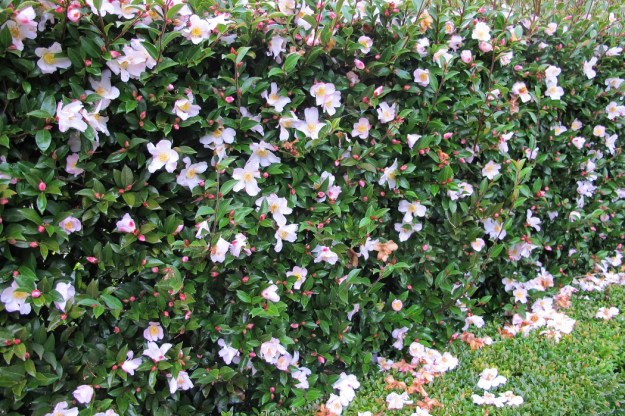
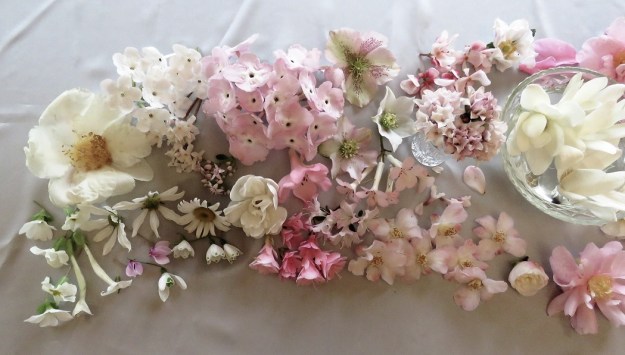
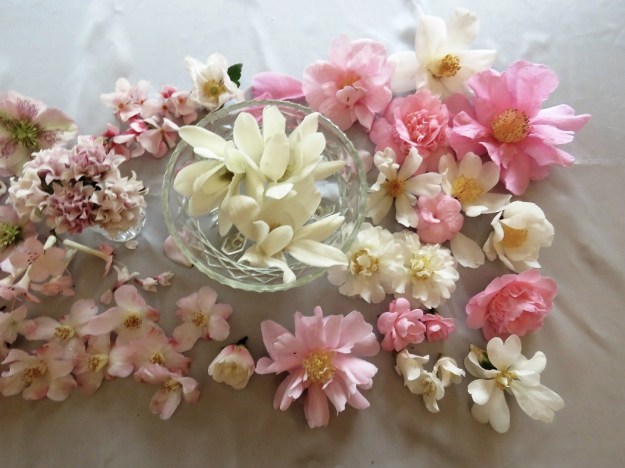
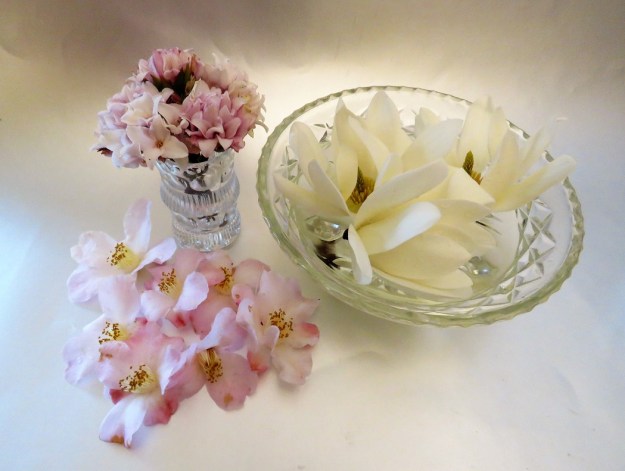 The centrepiece, I decided should be three of Mark’s cultivars. Fairy Magnolia White is well into bloom and a delight to us. We are proud of this one. Daphne Perfume Princess is in its full glory and the scent as we walk along our driveway is a pleasure. Camellia Fairy Blush never fails to please us, even after many years. It was one of the earliest plants Mark selected, named and released, if not the very first.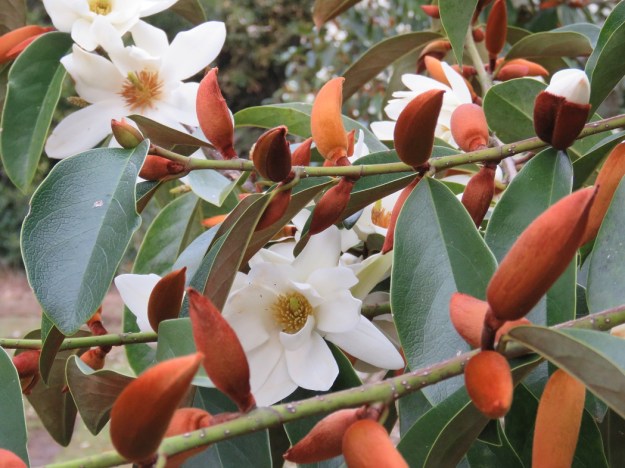
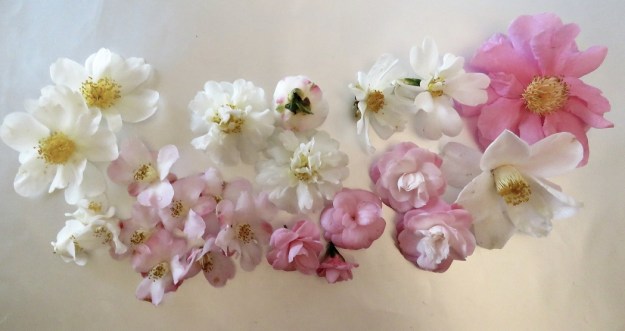 The named ones from left to right are C. gauchowensis, C. transnokoensis, Fairy Blush, Silver Dollar, Tiny Star, C. yuhsienensis Sweet Jane, Superstar and Showgirl.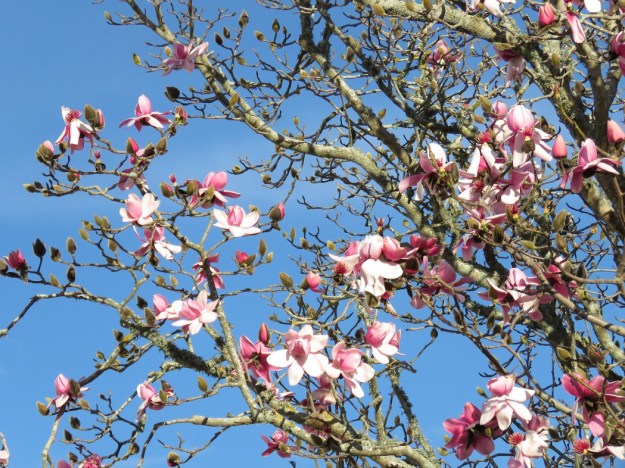
 Tikorangi The Jury Garden