
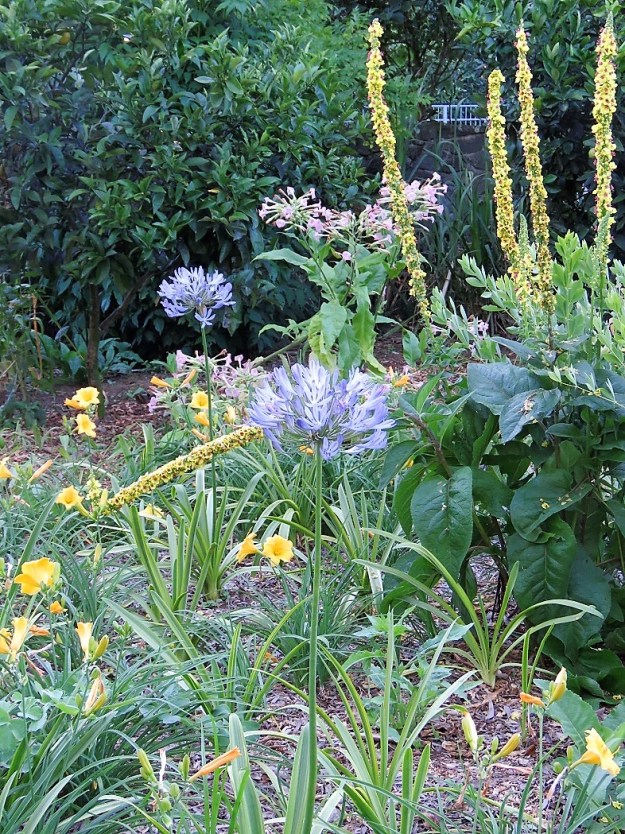
Fresh plantings in the Iolanthe garden
I have been spending many hours in my new Iolanthe garden. I use the word ‘my’, not the plural ‘our’ because this is a solo effort. It is certainly the most difficult of the new summer gardens I have planted and that has to do both with working around existing plants that are remaining in place and the heavy weed infestation in the area. I was starting to get discouraged at the scale of what I still have to do but there are enough glimpses of how it will look to keep me going most days.
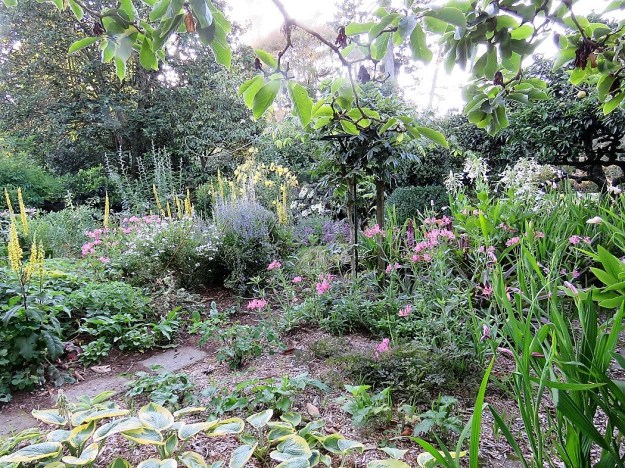
Informal, or maybe meadow-ish in time. Hopefully by next summer.
Mark says I shouldn’t call it a meadow garden because it is not a meadow. It is really a perennial garden but different to the other perennial gardens I have put in. An informal flower garden filled with a wide range of perennials planted informally (randomly, even) and also self-seeding annuals. With some grasses and various fixed shrubs and a fair swag of citrus trees (several still small) and three feijoas. Informal it may be but I still don’t want a heavy infestation of weeds. So I weed – but avoid putting the weeds into the compost heap, stowing them instead at the back of shaded shelter plantings around the property – level the soils in the area where I am working, plant and mulch, square metre by square metre. I paced it out and the whole area is around 600 square metres. Such is the weed seed loading in the soil, I have to go over every finished area within a few days as the seeds start germinating in the recently disturbed soil. It is tedious. It is also a lot of work and I say that as a gardener who is not afraid of work. But I am on a mission to get it done, even though it now means carting water as we enter high summer (on account of there not being tap in that area). Meadowish, or meadow style, perhaps.
The lesson I have learned about this style of gardening is that there is a fine line between an informal garden – where seeding down of desired annuals and biennials is encouraged – and a weedy mess. If you want the former, then you have to start by controlling the latter.
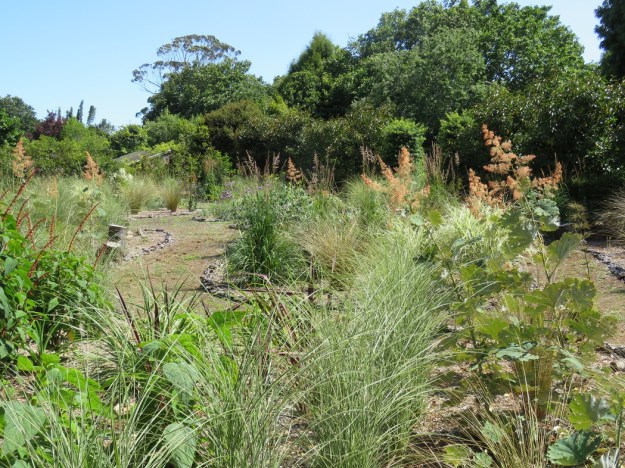
The grass garden is filling in, seven months from planting. We still haven’t done the paths but will get around to them this winter.
The grass garden is filling out but still has quite a way to go before it has full cover. This summer is the one that matters most when it comes to weeding. I have learned this. Fortunately, it is easy to do and I have found that the push hoe is the best implement for getting beneath the mulch without disturbing it too much and severing the weeds. I go over it often – thoroughly at least once a week with random weeding each time I walk through on most days. Next summer should be much easier.
Both the perennial borders and the lily border are in their third summer and are pretty much weed-free. So too the caterpillar garden and that is only in its second summer. I don’t claim them to be totally free of weeds but what pops up is easily dealt to, minor and mostly annual, not perennial weeds. More importantly, given the new summer gardens are largely herbaceous perennials, there is not a problem with nasty weeds intertwined with the root systems of the permanent plantings. The key to achieving this state is eternal vigilance but there are a few more tools in the arsenal against weeds.

The perennial borders going into their third summer – mostly free of weeds now.
Keeping soils well cultivated means weeds are easily pulled out, though this is easier with our friable soils. If you have heavy soils that make clods in winter and then set to concrete is summer, pulling weeds out is more likely to mean you leave the root systems behind and the perennial weeds will just keep on growing.
Trying to avoid any weeds ever going to seed reduces weeding into the future. One year’s seeding, seven years’ weeding goes the old saying. Based on my recent experience, I would say that you can cut that short to two or three years but take your eye off the ball – or weeds – and you are back to the beginning.
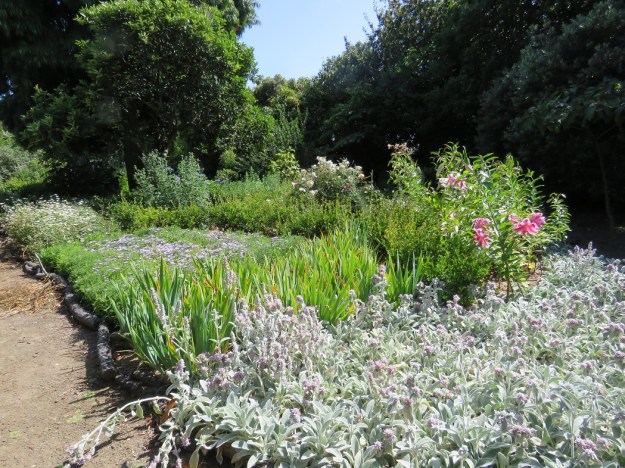
The caterpillar gardens in their second year – and the weeds are under good control.
Mulch, mulch and mulch but be sure it is a weed-free mulch. While we make hot compost, it is clear that it is often not hot enough to kill all the seeds and our compost is not as free of weeds as I would wish. While I prefer the look of compost as a mulch over other options, whenever I use it, I try and get back around several times over the next few weeks to pull out any germinating volunteers. If you are buying compost, it should be sterile – at least the stuff you buy in environmentally-unfriendly, heavy-duty plastic bags at the garden centre.
Being economical gardeners, we use what we have to hand for mulch. And what we have to hand is sawdust, wood shavings and wood chip. The first two are bright orange and stay that way for at least nine months which can be a pretty awful look in a garden so I only use those in areas where the colour will not worry me. The sawdust and shavings I laid in an established mixed border worried me so much over ensuing months that I eventually covered them up with leaf litter.

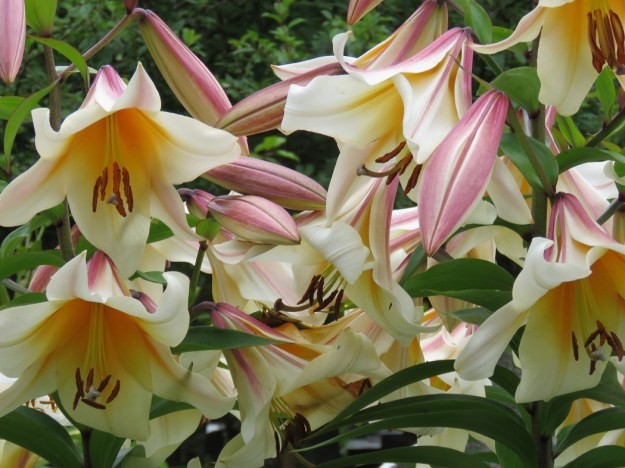
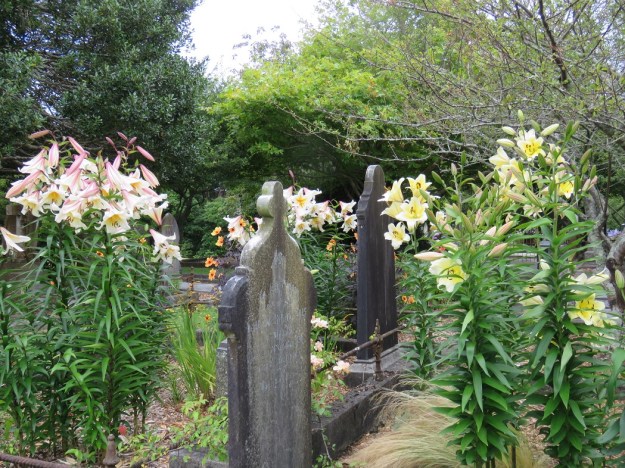
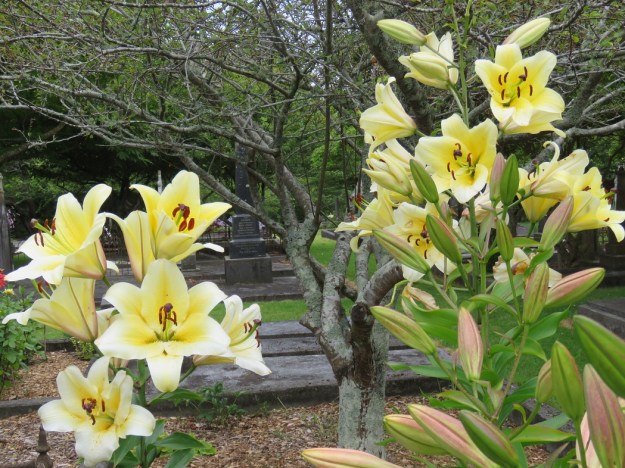
The lily border is just coming into its month of seasonal glory and is also largely free of weeds.
Garden mulch should be visually neutral so that you look at the plants and the design, not the mulch.
Mostly, I use wood chips which are not perfect but at least they are a muted shade of greyed beige when dry, brown when wet and they are 100% weed free. But this also comes with a qualification. Our domestic wood chipper produces a very fine grade product which ages quickly and therefore looks more natural. The arborist that we use has a commercial chipper which is like the fastest muncher in the west, dealing with prodigious amounts of wood and leaf at speed and the resulting mulch is a reasonably fine texture that ages well. But other commercial operators have mulchers that produce a much coarser product. Chunky rather than chipped. It takes way longer to mellow, even in full sun, and it will always look coarse. I hate the look and I would not want to be working amongst it either.
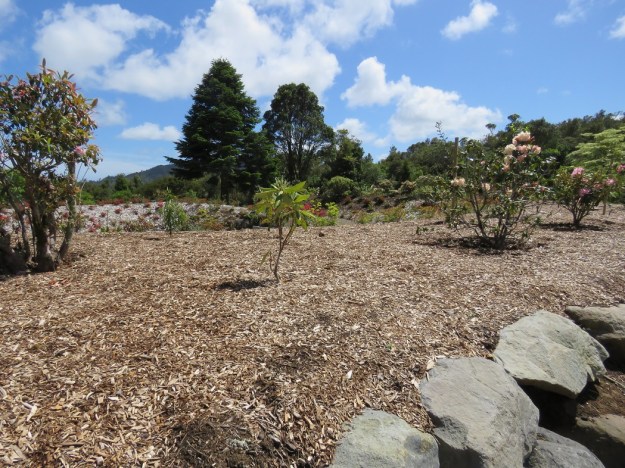
Large expanses of wood chip mulch in a public garden. It is hard to believe that all that space will ever be covered by the plants so the wood chip is a more or less permanent feature.
In addition to that, the areas where I am using wood chip are destined to be entirely covered by plants within twelve months or so. I find large areas of wood chip mulch, destined to remain that way for years to come, a barren and desolate look.
The lesson here is that if you are going to buy wood chip mulch, check the texture and remember that finer is preferable. You are probably going to be looking at it for at least a year.
If you lay wood mulch, be it chip, sawdust or shavings, and then want to work in the area, always, but always, scrape back the mulch before digging in the soil. Eventually the mulch will get incorporated in the soil and add desirable carbon content but you want it to have spent at least a year ageing and mellowing on the top surface so it starts to break down. Incorporating it in the soil earlier than that means that it robs the soil of nitrogen as it breaks down and that causes plants to show a yellow tinge and slows growth. Believe me, I have seen it happen where I have not been careful enough. You can counter it by adding nitrogen fertiliser but as you only notice it when the plants start to discolour and look stunted, they can take a time to recover.
This is my last new garden. When completed, we will have managed to reach the goal we set ourselves maybe fifteen years ago when we first decided we wanted summer gardens. The dollar budget for this last area is zero dollars because I am amalgamating and repurposing plant material we already have. The time and effort required, however, is substantial.

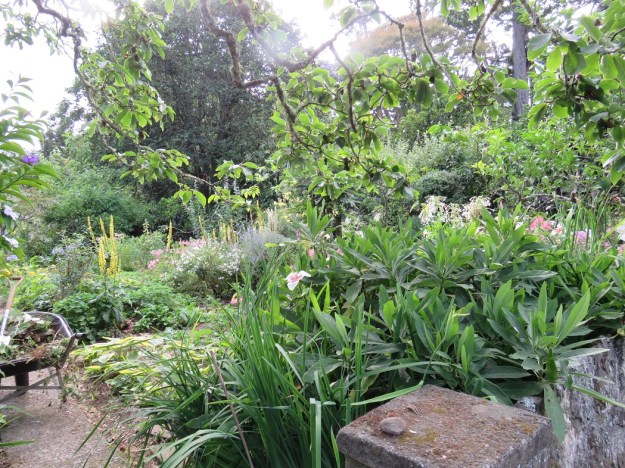
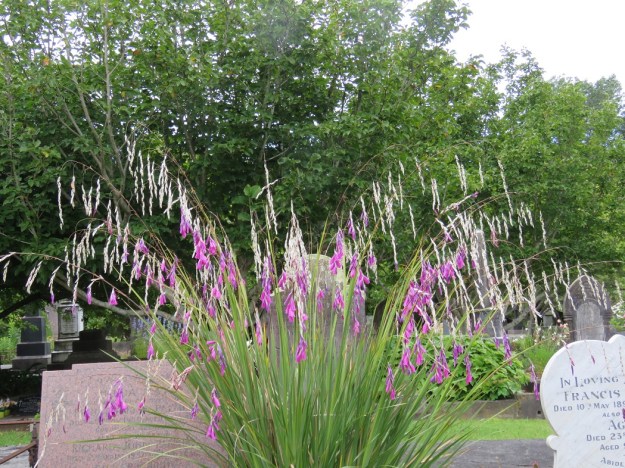
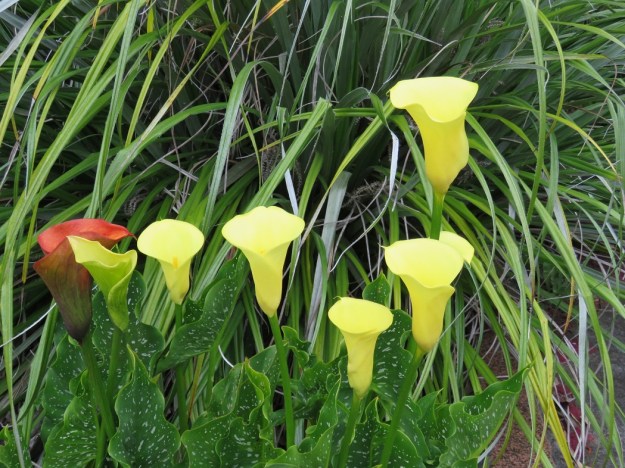
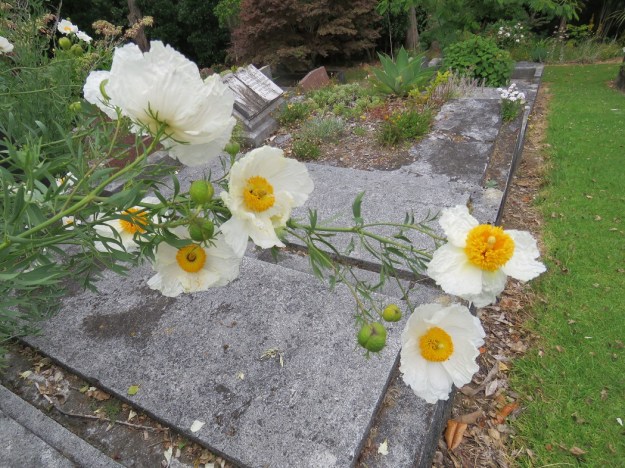
The narrow line between weedy mess and a host of summer blooms and seeding plants cheek by jowl










 Tikorangi The Jury Garden