

Oh look! I made a little display board.
Mulching is what enables us to maintain our garden to the standard we want, particularly keeping the new herbaceous plantings free of invasive weeds. Being economical gardeners, we don’t ever buy mulch in but rely on the resources we have here. I laid our main options out to photograph them.
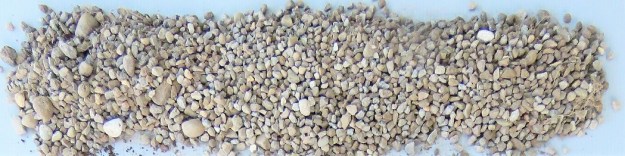
Gravel mulch

Mulching with gravel at Wisley
I have seen gravel used at the RHS Wisley Gardens, particularly in the Piet Oudolf borders and the Missouri Meadow. In its favour, it is weed-free and it makes a good seed bed in that managed meadow where seeding down is encouraged. However, it is heavy to handle, expensive and, in a situation with herbaceous plants which need digging and dividing, it is inevitable that a fair amount of it will end up in the soil even if you make efforts to scrape it to the side. I am reluctant to use it and that is a pity because we have a small mountain range of it retrieved from the capillary beds when we dismantled them. Maybe 10 cubic metres of it and that is a lot.
Granulated pine bark is a stable mulch and a neutral dark brown. I doubt that it comes cheap if you are buying it for this purpose. Not only do we have a small mountain range of gravel, we also have what is referred to here as ‘the bark slug’. When we ran the nursery, everything was potted into granulated bark and Mark decreed that the bark was not to be re-used when plants were being re-potted. His position was that the bark potting mix was one of the cheaper inputs overall (he didn’t pay the bills; I was often somewhat shocked at how much the bark bill came to each month at around $750 a truck-load) and that using fresh bark cut down on weed contamination and disease issues. All the used bark went out to the bark heap and as the heap grew, it seemed to take on a life of its own and creep out like a sand slug.
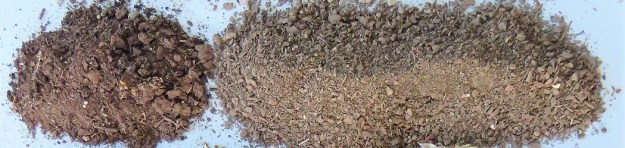
Granulated pine bark – after at least a decade and fresh, but dry
We don’t re-use the old bark as a garden mulch any longer because of the fertiliser bubbles within it. We always used Nutricote as a fertiliser for commercial plants and very good it is too. But, and it is a huge but, the coating on the fertiliser granules remains long after the actual fertiliser has been used. Mark initially rejected the use of the waste bark on paths and gardens because his eye zoomed in immediately to the fertiliser bubble casings within it. Now we are even more concerned that it does not appear to be biodegradable and we don’t want to be spreading a non-biodegradable product through the environment.
This is not a problem that you will have if you buy in bark chip because it won’t have fertiliser added (and not all fertiliser comes with a coating). To the right, is fresh(ish) bark that we still use as a potting mix. To the left is what it looks like after more than a decade in our bark heap. Despite being an organic product, pine bark does not decompose readily.
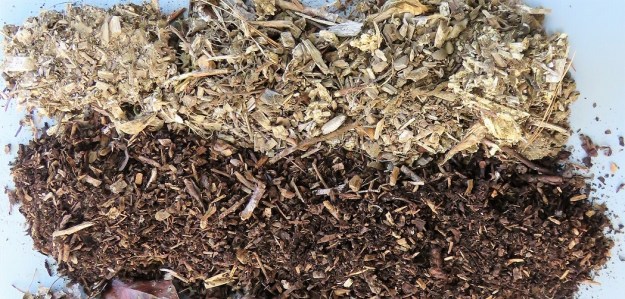
Commercial chipping at the top, our home chipper below
Next is the woodchip mulch after nearly two years on the garden. It is not my favourite mulch but we were given a large truckload of freshly mulched copper beech branches and leaves and I needed to cover a few hundred square metres of newly planted garden. Beggars can’t be choosers. It was put through a commercial mulcher and is much coarser than we get out of our domestic mulcher machine. It is very light to handle and forms a crust across the surface, discouraging weed growth. I just don’t like the colour – it is pale creamy yellow when it goes on – and because it is so coarse, it takes a long time to mellow out to something more neutral. And I don’t like the coarseness. It looks… utility, which indeed it is.
Our home-generated woodchip, being of a finer texture, discolours far more quickly and is less dominant visually. But it takes a lot of prunings to generate much quantity.
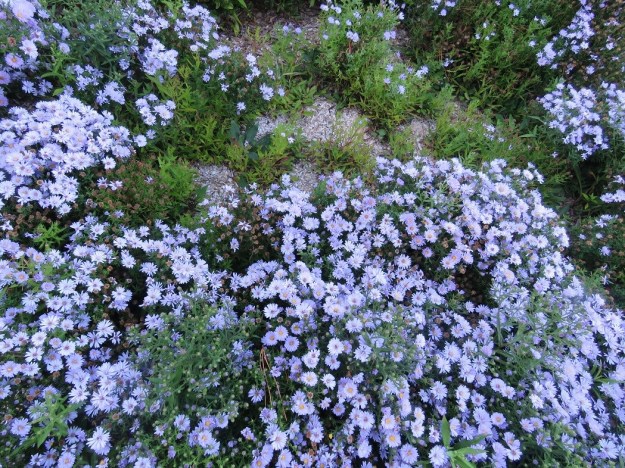
Evidence of nitrogen robbing at the top – plants are sparser and showing a yellow tinge while others have thrived
The advice with woodchip is to be careful to lay it on the top because it robs the soil of nitrogen as it decomposes if it is incorporated into the soil. Behold an example. I did the initial planting of this aster and laid mulch. I must have gone back into the area to add some more plants. Clearly, I was not sufficiently careful to scrape the mulch to one side and some of it was dug in when planting. The somewhat bare area and yellowish tinge to the plants are signs of nitrogen deficiency. I keep telling myself to get out and scatter a bit of blood and bone on the affected plants to combat this but we do not generally add fertiliser to our garden so I haven’t got around to it yet.
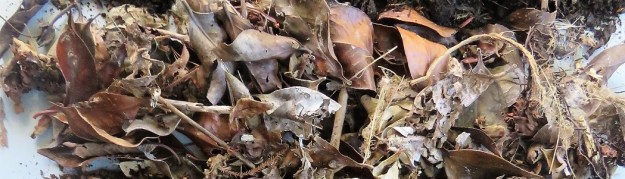
Leaf litter mulch
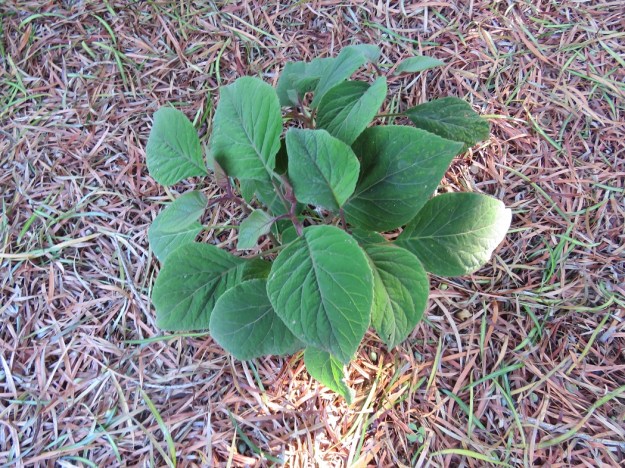
Smaller leaves look tidier
Next up is leaf litter – natural, free, nutritious, enabling a healthy soil ecosystem but untidy for small, tightly maintained areas. The birds will scratch amongst it (which is a sign of a richer soil environment because they are looking for food) and it often needs raking back into place until it builds a good under-layer. I like leaf litter mulch visually but where I am using it is in larger, more naturalistic spaces. It would not be my first choice for small, confined areas. Though the smaller your leaves, the tidier they will appear.
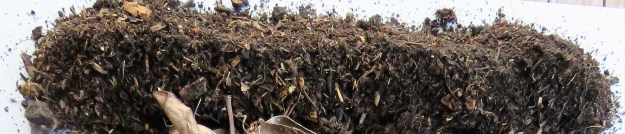
Compost is king
And finally compost – our preferred mulch by a country mile. Because our soils are so friable, we generally add compost as a mulch rather than digging it in around the roots of the plants. The worms will do the work and incorporate it over time. We often choose to put the woodchip and leaf litter through the composting process first. Compost is light to handle, natural in appearance and makes a major contribution to soil and plant health. We make a lot of compost here, putting it through a process that heats up sufficiently to kill off many nasties but even so, we try and avoid putting seed heads and invasive plants on the compost heaps. The problem is that even though we have compost mounds that are turned by tractor, we don’t make enough to compost to meet our mulching needs which is why we sometimes have to go to alternative options.

Our gravel mountain (with a pretty apricot foxglove seeding into it)
Upon reflection, I may have to turn to the gravel mountain to mulch the new grass garden that I plan to plant this autumn. It is about 450 square metres and laying an 8cm mulch across that area is going to take a lot of whatever I use. At least this is a planting that I do not anticipate having to do frequent digging and dividing.
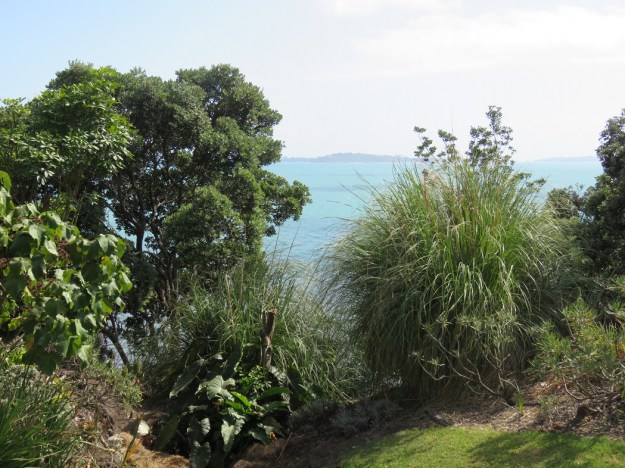 We visited a Mellons Bay garden which had a location and view to die for. It is still very much in development and the owners are making the most of creating a garden space that maximises its remarkable location. It was there that I encountered a grass I had not seen before.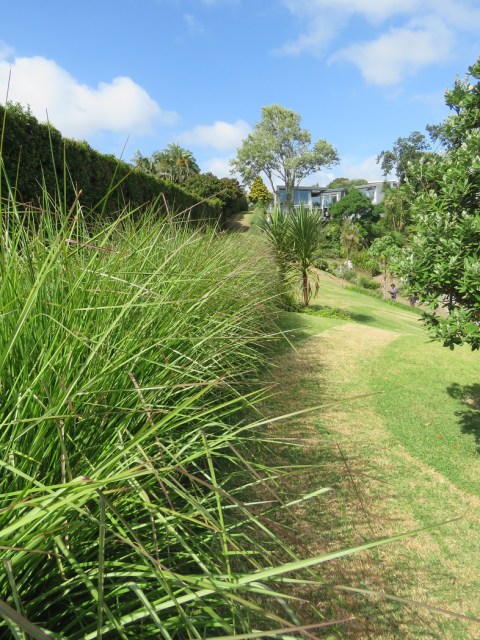
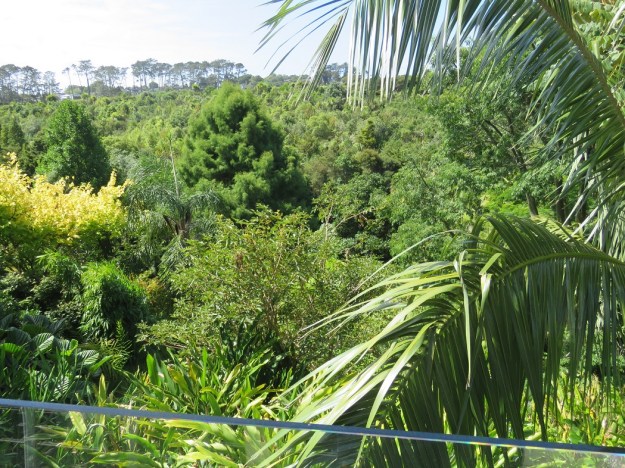
 Added to that, the row of houses have maximised what was once more or less wasteland that runs along the base of the properties. You wouldn’t want to go swimming or paddling in this water (I am guessing most of it is stormwater, supplemented by springs), but it is a delightful, sheltered common space at the end of the gardens.
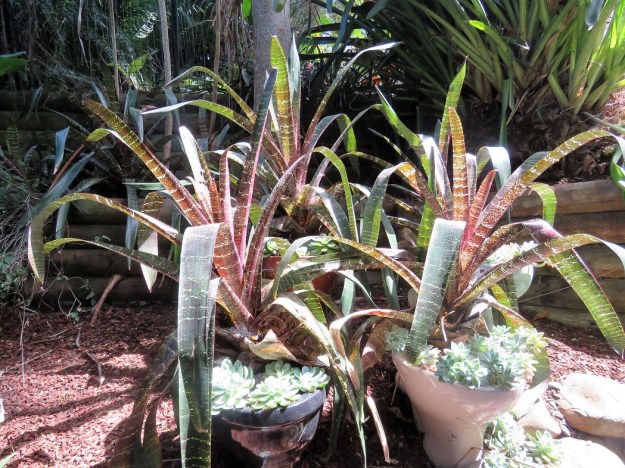 The light was too bright and the shadows too deep to do justice to this cluster of bromeliads but I particularly noted it because it was a counterpoint to the vibrant and bright use of bromeliads mentioned in the first post of these two. This was restrained and understated but maybe more charming for that.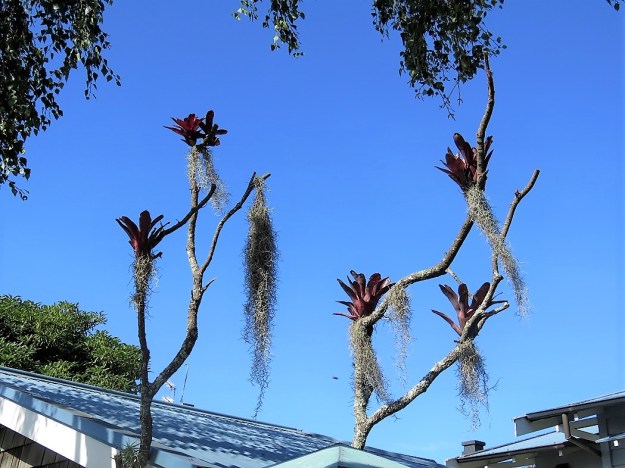
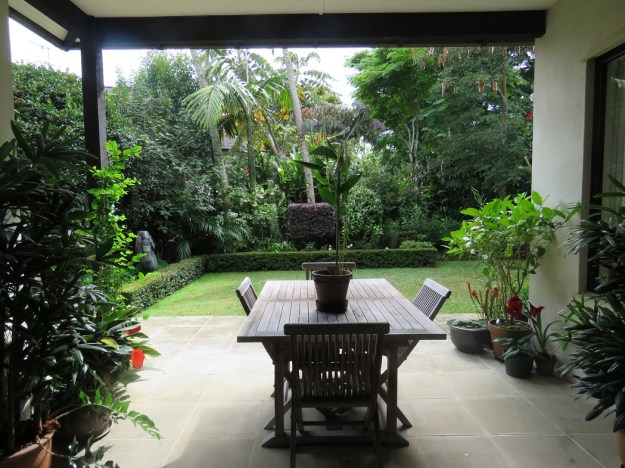
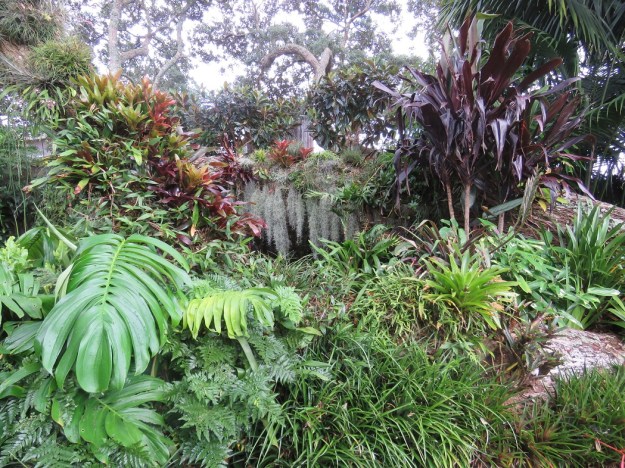
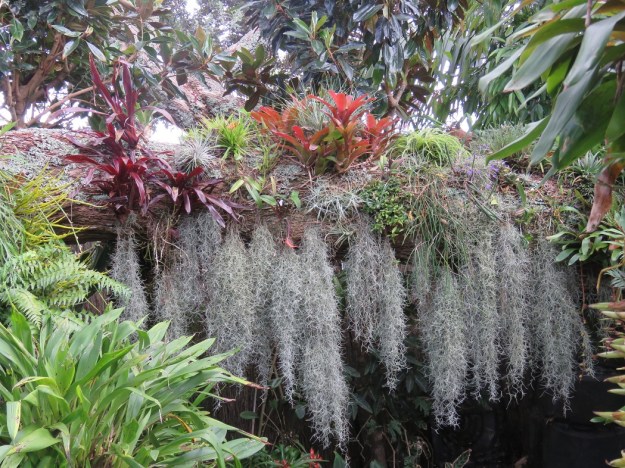 Despite its small size, good architectural design has given it total privacy and a good garden design has given it a sense of containment without being cramped. The level of refinement and detail is exquisite. The foliage is layer upon layer of detail without looking cluttered and the level of plant interest is extremely high. Wherever I looked, there was more fine detail to be uncovered with just the right amount of exotica. It takes a skilled eye and sure hand to be able to achieve that level of detail without it looking confused.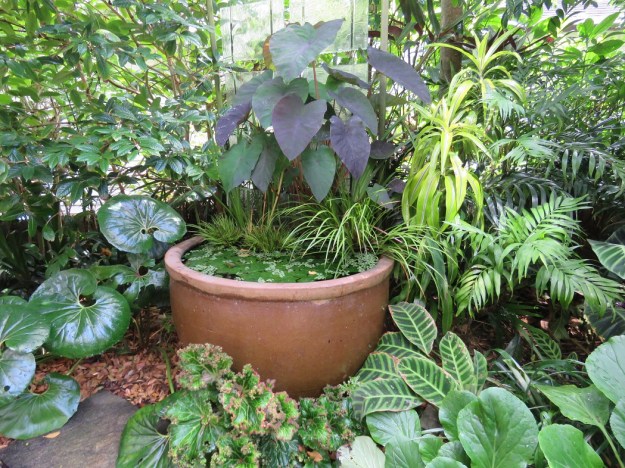
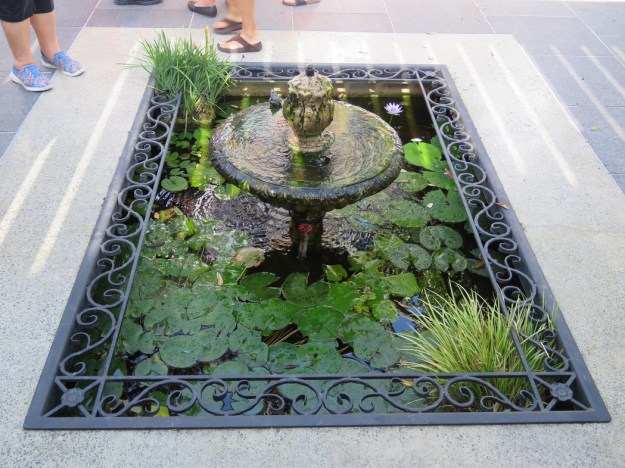 I will just offer you edited highlights, starting with this tiny garden (well, tiny by my standards) where the backyard pool was both pretty and thoughtfully constructed. In a very tight space where the water feature is within the outdoor entertaining area, safety is an issue and that outer decorative grill should give warning to most guests who may take a backward step without looking.
 I am always interested to see where the work and service areas are contained in small gardens. One of the aspects of growing many plants in containers that is rarely shown on TV is that a work area for repotting is needed. I nodded approvingly at this one – attractive but functional and pleasant to use.
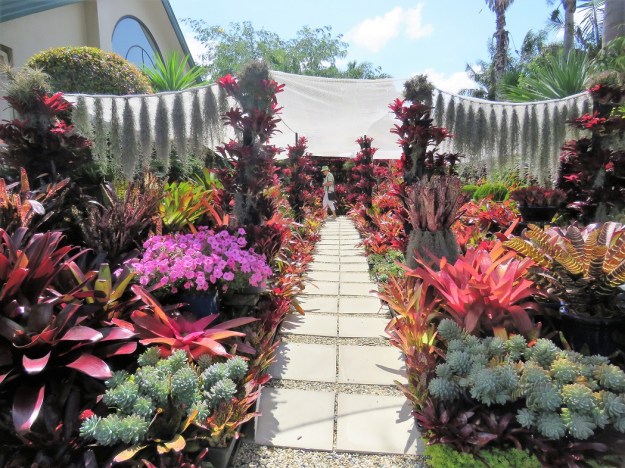 I failed entirely to find the work area for this garden although I think I read on their information sheet that it is screened from view out the back somewhere. I wish I had spotted it because I would have liked to have seen what the scale and set-up was. The very bright light conditions and crowds of people mitigated against getting photos that do justice to this garden which is a pity because it was a truly remarkable example of a garden of obsession. Whether I like it or not (and it was not my style at all) is gloriously irrelevant. I was in awe at the scale and the attention to detail. It was absolutely immaculate down to every last plant – the vast majority of which are in pots. Anything that looks a little marked or ‘off’ is clearly whipped out the back and replaced with a healthy substitute. It is all hand-watered, by owners who understand the differing water needs of each and every plant. It is also vibrantly colourful.
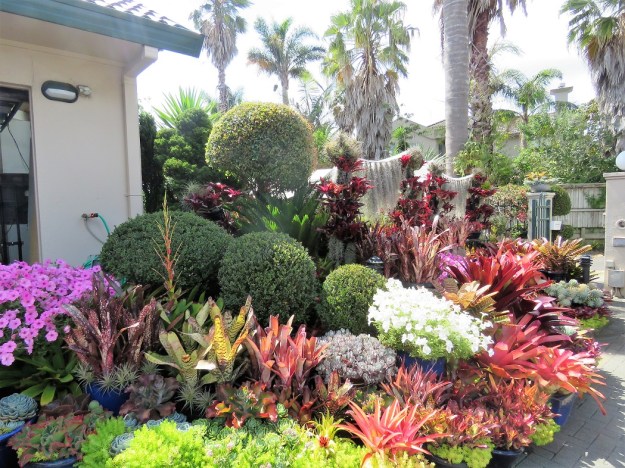 It would not be out of place in the book ‘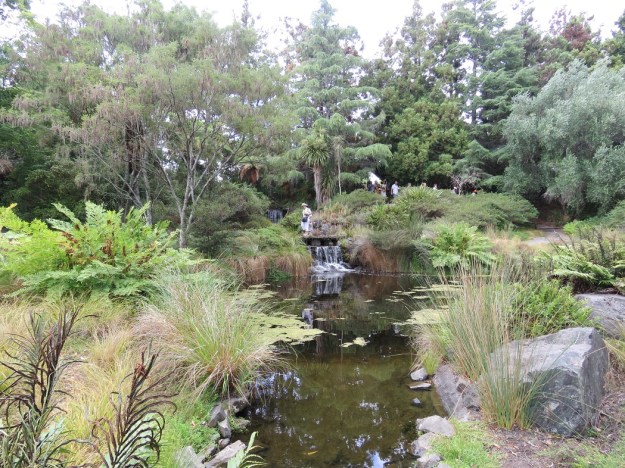

 A cautionary tale this weekend: last week my foot encountered a stick. The skin abrasion was so minor that I didn’t worry about it, though when it started to show signs of infection rather than recovery three days later, I reached for antiseptic salves and bandaids. Two days on from there, when my whole foot was swelling rapidly, I took advice and headed in for urgent after-hours care at the hospital. Yup, cellulitis – the bacterial infection was spreading rapidly into the surrounding soft tissue and skin.








 Tikorangi The Jury Garden