
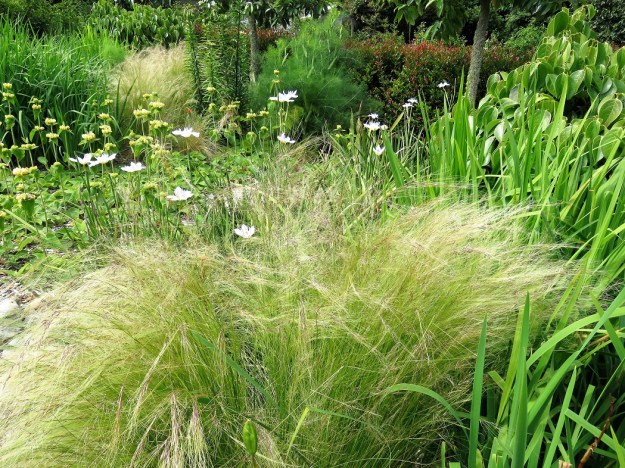
 I was shocked. Really shocked. There I was in the supermarket and I picked up a gardening magazine I had no intention of buying. But as I skimmed it, I came across an article that told us to rip out all our grasses. The ‘Oudolf prairies’ and the entire New Perennials movement were out. Shrubberies are back.
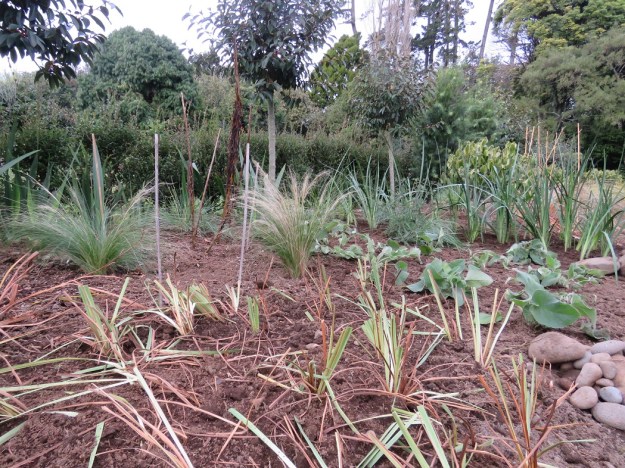
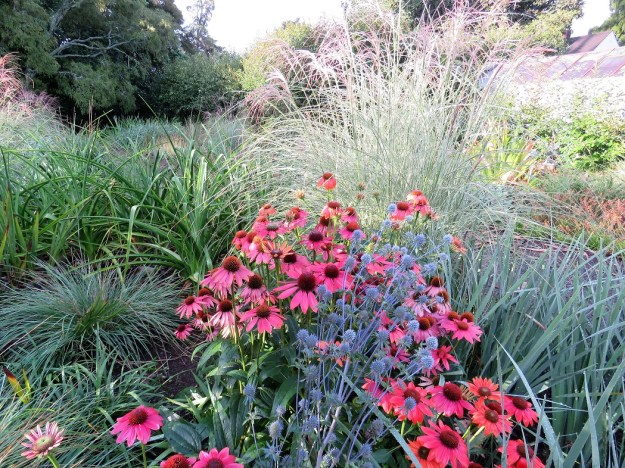
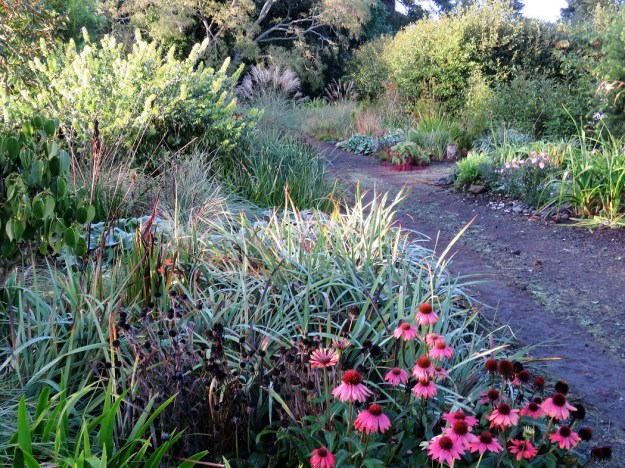
The writer qualified this statement by saying that she was just joking but the damage was done. There are my new borders just coming into their own with their heavy dependence on grasses and perennials, much influenced by what we have seen in the UK and Europe. And while this whole naturalistic gardening movement has been a major force in Europe and to some extent the USA for over 15 years, it hasn’t really reached New Zealand gardens yet, but is already, allegedly, passé.
 It did at least get me thinking on the difference between fashion in gardening and major gardening movements.
Fashion or trends are driven by marketing, as much in gardening as in clothing or décor. And that is all about selling commercial product. If you can convince customers that they need this hot new item to be on trend, that makes money for everyone on the supply chain from producer to retailer. Even better if you can convince them to replace a whole garden in order to be up with the play, at the forefront of fashion.
Gardening movements, styles or genres are different, though it can be hard to tell apart at the time. It takes hindsight to get the bigger picture. Until early last century, ornamental gardening was largely the preserve of the rich and powerful. Ornamental, domestic gardening at the individual level didn’t really take off until after WW1. But we can look back and see several significant gardening movements, or styles.
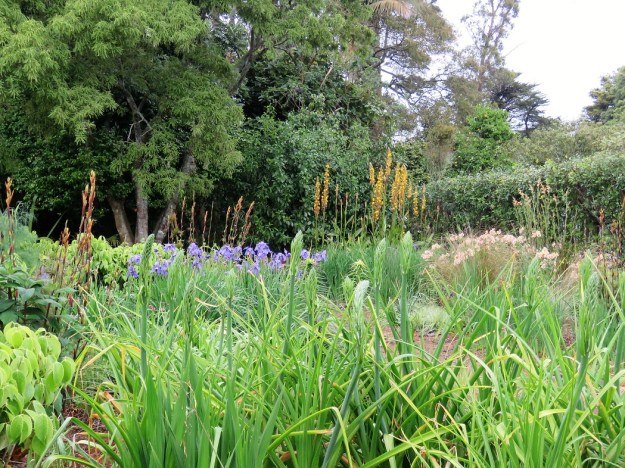 The idea of garden rooms has its most recent roots at Hidcote and then Sissinghurst. It made design – in this case, the design of a series of linked but separate spaces – applicable to the home gardener. Many people are still working to the garden rooms principles today.
Cottage gardening, as exemplified by Margery Fish at East Lambrook Manor, is a separate gardening movement that remains popular nearly eight decades later. It is very relevant and applicable to a domestic scale of gardening which became popular as the grand estates declined.
I think the classic rose beds probably warrant the status of genre rather than transient fashion, though they have certainly fallen from favour now and look very unsophisticated and barren by today’s standards. Those are the island beds of just roses, hybrid teas mostly, planted with little regard for colour and standing in splendid isolation with good air movement and bereft of underplanting. There are many practical reasons for growing roses in this manner and it is only in more recent times that most of us have decided the aesthetic deficiencies outweigh any practical consideration.
Treating the garden as an extension of the indoor living space (all that indoor-outdoor flow) is often attributed to the English designer, John Brookes in the latter half of the twentieth century. That is here to stay, though taken to ridiculous lengths by OTT Australian luxury design with their outdoor kitchens and living areas.
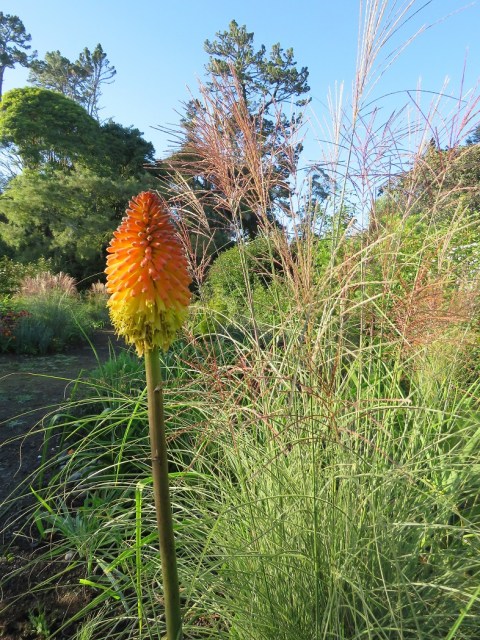 Crystal ball gazing, I would suggest that the contemporary tropical garden in more northerly areas of this country – the Balinese hotel style, as I have sniffily dubbed it, may turn out to be more movement than transient fashion. It fits the climate, the lifestyle, the aesthetic and the maintenance regime of many gardeners, particularly in Auckland city. Not so good down south, though, so it is quite localised.
Then there are the fashion gardens, more driven by magazines and other media then anything else. Remember the dreaded dwarf conifer gardens with their scoria mulch laid on black plastic? No. I don’t want to remember them too much, either. The same goes for the short-lived reign of the ghastly minimalist gardens at the start of the new millennium. Three large rocks, a yucca, a sanseveria and some scleranthus surrounded by an ocean of lime chip, fine gravel or – if the budget ran to it – prettier coloured pebbles. Or, horror beyond horror, a mass of tumbled, coloured glass pebbles if you were of a certain demographic. Aqua coloured glass shards were much favoured as I recall. Minimalist gardens may have drawn on the subtle and spare refinement of the traditional Japanese garden but they lacked any cultural context or complexity in their trendy manifestation and died very soon after being born.
While the home production of fruit and vegetables seems destined to continue no matter what, the current craze for *food forests* is, I suggest, more fashion than movement. It won’t be long before people realise that so-called food forests in temperate climates don’t actually produce much food at all – at least nowhere near as much as more utilitarian vegetable gardens, berry enclosures and orchards can provide. You wouldn’t want to be aiming at self-sufficiency with a food forest but you can at least claim to be on trend at the moment.
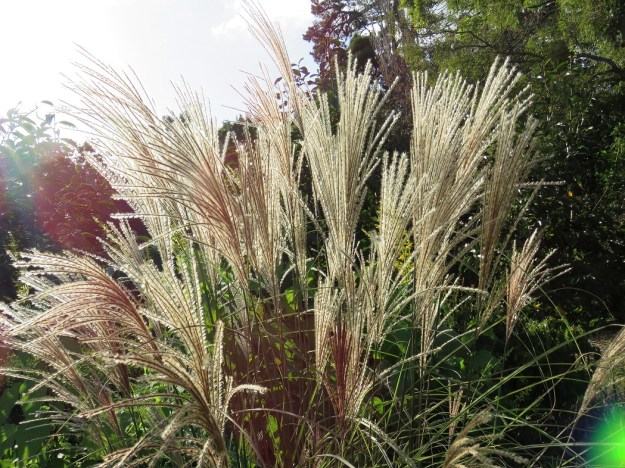
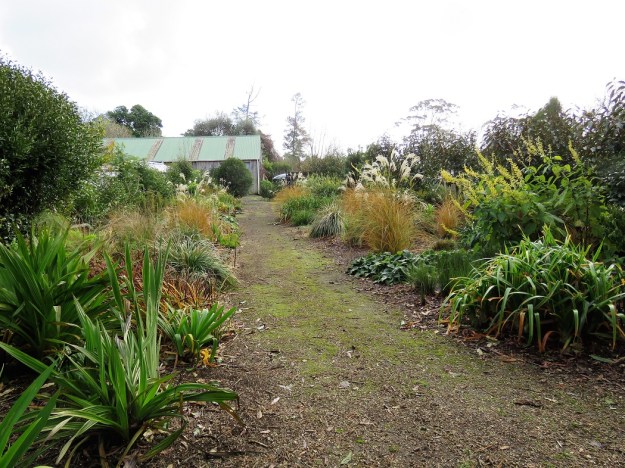
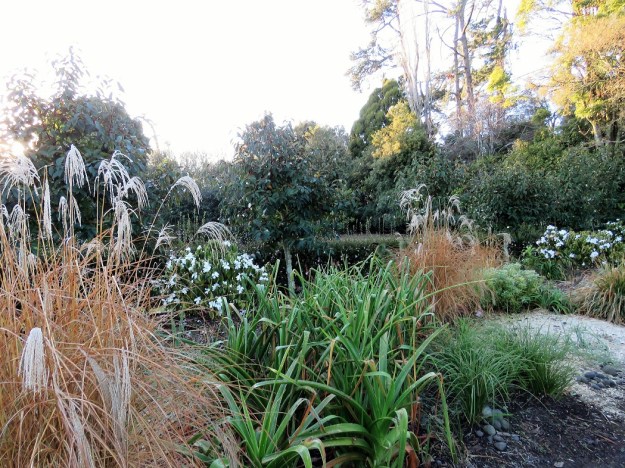
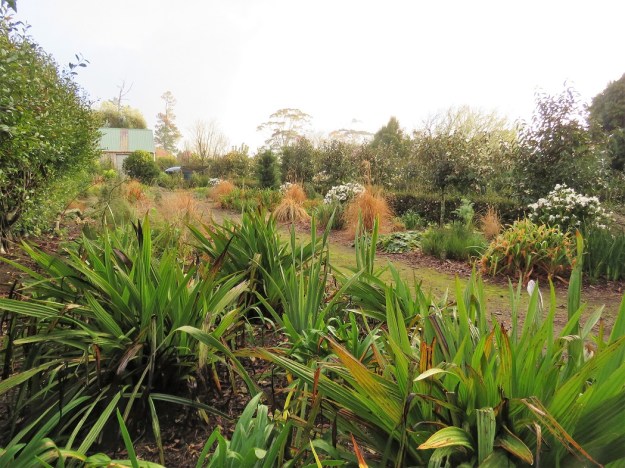
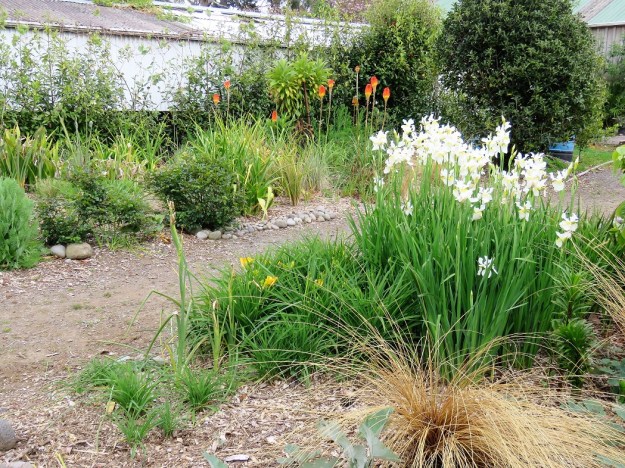
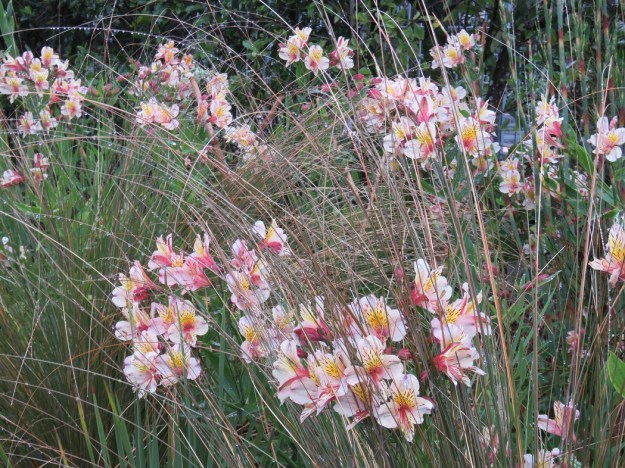 Which brings me to the ‘Oudolf prairies’ (he has done many things but never prairies) and the current fashion for plantings incorporating a fair swag of grasses. Movement, not fashion, I say. These are but one part of a major swing in gardening style towards a more naturalistic and sustainable approach. It is part of a whole spectrum which takes in meadows, even prairies if you have the right climate, the Sheffield School, environmentally friendly and sustainable gardening as practiced by a large swag of British, European and American designers and leading gardeners. It is soft-edged, should be lower maintenance, sitting comfortably with Nature as opposed to being imposed upon it, sustaining a healthy eco-system and a harmonious balance between the natural world and the aesthetic many humans crave. Enhanced nature, romantic gardening, naturalistic gardening – call it what you will. It is a movement, not a transient fashion because it is underpinned by a philosophy that goes well beyond the marketing of plants and landscaping accoutrements.
I won’t be ripping out my grasses and perennials to replace them with dwarf shrubs from the garden centre. Style trumps transient fashion every time.




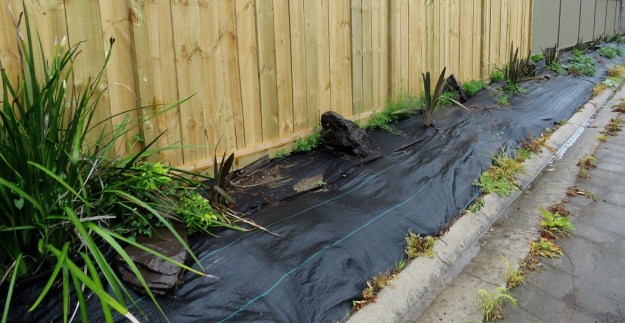 Starting with the public frontage (or maybe sideage), we have the sight of weed mat. I am sure I have railed against weed mat in domestic situations before. It is a commercial product for a commercial application – plant nurseries – and it has zero aesthetic appeal. All that can be said for it is that it is marginally better than the earlier habit of laying heavy duty black plastic which soured the soil over time. Weed mat is permeable so it allows moisture through. The soil beneath will compact over time, but it won’t become dead soil, bereft of all microbial and insect activity. It possibly has some application to use as a weed barrier that is then covered (entirely, please, entirely so that none is in view) with some pebble or lime chip but that means it can only be used on a flat surface. What could they have done? It was a rough slope so unsuitable for grass. I would be wanting to stain the fence dark and maybe plant the area solidly in something like mondo grass, perhaps with some marguerite daisies to bring pleasure to passers-by.
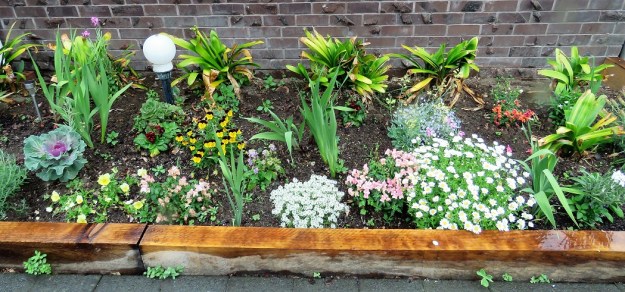 It was the borders inside that made me smile. They were recently planted and into heavy soil. One of this and one of that, randomly distributed. A lavender, a gerbera, a bromeliad, a patio rose, a cineraria, a kale, a paper daisy, a polyanthus and much, much more. In singles, bar the five clivias. I immediately conjured up the mental vision of this couple heading to the garden centre, determined to plant up the beds. They must have wheeled at least two trolleys around, loading up with one of everything which had flowers on it on the day. There were a lot of plants and I don’t imagine it was cheap at all. A garden centre owner’s delight. This is, by the way, a rental property and let me at least give credit that the enthusiastic landlords were attempting to make the outdoors attractive.
 If I still had a paid gig writing for the print media, I would be heading out with my camera to find some of the best examples of low maintenance, outdoor planting and design for non-gardeners that I could find. But I don’t, so that idea was short-lived.
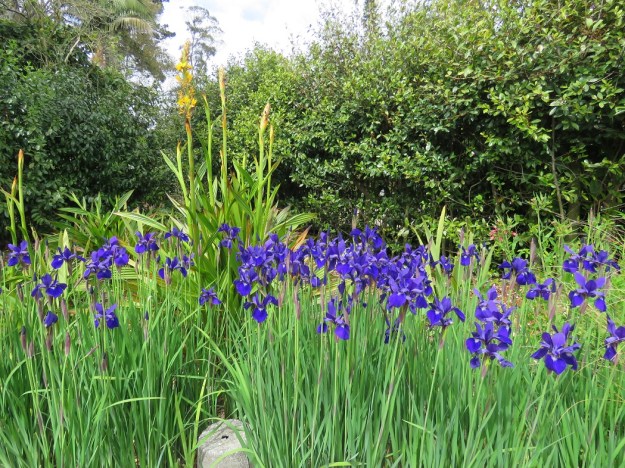
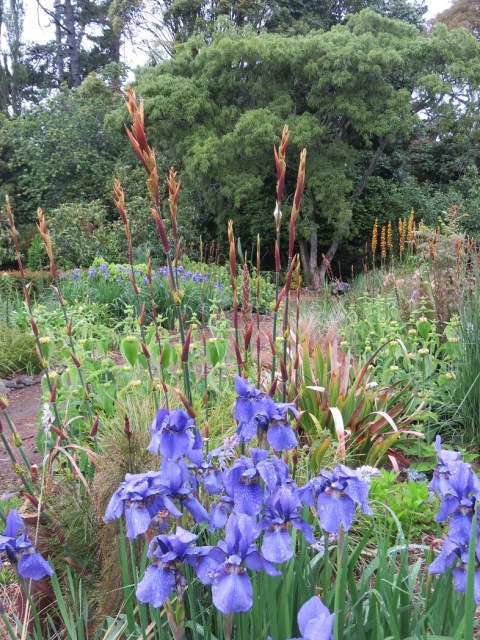
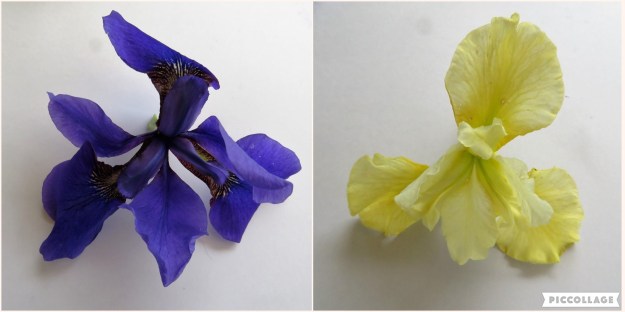
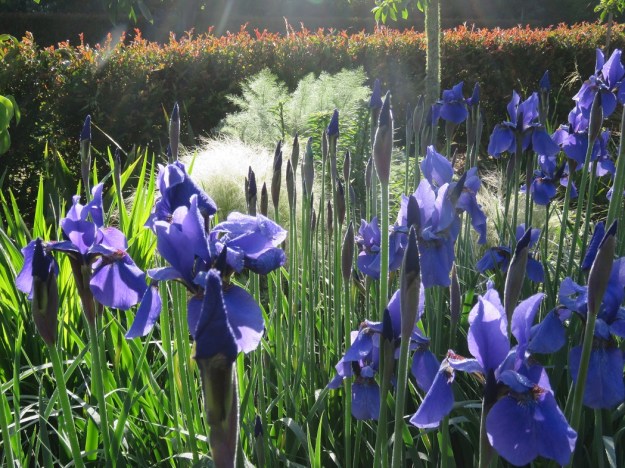
 “I think I prefer the sibiricans now to the bearded irises. Much easier care.” So spake a friend who will, for unrelated reasons, always be known as Cemetery Sue here, as we stood looking at my swathes of Iris sibirica in the new borders. In the second year since planting, their display has been fantastic.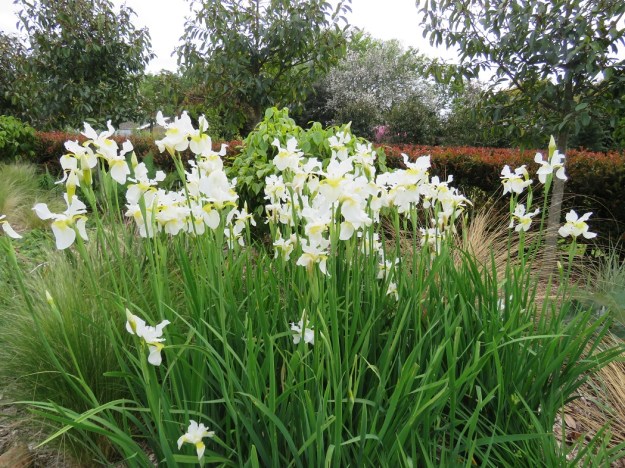





 Tikorangi The Jury Garden