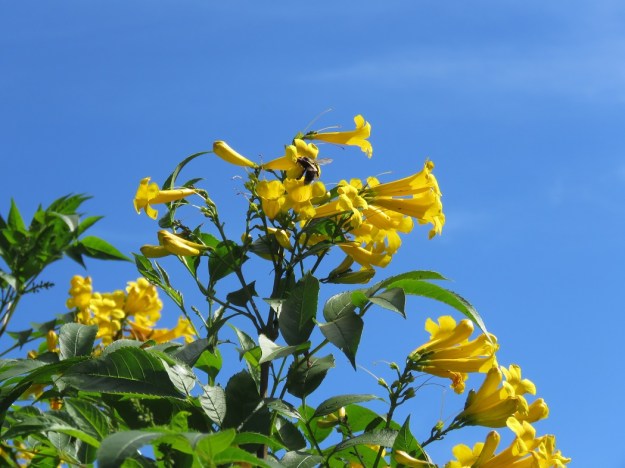
Tecoma stans
How pretty is the yellow tecoma? It must be having a particularly good flowering season because I have never taken much notice of it before though Mark tells me it has bloomed previously. Maybe it is that it is visible from the swimming pool and I have spent a bit of time floating around on the water on my air mattress in this week’s heat.
As an aside, I can not complain to our children about the heat. We have had temperatures in the late twenties (Celsius) all week and NZ has been ‘in the grip of a heatwave’ with temperatures in the early 30s. Our children are currently living in Australia in a heatwave that has seen temperatures well into mid 40s. Sydney daughter has previously commented that the heat only really becomes a big issue when the air temperature is higher than body temperature – above 37 degrees. So, there is the voice of experience. Canberra daughter declared yesterday that our grandson would not be going swimming that day because it was a *cool* day of *only* 26 degrees. We start wilting much above 26 degrees, but let it be known that we have high humidity and particularly bright sunlight which makes moderate temperatures seem much hotter. At least that is our story and we are sticking to it. I have been swimming (or floating in a leisurely fashion) at least three times a day.
Back to the tecoma. It is a plant from south and central America in tropical to sub-tropical areas. We are more warm-temperate than sub-tropical – maybe sub-sub-tropical – but sufficiently frost-free and well drained for it to grow and bloom here. It forms a large shrub to about two metres, somewhat rangy in appearance but I am sure it could be pruned to keep it tidier. Apparently it can be grown as a hedge so it must respond to pruning. The flowers are the giveaway that it is a member of the bignoniacae family – trumpet flowers. It attracts bees and butterflies, as I have observed, but has so far failed to attract any hummingbirds on account of the absence of such feathered delights in this country. It is scented, though not powerfully so.
We only grow it for the flowers and I will start to take note of how long it blooms because it can flower all year round in warm climates. Mind you, it is also becoming a pest weed in parts of Australia and Kenya, I read.
Should Armageddon come, Tecoma stans has some useful properties. Not only is the wood good (though you would need many more plants than our one to start harvesting wood), it has many medicinal properties capable, it is said, of treating diabetes, stomach pains, water retention, syphilis and intestinal worms! I just hope that, in the event of Armageddon, we get to keep the internet. It is rather too easy to get traditional remedies wrong in inexperienced hands. 
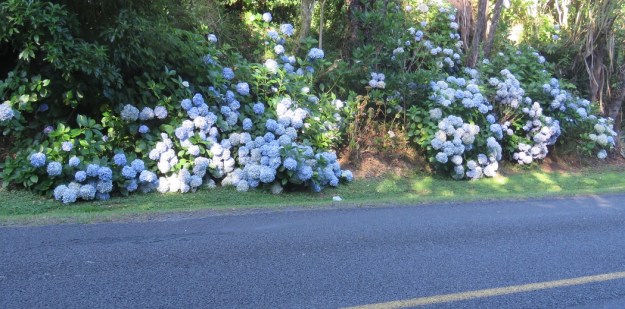
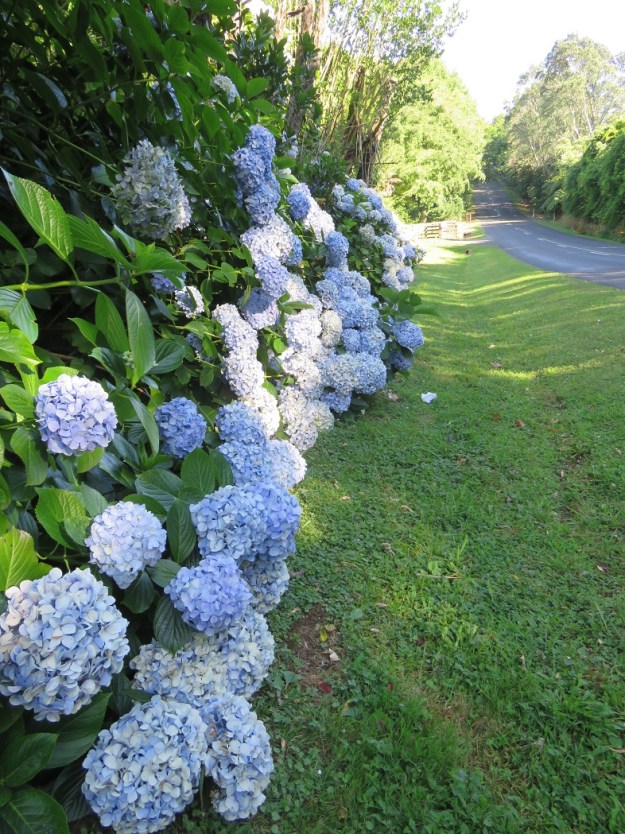 Basically, hydrangeas are blue in Taranaki. This is to do with

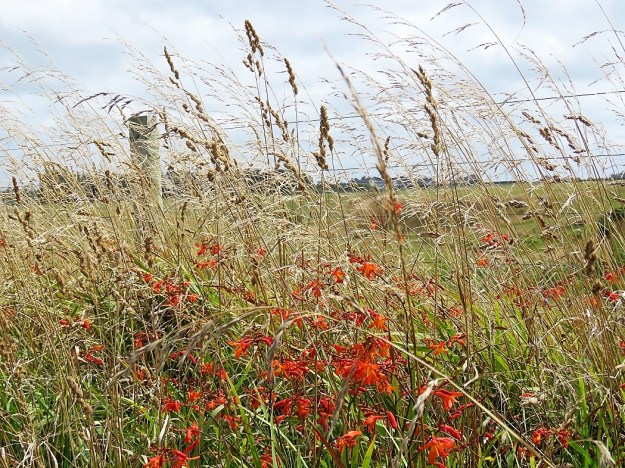
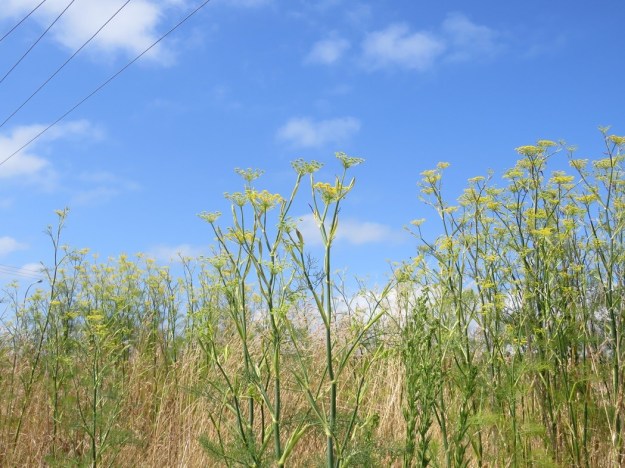

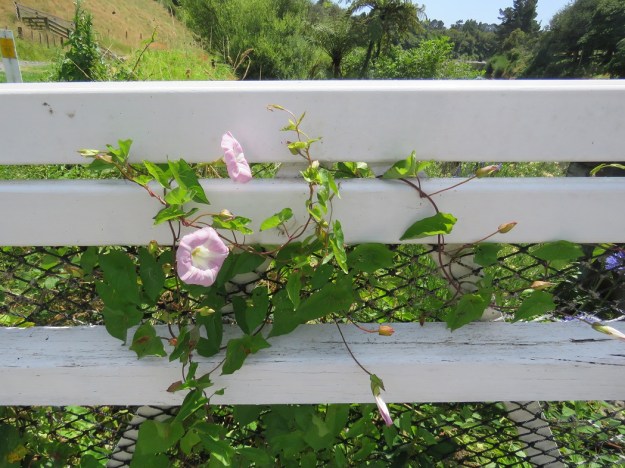


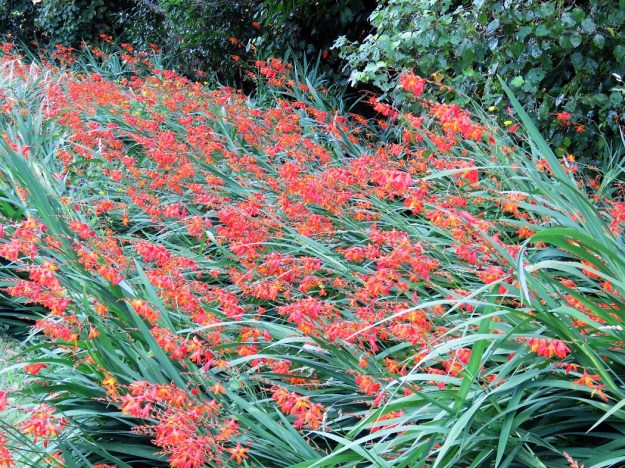
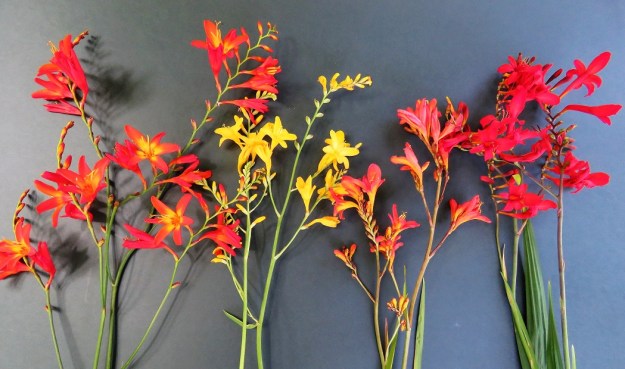
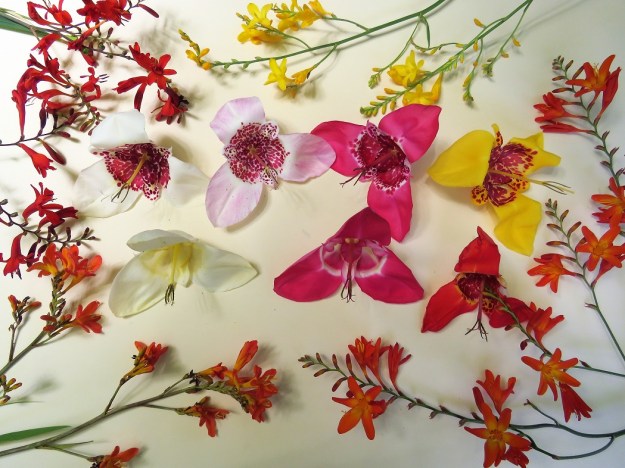 I started by thinking I would do a comparison of tigridias. And then crocosmias. It was too hot to be out in the garden and I couldn’t go down to the shaded areas of the stream in the park to clear weeds on the banks and free up the water from some of the choking weeds on account of having stuffed my dodgy wrist doing this heavy work the day before.
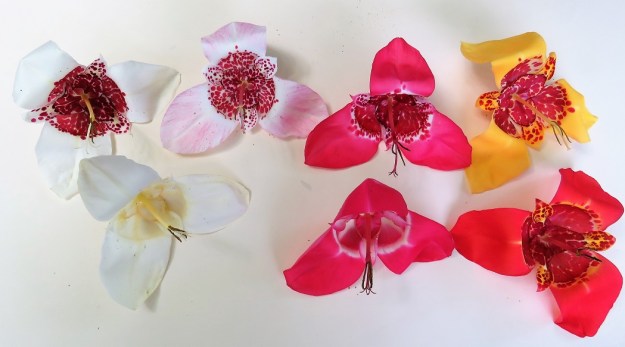 I have spent some time separating the

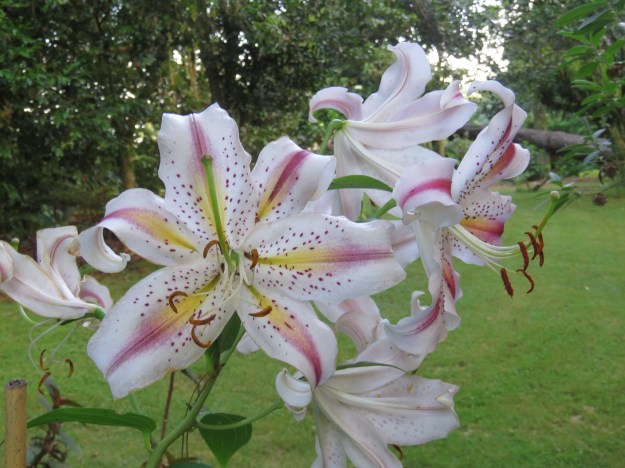
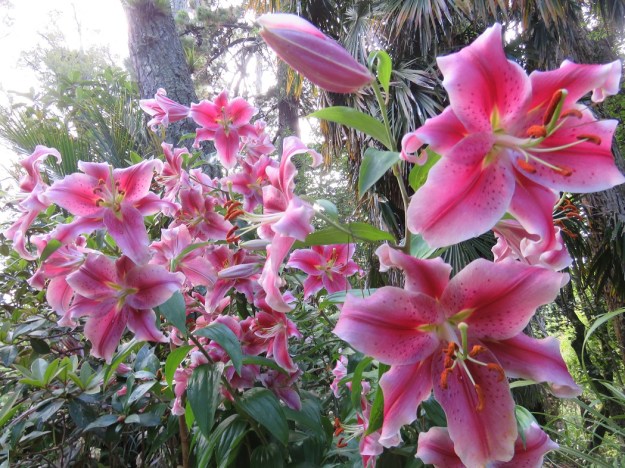 Auratum lily time is a delight, a joy even. Showy, over the top, flamboyant but glorious. And we are just entering these weeks of glory.
 We grow lilies in the better lit areas of woodland. They can get somewhat stretched reaching for the light so need more staking when not in full sun. I am rounding them up to limit the areas where we have them growing in order to make that seasonal staking task easier. But they certainly light up the woodland margins.
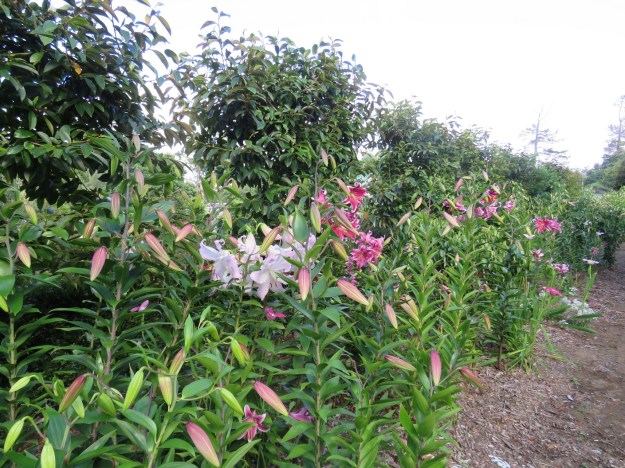 The new lily border has just opened its earliest flowers. These are the result of a determined and sustained effort to
 Almost all of ours are unnamed hybrids raised by father and son – first Felix and now Mark. Felix named a few that we used to sell but they are pretty mixed in the garden now. All are outward facing, not upward facing. That was one of the breeding aims. Upward facing lilies act as leaf and debris catchers and weather-mark badly.
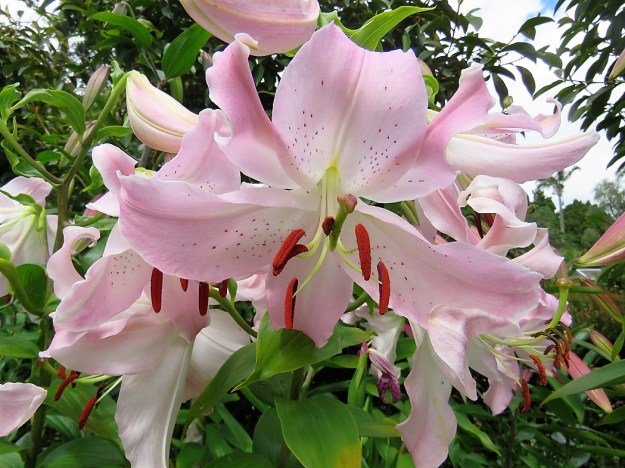 Of them all, I think these soft, marshmallow pink ones of Mark’s raising may be my favourite. Or it could be another one in a few days’ time.
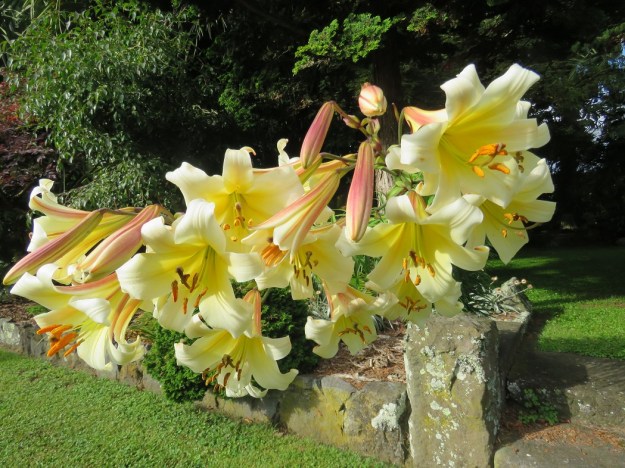 Finally, just in case there are any lily experts reading this: I assumed these trumpet lilies elsewhere in the garden are an unusual, honey-coloured

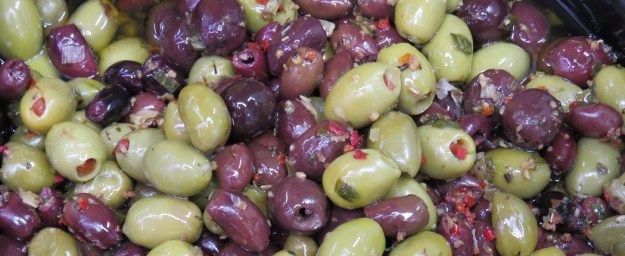
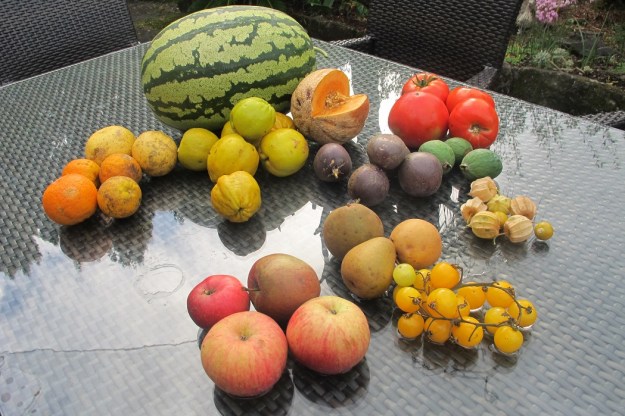
 That got me thinking. Do we eat twenty-five different fruit and veg week in and week out? The recommended daily intake of five plus is no issue, but that is servings of fruit and veg, not different types. We are large consumers of fresh fruit and vegetables but do we reach twenty-five different ones? When I say we eat a lot, we are maybe 90% vegetarian these days. Mark starts his day with avocado on toast, I have fresh fruit and muesli. Lunch is always a fresh fruit salad with five or six different fruits and Greek yoghurt. Dinner includes a fresh salad, a cooked green vegetable and a vegetable and carbs-based dish that contains protein. We can eat like this because we produce most of our own food, though I use the word ‘we’ in the royal sense. Mark grows the food crops. Were we buying all our food, I can’t imagine that the range of fruit and veg we eat would be anything near its current level. I blench at the thought of traversing the supermarket fresh produce section for the weekly shop and trying to select twenty-five different options. I mean, how many more of those resusable mesh produce bags would I need? (Answer: another nineteen).