

Late afternoon by Lake Burley Griffin
One of the interesting things about travelling is the different light. Canberra in mid winter is very, very different to Tikorangi in mid winter. A special family event saw us convening in that city a couple of weeks ago.
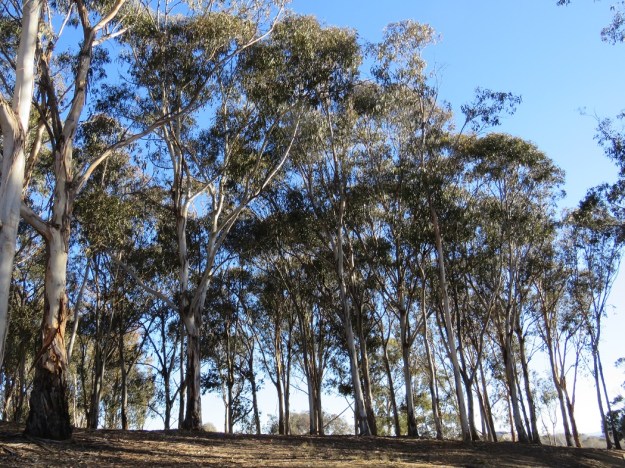
Plenty of eucalypts
Canberra, being inland Australia, has what I recall from my days of school geography as ‘a continental climate’. In mid winter, it is cold and dry. In mid summer, it is hot and dry. Much colder, much hotter and very much drier than our verdant climate at home. And in my many visits there since our eldest daughter took up residence about 15 years ago, I have never experienced wind. In winter, this is just as well because, when daytime temperatures are often only single digit (celsius), a wind would make the cold intolerably bitter.
 You can see how much colder it is by the daughter’s Crassula ovata (commonly called the jade plant or money tree). She forgot to cover it and hopes it will survive. We never have to worry about that sort of thing and it grows quite happily outdoors, all year round.
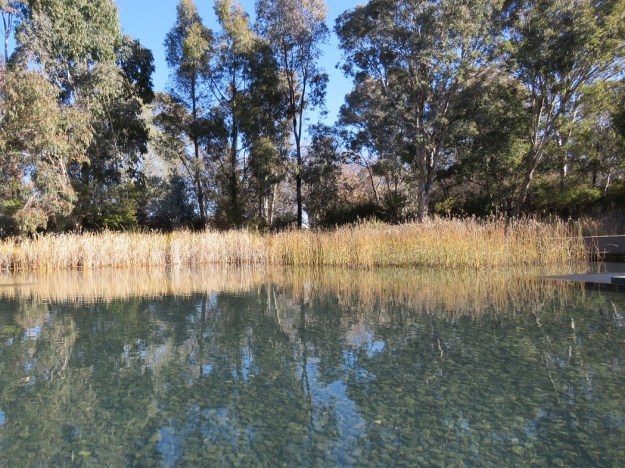 In my mind, I see Canberra as being dominated by muted golden colours. This is largely on account of it being such a dry climate. This is the entry to a major sculptural installation at the National Art Gallery. I never tire going to experience American artist, James Turrell’s Skyspace ‘Within without’ each time I visit and thought I had shared it before but it must have been just on the garden Facebook page instead.
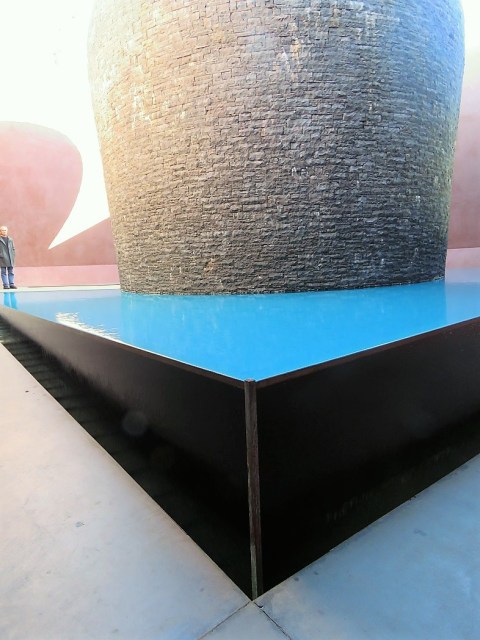
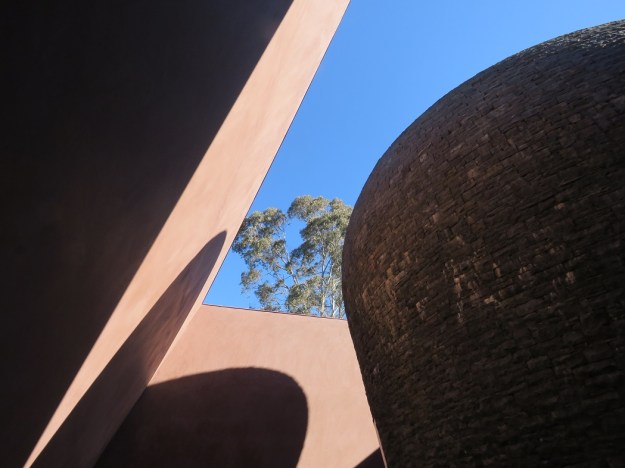
It is an astonishing piece, all angles, flat planes and light and shade. Truly glorious. We had hoped to catch the last day of the Cartier jewellery exhibition in the gallery but so did everybody else and the prospect of queuing for over an hour just to get in did not seem appealing. New Zealanders are not used to queuing.
 This is the entry lane to Skyspace and probably as close as you will get to a group shot of the family on this public site. It is minus me as photographer and minus the only representative of the next generation whose second birthday we had gathered to celebrate.
 Public architecture and landscape in Australia is on a more lavish scale than we tend to have in New Zealand – a sign of a larger and wealthier economy. The parliamentary precinct houses many other facilities as well and goes well beyond utility provision of services to enable federal government to operate. I hadn’t see this particular water feature before.
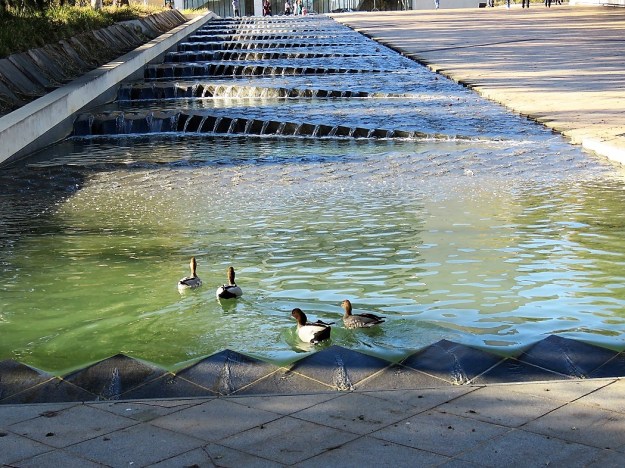 This is the wider context – a staircase waterfall, designed to be safe for the public while capturing light, movement and gentle sound in what is an arid environment.
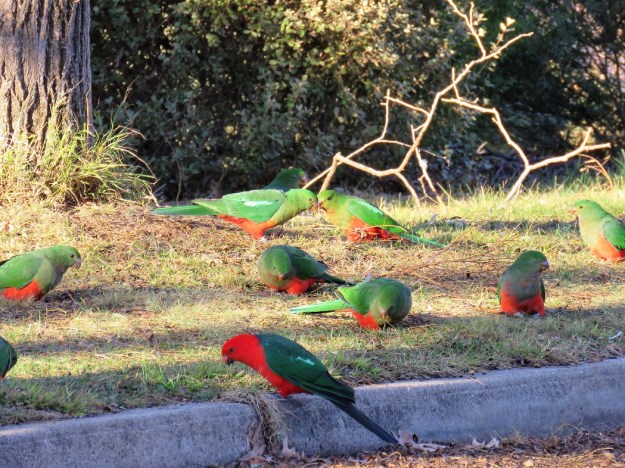 What Canberra may lack in terms of plant appeal in mid winter, it makes up for with its birds. Flocks of birds, in this case a convention of king parrots on the road side in our daughter’s quiet street. Daughter tells us that the red head on the front bird is a sign that it is the only mature male amongst the 20 or 30 juveniles in that group. New Zealand birds are generally restrained in colour whereas Australia has many birds that are bold, brash and colourful.
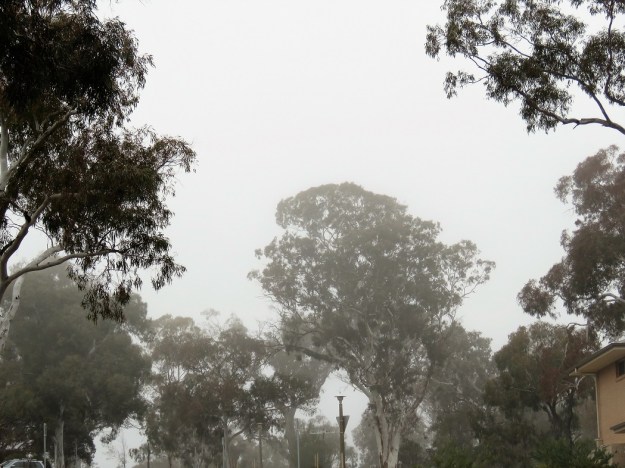 We rarely see the muted, mystical light of a winter morn in Canberra. This may be because we have far more wind – a disturbed westerly air pattern, as Mark refers to it. This is just a suburban street scene – eucalypts, eucalypts and more gum trees. But no koalas on these ones. There are more than 700 different eucalyptus species, most of which are native to Australia. I once offered to buy the daughter a book on them so she could start to learn the different ones but she did not take up my offer.
We came home to a place where the dominant colours are green, green and more green but with plenty of highlights of pinks, reds, yellows and all the colours of late winter breaking into spring. It is very different. My next post is likely to be ‘And suddenly it’s spring’. For this week, we have left winter behind here.


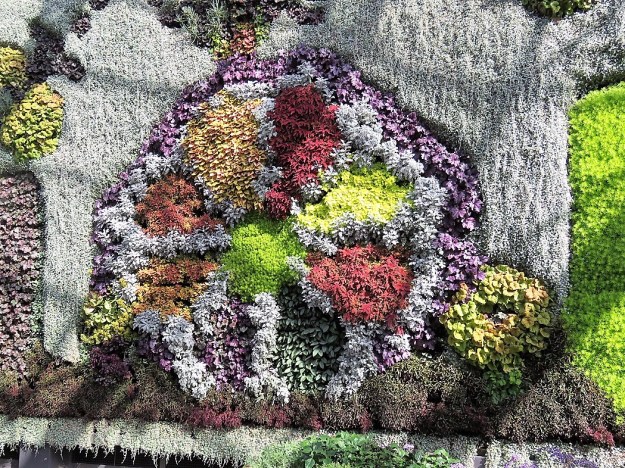

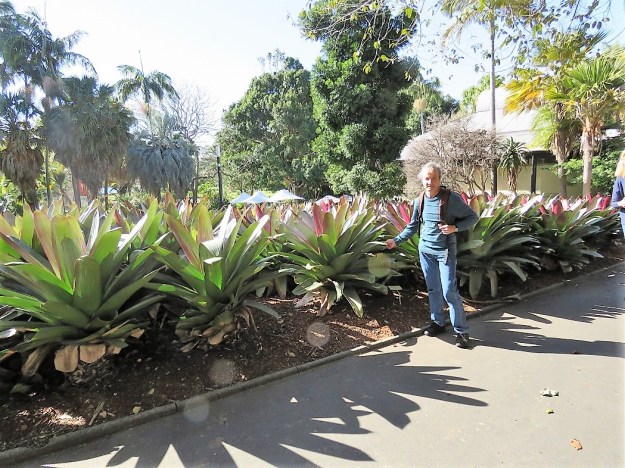
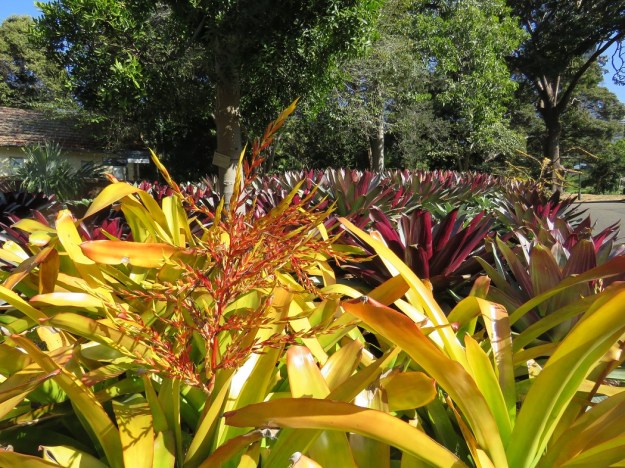


 The stand of flowering cherries in full bloom drew the crowds and proved yet again that humans like colour and blooms, preferably in abundance. It is a locally bred hybrid, a cross between the wild cherry Prunus avium and Prunus campanulata, named ‘Yvonne Matthies’. I have no idea if it is available in NZ and, of more importance, whether it is sterile or not. I imagine with all their bats and birds in Australia, they are not so keen on potential weed cherries that are spread by birds.
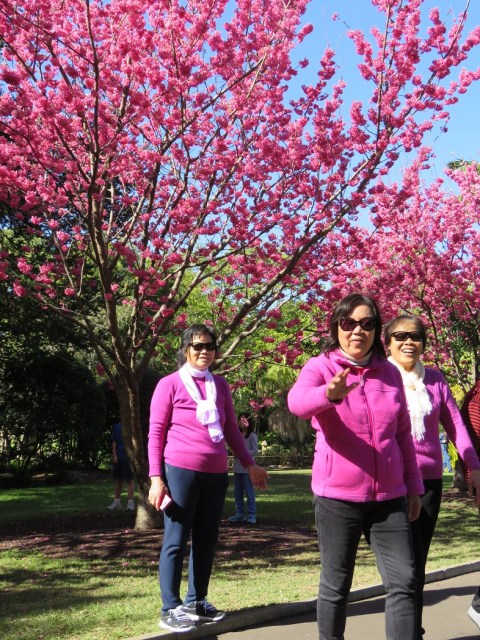 I particularly appreciated the tour group with the three women who, by pure chance, toned so perfectly with the blossom. They were equally delighted and took many (many, many) photos.
 Finally, the sign in each toilet cubicle spoke volumes about the sheer number of overseas visitors these gardens must attract. Toilet etiquette and requirements vary throughout the world. A Twitter friend was more worried by the fact that the roll of toilet paper is depicted round the wrong way. it should be unrolling from the top, not from underneath. That is all I will say on this matter.
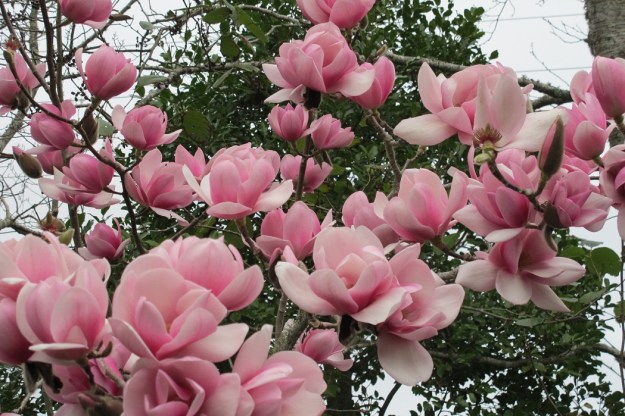
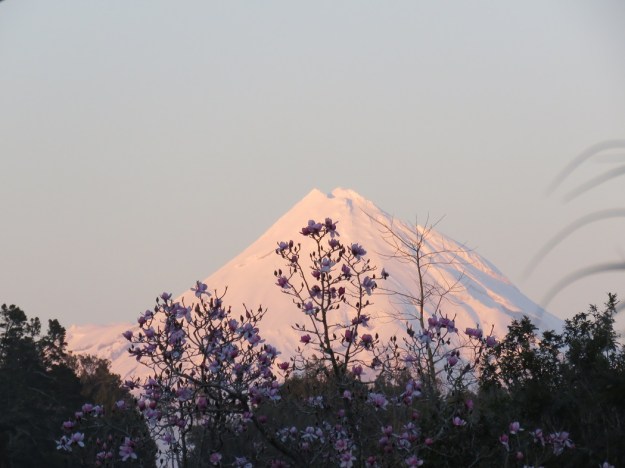 I rushed out at 7.40am on Monday because the day had dawned sunny, clear and calm and I thought the mountain should be in view. We only have one really good view from the garden and at this time of the year, Magnolia campbellii is in bloom in our park. It being just past mid winter here and the subject being a mountain, it is more often shrouded in cloud. We are inclined to get apologetic about this in Taranaki but I remember driving round the South Island with our son some years ago. We never once saw the Southern Alps and that was down the east coast and up the west coast in January. Mountains attract cloud which is all the more reason to celebrate the winter view when it is revealed.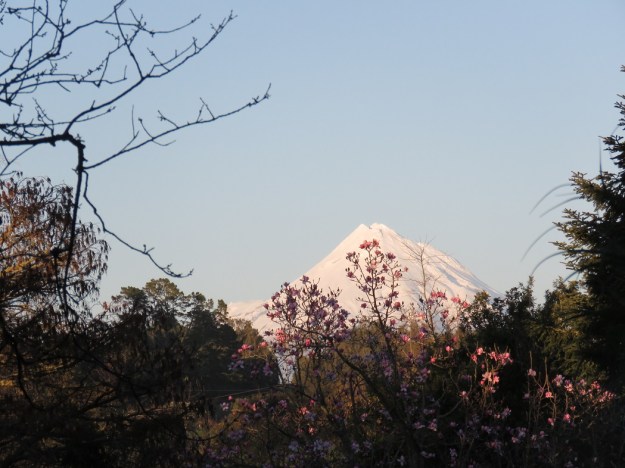
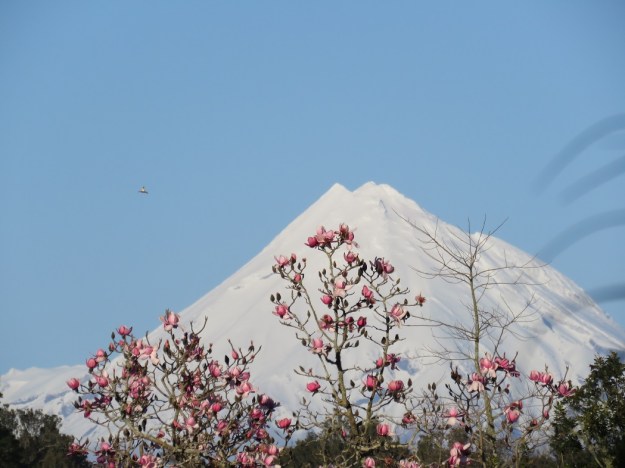
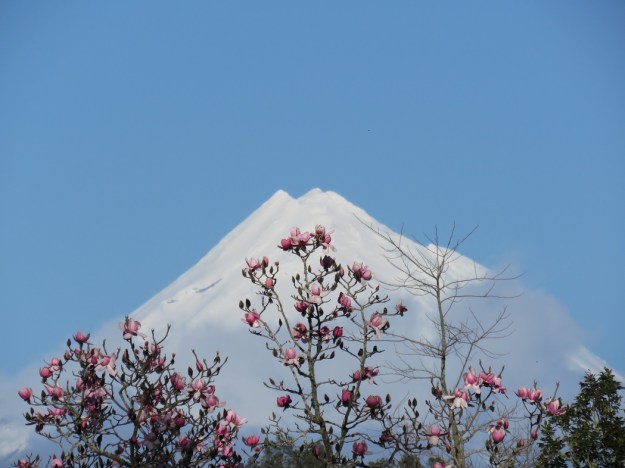
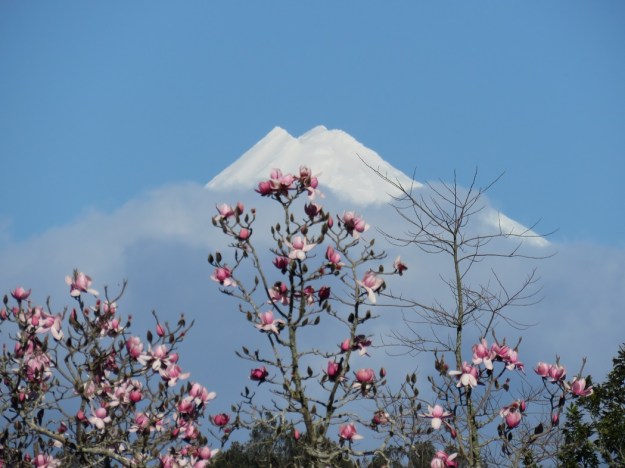
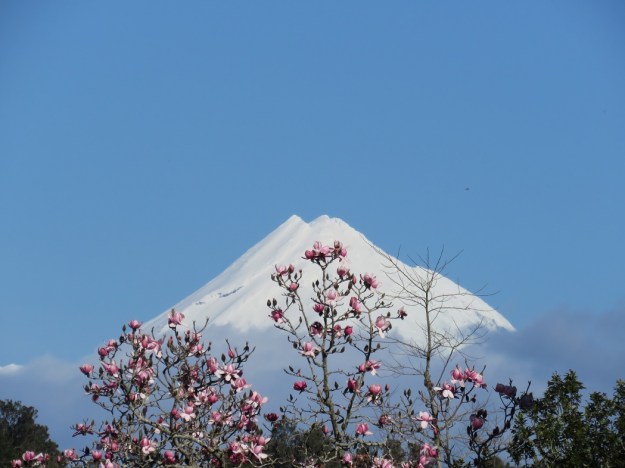
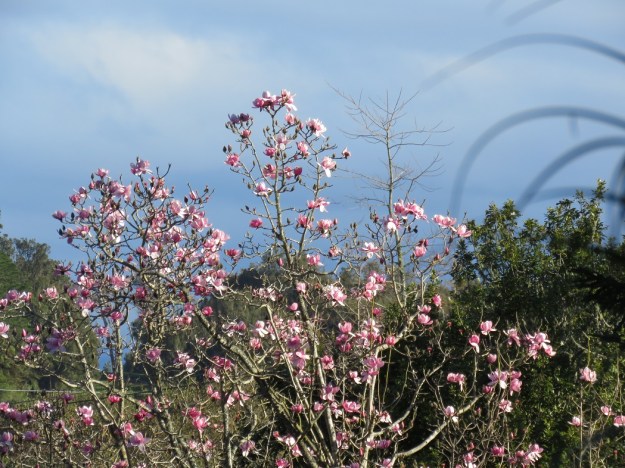
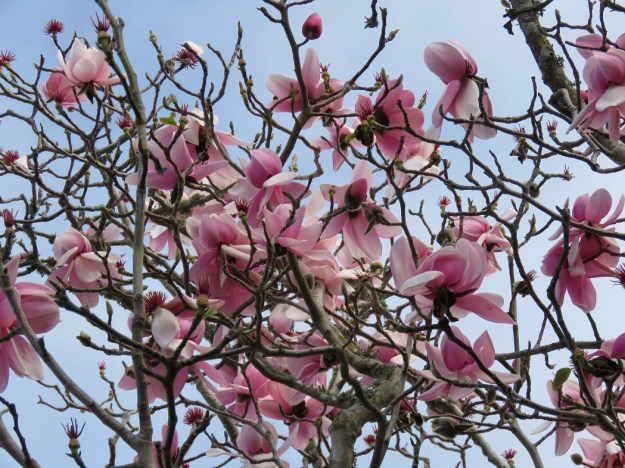


 Back in the heady gardening days of the 1980s and 1990s, there were many specialist nurseries carrying a very wide range of unusual plants, mostly selling by mail-order. I described Peter Cave of Cave’s Tree Nursery, Glyn Church of Woodleigh Nursery and Mark Jury as being like the three musketeers but Mark reminded me of Chris and Linda Ryan at Top Trees and the late Os Blumhardt who led the way. Times changed. I think Top Trees may have closed first, followed by Peter, Glyn sold his business and Mark and I were the last of that quartet to stop selling plants, I think.
 Tikorangi The Jury Garden