

Off topic but a pretty flower to lead – Nerine bowdenii coming into bloom. The last of the season to flower and the easiest of the nerines we grow
Remember those TV programmes from ten or even twenty years ago that were all about instant makeovers? You too could have your messy back yard transformed into beautiful, landscaped space within a day. Fortunately, we seem to have moved on from the techniques that had to be used to make a photograph-ready scene immediately. Nowadays, it is more common for programmes to include a more modest, practical make-over section where the presenter talks the viewer through the process and explains how the plants will grow to fill the space, rather than trying to create the illusion of instant show garden.
The techniques of creating a show garden – reaching their zenith at Chelsea Flower Show – are very different. Those are a combination of ideas and illusion, designed for a temporary installation and they don’t have a whole lot to do with actual gardening. For starters, the plants are generally kept in their pots and packed in really tightly before being covered with a carpet of mulch to hide the evidence. But those earlier makeover TV garden shows seemed to imply that it was possible to create an instant, fully furnished garden. It isn’t. Gardening takes time.
We are blessed by a benign gardening climate where we live. Most of New Zealand has extraordinarily fast growth rates compared to other parts of the world and you can accelerate the growth rates even more if you are willing to apply large amounts of fertiliser often. We don’t do that, preferring to rely instead on home-made compost, gardening in line with our ethics. For how we can we complain about modern farming practices and the deterioration of fresh water in this country if we are doing the same thing on a smaller scale in our own gardens?

April 21, 2017
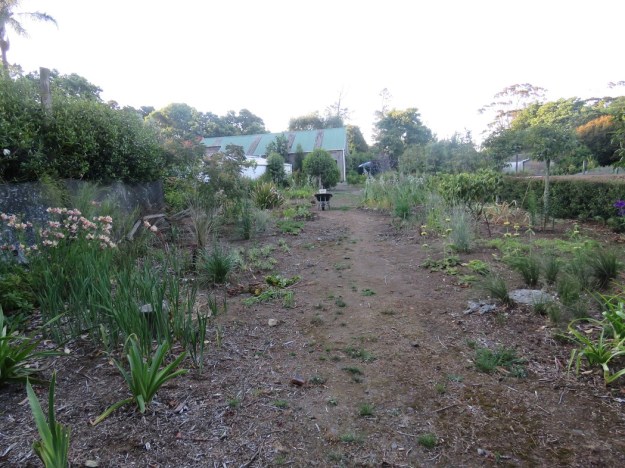
It was interesting this week to chart the growth we have achieved through photographs of the new gardens we are working on. This photograph was taken just over 12 months ago – late April. The area was a blank slate and had been nursery so laid in weed mat for three decades. This had compacted the soil badly and after planting the first few plants, I decided it was all too hard to dig and I would take up Mark’s offer to rotary hoe it.
December 2, 2017
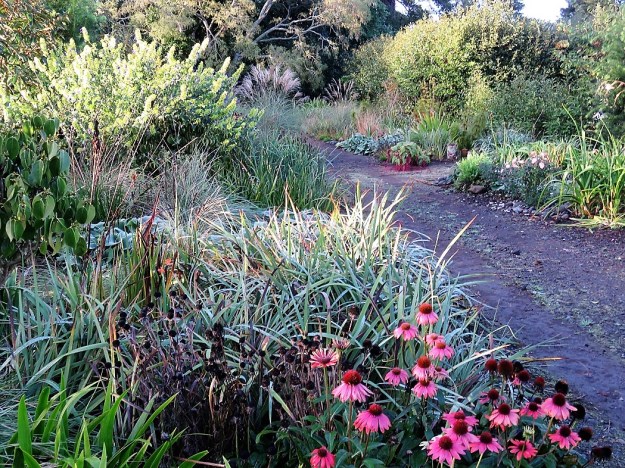
Come December, it was pretty much planted out. I, personally, have planted every single perennial in there and added no fertiliser except some compost at the time of planting. Nothing has been watered. We garden without irrigation here. Mark often describes our place as ‘a poor man’s garden’ (excuse the gendered language – I have yet to come up with a pithy, gender-neutral term which would be more accurate). If we had to go out and buy the plants, we could never afford to garden on the scale we do. I think I bought maybe 10 new grasses to go in this garden. Everything else has been relocated from elsewhere here.
May 7, 2018
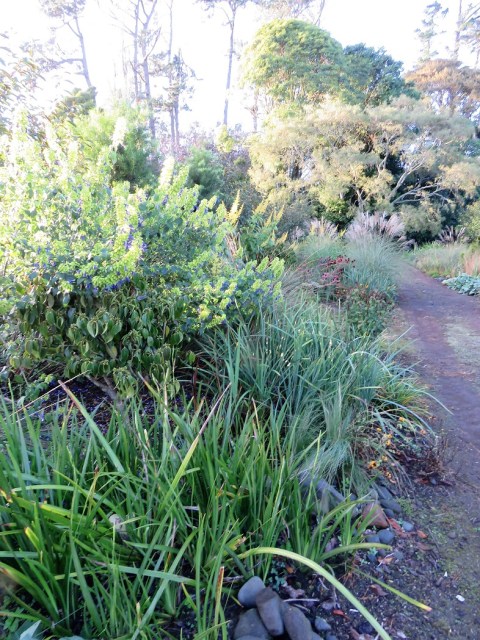
Now, in autumn, the whole area looks remarkably well furnished and under 13 months have passed. All that is needed is some tweaking. I want more blues in summer. Fortunately, Mark has a row of very good blue agastache in his vegetable garden (for the butterflies and bees, you understand) that I can raid. I am a bit worried about the phlomis which look overly enthusiastic out in the sun. They are far more restrained in their habits growing in the woodland gardens where we have them established. The Calamagrostris x acutiflora ‘Karl Foerster’ (feather reed grass) may prove to be too vigorous in our conditions. But that whole process of editing and tweaking and modifying as I learn is what gardening is all about.
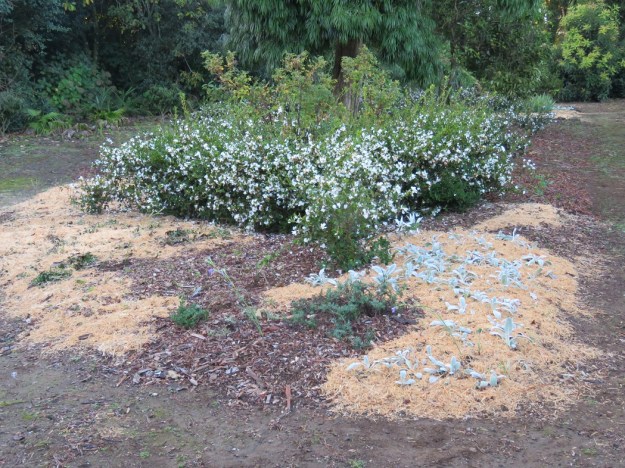
The caterpillar garden this week
The grass garden took priority. Over on the other side of this new area, I have nearly finished planting out the caterpillar garden. It is a very different style of planting, far lower and more restrained although the area involved is similar – about 30 metres long and up to 8 metres wide. It is also under siege from the local rabbit population. I find the rabbits generally leave the plants alone if they are surrounded by wood shavings. We have tried various strategies to deal to the rabbits but have grown desperate enough to think we may have to resort to poison. For us that is really desperate. We prefer to keep to trapping or shooting vermin rather than poisoning. It will be interesting to see how quickly this area fills out. The planting has again been carried out using relocated material – from the former rose garden that I have been stripping out. No plants have been purchased. But even I am amazed at how many plants it takes to fill in a blank space – hundreds and hundreds of divisions, maybe thousands. Mind you, I am planting closely. That is how I will get a carpet covering within the year.
Gardening is not an instant activity. But a year to go from blank slate to looking well-furnished and established seems the next closest thing to instant results for us.
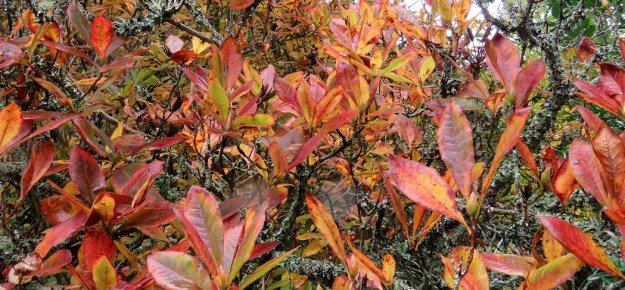 I do not know whether it was the rainy Saturday that made me pensive or whether it was my somewhat melancholy state of mind. Either way, I took a damp walk around the area we call the park. While the autumn colours seem quite striking this year and relatively early considering we have only had two cold days so far, I am not sure that damp autumn days are uplifting to my soul.
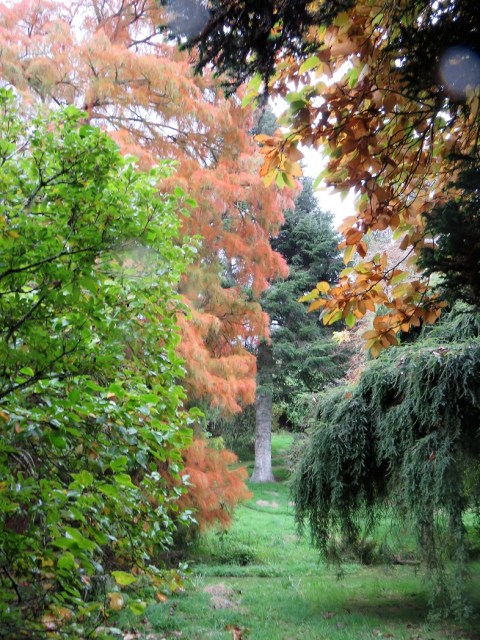 But I have been pondering the differences between those of us who see gardening as a process and those who see it as a product. I am happier in the company of the former – those who enjoy the act of gardening and see it as a journey where there may be a destination in mind but experience says that such a goal will be but transient and fleeting and not an end point at all. For a garden can never be static and frozen in time so will never be finished or full. I suspect these are the characteristics of a gardener.
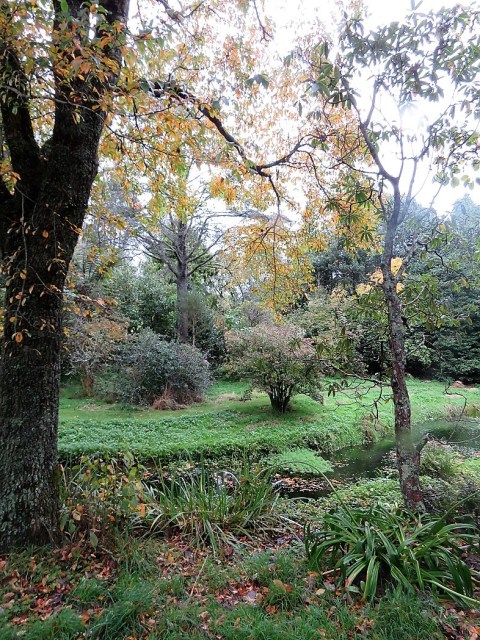 There are many who see a garden as a product – a particular destination or point of achievement in a creation that can then be frozen in time. This, I think, is probably a viewpoint of a garden owner who is not a gardener by nature. I felt a passing pang of sympathy for landscape designers. I would guess the majority of their paying clients fall into this category. Some may come to understand the whims of nature but many more make a rod for their backs, requiring that a garden be preserved in pristine condition at a certain point of its development.
 But Sunday dawned fine and dry which meant my usual cheerful disposition was restored. We cannot complain about an autumn which delivers us a daytime temperature of 24 degrees Celsius and night time temperature still well into double figures. Behold Mark’s pride and joy – his luverly bunches o’ bananas. Several lovely bunches. We are super marginal when it comes to growing bananas for tropical we are not. These are the only plants we cover for winter – festooned in protective shade cloth suspended on a giant bamboo frame.
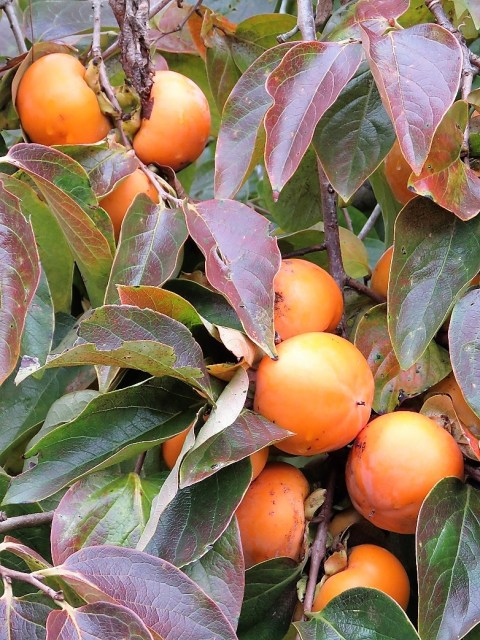
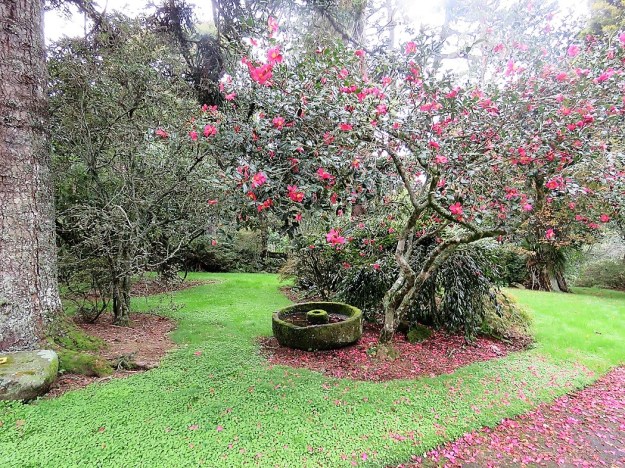
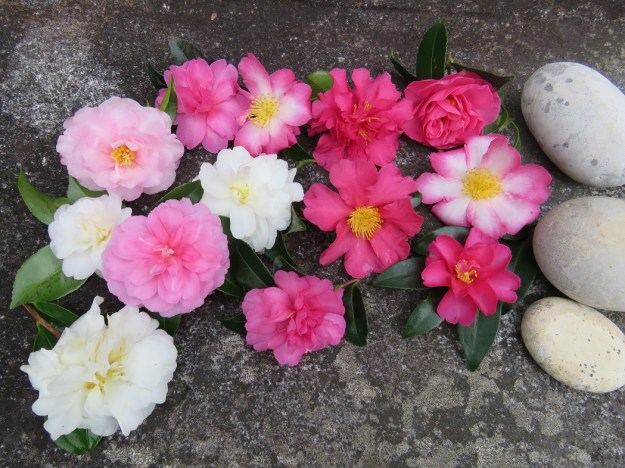
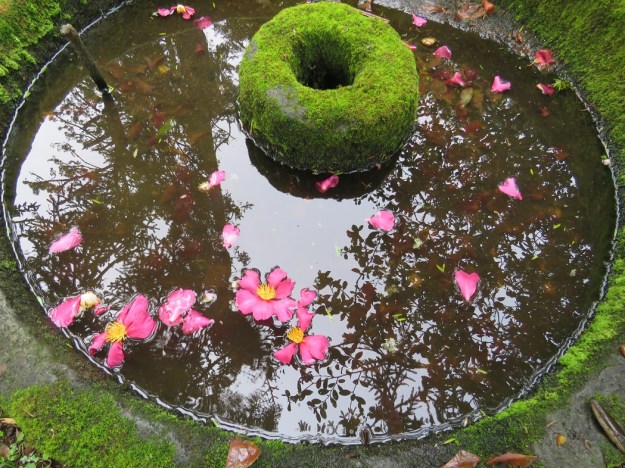 But every autumn, as the sasanquas come into flower we both derive huge delight, particularly from the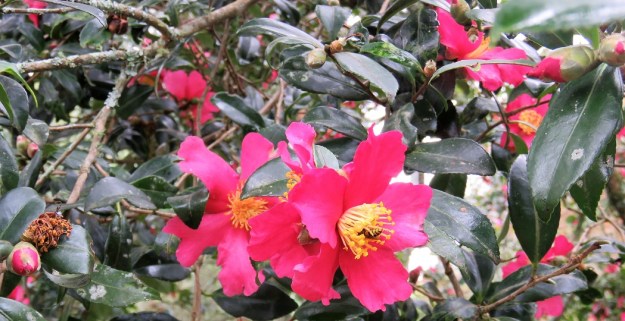

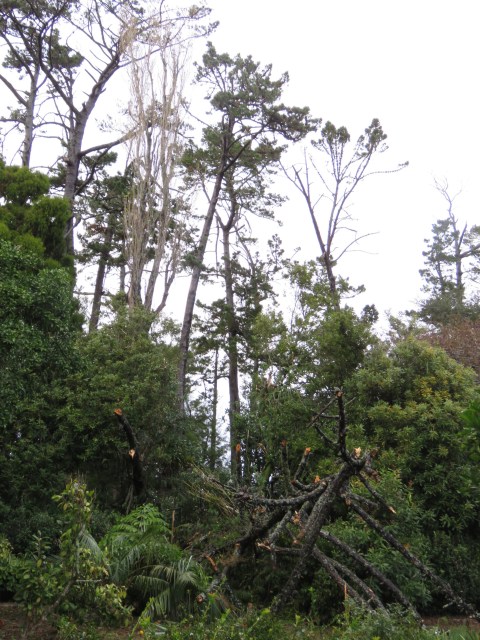 With an increasing number of what are called ‘extreme weather events’ in the face of climate change, we just have to accept that falling trees are a fact of life here. We have a garden created amongst large trees. But none are as vulnerable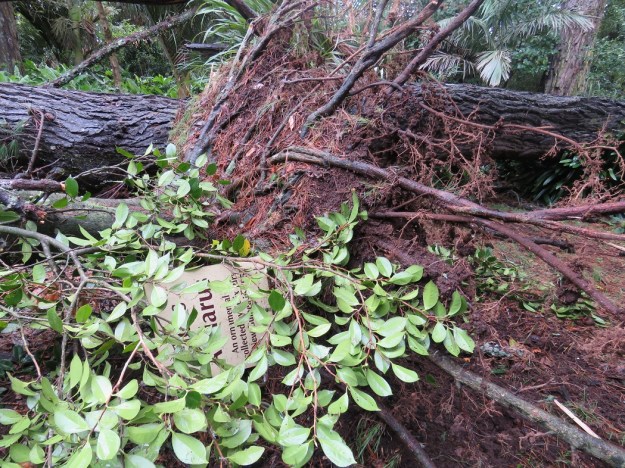
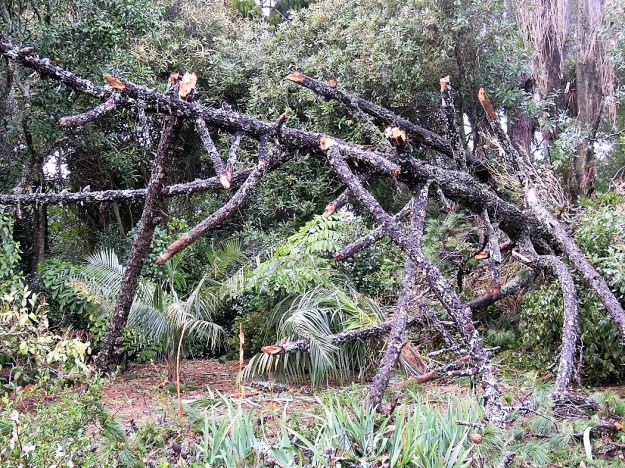
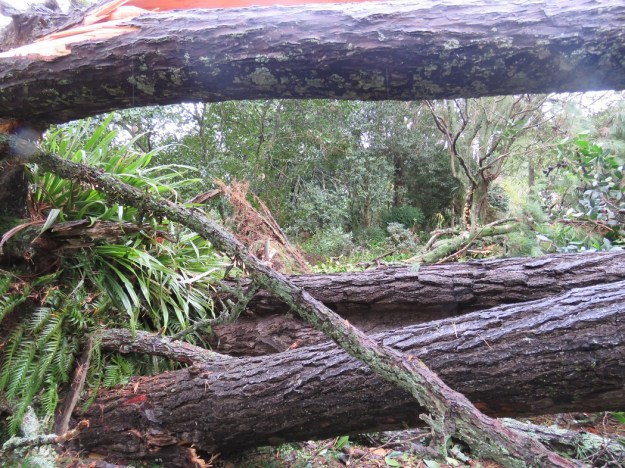 I wryly suggested to Mark that maybe we should be renaming our Avenue Gardens the Pine Log Gardens and he quipped that our stumpery is growing. We will follow our practice of clearing paths, removing all the side branches and cleaning up the collateral damage but leaving the body of the trunk where it fell and gardening around it. As more huge trees fall, we have a stumpery by chance, not design.
 Overseas,
  It may come as no surprise to regular readers that I also chose
 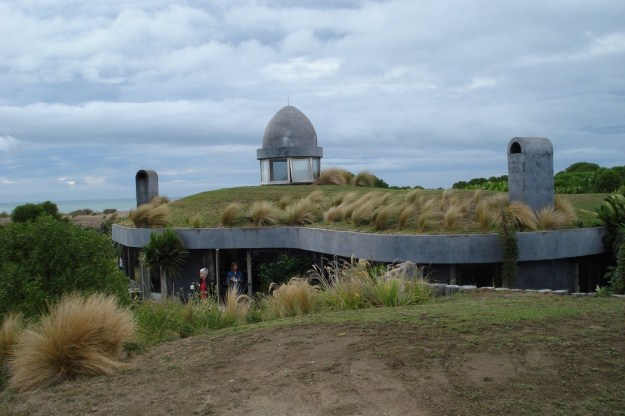 Nor have we visited the Garden of Cosmic Speculation or any of the Wirtz gardens. Landform as sculpture is a different aspect altogether and I haven’t seen enough to comment. I have seen one garden that took this approach in a naturalistic style and I have never forgotten it (years ago –
  Tikorangi The Jury Garden