
Tag Archives: Abbie Jury

100 best native plants for New Zealand gardens by Fiona Eadie

9781775536512If this book looks a little familiar, it is because it is a new edition of one first published in 2001, updated in 2008 and again for 2014. It is a handy book, not comprehensive because it only covers 100, but many are varieties of native plants that you may want to know about. Credit to both author and book designer for having a flexible approach where the sections on each plant can vary in length rather than dumbing the content down to fit a formulaic lay-out of the style seen in recipe books.

The author is head gardener at Larnach Castle in Dunedin and a passionate advocate for using our native flora. Her information is useful. Plants are given their botanical name, Maori name (which is often the name we use most widely) and any common names. General information is given about each plant – identification, location in the wild, important botanical information such as whether both male and female are required, followed by handy info on using these plants including preferred garden situation, pests and problems, landscaping suggestions, a short list of some different cultivars available and related species. There is plenty of information, delivered in a user-friendly form. All plants are photographed, though the photography is a bit patchy in quality.

If you have earlier editions of this book, the 2008 version changed 17 plants from the 2001 edition and this one changed a further 16 plants so it is about one third of new content over the original. I notice the price has not changed in the six years since the mid edition. The only thing that really annoyed me is the sales hype on the back cover (for which the author has no responsibility). “An expert guide to the top 100 New Zealand native plants…” it trumpets. What a cheapening effect one word can have. Not “THE top”. It is “an expert guide to 100 top plants”. There is a difference.

100 best native plants for New Zealand gardens by Fiona Eadie. (Random House; ISBN:978 1 77 553 651 2).

First published in the Waikato Times and reprinted here with their permission.
Garden Lore

What is a weed? A plant whose virtues have not yet been discovered.

Ralph Waldo Emerson Fortune of the Republic (1878)

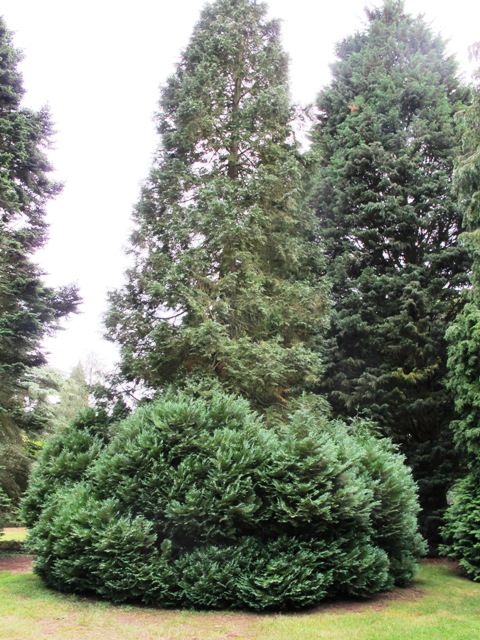
Chamaecyparis lawsoniana ‘Alumii’

Natural layering

This tree reminds me of that old song (and this will date me) “Look there Daddy, do you see, there’s a horse in striped pyjamas” except that it is a tree wearing stiff petticoats and a frilly skirt. No that’s not what it is at all, that’s a fine example of what people call layering. The tree is Chamaecyparis lawsoniana ‘Alumii’. Over time the weight of the lower branches must have dragged them to the ground where, left undisturbed, they have sprouted roots. While the original part of the tree looks a little thinner and paler with ageing, the skirt shows juvenile vigour. It is not common to see a tree layer so evenly all round.

The layers could have been cut off from the parent plant at an earlier stage, dug up and replanted elsewhere. Left to their own devices over time, the strongest growths will flourish at the expense of the weaker ones but there will be a thicket of Lawson Cypress.

First published in the Waikato Times and reprinted here with their permission

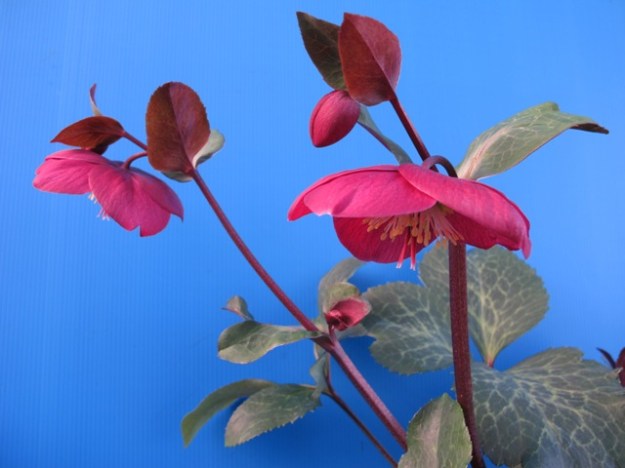
Plant Collector: Hellebore Anna’s Red

We are very impressed by Hellebore 'Anna's Red'

We are very impressed by Hellebore ‘Anna’s Red’

It takes a special plant in a garden centre to make us think immediately that we must have it there and then. This new hellebore is one.

There are three stand-out features. It holds its flowers well above the foliage and they are outward facing so displayed well. The foliage is beautifully marbled and interesting in itself. The flower colour is an attractive magenta-burgundy but without brown tones that often mute those colours.

I did a search to see if I could find the breeding but all the internet tells me is that it is one of the “Rodney Davey marbled group”, Davey being the breeder. Fair enough – it is the work of a dedicated hellebore specialist and if he does not wish to disclose the breeding, that is his right. Looking at it, our guess is that it probably has quite a bit of H. niger in it, in which case to get this strong colour into that species is a real triumph. It is the way the flower is displayed that makes us think of niger (some of you may grow “White Magic” with its upward-facing flowers). While there are similar burgundy colours in the H. orientalis group, none of them display their flowers as well and we have yet to see these combined with such attractive, marbled foliage.

The breeder lives in the south of England and the plant was named for prominent garden writer, Anna Pavord. Fortunately, due to the wonders of micropagation (tissue culture), the plant has been multiplied hugely and is available everywhere that I can see, in both this country and overseas. It is worth having and no, I was not given a plant to review. We truly did spot it in a garden centre and buy it.

First published in the Waikato Times and reprinted here with their permission.
Garden Lore

Sir Frank Crisp’s eccentricities were reflected in his garden. In 1905 Lady Ottoline Morrell visited Friar Park where she found Crisp, dressed in frock coat and top hat, proudly showing his visitors around the garden, which had ‘Sham Swiss mountains and passes decorated by china chamois’. Twenty-three thousand tons of rock were used in the construction of this garden which accommodated an extensive collection of alpine and other rock garden plants.

Alastair Forsyth Yesterday’s Gardens (1983)

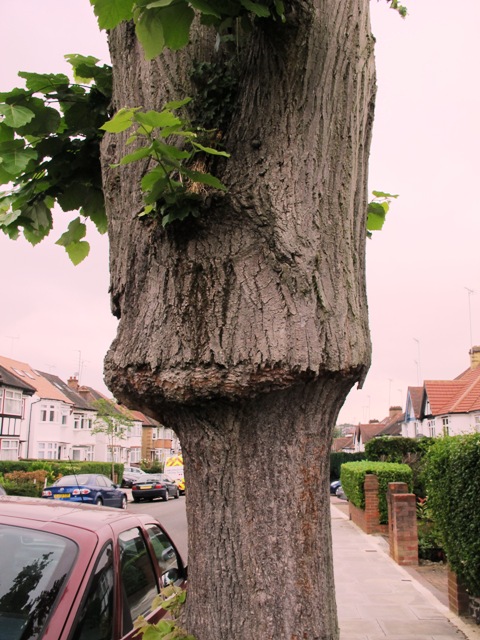
graft incompatibility
Graft incompatibility

The odd growth on this tree is a fine example of what is called graft incompatibility. Many trees and some shrubs are grafted or budded – in other words the roots of a different cultivar are used to grow the desired top. There are many reasons to do this. Sometimes dwarfing stock is used to keep fruit trees – particularly apples and citrus – small enough for home gardens. Often a plant will have special characteristics – maybe variegated foliage, bigger flowers, weeping habit – but it cannot be raised true from seed and getting it to root from cuttings may be difficult, too slow or impossible. In that case, it is budded or grafted.

A closely related plant has to be used as root stock and as a customer you are reliant on the propagator or nursery knowing what root stocks to use. If they make a poor choice you can end up with this effect over time. It will be a weak point on the trunk. Where the top and bottom are fully compatible, it is hard to pick the join although it always pays to keep low growth removed in case it is the root stock coming away. It can out-compete the grafted top if left to its own devices.

This is a lime tree, or linden on a London street.

First published in the Waikato Times and reprinted here with their permission.
Plant Collector: Carpenteria californica

Carpenteria californica - but in Yorkshire, not Tikorangi

Carpenteria californica – but in Yorkshire, not Tikorangi

This is my photograph but not taken in our garden. We saw a number of carpenterias flowering in English summer gardens, none lovelier than this specimen in Yorkshire. We tried growing it here when Top Trees Nursery near Clive were selling plants in this country. Ours did not thrive and eventually gave up the ghost. It’s failure to thrive will in part have been that it hails from California and is better adapted to a Mediterranean climate – dry summers and cool, dry winters.

There is only one species of carpenteria, which is a large, evergreen shrub. However it is a relative to philadelphus which we do succeed in growing here. In the wild, it occurs in a very limited geographic area and is apparently endangered but it is so widely grown as a garden plant that its survival is guaranteed. Unlike philadelphus, there is no fragrance.

The common name is a tree anemone and those lovely big white blooms with golden stamens are indeed an anemone form.

First published in the Waikato Times and reprinted here with their permission.