
Hi de hi, campers!
Welcome to the third edition of Tikorangi News. Matters are unfolding so rapidly in Tikorangi that we at New Plymouth District Council understand that you need to be kept well informed. At Council we understand. We are very understanding. We understand that Tikorangi residents are disappointed that the Kowhai C site is going ahead. We do. We really, really understand.
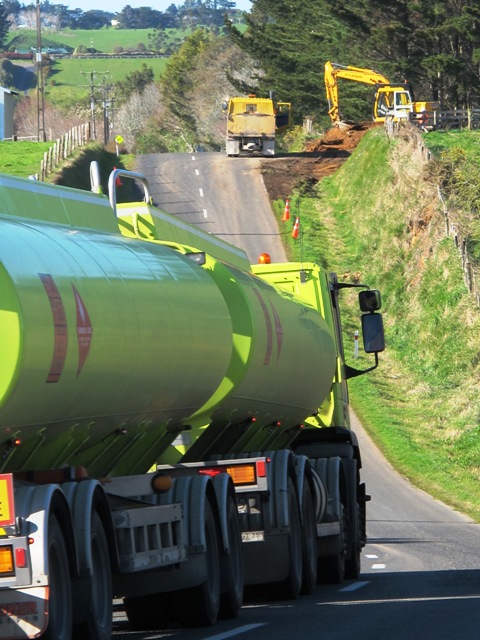
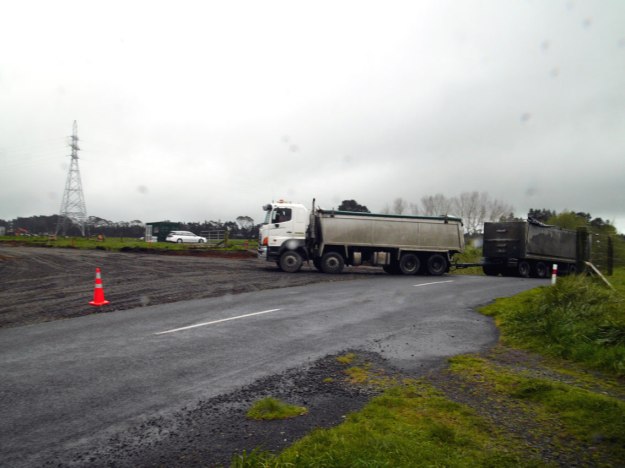
 * Tikorangi folk will be thrilled to see that, like Arnie, Greymouth Petroleum are back! They sure are back. Be reassured that we, here at Council, understand your concerns about safety issues at the entrance to their lovely new Kowhai C site but we are right across safety issues. All of us here at Council are well briefed on their Traffic Management Plan and there is no danger at all. It is perfectly safe.
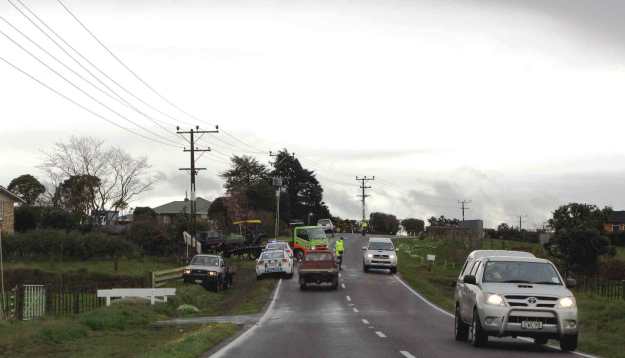
* It is idle speculation that a Greymouth vehicle may have been involved with this minor traffic incident on Ngatimaru Road at 3.45pm on September 4. We understand the lady in the ute who may have been rear-ended is absolutely fine although the ute may not make a full recovery.
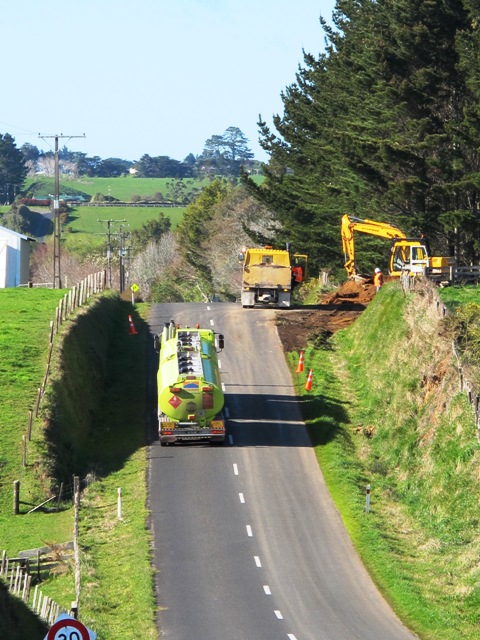
* Isn’t it wonderful that Greymouth have distributed their newsletter to local residents? It is so packed with handy information and updates so everyone is now really well informed as to what is happening. You will have noted their comment that “We choose sites as far away as possible from residents.” It is not Greymouth’s fault that you Tikorangi folk have your houses too close together. We have reviewed the situations of the neighbours’ houses closest to both Kowhai B and C at 350 metres or less and have concluded, in the most understanding way, that effects will be less than minor and therefore perfectly acceptable. You can trust us to protect your interests.
* Since learning that they were to get the consent, Greymouth Petroleum’s field staff have been busy as little beavers in the last week visiting local residents. This is called retrospective consultation with the local community. If you haven’t seen your Greymouth rep yet, give them a call. Offering them home made cake and a cuppa is a good way of showing them country hospitality.
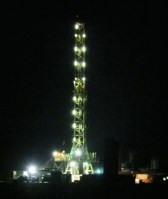 * The good folk at Venture Taranaki tell us they are well down the track of preparing their report on the economic benefits to Taranaki of flaring and night lighting sites. Local residents will be well aware that these activities have the positive benefit of lowering their household power bills. There are many other benefits and Venture Taranaki expect to be able to quantify the financial and employment benefits that accrue from the companies’ generosity with flaring and night lighting. Local residents may not realise that a side benefit of flaring is, reportedly, a reduction in flying insects and as a result the risk of a malaria or Ross River virus outbreak in Tikorangi has been greatly reduced.
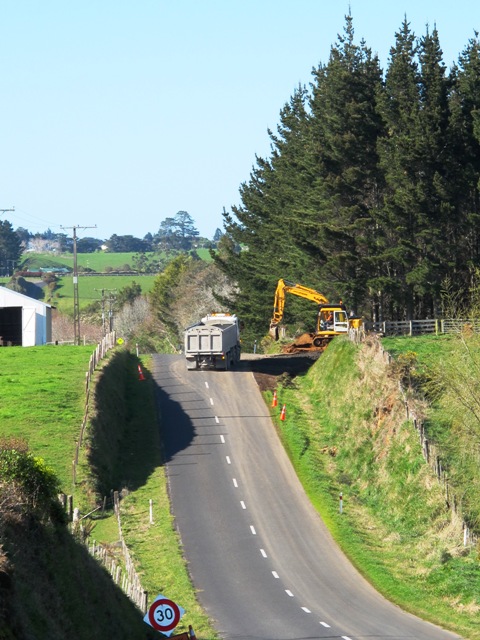
* Some Tikorangi residents have called for a lowering of the speed limit through the area. We have taken this suggestion seriously and sought independent expert advice. Contrary to what local residents may think, the expert advice is very clear that we should be raising the speed limit to 120km/hr. This simple action will result in a considerable lowering of risk because the time taken for heavy vehicles carrying hazardous loads to pass your property will be greatly reduced. We will be gazetting the new speed limit shortly and new signage will be posted.
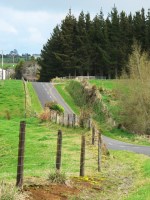 * Even we at NPDC have been astonished at just how quickly Greymouth Petroleum have been able to improve your local countryside. It took just one and a half days to change it from this boring and dull country road (shown to the left), into this lovely new scene shown below. You hardly know they are there, do you Tikorangi? This is the incredibly small environmental footprint they have.
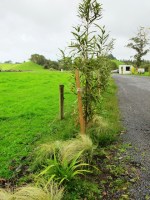
Todd’s plantings
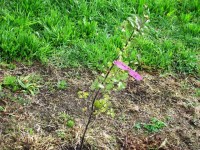
Greymouth’s pittos
* In the spirit of friendly competition, it is clear that your two local petrochemical companies are actively working to make their sites more beautiful than their rival’s. Todd’s entranceway to their Mangahewa C site features rewarewas with herbaceous under plantings. Not to be outdone, Greymouth have spared no expense and gone for high quality pittosporums along the boundary of the Kowhai B site. That is just the ticket. The companies are going to make sure that Tikorangi is more beautiful than ever.
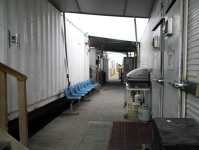 *
*  We have heard a few mutterings that some residents may not be happy about the establishment of a semi-permanent single men’s camp with the access on little Stockman Road. My, oh my, what whingers some people are. Such camps are commonplace in the outbacks of Australia and Tikorangi is just as remote. There haven’t been any problems with the camp at Mangahewa C site and we see its relocation to Stockman Road could be a positive move for the community. And of course if somebody wanted to build a hotel on Stockman Road, we would approve it so a single men’s camp is not so different. What could go wrong?
* Residents closest to Mangahewa C who are sad that the last well is to be drilled shortly will be so excited to hear that Todd Energy are planning to drill another four wells there in the near future. Such good news for all. Look upon this as a potential tourist attraction. In the meantime, lucky residents along Tikorangi Road will be pleased to hear that it is highly likely that Mangahewa E will be starting soon and you will get to enjoy the brand new, state of the art drilling rig painted in special colours.
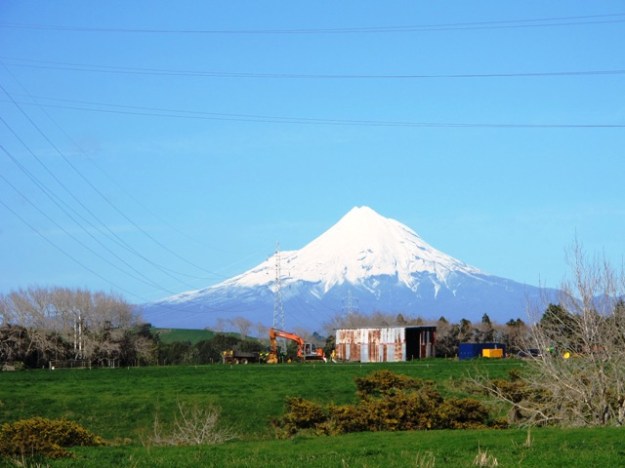
On that positive note, we conclude. Kia kaha Tikorangi! And if things get you down, raise a smile. At the office, we are running a sweepstake on how many more well sites can be fitted in Tikorangi. There will always be room for more.
Your very understanding team at NPDC.
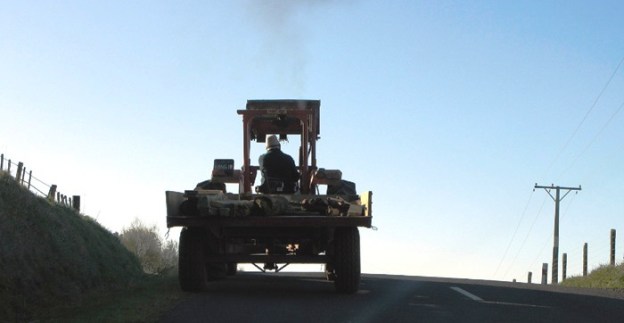

Click here to read the second issue of your Tikorangi News.
Click here to read the first edition of your Tikorangi News.
My letter to NPDC councillors, emailed on September 2. It has elicited just two replies. A courteous acknowledgement from Cr Biesek and a classic case of passive-aggressive self justification from a councillor who had best remain unnamed at this stage.
Dear Councillors,
It is difficult to convey the sense of betrayal felt at the news that your Council officers are ready to sign off the Kowhai C site. It will not be going to a hearing. I am assuming there are no affected parties under their interpretation of the RMA. There has been no community consultation.
The Tikorangi community came to you in good faith. The letter signed by 80 adults, 75 of whom live in the immediate block around the Kowhai C site, represented a rare expression of unanimity in the district in opposing that site. But you shelved that letter. Greymouth Petroleum has not even bothered to acknowledge receipt of it.
In good faith, we have spent countless hours working to find paths through the development. After all, we were only opposing one site. We could work with the other 12 well sites (now numbering 95 or so potential gas wells consented or in the process of being consented in Tikorangi with a further possible 17 that I know of – there may be more). There was always the sticking point of Kowhai C but your staff assured us it was “on hold”. Your website still shows it as “paused”.
And all the while, as we sat around the table with your staff and put in a great deal of work behind the scenes, those very same staff were working with Greymouth to repeatedly massage their application for Kowhai C to the point where it is now ready to be signed off. But they didn’t tell us that. The first we knew about it was when work started on the site last Tuesday.
Reassurances that it is for 4 wells only and for 15 years ring hollow. Now that they are in, it is easy for things to change and for later applications to vary the consent, based on existing use. There is already precedent for this at Mangahewa C. Councillors change, staff change. You have opened the door to industrial development in the one block which this community opposed.
What is more, in an historic move, Otaraua Hapu stood in solidarity beside Tikorangi residents to oppose Kowhai C site and told you that this is their territory and they had not been consulted or given their consent. Otaraua tell me that the courts have now confirmed that it is indeed their rohe although Ngati Rahiri have challenged that ruling so it is still before the courts. What is important is that Otaraua Hapu has still not been consulted and council officers have not responded to repeated messages and emails on this matter. Yet you are signing off their territory for heavy industrial development. It appears that no lessons have been learned from history.
All but one of the councillors around your table listened courteously and, I thought, gave us a fair hearing even though some of you showed definite allegiances soon after.
But you did nothing. So Kowhai C is going ahead.
Shame on Council staff. The so-called Tikorangi Protocol was based on good faith and trust. I have neither left.
Yours sincerely,
Abbie
 • We know that Tikorangi residents were united in their opposition to the Kowhai C site but we have GOOD NEWS. We have halved the number of gas wells Greymouth Petroleum can drill on this site. They are only allowed to have four wells – to start with anyway. This is a win-win situation. They win. And in the future, if they apply for a variation to their consent, they will likely win again.
 • Greymouth Petroleum have asked us to assure residents that they have not forgotten their undertaking to NPDC councillors on June 11 that they will be setting up a blog, holding community meetings and sending out community newsletters to keep you folk informed. They have just been such busy little beavers that they haven’t had time to do it yet. However, they do want everybody to know that they are very, very sorry about the incident back on March 17 when one of their loads took out the power supply to Tikorangi. They assure us that this was a fully compliant load and they are sure that there were pilot vehicles. Somewhere. Of course we understand that little accidents can happen.
 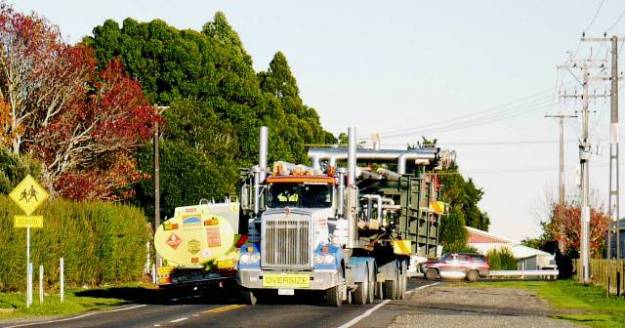 • We have had positive reports that the large loads on your roads are a special attraction for the preschoolers in the area. And some dads, too. Isn’t it just so cute how the appeal of big rigs never fades? You can tell your littlies that there is plenty more to come so the excitement will continue.
 • An innovative initiative is about to start as we want to teach Tikorangi residents that their roads are safe and that local children will be well looked after if they return to using the free school bus service. This will have the added benefit of reducing traffic on the roads if parents stop driving their children to school instead. “Keep left” will be the slogan. There is plenty of room in the drain for pedestrians, cyclists and horse riders. Wear gumboots if it is raining. Just stay as far left as you can because some of these are very large vehicles and the bigger they are, the more important they are.
 • New Plymouth District councillors want us to tell you what a wonderful day they had on their tour visiting the companies and they thoroughly enjoyed the hospitality. They are sorry they couldn’t fit in the residents on this recent familiarisation tour, facilitated by Tikorangi’s very own elected representative, Cr Craig MacFarlane. But they were reassured by the companies that any negative impacts on residents are grossly exaggerated and claims of increasing industrialisation of your district are nothing but hyperbole. They saw this for themselves so that is good news. You will be reassured by this and no doubt you will all be voting to re-elect Cr MacFarlane in appreciation of his sterling efforts on your behalf.