
 Twenty three gardens by twenty one New Zealand designers – this book has certainly prompted a great deal of discussion here over the past couple of weeks. There is a heavy bias towards high budget properties with stunning views in or around Auckland, often with hard-edged modern, architecturally designed houses. The response is dominated by hard edged, angular gardens, pared back planting schemes largely stripped of colour and heavily dominated by native plants. Water features and swimming pools abound, usually with wet edges of the infinity style (so that the body of water melds into the sky or sea in front) and sometimes with the water lapping at the walls of the house. Generally, there is little evidence that the property owners want to garden themselves. Most want an exterior which will complement their homes, their lifestyle and, apparently, the environmental context of the property.
Two things stop this book from being any more than one for the coffee table book. One is the absence of critique or interpretative commentary. It is a showcase presentation of a narrow selection of modern NZ garden design. The second is the actual design of the book. Unfortunately, the decision was made not to caption the photographs. This of course gives a very clean, some might say contemporary, look to the book but it is not a lot of help to the reader. This is even more so where four photographs are placed on a page with no borders separating the images. We know they are artsy because sometimes one or two are in black and white and sometimes they are cropped so heavily that you are not even sure what the detail that is shown is. Sometimes features referenced in the text are not illustrated in the photographs and it takes frequent flicking backwards and forwards to try and match text to photograph. Given the calibre of the photographer, this almost certainly comes back to the book designer, as does the photo selection.
From the point of view of the reader and given the reportage style of most of the writing, showcasing the photographs with extended captions instead of wodges of descriptive journey around the properties might have integrated text and illustration better.
Sally Tagg is vastly experienced in garden and plant photography. She doesn’t cut corners and the photography throughout is of a very high standard. The author, Carol Bucknell, has faithfully recorded each garden and gives the landscaper’s framework for the decisions behind the design and construction of each. It makes an attractive coffee table book but is unlikely to contribute much to the garden history of NZ.
Contemporary Gardens of New Zealand by Carol Bucknell, photography by Sally Tagg. (Penguin; ISBN: 978 0143 56694 6).
For more thoughts on the topic, related more to the ideas than the book, check out: Modernist gardening, modern gardens and contemporary design
First published in the Waikato Times and reprinted here with their permission.
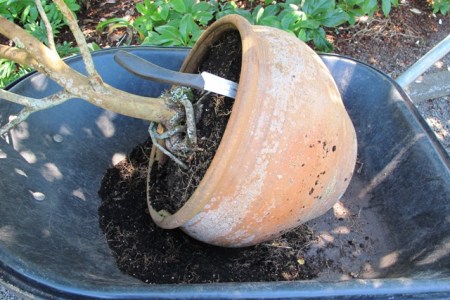 Choosing plant containers
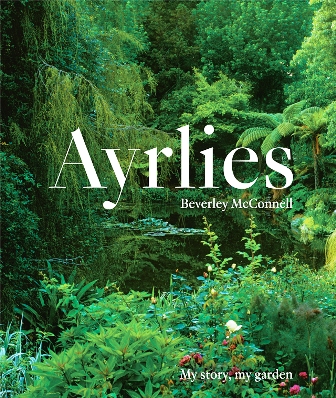 The subtitle of this book is “My story, my garden” and that pretty much captures the flavour. These are Bev McConnell’s memoirs and as both the author and her garden reach maturity, the timing seems entirely appropriate. Her garden, Ayrlies, is located at Whitford, south east of Auckland and over the past 40 years, both the garden and the gardener have earned a leading position. This is a book about a garden, not a gardening book as such. The author writes about her own experiences and while there is wisdom and advice contained in the text, it is not a manual or a reference book.
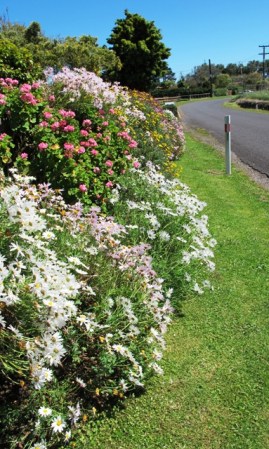 I smile each time I pass a property down our road. The frontage is a froth of flowers for much of the year. There is nothing choice. Most of them are common enough daisy bushes and pelargoniums which balloon out onto the road verge. It is just a delightful picture for the passing motorist – it being in a position where there is no foot traffic. What makes it a little bit special, to my mind, is that the sole reason for this planting is to bring pleasure to passersby. From my vantage point on the road verge, it looks as if the property owner would not really see this particular planting from their house windows or indeed from inside their garden. That shows a generous gardening spirit, in my opinion.
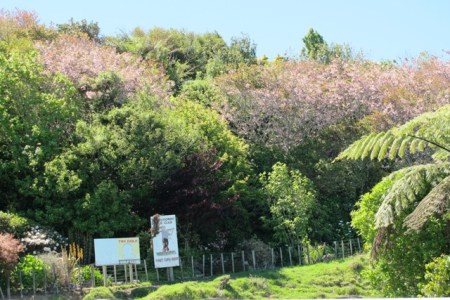
 Tikorangi The Jury Garden