Tag Archives: Abbie Jury

Grow It Yourself – Parsley

The parsley patch - naturalising nicely with the pretty but weedy forget-me-nots

The parsley patch - naturalising nicely with the pretty but weedy forget-me-nots

I am a huge fan of parsley. If you have a good big patch of it in the garden, you are never without a green veg, a garnish, a flavouring and a basic ingredient for all season pesto. Chop it through pasta, serve a thick layer on soup, use abundantly in coatings for foods – the options for use are numerous as long as you have plenty available. It is particularly useful in the depths of winter when you may have a shortage of other fresh greens. And you can feel virtuous because it is full of goodness if you eat enough.

The critical aspect of ensuring that you have an uninterrupted supply is to get it established two years in a row because this is a biennial plant. In its second year, it will set seed and die. As long as you leave at least one plant to go to seed, parsley can naturalise itself and pop up gently throughout the vegetable garden or even in the flower beds. Once you have established it two years in a row, it should continue under its own steam as long as you let some of the seedlings grow and are not too vigilant on the weeding.

There are two types of parsley – curly leafed (which is arguably more flavourful and easier to chop) and flat leafed Italian (which is allegedly sweeter and is certainly more trendy in modern recipes). Both grow in the same conditions so you can have either or both. Parsley is usually started in the first instance from seed. Be patient. It can take several weeks to germinate. While it is starting, it needs to be kept moist so if you are planning on sowing some, start before the dryness of summer. After that, just let it grow and start picking. It does not require any care and is generally free from pests and diseases.

First published in the Waikato Times and reproduced here with their permission.

In the Garden: November 4, 2011

The start of a new fortnightly series first published in the Weekend Gardener and reproduced here with their permission.

An easy method of killing unwanted moss

An easy method of killing unwanted moss

With our garden festival currently in full swing (now styled the Powerco Taranaki Garden Spectacular), all our efforts in the garden have been on presentation for the most important days of our garden visitor year. We call this garden grooming – a bit like giving your car a valet treatment. It doesn’t last long but it looks great in the meantime. When it comes to the lawns, we have made a deliberate decision to avoid chemical use where possible, both for weed control and fertilising. We use a mulcher mower, an edger and we hand dig flat weeds. As long as the rest is comprised of small, fine leafed green plants which mow well, we are willing to live with a mixed colony rather than just rye grass and fescue. At least our lawns are not toxic.

We don’t worry too much about moss in the lawns – it occurs most in shade where the grasses struggle. And if we were Japanese, we would revere the moss. But with our high rainfalls and humid conditions, we get a lot of moss growth on paths, brickwork and stonework. Often I will sprinkle soda ash (which is simply powdered washing soda crystals available from bulk bins) which kills the moss overnight. Indeed, cold water washing powders work equally well though I have found the leading brands are better than the budget brands – perhaps they have more water softener in them. Our chemist daughter reassures me that there should not be any problems of toxicity in using soda ash or washing powder to kill moss though if you get too carried away over time, you will be altering the pH of your soils because they are alkaline. I have experimented on grass and it kills moss without harming the grass. Do not do as someone I know – use so much that when it rained, his entire lawn foamed. The moss dies but does not disappear so you have to rake it out of lawns and brush it off hard surfaces.

Rhododendron seed head, missed from last year

Rhododendron seed head, missed from last year

Top tasks:
1) Deadheading rhododendrons. While conventional wisdom is that all rhododendrons including vireyas need deadheading, in fact only those that set seed need it. Setting too much seed can weaken a plant and even cause it to die over time. The others just look better for having it done.
2) Mulching garden beds. There is no point in mulching dry soils so we like to get it on before summer. We mulch frequently with homemade hot compost mix which means we rarely need to fertilise garden borders.
3) Getting the planting out of this season’s trees and shrubs completed. November is getting late for this but we soak all root balls thoroughly and can generally rely on regular rainfall here in North Taranaki.

Garden fashion – from designer trend to cliche

I fear my scatter cushions are more of the shabby chic genre than designer...

I fear my scatter cushions are more of the shabby chic genre than designer...

I attended a really interesting garden lecture on Saturday. Some readers may know Neil Ross from his regular contributions to the NZ Gardener magazine. He spent some years as head gardener at Ayrlies in Auckland but these days is back gardening, designing and writing in the UK. His talk was loosely on gardening trends in Britain and I thought readers might enjoy a summary of what is going out of fashion and what is on the rise, based in part on his analysis of the cutting edge garden installations by leading designers at Britain’s superb garden shows – Chelsea, Tatton Park, Hampton Court and the like.

Passing over (so they will look dated very soon in your garden, should you be contemplating them) are painted walls – usually solid plastered walls installed as a garden feature and painted in a dramatic shade with colour toned plantings. Sorry, passé now, along with gabions, thank goodness. The latter are wire cages, usually filled with rocks but sometimes with au naturelle branches and trunks cut to length or even pine cones. We always thought that gabions looked better when used for their original purpose of slowing erosion. They are a bit too industrial altogether in a garden.

Dribbly water features that look like urinals (Neil’s description, not mine) are looking dated, irrespective of whether that trickle of water is flowing out of a terracotta head, a gargoyle of any description or just a modest pipe. Keep to ponds (lakes are better), natural streams or at least a decent gush of water if you feel the need for a water feature.

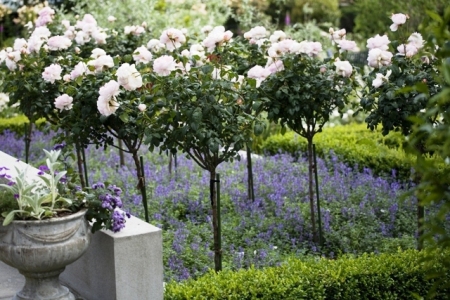
Box balls, Neil reports, have been so over-used as a formal feature that they have been done to death. Though he thought, in New Zealand it is not just buxus balls. It is the whole mini-Sissinghurst look of clipped buxus hedges and edges containing formal standard plants (be they roses, bay trees or choisya ternata) – a man after my own heart on this issue. Also done to death are designer scatter cushions accessorizing the display garden. I have to admit that I have been known to employ the scatter cushion on our rather unforgiving stone seats though mine are of the shabby chic genre (all my late mother’s tapestry, now heavily faded) rather than designer colours and textures. I only put them out when our garden is open and I went off that idea the time I forgot to bring them in and it rained….

The Missouri Meadow Garden at Wisley - perhaps the pinnacle of the prairie garden style

The Missouri Meadow Garden at Wisley - perhaps the pinnacle of the prairie garden style

The prairie garden is in danger of becoming yesterday’s design in England though we have never embraced this style in New Zealand. The Missouri Meadow at the RHS flagship garden, Wisley, south of London, is the finest example we have seen. But it relies on low rainfall and low fertility which hardly describes the dairy farming areas of New Zealand so we may never see prairie plantings popularised here.

If you want to be cutting edge, Neil’s advice is that the new trend is to keep chickens and indeed anything that is edible or food producing in the garden. I don’t think guinea pigs count. Beehives are all the rage, especially in cutsie-pie bee frames. Insect hotels are all the rage in English gardens though the research is that insects are happier in a natural environment (leave an old log to rot down) than in your designer Hilton.

Green walls are still a hot item but we agreed that they are expensive to install and a lot of work to maintain. It is easier to grow plants in the ground rather than in vertical frames, if you can.

Glass is in fashion, preferably exquisite, hand-blown glass features. At a pinch wine bottles might fit the bill in a creative wall construction which may suit the winos amongst us. But the suggestion I have seen to use old wine bottles as a garden edging is a really bad idea from a practical point of view, let alone the dodgy aesthetics. As you plunge your spade in to turn over the soil, you are just as likely to hit a bottle and break it.

Predicting the Return of the Conifer

Predicting the Return of the Conifer

And conifers are due to make a return. Not in a reincarnation of the awful 1970s style some readers may recall – a mass of prostrate junipers and the like plonked in through black plastic and then covered with that nasty red scoria. There were good reasons why that particular style of gardening fell from grace but the poor old conifers themselves did not deserve to be cast out to the wilderness along with the garden style. The conifer family is huge and there are many fine specimens from tiny treasures to handsome, long-lived landscape specimens. Used judiciously as accent plants throughout the garden, they can give a splendid year round shape and definition as well as variations in colour. Thank goodness we still have ours – after sixty years, some are getting venerable and we would not be without them.

In place of prairies and meadows, more block planting of perennials is returning – check out the work of Tom Stuart Smith or Piet Oudolf.

The final caution comes not from Neil but from the Garden of Jury – beware of rills and obelisks. They are on the cusp of passing from innovative to hackneyed. It is a very short step.

First published in the Waikato Times and reproduced here with their permission.

Garden design – a starting point

First published in the Waikato Times and reproduced here with their permission.
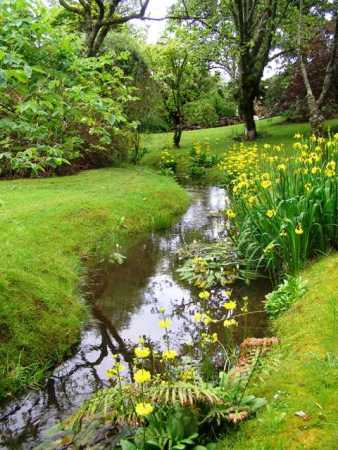
A sense of arrival - but keep it in proportion to the size of the property and the house

A sense of arrival - but keep it in proportion to the size of the property and the house

Garden design is certainly all the rage these days, but if you can’t afford or don’t want to pay a professional designer, where do you start? Without for one minute pretending that a brief column can do justice to design, I would suggest three principles as a starting point.

  1. A sense of arrival.
  2. A sense of journey.
  3. An underpinning principle of logic (with some common sense).

Stand back and look critically at your property from the point of entry or roadside. If you look at good gardens or handsome properties, most will convey a sense of arrival. You know you are in the right place and you can see clearly where you are to enter the property and which direction to follow. This is usually achieved by way of hard landscaping or structures – a fence or hedge (which rates as a green structure), maybe gateways, a driveway and paths. But those arrival features should be in keeping and appropriate to both your house and to the scale of the property. If your lot in life is a tiny, town section with in-fill housing, putting up an imposing gateway and fencing is more likely to make your place look like a prison. And if you own a little wooden cottage, tall brick or plastered walls will just look incongruous. So keep the scale appropriate. Materials used should relate to the house and outbuildings, though if yours is a corrugated iron garage, a hedge may be more pleasing.

Set about softening the entrance with plants. Whether you use formal, matched pairs, an avenue or a froth of pretty flowers is entirely a matter of taste. It is the structures and paving that give form, but it is the plantings which make it appear welcoming and give the interesting detail.

The promise of a journey is possible even on very small sites like in the town garden of Thorveton

The promise of a journey is possible even on very small sites like in the town garden of Thorveton

Creating a sense of anticipation, maybe even mystery, is dependent on making sure that the whole garden is not visible at first glance. It sounds simple, but if you walk along any city street, you will see many gardens where all is revealed from the frontage. There is no invitation to explore or sense of journey. What you see is what you get.

The larger your garden, the easier it is to achieve that promise of journey, to hold back discoveries until you venture further. You may think it is impossible to do on a small, flat section. Not so. It takes a bit more skill and thought, but it can be achieved with a mix of strategically placed plantings and maybe some structures.

But it is the underpinning principle of logical sense which we always keep at the forefront of our minds whenever we plan developments in our garden. Too often have we seen design mistakes where people have dropped in a feature because they feel they need a focal point without thinking about whether it has logic to its selection and placement, beyond being a contrived focal point. The most common and reasonably expensive mistake is summerhouses and gazebos. These structures are all about entertaining and socialising which involves food and drink. If you site it more than 20 metres from your kitchen, odds on you will rarely use it. It just becomes a redundant structure with little purpose. Unless of course you have servants to do the fetching and carrying.

The same goes for garden seats though you may carry your coffee mug 30 metres in this case. A seat is for sitting upon – make sure seating is located where you want to sit, not just to look good from afar.

One pet dislike here is contrived water features where the use of a pump has cascading water flowing from a dry hill or mound, magnified by the sound of the pump and the installation of a fake waterfall. Water does not flow from dry mounds and the installation of such a feature is more often unsubtle fakery which lacks any logic. It is a lot of trouble to go to when you are probably better off with a simple pond, whether it be formal (imposed upon the landscape) or natural in appearance. But if you are going for a natural looking pond, logic says it should be at a lower point of your property.

If you have a large garden, it makes sense to have your intensively gardened and detailed areas closest to the house and living areas. As you move further away, a more natural, loosely maintained style is entirely appropriate. It can look very odd to drop in a formal or highly structured feature in the outer reaches of the property. And common sense says you will never maintain it as tightly as you should, simply because you don’t pass it every day.

How you choose to garden within the design framework is entirely up to personal taste, as is the choice on going with straight lines to give formality or looser curves to evoke a more romantic naturalism. But essentially, good design will mean your garden is an extension of your living space and not just a matter of keeping up appearances.

Simple Ideas to Import (from Spain and Portugal)

First published in the Weekend Gardener and reproduced here with their permission.

Tiles
Both Spain and Portugal have long histories of bright tiling which can look garish and out of place in different cultural and geographic contexts. However, the more restrained use of tiling, seen here at the Royal Palace in Seville, may fit the bill in more humble abodes in New Zealand. Setting a small tile into a predominantly brick paved area reduces the problems of a slippery surface when wet. Clay bricks (which grow moss too readily in many parts of this country) could be replaced with concrete for a safer walking surface.

Using bright tiles on the risers of the steps with very plain treads adds detail without being too dominant.

Mosaics

Personally, I am not a huge fan of the modern fashion for colourful and often rough mosaics and I suspect it may go down in history as an aberration in good taste on a par with macramé. The mosaics of antiquity in Spain were wonderfully detailed and executed with precision and go to show that good design and craftsmanship are timeless.

Mixed modern paving

We can certainly learn from the detail of modern paving, these examples are from Madrid. Bold, geometric designs, variations in texture and a subtle mix of muted colour can make an expanse of paved or sealed area a great deal more interesting. A mix of different sized pavers, flint, and flattish pebbles of a fairly small grade set in concrete make a pleasing surface.

Mixed paving and tiling

These two examples are from the famous Alhambra in Granada and may appeal to those who are looking for more detail in their paving. The small coloured tiles set in the brick squares are probably very old but recycled in a much more modern construction. The long view down the avenue is also a recent reconstruction and the detail is used to accentuate design features. These details have been picked out in black pebbles placed on their side which gives a relatively uneven surface which must be impossible to sweep. A blower vac would be needed to keep this area free of garden litter and debris.

Blue tree
Clearly one tree died in this avenue in Queluz, Portugal but that did not deter the local authorities from turning it into an eyecatching feature. It was painted well. Twiggy growth and loose bark must have been removed and it was given more than one coat of paint. Choosing a colour other than bright blue might make it a more subtle option for a home garden. A muted rusty red would be less visually dominant, while a cream could light up a dark area.