Tag Archives: Abbie Jury

Plant Collector: Rhododendron Loderi Venus

Loderi Venus - still at the top of its class

Loderi Venus - still at the top of its class

If ever there was a good reason to learn to graft plants at home, it is the Loderi rhododendrons. These used to be widely available in the days when specialist rhododendron nurseries produced a huge range and when customers understood that sometimes special varieties need to be grafted, so were willing to pay a premium. These days there will only be one or two places in the whole country still producing these lovelies, which can’t, in the main, be grown from cutting.

The Loderi group date back to the turn of last century when Sir Edmund Loder of Leonardslee near London crossed fortunei with griffithianum. The results were rather large trees with exceptionally large flowers, fantastic fragrance and reasonable hardiness. Despite the passage of over a century, little has been produced that is the equal, let alone an improvement, in the big, fragrant class of rhododendrons. This one is Loderi Venus. Unfortunately our mature Loderi King George bit the dust when one a huge Lombardy poplar landed on top of it but Mark is hoping that his emergency grafts will take so that we can keep it represented in the garden. Venus has the best pink colour of the group and is a picture in full flower.

In the Garden this Week: November 5, 2010

· Narcissi fly are on the wing, circling in search of somewhere to lay their eggs. It is the hatched larvae which will burrow in and consume bulbs, causing the damage from inside out. The flies start circling in the heat of the day. Mark can be found in our rockery stalking them individually with his little sprayer of Decis, which is a synthetic pyrethroid. The non chemical alternative is to stalk them with a fly swat in hand but you have to be very quick to get them. Removing spent foliage and mounding the soil a little deeper over the bulbs will also help protect them. Narcissi (daffodils) need 65 days of growth in order to make the bulbs strong for next season so as long as you recall seeing the foliage emerging by late August, it is safe to strip it off now. Narcissi fly attack daffodils, hippeastrums, snowdrops, snowflakes and quite a number of other bulbs growing in sunny positions. The offender looks like an inoffensive small blowfly but with a yellow lower abdomen.

· In the vegetable garden, leave the brassicas now til the end of summer (that is the cabbage, broc, cauli family) because the white butterfly will decimate summer crops but you can be planting pretty much anything and everything else now – lettuces and all salad veg, peas, green beans, runner beans, cucurbits, main crop potatoes, kumara, yams, tomatoes. If space is very limited, go for quick turnaround greens and higher value crops rather than those that take up a lot of space (in other words lettuces and capsicums rather than gherkins and pumpkins).

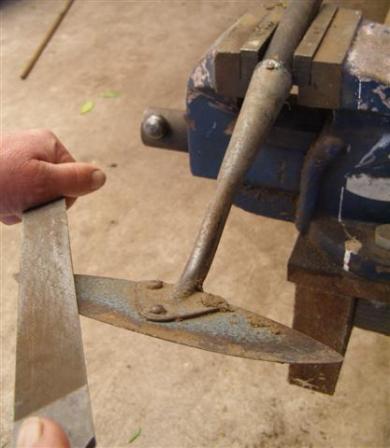
Keep your push hoe sharp for good results

Keep your push hoe sharp for good results

· Stay on top of the weeding. Regular push hoeing before plants have a chance to set seed is very effective, especially done on a hot, sunny day so the weeds wither and die quickly. Push hoeing also keeps the soil tilled and friable. It is easier if you keep your push hoe sharpened – you can do this with a file from time to time.

· If you have not covered your strawberries yet, you are risking your harvest. The birds don’t understand about waiting until they are ripe – as soon as they showing any sign of red, they will be into them. Use bird netting held up with cane hoops or something similar. Laying straw or dried grass beneath the plants helps keep the fruit clean and reduces the chances of rotting if we get a wet spell.

· Water container plants daily now unless we get rain. A little often is the mantra.

· Coating your fingers in cooking oil before going out to deadhead rhododendrons stops the sticky goop on your fingers.

· If you have small children in your life, plant a few sunflower seeds with them and go for the giant heads. They will need staking and tying in due course but it is a pretty amazing experience for little ones to see plants which will grow quickly to three or four metres and have a spectacular flower head. They won’t forget it.

Tried and True: Lachenalia aloides

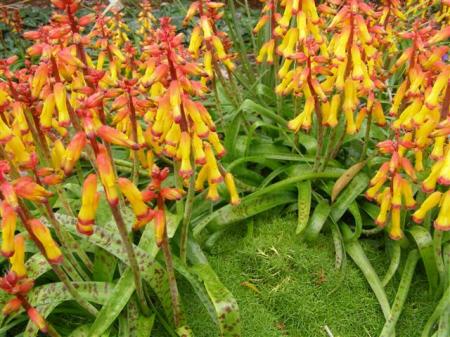
Lachenalia aloides

Lachenalia aloides

• The easiest lachenalia to grow.
• Widely available, from many other gardeners if not from every garden centre.
• Bright winter colour.
• Often sold as Lachenalia Pearsonii.

In the gloom of winter when the main colour comes from pink camellias, the early flowering lachenalias ring a colour change to orange and red. Whether you consider this form of aloides to be garish or cheerful depends on your personal taste. It is the most common lachenalia in New Zealand and is often referred to as Pearsonii. It has two strappy leaves per bulb, usually with burgundy spots. These are South African bulbs which thrive in areas which have winter rainfall although even the toughest aloides will not want to be out in hard frosts. Lachenalias have a long dormancy period so are easy to lift and divide.

Try underplanting citrus trees to repeat the colour, or we find it also combines well with the green, mounding hillocks of our native scleranthus biflorus. It will combine equally well with any predominantly green scene to add a bright spot.

Tikorangi Notes: Friday October 29, 2010

Latest posts: Friday October 29, 2010

1) Sumptuous nuttalli rhododendrons are coming into flower, particularly the appropriately named Floral Legacy.

2) Countdown to Festival – the penultimate episode for this year as our annual Taranaki garden festival starts today.

3) Our tips for garden tasks this week.

4) Outdoor Classroom this week is about rhododendrons – common problems and suitable remedies.

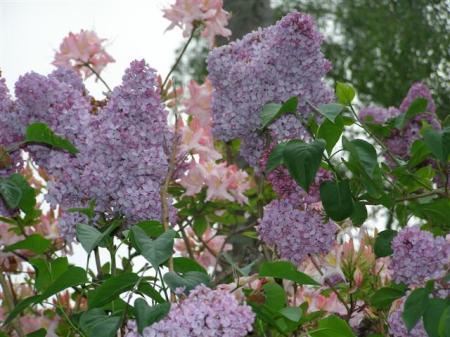
Even at 7.30am, the lilac flowers and adjacent apricot azalea are a delight this week in our driveway
Even at 7.30am, the lilac flowers and adjacent apricot azalea are a delight this week

Tikorangi Notes: Friday October 29, 2010

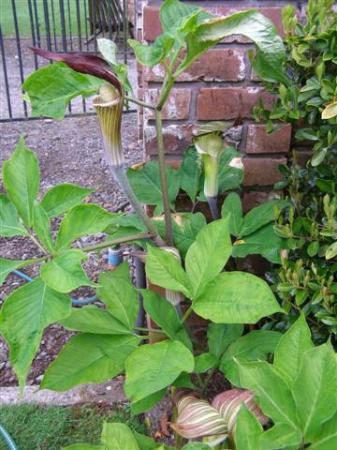
Mark's hybrid arisaemas are a real feature

Mark's hybrid arisaemas are a real feature

Today is the first day of our annual garden festival – an event which delivers a hefty portion of our annual visitors in a busy 10 days. All around our province, gardens are groomed, swept, weeded and trimmed in preparation and garden owners are waiting to meet and greet. At this time of the year it is mostly the maddenia and nuttallii rhododendrons in flower for us, along with the deciduous azaleas. Mark’s arisaemas make pretty unique bedding plants throughout, the rhodohypoxis make carpets of colour and the roses are just opening.

Countdown to Festival: October 29, 2010

Somebody has already sampled the Moroccan date and spice cake

Somebody has already sampled the Moroccan date and spice cake

• It is here. We have counted down and opening day has arrived. It is too late to do anything but titivate for garden openers who will be out waiting to meet and greet visitors from this morning onwards. Local support is enormously important so I would urge readers to take a leaf from the bridal book and go and see one garden that you have been to previously and enjoyed, one garden that is new to you, one garden that you think may have some really good ideas for you to borrow and presumably one garden that has wisterias for the blue element! Maybe blue Siberian irises or ceanothus would do instead.

• We are a bit worried about potential weight gain here at Tikorangi this week. For the first time we are offering food for sale on Fridays, Saturdays and Sundays – courtesy of our neighbour Chris Sorensen. Now, we know from experience that her Greek lemon cake is almost divine (cooked with coconut and almond meal and drowned in lemon syrup and glaced lemon slices) and that her carrot and pineapple cake with pecans is a tour de force. It is a source of some chagrin to me that our Chris is a hugely more talented baker than I am but garden visitors will be the lucky ones to sample her offerings menu this week. The menu includes both hot and cold savouries as well but Mark and I have yet to conduct our quality control survey on these items.

• Near Manaia, Jenny Oakley has had cause to be grateful that they don’t get passers-by or casual evening visitors or she might feel embarrassed to be seen out at night with miner’s lamps strapped to her head as she waters her containers and hanging baskets and ties up her broad beans. The family gave her one as a joke Christmas present one year so that she could continue to garden after dark but they didn’t expect her to actually wear it! Experience has shown her that she needs to wear two at once in order to get enough light, which she says is not a very flattering look.

• In Stratford at Merleswood, Erica Jago has been glorying in some welcome sunshine recently which has her plants making up for the slow and cold start to spring. Being inland, Erica’s wisterias flower a little later than coastal gardens so peak during Festival and she has enormous and well trained specimens. Her Venusta, she says, must be at least 65 years old and is very striking with its strong lemon scent and big, fat, stubby, creamy white racemes. Various other cultivars in blues, lavenders and pink tones festoon their way around her garden. Erica’s rugosa rose hedge is bursting into bloom. The major work she undertook on this hedge over winter, which she says was arduous (syn. a cow of a job!) has paid off with a much better display this year.

• The call is out for anybody interested in opening their garden for the 2011 Festival to contact festival manager (Lisa Haskell) at TAFT on 06 759 8412. While it is undeniably a lot of work to prepare one’s garden, the pleasures and rewards of opening outweigh the labours. It is really affirming to have many hundreds, sometimes thousands, of people come and enjoy your garden and tell you how wonderful it is, though some of us might hide a wry smile at suggestions that we are lucky to live in such a beautiful place. There is not a lot of luck involved.

• Events this weekend include the inimitable Lynda Hallinan (From Chelsea to Chooks – how to be self sufficient in style), floral artist and micro-greens devotee Fionna Hill and our very own Jenny Oakley giving a workshop on hanging baskets. There is, as many of us have found out, a little more to good hanging baskets than plonking in some potting mix and a few pansies. Events kick off this evening with jazz and wine at our garden here at Tikorangi where we are slightly nervous about the number of tickets sold – divide by two and it gives an estimate of the number of cars to expect. Where will we park them?

• And a final word on etiquette for garden visitors although the source wishes to remain anonymous. Even with the best intentions, saying to a garden owner: “I guess the garden looks after itself these days,” is not a compliment. Gardens by definition do not look after themselves (native reserves and national parks do that). Gardens need a lot of looking after and that relaxed and natural look, which has a debt to the English romantic tradition of gardening, takes work.