Tag Archives: Abbie Jury

Flowering this week: Eucomis or pineapple lily

Neither pineapple nor lily, this burgundy coloured eucomis is a feature in our summer garden

Our best guess is that this is a good form of Eucomis comosa, possibly a hybrid. It actually has nothing to do with pineapples or lilies because it is a bulb from South Africa and belongs to the hyacinth family. But the flower with top knot is seen as resembling a pineapple and that may be more PC than referencing caricatures of certain indigenous tribes who favoured top knots. The bulbs are big fist-sized affairs and build up quite readily in well drained, sunny positions. Each bulb makes a large clump so it is a plant for the summer herbaceous border where it has room to spread out and where it doesn’t matter that it leaves a bare area when it dies off in autumn. The long-lived flowers are apparently widely used in floral work and because the eucomis is happy to grow in covered houses, flowering seasons can be extended.

Our eucomis has leaves which are a subtle blend of burgundy and brown with a green undertone, bright burgundy flower stems and buds opening to a scented lilac flower with lovely yellow anthers. Green forms of eucomis are more common and there has been a range of dwarf eucomis hybrids introduced in recent years. This is a genus that lends itself to hybridising and it is generally an easy garden plant in our favoured conditions here in Taranaki.
In the Garden January 29, 2010

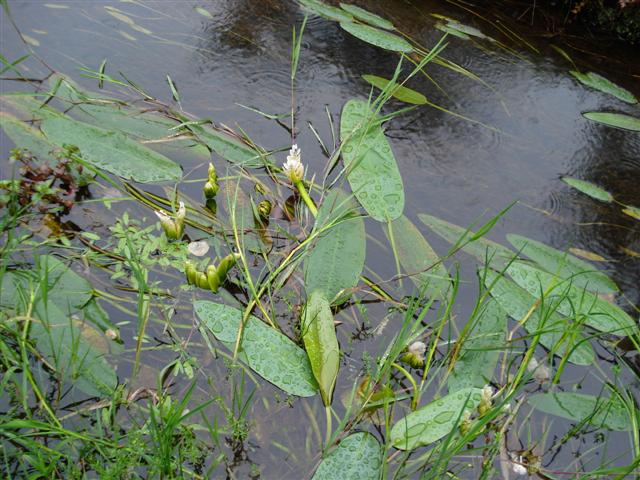
The buds and flowers are edible and it may be pretty but the Cape Pond Weed is dangerously invasive in our waterways and should be shunned at all times

The buds and flowers are edible and it may be pretty but the Cape Pond Weed is dangerously invasive in our waterways and should be shunned at all times

  • If you have hydrangeas full of fresh foliage but precious few or no flowers, the likely problem lies in your winter pruning. Most hydrangeas set flower buds on last season’s growth so if you cut them off at ground level or too low down the stems, you have cut off all the next season’s flower buds. You can not make them flower this season but get some advice before you prune again this coming winter or be less brutal.
  • The end of January usually heralds the time when garden centres start to take delivery of spring bulbs which are sold dry because they are dormant at this time. If you are after anything beyond the usual mass runs, you will need to start haunting your garden centre because anything rare and choice is likely to be available in small numbers only and to sell out quickly.
  • Summer is a good time to give some attention to water gardens and ponds. You are less likely to suffer from hypothermia and the water can start to get pretty green and algae ridden as temperatures rise. If you don’t have fish, you are highly likely to have a breeding ground for mosquitoes unless your water is flowing. We saw a solar powered mini fountain in a friend’s garden in London which was to counter mosquito breeding but don’t know how widely available they are here. The alternative is a plug-in water feature to keep the water moving. A squirt of CRC across the surface of the water will kill the larvae. You may need to seek advice from your garden centre on algae treatments. The simplest water feature of all is a smaller growing water lily plant in a large bowl and a single water lily flower can be a vision of simple perfection. Never but never unleash oxygen weed into flowing streams and shun the African Cape Pond Weed (water hawthorn or Aponogeton distachyum). We know how invasive both are and Mark battles infestations annually in our stream and ponds.
  • If you have an onion crop, the indication that they are ready for harvest is when the stems turn brown and bend over. Once you have dug the onions, they need to dry out for a few days before storing them. Plaiting them or using mesh onion bags is to allow continued air movement so they don’t rot. Don’t store them in plastic and hanging them is better than boxes on the ground. The same storage rules apply to garlic.
  • It is the last call for sowing sweet corn. Given a reasonable summer and autumn it will mature just in time and then as temperatures drop, it will hold in the garden (it stops growing) part way into winter which greatly extends the fresh corn season. You may never buy frozen corn again.
  • With the many fruit trees sold in recent years, some readers will be picking their plums if they can beat the birds. The best time to prune and shape your plum tree is straight after harvest. You reduce the chance of silver blight entering the tree if you summer prune. The same applies to cherries, both ornamental and fruiting, almonds and indeed all stone and pip fruit and their ornamental relatives.

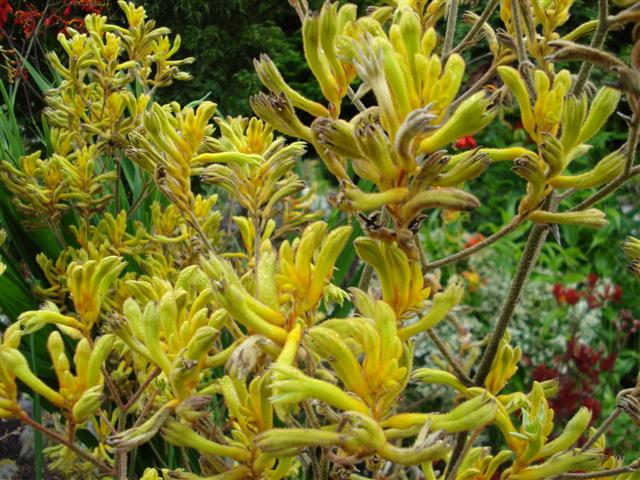
Flowering this week: anigozanthos, probably a flavidus hybrid.

The Australian anigozanthus requires perfect drainage in our conditions

I have never been up close and personal with Kanga and certainly not so near that I can examine her feet, so the reason why the anigozanthos family are widely referred to as kanagaroo paws eludes me. While the flowers are slightly furry, that doesn’t seem sufficient reason to liken the two. But these interesting clumping, evergreen perennials from South Western Australia are worthwhile additions to the sunny garden, if for no other reason than that they flower most of the year.

The critical issue with anigozanthos is perfect drainage. Apparently flavidus is more tolerant of damper conditions than the other species (which may be why this yellow one thrives where we have lost others over time) but we are only talking tolerance of Australian damp which is not at all the same thing as Taranaki damp. Perfect drainage, a raised bed and very open conditions are still recommended.

Modern breeding has led to the commercial release of a range of jewel-like colour combinations going well beyond the common red and yellow toughies, more into the rosella parrot colourings. We have tried a number of these over the years and gradually lost the lot – you should have more success if you garden in sandy, coastal conditions. But the reliable yellows and reds give consistent and curious flowers in our rockery and are also good as a cut flower. This yellow plant puts up flower spikes to around 150cm and, bless, they hold themselves up without staking. Many others are a great deal more compact and with flower spikes closer to 20 or 30cm

Anigozanthos are frequently available in garden centres.

In the garden this week January 22, 2010

  • Only mad dogs, Englishmen and dead keen gardeners are doing much in the ornamental garden at the moment. But do stop weeds from going to seed if you want to save yourself a great deal of work later. If you catch them before the seeds are set, you can push hoe them or just pull them out and leave them to frazzle in the sun. But if you can see seed heads formed already, you will have to gather them up and either put them out in the rubbish or hot compost them. Weed seeds will survive baking in the sun and indeed survive most people’s compost heaps which don’t get hot enough to sterilise. If you have rubbish collection, the wheelie bin is the safest option for seeds.
  • While you can’t be doing much planting in the ornamental garden, you can at least summer prune, limb up, tidy up and deadhead. We tend to be spring garden specialists in this country and can look rather dull, green and tired in full summer. A grooming round can freshen it all up considerably.
  • We summer prune the roses constantly, trimming back to leaf buds where possible, deadheading and generally tidying up the bushes. If you don’t spray your roses, this is an important process to look them looking half way decent. The books all recommend watering and feeding too, but we don’t tend to get around to this.
  • Most clematis which have finished the first flush of flowering and which may now be sporting an unfashionable powdered white look (powdery mildew) can be cut back to a few centimetres of growth. Feed them, give them a good drink and they will spring back into fresh growth and even flower for you in about six weeks. You can not do this to all clematis, but most of the hybrids that you buy will respond to this treatment.
  • In the vegetable garden, harvest continually to encourage the likes of beans, cherry tomatoes, cucumbers and courgettes to continue producing fresh crops.
  • Even though we have had little real summer yet, the end of January signals the time to get late sowings of corn in to carry you through to early winter. Planted after that, they are unlikely to mature in time.
  • Basil is best pinched out to encourage bushy plants.
  • Most garlic will be ready to be harvested and alas after a bumper crop last year, we are going to be lucky here to have sufficient to keep the vampires at bay. Store in cool, dark conditions with good air movement – in other words plait them in traditional style or recycle mesh onion bags.
  • If you enamoured of the Brussels sprout, you need to be getting in plants right now if you want to be confident of a harvest later. Keep up with sowing fresh salad greens – a little often is the key.
  • The new gardening programme on Prime (Sunday at 7.00pm) is all about learning to veg garden but unless you fit the demographic (urban dwelling female, under 40, upwardly socially mobile and probably drinking skinny milk decaf latte and driving a people mover), it may not inspire you.

Gathering seed: a step-by-step guide with Abbie and Mark Jury