Tag Archives: Abbie Jury

The later flowering lachenalias

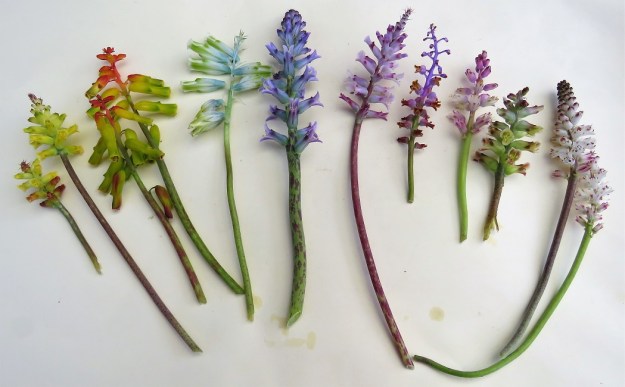
Left to right, probably arbuthnotiae, aloides tricolor, aloides vanzyliae, glaucina x 2, mutabilis, what came to us as carnosa but probably a hybrid, don’t know (or can’t remember) and contaminata – a round up of some currently in flower this morning 

Back in August 2015, I wrote what I called part one about lachenalias, covering the early bloomers.  It has taken me three years but I return with part two on the late bloomers. Back in our days of putting out a mail order catalogue, we used to offer a range of over a dozen different lachenalias, all but one or two being species, and we gathered up every different one we could find for the garden. By the way, our last mail order catalogue went out in 2003 (yes! 2003!) so we have long since stopped supplying plants. If you are in New Zealand, try Trade Me which is one of the last places you can source some of these less common bulbs.

In the years since, some have proven themselves in the garden and others have faded away. The early season varieties in that first post are all easy and reliable as garden plants (L. bulbifera, L. aloides quadricolor, L. aloides var. aloides and Mark’s L. reflexa hybrid). Others are best kept in pots if you want to ensure their continued survival.
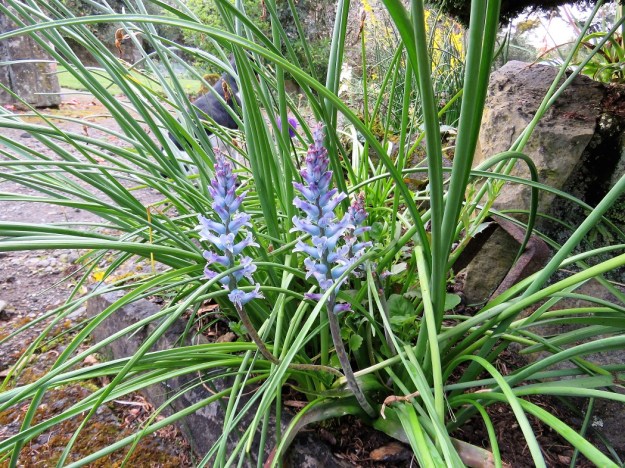
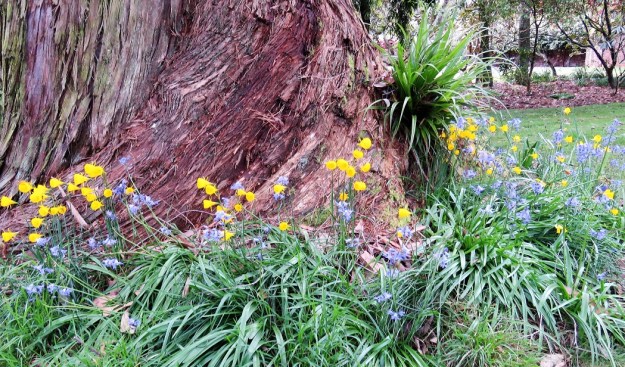
Lachenalia glaucina flowers, nestled in amongst the foliage of narcissi which have already finished blooming. The lachenalia’s foliage is much sparser and close to the ground

In the blues the absolute stand-out is Lachenalia glaucina, or at least the good forms of it. It can throw a lot of seedling variation. It was difficult as a nursery plant, partly because it was frost tender and we were growing the bulbs in open conditions, not under cover. Over the years, it has become one of most successful varieties in the garden – in an understated sort of way. I used to encourage less experienced gardeners to choose L. mutabilis instead because it was much easier and more reliable, while still a good blue. Now I can tell you that it was easier in a pot.  I am not even sure that we still have it growing in the garden. I rounded up one somewhat moth-eaten flower from a bulb that is struggling on in the heap where we dump our used bark potting mix. The other blues we used to grow like unicolor, mediana, and ‘Te Puke Blue’ have not thrived in garden conditions and the only plants we have left are in Mark’s covered house, where only he ever gets to see them. The same with the beautiful cream lachenalia with the terrible name of L pustulata (on account of its warty leaves).
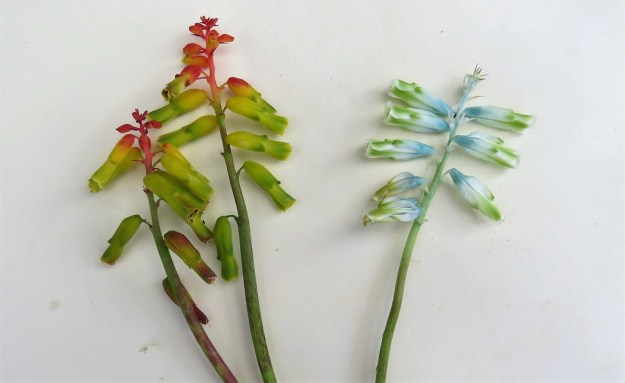
Lachenalia aloides tricolor and aloides var. vanzyliae

Lachenalia aloides is an interesting species. It gives us the most common of all lachenalias in New Zealand – the strong growing orange and yellow one that looks as if it should be sold amongst the fake flowers at The Warehouse. That form has finished flowering for the season, as has its four-coloured variant, quadricolor. But look at these two late flowering forms of same species. L. aloides tricolor is a combination of green, yellow and red, finer in form than the usual aloides. It is easy to grow and reliable. And then there is L. aloides var. vanzyliae – surely the most desirable of them all and also the most unreliable. Ain’t that just the way? Who wouldn’t want a big patch of this little charmer in pristine white with highlights of aqua blue and lime green? It is at least still growing for us but I would hardly describe it as flourishing.

The other two from the top line-up that have proven to be easy and reliable here as garden plants are creamy L. contaminata (it has naturalising potential) and the pink one that came to us L carnosa but Mark thinks is a hybrid.

As always, it is the detail that gives us delight in our garden, not just the big pictures.
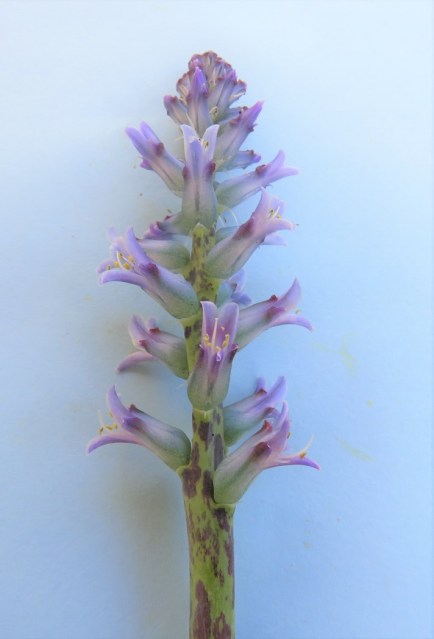
Glorious glaucina – the best performing blue lachenalia in our garden

Postscript: rather than rewriting the same information, I copy below the general info I wrote earlier about the genus of lachenalias:

Lachenalias are South African bulbs, mostly from the Cape Province. Some are very easy to grow, others less so. Naturally the very choice varieties are the ones that are less amenable but that is always the way. Some are desert plants and we struggle with those, but the ones that grow in areas of winter rainfall are generally easy and reliable in our conditions. A few, like L. glaucina, are particularly frost tender. Lachenalias last very well as a cut flower and will out-bloom most other late winter and spring bulbs in the garden. L. bulbifera is already in bloom by the beginning of July while the white L. contaminata flowers through November. A family of easy-care bulbs which gives us a full five months of blooming across the colour spectrum – what is not to like?
Notes from the Garden of Jury, September 30, 2018

The early spring bulbs are over and we are now into mid-season. We garden with many, many bulbs and probably find them a great deal more fascinating than most who are less enthusiastic. I could wow a few readers with the Phaedranassa cinerea or maybe the Cyrtanthus falcatus in bloom now, but to the casual eye, a simple planting of bluebells and Narcissus bulbocodium naturalised around the base of an old eucalyptus tree is likely to be far more charming. That eucalyptus dates back to around the 1870s when Mark’s great grandfather planted several around the property. They are messy trees because they shed bark and small twiggy growth all year but look at that interesting twist in the trunk that some varieties develop with age.

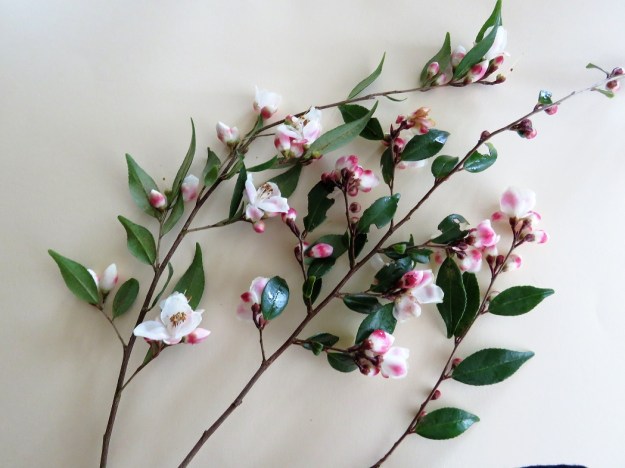
Camellia minutiflora – a charming and graceful species

The flowers are delightful and abundant but small – C. minutiflora again

I do a lot of flower and garden photography although I would only describe myself as a gardener and writer who takes photographs, not a photographer as such. And some flowers are really difficult to photograph. I feel I have got to grips with magnolia images but making a series of flower shots of some genus can be particularly challenging. It is mighty hard to make a whole lot of full trussed rhododendrons, japonica camellias or hybrid tea roses look interesting rather than a series of blobs. More on rhododendrons later in the season. But so too is it difficult to capture some of the smaller flowered shrubs, conveying their charm. I have taken many photographs of the dainty camellia species, C. minutiflora, and they remain a dismal failure in capturing the simple visual delight to the naked eye. It is such a delightful plant that we have used it in a number of places through the garden. In the end, I decided I just had to pick a few sprays and lay them on a plain background to try and show just how sweet this little camellia is when you can see the detail.

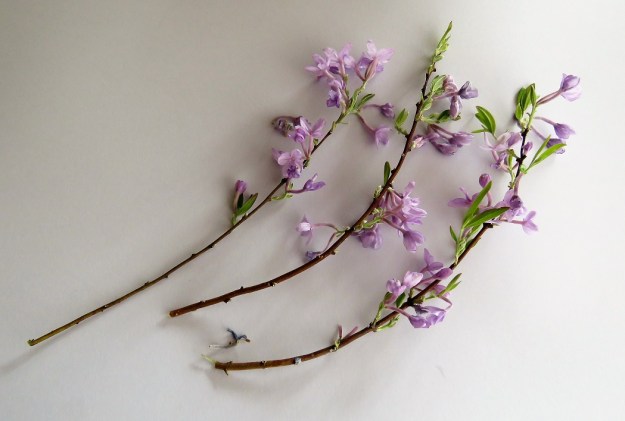
Daphne genkwa – the blue daphne

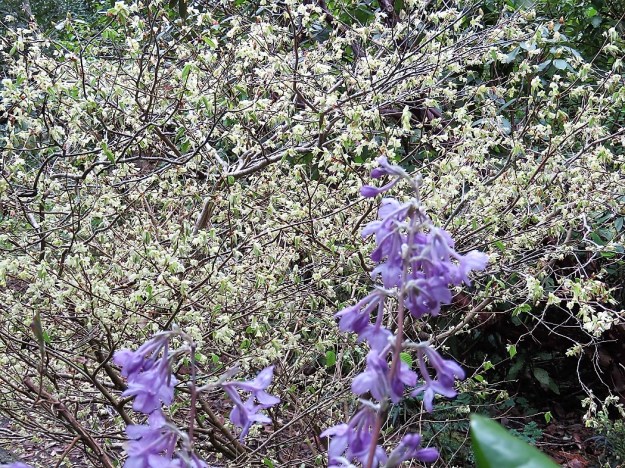
Daphne genkwa with its corylopis backdrop

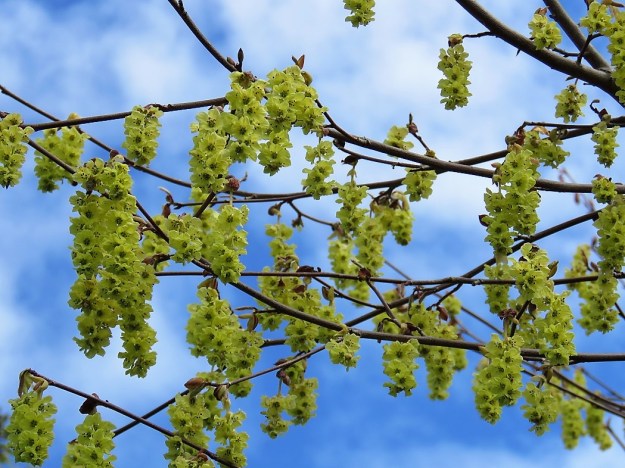
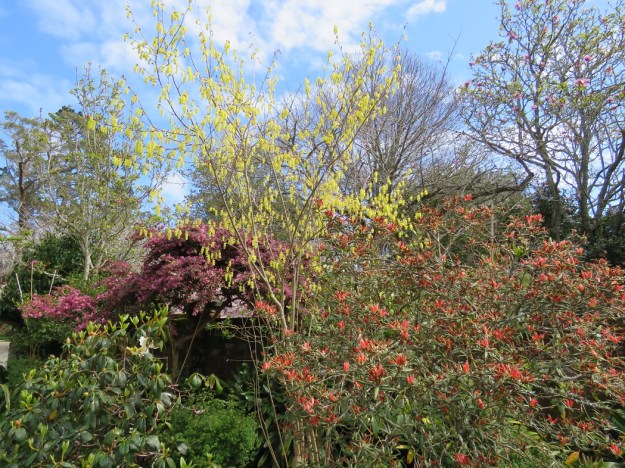
So too with the less common blue daphne, D. genkwa. I photograph it every year and then delete almost all the photos as not doing justice to the plant at all. This may be because it is not a shrub with much to distinguish it other than its remarkable lilac blue flowers. And so too the corylopsis, often referred to as witch hazels. I think we only have two different forms of corylopsis. One flowers earlier and makes a charming haze of creamy yellow behind a Daphne genkwa. The other is flowering now and may be a form of C. pauciflora but we have never taken much interest in unravelling the family. They just occupy a space and remain relatively anonymous for most of year except for their splash of dainty blooms in the two weeks or so when it is their turn to shine. Colder, drier climates appear to get a more extended flowering season on a number of these deciduous shrubs whereas, in our mild conditions, they are more of a fleeting delight. But on their days, what a delight they are.

Corylopsis

And the corylopsis in situ with Rhododendron spinuliferum to the right front and and the burgundy loropetalum behind

It was garden writer, Neil Ross, whom I first heard likening a garden to musical theatre. Don’t plan a garden full of stars only, he said. Those stars need the chorus to make them shine so don’t forget those plants filling the role of the chorus. That is how I see these plants which have a short season – chorus cast with a brief solo in the spotlight.

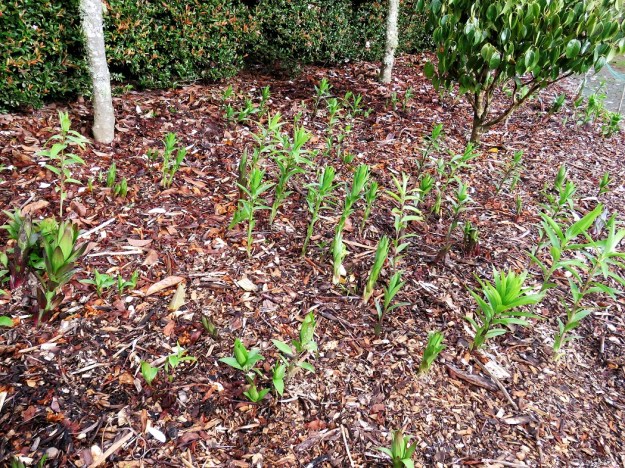
Just look at the lily border. It never looked like this last year when the rabbits won the battle on the emerging shoots. Mark is getting bored with his daily round of vigilance and looking forward to the time when the stems get tall enough to be out of the reach of the rabbits. But spraying the plant with water and sprinkling just a part teaspoon of blood and bone on each plant is working. The reason for doing it one by one is because it has to be reapplied after rain and we don’t want to be over fertilising the whole border by broadcasting the blood and bone freely and often. Besides, I was a bit shocked at the price last time we bought some. It would be easier to manage if we bought some liquid blood and bone so it could just be applied with one action but we will use up what we have first.

The price to pay for a lily display is clearly ongoing vigilance.

Yes, yes I know the advice is always given not to drive over hoses. Based on experience, it appears that you can get away with it when the hose is still relatively new but there comes a point in the age of the hose when one incident of driving over it can render it a very leaky hose. This of course means that over the course of the next weeks, any user of said hose gets wet legs until the right stage of being fed up is reached and the hose replaced. We haven’t quite got to this point but it is imminent. And I will try not to drive over the next hose length.
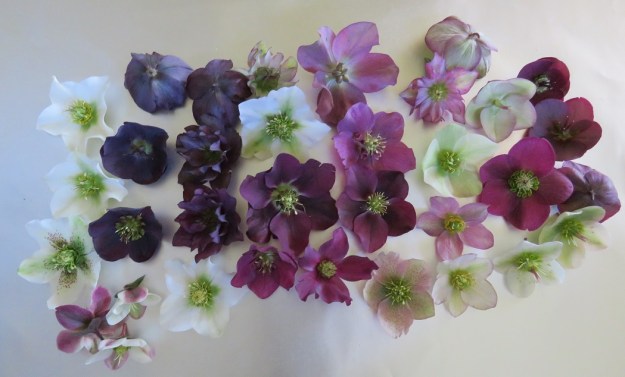
Hellebore update

I meant to do a round-up across the different hellebore types we grow here this year but I left my run too late. There is more to hellebores than just the most common H. orientalis types and some of the other species and inter-species crosses are also interesting and fill a different niche in the garden. But I had to make do with mostly H. orientalis and a few hybrids for today’s picking.
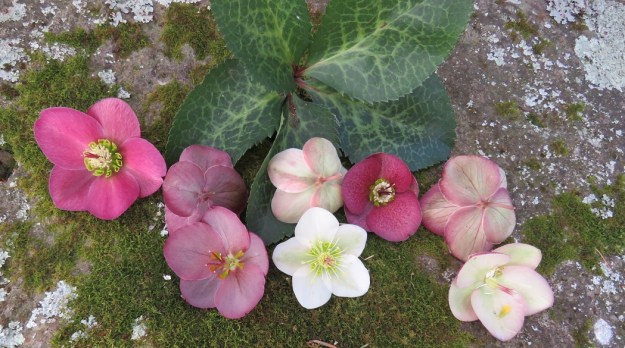
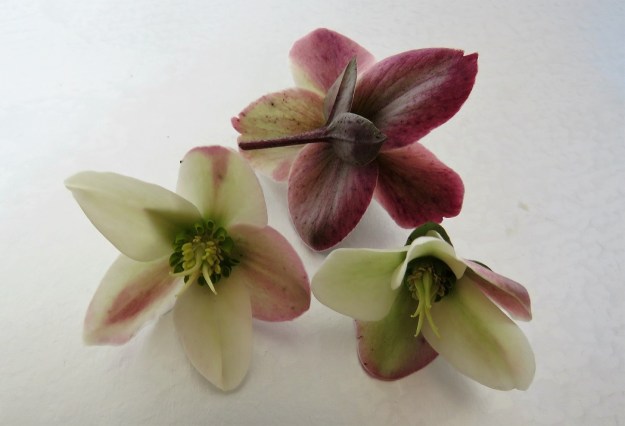
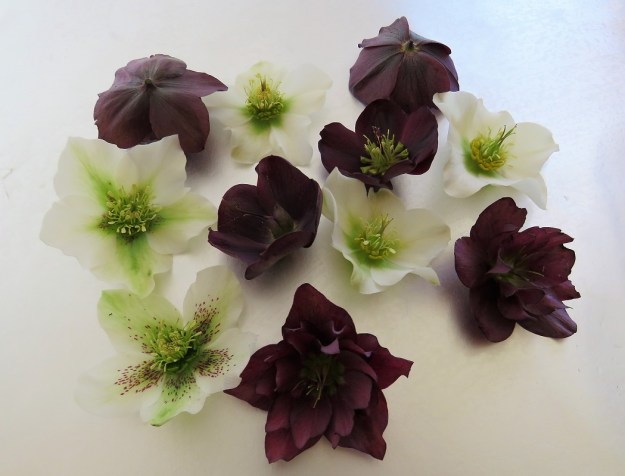
Late season flowers, so not an accurate guide to the flower size and colour. Left to right: Anna’s Red, Penny’s Pink, Molly’s White, Ruby Daydream and Sophie’s Delight

We are very impressed by the garden performance of the hybrids from UK breeder, Rodney Davey and sold as his ‘Marbled Group’. So impressed have we been by ‘Anna’s Red’, ‘Penny’s Pink’ and ‘Molly’s White’, that we added ‘Ruby Daydream’ and ‘Sophie’s Delight’ this year. There are more in that range but whether they have come into New Zealand yet, I don’t know. All are characterised by excellent marbled foliage which is most appealing and outward facing flowers that sit above the foliage. The first three named above also appear to be sterile, which is a good thing as far as hellebores go. Many hellebores can be promiscuous seeders. The Davey group are a big improvement on many of the orientalis types. His hellebores are hybrids so have mixed species parentage but I haven’t seen the details of what he has used made public anywhere and we would never criticise him for keeping that information to himself. There are way too many people out there just waiting to copy, as we know to our own cost, and he has put many years of work into getting this new strain of hellebores. If you are in the market for hellebores, buy them.

The same can not be said for hellebores ‘Jacob’ and ‘Josef Lemper’. I bought them both last year because they looked terrific in the garden centre. Josef collapsed and died within weeks so I even bought a second plant because I liked it, despite them both setting frightening amounts of seed. This year – nothing. I know where I planted them but if they flowered again, it was so insignificant that I failed to register it and the plants that I think are them, are but poor specimens now. There is a big difference between having a brilliant looking hellebore in a pot and garden performance. This all makes more sense now that I realise they were H. niger, not H.orientalis  as I had earlier assumed, .

Look at the flower power of Angel Glow in the garden

‘Angel Glow’, bought at the same time, is a beaut. It is another hybrid and it has mass flowered two years in a row. If it keeps on doing as well, I will be delighted. The ever-handy internet tells me it is an H x ericsmithii selection which makes it a three way cross between niger (which gives it the upward facing blooms) and sternii which is itself a cross between argutifolius and lividus. I just give you that information in case you wanted to know. It makes it very different to H. orientalis but it fills a similar niche in the garden as a plant. The pretty H. niger is forever disappointing in our climate (I think it wants it drier and colder) but the hybrid vigour of ‘Angel Glow’ sets it apart from that parent.

The border was looking better this year

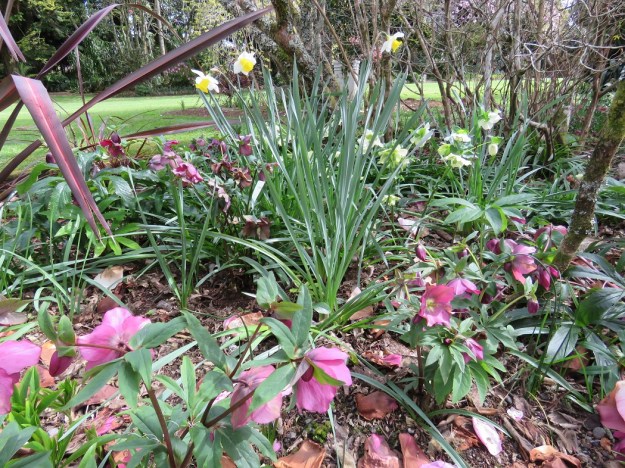
I redid our 30 metres of Helleborus orientalis border three years ago. After decades of easy care gardening, it had lost much of its charm. The next two years were a bit ho-hum in performance but it has come into its own this winter. Hellebores can take a little while to establish well. Most of the plants I used were ones Mark has raised in his quest for better garden performance – so with longer stems of sufficient strength to hold the blooms above the foliage and with outward facing flowers.  We have a fair old mix of established shrubs in the border so keeping the underplanting primarily to hellebores gives it a certain unity. But I also added a whole array of odds and sods in bulbs – mixed dwarf narcissi, snowdrops, cyclamen and bluebells in the main but also other strays that would perform in semi shade. It adds another layer of interest through winter and spring and it has been very pretty this year.

The slate shades can look better picked than in the garden…

… but add white and the contrast makes them sing

Mark is not keen on murky pinks, is scathing about most green flowers and doesn’t like pink and green colour mixes so most of his seedlings are either red or white. We had also been given some of the newer slate colours and have a few doubles carried over from when they were the rage. The slates are a really curious shade when you look at them closely but that colour tends to be quite flat and dead in a garden situation unless surrounded by plenty of white. The plants we have all hang their heads, too (downward facing flowers). This is also true of the double hellebores – the weight of the flowers makes them downward facing, which is not so great in a flat border.

There is quite a bit of trial and error on garden performance with H. orientalis. When they are good, they are very, very good. When they are not, they can be disappointing, even more so if you have gone out and paid garden centre prices for a plant that looked great at time of purchase but never as good again. And it is not so much a gap as a gulf between a good hellebore and a very ordinary seedling one.

Tikorangi notes: a week of pests and petals

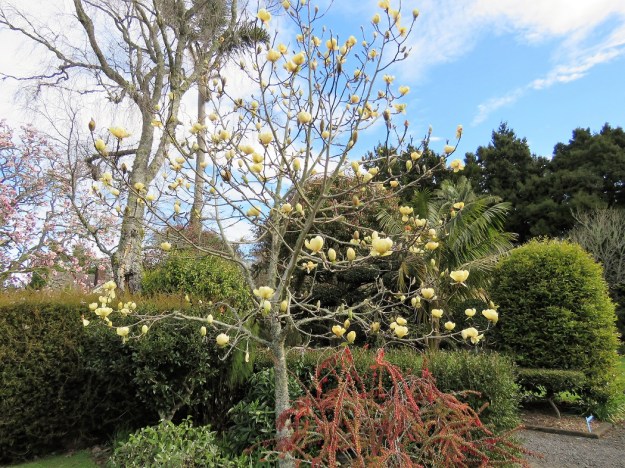
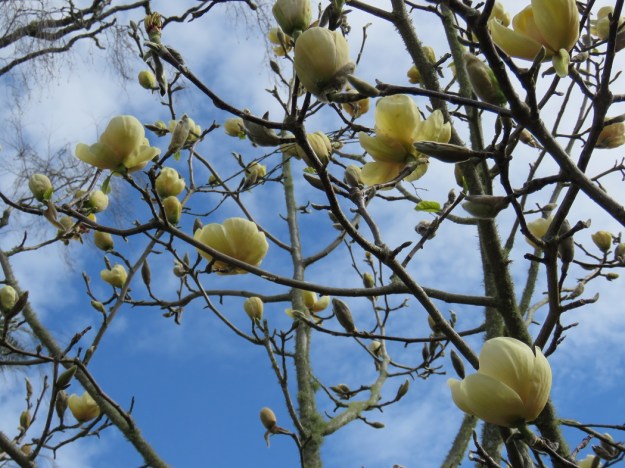
Magnolia Honey Tulip

Honey Tulip is going from strength to strength as the tree matures

The magnolia joy this week has been ‘Honey Tulip’. Mark is a modest plant breeder and inclined to describe a number of his best plants as a stroke of luck. I know how hard he works to get these so-called lucky breaks and there is not much left to chance. As we looked at a prominent specimen of ‘Honey Tulip’ at our entrance this week, he expressed relief again that it is indeed excellent and that we have not released a dog of a plant on the market. And he mused (again) that out of that particular controlled cross, he only got two yellows amongst the offspring and only one of those was of merit. That is what he calls a lucky break. I don’t think he is happy unless he gets a run of several – or many – very good similar seedlings worth considering but even then he worries into the future whether he picked the best one at the time to name and release! So the annual display that ‘Honey Tulip’ puts on for us is both a relief and a delight as it continues to go from strength to strength.

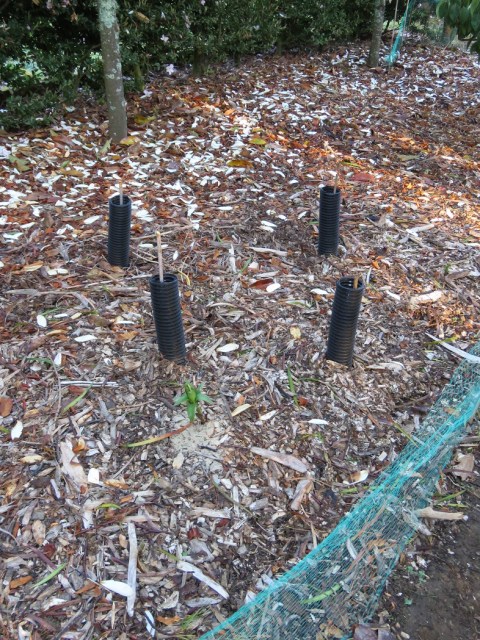
The battle with the rabbits continues. After the new lily border was decimated last year, it was a priority to try and get them up this year. While the bulbs will likely survive one year with all their growth having been chewed off, two years is stretching it. First, I spent a day erecting a mesh fence along the border. It was more diversionary than rabbit-proof. In an environment filled with tasty edibles, I just hoped they would take the hint and change their route. But the little fockers laughed at me. When the first shoots were chewed back to ground level in a single night, I started putting cut lengths of drainage tubes over the damaged ones. That works but there are literally hundreds of bulbs in that border and Mark didn’t think it was a realistic option for the whole area. He tried the expensive rabbit repellent spray we bought last year but they laughed at his efforts too.

Netting and tubes in an attempt to deter rabbits

Blood and bone works. Mark now does a daily round. He sprays water on the fresh shoots and sprinkles a light application of blood and bone on the wet surface. The moisture makes it adhere which means that he will only have to repeat the application after heavy rain. It requires vigilance and routine. We need to get them above maybe 40cm so the rabbits can’t chew off the top and the shoots can keep growing. It won’t matter then if they chew off the lowest leaves.

Blood and bone lightly sprinkled on damp foliage is the best rabbit deterrent so far

The longer term solution is obviously to reduce the rabbit population. Mark does daily rounds with the gun. The dogs have found the odd burrow of small ones, to their delight, but are pretty useless once they are larger and on the loose. We got desperate enough to buy some rabbit poison but it is also poisonous to dogs so it requires putting out at night and gathering it back up in the morning. On the first morning, not only had the rabbits totally ignored the bait but our Dudley dog ate one bait before Mark’s eyes. It put him off using it again. The option of getting a cat again is still on the table. It is the first time we have ever hoped a stoat may move back onto our territory to do a clean out of the rabbits. Not for the first time, we have muttered curses at the early British settlers in this country who introduced this pest so they could continue their what-ho-jolly-hunting traditions.

A magnolia bud that has been eaten out, usually by possums but we are now wondering if rats are also to blame

While on pests, a possum – or maybe rats – have wrought havoc this year on some of the magnolias in the distant parts of our property. You can see from the photograph how the offender has eaten into the bud and nipped out the centre at the point when the flower buds were forming. Every single bud on this tree was taken out, which is why Mark is wondering about rats as well as possums. It is very discouraging. Mark is the chief pest control officer here and he generally manages to maintain some sort of equilibrium with a combination of ongoing trapping and the gun but this year appears to be particularly bad.

Doryanthes palmeri or the Queensland spear lily

Two months on from when I first mentioned the Doryanthes palmeri coming into flower,  I am coming to the conclusion that it does not open any more than this. I had envisaged that massive stem covered in open blooms but I think it may just gently continue for a long time yet, opening blooms in sequence without that mass display. The bees love it. Every time I pass, I can hear the audible hum and most of the open flowers have a bee foraging within them.

I mentioned it as a nursery relic cast aside. And indeed, I found confirmation of that this week as I was clearing around the plant. Behold, the original black planter bag, still around some of the root system. Some plants are tough and determined. It was not going to stay constricted by a pathetic little PB as we call these nursery bags.
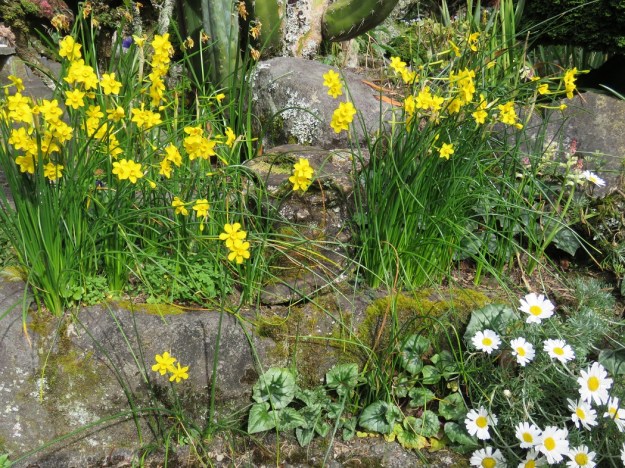
Dainty and fragrant Narcissus jonquilla

Finally, because we love the tiny as much as the large, here are two little scenes from the rockery. Spring is a glorious season here, never more so than when we get over a week without rain to enjoy the blooming. But suddenly we are on the cusp of the point where a long spring no longer beckons but instead we are under pressure to get the new plantings done before it is too late and we are too dry and too warm.

Moraea villosa or the peacock iris

In praise of petal carpets

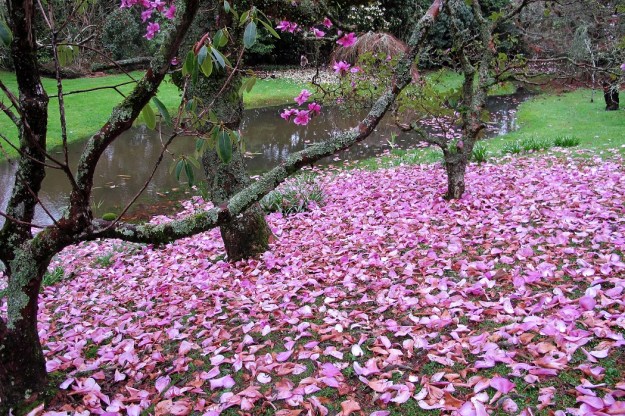
Magnolia Lanarth, down by the big pond

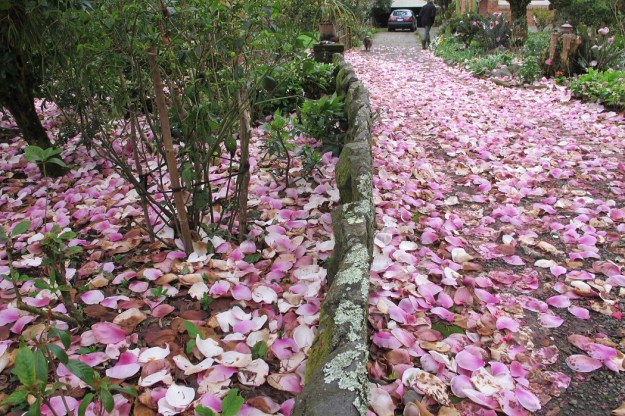
I love me a good petal carpet. I have an entire folder in my photo files, dedicated to petal carpets. There is another one for floral skypaper but that is for another day. While we can get petal carpets pretty much all year round, this is peak time with magnolias, prunus and camellias dropping petals. The best carpets form beneath trees or large shrubs which drop their spent blooms in petal form, rather than the complete flower. Transient these may be, but on their day, they are a delight. 

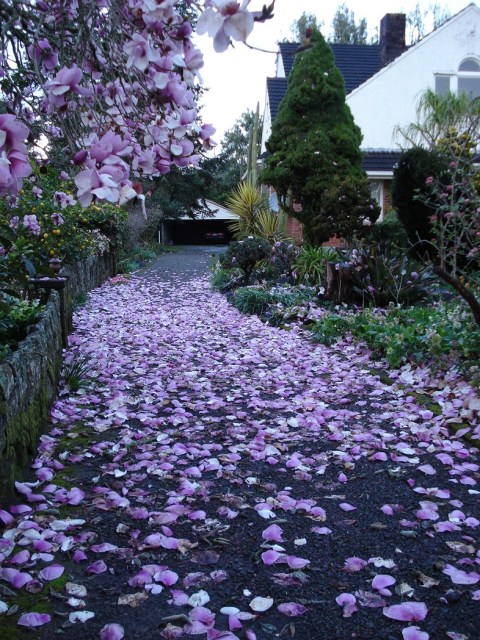
The petal drop from the original Magnolia Iolanthe beside the drive is prodigious. We will rake or blow them off the drive when they turn to unattractive sludge but leave the ones on the garden to break down at their own rate. It is just part of the cycle of growth and decay.
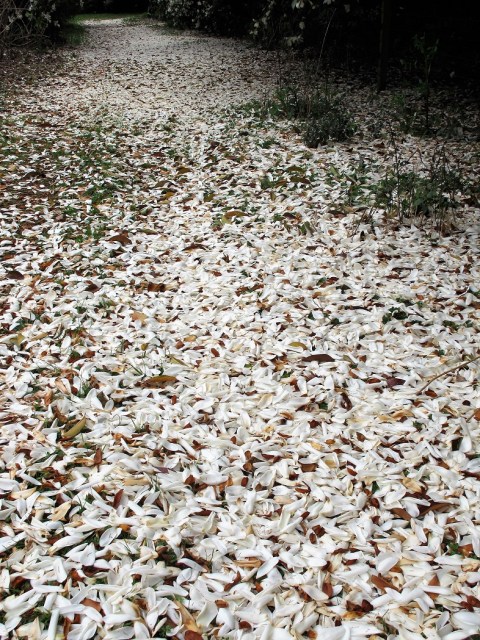
We have many white michelias from Mark’s breeding programme and they make splendid snowy carpets, sometimes even retaining some of their scent. This magical white pathway is beside a whole row of a cross that Mark refers to as his Snow Flurry series.

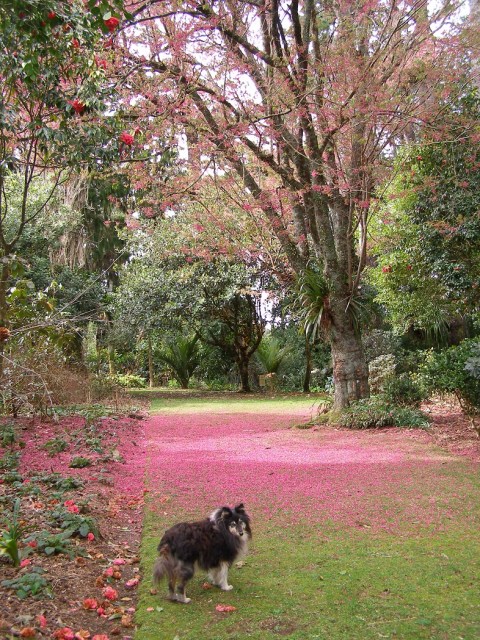
I had to include at least one photo of a photo-bombing dog. So many of my photos have a dog within them.This one is my late and much beloved, loyal companion, Zephyr, beneath a Prunus campanulata. Zephs was a quiet dog but the most photo-bomby of all photo-bombers, making frequent appearances on the pages of the Waikato Times, for whom I was lead garden writer at the time. The prunus is still there, laying its carpet of blooms every year but Zephyr has been returned to the earth.

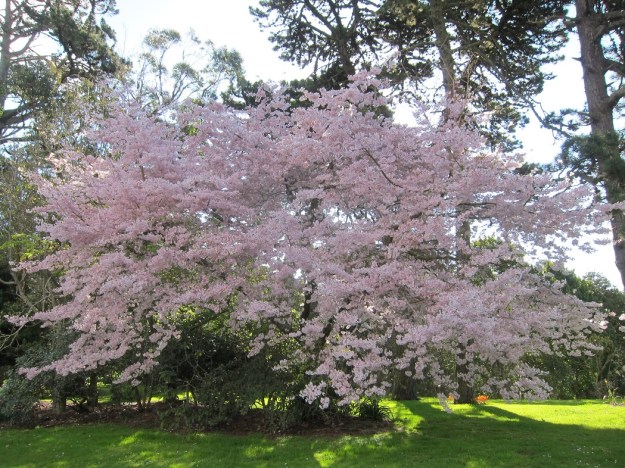
Prunus Awanui

I once read a profile of a garden that was opening for our annual garden festival. Clearly the owner prided himself on immaculate presentation because he proudly declared that he went out every morning to rake up the fallen petals beneath his Prunus Awanui. And I thought why? This is our Awanui. It may be a little larger than his tree was but the blossom is comprised of lacy single flowers without bulky substance to the petal. This means they will fall like gentle snow and decompose on the ground so quickly that there is no sludgy period. Why would anybody think it necessary to rake them up daily?

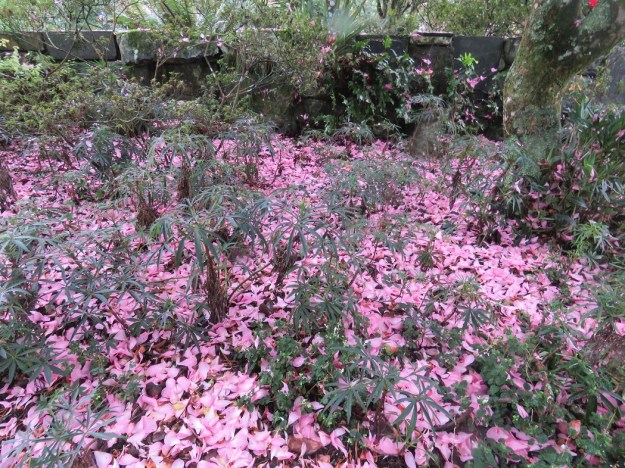
Sasanqua camellia blooms generally shatter into petals as they fall, unlike the japonicas and reticulatas which more commonly fall as complete blooms. This pink sasanqua fell below to carpet the Helleborus foetidus.

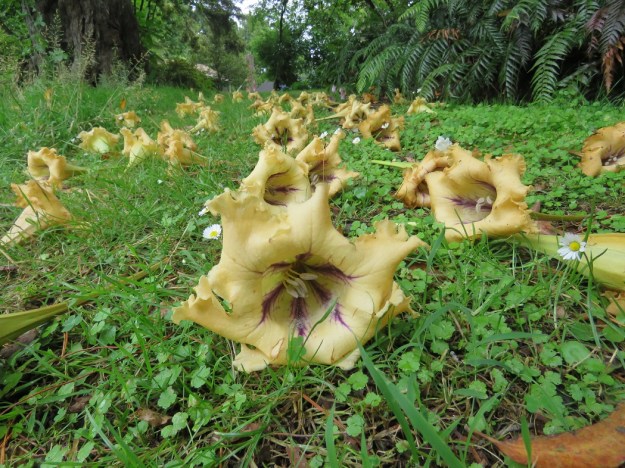
Solandra longiflora

For a change in colour, I give you Solandra longiflora in January. These fall as entire trumpets so they do turn brown and sludgy on the ground as they decay, but on their day, they are a lovely sight.

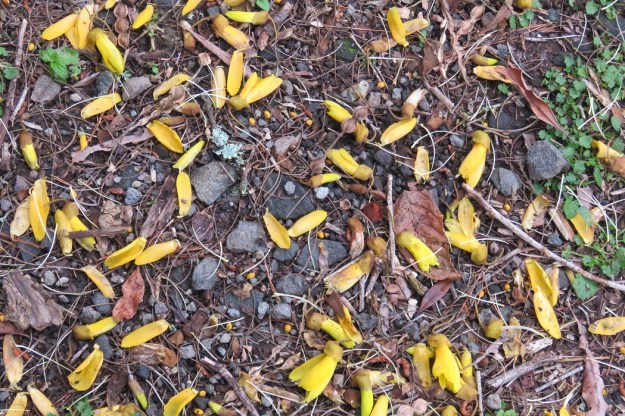
And the yellow kowhai blooms, our native Sophora tetraptera. This tree is much beloved by our native tui and kereru so many people find the floral display is greatly diminished but we figure we have plenty to share.

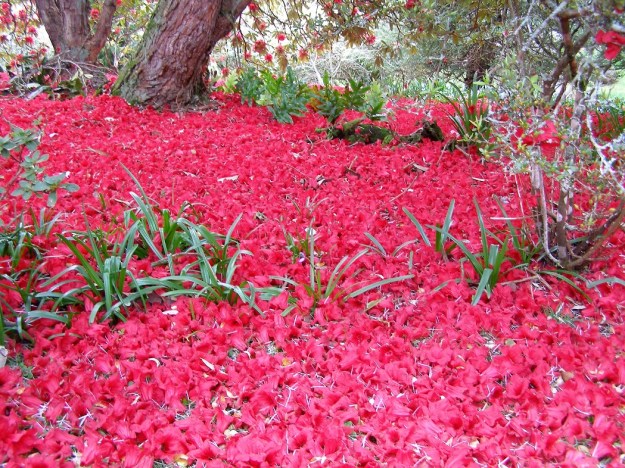
The fallen red blooms of a rhododendron make a transient, plush pile carpet for a few days each spring.

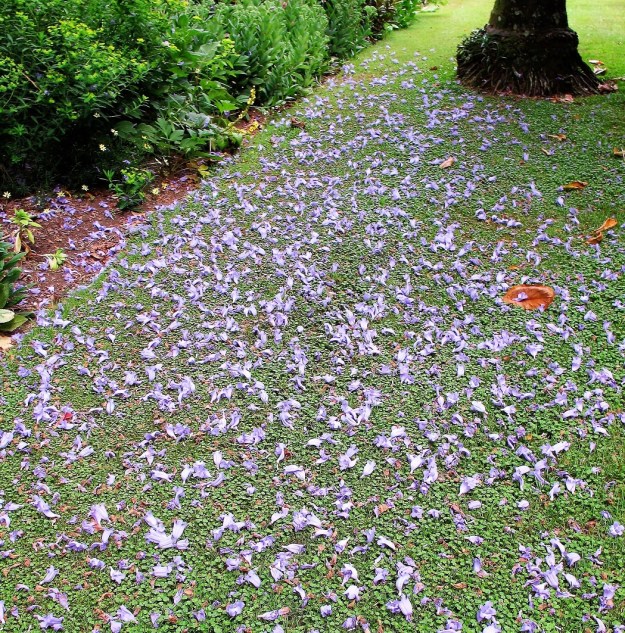
I felt sure I should have at least a few blue petal carpets but all I found was this slightly sparse carpet of jacaranda petals down our avenue garden. There aren’t many blue flowered trees when you think about it – the jacaranda, iochroma and paulownia but what else?
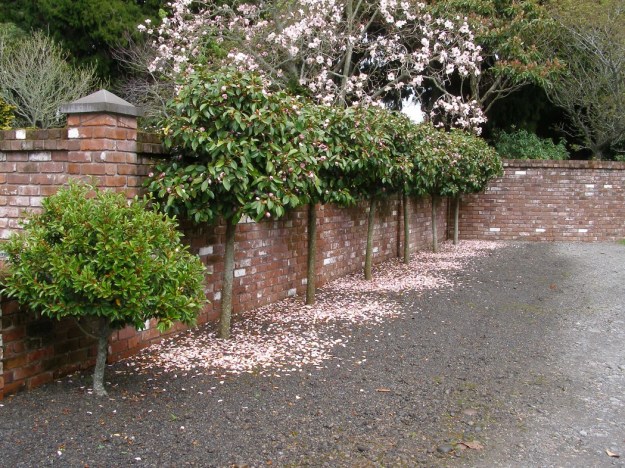
And finally from this selection, when the weather is calm, the soft pink petals of  Fairy Magnolia Blush can form pretty circles beneath each plant.