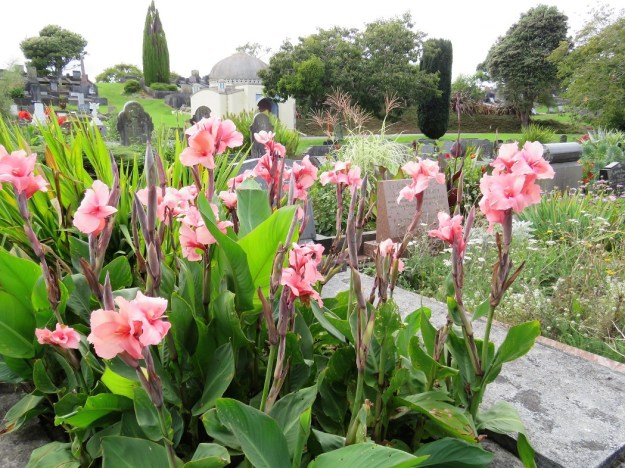
 I returned to the main cemetery of New Plymouth yesterday. As the season advances inexorably into what is already showing signs of late summer, I wanted to see what was in bloom. “Was She who is the Phantom of the Graveyard there?” Mark asked. He had a personalised tour last month from the bright and bubbly person who wishes to remain anonymous and unacknowledged but who has beavered away there for many years now. These days more volunteers have come forward to join her and it is a lovely place to visit.
Why go there rather than our public gardens to see what is in flower? I am delighted by what is the grown ups’ version of the miniature gardens our children used to make for Show Day in their junior school years. Grave-sized gardens, in fact, which are styled individually, often from donated plants. It is an interesting place to look at plant combinations, plant performance under a light maintenance regime (the area is huge) and incidents of serendipity.
I am planning a meadow for our new Court Garden but, influenced by the Pictorial Meadows excellence in the UK, I want to select plants that will bloom in succession from spring to autumn. At this time of summer, we are not as flowery here as earlier in the season and I was wondering what we could consider. There weren’t many answers for me as far as the proposed meadow is concerned because I think I want to at least start that with mostly annuals and biennials rather than perennials and bulbs in order to achieve the meadow look as opposed to herbaceous plantings. But there was plenty of other interest amongst the graves.
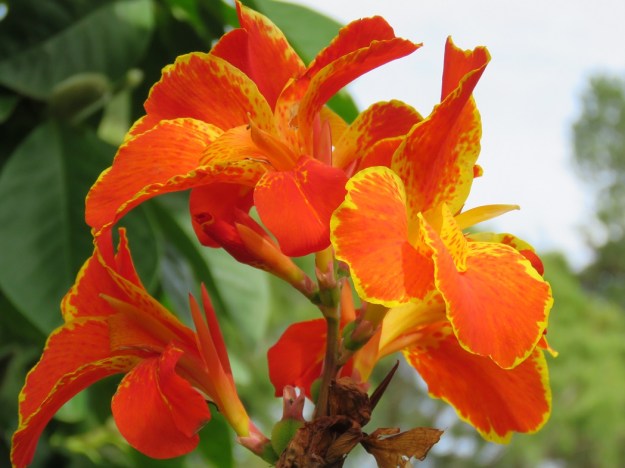

Canna liles star in these small, grave-sized gardens
Cannas and dahlias were the stars yesterday morning. I am not a fan of cannas. They are too big, dominant and blobby for our tastes here and they don’t die down gracefully. But they are certainly showy and the colour range surprised me – from whites and pale lemons through paler pinks to bright, vibrant showstopper blooms. I can admire them without needing to grow them. In fact, I prefer to admire them elsewhere.
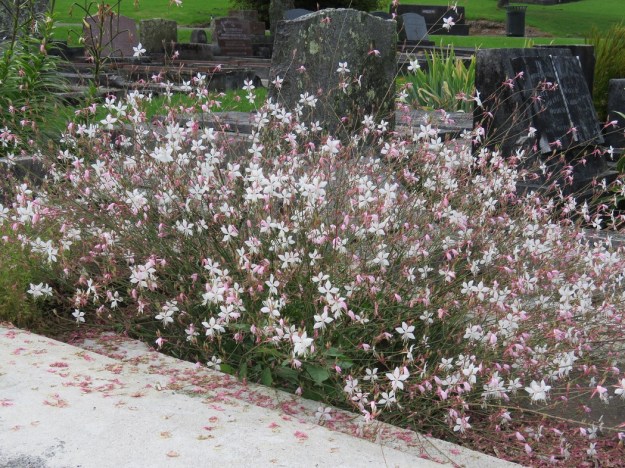
Gaura – they do indeed dance like butterfies in the breeze
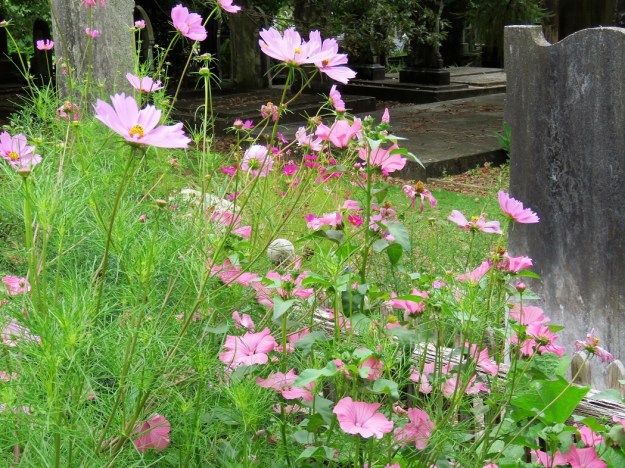
The gaura looked terrific. Ethereal even, waving in the light breeze like clouds of butterflies. I must try again with these now we have more open areas of garden in full sun. And as I admired the combination of pink lavatera and tall cosmos, I realised again that it is the lightness and movement that I want in our newer meadow and perennial plantings. The romantic prairie look, Mark just called it. That is why I am not so keen on the ponderous cannas.

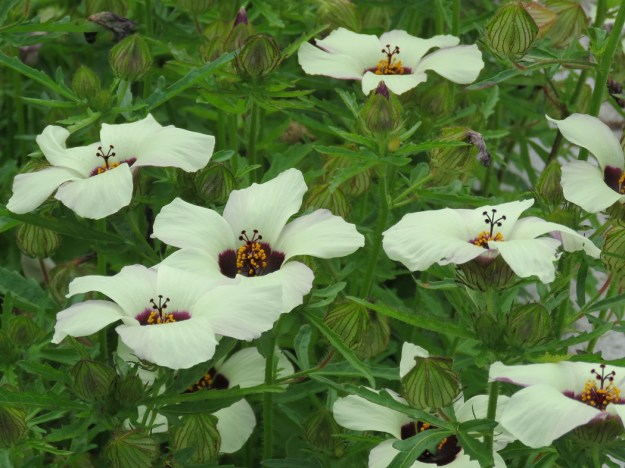
Hibiscus trionum
One grave was covered in Hibiscus trionum and it was the most eye-catching display of this pretty plant that I have seen.

Lilium formasanum reaching two metres tall
We had been talking about Lilium formasanum the previous day. While it is regarded as a weed in this country and banned from sale, we are quite happy to let it pop up around our place. It is one of those plants that I think in time we may come to accept as a permanent addition to our environment. I assume its weed status is on account of its seeding ways and its ability to pop up in all sorts of situations. We are increasingly of the view that we must learn to live with many of these interlopers and only wage chemical warfare on those that endanger our natural flora – the likes of Clematis vitalba (old man’s beard), Japanese knot weed and, in the area where we live, giant gunnera and pampas grass. The Formosan lily was looking right at home and picture perfect amongst the graves. It is a beautiful flower, though without the heady fragrance of many other lilies.
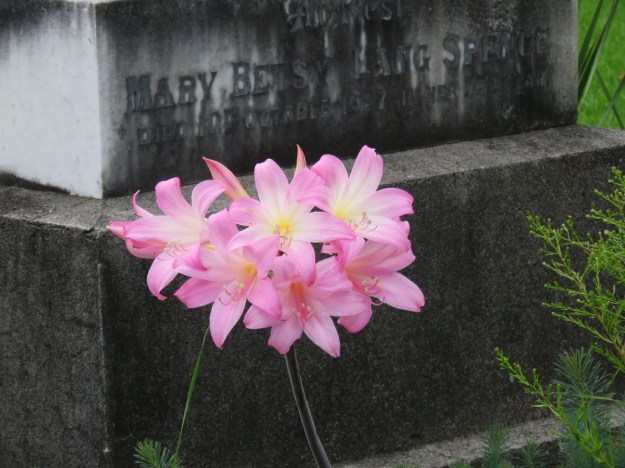 The belladonnas were also in bloom, as they are on our road verges and wilder margins of the garden here. They are so common we take them for granted, but if you look afresh at them each season, they are a lovely late summer bloom.
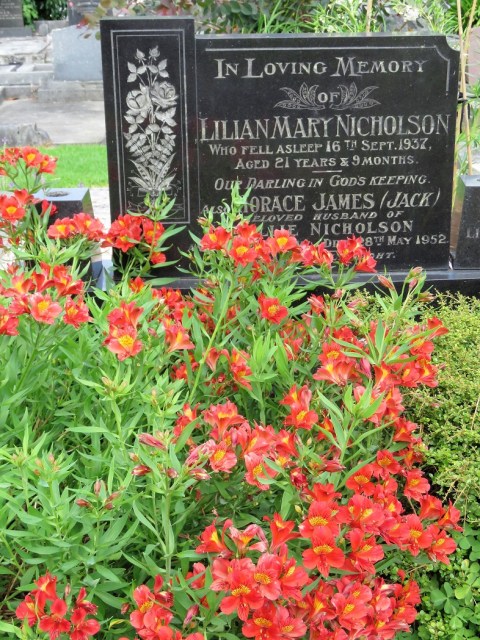
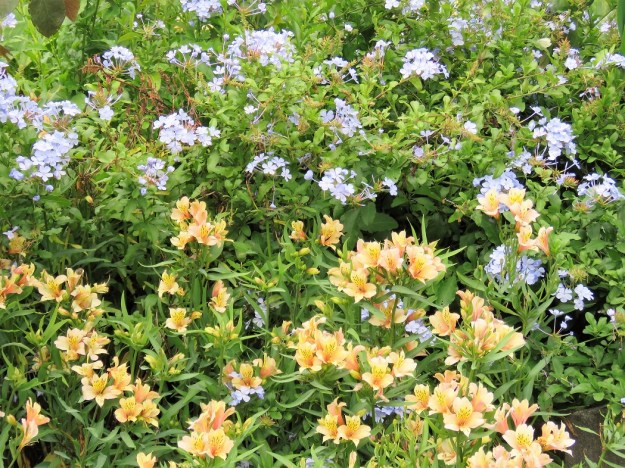
Alstomeria flower on and on, seen here with plumbago
In terms of bangs for the buck, alstromerias work hard. I need more of these. Not for the meadow but for my hot summer border. And definitely not the modern over-bred varieties that have been shrunk down to be bedding plants. I want more of the big, tall ones in clear reds, yellows and orange colour mixes. They seem to bloom from spring to autumn and that is not to be sniffed at, as long as you can contain their wandering ways.

Rudbeckias!
All I came up with for my meadow in the end were rudbeckias to go with the amaranthus that has already established itself as a naturalised wildflower here. I may use the Lilium formasanum, despite it being a bulb and I had already decided I wanted the white Japanese anemone in big swathes, despite it being perennial. I simply love the romance of the windflowers. They need to be managed. In a garden situation they can be thuggish and invasive but I think I can mange them in the meadow.
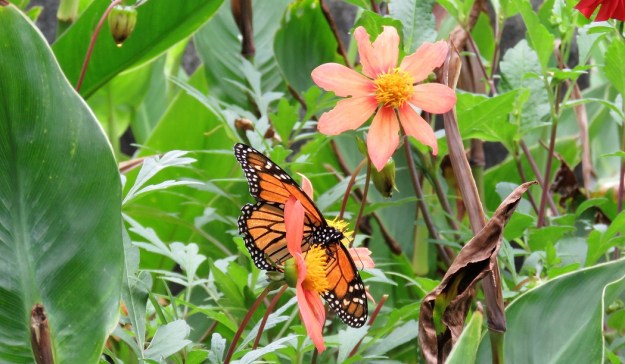
Butterflies, bees and no doubt a host of other insect and bird life inhabit these gardens
Graveyards can be austere, grim places and parts of the Te Henui are of this stark nature, maintained only by weed spray and lawn mowing. But the areas full of these small gardens, flowers and trees lift the spirits and it is clear the public love walking through. Each tap has a little watering receptacle for dogs which was an endearing sight. It is worth a visit and I hope our elected Council officers and paid staff appreciate the special character that the volunteers, led by the dedicated Phantom of the Graveyard, have bestowed upon this place of memories. Some of us even go there for inspiration. Life, growth, flowers and community engagement in amongst death.
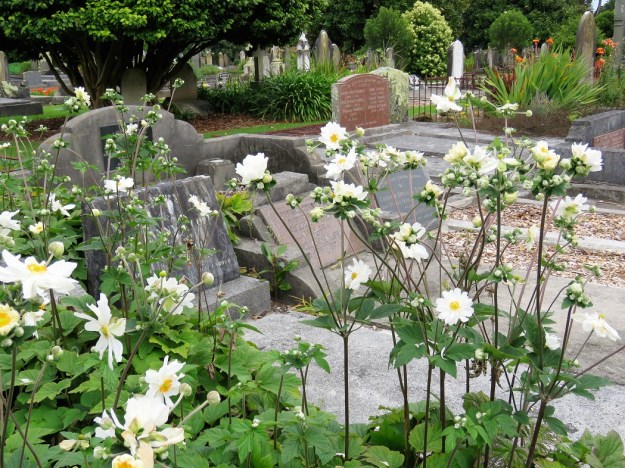
Windflower romance – the white Japanese anemones

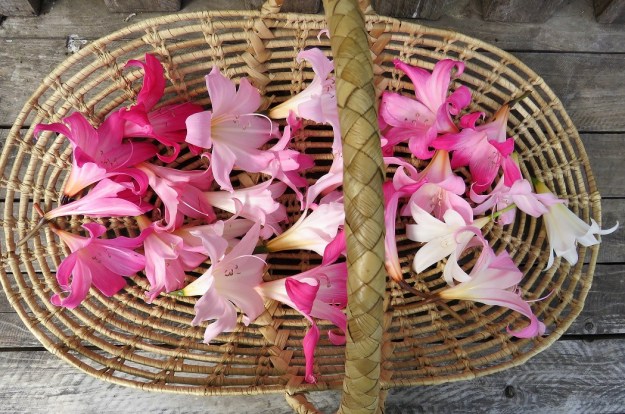
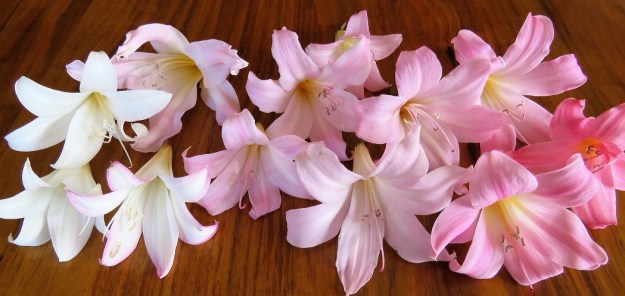
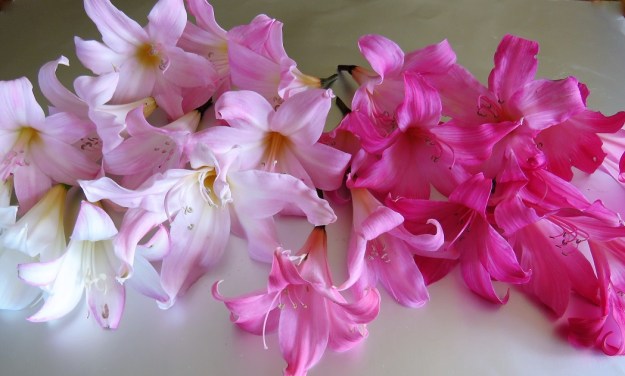 The deepest coloured forms – cerise almost getting to red – tend to be later flowering and are the only ones that we have ever had picked by passersby. But that was years ago. These days our road verges are so steep that there is nowhere safe to stop and nowhere to walk so the flowers are safe. It is an ill wind, I guess, though we would prefer more hospitable road verges and slower traffic.
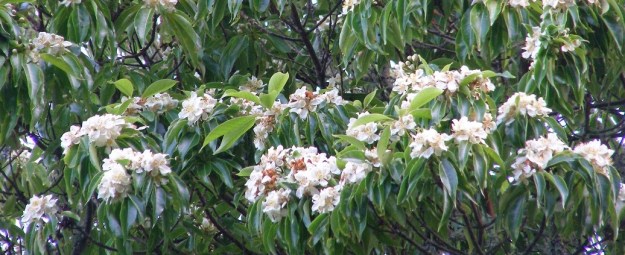
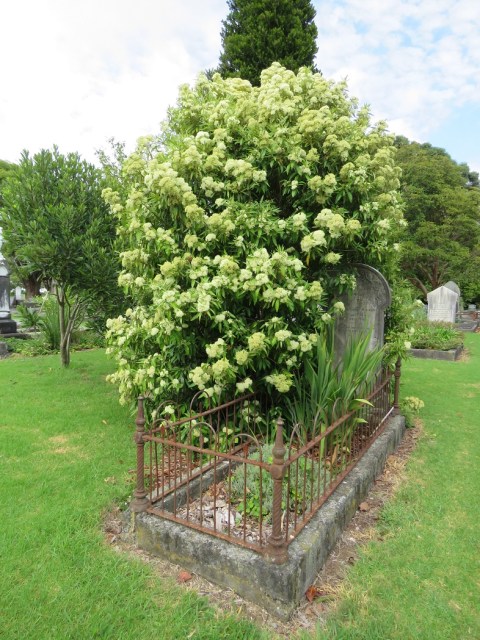
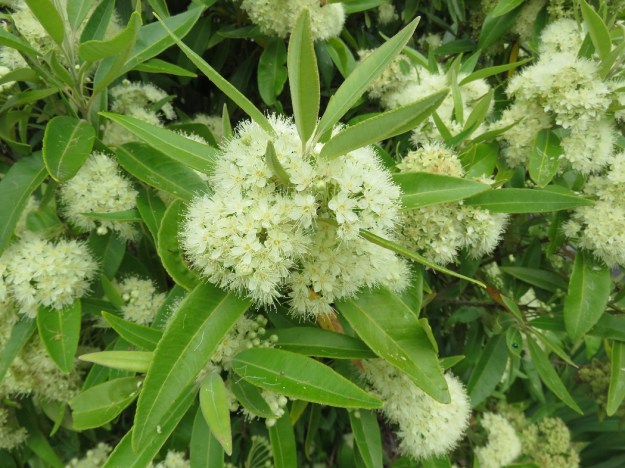
 Alas poor schima, we knew you well. In early spring you would drop all your leaves in one big whoosh (and there were A LOT of leaves because you were a large tree) and startle us for a few weeks with remarkable lime green fresh growth. You were a way finder for garden visitors. We could point you out – “see the lime green tree – you will find the sunken garden in front of that”. In early summer you covered yourself with small white blooms but no more. True, we had noticed that you were not looking too healthy on one side but now you are gone. Awkwardly – getting you down is a challenge because you are resting against other standing trees but our gratitude that you fell the way you did is great. Had you fallen the other way, you would have brought down the power lines to our house and that would have been A Major Repair.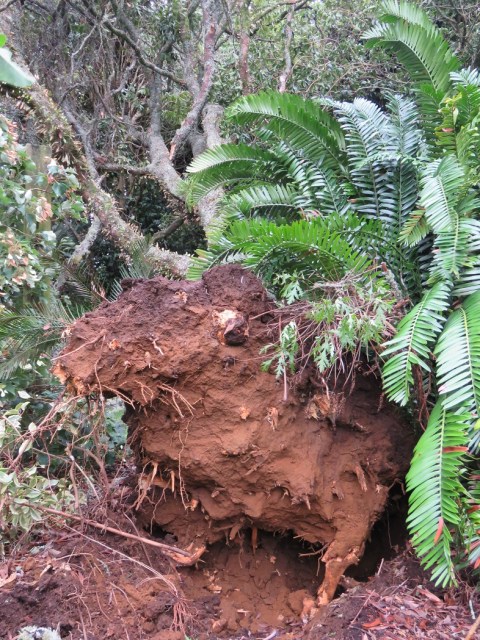
 Tikorangi The Jury Garden