

Narcissus Peeping Tom in golden light
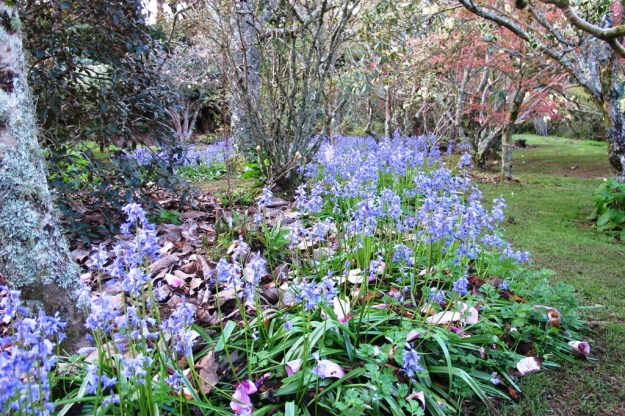
With heavy rain forecast over the next few days, I picked some of the spring bulbs. The light was fading as I brought them indoors, but I like the stainless steel backdrop of the splashback to our stove and I had fun photographing the flowers both in the general background light of the kitchen and in the shafts of golden light, which, believe or not, emanate from the spotlights on the range hood above. If you are on Facebook, there is a fuller album of them on our Facebook garden page.
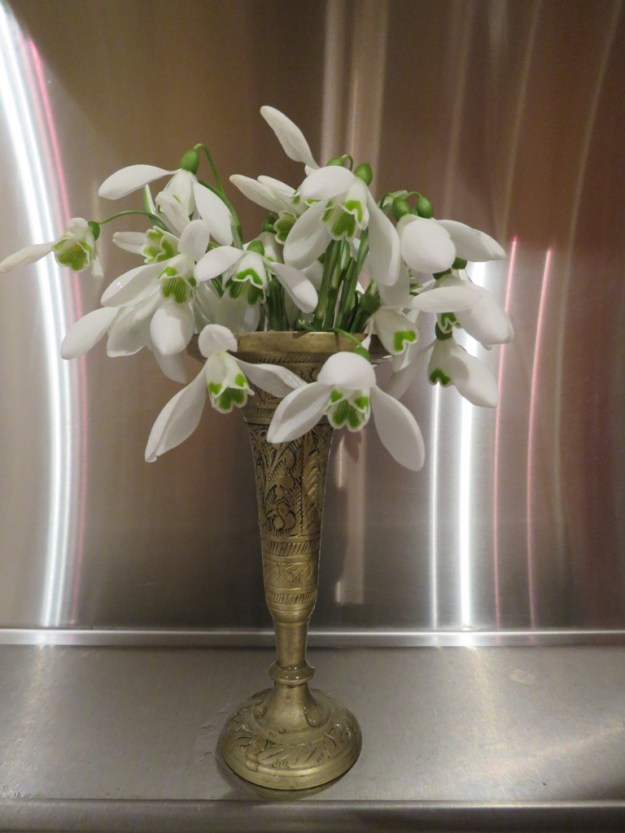
Galanthus S Arnott in silver light
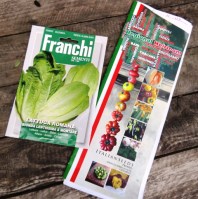 The new Franchi seeds catalogue arrived in the mail last week. If you haven’t met this brand before, you can find them on line at http://www.italianseedspronto.co.nz/ (that is the address for New Zealand mail order only). There is an interesting range of heirloom and traditional Italian varieties. They are expensive when compared to some other brands on the market, but you get a hugely generous amount of seed per packet. Given the sparse number of seeds in the packets of some other brands, this is something of a surprise. Mark is a particular fan of the packets of mixed lettuce varieties which he sows in succession to keep supply going, so he is more than happy to get a generous quantity of seed. There is a good variety of different lettuces in these mixed packets too, which mature at different rates and add interest to salads now that we have moved on from just Iceberg or Buttercrunch.
 I was positively excited to buy my very own spade recently, and what a lovely spade. It is a Joseph Bentley border spade with a handsome oak handle so it must be imported from the UK. A border spade is both smaller and narrower than a conventional spade and I find the lighter weight makes it easier to use – a pleasure, even. There are cheaper spades around – I think I paid somewhere between $70 and $80 for this one at Palmers Garden Centre – but I have not found a spade I like more. I expect it to last as long as I do. Mark kindly oiled the handle again before use, using linseed oil. And he sharpened it for me. I sometimes wonder whether the current fashion for no-dig gardening and the desire by some to avoid the effort of digging is related to blunt spades. A sharp spade makes digging so much easier but I can’t recall seeing the advice offered widely that you need to sharpen your new spade before use and then to keep an edge on it from time to time. If you are wondering how to do this, I see I published a little article on this very topic some time ago.

The Magnolia and the Cross
Having referenced the Magnolia and the Maunga and the Magnolia and the Wellsite recently, I now offer you the Magnolia and the Cross. This is M. campbellii again, but in the grounds of St John’s Church in Waitara where I spotted it when we attended a funeral recently. Even if one is not of a religious persuasion, the cross is a very strong symbol.
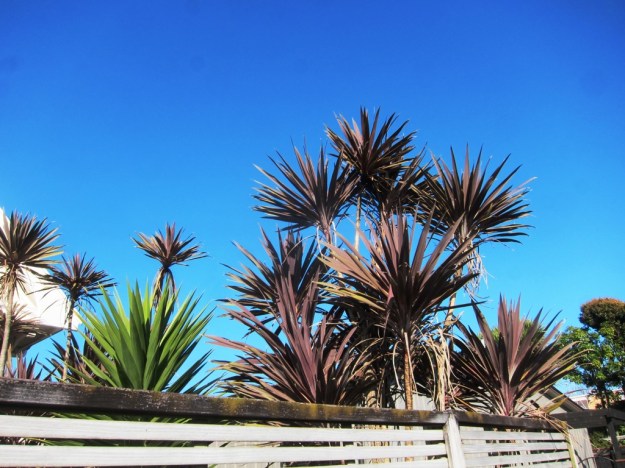
 Certainly for those who crave perfection in their garden plants, our native cordylines can develop a motheaten appearance. Caterpillar damage from a native moth – Epiphryne verriculata – is typical in this country whereas the cordylines I have seen overseas, particularly in the UK where they are a prized plant, keep cleaner foliage.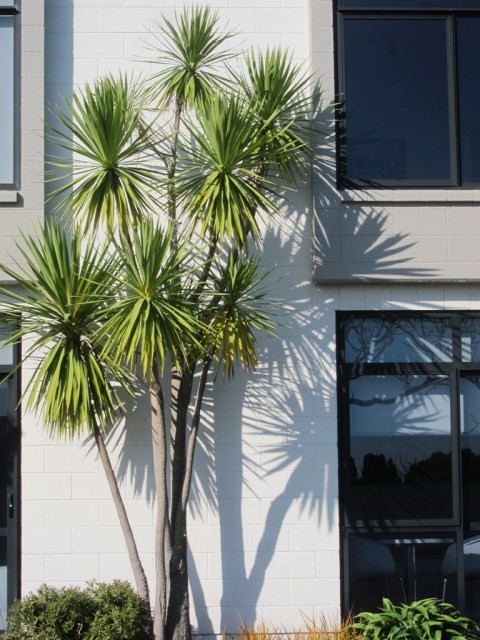
 Heading out of town, I stopped by the recent planting of an avenue of cordylines leading up to the golf club. You may notice it is an informal avenue which seems a wise decision given that this is not a plant that is particularly cooperative when it comes to straitjacketing it into precision formation. It is much too individual and unpredictable to achieve rigid conformity.
 The established block beside the airport turnoff has been there for a fair time now. They were both eye-catching and appropriate when first planted and I think they are maturing well. The planting beneath is our native flax or phormium.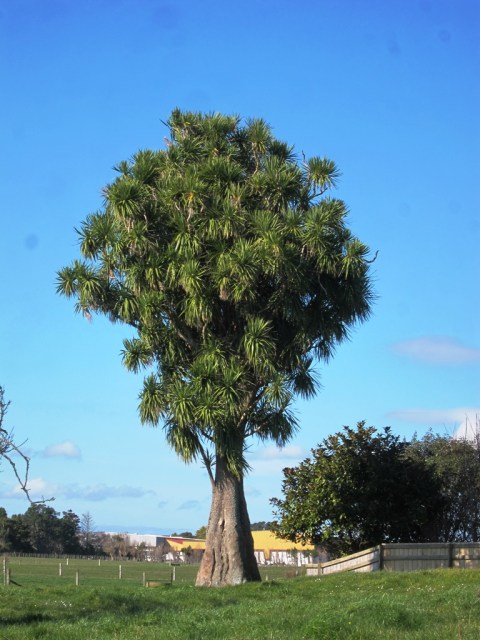


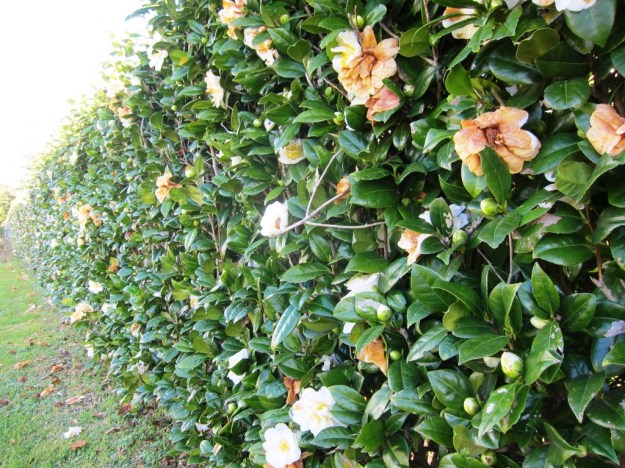


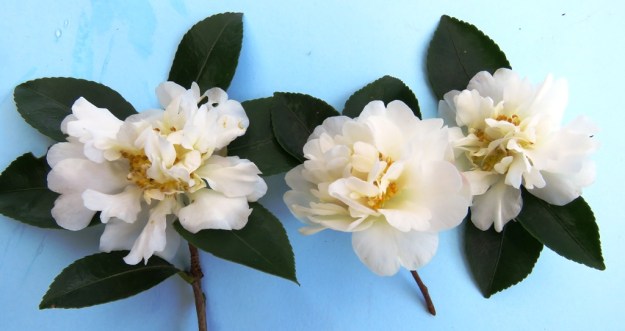
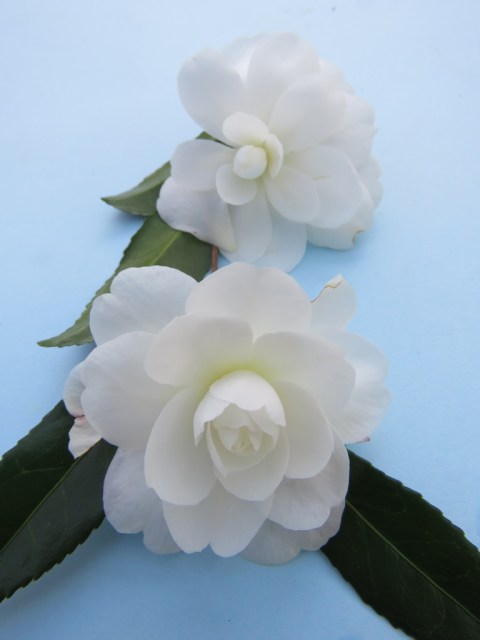
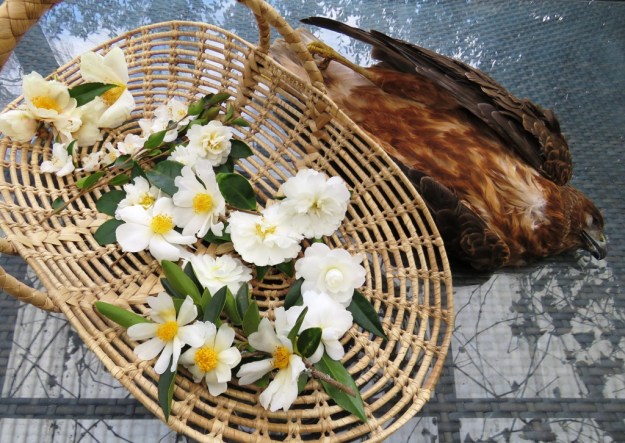
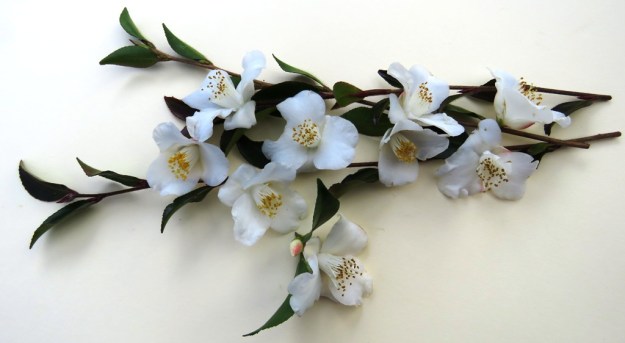
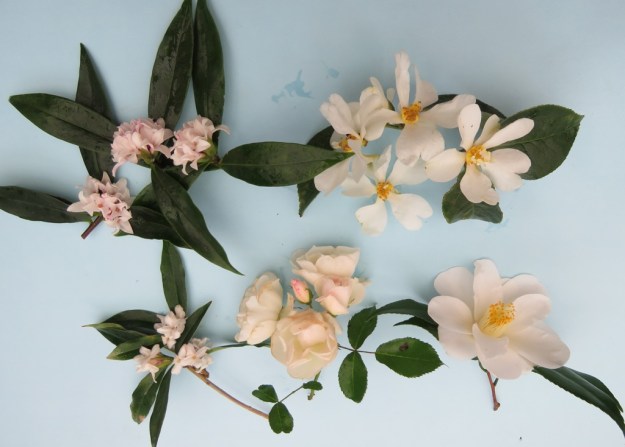
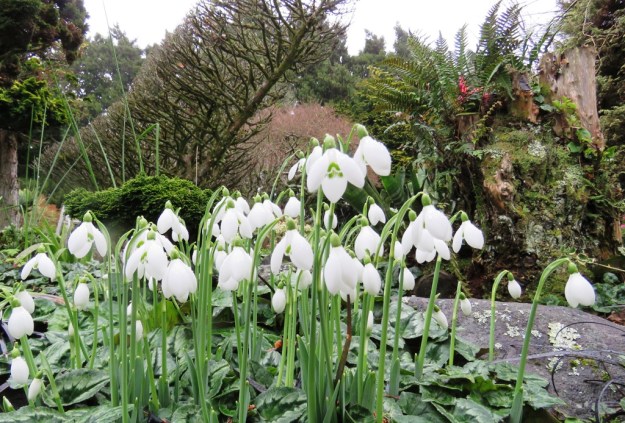
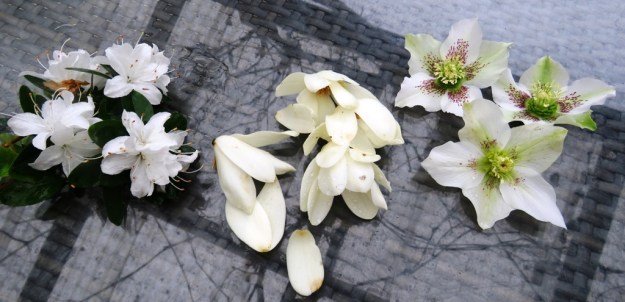 Finally today, I headed out into the chill to find the white evergreen azaleas, the very first of the new season’s michelias (deliciously fragrant) and white hellebores. By this time, I found my eyes being drawn to colour and red blooms were demanding my attention. I would find a monochromatic garden soon palled but the colours will have to wait for another day as I end with the simple perfection of Camellia Superstar below.

