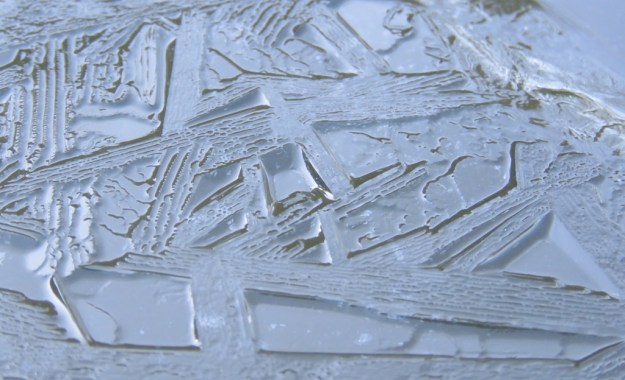
Ripples on the ice formed on a farm trough
July is our bleakest winter month here. We feel the cold, especially this week with three sharp frosts in a row which is unusual for us, but the daytime temperatures rarely drop below double figures (Celsius). The ice photo is from a water trough on the coldest part of the property. Mark was very taken with the patterns.
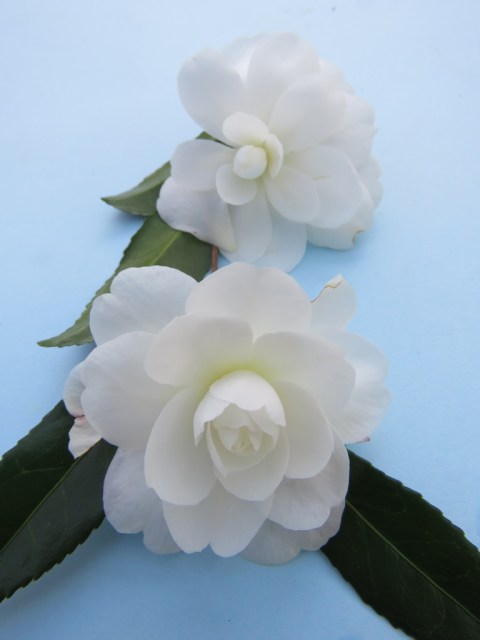
Early Pearly – the loveliest of sasanqua camellia flower forms
But cold is a relative thing and a winter here in Taranaki remains full of flowers. I was playing around with white camellia blooms because I had been reminded of our love affair with white flowers in this country. The ‘any colour is fine as long as it is white” syndrome, perhaps. I am sure gardeners in parts of the world which spend many weeks or months or under snow might find this national obsession with white flowers puzzling. I suspect it may derive from a sense of social envy – Sissinghurst’s white garden has a lot to answer for here in the antipodes.
As I progressed on my white flower assemblages, often having to pick the flowers because it has been raining or windy, I began to feel positively bridal despite the winter chill.
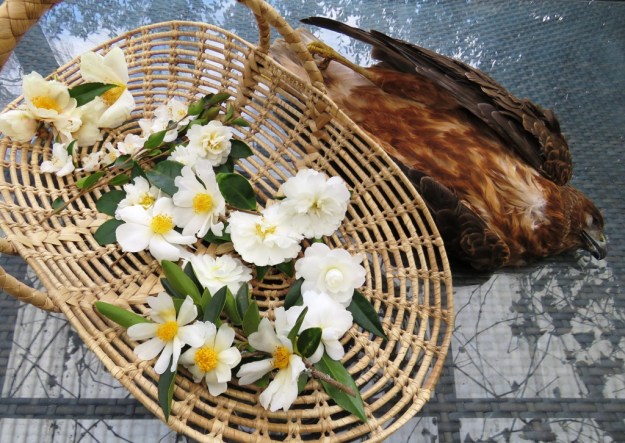
The Montanoa bipinnatifida has passed over and the monarch butterflies have moved onto an obscure michelias species that is flowering. The frosts have dealt to the Dahlia imperialis alba this week and Luculia ‘Fragrant Pearl’ is passing over, but there is plenty of white in evidence. Yes, it is a dead harrier hawk above – killed on the road but passed on to a Maori weaver to use the feathers. In the basket starting at the back is one of the gordonias. They have been particularly good this season. Then the small flowers are Camellia transnokoensis which we rate highly as a small leaved, miniature flowered species which we are using as hedging. We replaced some buxus hedging with this camellia. For, Mark reasoned, how much better to have a hedge that has pretty flowers which make a contribution to the ecosystem by feeding birds and insects. Next is another species, Camellia gauchowensis, Camellia sasanqua Mine No Yuki, Early Pearly and at the front Camellia drupifera.
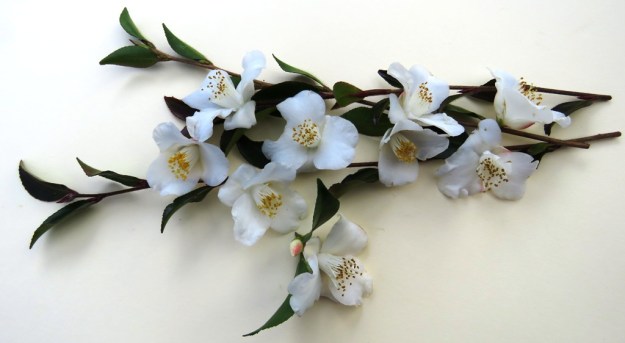
Camellia transnokoensis
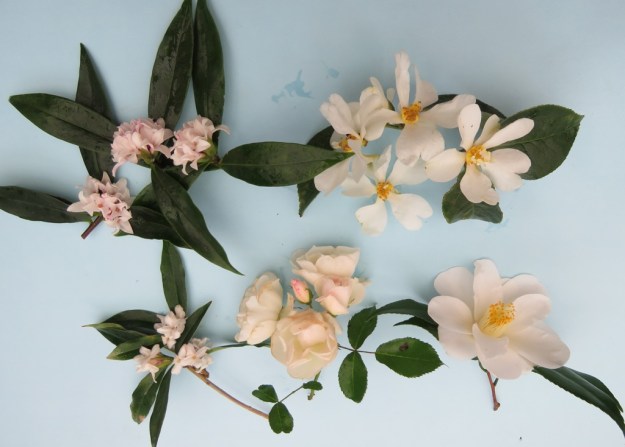
Picked in the rain today
Daphne bholua
At the top we have Mark’s new Daphne Perfume Princess – not pure white by any manner of means but the overall display is more white than coloured. Next to it is one of our favourite species, Camellia yuhsienensis, whose flowers are like the michelias of the camellia world. Below is the Himalayan daphne, Daphne bholua , which has the sweetest perfume of any daphne we know but suffers from scruffy growth and badly behaved habits of suckering and seeding. Next is Rose Flower Carpet White (does it ever stop blooming?) and then the pretty bloom of Superstar – another white camellia which we rate highly on garden performance and weather hardiness – at least when compared to most larger flowered whites.
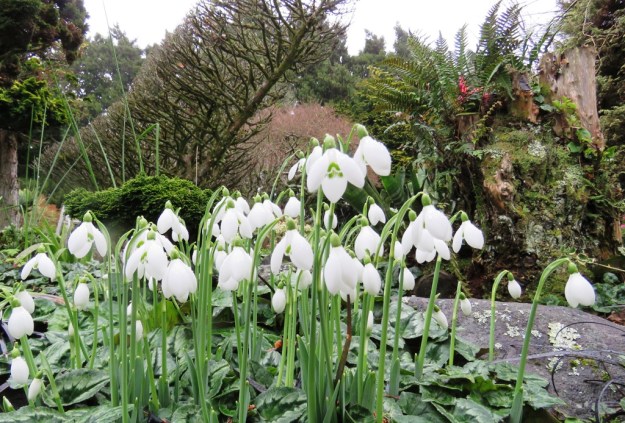
We may not get a long season from the galanthus and they certainly don’t peek through the snow here, but the simple charm is constant. Galanthus elwesii and Galanthus ‘S Arnott’ are the most reliable performers in our conditions. Although we grow some other varieties, these two are our mainstay.
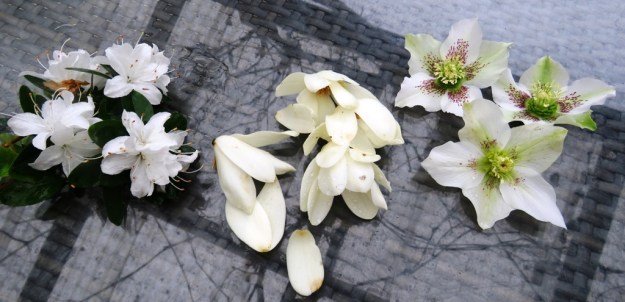 Finally today, I headed out into the chill to find the white evergreen azaleas, the very first of the new season’s michelias (deliciously fragrant) and white hellebores. By this time, I found my eyes being drawn to colour and red blooms were demanding my attention. I would find a monochromatic garden soon palled but the colours will have to wait for another day as I end with the simple perfection of Camellia Superstar below.

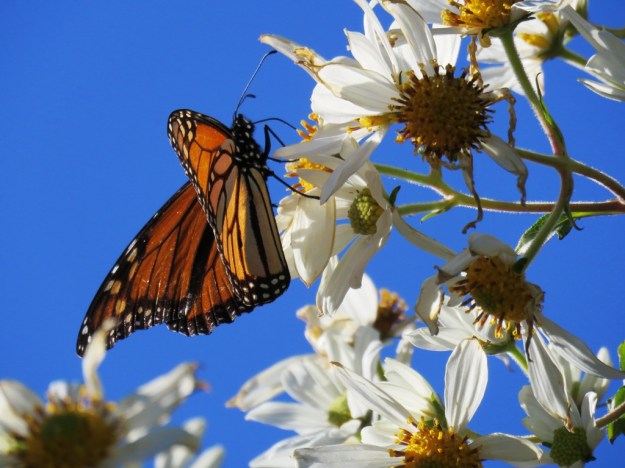 I have a new camera and while I am still learning to use it, I doubt that I could have captured the monarchs on the montanoa with my old one, even before it decided to shuffle off the mortal coils and go where digital cameras go to die.
 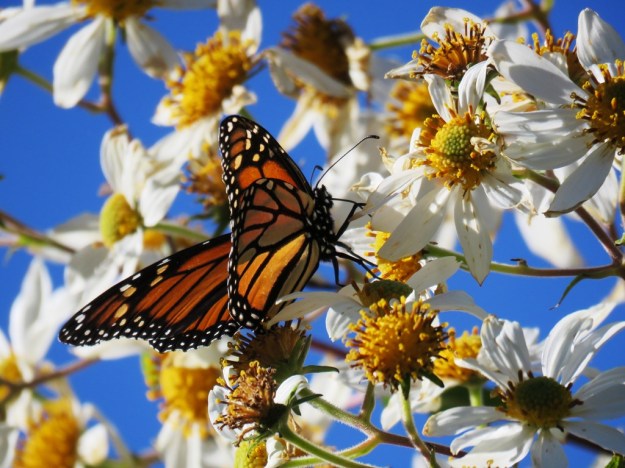 It was a comment left on this site that had me heading down to check out the montanoa on a sunny mid-winter’s day, to find it positively dancing with monarch butterflies. “It’s a natural food source for monarch butterflies, as it also comes from Mexico”, the reader said. Given that monarchs are recorded as self-introducing to this country around 1840 and generally produce two generations a year, that means at least 350 generations have passed since the Mexican connection so I think the montanoa is perhaps better described as being an “indigenous food source for monarch butterflies in Mexico”. But a source of winter nectar, it certainly is. It was a joy to see.
 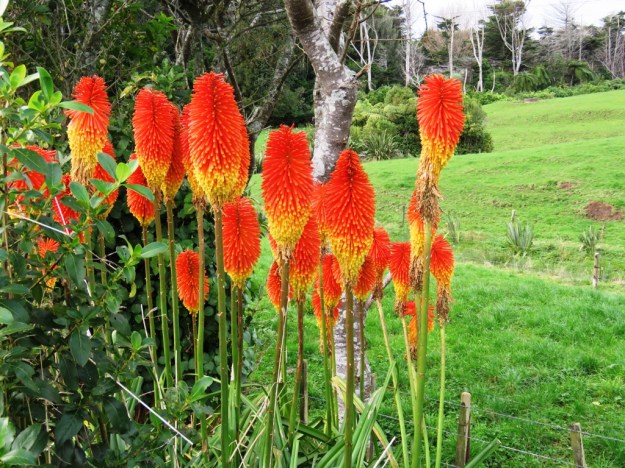 I was so discouraged when I left the scene of institutional and bureaucratic vandalism that was the
 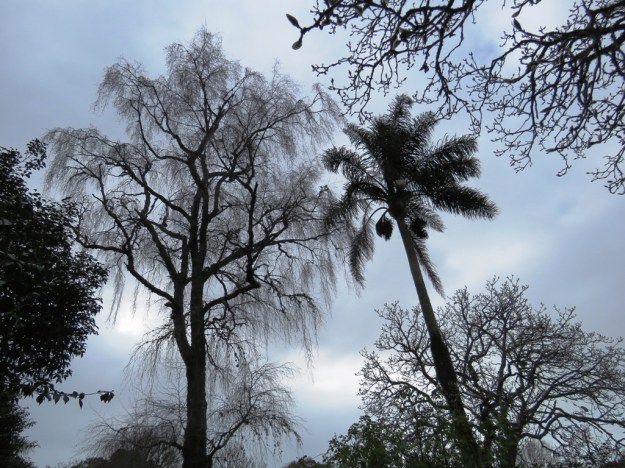 And at home I raised my eyes upwards to drink in the sights of our trees. We have many large trees here, evergreen and deciduous, native and introduced. While by no means the largest of our trees, this scene of magnolias, silver birch and Queen Palm (Syagrus romanzoffiana) soothed my soul.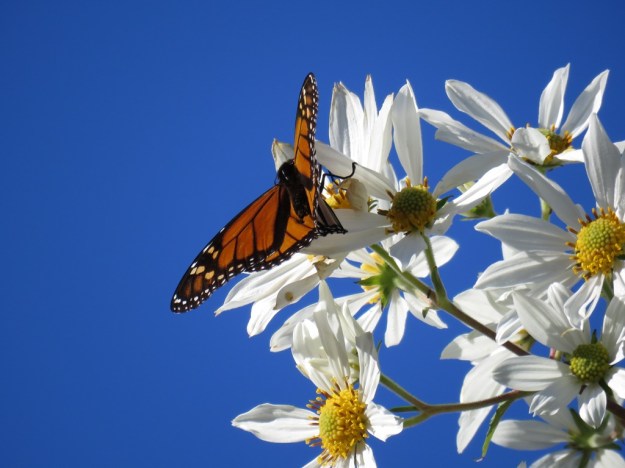
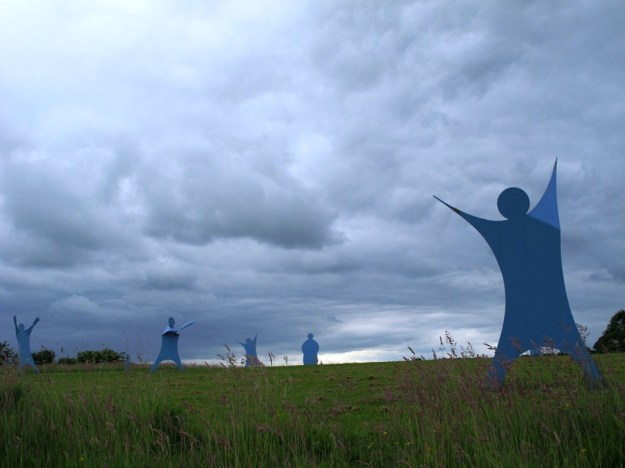
 Maybe it was our national cricket team playing in Yorkshire that brought this scene back to mind. I photographed it at Yorkshire Lavender near Terrington, about this time last year. I was greatly charmed at the time. It was set on top of a small hill with a big sky and big vistas. I admit I like cricket – well, I like it when our team is winning and they did win the test match a few weeks ago – but it was the large scale whimsy that I appreciated with this scene.


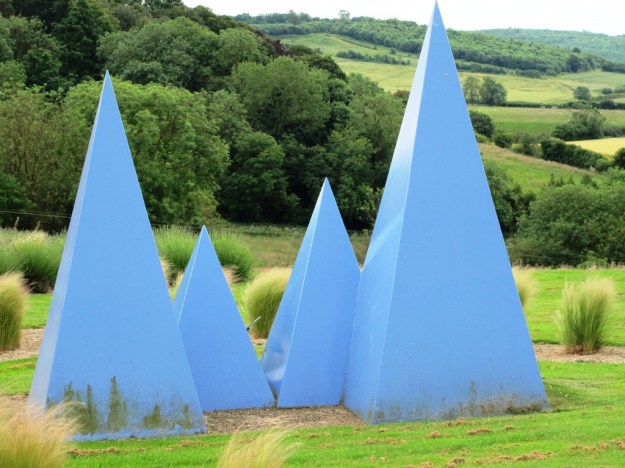
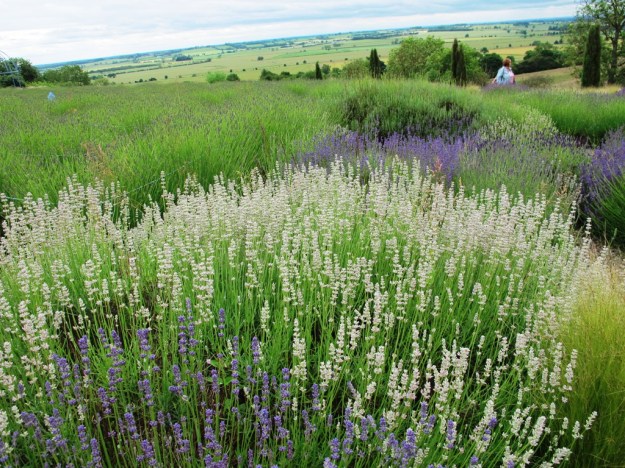 I like lavender. I really enjoy the open fields of lavender which are so evocative of a different climate. It is not a plant for our fertile conditions with high humidity and high rainfall all year round. I have just one plant left and it lurches on from year to year, clutching at the remnants of its life. I liked the way Yorkshire Lavender didn’t just keep to lavender but were extending into the New Perennial style as well with their mixed plantings and the mandatory grasses.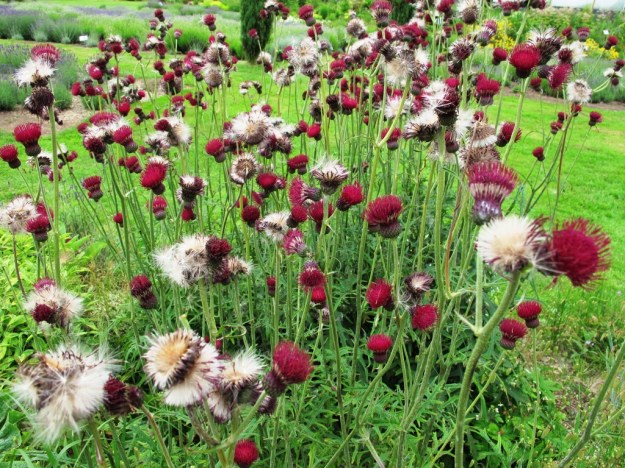

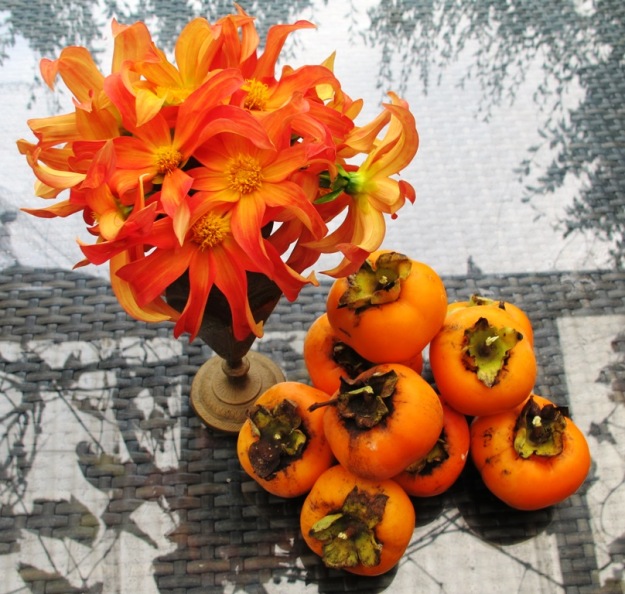
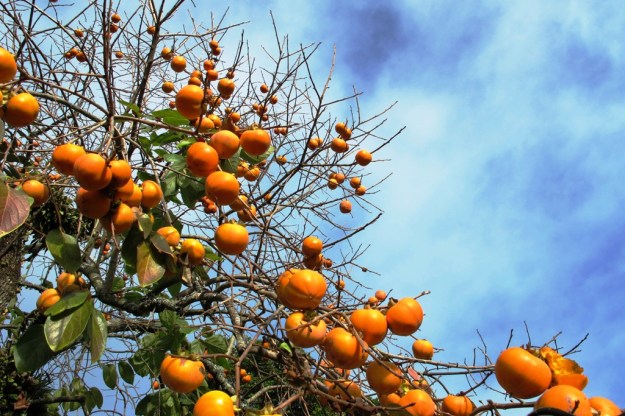 Persimmons. These are a glorious sight in autumn but more decorative than useful here. Ours is an old astringent variety – mouth-puckeringly so until it is super ripe and then I really only like the jelly-like centre segments. We don’t eat many of them. I tried buying the fruit of the non-astringent recent introductions, which can be eaten at the crisp stage like an apple. I was a little underwhelmed – I preferred apples.
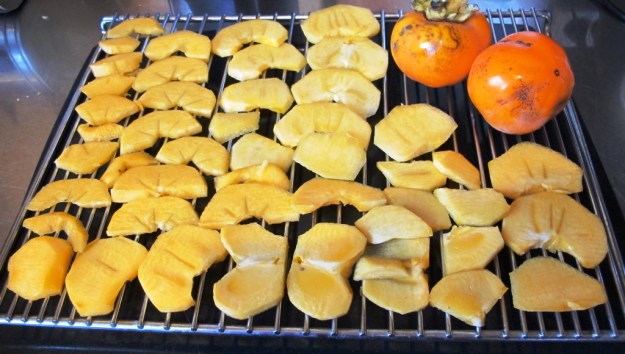 I recently read that persimmon fruit dry well and even the astringent types can be picked before fully ripe, sliced and dried and they will lose their astringency. Truly, we were very sceptical. But it works. It really does. The first batch I sliced, skin and all, and dried on a rack over our woodburner. It was a bit hot for them and the skin was a little tough. This second batch I used a sharp knife to remove the skin – which wasn’t difficult – and then sliced and put in the oven on fan bake at a very low temperature for several hours. They aren’t fully dried so I will store them in small packages in the deep freeze lest they go mouldy in our humid climate.
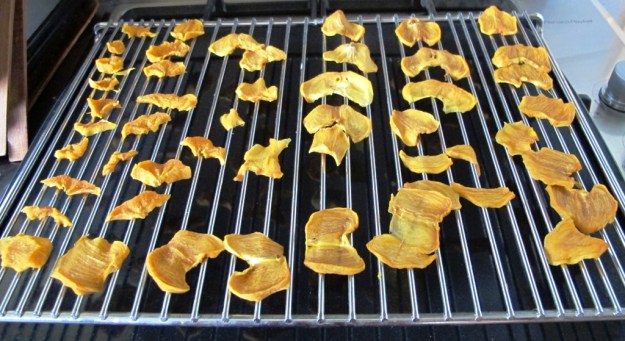 If you like dried fruit or eat muesli, they will make an excellent addition. I plan on using them as a substitute for dried apricots. They don’t taste the same but they will fill the same role. As with any dried food, they shrivel away to very little. I doubt that my forays into dried persimmons are going to make much of an inroad to our total crop – I won’t be drying hundreds of them and there is a large crop on the tree. But we are always interested in adding variety to our diet and dried persimmons take little effort to utilise a crop that we would otherwise waste.