
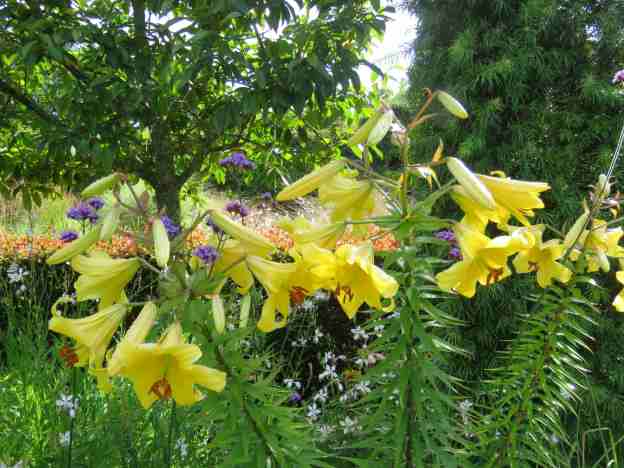
While I think of early spring and autumn as Peak Bulb Blooming Time here, January must take the crown of Big Show-off Bulb Time. With big bulbs as well as a big display, notably the lilies and scadoxus.
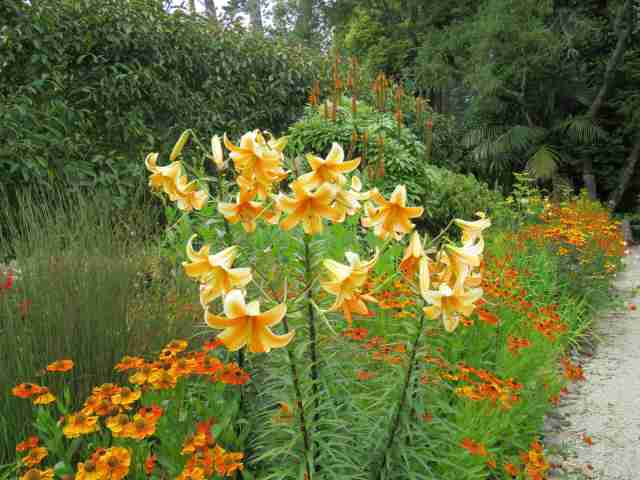
Beat the drum to announce lily time. The month starts with the yellow and apricot-orange Aurelians, for which I give full credit to Mark. We have never made them available on the market so any Aurelians you buy won’t look quite look ours and probably will have fewer flowers to the stem. They are truly lovely in their 2 to 3 week season. Nicely scented too.
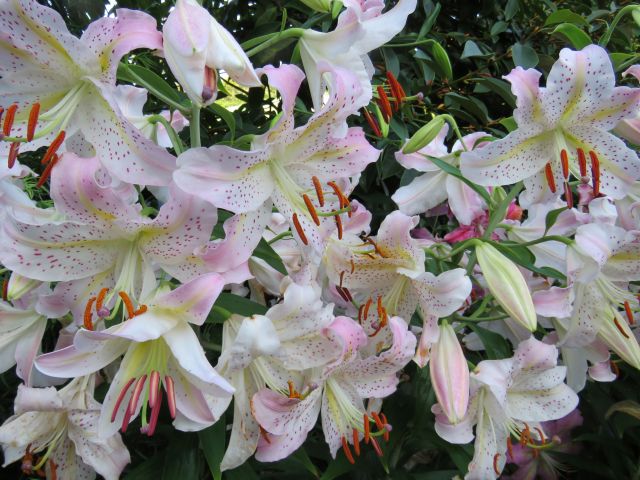
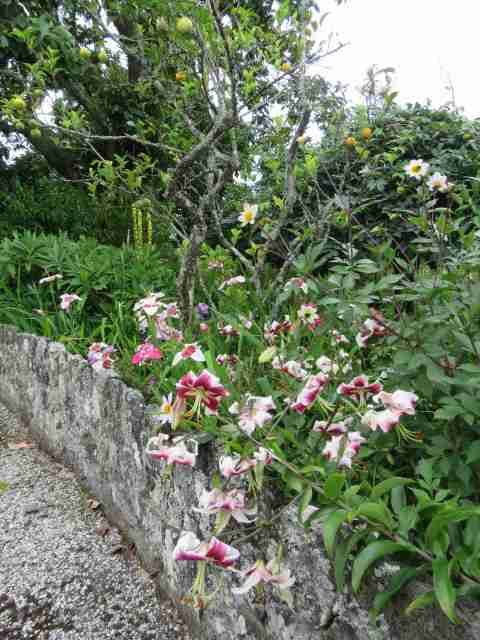
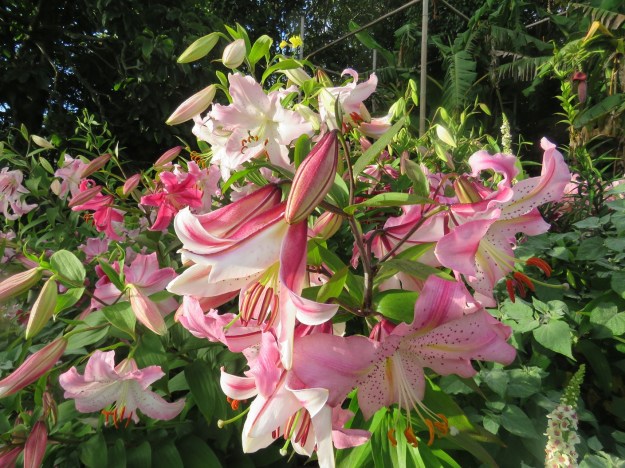
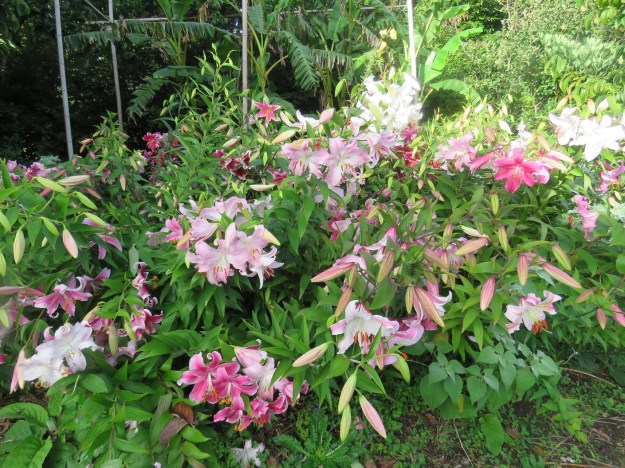
As the Aurelians pass their peak, the auratums hit their stride and they are an astounding sight in full sun and in the open woodland areas of the Avenue Gardens. We have a few, as I say in a major understatement. Some date back to Felix who dabbled with lilies in the 1960s and 70s, and even further to Les Jury (his older brother) selecting for deep red shades amongst others, but particularly for outward-facing flowers. Upward-facing lilies are probably better for florists but they also gather dust and leaves and suffer more from pollen staining so they are not as good as garden plants. We select for plants that perform as garden plants.
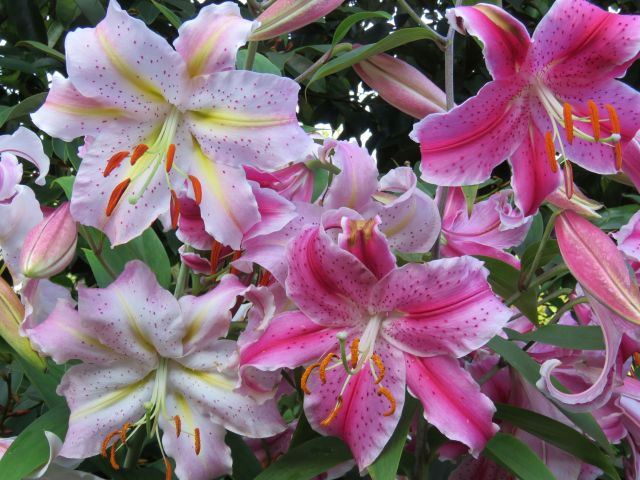
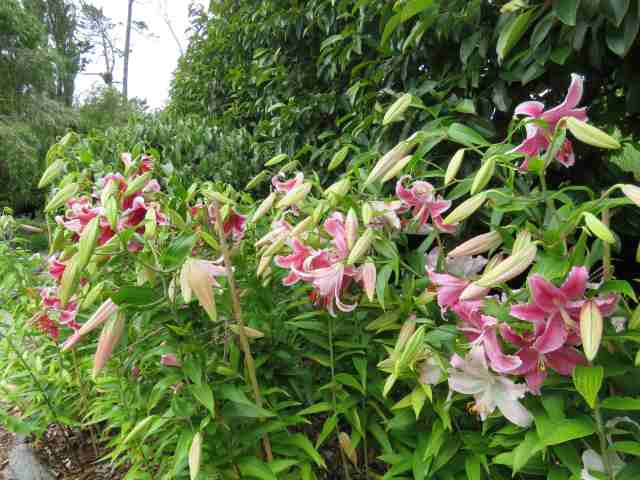
Back in our mailorder days, we named and sold a few of Felix’s selections but the more recent hybrids from Mark have never been put into commercial production. Pure and simple, he raised many plant from controlled crosses for our garden (by which is meant he chose the parents and manually pollinated rather than harvesting wild pollinated seed). He was after outward-facing blooms, big flowers, strong stems and a range of colours from white through pinks to what passes for red in the auratum family. He succeeded in this endeavour and every year, the auratums are a sensory joy with both looks and heady fragrance.
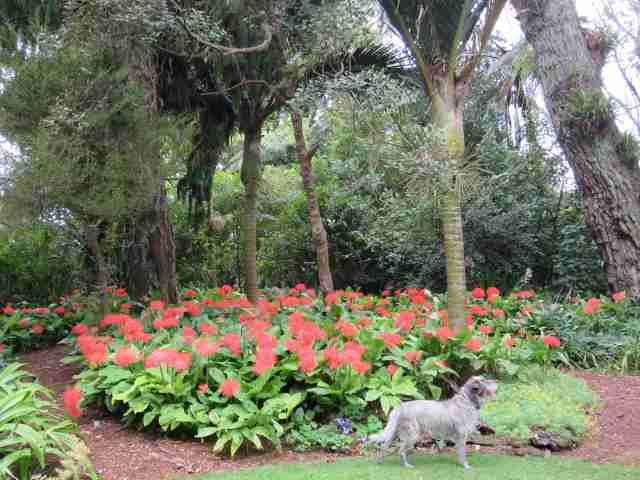
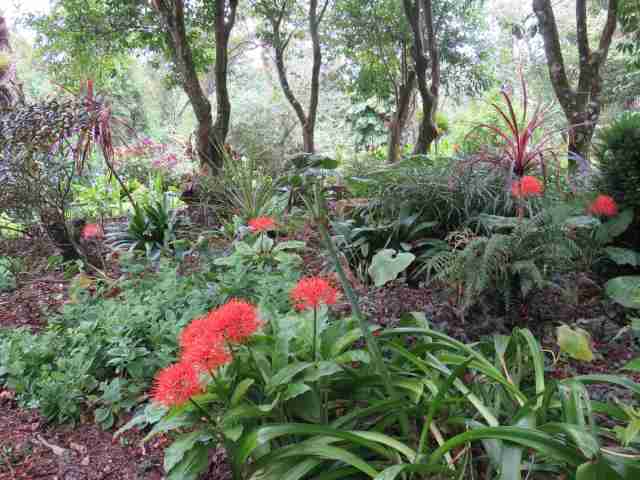
The Scadoxus multiflorus ssp katharinae continue to thrill and delight us with their sheer scale here. I am not sure I have much else to say that I have not said before. This particular patch is one of our unique features. It is more usual for these bulbs to be nurtured as single specimens in a pot. While they have naturalised here, their spread is not on such a scale as to be described ‘invasive’; they are easy to control but we are fine with them gently popping up in nearby areas. As a general rule, we favour complex scenes of mixed plants rather than mass plantings, so much the better if they are choice plants finding their own happy place.
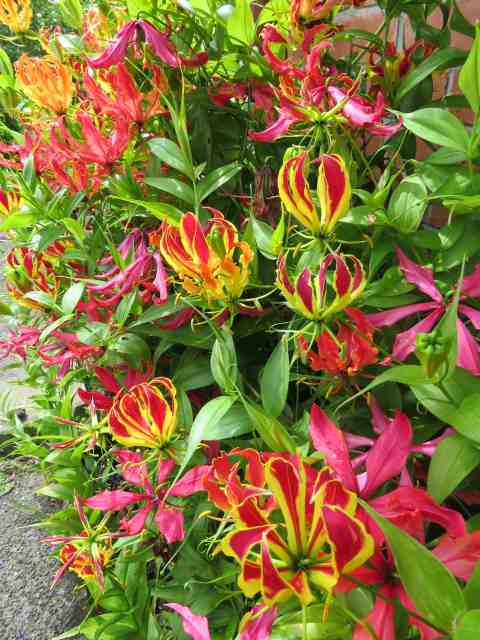
It is also gloriosa time. While they are commonly referred to as climbing lilies, the lily connection is but distant and the colchicums are much closer relatives. Gloriosas are highly prized by many until they multiply to the point where they become a bit of a weed. We are at that point. They are a handy plant to have in super dry conditions like the narrow, hot, dry border at the front of our house where little else thrives. I am not convinced about them in other areas and am trying to restrict their spread. Also, I feel they ramble as much as climb. I wouldn’t mind if they would climb neighbours to hold themselves up but they are more inclined to sprawl and need staked areas to keep them more upright.
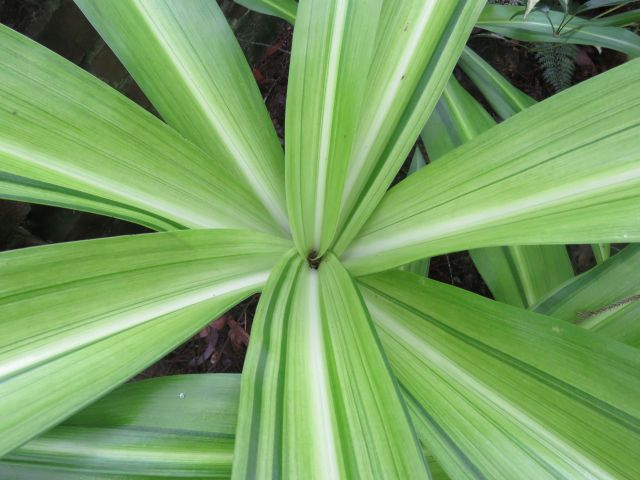
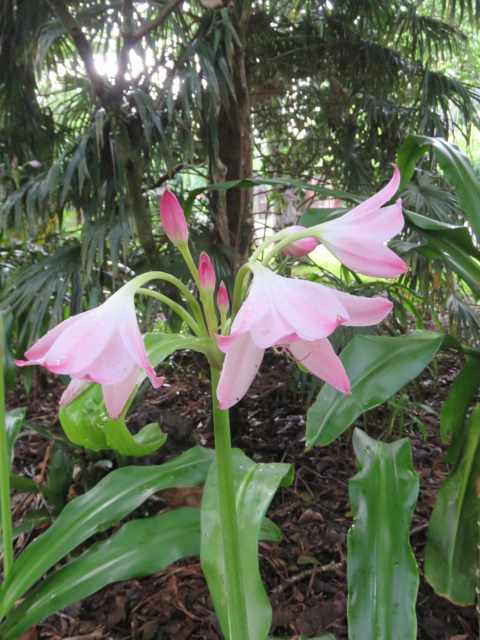
The stars of our crinums are the many bulbs we have of Crinum moorei variegated but they are only just starting to put up their pure white flower spikes this week so they can wait til February’s instalment. We have other crinums flowering soft pink. I have never unravelled the different species; Mark tells me we have two different species, one of which is the common form of moorei (non-variegated) and one of which is a different species that he has forgotten the name of and I never knew so its identity may remain forever a mystery. These all-green foliaged plants are rangy in foliage, utilitarian but useful bulbs for shady areas and pretty in bloom.
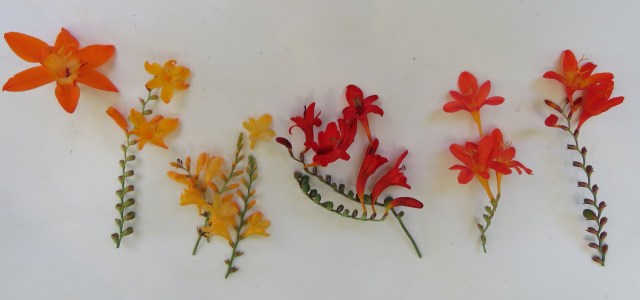
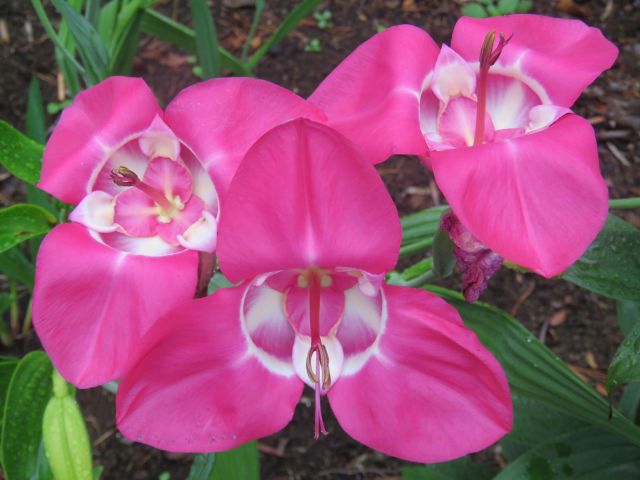
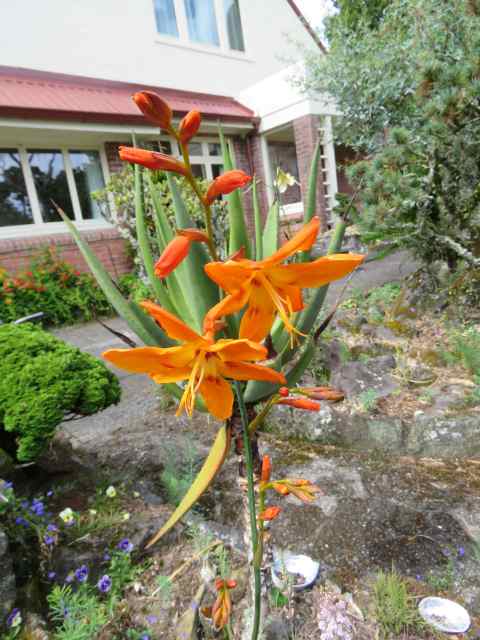
In the showy/utilitarian/potentially weedy category, we are flowering tigridias (jockey caps), crocosmia and zephyranthes. Tigridias hail from central America, Tigridia pavonia which is the common garden species is from that area around Mexico and Columbia. Crocosmia are a grasslands bulb from southern Africa.
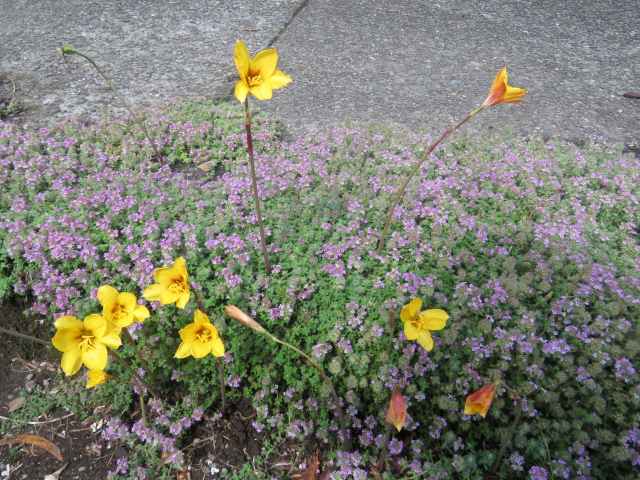
The zephyranthes are from the Americas, oft referred to as ‘rain lilies’ because flowering is triggered by rain. Zephyranthes or habranthus, you may ask. As I did. I have no idea now. We have always called them zephyranthes but ten years ago when I wrote this piece they appear to have been reclassified as habranthus. Now, a decade on, it appears that habranthus have been swept up – along with sprekelias – and moved back to zephyranthes. This is all based on botanical analysis and DNA and who am I to challenge that? I can continue with zephyranthes which is easier for this old brain to remember because we used to have a family dog named Zephyr. These are plants for the casual, sunny areas of the garden – more wildflower than tidy bedding plant.
As if the disappointing summer is not bad enough, I see we already have the first flowers opening on Cyclamen hederafolium and even the autumn snowdrop. Sigh.
Special thoughts to those in the north and on the east coast who have been hit hard by extreme weather in the past week. We see you, we hear you, we feel for you even as we know that is about as useful as Trump’s ‘thoughts and prayers’ or, in the rural vernacular, as useful as tits on a bull. May the weather settle soon that you can start the process of recovery.

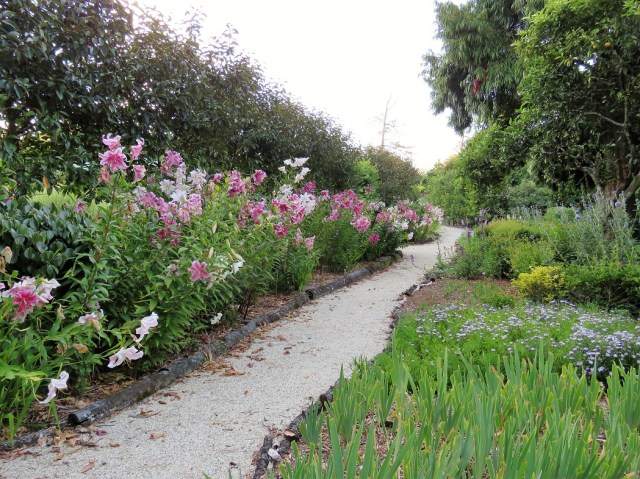
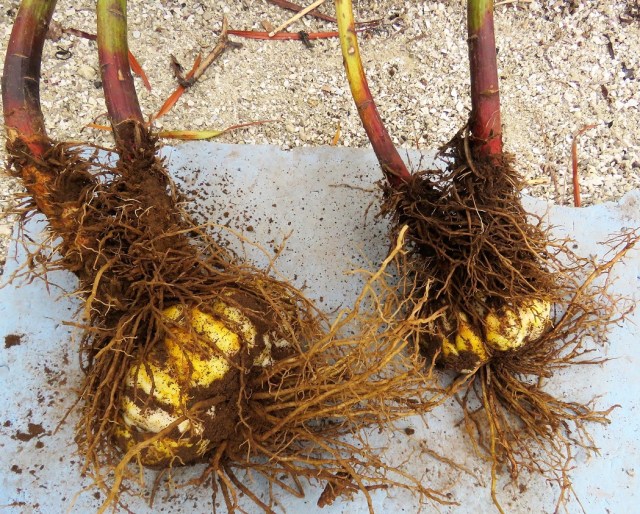
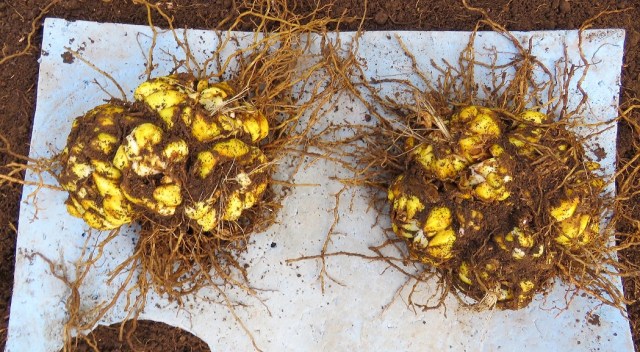
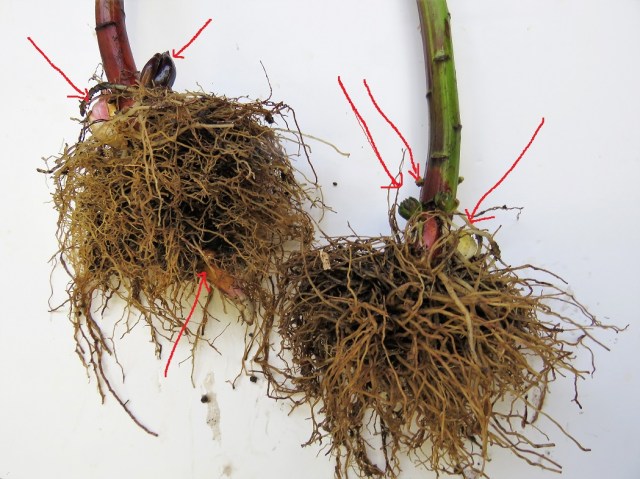


 Auratum lily time is a delight, a joy even. Showy, over the top, flamboyant but glorious. And we are just entering these weeks of glory.
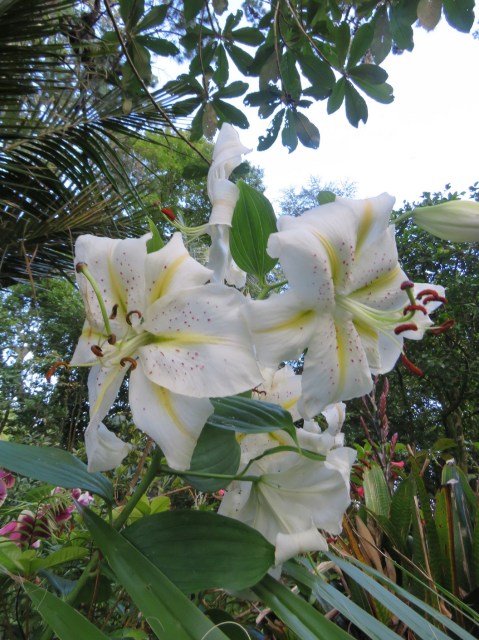 We grow lilies in the better lit areas of woodland. They can get somewhat stretched reaching for the light so need more staking when not in full sun. I am rounding them up to limit the areas where we have them growing in order to make that seasonal staking task easier. But they certainly light up the woodland margins.
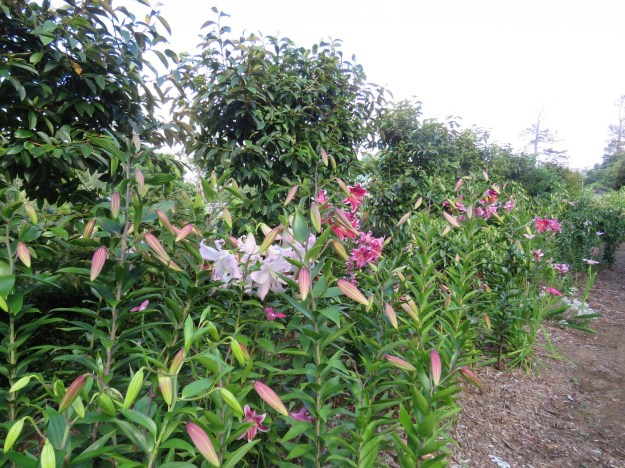 The new lily border has just opened its earliest flowers. These are the result of a determined and sustained effort to
 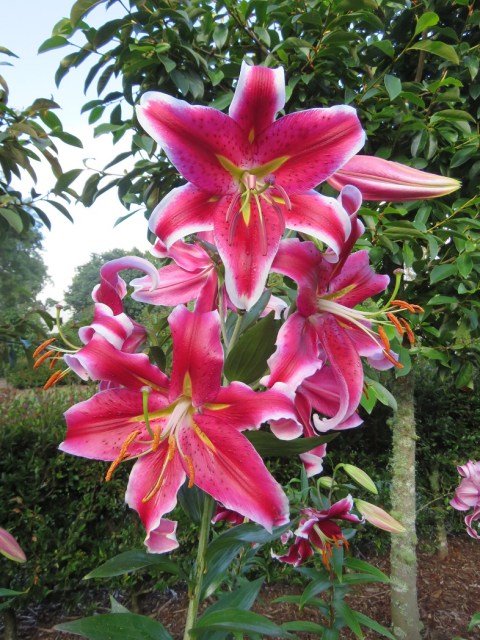 Almost all of ours are unnamed hybrids raised by father and son – first Felix and now Mark. Felix named a few that we used to sell but they are pretty mixed in the garden now. All are outward facing, not upward facing. That was one of the breeding aims. Upward facing lilies act as leaf and debris catchers and weather-mark badly.
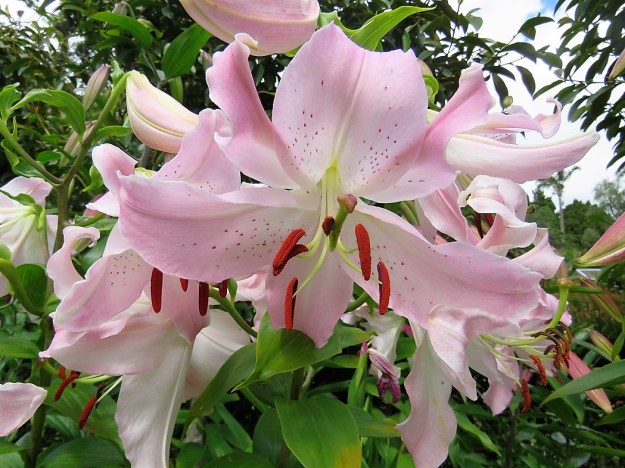 Of them all, I think these soft, marshmallow pink ones of Mark’s raising may be my favourite. Or it could be another one in a few days’ time.
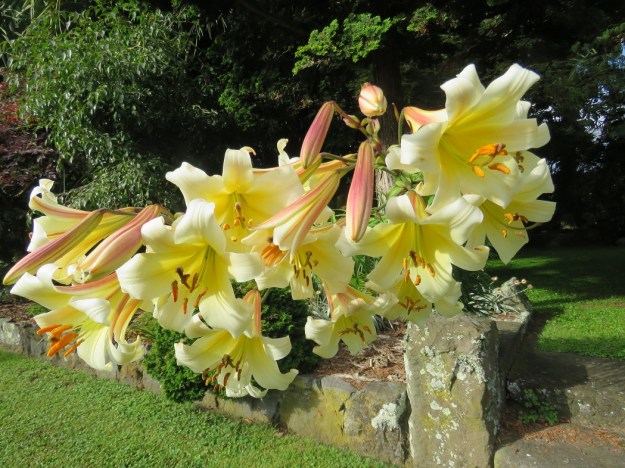 Finally, just in case there are any lily experts reading this: I assumed these trumpet lilies elsewhere in the garden are an unusual, honey-coloured
 As 2018 draws to a close, I decided that I do not have anything to say on
 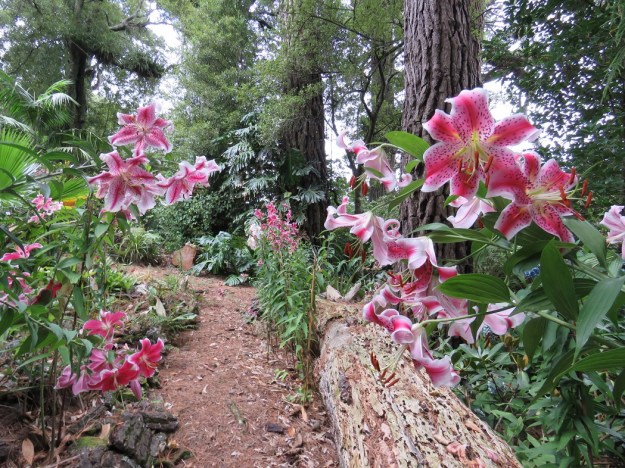 Firstly, January is for lilies.
 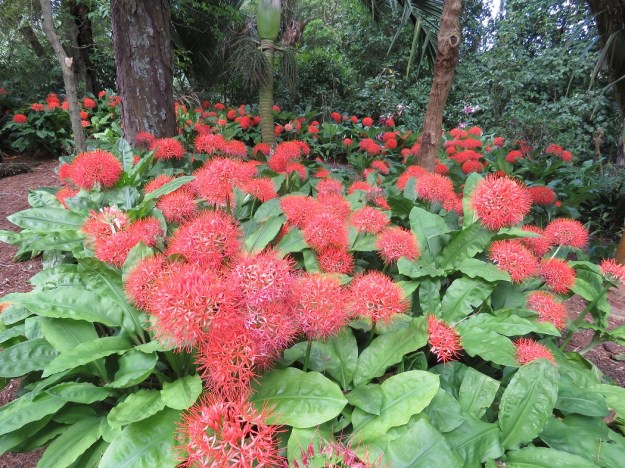 February is peak summer here, when we get the most settled and warmest weather. And the
 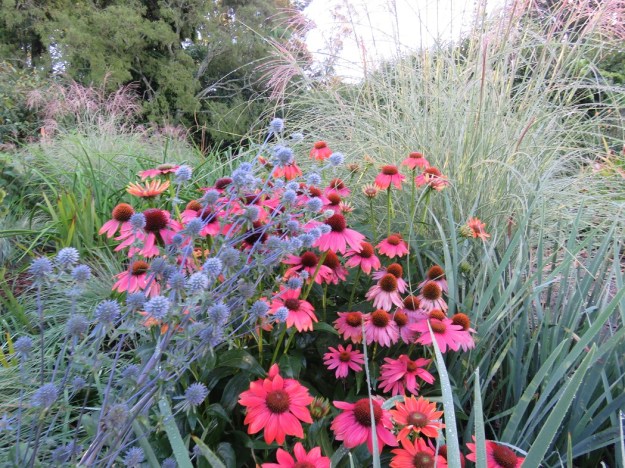 March is still summer here although the day length is shortening and the nights noticeably cooler. It used to be a very green time for us, because we have so much woodland garden and there is not a whole lot of high impact flowering in later summer woodland. We went to England three times to look at summer gardens and it is the sunny perennials that flower into this time. It has been really exciting putting in a large summer garden in full sun. I am extremely impressed by the echinaceas which flower from December to April and I have a very soft spot for the blue eryngium, even if I often need to put a stake in to hold them upright.
 By April, we can no longer pretend that summer will go on forever. The flowering of the
  May brings us the early camellias in bloom, in this case
  June is early winter here. Definitely winter. I could have chosen Mark’s Daphne ‘Perfume Princess’ which flowers on and on through the winter months, but instead I picked Vireya Rhododendron macgregoriae. This particular plant has
  July is our bleakest, coldest month. But there is light ahead. July brings us snowdrops and by the end of the month, we have the earliest blooms opening on both the deciduous magnolias and the early michelias. Nothing shouts spring more than the earliest spring blooms. Mark would like some galanthus varieties that flowered later in the season as well and he has tried all that are available, but none of them compete with Galanthus ‘S. Arnott’ for showy and reliable performance and the ability to naturalise in his bulb meadows that are a long-term project.
 August – yes there is a lot of snow on our Mount Taranaki. All the better to frame our
 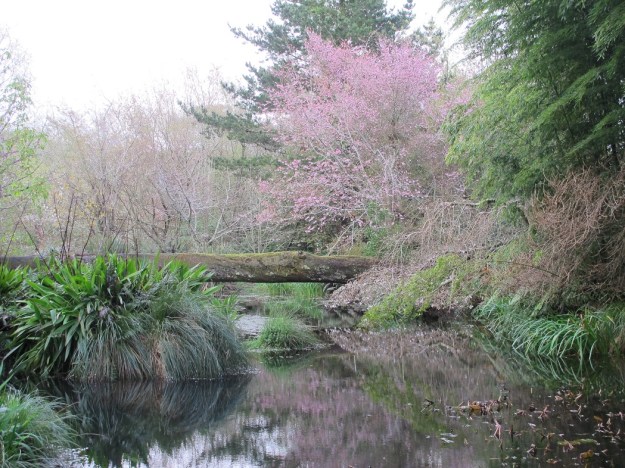 I gave September to the prunus, the flowering cherries. It is probably the campanulatas that are the showiest and they flower in August and I had already allocated that month to magnolias. But we grow quite a range of flowering cherries and this one is down in our wild North Garden, an area that we find particularly charming at this time of the year.
 October is mid spring. And for October, I chose the clivias yellow, orange and red, seen here with Hippeastrum papilio and dendrobium orchids in the Rimu Avenue. As I selected photos, I realised I was leaning to what we might call our backbone flowering plants – the ones we have a-plenty. Not all of them. I had to skip the azaleas, the michelias, the campanulatas and the hydrangeas owing to my self-imposed restrictions of one per month.
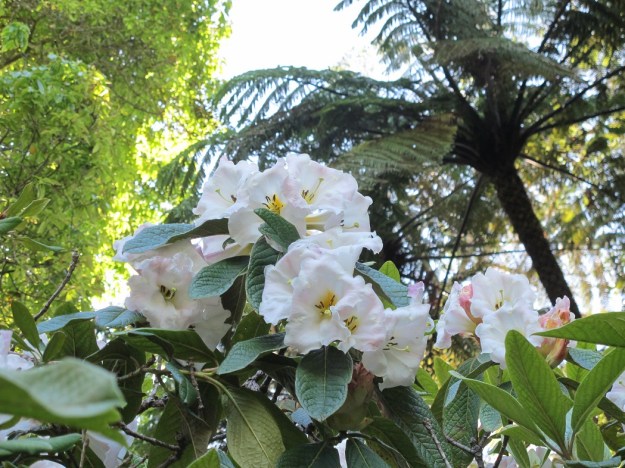 November brings us peak nuttallii and maddenii rhododendrons. The rhododendrons start in August, sometimes the first blooms as early as July, and flower well into December. But the beautiful nuttallis and maddeniis peak in November and are a source of great delight.
 Finally, December is marked by the Higo iris down in the meadow in our park. What prettier way to end the calendar year? And gardening being what gardening is, we start the cycle again with a new year. Best wishes to all readers for a happy and rewarding 2019.

 It is
It is 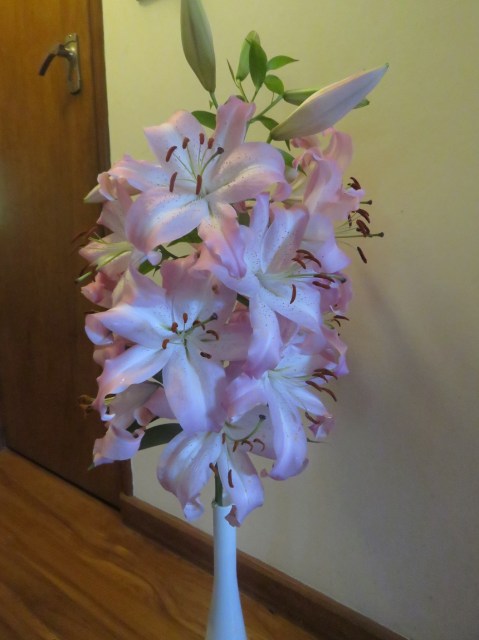
 Tikorangi The Jury Garden