Tag Archives: autumn bulbs

‘Autumn is icumen in’

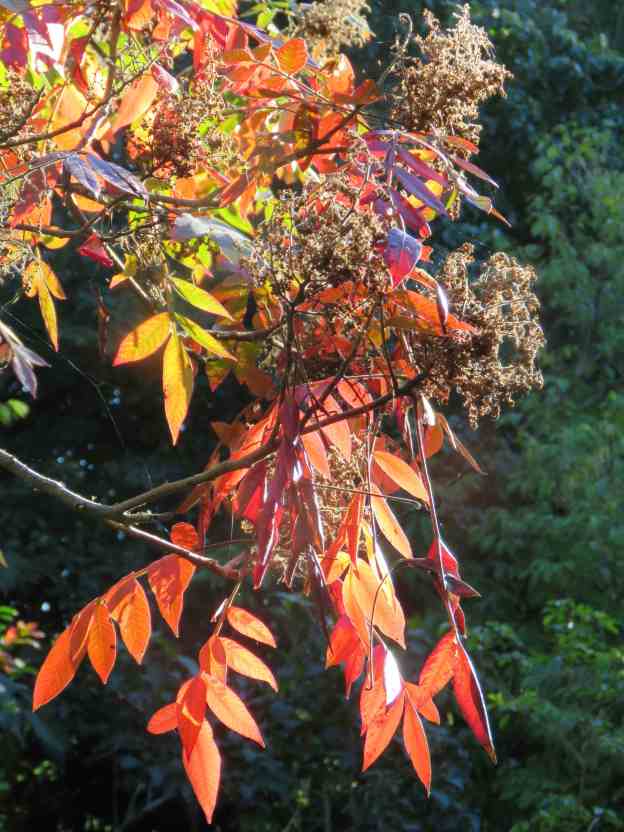
It is not ‘sumer’ that is icumen in here, but very much autumn that has announced its arrival.

It seems a lifetime since I studied English literature at university. I guess it is almost a lifetime ago and I have long since lost my ability to read texts such as Chaucer’s tales and ‘Sir Gawain and the Green Knight’ in their original Middle English. But how have I reached this age without ever knowing about the farting billy goat in ‘Sumer is icumen in’? (see below) I only found it this morning when I looked up the lyrics. It is perhaps a sign of times that were more bawdy than vulgar.

‘Icumen in’ does not translate to ‘is coming in’. It means it is here and nothing makes that seem more real than the end of daylight saving. I used to find the onset of autumn somewhat depressing, describing myself as a summer bunny. But now that I garden, it heralds the start of a new season with all the freshness of new season flowers.
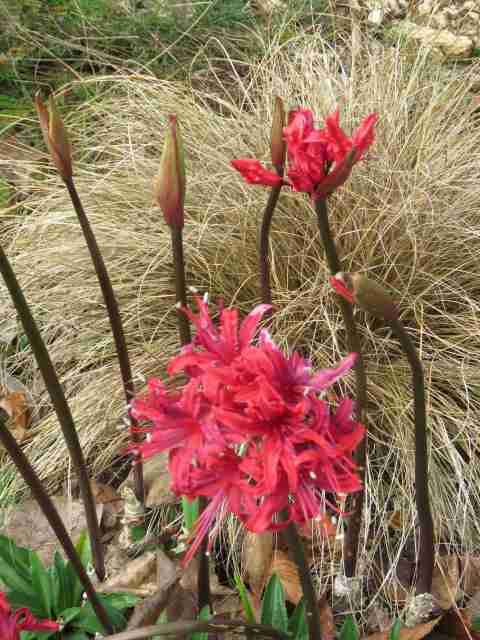
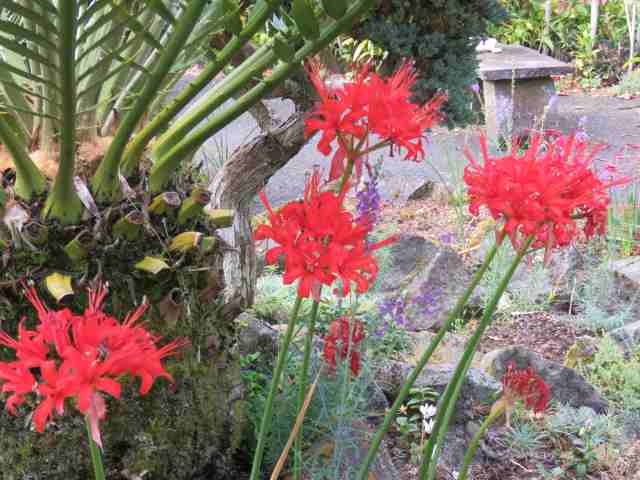
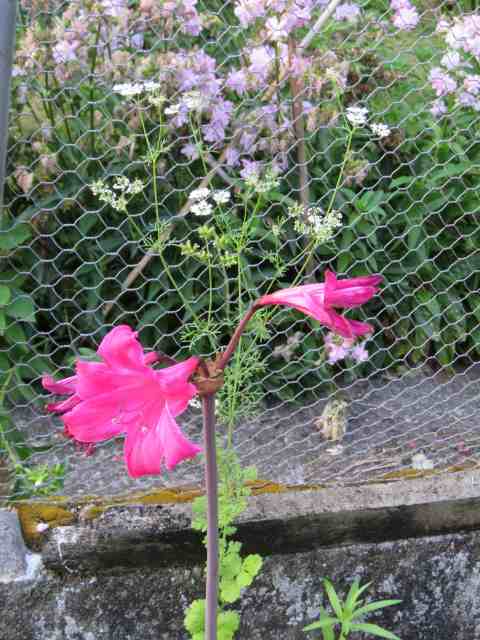
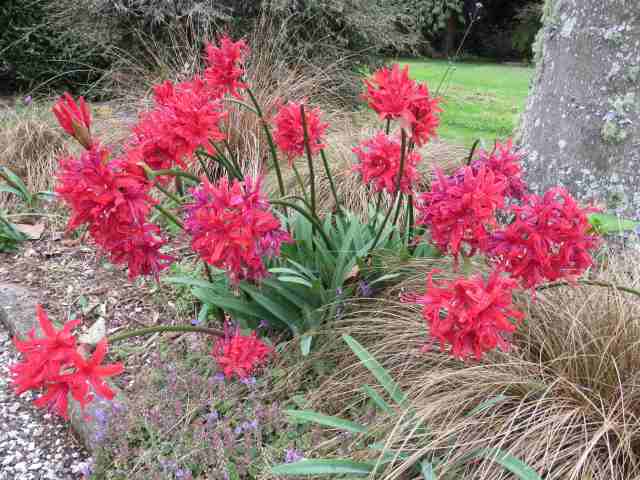
Nerine sarniensis season! This is one of Mark’s hybrids – the long stems mean it would probably be better grown as a cut flower than a garden plant. The weight of the head can drag the stems down but we don’t do cut flowers so we just persevere with it in the garden.

In our climate, it also heralds the time when we can get back to planting, digging and dividing and renovating parts of the garden that are crying out for more drastic action. We still have up to two months of the growing season left here; the ground doesn’t get cold enough to stop plant growth until June. Indeed, for those people who live in areas with hotter, dry summers, autumn planting is often a much better option than spring planting because the plants can settle in and get their roots out before the stress of summer conditions sets in. Spring planting is the better option for those who live with harsher climates where the ground can freeze or is waterlogged and very cold in winter but most of our country can happily plant away in autumn,  safe in the knowledge that that the plants will over-winter and leap into new growth in springtime.
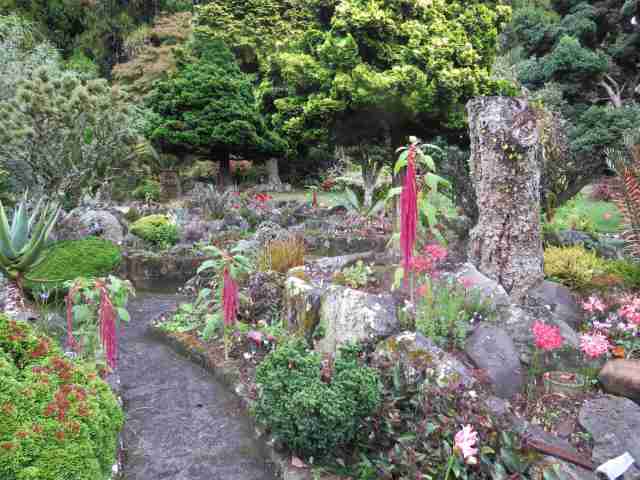
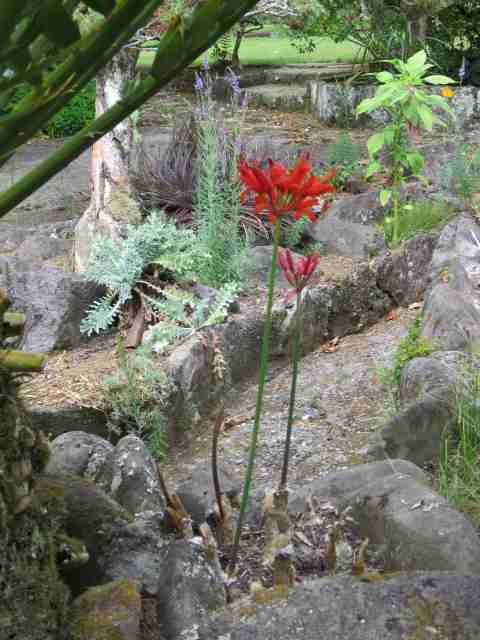
Autumn is the second season for the rockery. While there is always something of interest flowering 52 weeks of the year, autumn and early spring are when it bursts with colour and variety. Nerines feature large, particularly the sarniensis hybrids.
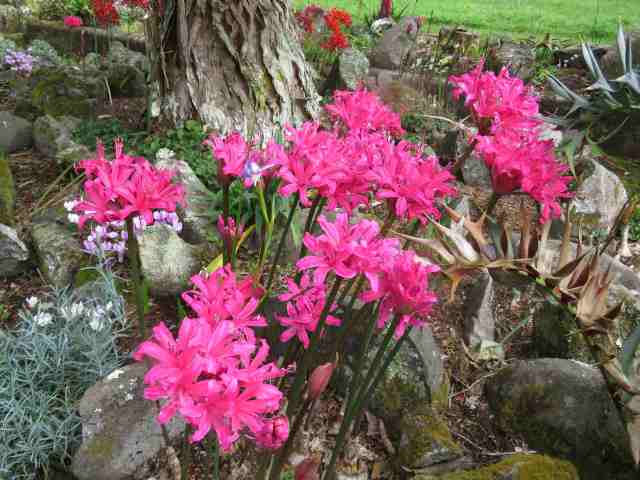
Most of our nerines are hybrids from both Felix and Mark’s efforts. We once named and sold a few but nowadays they mostly just exist in our garden. Every year, my camera fails to capture the truly startling shade of highlighter pink in this clump.
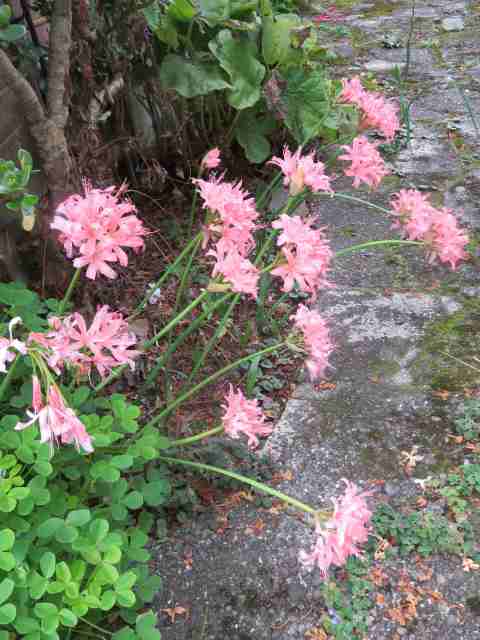
Felix started with a few named ones from Exbury. This is ‘Inchmery Elizabeth’ and has proven to be such a pretty and reliable performer down the decades.
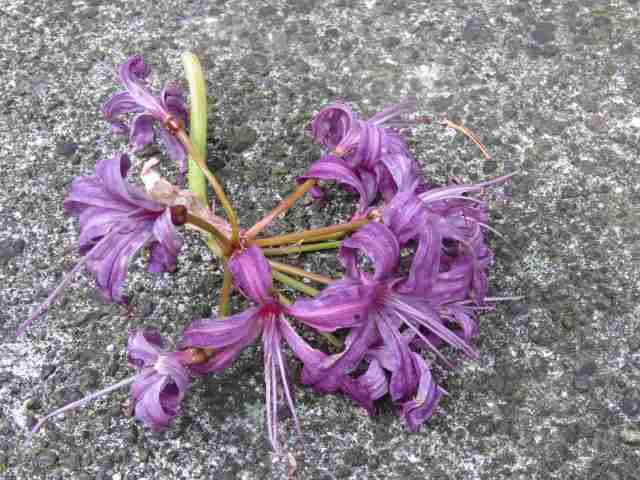
I found this one snapped off, which may have been due to slug chomping on the stem or it may have been Ralph the dog who is no respecter of gardens but ploughs in when pursuing a fly, bee or wasp. What I think is interesting is the shade of purple it is fading to; presumably there are enough blue genes in there to indicate it is only a matter of time and determination by somebody to get to true purple and blue hybrids in the future.
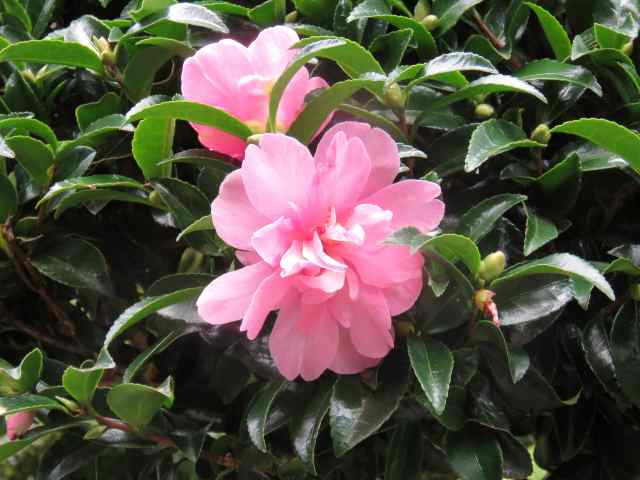
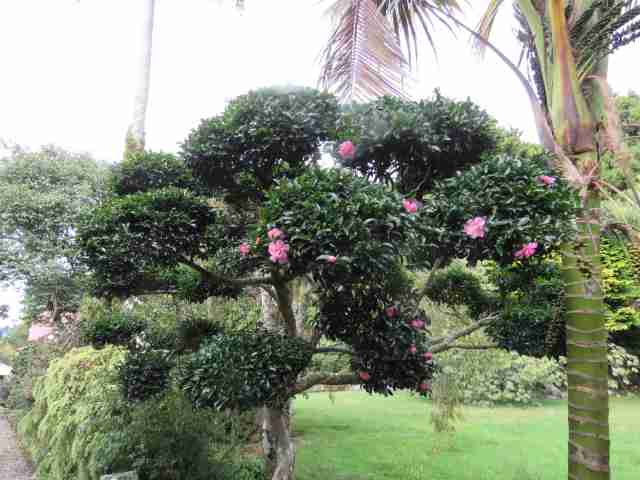
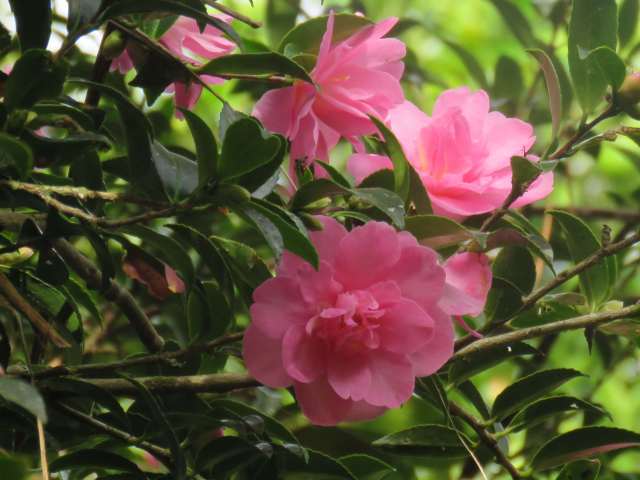
Camellia sasanqua ‘Elfin Rose’

Autumn is sasanqua camellia season. This is sweet little ‘Elfin Rose’, which we cloud prune. Sasanquas don’t have to be white, as per the long-running fashion in this country.
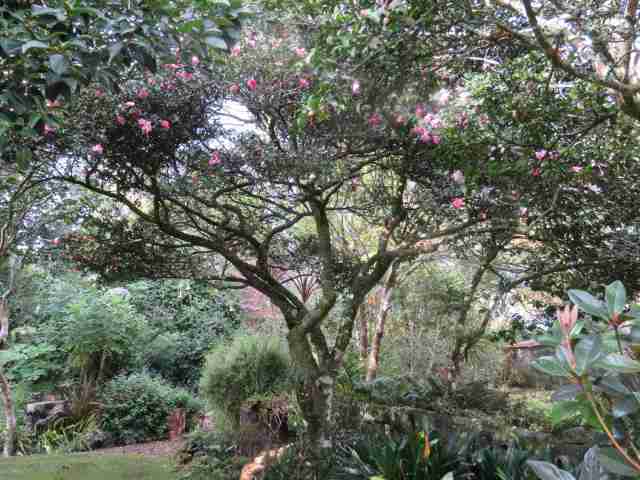
Camellia sasanqua ‘Sparkling Burgundy’

The flower on ‘Sparkling Burgundy’ is not so very different to ‘Elfin Rose’ but the habit of growth is. This plant is decades old, maybe 50 years or so. We lifted it and thinned the canopy to turn it into a graceful, open small tree rather than a bushy shrub.
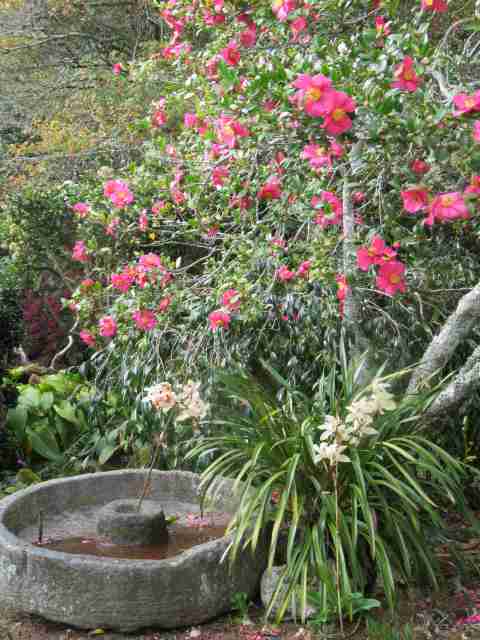
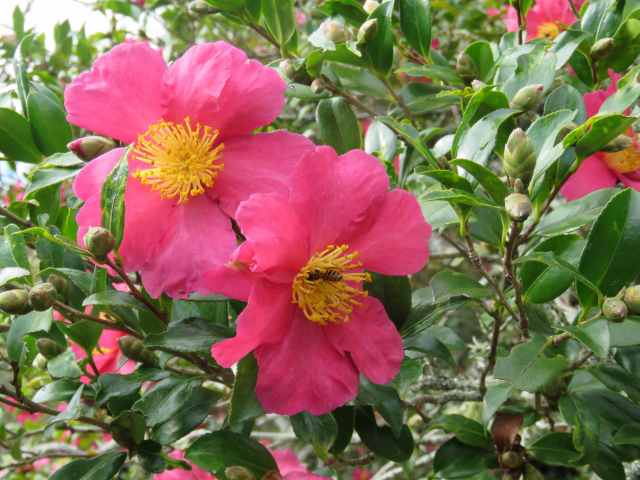
Camellia sasanqua ‘Crimson King’

Sasanqua camellias have softer flower forms and laxer growth than the more common japonica and hybrid camellias that flower in winter and spring but they don’t get petal camellia and we have grown to appreciate their relaxed informality of flower form. Alas that is a wasp feeding on the flower above but they are equally a source of food for the more desirable bees. Exposed stamens and pollen are the key to feeding bees.

The lyrics to ‘Summer is icumen in’, courtesy of Wikipedia. Composed, it seems, to be sung as a round. Spot the farting billy goat (and the politer alternative).

Middle English
Sumer is icumen in
Lhude sing cuccu
Groweþ sed
and bloweþ med
and springþ þe wde nu
Sing cuccu

Awe bleteþ after lomb
lhouþ after calue cu
Bulluc sterteþ
bucke uerteþ
murie sing cuccu

Cuccu cuccu
Wel singes þu cuccu
ne swik þu nauer nu

Sing cuccu nu • Sing cuccu.
Sing cuccu • Sing cuccu nu
Modern English
Summer[a] has arrived,
Loudly sing, cuckoo!
The seed is growing
And the meadow is blooming,
And the wood is coming into leaf now,
Sing, cuckoo!

The ewe is bleating after her lamb,
The cow is lowing after her calf;
The bullock is prancing,
The billy-goat farting, [or “The stag cavorting”]
Sing merrily, cuckoo!

Cuckoo, cuckoo,
You sing well, cuckoo,
Never stop now.

Sing, cuckoo, now; sing, cuckoo;
Sing, cuckoo; sing, cuckoo, now!
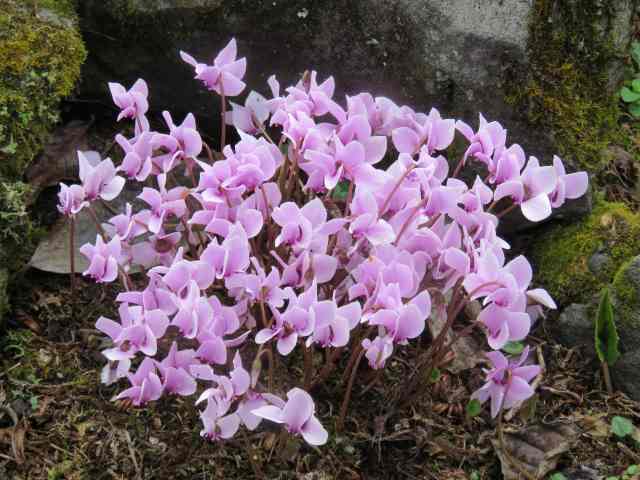
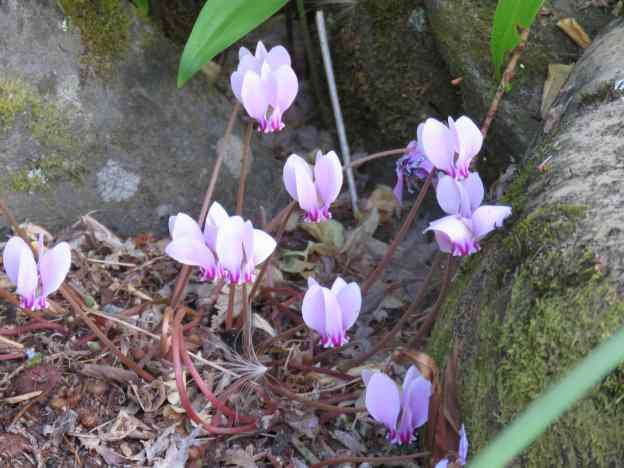
What is there not to love about Cyclamen hederafolium. First the pretty, dainty blooms and then the lovely marbled foliage to carry through winter.
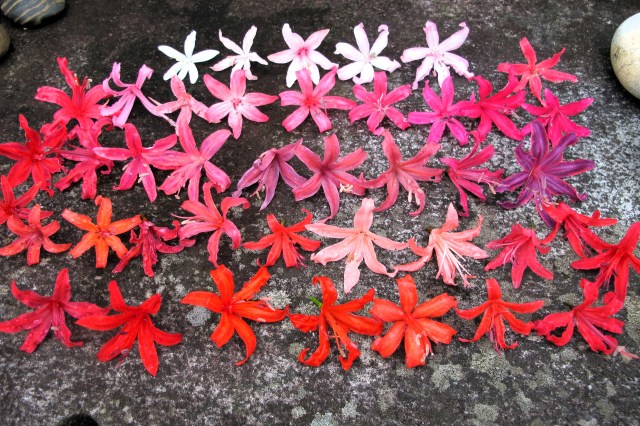
A flower lay I prepared earlier, showing the various hues of nerines in the rockery at the time

Waiting for rain

The Court Garden has barely turned a hair – or lost a leaf – in our unusually dry summer

It is unusually dry here. In fact our province of Taranaki went into official drought declaration some weeks ago. I was woken yesterday morning by the sound of rain and my instant response was relief but it stopped and I see it was only about half a millimetre so that did absolutely nothing.

Continuing dry weather has affected the floral display in the borders

People who live in habitually dry areas may scoff at what we declare as drought but it is all relative. For many years, I have been cheerfully declaring that we get around 150 cm of rain a year (1500mm or about sixty inches) fairly evenly distributed across the year. We might complain about the dryness if we get several weeks without rain in summer but we are generally confident that the rains will arrive in time. Our prevailing westerly weather patterns tend to mean that we get moisture-laden air coming in from the ocean. High sunshine hours and relatively high rainfall is the norm. Currently, we are about 60% down on our normal rainfall in the first months of this year.

Fortunately, we source our water from our own, private bore so we are not in danger of running out. The water delivery businesses must be booming with urgent calls from those rural folk who rely on rain water tanks or surface water sources. Stream and river levels are uniformly low.

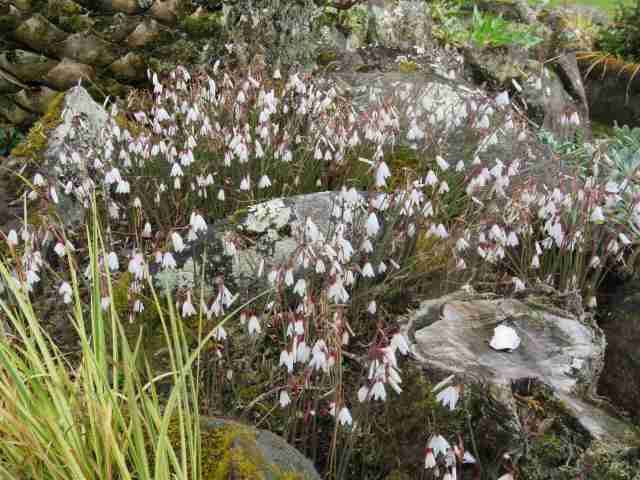
The autumn bulbs are not bothered. They received just enough summer rain earlier to trigger them into growth. This is dainty little Leucojum autumnale. Its teeny tiny flowers are not much larger than a finger nail but it increases well.

When it comes to gardening, because we live in a climate with consistent rainfall, we have no irrigation system and we can only reach a few, small areas with a hose. Extended dry periods are a good test for us. When the hydrangeas planted in shade start to wilt, we know we are very dry.

We are not unduly worried yet. The rains should come.  It is frustrating though, for people who garden every day. It feels as though much is on hold, waiting for rain. We can’t plant anything much or dig and divide. But at least Zach and I got onto a messy border immediately behind the house. There is a water tap close by so we could do more.

A generally unremarkable border

One might describe it as an historic but unremarkable border, most of the permanent trees and shrubs having been planted by Mark’s father, probably back in the 1950s and 1960s. Over the years, it has received little intensive care or love, confined to weeding, removing dead plants, a bit of pruning and filling bare spaces but little else. The swathe of auratum lilies were crying out for some love.

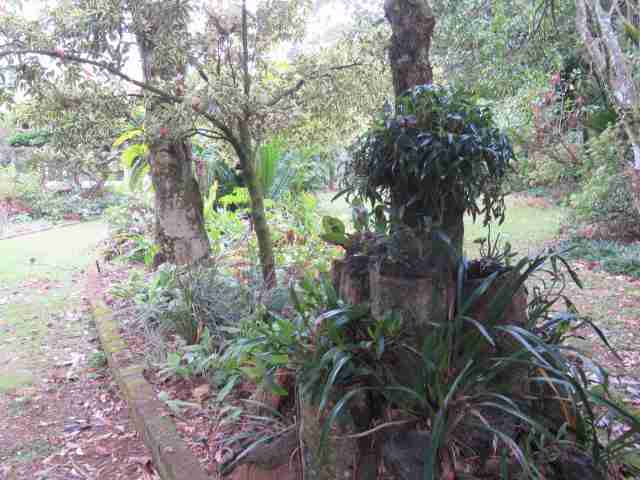
The border goes from sun to full shade. This is Zach’s orchid construction at the shady end.

I haven’t counted the plant varieties but there must be at least 50 or 60 different ones in a curved area measuring up to three metres across and twenty five metres long. We pruned almost all the trees, shrubs, cycads and the like – a tidy-up really. The work came on the under plantings – the lower growing perennials and bulbs.

My mantra is that when there is a diverse top tier planting of trees and shrubs (like, one of each specimen), bottom tier plantings need to be simpler to give some cohesion. Our idea of simple may not be the same as many gardeners, let alone designers, but what Zach and I did was to consolidate the different ground level plantings into bigger blocks, rather than drifts or random placement. We removed some entirely (yellow tigridias and every last bit of green mondo grass), reduced some (it is very nice of Geranium madarense to seed down and naturalise but we only need four full-sized ones to make a statement next spring and a few younger ones for the year following – not 40), divided hostas and farfugiums and consolidated other plants into blocks.

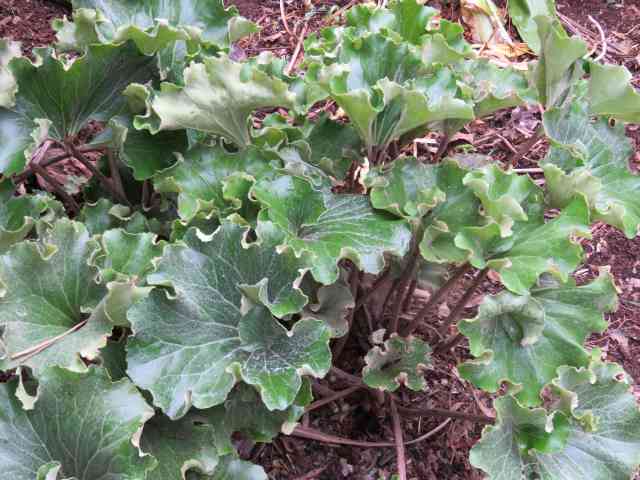
Farfugium japonicum ‘Crispatum’ features strongly. I am going with the RHS name of this plant but a net search sees it listed under assorted variants including ligularia (first word), tussilagineum (second word) and Cristata or Crispata (third word) in every possible combination of those three words plus the three words of its RHS-accepted name.
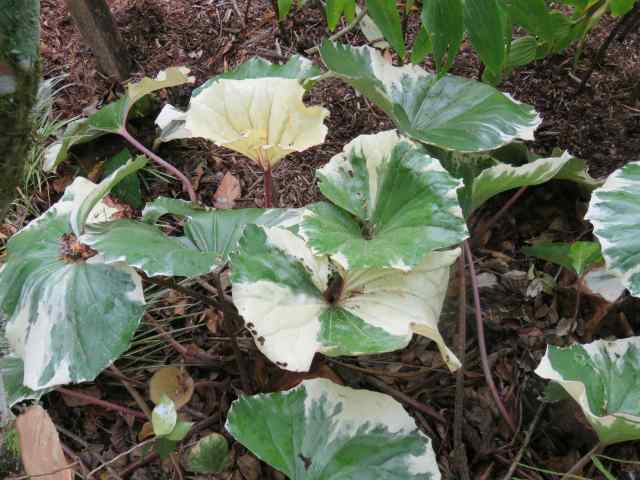
Farfugium japonicum ‘Argenteum’ is showier but also much slower to increase. Fortunately, we used to sell it commercially so we had a jump start on having sufficient plants for impact in shady areas.

All plants that were lifted were plunged into buckets of water, replanted into holes enriched with compost, thoroughly watered and mulched. If we don’t get enough rain in the next week or two, we can easily reach them with the hose.

Just a reminder not to lay mulch when the ground is bone dry. It will act as a barrier to moisture entering the soil. Mulch needs to be laid to protect existing moisture levels in the ground before it dries out.

May the autumn rains arrive soon.

The rockery is so dry it is pretty much dust. There is no sign of life in the soils but the autumn bulbs are barely turning a hair at the conditions.

Harbingers of autumn


It may still feel like high summer where we are, but the flowers do not lie. We are on the cusp of autumn.

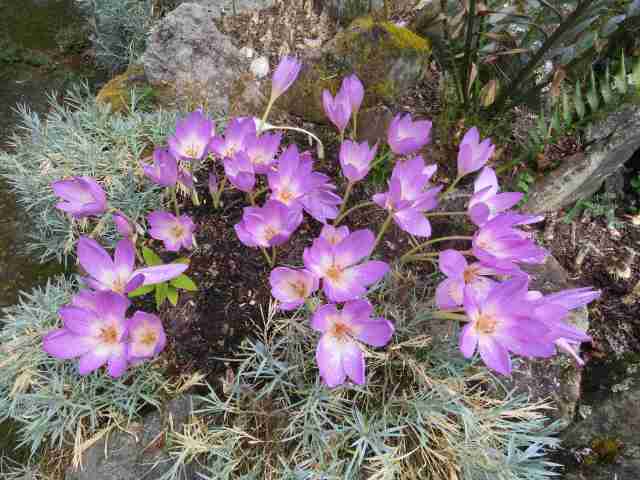
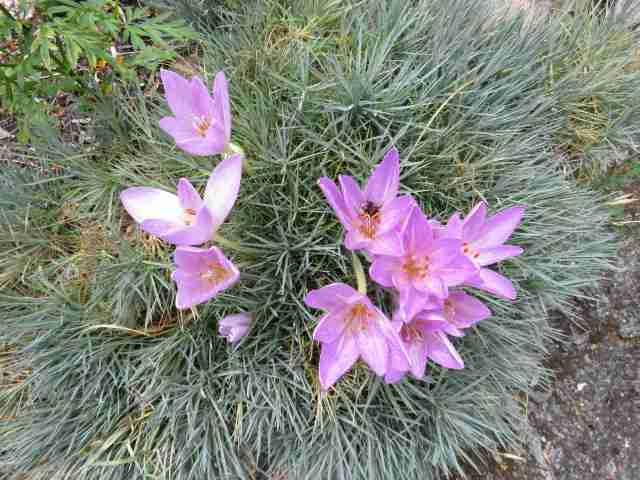
Colchicum autumnale

Summer here in North Taranaki has not followed its usual pattern. While we are always slower to warm up in November and December than the east coast, it didn’t really feel like summer until mid January. I don’t swim in cold water and I wasn’t tempted into the pool until well into January. Since then, we have been in and out of the water every day in an unseasonably warm and dry spell. A couple of degrees of extra heat on an ongoing basis makes quite a difference when you spend most of your days outdoors in the garden.

A stray belladonna in the raspberry cage was the first autumn bulb I noticed this season

And dry. I know when we talk about dryness, others may scoff. We all adapt to our own, local conditions and we expect rain on a regular basis all through the year. Mark, a keen weather watcher who could have happily pursued a career on meteorology, tells me we only had 40ml in January and that fell basically on one day, late in the month. We don’t ever water the garden (except for some of the vegetables) and we have no irrigation system; it isn’t necessary in our climate and nor does it seem like good practice but we are seeing some floppy looking plants and some early dropping of leaves.

Even the first nerines are opening

When the autumn bulbs started flowering in what still feels like high summer, I assumed they were being triggered by day length, as vireya rhododendrons are. They are certainly not being triggered by change in temperature, either day or night. Mark pointed out that it may well be that one day of rain in January that triggered them into growth and that makes sense because many bulbs are identified as summer rainfall bulbs.

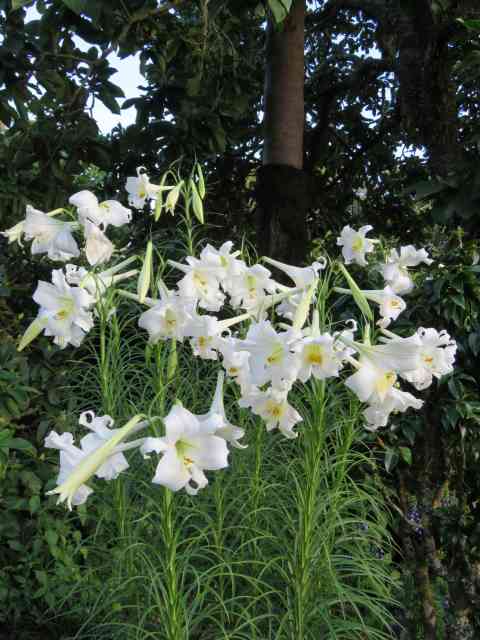
Lilium formasanaum is a bit controversial in this country. It is on the Pest Plants Accord so illegal to propagate or sell. We keep it because it is showy and not a problem in our garden but also, it is not in a situation where it can escape from the garden to become a problem elsewhere.

Zach and I are waiting for rain so we can move plants again. We have plans we want to get underway. At least we know that here, with a temperate, maritime climate, the rains will come. While our high summer may be of short duration, so too is the depth of winter which we measure in weeks, not months. We have exceptionally long autumn and spring seasons and that does make for a good gardening climate.

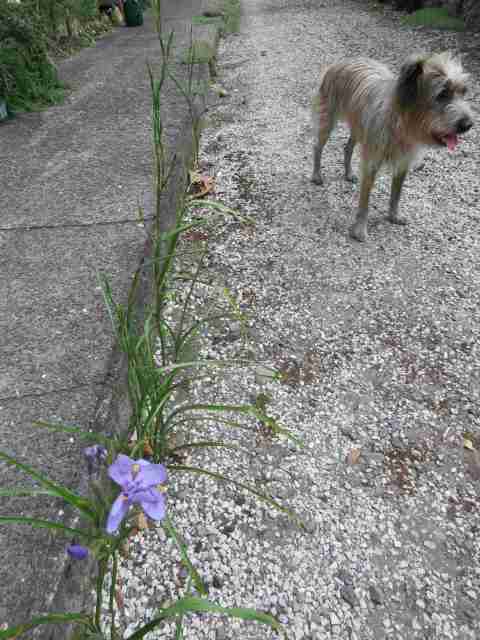
A self-seeded Moraea polystachya on the side of the drive. Of all the autumn bulbs, this moraea probably has the longest flowering season.

The autumn bulbs are one of our seasonal highlights.

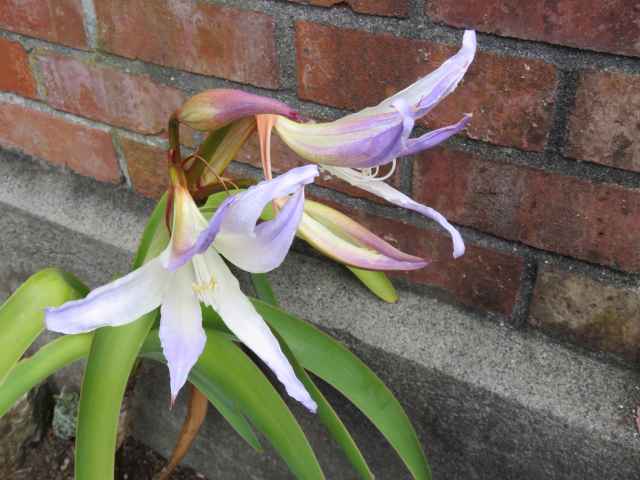
The Worsleya procera is opening! This bulb is one we take some pride in because it is rare in cultivation, even rarer to see it flowering in a garden situation and it is very choice. It is generally grown as a pot plant in carefully controlled conditions. The lilac colour deepens and spreads as the flower opens.

Oxalis – by no means all bad

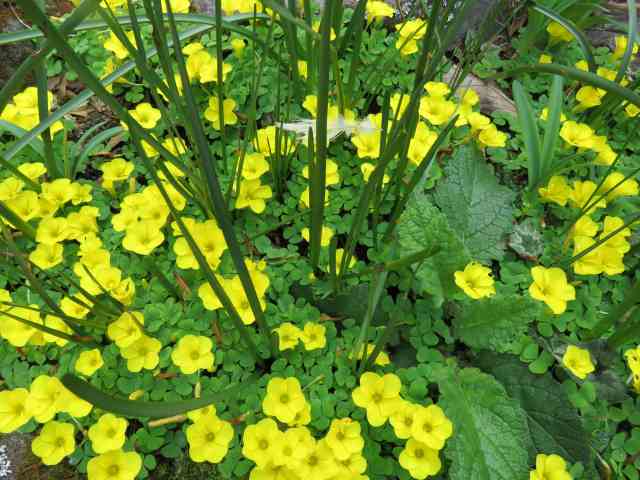
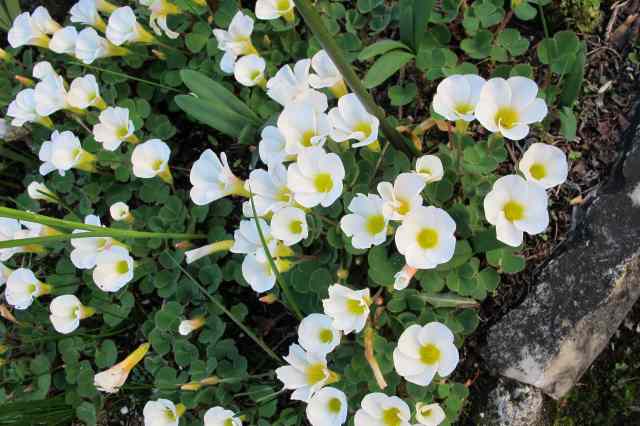
Sunny Oxalis luteola. These bulb oxalis only open their flowers in the sun.

It is easier to maintain specific plant collections when you have a nursery. In that situation, special plants are maintained under nursery conditions and given more individual attention and care than in general garden collections. We used to carry a large array of different bulbs when we were doing mailorder and they were repotted on an annual basis, or at least every two years. We only listed bulbs if we had enough stock reserved to keep going for the following years.

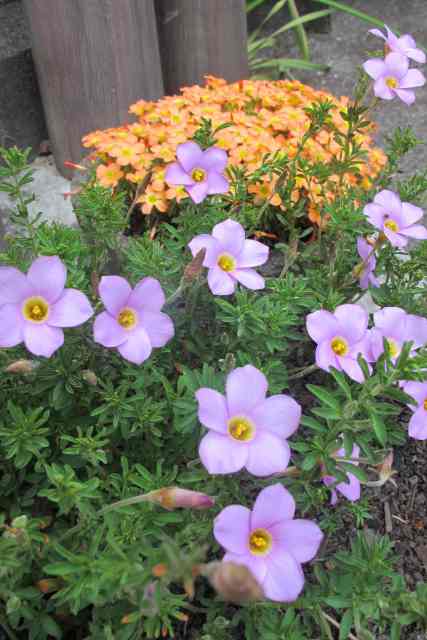
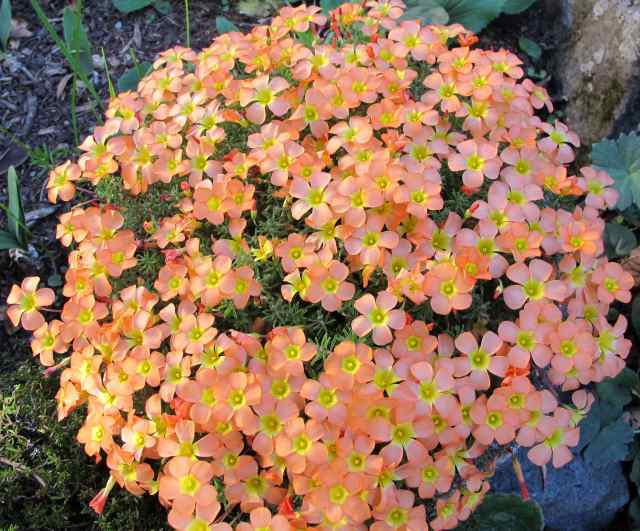
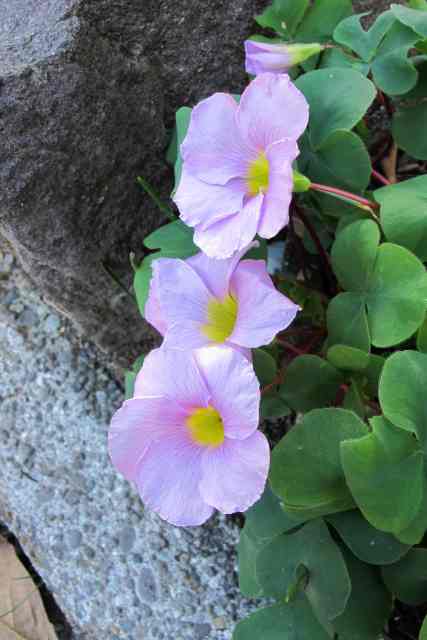
Lilac O. hirta with apricot O. massoniana behind

We put out our last mailorder catalogue in 2003 – twenty years ago – even though I still get email and phone requests from people wanting to order plants from us! In the years since, I have planted most of the good bulbs in the garden, scrapped some that may have been botanical curiosities to half a dozen afficionados throughout the country but were of little merit as garden plants and the rest have languished under a regime best described as benign neglect. Some have not survived this laissez faire approach but, with an extra pair of hands, we are starting to salvage what has.

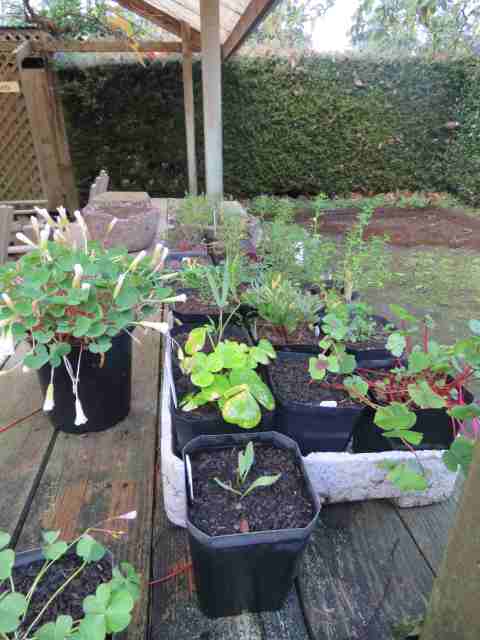
Zach’s oxalis collection is continuing to grow

Our gardener, Zach, is doing his apprenticeship and one of his modules is on plant collections. I suggested the ornamental oxalis as a well-defined collection he could assemble in one place. There is no doubt that most of these thrive and look their best in containers. I have never forgotten Terry Hatch’s magnificent display of oxalis in pots at Joy Plants and that must be 30 years ago.

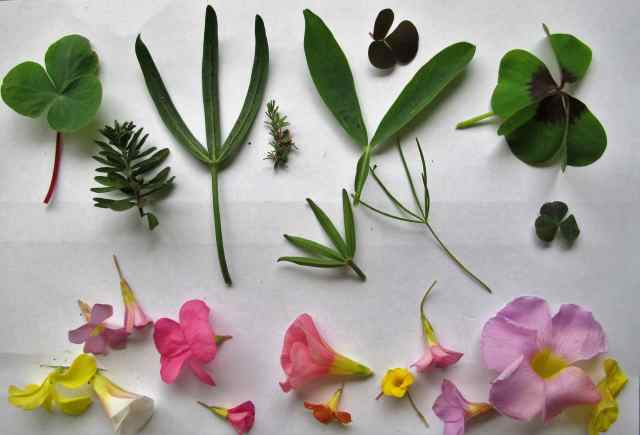
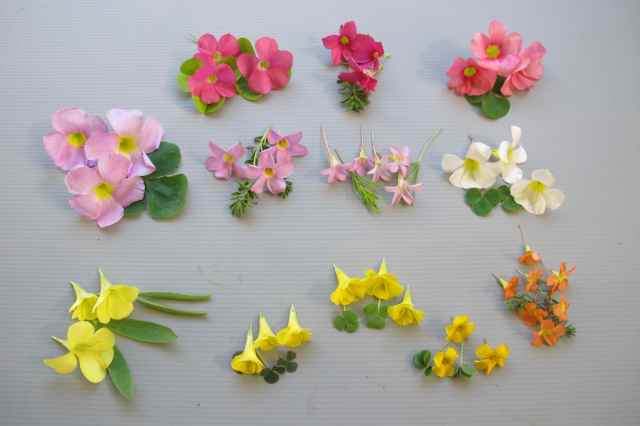
13 different flowers and 10 different examples of oxalis foliage.

For years, I maintained a collection of my favourite oxalis in pots to be brought out when they look their best in autumn and early winter. I hate plastic pots in the garden so they were all in terracotta, ceramic or vintage concrete pots and truly, I just got fed up carting these heavy pots out of the nursery and into the garden and then back again when they were over, not to mention the annual repotting. I gave up and planted them out and let them fend for themselves. The most invasive of them, I put in shallow pots and sank the pot in the garden, but I rarely repotted them.

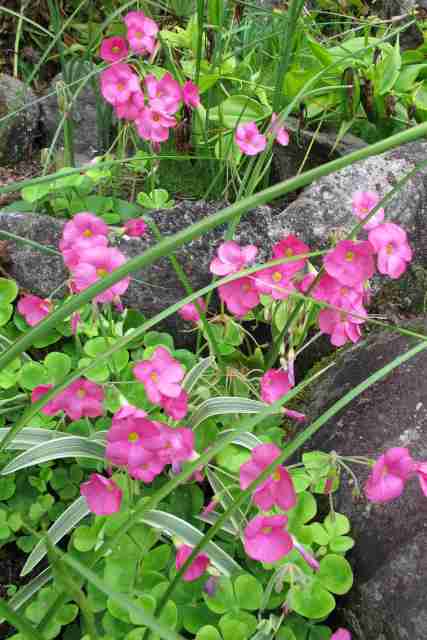
One of the very best oxalis when it comes to good behaviour and generous flowering over a long period of time – O. purpurea alba

Zach has so far isolated 23 different forms of ornamental oxalis that grow from bulbs. Most are from the garden here and a few he has added from his own stash of plants at homes. (Note: he has just sourced another five from a local market, he tells me.) Amazingly, I think we only lost two varieties in the years between my getting them out of the nursery and him getting them back in again and they weren’t a great loss. I suggested that he also pot up the weedy ones we battle all the time. The creeping oxalis – O. corniculata – which we have in bronze and green is the worst and we have a pink one in a patch of grass that may be O. corymbosa.

O. bowiei

Then there are the more herbaceous oxalis. The best known of these is probably what we call a yam in Aotearoa New Zealand, although technically it is growing from a tuber. Commonly known as oca in Spanish, it is a food crop and one we grow ourselves, semi naturalised in the vegetable garden. Botanically it is Oxalis tuberosa.

Oxalis peduncularis

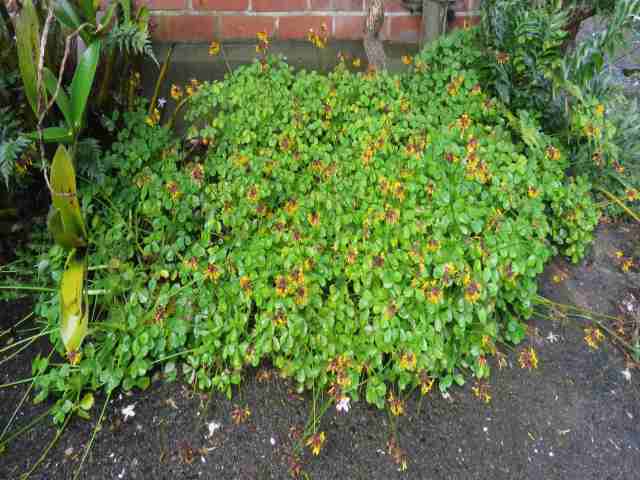
We have Oxalis peduncularis growing in one of those awkward, narrow borders against the house and it looks and grows more like a succulent, flowering for most of the year. Now that I am getting my eye in again, I have spotted another plant that is like a dwarf peduncularis but I have never even thought about what it is because it has just always been there, in its place. It must be another oxalis.

The family is huge overall with somewhere over 550  different species in the wild across most of the world except the polar areas. I have only just discovered that we have a native one – Oxalis exilis. It is a small creeping one and I think it is probably one that I assumed was corniculata, too.   

Oxalis massoniana – one of the prettiest in colour and because of its compact growth, it can form a tidy mound

The thing about plants is that the more you learn about them, the more interesting they get. There are many worse rabbit holes in life that one can go down than the intricacies of the oxalis genus. I can see that Zach’s oxalis collection will probably continue and expand long after he has fulfilled the requirements for his level 4 apprenticeship.

O. eckloniana – probably the largest flower one we have

I am wondering now whether I can get him onto isolating and sorting the intricacies of the lachenalia collection next. That went pretty much the same way as the oxalis collection when we retired from mailorder but is more complicated because of their readiness to cross with each other and produce natural hybrids. He doesn’t need to do it for his apprenticeship but I think he would find it very interesting and it would be satisfying to sort it out again. At least all the lachenalias are bulbs and there are only about 133 species so that makes it more tightly defined.

Judge not by the worst members of the family

Notably nerines

Nerine sarniensis hybrids in the rockery

It is nerine season and they certainly put on a great display. I don’t love them in spring when the foliage is slow to die off and looks scruffy as all the spring bulbs light up the rockery, but, come April, all is forgiven.

I need to put a tie on the two pink ones which have inveigled their way amongst the orange-red so I can move them. While we are fine with the adjacent blocks of clashing colour, they look better to my eye if they are adjacent, not mixed together.

Most of our nerines are sarniensis hybrids which give the range of colours and full heads of flowers. Often referred to as ‘Guensey lilies’, their connection to Guernsey is solely due to the cut flower trade because they are native to the Cape area of South Africa.

One of Mark’s unnamed hybrids that matures to purple, planted amongst our native carex grasses. It is a very good head of flowers with long stems but the stems really need to be a little more sturdy to hold the big head upright.

The sarniensis hybrids need really good drainage, open conditions and sun. Because they are in leaf in winter, they aren’t suitable for areas that get heavy frosts. These are bulbs that want to grow where their bulbs can bake in the sun so the rule of thumb is to plant them to a depth of no more than half the bulb with the other half and the long neck above the soil. They are also happiest in a crowd and can form a clump above the soil. I will divide the clumps when they get too congested and I discard the many small bulbs before replanting the larger ones close together.

Smoky shades
Undeniably vibrant shades. I find the highlighter pink particularly so.

We have a few of the early Exbury hybrids and the rest are all the result of Mark’s dad, Felix, hybridising to get a wider range of colours, along with some by Mark in days gone by. Felix particularly liked the smoky shades and they have a subtle charm of their own, as do the ones that mature to blue-purple shades. That said, the vibrant orange, clear red and highlighter pink ones are unashamedly bold and make a loud statement of their own.

The sarniensis hybrids are not that easy to find for sale. Local readers might like to hop in their car right now and head out to the Inglewood Sunday car boot sale because I saw somebody selling a really good selection of different colours in bloom there last Sunday. It is likely they will be there again today and maybe next week while we are at peak bloom. Beyond that, I don’t know where they are available but don’t expect them to be cheap like mass produced daffodils and tulips.

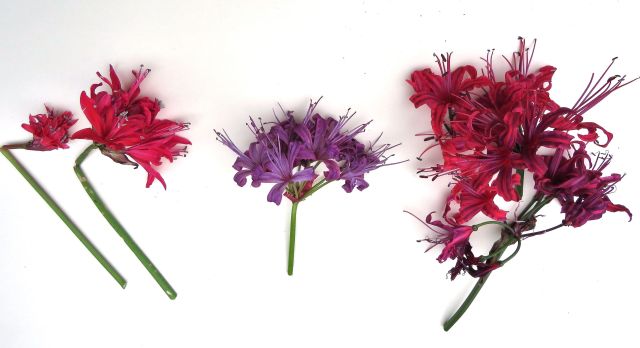
As I gathered single flowers to show the range of colours we have here, I picked up a few that had been snapped off. The one in the centre I think I can blame on Ralph dog who is no respecter of gardens. The ones on the right were clearly leaning over onto the grass where they fell victim to the lawnmower. The ones on the left are weevil damage on the rockery. If you zoom in on the second left, you can see the telltale damage on the stem which eventually weakened it to the point of breaking and flopping near the flower. Notwithstanding an exuberant dog, lawnmower and our localised patches of weevils, there isn’t much else that attacks these plants.

Nerine pudica on the left and bowdenii on the right

While we favour the sarniensis hybrids as garden plants, we also have a fair swag of N. bowdenii seen here on the right. There was only stem open so far two days ago when I took these photographs because it comes into bloom a little later than the sarniensis. It is easier to grow with stems that are strong enough to hold up the truss of flowers and is certainly more widely available than most others. On the downside, its truss is not as full of flowers and it basically comes in shades of hot pink although there is a white form, the internet tells me.

On the left in the photo above is N. pudica which I had forgotten about until this stray pot in the nursery opened its blooms. Several years ago, I planted a whole lot out, mostly in the rockery, and I had forgotten about them because I can’t recall them ever flowering there. I think I have found one patch of them which I shall watch to see if they do bloom. The same thing happened with the Lycoris aurea that I planted in the rockery a decade ago. They have never flowered again which is a pity because they were lovely – a most attractive shade of yellow and looking just like a yellow nerine except they are a lycoris, not a nerine. I live in hope that they are still there and pretending to be a mound of non-flowering nerines, so they can spring forth one year and delight me.

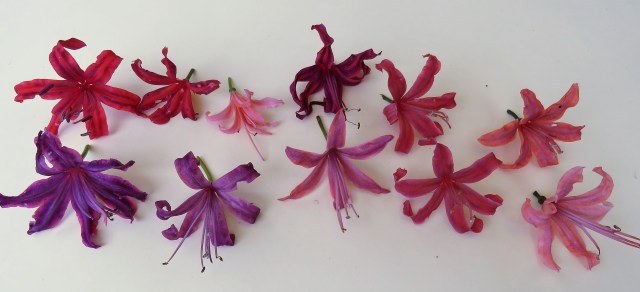
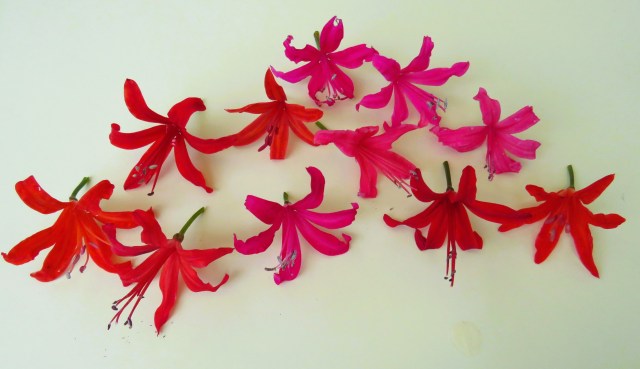
A range of the colours we have from pure white (named ‘Sacred Heart’ from memory) through soft pinks to alarmingly bright pink, coral, smoky shades, blue tones, reds through to bright orange

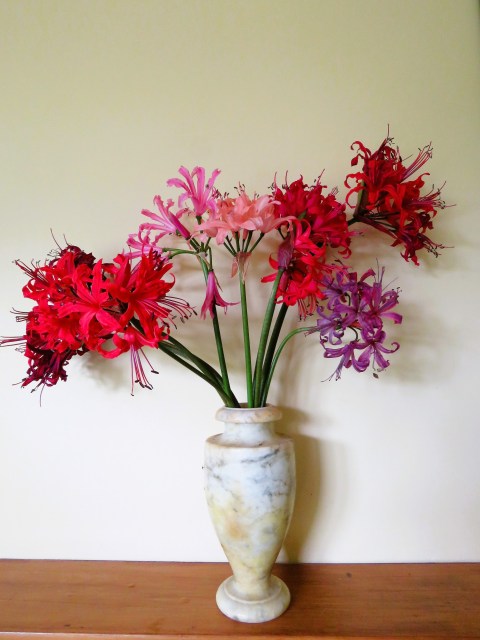
Nerines became popular as a cut flower because they have long stems and last well in a vase – hence the ‘Guernsey lily’ moniker. I rarely pick them because they last longer in the garden and, when a bulb only puts up one flower stem, it feels like flowercide to cut it to bring indoors to die. They are not as easy to produce as many other flowers for the cut flower trade so I would not expect them to be cheap to buy.