Tag Archives: autumn bulbs

Notably nerines

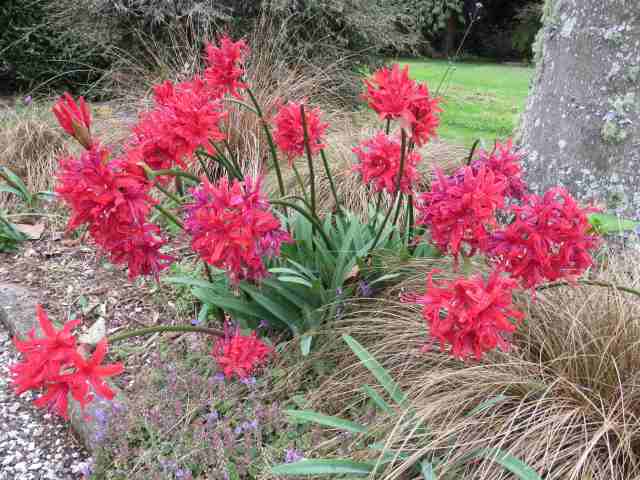
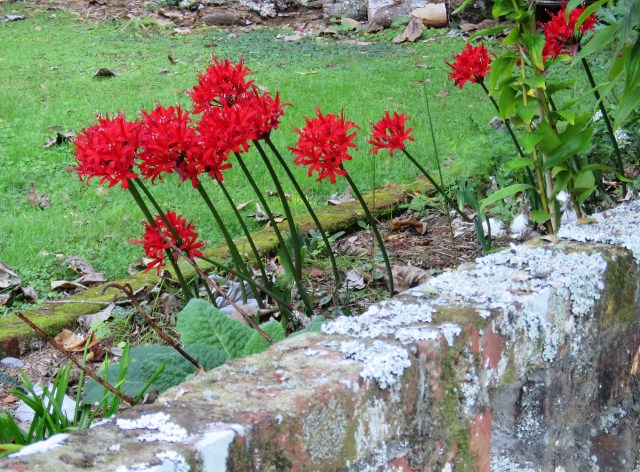
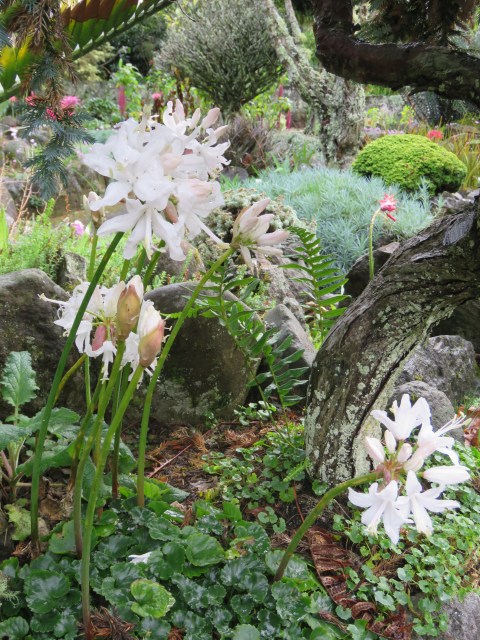
Nerine sarniensis hybrids in the rockery

It is nerine season and they certainly put on a great display. I don’t love them in spring when the foliage is slow to die off and looks scruffy as all the spring bulbs light up the rockery, but, come April, all is forgiven.

I need to put a tie on the two pink ones which have inveigled their way amongst the orange-red so I can move them. While we are fine with the adjacent blocks of clashing colour, they look better to my eye if they are adjacent, not mixed together.

Most of our nerines are sarniensis hybrids which give the range of colours and full heads of flowers. Often referred to as ‘Guensey lilies’, their connection to Guernsey is solely due to the cut flower trade because they are native to the Cape area of South Africa.

One of Mark’s unnamed hybrids that matures to purple, planted amongst our native carex grasses. It is a very good head of flowers with long stems but the stems really need to be a little more sturdy to hold the big head upright.

The sarniensis hybrids need really good drainage, open conditions and sun. Because they are in leaf in winter, they aren’t suitable for areas that get heavy frosts. These are bulbs that want to grow where their bulbs can bake in the sun so the rule of thumb is to plant them to a depth of no more than half the bulb with the other half and the long neck above the soil. They are also happiest in a crowd and can form a clump above the soil. I will divide the clumps when they get too congested and I discard the many small bulbs before replanting the larger ones close together.

Smoky shades
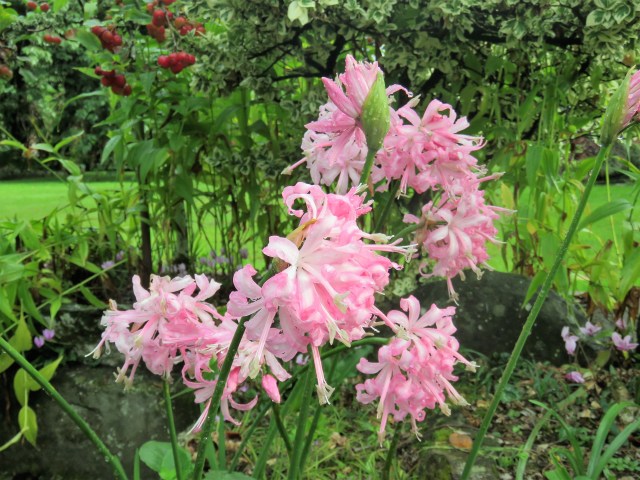
Undeniably vibrant shades. I find the highlighter pink particularly so.

We have a few of the early Exbury hybrids and the rest are all the result of Mark’s dad, Felix, hybridising to get a wider range of colours, along with some by Mark in days gone by. Felix particularly liked the smoky shades and they have a subtle charm of their own, as do the ones that mature to blue-purple shades. That said, the vibrant orange, clear red and highlighter pink ones are unashamedly bold and make a loud statement of their own.

The sarniensis hybrids are not that easy to find for sale. Local readers might like to hop in their car right now and head out to the Inglewood Sunday car boot sale because I saw somebody selling a really good selection of different colours in bloom there last Sunday. It is likely they will be there again today and maybe next week while we are at peak bloom. Beyond that, I don’t know where they are available but don’t expect them to be cheap like mass produced daffodils and tulips.

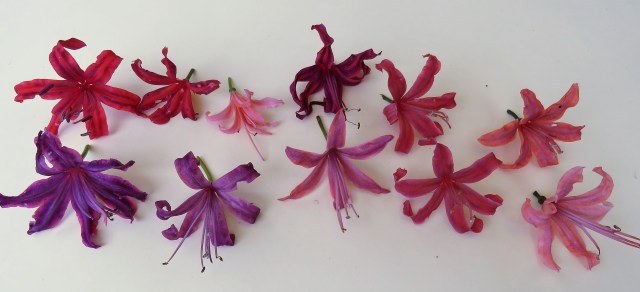
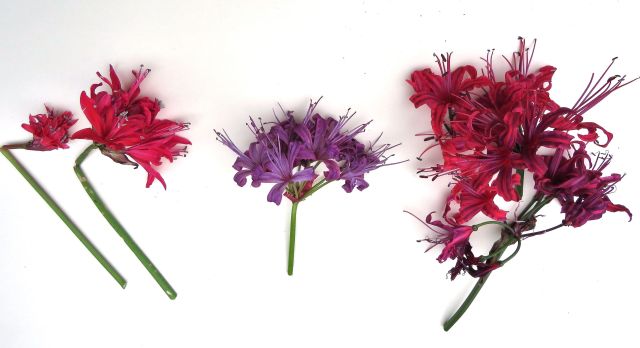
As I gathered single flowers to show the range of colours we have here, I picked up a few that had been snapped off. The one in the centre I think I can blame on Ralph dog who is no respecter of gardens. The ones on the right were clearly leaning over onto the grass where they fell victim to the lawnmower. The ones on the left are weevil damage on the rockery. If you zoom in on the second left, you can see the telltale damage on the stem which eventually weakened it to the point of breaking and flopping near the flower. Notwithstanding an exuberant dog, lawnmower and our localised patches of weevils, there isn’t much else that attacks these plants.

Nerine pudica on the left and bowdenii on the right

While we favour the sarniensis hybrids as garden plants, we also have a fair swag of N. bowdenii seen here on the right. There was only stem open so far two days ago when I took these photographs because it comes into bloom a little later than the sarniensis. It is easier to grow with stems that are strong enough to hold up the truss of flowers and is certainly more widely available than most others. On the downside, its truss is not as full of flowers and it basically comes in shades of hot pink although there is a white form, the internet tells me.

On the left in the photo above is N. pudica which I had forgotten about until this stray pot in the nursery opened its blooms. Several years ago, I planted a whole lot out, mostly in the rockery, and I had forgotten about them because I can’t recall them ever flowering there. I think I have found one patch of them which I shall watch to see if they do bloom. The same thing happened with the Lycoris aurea that I planted in the rockery a decade ago. They have never flowered again which is a pity because they were lovely – a most attractive shade of yellow and looking just like a yellow nerine except they are a lycoris, not a nerine. I live in hope that they are still there and pretending to be a mound of non-flowering nerines, so they can spring forth one year and delight me.

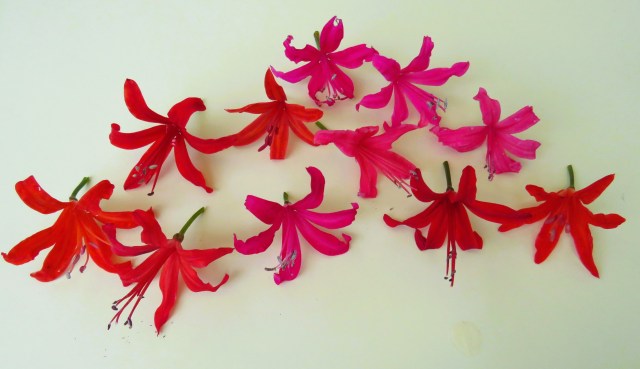
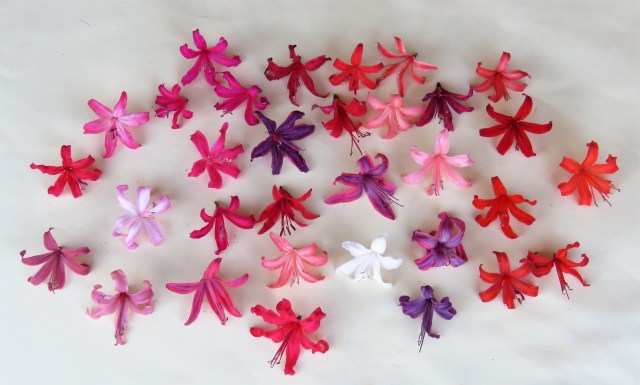
A range of the colours we have from pure white (named ‘Sacred Heart’ from memory) through soft pinks to alarmingly bright pink, coral, smoky shades, blue tones, reds through to bright orange

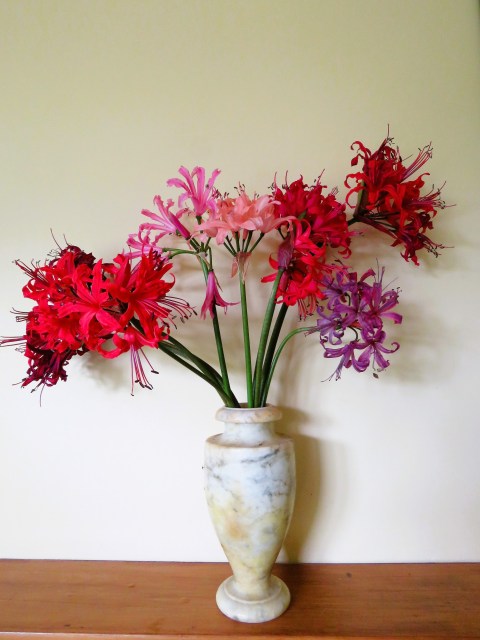
Nerines became popular as a cut flower because they have long stems and last well in a vase – hence the ‘Guernsey lily’ moniker. I rarely pick them because they last longer in the garden and, when a bulb only puts up one flower stem, it feels like flowercide to cut it to bring indoors to die. They are not as easy to produce as many other flowers for the cut flower trade so I would not expect them to be cheap to buy.

Autumn nerines

The autumn rockery this week

Look at the nerines. Autumn stars, these are.

We grow a few different species but what is coming into bloom now are what we refer to as the N. sarniensis hybrids. I will admit that I do not know what they were hybridised with. As they appear to have been popular in both Europe and Japan by the 1600s, I am guessing the genes are pretty mixed by now but dominated by the species, N. sarniensis.

It really is shocking pink or highlighter pink, brighter even than in this photo

All nerines hail from areas of southern Africa and there are currently 24 species recognised. Notwithstanding that origin, the common name internationally is the ‘Guernsey lily’ owing to that island in the English Channel adopting the flower early on as its own and establishing a cut flower trade with it. I have no idea if it is fact or legend that a ship carrying a load of nerine bulbs to the Netherlands was wrecked nearby and the bulbs floated to the shores of Guernsey Island and naturalised themselves on the coastline. It is a good story and bulbs had to get there somehow.

The history of nerines in cultivation seems to be pretty murky, maybe because it goes back over 400 years. I had always assumed – based on the photos of the Guernsey lily that appeared to be predominantly red – that sarniensis in the wild was red. Mark thought it was orange, based on Nerine fothergilla major (which has now been reclassified as sarniensis, just to confuse us further) but it appears that the colour may be variable in the wild.

Our nerines range from pure white through pale pink, pink and white bi colours, mid pinks, coral shades, shocking pink, cerise, crimson, shades of orange and scarlet.

Ageing to blue purple tones

“Oh lord,” said Mark, looking at the purple ones on my flower lay, “the phone will ring next week with people wanting a purple nerine. Reader, they don’t open purple. Mark spent a bit of time crossing and selecting to get the blue and purple lines in the flowers and those ones age to purple. We never named any of them and we don’t know if other breeders have similar shades which they have put on the market, which would seem likely. Whether any are available in New Zealand is another matter.

Very few of our nerines have ever been sold commercially. We have a few named cultivars originally from the Exbury collection in the UK (where they have to grow them under glass), Felix Jury named a few but not many and I think Mark named one that we once sold. It is all a bit academic now because we just enjoy them in the garden and it doesn’t matter to us whether they are named cultivars or unnamed hybrids.

These nerines are deciduous and they put up their flower spikes before putting out the fresh foliage. I don’t love the foliage in spring when it is getting tatty and tired and we have some quite big clumps of them, but they make up for it in autumn. Because they have foliage through the winter, sarniensis nerines are frost tender and they struggle in cold, wet conditions. They need to be in full sun with sharp drainage and the large bulbs nestled into the soil but with their top half and necks exposed to bake in the sun. They are quite particular about conditions and won’t flower if they don’t like them. Nerine bowdenii which flowers later is much easier, hardier and less particular but only comes in pink, I think.

A small kingfisher, autumn bulbs and cyclone recovery

Does anybody else feel they are living life day by day, waiting to see what else life will throw at us? Oh, most of you? I thought so. As I heard somebody on the radio saying yesterday, the pandemic has hit pretty much every corner of the world and it ain’t over yet. Add in the invasion of Ukraine, the very real threat of a nuclear war in Europe, the appalling flooding in northern New South Wales and it makes our experience with Cyclone Dovi seem minor.

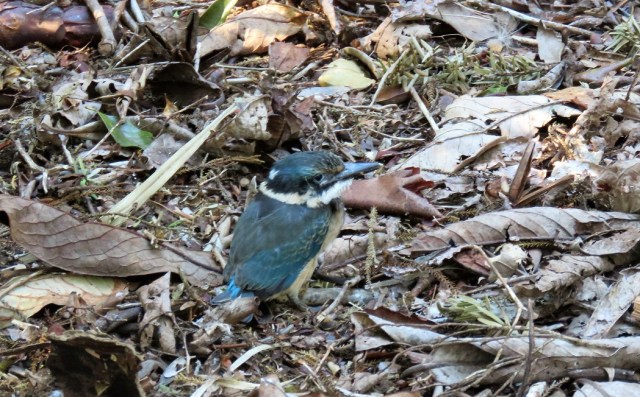
Little Beaky the kingfisher or kōtare

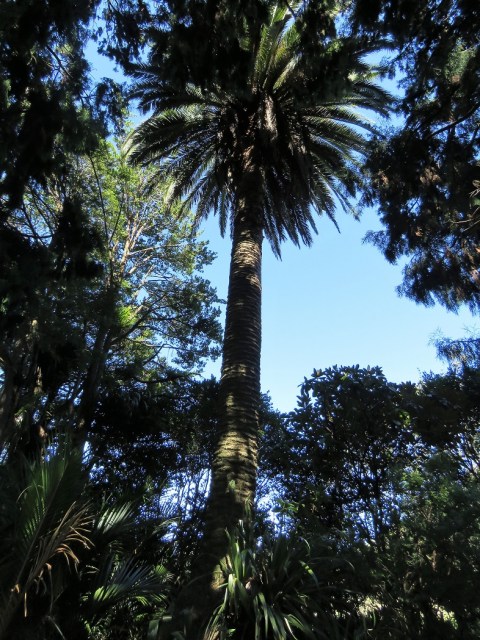
I have to focus on the little things in my immediate physical world to keep me sane. Meet our little kingfisher or kōtare. Zach found it on the ground on Tuesday and it had clearly fallen out of its nest-hole high, high above in the Phoenix palm. Zach named it Queenie but told me the next morning it had changed to Beaky. I can only assume that these are pop culture references which I am too old to understand.

For such a small creature, Beaky had a very loud voice and on Wednesday, it spent a lot of time calling to its whanau (family) above. At times the mother would reply so she knew where it was and we hoped she was feeding it.

Beaky’s family nest was a hole high in the Phoenix palm

Thursday – no sign. No bird. No noise. I hoped Beaky had not been taken by a feral cat or stoat. Zach bravely declared that he was sure the tail feathers must have grown sufficiently for Beaky to fly but I had my doubts. Zach was right.

On Friday, the sound of loud kingfisher squawks drew me back to the area where I saw a little kingfisher perched in an adjacent tree. As I watched, it flew over to the Phoenix palm and then back before flying a little more confidently further afield. Was it Beaky? It is a bit hard to tell when it is up in a tree but it was a baby kōtare, clearly new to flying and managing to make a great deal of noise so I think it was likely to be Beaky who may just be the noisiest, small kōtare of all time. I hope it was.

The gum tree or eucalyptus at our gateway with the rootball and base standing upright again. The belladonnas are not bothered by all that has gone on around them

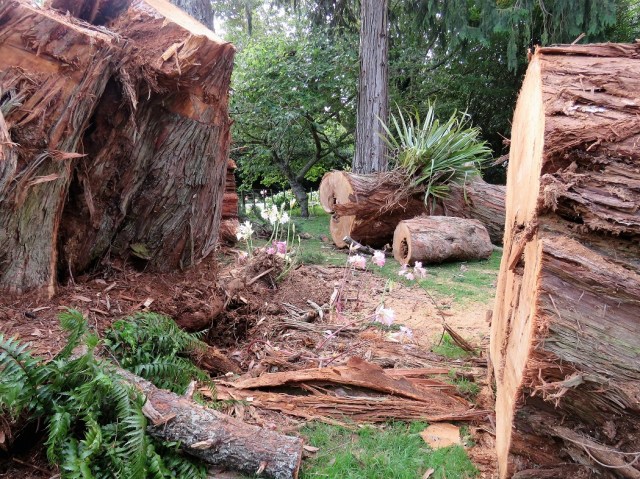
On the cyclone clean-up front, we have made good progress. In a difficult operation, the arborist dropped what remained standing of the giant gum tree at our gate, removing also the broken branches – called swingers – caught up in an adjacent tree and in danger of falling onto passing cars. This involved getting in a large truck with a hiab to lift down sections safely but also meant that they could stand the base of the main trunk upright again which is way more pleasing visually. I got out the tape measure – it is about 2 metres across near the base so that is a pretty huge chunk of timber to fall.

In the Avenue Gardens

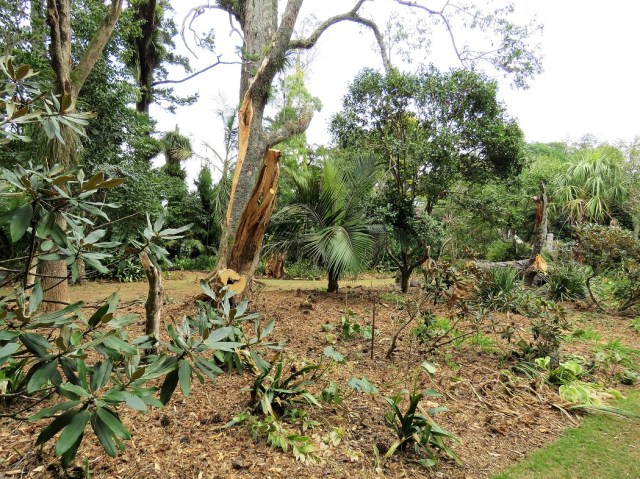
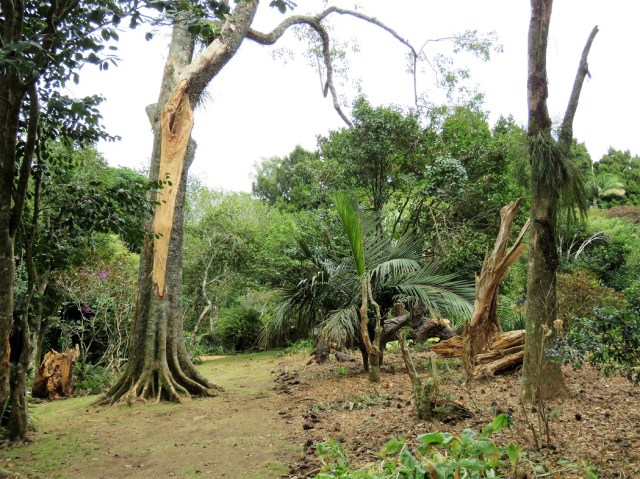
The main damage in the Avenue Gardens has been cleared. It remains to be seen how much of the herbaceous underplanting returns in spring. The whole area was densely planted and lush until three weeks ago. I am hoping Mark is thinking his way into deciding what we can replant for the middle layer of shrubs and small trees that were taken out. That is his area of expertise.

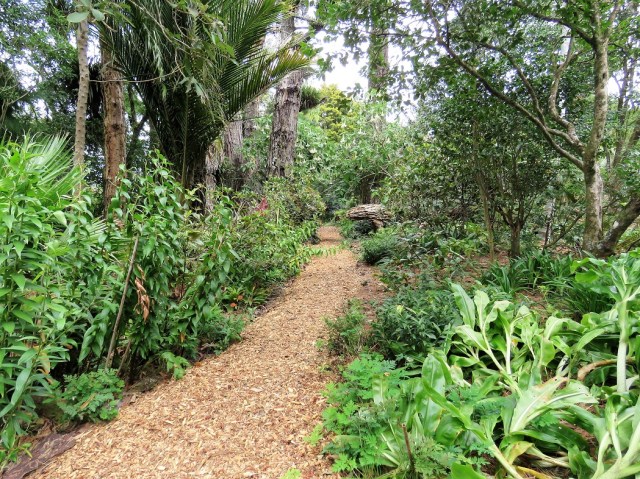
The next path over from the areas of damage and all looks well with the new surface

Because so much of the material was mulched on site, we have used some of that fresh woodchip to cushion the paths, which gives a nice, soft surface to walk on. We still have a small mountain of mulch left but it was important to get the big piles off the garden before they heated up more and cooked the herbaceous material beneath.  

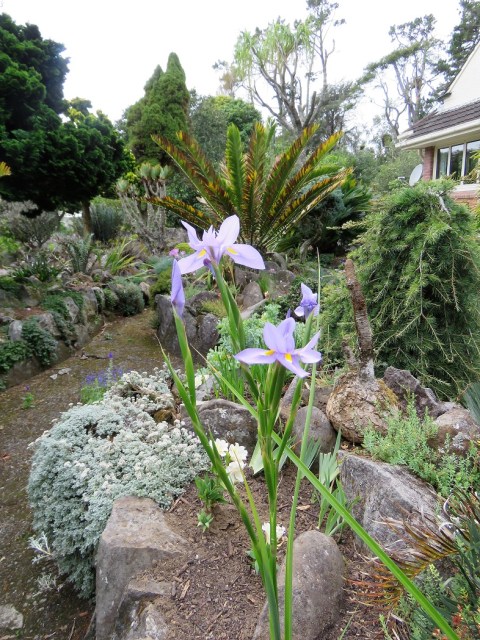
Moraea polystachya in the rockery

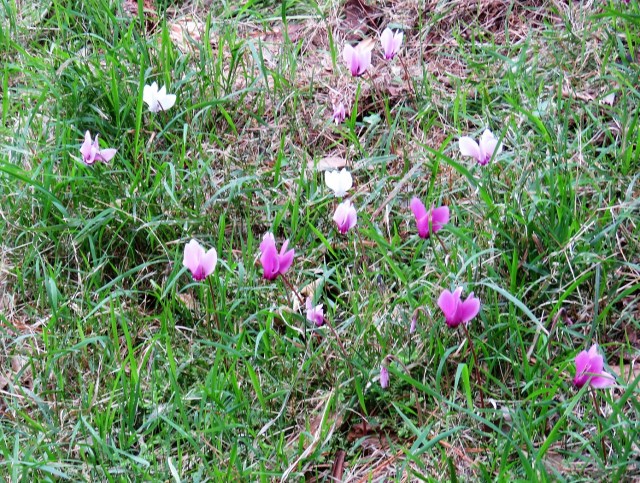
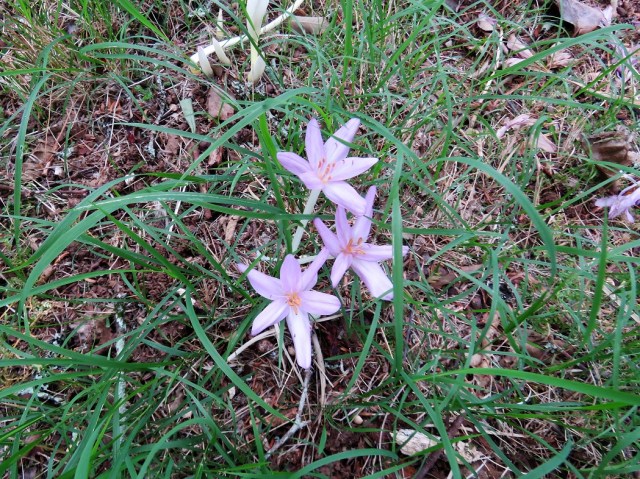
More autumn bulbs are opening every day. While I love the bulbs in the rockery – all the Cyclamen hederafolium, Rhodophiala bifida, Haemanthus coccineus, Leucojum autumnale, Moraea polystachya, sternbergia, Colchicum autumnale and the first of the nerines amongst others – there is something particularly engaging about the brave cyclamen and colchicums flowering in wilder conditions in the long grass in the park.

There is a resilience and an element of surprise with bulbs that will naturalise in more challenging conditions.

The first autumn blooms and the journey to gardening nirvana

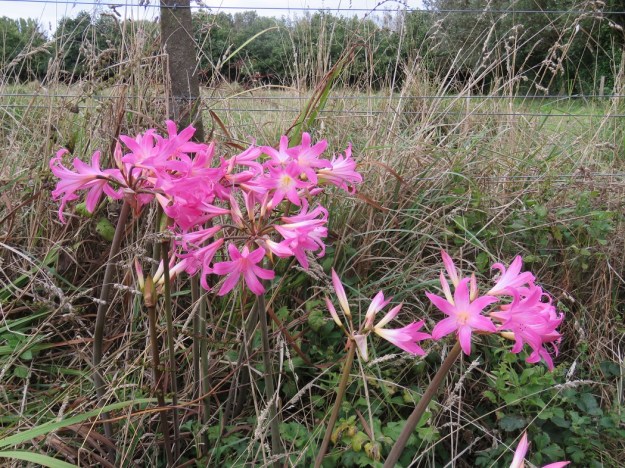
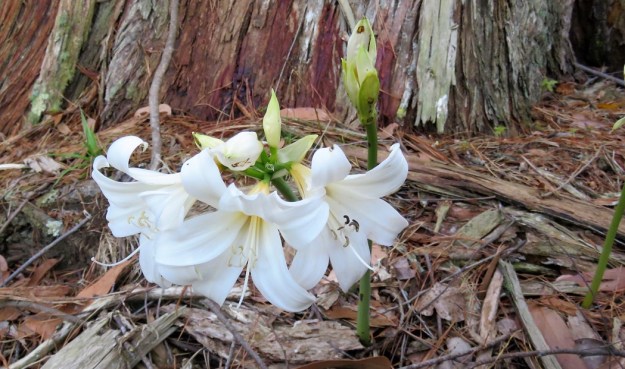
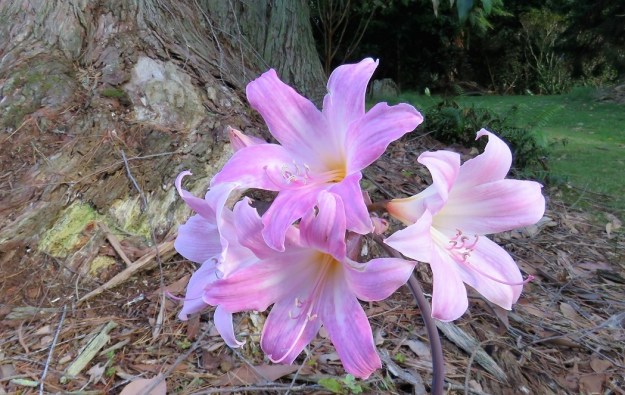
Amaryllis belladonna – more roadside flower than garden plant in our conditions

As the calendar moves into March, the autumn bulbs are the first reminder that summer will not be endless. First Cyclamen hederafolium and Colchicum autumnale remind is that the seasons wait for no man or woman. Now they have been joined by the belladonnas and the truly tiny Leucojum autumnale.

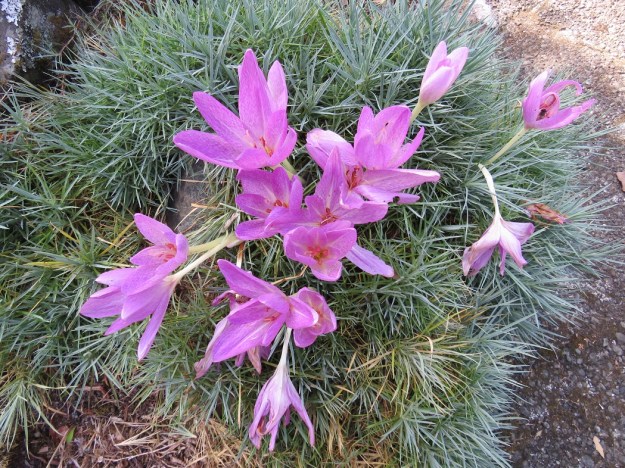
Colchicum, not autumn crocus. The foliage is unrelated, being a dianthus

Colchicums are often referred to as autumn crocus but there is no botanical connection, just a visual perception. The best known leucojum is L. vernum or the common snowflake which flowers in spring – a vigorous bulb that is widely found around old house sites that date back to the nineteenth century. The old brick chimney may be all that is left standing but it is highly likely to have clumps of the double daffodils and snowflakes, maybe some violets and a couple of really old camellia trees. For overseas readers, almost all the early European settlers’ homes were built in wood and house fires were common which is why the chimney is the only remaining evidence.

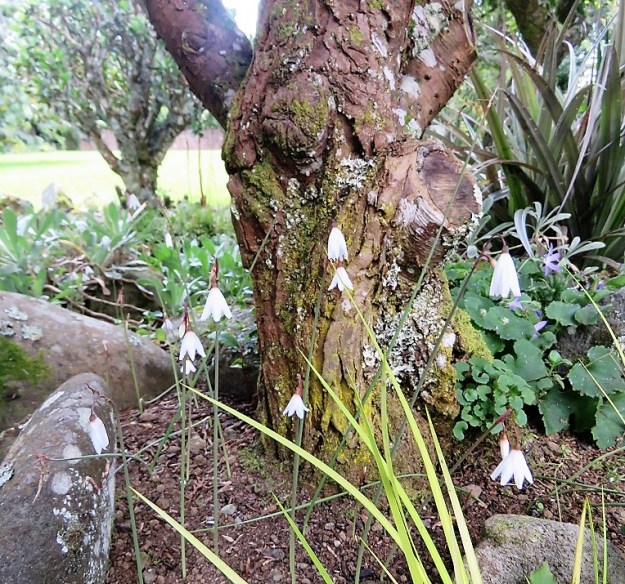
Blink and you may miss the delight of tiny Leucojum autumnale

Little Leucojum autumnale is a very different creature, a fleeting, dainty little flower that has to be measured in millimetres, not centimetres. It is very cute but easily swamped by larger plants if you are not careful. I see it is now classified as an acis, not a leucojum but it may take me a while to remember that. It comes from the western areas of the southern Mediterranean so places like Spain, Morocco, Tunisia and Sicily which are very hot and bone dry but the first autumn rain will trigger the bulbs into their very short flowering and growing season.

Some welcome rain fell this week – 62ml to be precise, which was very welcome after an exceptionally dry summer. Sadly it was followed by the first chill wind of autumn which rather reinforced the message of the autumn bulbs. Summer 2020 is over and we are now entering our long autumn season. I have removed my togs and towel from the swimming pool and put them in the laundry basket although the younger visitors here are still swimming.

What I call English manor house style of twin borders – seen here at Parham House

Cottage garden style as per Margery Fish at East Lambook Manor

Beth Chatto’s dry garden

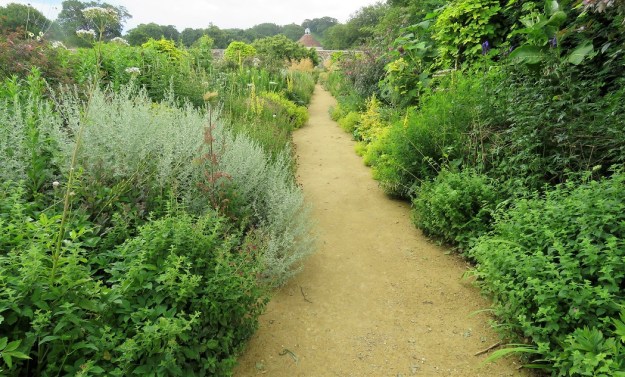
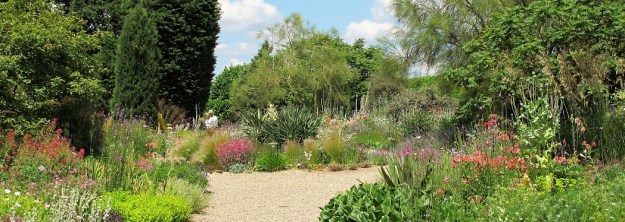
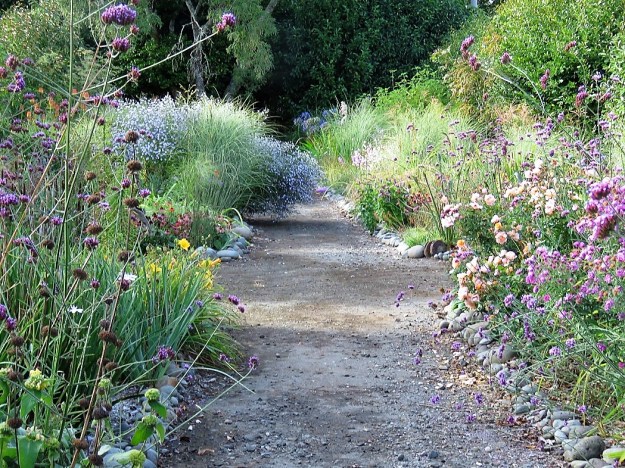
As the summer borders reach their point of peak profusion, I ponder again how full I want these borders to look. The tradition of herbaceous borders is to have them packed so full that no soil is visible. Cottage gardening encourages the plants to meld and run together whereas herbaceous tradition says that each plant occupies its own space without much intermeshing with its neighbours. And then there is the Beth Chatto dry garden where, even in a mature garden, she kept each plant standing alone in its own space. Mark likes the Chatto approach because it displays the individual plants to their best. It is a style he has used extensively in the more detailed woodland areas. If you analyse the Chatto dry garden, they are predominantly smaller plant varieties growing in very hard condtions (dry river bed with very low rainfall) which could not be further from our summer garden conditions which foster lush and exuberant growth.

I am leaning to the traditional herbaceous position for these summer borders but it is a constant learning process about how each plant variety performs. I want to be able to walk amongst the plants to weed, stake and dead-head and that means knowing how much space to leave between each different clump that they may floof themselves over the space to fill it but still leave me passage between the plants at ground level without tramping on them.

The summer borders here

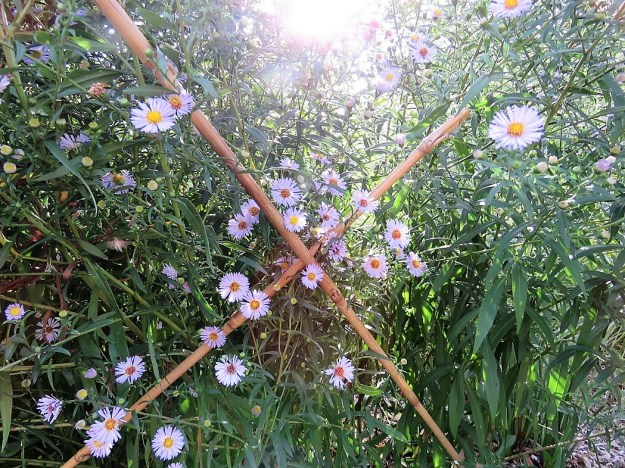
The bouffy aster needs staking to keep the path clear. I do it very simply and this is not visible when the plant is allowed to flop back

I love this big, bouffy aster coming into flower. We have the more compact version that makes a low carpet in bloom and another similar one that is just above waist height. I am guessing this larger version is a species – or close to it – with its daintier, paler blue blooms that are like a cloud of butterflies dancing on the bush. This year I have had to stake it to keep the path clear and it is obvious I have too much of it too close together for future seasons. Some at least will need to be moved to another area before next summer.

It is a constant learning process but that is what makes gardening interesting. Once a garden is all planted up, most of the gardening activity is simple and repetitive maintenance – outdoor housework, in effect. The interest levels in that are not high. It is the ongoing learning and constant tweaking in search of the impossible state of perfection that makes it interesting. That is how I see it for those of us who actively garden.

As a final comment: the new summer gardens have all been planted following the modern trends of lower labour input and management than the older, more traditional herbaceous plantings of the English manor house style of borders. But they still involve me in quite a lot of deadheading, dividing, staking and cutting back. I enjoy doing it but it is certainly more than I originally anticipated. My gardening nirvana may be when I have tweaked the plantings to the point where such a high level of intervention is no longer required.

The ornamental oxalis

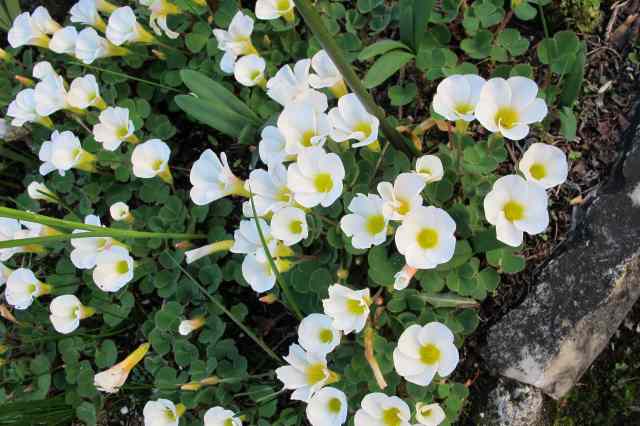
The white form of Oxalis purpurea – the best of them all

Back in our nursery days, we had a large range of ornamental oxalis. I see in our old mailorder catalogues that we offered over 20 different varieties that we had in production at the time and I wrote extolling their autumn merits for several publications.

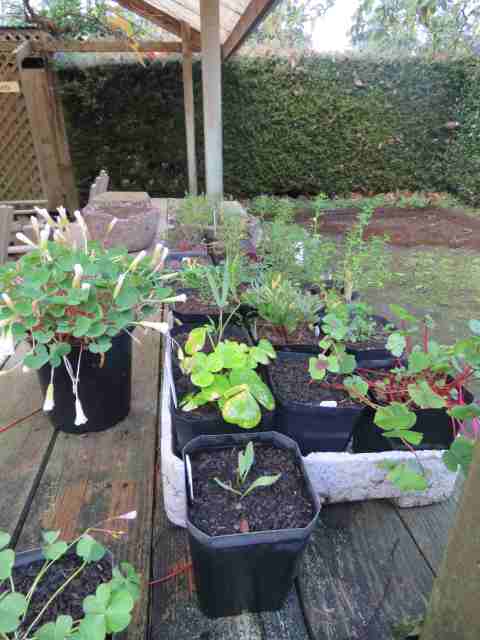
Twenty years on and the oxalis collection has refined itself down. It is the difference between gardening in containers and gardening in the soil. Some of those varieties were so delicate and touchy that we have lost them. Others needed to be kept confined because of their invasive proclivities. Some flowered prettily enough but their season was so short that it was hard to justify their place in the garden. I decided years ago that I was not going to fluff around with plants in containers. We have quite enough garden with many different micro-climates. If plants couldn’t perform in the garden, I didn’t have the time or inclination to nurture them in controlled conditions in containers.

These days, the oxalis we still have are the stand-out performers (and a few of the nasty weed ones that most of us battle – particularly the creeping weed which I think is Oxalis corniculata). The star has always been and still is the beautiful, well-behaved Oxalis purpurea alba. Large white flowers in abundance over a long period of time and not invasive. At this time of the year, I am more than happy to use it as ground cover in sunny positions. Oxalis flowers don’t open without the sun so they need to be in open conditions.

Oxalis purpurea nigrescens

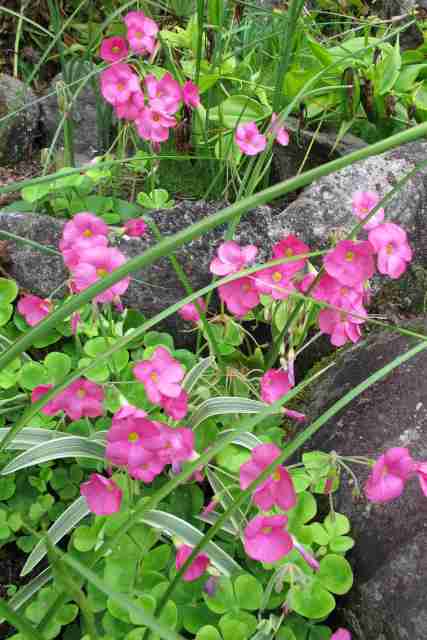
O. purpurea is a variable species. The striking red-leafed form (O. purpurea nigrescens) with pink flowers comes a bit later and is invasive so needs to be kept confined. We also have a strong-growing (somewhat invasive) green-leafed form with very large pink flowers which is worth keeping and also has a long flowering season. Back in the days, I recall more than one person telling me that there was a red leafed form with the large white flowers but I have never seen it so I rather doubt its existence.
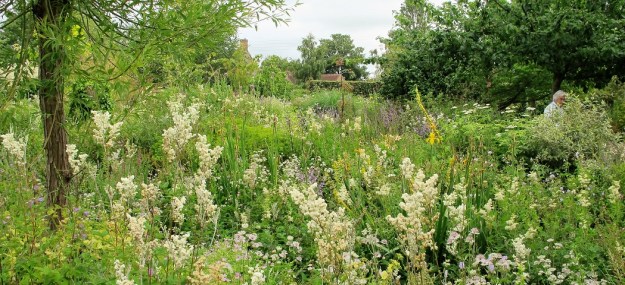
Oxalis luteola as runner-up in my best garden oxalis list

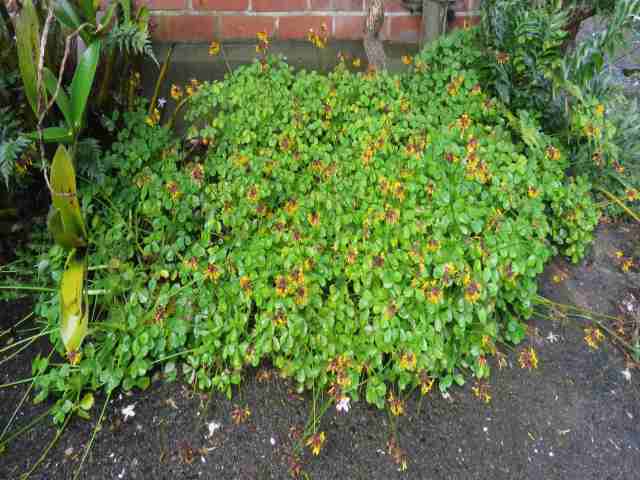
The standout yellow is Oxalis luteola. It, too, is well behaved and forms a gentle, non-invasive mat that flowers for a long time in mid- autumn, combining well without competing with other bulbs like the dwarf narcissi that are in growth but won’t flower until late winter and early spring. It leaves the rabbit-ear Oxalis fabaefolia in the dust for length of flowering time. Both have large, showy yellow flowers but the latter’s flowering time can be measured in days rather than weeks.

Oxalis massoniana

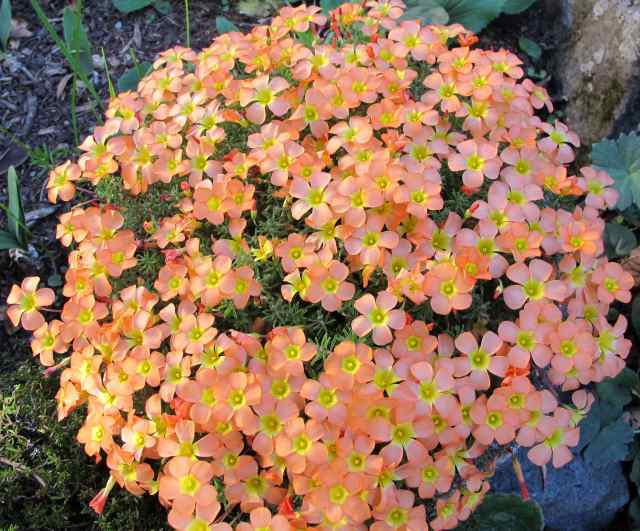
I am very fond of little Oxalis massoniana with its dainty apricot and yellow blooms but it needs a bit of nurturing to keep it going. The popular old candy-stripe O. versicolour is happy left to its own devices in the rockery but will not come into its season for a few weeks yet. It is the only one I know that looks more interesting when its flowers aren’t open because the striped buds disappear into a fairly ordinary white flower on sunny days.

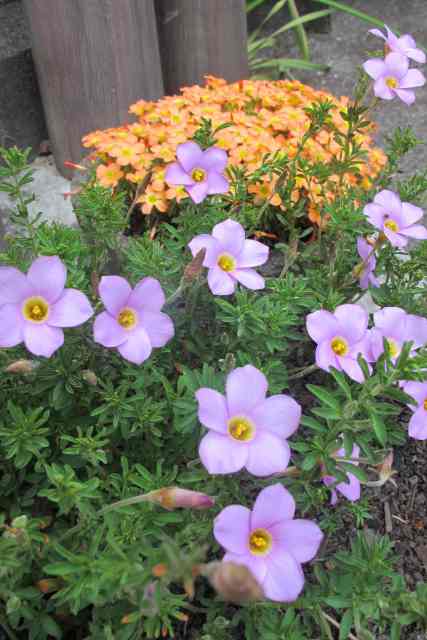
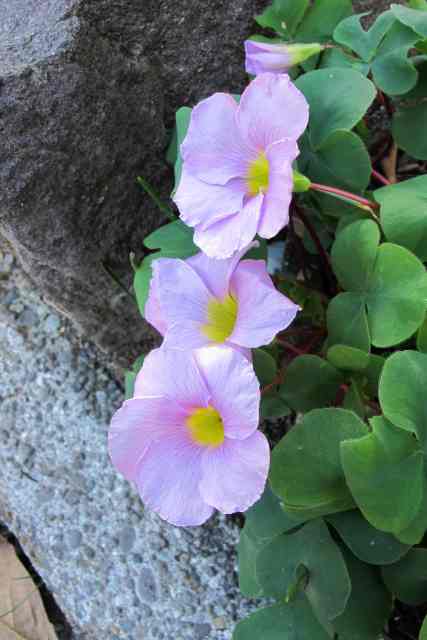
I have hung onto the strong-growing O.eckloniana for its large lilac blooms but I keep it confined to a shallow pot sunk into the rockery. I could rustle up a few of the others from around the garden, like O.hirta in both lavender and pink, O. bowiei, O, lobata, the unusual double form of O. peduncularis  and O.polyphylla but they are not the star performers that luteola  and purpurea alba both are.

If you are into container gardening, a collection of different ornamental oxalis species give interest on a sunny terrace or door step from autumn to mid-winter. I saw somebody listing a whole range of different oxalis on Trade Me at one stage. In fact, it looked like somebody had bought our full collection all those years ago and kept it going so they are still around. If somebody offers you O. purpurea alba or O. luteola, don’t reject them just because they are oxalis. They are worth having.
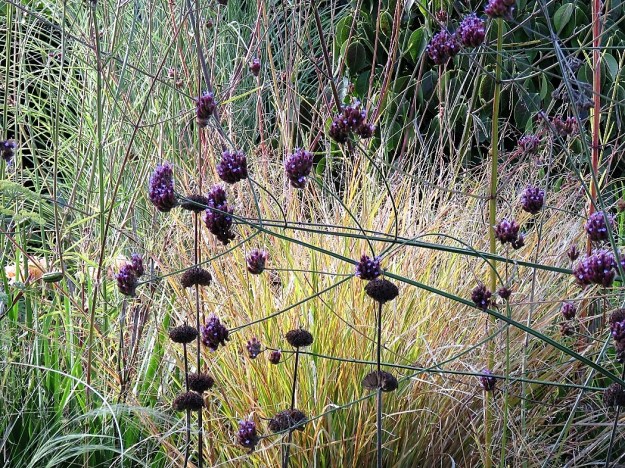
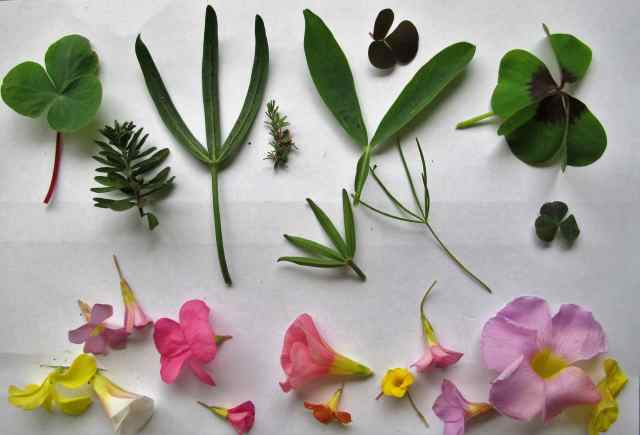
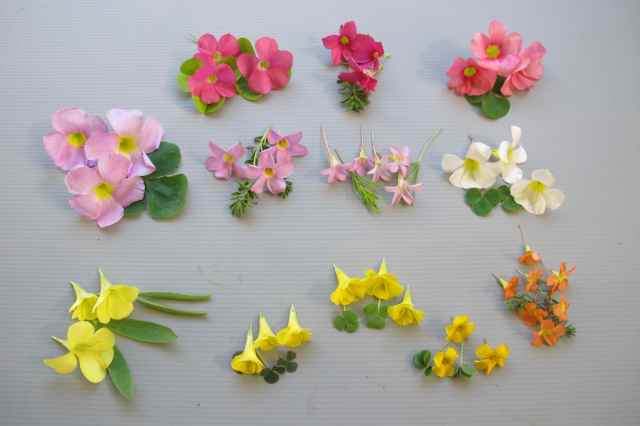
Oh look! Here is a little display board I prepared earlier of under half of the oxalis that we used to grow