Tag Archives: autumn bulbs

Plant Collector: Nerine pudica

Nerine pudica

Nerine pudica

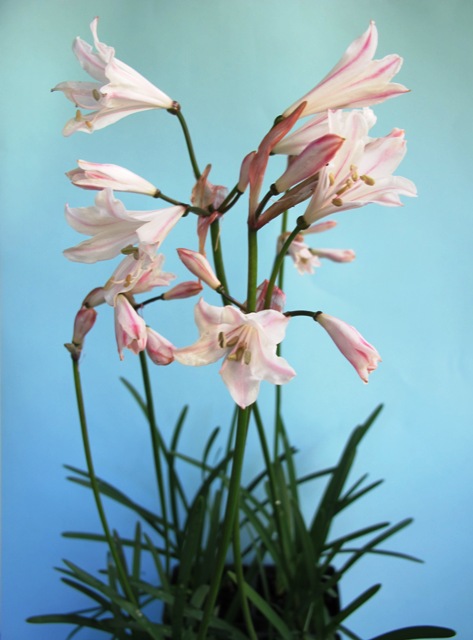
How pretty is little pudica? This is the first season I have seen it flower and it is a delight. The pointed bells are mainly white with a pink stripe down the centre of each petal and each stem has up to six flowers on it. It is a nerine which makes it a bulb, but it is a much smaller one than the more common sarniensis and bowdenii types. The foliage is also much finer and narrower. It looks more a mondo grass or liriope leaf.

N. pudica is a species, hailing from the western side of South Africa. The ever-useful reference “Bulbs for NZ Gardeners and Collectors” by Terry Hatch and Jack Hobbs tells me that it is one of the original parents of many of the modern hybrids. While showy hybrids have their place, there is often a simple charm in the original species. The ones in the photograph are still in pots. It will take several years before we can comment on how reliable they are as garden plants in the rockery but the requirements are the same as for other nerines – excellent drainage and full sun. I am hoping they will do well because it makes a pretty addition to the autumn bulb display.

First published in the Waikato Times and reprinted here with their permission.

At the end of a golden summer come the autumn bulbs

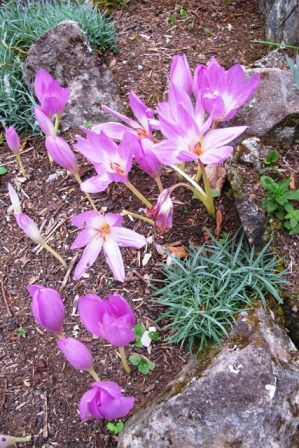
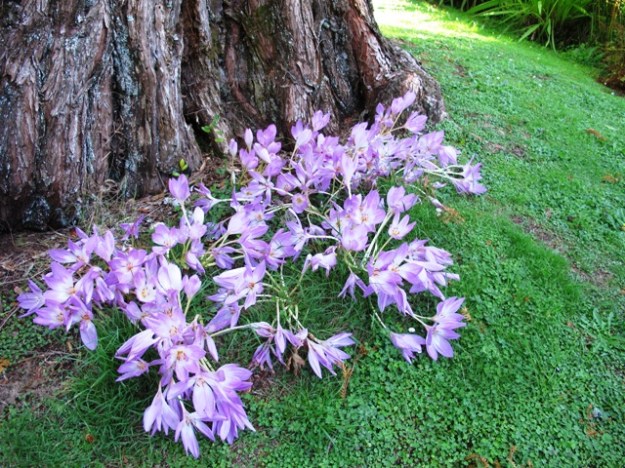
Colchicums, not autumn crocus

Colchicums, not autumn crocus

Autumn. It is indubitably autumn. I can no longer pretend it is just the summer slowly waning and that winter is still a long way off. For most people, autumn is synonymous with leaves colouring to fiery hues.

However those of us in coastal areas may carry that mental image but the reality can fall well short. Inland areas get much better autumn colour because the nights cool down more rapidly and it is the sharp drop in temperatures which triggers the colouring response in most deciduous plants as much as the declining day length. The moderating effect of the sea means we drift far more slowly between seasons and the leaves are inclined to turn brown and fall, skipping much of the colouring process.

Our extensive use of evergreen plants in this country also mitigates against fantastic mass displays of autumn colour. Our native plants are all evergreen and in a generally benign gardening climate, we tend to favour evergreen exotics as well. I have met many gardeners who shun deciduous plants because they are allegedly messy and lack winter interest, which has always seemed a bit myopic to me. We are never going to rival countries like Canada with its native maples when it comes to a mass blaze of autumn tones.

It is the autumn bulbs that signal the change in season for me. There are so many pretty seasonal flowers coming through now. These are triggered into bloom by a drop in temperature, declining day length and some by late summer rain – don’t laugh at that last one.

The charm of carpets of Cyclamen hederfolium

The charm of carpets of Cyclamen hederfolium

Gardeners in this country tend to focus on the spring bulbs – from the early snowdrops through the snowflakes, bluebells, tulips, daffodils, anemones and ranunculus. These are readily available and marketed widely. They also flower at a time when the majority of trees and shrubs are blossoming forth.

The autumn bulbs have never captured the market in the same manner yet they bring freshness to the garden at a time when many plants are looking tired or passing over. I find them a wonderful antidote to the autumnal despondency of declining day length. There they are, all pretty and perky, just coming into their prime.

I often feature selected autumn bulbs in Plant Collector because this is their time to shine. As I wander around the garden, I see carpets of Cyclamen hederafolium (flowers only so far – the leaves have yet to appear) and taller spires of the autumn peacock iris, Moraea polystachya, which is inclined to seed itself around a little. This lovely lilac moraea has one of the longest flowering seasons of any bulb I know. The common old belladonnas are already passing over but I enjoy their blowsy display while it lasts. We use them in less tamed areas on the road verge.
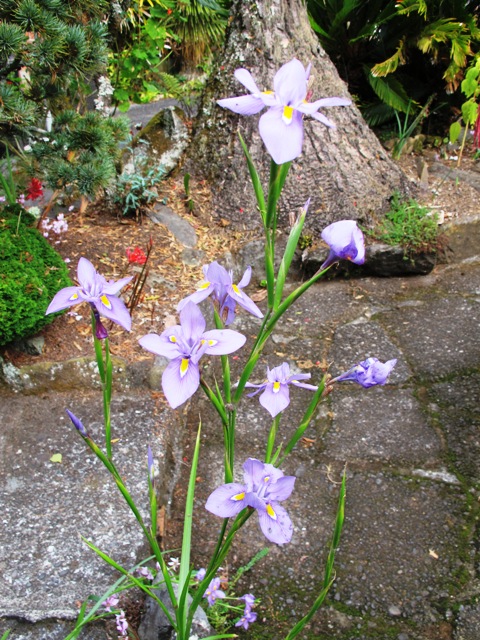
Moraea polystachya - the autumn flowering peacock iris

Moraea polystachya – the autumn flowering peacock iris

Over the years, I have waged a campaign to convince people of the merits of the ornamental oxalis, many of which are autumn stars. Call them by their common overseas name of wood sorrel, if the mere mention of oxalis makes you shudder. The range of different species is huge. By no means are all of them nasty weeds and many are not the slightest bit invasive. We have them flowering in white, yellow, apricot bicolour, a whole range of pinks, lilac, lavender and even crimson. Some are perfectly garden-safe. I can vouch for their good behaviour after decades in the garden here. Others I keep in pots – preferably wide, shallow pots for best display.
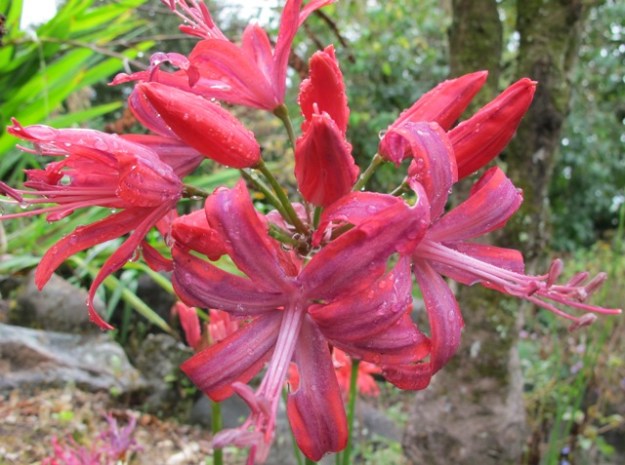
We are big fans of the Nerine sarniensis hybrids

We are big fans of the Nerine sarniensis hybrids

And nerines are the major feature of our autumn rockery. The majority of these are sarniensis hybrids with big heads of flowers. By no means are all of them the common red of Nerine fothergillii or the strong growing pink Nerine bowdenii which comes later in the season. We have some lovely smoky tones, reds deepening to violet hues, a remarkable lolly pink – the colour of a highlighter felt pen, two tone sugar candy and even heading to apricot. Nerines are renowned as a good cut flower but I never cut them. There is only one stem per bulb and I would rather admire them in the garden than indoors.

Then there are the bold colchicums which, contrary to popular belief, are not autumn crocus but certainly put on a splendid show with a succession of flowers from each corm. You have to go a long way back in the botanical family tree to get any relationship between colchicums and the proper autumn crocus. The latter is a much more delicate and transient performer whose flowers appear at the same time as its foliage. Currently, we are enjoying both in bloom.

Some bulbs are quite transient in flower but no less delightful for all that. If I am ever forced by declining health and aged frailty to trade down from a large garden, I can see that it would bulbs that I would chose to grow. I love the way they mark the seasons and how there can always be a different one coming into its time to star.

First published in the Waikato Times and reprinted here with their permission.

Plant Collector: Cyclamen hederifolium

???????????????????????????????
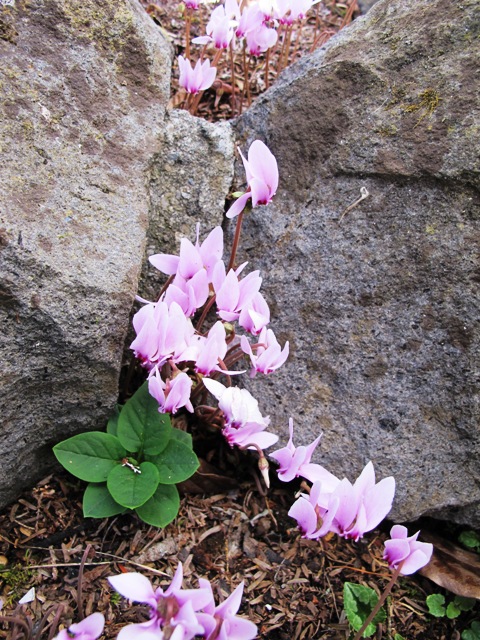
As early as January the first flowers on Cyclamen hederifolium start to appear on parched soils, though they are just coming into their own now. Some of you may know C. hederifolium by its earlier name of neapolitanum. It is the easiest of the dainty species to grow with one of the longer flowering seasons. The heart-shaped leaves, usually mottled and marked with silver, appear towards the end of flowering and make an attractive ground cover through until early summer.

Hederifolium comes in a range of pinks from light to mid, as well as in pure white. It hails from southern Europe through to Turkey and grows in hard, poor conditions, tolerating both heat and cold. What it doesn’t want is wet ground. We use it in open sun to semi shaded woodland margins where drainage is good.

Cyclamen grow from tubers which can develop to large, flat discs. Over the years, some of ours have reached up to 20cm or more across.

If you can’t find C hederifolium for sale, it is easy to grow from fresh seed and gently seeds down in the garden. If you know of somebody who already has it, the seed forms later in the year as a fleshy capsule at the end of a corkscrew stem. The secret is to sow it immediately and not try and store it.

The species cyclamen have a gentle charm which I personally find lacking in the big flowered hybrids which are sold as house plants. However most of those will survive as garden plants and live on if you find a suitable spot where they won’t get outcompeted by overhanging plants.

First published in the Waikato Times and reprinted here with their permission.

Plant Collector: Nerine filifolia

The daintiest of nerines - N. filifolia

The daintiest of nerines – N. filifolia

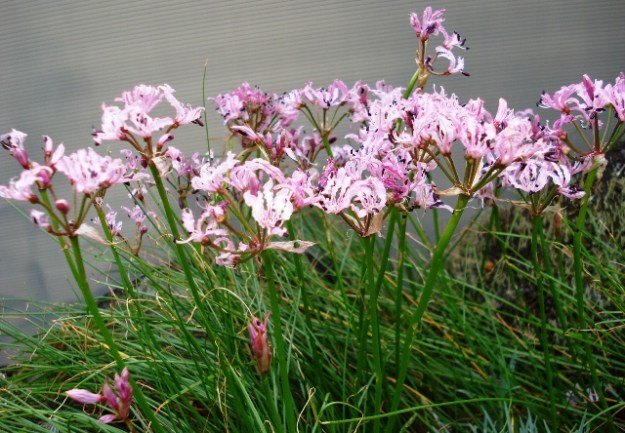
Nerines are a star of our autumn garden so the appearance of N.filifolia always arouses that slight sense of autumnal melancholy in me, coinciding as it does with the realisation that the days are getting shorter again. But the references tell me that in fact it is summer flowering and certainly it is always the first nerine to bloom here. It is also the daintiest member of that family that we have. It is tiny. While the stems can be about 25cm long, individual flowers are only a cm across at most with particularly frilly, waved petals in deep pink and nine flowers to each head.

The filifolia part of the name means fine foliage, grass-like in the vernacular. With us it is evergreen. In harder climates, it may lose its leaves. Like all nerines, it is a South African bulb, from the Eastern Cape area. It builds up easily and is not fussy in the garden, as long as it doesn’t get swamped by stronger growing plants.

Nobody could call it spectacular. It is just one of those little treasures that adds detail and seasonal interest to the garden. The problem will be sourcing bulbs. You will probably only find it from bulb specialists or other gardeners, though Trade Me is always worth watching for odd plants that are not widely available these days.

First published in the Waikato Times and reprinted here with their permission.

Of naked ladies, autumn crocus and so-called autumn crocus.

Just for the record, and in light of finding myself in print with some incorrect information which I didn’t actually write, I offer the following clarification.

The true autumn crocus is indeed a crocus

The true autumn crocus is indeed a crocus

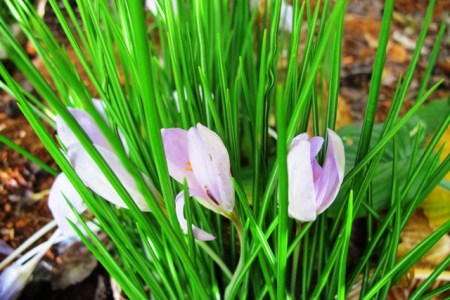
The true autumn flowering crocus is in fact a crocus. There are many different species in the genus of crocus, some flowering in spring and some in autumn. Generally, crocus flower around the same time their foliage appears. We don’t have a species name on this pretty autumn crocus in our garden. Trace the botany of crocus back and they are part of the subfamily of Crocoideae, the family of Iridaceae and the order of Asparagales.

Colchicum autumnale

Colchicum autumnale

Colchicum autumnale flower about the same time for us, but the flowers appear a long time before the foliage so they are sometimes called naked ladies. Equally, they are sometimes referred to as autumn crocus but they are not. Again it is a big genus with many different species but they come from the family of Colchicaceae and the order of Liliales.

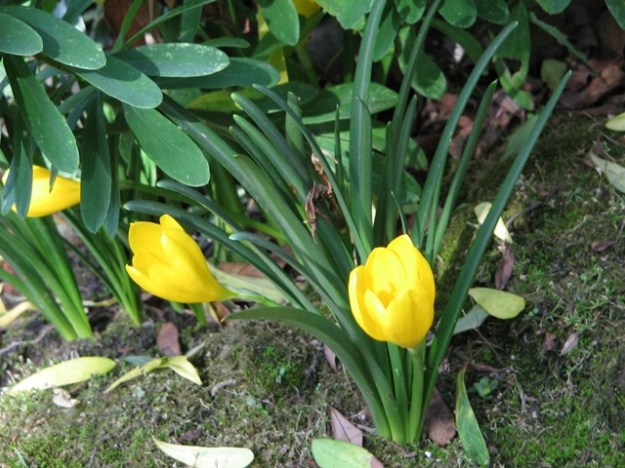
Sternbergia are not autumn crocus either (Photo credit: Meneerke bloem)

Sternbergia are not autumn crocus either (Photo credit: Meneerke bloem)

Sternbergia are sometimes referred to as autumn crocus but they are no more autumn crocus than colchicums. In fact they are more closely related to narcissi than crocus (a fact I discovered from the Pacific Bulb Society) and they are closely related to amaryllis. However, they flower with their foliage and their blooms, generally yellow, resemble a crocus in form. We have sternbergia in the garden here but they don’t flower overly well for us, possibly because they are essentially a Mediterranean plant which likes a hot, dry summer.

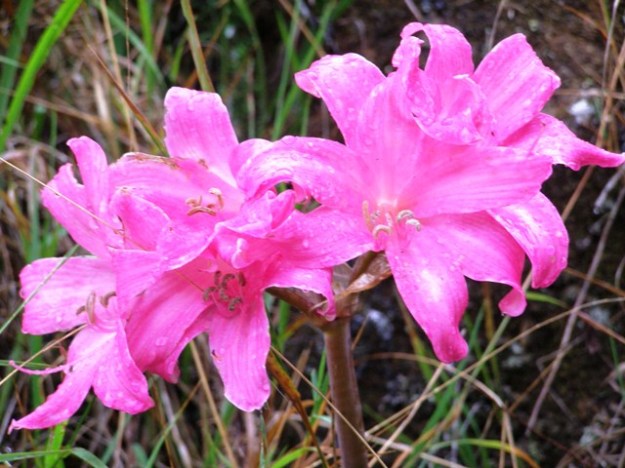
Amaryllis belladonna - the other naked ladies and closely related to sternbergia

Amaryllis belladonna – the other naked ladies and closely related to sternbergia

Also widely referred to as naked ladies are Amaryllis belladonna or the belladonna lilies that are mostly seen as roadside plants here. The genus is amaryllis, the species is belladonna (and there is only one other species in that genus) but the sub family (Amaryllidoideae) and then family (Amaryllidaceae) are the same as sternbergia. Trace them back another step on the Linnaeus chart and you find they are from the order of Asparagales which is where they meet the family tree of crocus – quite a long way back, botanically.

The bottom line is that the true autumn crocus is indeed a crocus, though it may be one of many different species.

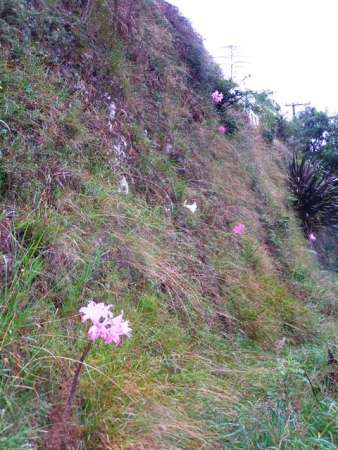
Amaryllis belladonna (or naked ladies) are usually seen as a roadside flower

Amaryllis belladonna (or naked ladies) are usually seen as a roadside flower