Tag Archives: autumn flowers

‘Say it with flowers’

Back in the prehistoric times before the internet, sending flowers to somebody in another place usually happened through Interflora – organised by telephone (land line, of course) or in person. The Interflora group ran extensive advertising and their slogan was ‘say it with flowers’. I have been thinking about that all week in various contexts – letting the flowers tell the story.
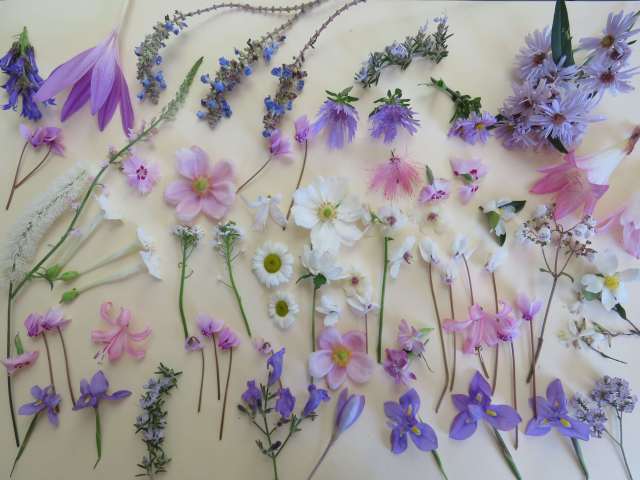
The free-form version

When daylight saving ends here in the southern latitudes, we have to accept that autumn has arrived and this always happens around Easter. The rockery has its second coming and oh my, but it is pretty at this time of year.
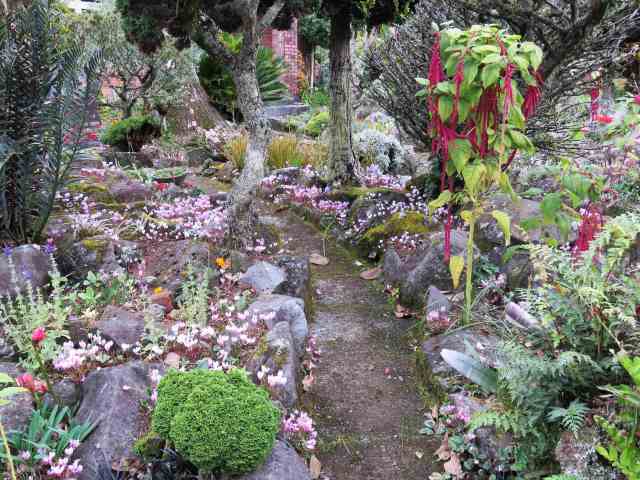
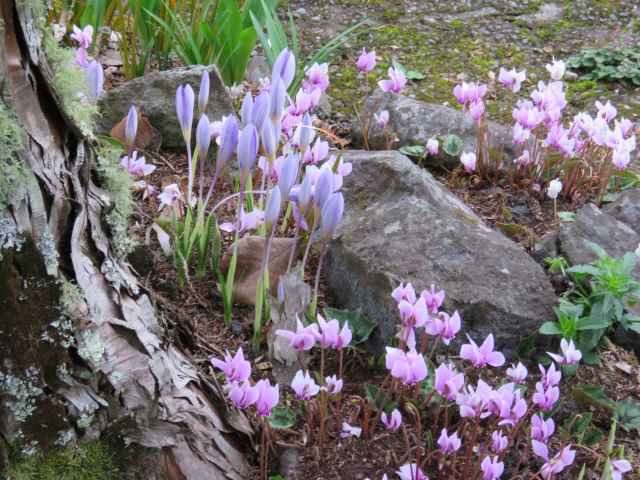
Cyclamen with amaranath and the first nerines

In early spring, the highly detailed rockery is dominated by the yellow of dwarf narcissi and every lachenalia we can grow here, across the range of colours. In autumn, it is mostly pink and white with masses of Cyclamen hederafolium and the Nerine sarniensis hybrids we can grow well.
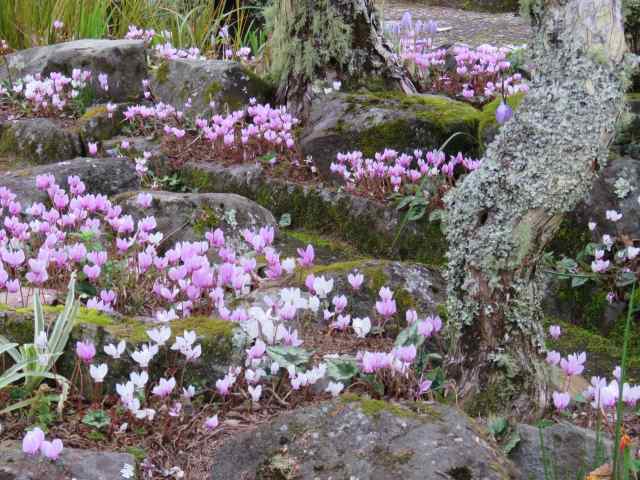
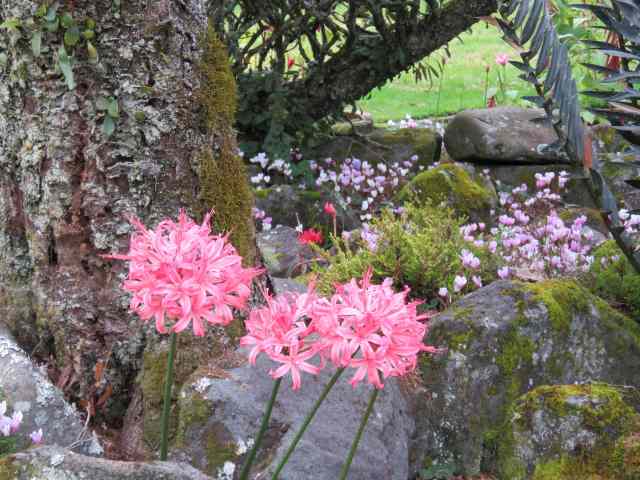
Can one ever have too many of the species cyclamen? I think not. They are seen here with the lilac blue of the autumn crocus from the C. serotinus group, maybe salzmanii. Our rockery is immediately in front of the house so we walk past it often every day and really it is very, very pretty at this time.

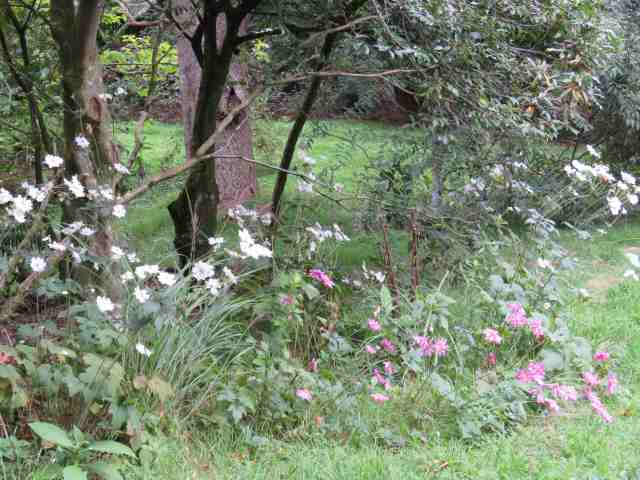
The Wild North Garden has largely become our gardener Zach’s domain and he is continuing to add suitable plants that are surplus to the more tightly managed garden areas. He was so pleased with how the Japanese anemones he planted last year have settled in that he is adding more this year.
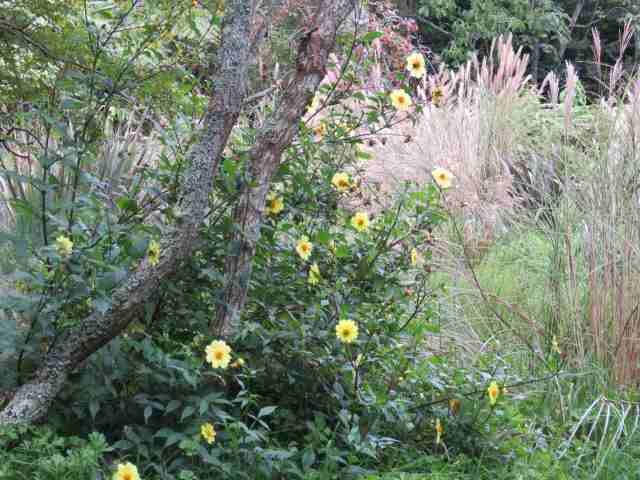
The dahlias have also settled in well to this controlled wilderness. I am pretty sure this is Dr Keith Hammet’s Dahlia ‘Conundrum’ which certainly increases well and flowers for a very long time.

The Wild North Garden may be Zach’s special area but the summer gardens are mine and I love the Court Garden in early autumn as the tall helianthus come into flower and the sun drops lower in the sky to shine through the flower spikes of the tall grass, Miscanthus ‘Morning Light’.
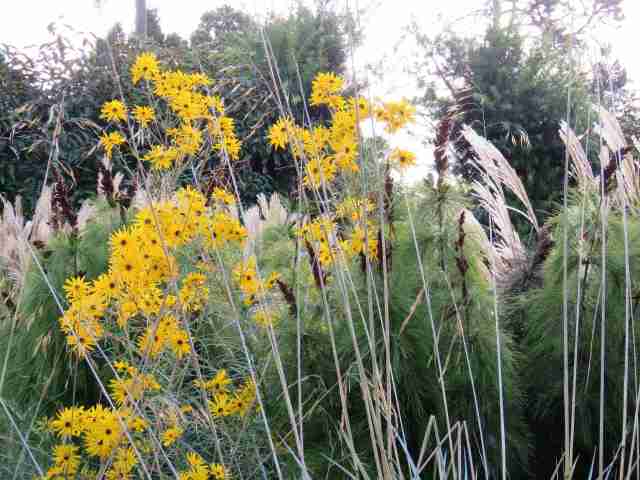
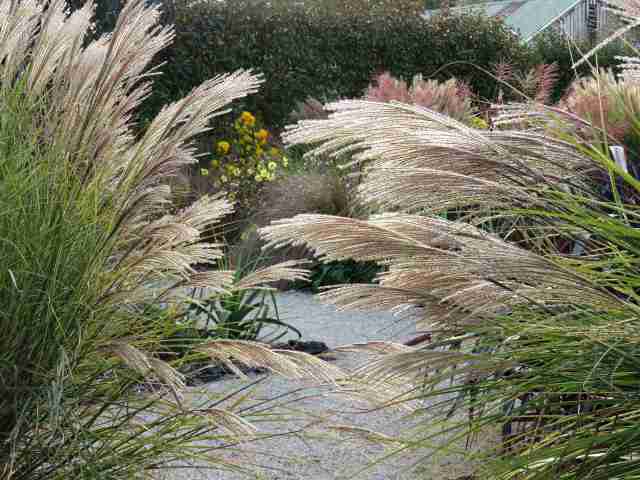
Personally, I would have called it ‘Evening Light’ or maybe ‘Late Afternoon Light’ but that has to do with location and the direction of our lowering sun.
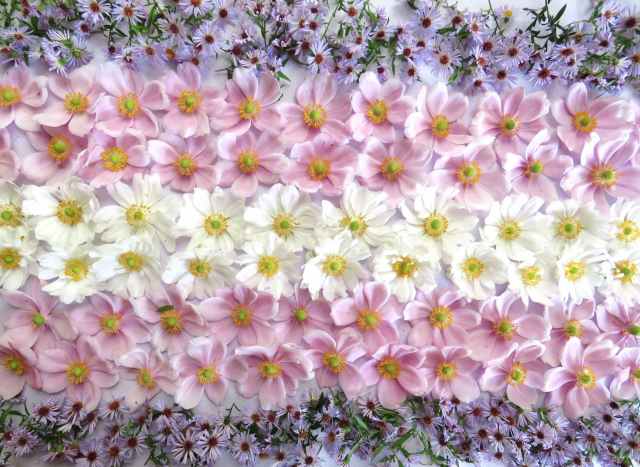
I captioned the top pastel pink, blue and white confection as ‘the free-form version’. This more explicit floral version of a flag would have worked better had Japanese anemones also come in pale blue as well as white and pale pink but we make do with what we have. It reminds me of the floral confections the very late Queen Mother used to wear. Some of you may remember her many appearances where it looked like she was wearing pretty hydrangeas on her head. I went looking for images but they were all copyrighted so if you are curious, google ‘Queen Mother’s petal hats’ to behold the visions.

Sometimes in life, we need to stand up to be counted and I will stand up and be counted in support of the extremely marginalised group this flag stands for as they face an onslaught from people who want to erase them from history, from the present and from the future.

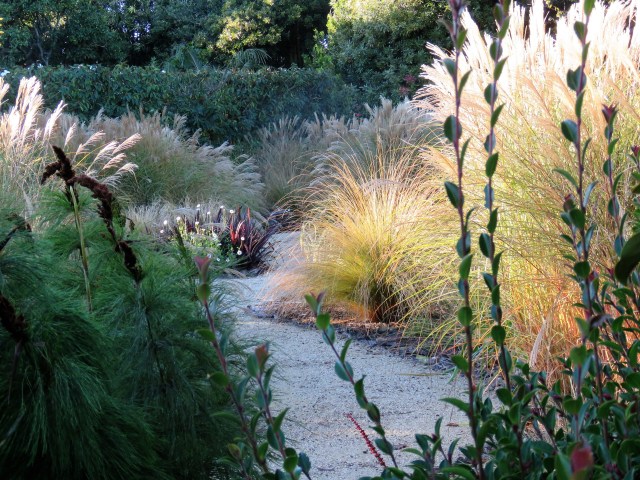
The colours of late autumn

Persimmons – golden orbs against a clear sky in late autumn. Being an old fashioned, astringent variety, we have to wait until they are very ripe before picking them

Here we are, 23 days off the shortest day of the year and in the late autumn phase. The daytime temperature has dropped to the mid teens celsius and we even had a light frost this week. But we are lucky here that our light levels during the day don’t drop much. It just gets dark earlier.

The first of the sun’s rays hitting the Court Garden this week

We never get that grey, leaden look of spent perennials and patches of dark green that characterise many gardens in colder climates, let alone the blanket of white snow many northern countries experience. But neither are we tropical. I have busted out my thermals already. In self-defence, we do not retire indoors as the temperature drops and we are out and about in the garden in all but the worst weather.

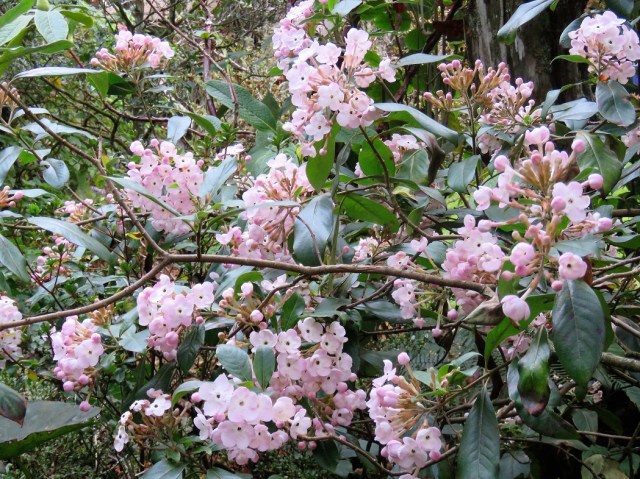
Luculia gratissima ‘Early Dawn’ in sugar pink
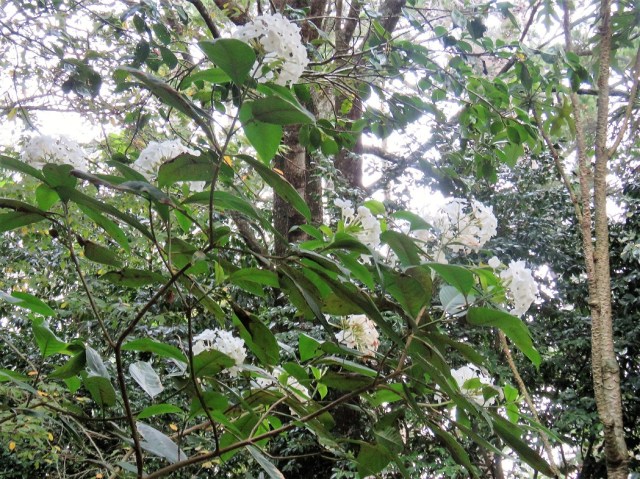
Luculia pinceana ‘Fragrant Pearl’ with its white rounded heads
Luculia pinceana ‘Fragrant Cloud’

The luculias are in flower. Rangy and frost tender these plants may be, the scent is divine and the flower heads are large and attractive balls of colour well into winter. My favourite is the almond pink of ‘Fragrant Cloud’. Unfortunately, they don’t hold well when picked but we keep our house at a warm temperature in winter that is not conducive to any garden flowers holding well indoors.

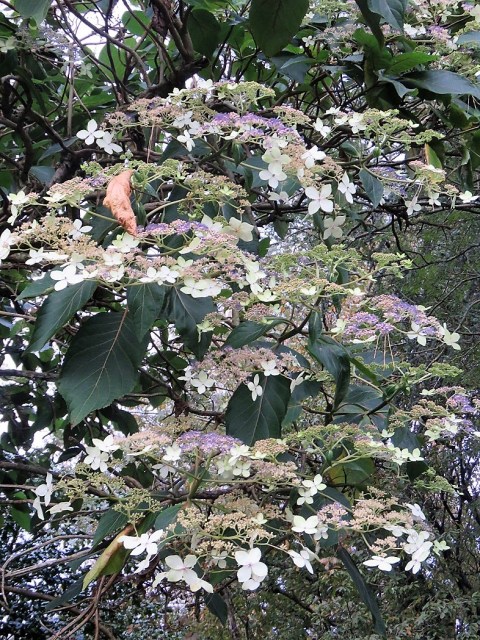
The most enormous of hydrangeas and evergreen, too

Also rangy and frost tender, the enormous, evergreen tree hydrangea is in full bloom. Walking past it on sunny days, the hum of honey bees is not quite deafening but certainly on track in that direction. As the plant is about 5 metres tall and currently sporting so many blooms on the sunny side that the foliage is barely visible, it can accommodate a whole lot of honey bees at a time when other food sources are less abundant. Last I heard, this unusual Chinese hydrangea is thought to be a member of the aspera group.

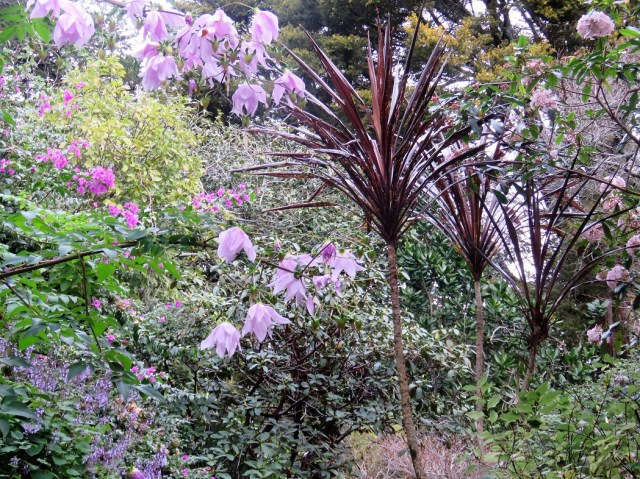
Nearby, still in the woodland area we call the Avenue Garden, I like this seasonal composition with the red form of Cordyline australis x banksii, the hanging chalices of the tree dahlia D. imperialis (another rangy, frost tender plant), the cerise of the enormous bougainvillea, blue flowered plectranthus and Luculia ‘Fragrant Cloud’ on the right.

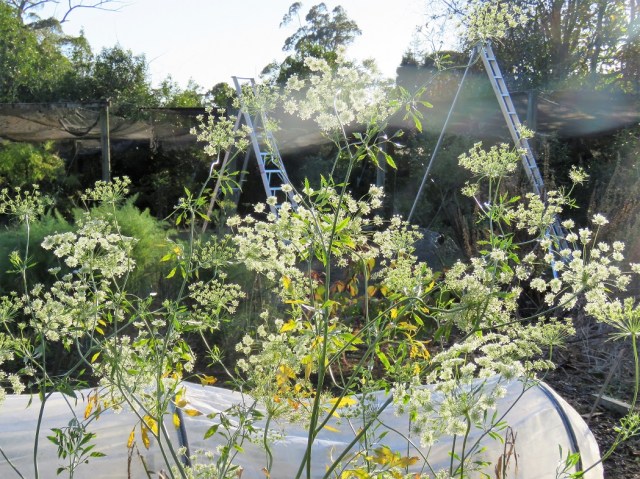
Ammi majus

Out in the rather wilder margins of Mark’s vegetable garden (which we never open to public view because while he is a productive gardener, he is also very messy in this area), the Ammi majus flowers on. I liked the mix of wildflower, the cloche and the communion of our two new ladders which Lloyd was using in tandem at the time.

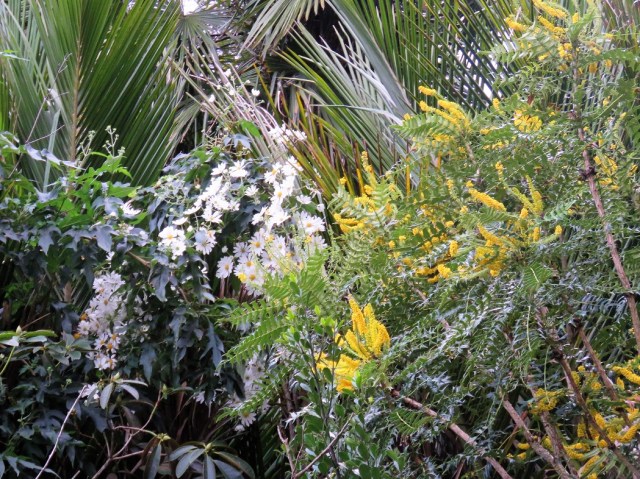
In still wilder margins, this scene was the coming together of a United Nations of self-seeded plants – the nikau palms from NZ, Montanoa bipinnatifida otherwise known as the Mexican tree daisy,and the yellow mahonia which may or may not be Mahonia japonica from Japan.

Vireya rhododendron macgregoriae, this plant defying the odds and still going strong after 64 years

Back in the more cultivated areas of the garden, many vireya rhododendrons are blooming. These are the subtropical rhododendrons – so frost tender and generally pretty sensitive – and tend not to be longlived. Their flowering is triggered by day length, not temperature, so they bloom intermittently but autumn and spring are the main seasons. We have some dead specimens we are removing now and Mark is doing a cuttings round to propagate an ongoing supply. But this specimen, this one is defying that tendency to whiff off and die. It is the very plant that Felix collected from the highlands of New Guinea in 1957 and the start of his breeding programme – R. macgregoriae.

Sasanqua camellia ‘Elfin Rose’ and Nerine bowdenii

Autumn is sasanqua camellia season, now my favourite group of camellias. For years the NZ sasanqua market was completely dominated by consumer demand for white sasanquas – it may still be the case but I am out of touch with commercial production these days. We have plenty of different white sasanqua varieties in the garden but they do not spark joy for me in the way the coloured options do. This one is pretty ‘Elfin Rose’, seen here with the last nerines of the season, N. bowdenii at its feet.

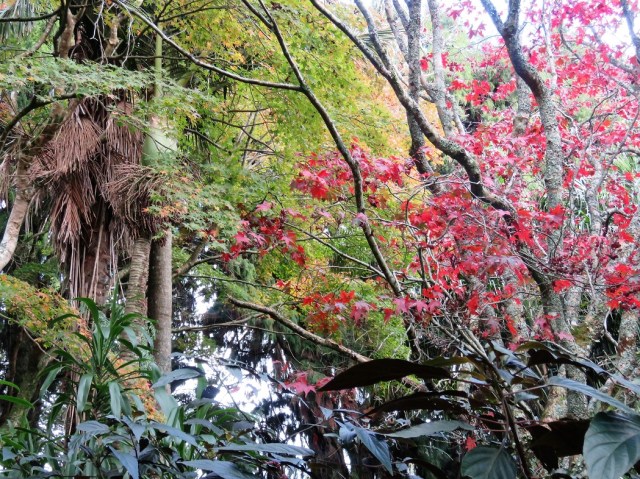
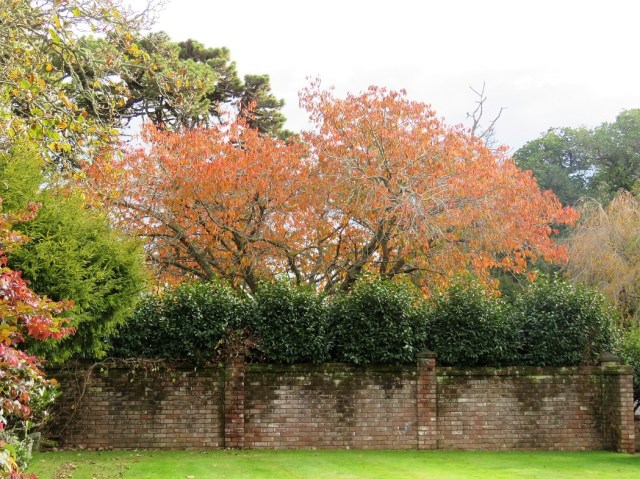
It is not just flowers giving colour. While autumn colour is patchy and extended over a long period of time because we move so gradually from late summer to autumn to winter, the maples and some of the prunus give a pretty display.

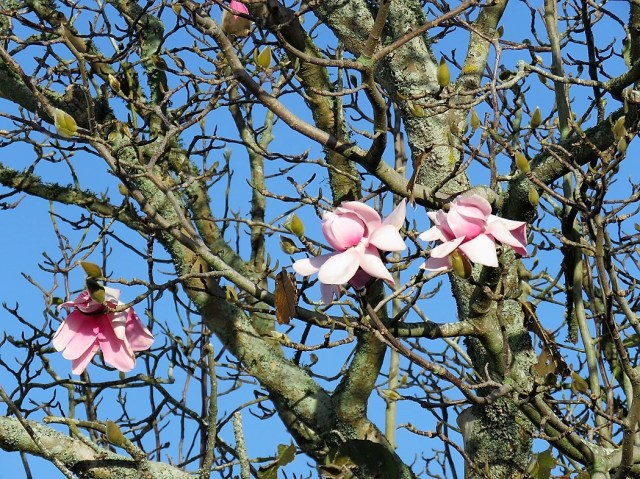
Magnolia campbellii opening blooms in late May

Finally, in a sign of how our seasons lack the sharp demarcations of colder climates, the first magnolias are already opening. I follow a Facebook page for magnolia enthusiasts that is heavily dominated by mad keen magnoliaphiles from northern Europe. They are still posting photos of late season blooms opening on their spring magnolias. Meanwhile, as far away as we can get across the world, the Magnolia campbellii in the Anglican churchyard of my local town of Waitara is already open with a score or more blooms.

First flowers on ‘Fairy Magnolia White’ in late May

Here, we are looking at the first flowers open already on ‘Fairy Magnolia White’, the first of the michelias of the new season to bloom. As we are in the last gasps of autumn, these early magnolias are a reminder that spring is not far away.

Day 3 of lock down and a minor mystery is solved

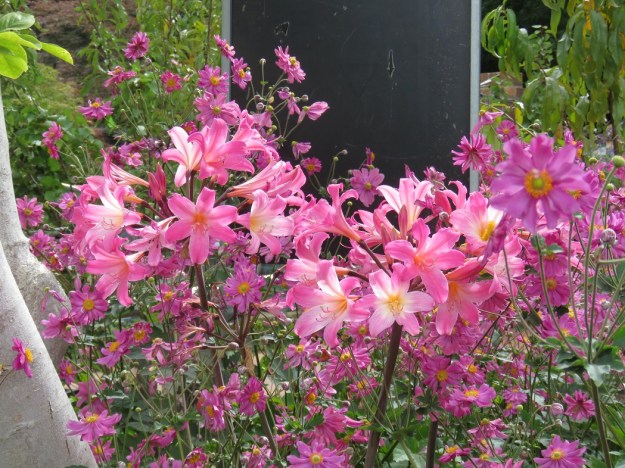
As we adjust to lock down and our personal worlds become so much smaller, I did at least solve a small mystery yesterday. I saw a lovely combination of vibrant pinks when we visited Cloudehill Gardens in the Dandenongs outside Melbourne last year. I can repeat that in my new perennial meadow, I thought.
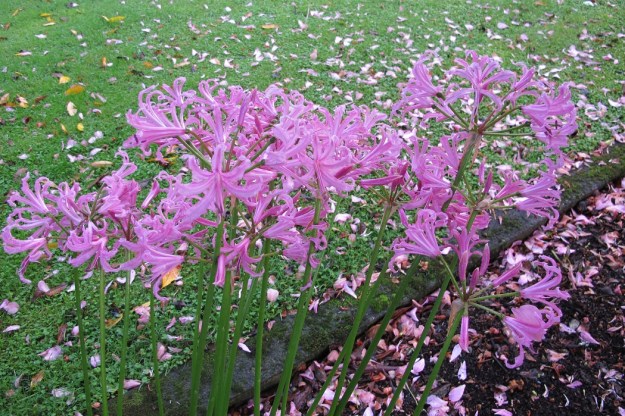
Nerine bowdenii flowering in late May here 

My perennial meadow planting with hidden N. bowdenii

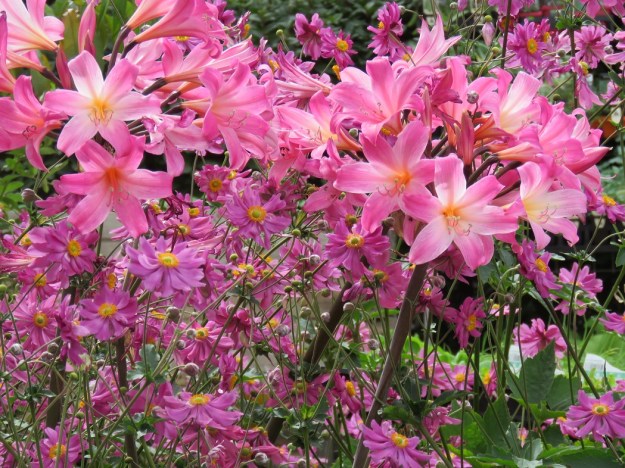
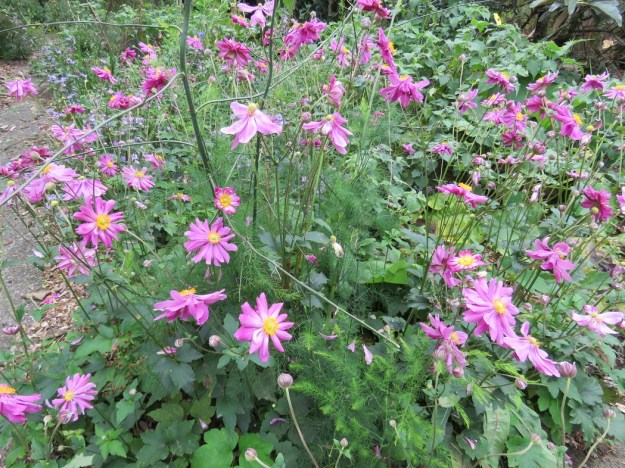
In my mind, I had it as a combination of the deep pink Japanese anemone and Nerine bowdenii. As the anemone came into flower, I found myself wondering where the nerine was before realising that of course it flowers much later here. I considered the possibility that Cloudehill had a selection that flowered much earlier in the season and kicked myself for not checking the flowering times here – easily done in these days of digital photo files that give dates. There seemed to be a story in there about not assuming that combinations seen in different climates will also work at home. I found my photos.

Belladonnas at Cloudehill! Of course. Not N. bowdenii. But then the Japanese anemone actually comes from China. The world is looking more confusing by the day.

Eagle-eyed readers will have already spotted my mistake. It was my memory. Not Nerine bowdenii at all. Those are belladonnas. That explains it. I am not sure that I want to bring big, thuggish belladonnas into the garden. We have them in abundance on the roadside and on our margins but they aren’t the best garden candidates. In fact we already have both on our roadside and all I need to do is shuffle some of the right pink tones closer to the anemone there.

I just need to relocate some pink belladonnas in the right tones on our roadside and I will have that combination.

As Mark and I had a leisured start to our morning on day two of lock down, he quipped that half the houses around the nation were currently undergoing paint jobs. Lloyd, our garden staffer, had gone in to a Mitre10 Mega on Tuesday and reported that everybody else was in there buying paint and they had sold out entirely of his preferred brand.

We are in the garden so there is no major change for us, except the absence of Lloyd during the week. I have found, however, that my focus and concentration are scattered all over the place. I am telling myself that there is plenty of time – a whole month at least – and it is fine to allow myself a few days to mentally settle into the peculiar new reality we are all facing. Friends have noted the same phenomenon. It doesn’t matter if major tasks get left for a little while.

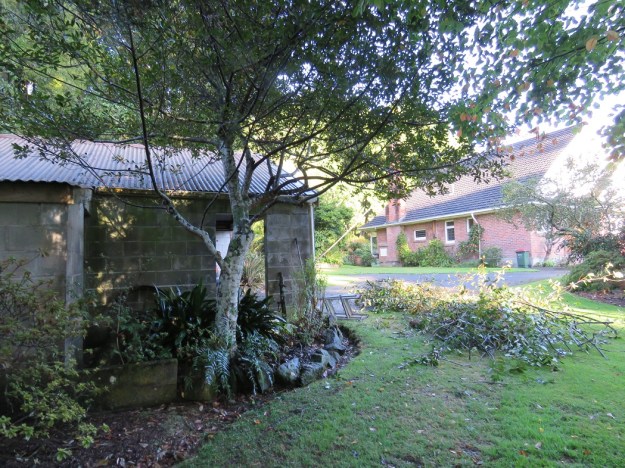
Fiddly faddling on the Magnolia laevifolia. But where is Lloyd when I need him? He is always most obliging about dealing to my piles of prunings.

This is why I spent yesterday entirely distracted by a very small garden with an untidy Magnolia laevifolia draping itself over the garage roof, leading to a build-up of leaf litter composting on the corrugated iron roof. It is a smaller, defined project that I can complete before my scattered brain gets distracted elsewhere. Fiddly-faddling, I call it. Mark describes it as montying – a reference anybody who watches BBC Gardeners’ World will understand. May you all fiddly-faddle or monty in tranquil safety wherever you are.

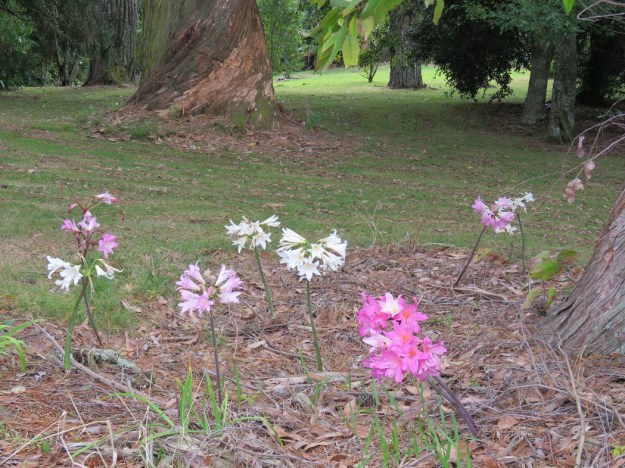
Belladonnas we have a-plenty in a variety of hues but their flowering season is brief and their season is full, smothering leaf is very long


The autumn camellias

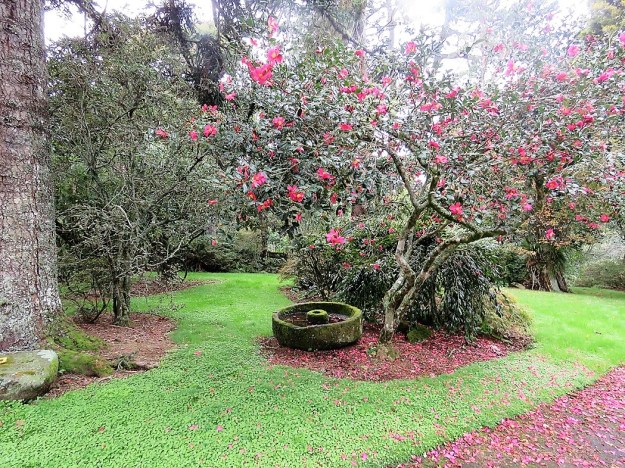
Camellia sasanqua Crimson King in prime position

When Mark returned home to Tikorangi in 1980 bringing me and our first baby bump, the name Jury was synonymous with camellias. These days Jury = magnolias, but not back then. There is a whole chapter in the family history that is headed ‘Camellias’ but it is largely in the past now. Changing fashion, changing focus and the dreaded camellia petal blight has seen to that.

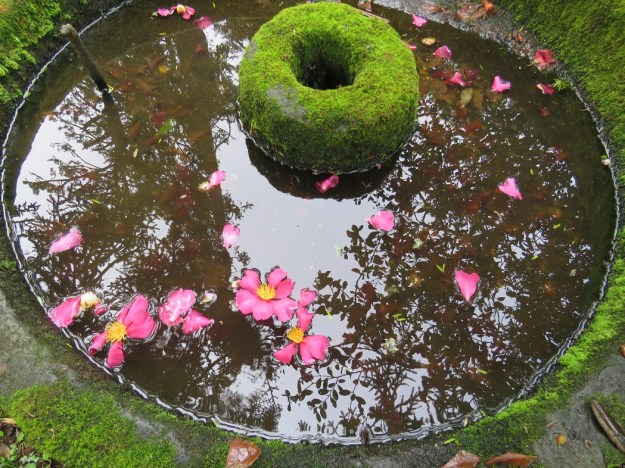
But every autumn, as the sasanquas come into flower we both derive huge delight, particularly from the Camellia Crimson King by the old mill wheel, which is just out from our back door beside the driveway. It is a picture of grace and charm.

Crimson King rests more on its merits of form and position than the beauty of individual blooms

Sasanquas are the unsung heroes of the camellia family, seen mostly as hedging plants, so utility rather than glorious. But if they are allowed to mature as specimens and gently shaped down the years, they stand on their own merits. Mark declared yesterday that it is the autumn flowering camellias that interest him now, not the late winter and spring varieties. For these autumn ones do not get petal blight whereas the later varieties are now a mere shadow of their former selves, faced by the extreme ravages wrought upon their blooms by blight. Our camellia trip to China in 2016 had us concluding that our mild, humid climate with high rainfall means that we suffer worse from petal blight in Taranaki than pretty much anywhere else, really. It is nowhere near as bad in dry climates.

The history of camellias from the middle of last century onwards has some parallels to the history of tulips – all about show and showy blooms. So it was predicated on the quest for the new – extending the boundaries of flower form, size and colour, prizing breakthroughs even when the results were more novelty than meritorious. Camellia societies had enormous flower shows where the staging of individual show blooms was the focus. It didn’t have much, if anything, to do with garden performance let alone longevity as garden plants. Sasanquas didn’t fit this show bench mould. They flowered too early in the season, individual blooms are often quite small, lacking rigid, defined form and falling apart when picked.

But fashions and conditions change and these days it is the softer look of the Japanese camellia family member, the sasanquas, that makes us stop and take notice more than the later flowering japonicas and hybrids on which the earlier family reputation was forged. The light airiness and grace of the sasanquas fits our style of gardening far better than the solid, chunkiness of many of the later varieties and the autumn flowers serve as another marker of the change of season.

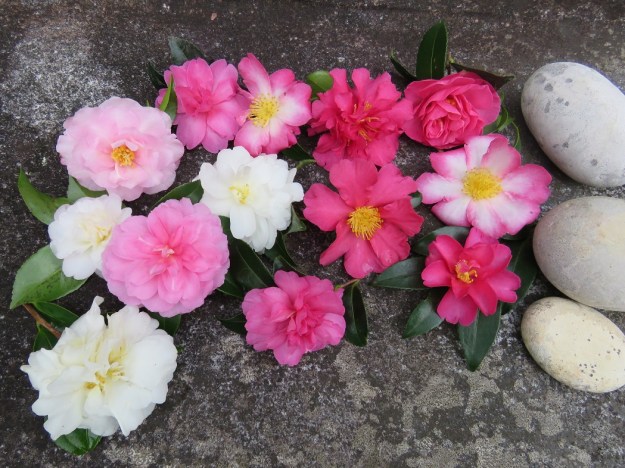
The earliest of the sasanquas here – all named varieties

I did a walk around to see how many different blooms I could pick but it is still a little early in the season and some have yet to open. Some plants we leave entirely to their own devices, some we will clean up the canopy from time to time -to take out dead wood and create an umbrella effect, two we clip tightly once a year to a cloud pruned form. With their small leaves, the sasanquas clip well. It just pays to do it soon after they have made their new growth after flowering. Leave it until late spring and you will be clipping off all the flower buds set for next autumn.

Camellia Mine No Yuki

It takes a few decades of growth to get sufficient size to shape as we shape ‘Elfin Rose’ and ‘Mine No Yuki’ but these specimens now function as distinctive shapes within the garden all year round, rather than melding into the background as most camellias do when not in bloom.

Late Bloomers – the tree dahlias in autumn

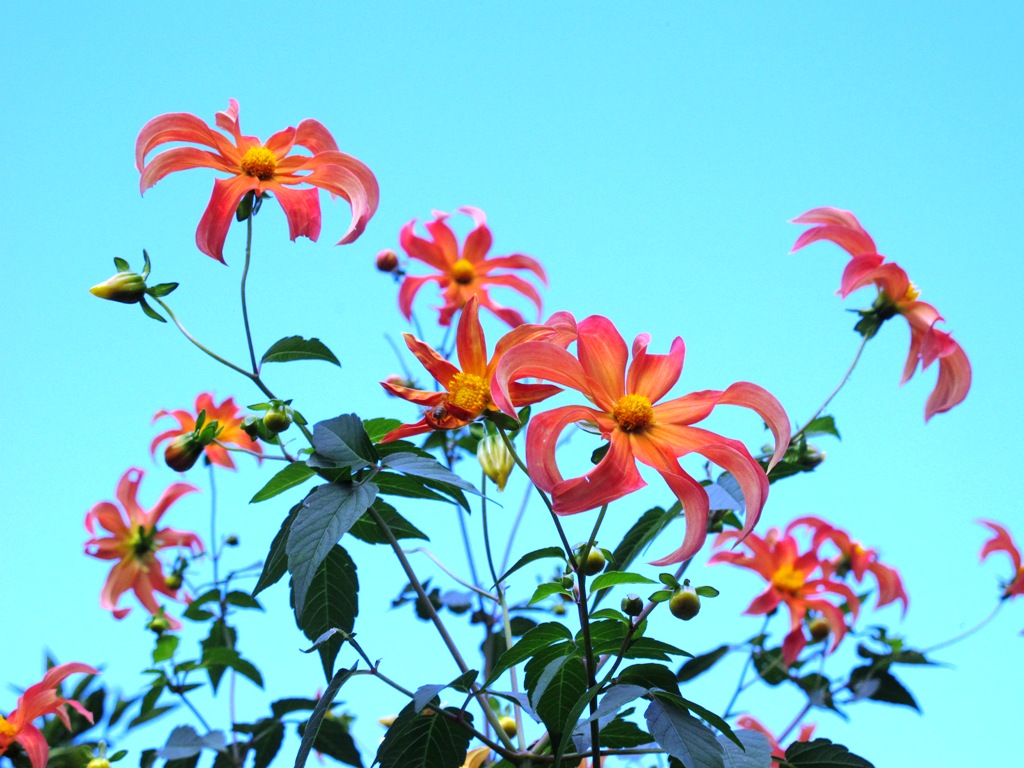
Tree dahlia 'Orchid', bred by Keith Hammett

Tree dahlia ‘Orchid’, bred by Keith Hammett

The last clarion call of the autumn flowers here are the tree dahlias, wildly impractical plants to grow but I absolutely love them. There is nothing like their over the top blooms soaring skywards in late autumn.  At least we are lucky in this country that we get clear blue skies with strong light all year round. Otherwise they might be soaring up to the gloom of lower light levels of other climates.

For problem number one is that these are frost tender plants which is not surprising when you consider they originate from Central American areas like Mexico, Columbia and Guatemala. We are not actually frost free in Tikorangi. We have areas of the garden that are so protected now by overhead cover that we can grow the most tender material, but out in the open we still get sufficient frost to require placing tender plants carefully. We may only get three visible frosts each winter, but the air chill on a calm night can get low enough to wreak havoc. And because these tree dahlias don’t start flowering until May and continue into June, they can get hit late in their season.

Left to right: 'Chameleon" , 'Orchid' (both Hammett varieties), D. imperialis and an unnamed Hammett variety.

Left to right: ‘Chameleon” , ‘Orchid’ (both Hammett varieties), D. imperialis and an unnamed Hammett variety.

A hint to the second problem lies in the name – the ‘tree’ part. These are not trees. They have nothing to do with trees. They are a fully deciduous herbaceous perennial but their rapid growth in summer and autumn sees them take on tree-like proportions. It is nothing for them to be 3 metres high, sometimes 4 or even 5 metres. Being dahlias, they are plants for sunny, open positions but they also benefit from some support and shelter from wind which can knock their brittle stems over. They have the hollow stems that are typical of dahlias. Some we grow against sheds or to the side of frames already in place for runner beans and frost protection frames for the bananas and sugar cane.  Some we fence in with heavy duty bamboo cross bars – hitching rails, Mark calls them.

Below ground, they have big, chunky tubers which mean that they are difficult to grow amongst other plants and they take up quite a bit of space for their six weeks of glory.

Not many gardens have both the space and the conditions that suit such particular requirements, along with a tolerance for their scruffy off-times. But if you have and can, they are as easy to grow as your more modest dahlia but with more spectacular results.

New Zealand plant breeder, Keith Hammett, has done a lot of work with dahlias, including tree dahlias. The orange starburst variety which he named ‘Orchid’,  with its twisted petals is more compact than any of the others we grow. It only reaches about 2 metres maximum though that is 2 metres high  and 2 metres wide. We have it by a big mandarin tree whose fruit are ripening as the dahlia blooms. It is a lovely combination.

Dahlia imperialis, my personal favourite

Dahlia imperialis, my personal favourite

My favourite is the simple Dahlia imperialis species and it is the most commonly available plant. When it first comes out, it looks like a clematis from a distance. Yes the blooms are a little floppy and the petals are larger and soft, so easily damaged, but I like the somewhat pendulous form and I think the lilac pink colouring is pretty.

Dahlia imperialis Alba - soaring skywards as winter descends upon us

Dahlia imperialis Alba – soaring skywards as winter descends upon us

Being a species, there are a fair number of different selections of D. imperialis. Our late season double white is Dahlia imperialis alba plena. ‘Alba’ of course means white and ‘plena’ means full and is applied to fully double flower forms. This one towers above a shed and puts on a wonderful display with its shaggy blooms but usually gets cut back by the cold when still in bloom in early June.

While tree dahlias can be grown from tubers in the same way as their smaller dahlia cousins, they are also commonly propagated from cuttings which are easier to handle than their oversized tubers. I admit I have yet to try it – there is a limit to how many tree dahlias we can place here – but the advice is to cut the stems that flowered in autumn, making sure that you have at least two nodes per cutting. Lay it flat because the new roots form from the nodes and cover to a depth of about 10cm. Or you can take spring cuttings from fresh growth. It does not appear to be difficult. I may report back on this because we are taking cuttings this year. We have a newly available position where a large tree fell, opening up what looks to be an ideal space for a tree dahlia or maybe two.

022 - CopyFirst published in the May issue of NZ Gardener and reprinted here with their permission.