Tag Archives: belladonnas

Let there be flowers and the gentle change of seasons

In a world that seems to be growing more chaotic, unstable, downright dangerous and even vicious by the day, let there be flowers.

I know I am not alone in limiting my time following the news and on social media. Never in my life did I think I would be taking life guidance from RuPaul but his advice to ‘look at the darkness but don’t stare’ are words that I repeat to myself every day. It is one thing to be aware of what is happening but it can be overwhelming if I spend too much time following it closely.

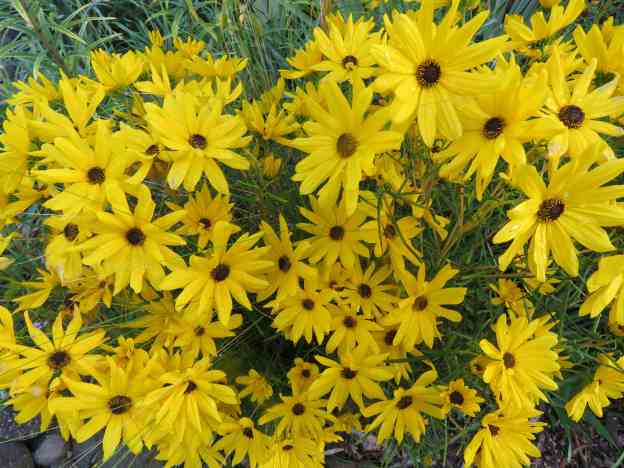
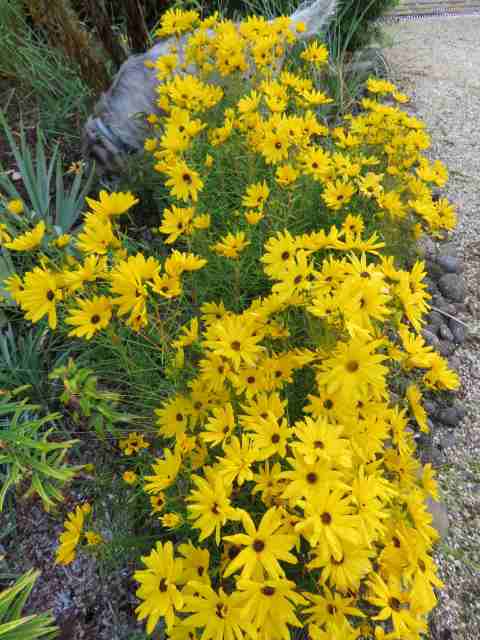
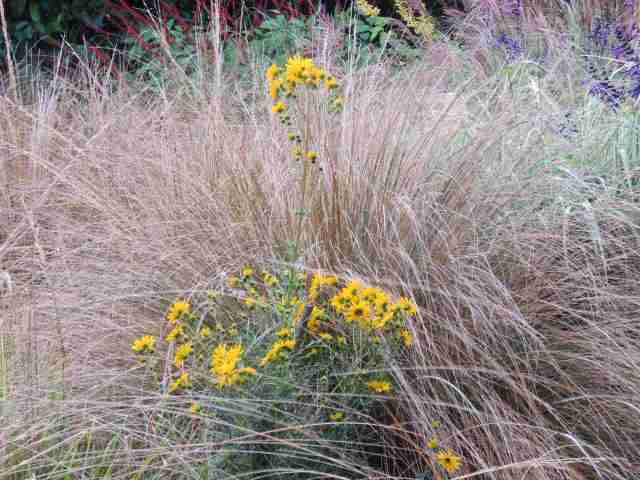
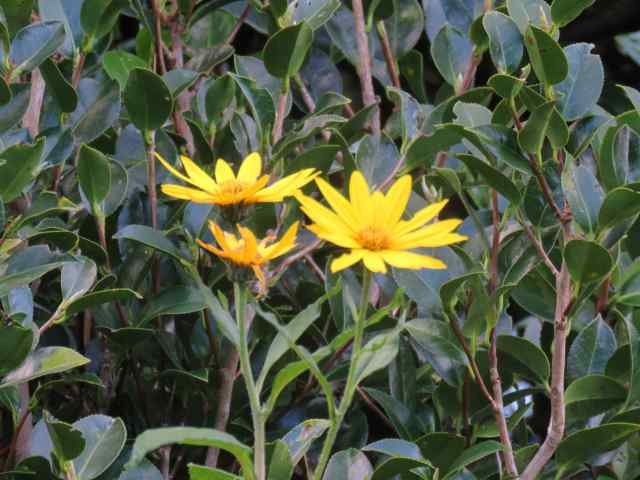
The bright cheer of the dwarf helianthus makes me smile. This is a named cultivar but I have forgotten where I recorded the name.

Instead, I give you the gentle predictability of the change of season from summer to autumn here with photos from yesterday. I have used the shorter version of the helianthus in the borders but the tall leggy form – likely closer to the species or as it is found in the wild – seemed to fit better in the controlled abandon of the Court Garden. No more. We are in danger of losing it because it is not as capable of coping with competition as I thought. As soon as this remaining clump has finished flowering, I will relocate it to the more cultivated environment of the borders where it will be given its own space to thrive.

The Jerusalem artichoke is also a member of the helianthus family but it does not justify its place as an ornamental plant. Not enough flowers, I am afraid, but an abundance of tubers which I dare not eat. While tasty, no matter how hard I try, I can not find ways to prepare it that improve its digestibility without the unfortunate side effects. Its name as fartichoke is fully justified.

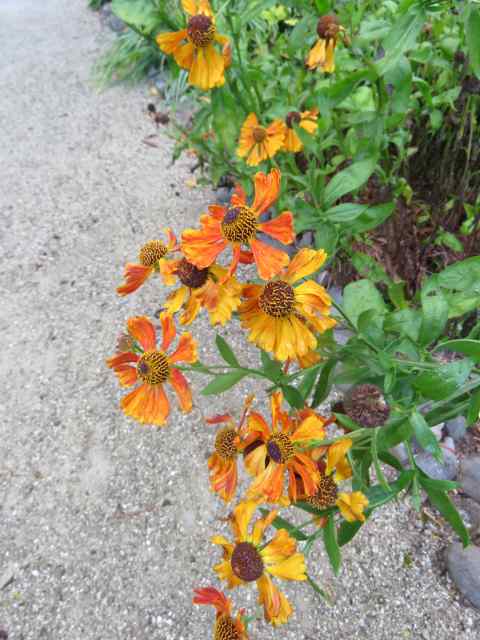
The heleniums are in the twilight of their season but remain eyecatching. These have one of the longer flowering seasons of the summer perennials and fully justify their prime position in the borders.

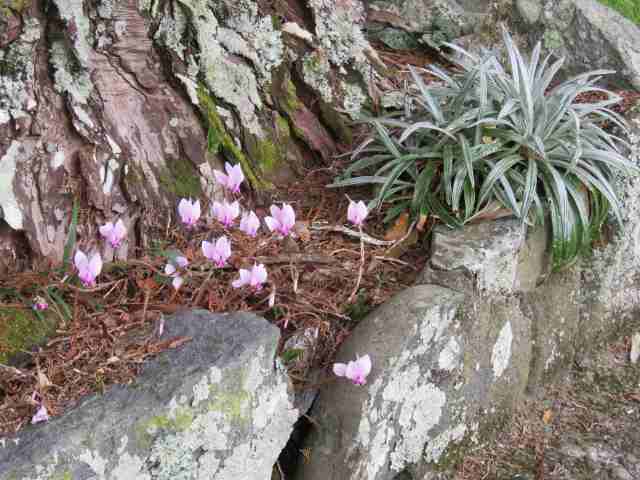
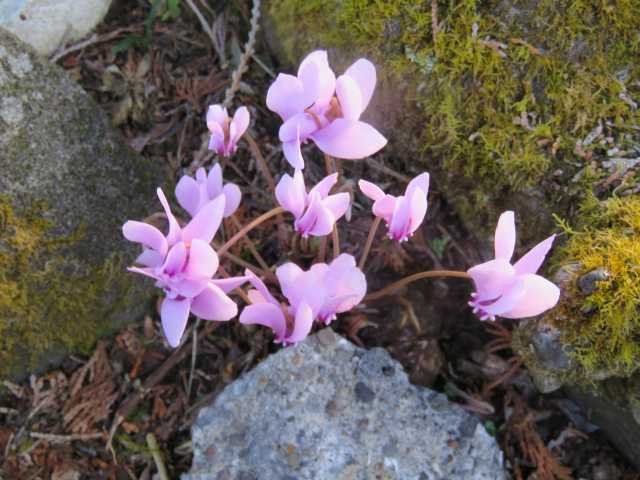
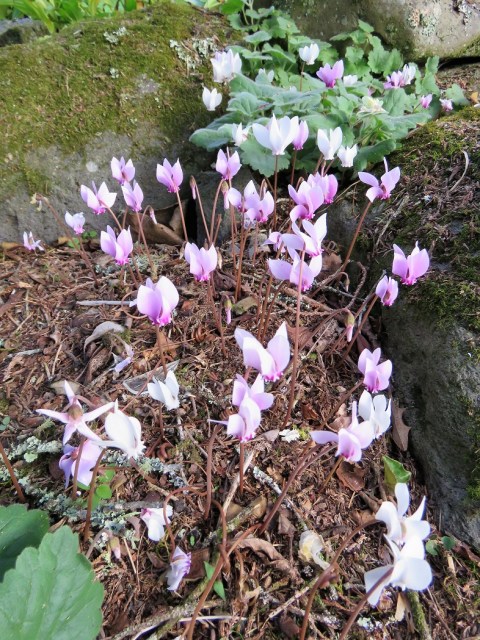
Cyclamen hederafolium are coming into their autumn peak and what a delight they are. We have many of them, many many in fact because we encourage them to seed down in their pretty pink and white charm. I am not a fan of the bigger cyclamen hybrids but the species are a source of great delight throughout the garden.

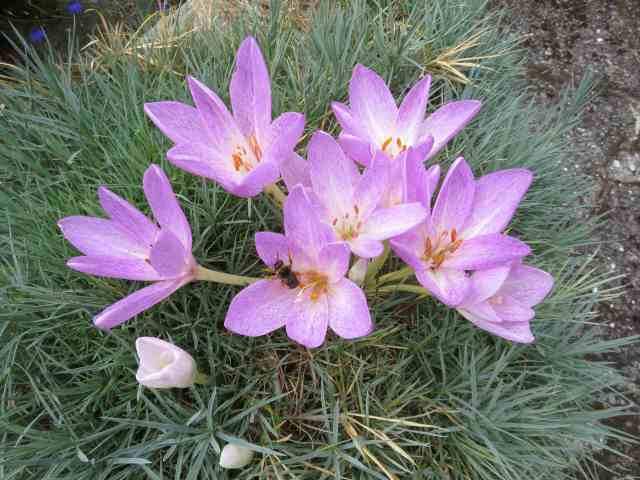
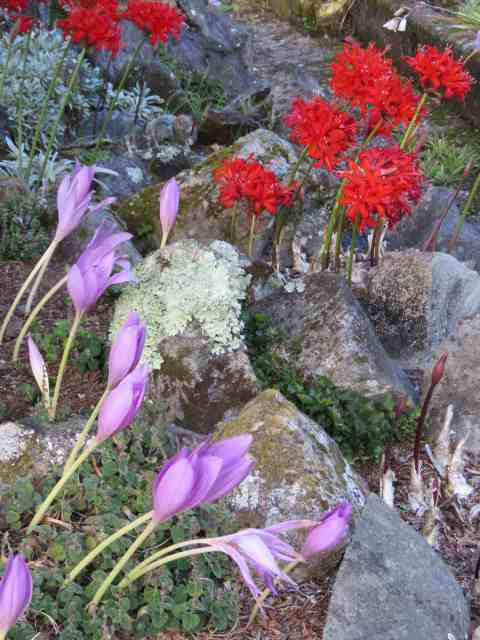
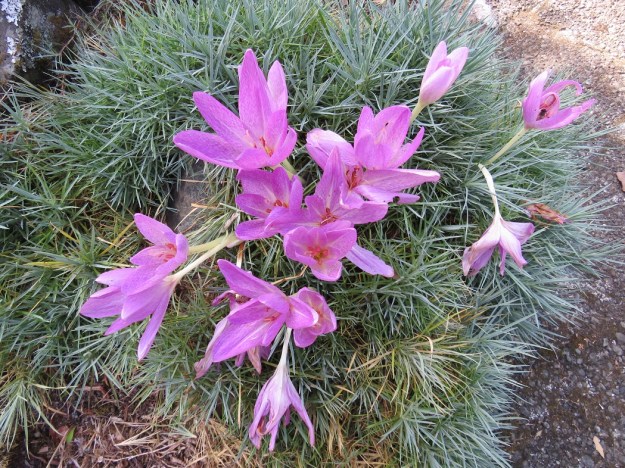
The rockery is hitting its stride with its autumn display. The colchicums are a fleeting delight but one we would not be without. The nerines are just starting, mostly red so far but plenty about to open in other colours. I live in hope that the Lycoris aurea will stage a reappearance. I planted a pot of flowering bulbs out in the rockery years ago but I can’t remember where and it has never flowered since. It may have gently withered away to nothing or it may still be masquerading as a random clump of nerines which I just haven’t noticed aren’t flowering. Perhaps our hot, dry summer will have triggered it to flower. Or maybe not.

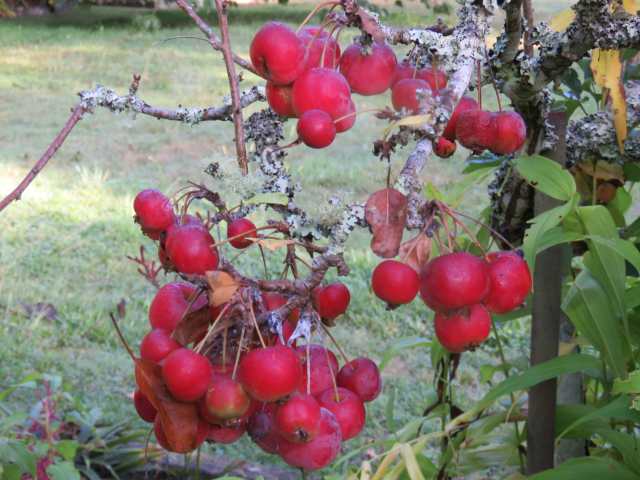
We have two dwarf crabapples in the rockery, standing little more than 1.2metres high after about 50 years. Their flowering is insignificant and their form and foliage unremarkable but they justify their place with their ornamental fruit in autumn.

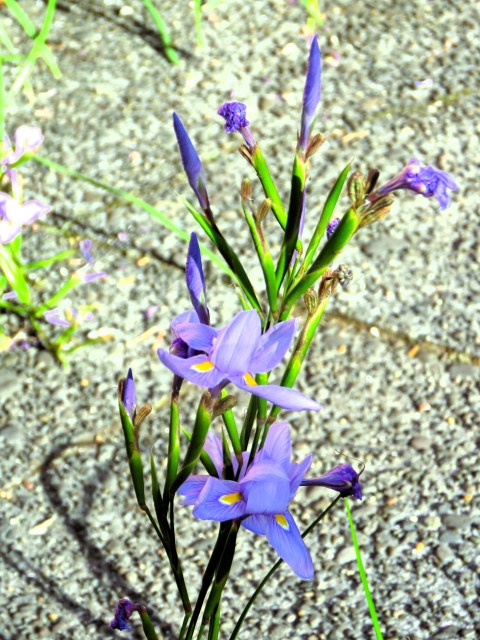
Moraea polystachya, an autumn form of the peacock iris, seeds around enthusiastically but harmlessly and rewards us by popping up randomly – on the edge of the drive in this photo – and having one of the longest seasons in flower of any of the autumn bulbs because it keeps opening a generous succession of buds.

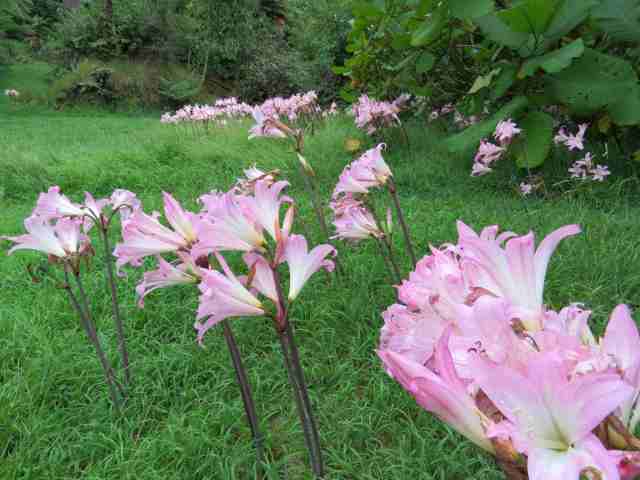
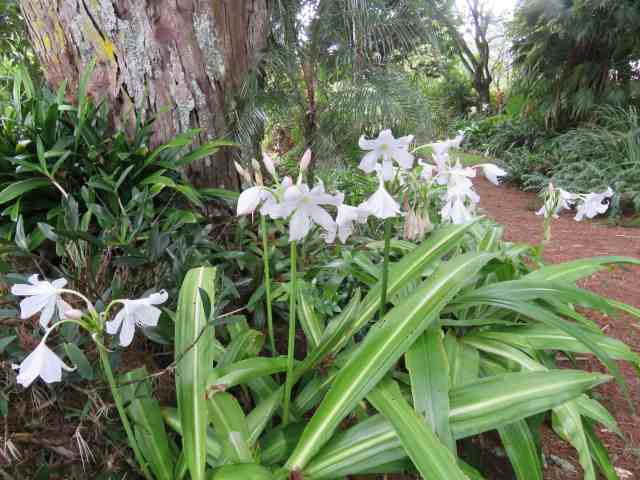
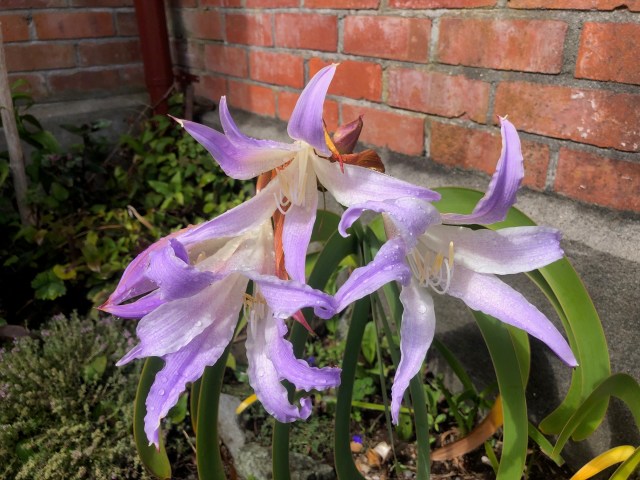
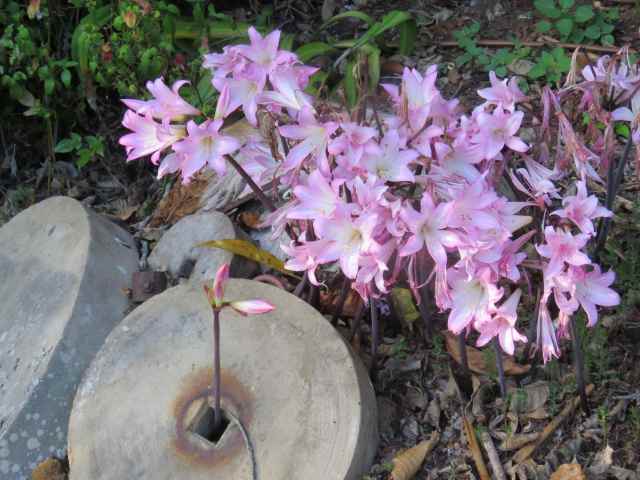
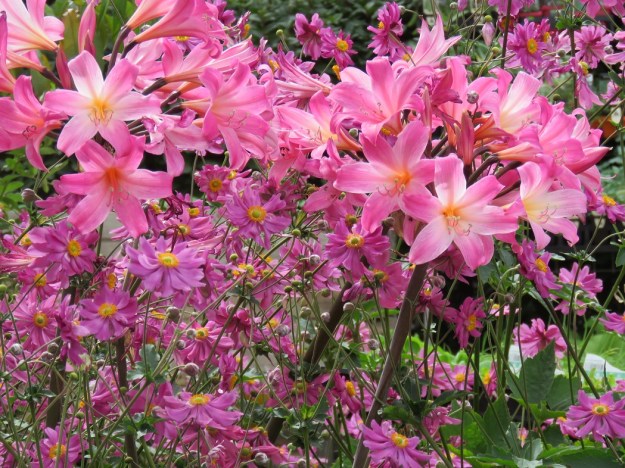
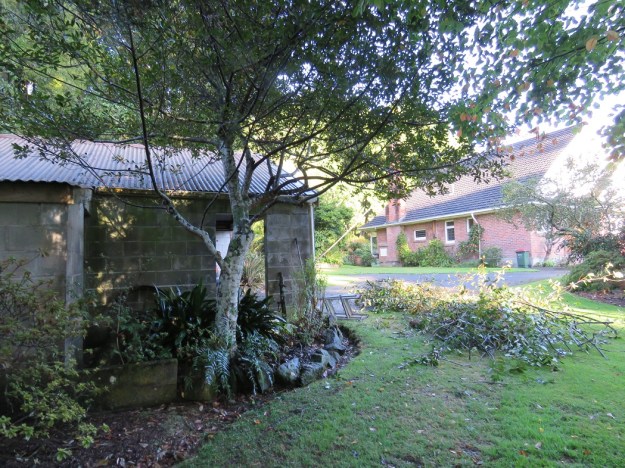
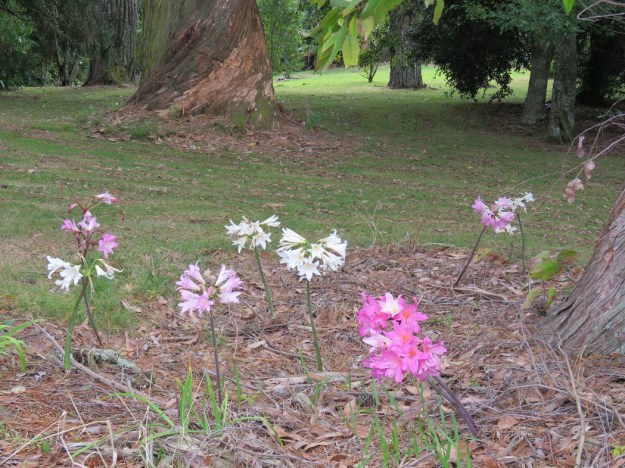
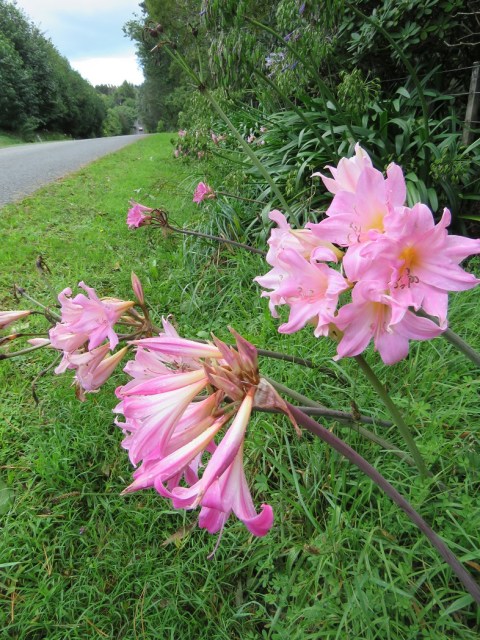
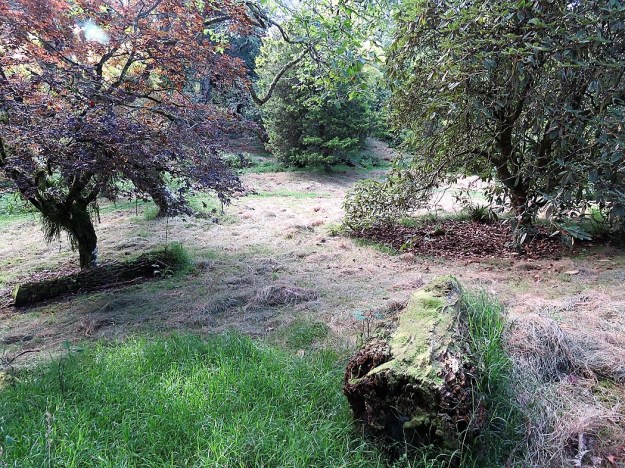
The belladonnas are bold, a bit scruffy and have bulbs and foliage that are too large to make them obliging garden plants. But they are a welcome addition in wilder areas, in this case on the site of the old woodshed we removed this summer before it fell over of its own own accord. We don’t know anything about the grinding wheels except that Felix must have gathered them up fifty years ago and there are three in graduated sizes.

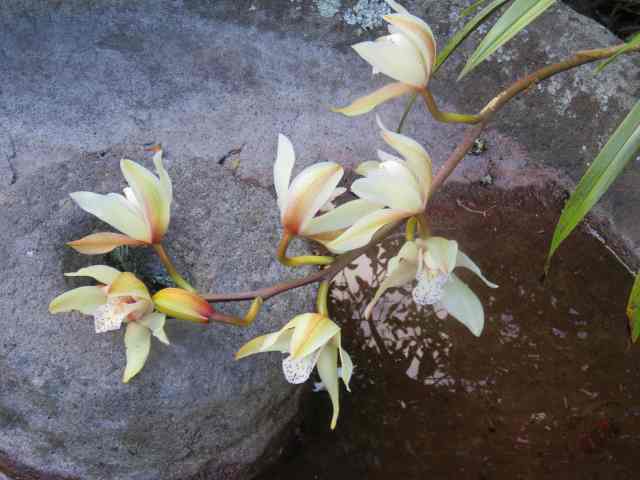
The first cymdidium orchid is opening. This somewhat understated one is always the first of the season and is a top performer in its spot, arching over the old stone millwheel which has been repurposed a bird bath.

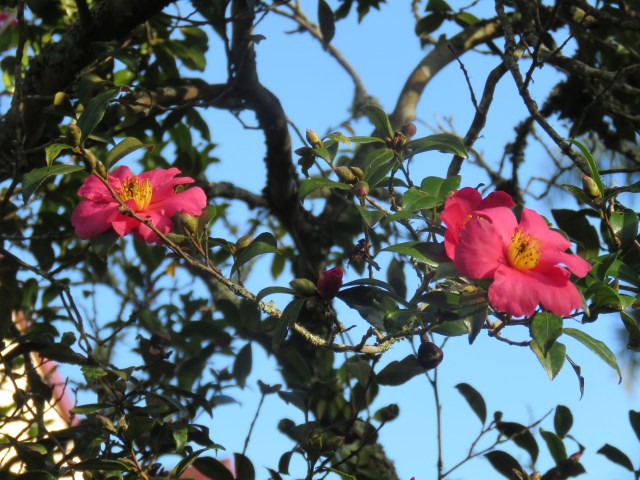
Finally, camellia season has started. Camellia sasanqua ‘Crimson King’ is always one of the first to open. Even with climate change, there is a reassuring predictability in the cyclic nature of the seasons.

May there always be flowers. I can stare at them as long as I like without fear of being overwhelmed by a sense of despair, anxiety and helplessness. In the flowers and the seasons lie promise and joy and we need a whole lot more of that at this time.

Day 3 of lock down and a minor mystery is solved

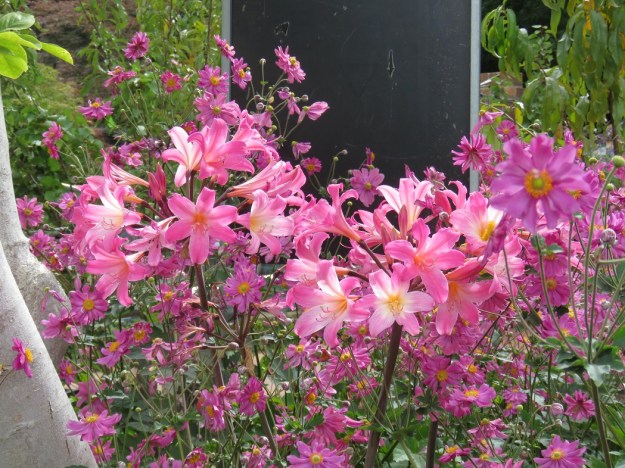
As we adjust to lock down and our personal worlds become so much smaller, I did at least solve a small mystery yesterday. I saw a lovely combination of vibrant pinks when we visited Cloudehill Gardens in the Dandenongs outside Melbourne last year. I can repeat that in my new perennial meadow, I thought.
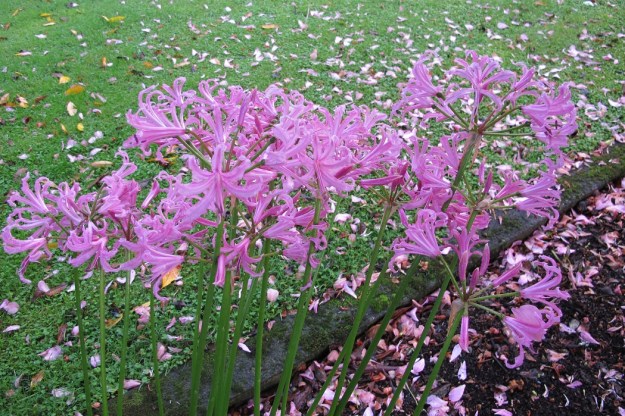
Nerine bowdenii flowering in late May here 

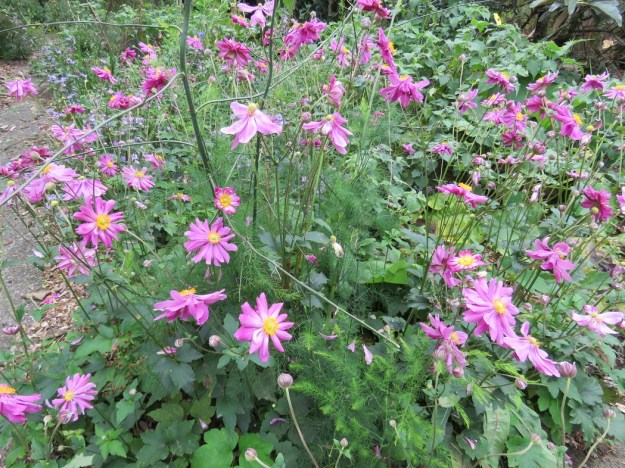
My perennial meadow planting with hidden N. bowdenii

In my mind, I had it as a combination of the deep pink Japanese anemone and Nerine bowdenii. As the anemone came into flower, I found myself wondering where the nerine was before realising that of course it flowers much later here. I considered the possibility that Cloudehill had a selection that flowered much earlier in the season and kicked myself for not checking the flowering times here – easily done in these days of digital photo files that give dates. There seemed to be a story in there about not assuming that combinations seen in different climates will also work at home. I found my photos.

Belladonnas at Cloudehill! Of course. Not N. bowdenii. But then the Japanese anemone actually comes from China. The world is looking more confusing by the day.

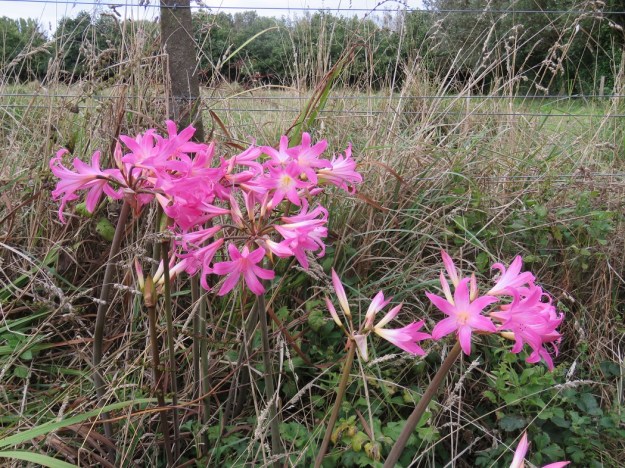
Eagle-eyed readers will have already spotted my mistake. It was my memory. Not Nerine bowdenii at all. Those are belladonnas. That explains it. I am not sure that I want to bring big, thuggish belladonnas into the garden. We have them in abundance on the roadside and on our margins but they aren’t the best garden candidates. In fact we already have both on our roadside and all I need to do is shuffle some of the right pink tones closer to the anemone there.

I just need to relocate some pink belladonnas in the right tones on our roadside and I will have that combination.

As Mark and I had a leisured start to our morning on day two of lock down, he quipped that half the houses around the nation were currently undergoing paint jobs. Lloyd, our garden staffer, had gone in to a Mitre10 Mega on Tuesday and reported that everybody else was in there buying paint and they had sold out entirely of his preferred brand.

We are in the garden so there is no major change for us, except the absence of Lloyd during the week. I have found, however, that my focus and concentration are scattered all over the place. I am telling myself that there is plenty of time – a whole month at least – and it is fine to allow myself a few days to mentally settle into the peculiar new reality we are all facing. Friends have noted the same phenomenon. It doesn’t matter if major tasks get left for a little while.

Fiddly faddling on the Magnolia laevifolia. But where is Lloyd when I need him? He is always most obliging about dealing to my piles of prunings.

This is why I spent yesterday entirely distracted by a very small garden with an untidy Magnolia laevifolia draping itself over the garage roof, leading to a build-up of leaf litter composting on the corrugated iron roof. It is a smaller, defined project that I can complete before my scattered brain gets distracted elsewhere. Fiddly-faddling, I call it. Mark describes it as montying – a reference anybody who watches BBC Gardeners’ World will understand. May you all fiddly-faddle or monty in tranquil safety wherever you are.

Belladonnas we have a-plenty in a variety of hues but their flowering season is brief and their season is full, smothering leaf is very long


The first autumn blooms and the journey to gardening nirvana

Amaryllis belladonna – more roadside flower than garden plant in our conditions

As the calendar moves into March, the autumn bulbs are the first reminder that summer will not be endless. First Cyclamen hederafolium and Colchicum autumnale remind is that the seasons wait for no man or woman. Now they have been joined by the belladonnas and the truly tiny Leucojum autumnale.

Colchicum, not autumn crocus. The foliage is unrelated, being a dianthus

Colchicums are often referred to as autumn crocus but there is no botanical connection, just a visual perception. The best known leucojum is L. vernum or the common snowflake which flowers in spring – a vigorous bulb that is widely found around old house sites that date back to the nineteenth century. The old brick chimney may be all that is left standing but it is highly likely to have clumps of the double daffodils and snowflakes, maybe some violets and a couple of really old camellia trees. For overseas readers, almost all the early European settlers’ homes were built in wood and house fires were common which is why the chimney is the only remaining evidence.

Blink and you may miss the delight of tiny Leucojum autumnale

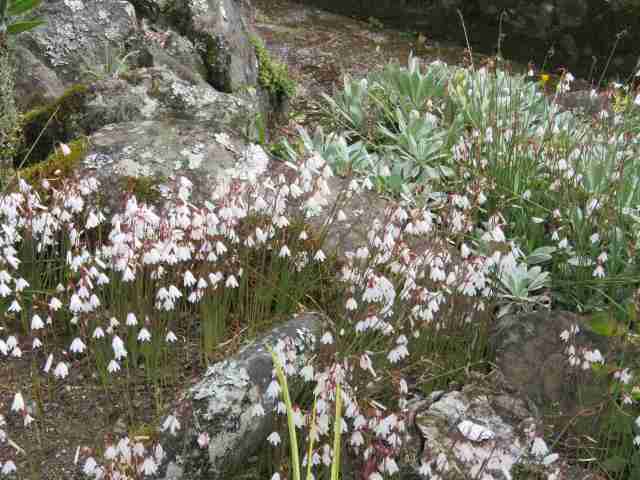
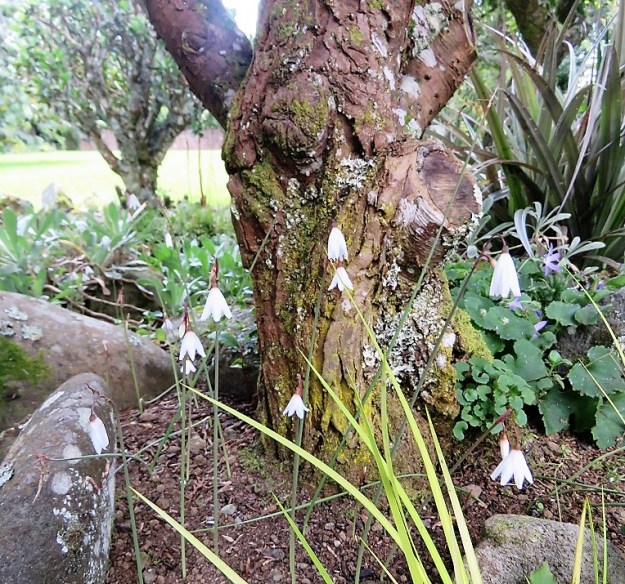
Little Leucojum autumnale is a very different creature, a fleeting, dainty little flower that has to be measured in millimetres, not centimetres. It is very cute but easily swamped by larger plants if you are not careful. I see it is now classified as an acis, not a leucojum but it may take me a while to remember that. It comes from the western areas of the southern Mediterranean so places like Spain, Morocco, Tunisia and Sicily which are very hot and bone dry but the first autumn rain will trigger the bulbs into their very short flowering and growing season.

Some welcome rain fell this week – 62ml to be precise, which was very welcome after an exceptionally dry summer. Sadly it was followed by the first chill wind of autumn which rather reinforced the message of the autumn bulbs. Summer 2020 is over and we are now entering our long autumn season. I have removed my togs and towel from the swimming pool and put them in the laundry basket although the younger visitors here are still swimming.

What I call English manor house style of twin borders – seen here at Parham House

Cottage garden style as per Margery Fish at East Lambook Manor

Beth Chatto’s dry garden

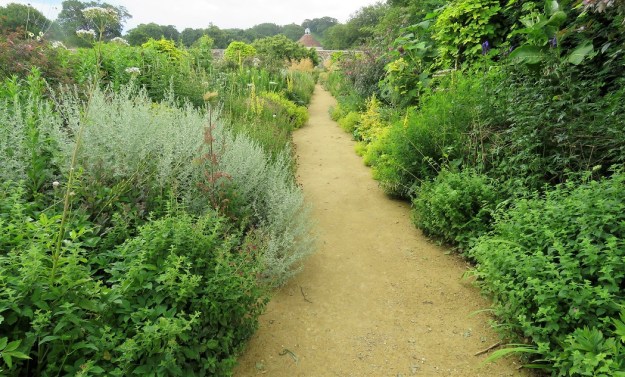
As the summer borders reach their point of peak profusion, I ponder again how full I want these borders to look. The tradition of herbaceous borders is to have them packed so full that no soil is visible. Cottage gardening encourages the plants to meld and run together whereas herbaceous tradition says that each plant occupies its own space without much intermeshing with its neighbours. And then there is the Beth Chatto dry garden where, even in a mature garden, she kept each plant standing alone in its own space. Mark likes the Chatto approach because it displays the individual plants to their best. It is a style he has used extensively in the more detailed woodland areas. If you analyse the Chatto dry garden, they are predominantly smaller plant varieties growing in very hard condtions (dry river bed with very low rainfall) which could not be further from our summer garden conditions which foster lush and exuberant growth.

I am leaning to the traditional herbaceous position for these summer borders but it is a constant learning process about how each plant variety performs. I want to be able to walk amongst the plants to weed, stake and dead-head and that means knowing how much space to leave between each different clump that they may floof themselves over the space to fill it but still leave me passage between the plants at ground level without tramping on them.

The summer borders here

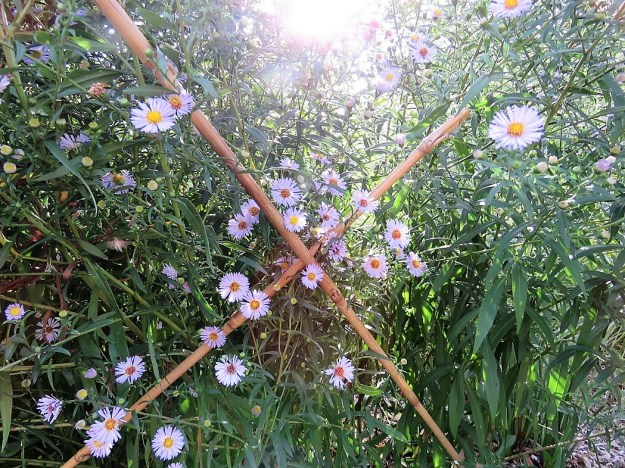
The bouffy aster needs staking to keep the path clear. I do it very simply and this is not visible when the plant is allowed to flop back

I love this big, bouffy aster coming into flower. We have the more compact version that makes a low carpet in bloom and another similar one that is just above waist height. I am guessing this larger version is a species – or close to it – with its daintier, paler blue blooms that are like a cloud of butterflies dancing on the bush. This year I have had to stake it to keep the path clear and it is obvious I have too much of it too close together for future seasons. Some at least will need to be moved to another area before next summer.

It is a constant learning process but that is what makes gardening interesting. Once a garden is all planted up, most of the gardening activity is simple and repetitive maintenance – outdoor housework, in effect. The interest levels in that are not high. It is the ongoing learning and constant tweaking in search of the impossible state of perfection that makes it interesting. That is how I see it for those of us who actively garden.

As a final comment: the new summer gardens have all been planted following the modern trends of lower labour input and management than the older, more traditional herbaceous plantings of the English manor house style of borders. But they still involve me in quite a lot of deadheading, dividing, staking and cutting back. I enjoy doing it but it is certainly more than I originally anticipated. My gardening nirvana may be when I have tweaked the plantings to the point where such a high level of intervention is no longer required.

The end of the long, hot summer is nigh

Belladonnas – a roadside flower for us

Summer continues here with temperatures in the mid to late mid twenties during the day, and often not dropping much below 17 at night. That is celsius, of course. With our near-constant high humidity, it feels hotter. Dry heat is easier to live in. But we are not complaining. Last summer never really arrived and we would have been lucky to have a single day where temperatures reached 25 or 26, rather than the three months so far this year.

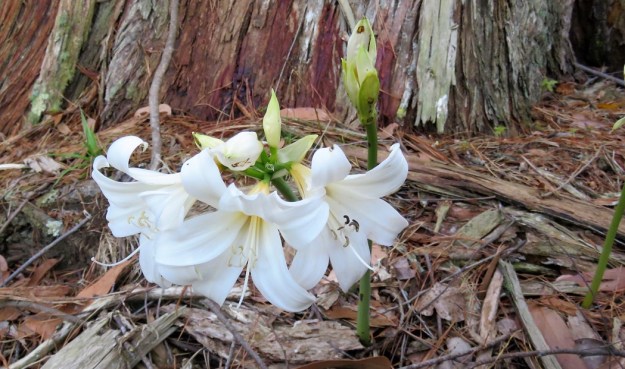
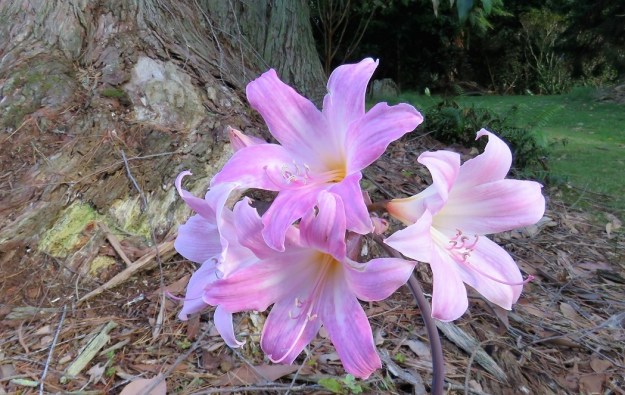
Our belladonnas range from pure white through pretty pastel pink to sugar candy pinks and all shades between

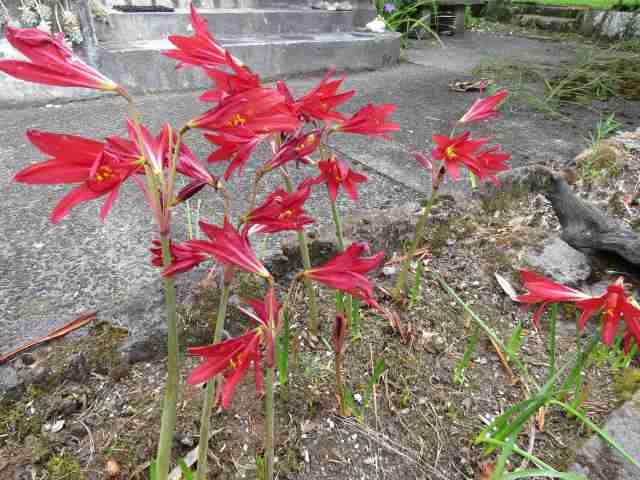
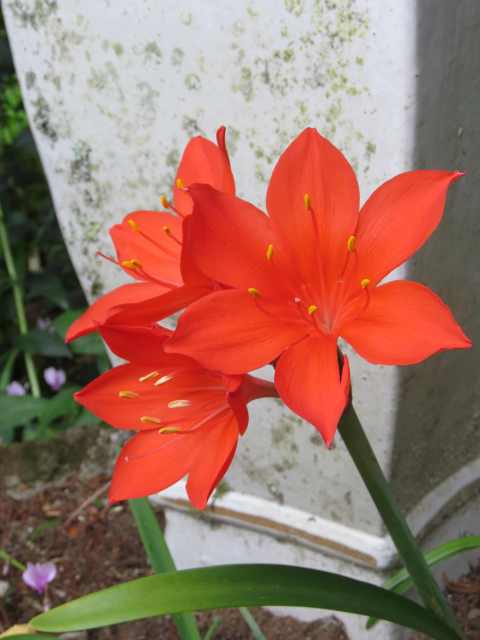
What is interesting is that while the temperatures haven’t really dropped, the garden is starting to tell us that autumn is coming. The belladonnas are already past their peak, Cyclamen hederifolium is in full bloom  as is the tiny, dainty autumn snowflake, Leucojum autumnalis. Moraea polystachya has started its blooming marathon.Even the first nerine has opened and I spotted a flower on an autumn flowering camellia – C. microphylla. Haemanthus coccineus is out and the exquisite Rhodophiala bifida have already been and almost gone, their lovely trumpet blooms touched with gold dust now withering away for another year.

Cyclamen hederafolium seed down happily for us now

Some plants are triggered into growth or blooming by temperature, some by seasonal rain (we can do the South African autumn bulbs so well because we get summer rain, even in a drought year such as this has been) and some are triggered by day length. While our weather conditions are still indubitably summer, the day length is shortening and these plants are programmed to respond.

We don’t get sharp seasonal changes because our temperature has quite a small range from both summer to winter and day to night. It will be another three months before the trees start to colour. But the garden is coming out of its summer hiatus and entering autumn, whether we are ready or not.

Stachys Bella Grigio is giving up the ghost. Whiffing off, as we say.

Some plants just like to confound you. I wrote earlier about Stachys ‘Bella Grigio’, the startling white, felted variety that was so happily ensconced in a new garden. Booming away, even. It was setting so many offshoots that I thought I would be able to carpet many square metres by the end of the season. Well, it was an ‘upanddieonyou’ after all. It has been upping and dying like mad in the last weeks. Otherwise known as ‘whiffing off’ here.

I dug up a couple of wilting plants to see what was going on. They are dying from the top down. Their roots are fine. As an aside, if you are puzzled by why a plant is clearly dying, basically they die either bottom up or top down so it is always interesting to carry out an autopsy. Each of these plants was carrying 30 or more offshoots. I took off the ones with roots and have tried replanting them and I thinned out the offsets which had not yet established their own roots because it looked a bit as if the plants were smothering themselves to death in their desire to reproduce. There was no sign of insect infestation.

“It’s probably climatic,” Mark said. His thinking is that we are too humid and it has been particularly so this summer, whereas that felted white foliage is usually indicative of alpine plants. I think it is varietal. I have heard too many stories from others who have experienced specimens of this plant thriving, established and growing well before suddenly keeling over and dying. I cleaned up two plants and replanted the offsets out of curiosity. If I have to do this every year to keep these plants alive, then I am afraid I will decide very soon that it simply is not worth the effort.

We have mown the meadow for the season. Well, Lloyd has. With our special sickle bar mower, imported from Germany. We are still learning how to best manage the meadow in our conditions and Mark thinks that we are leaving the mowing too late and that it would be best done soon after Christmas for the first mow with a follow up in autumn. Maybe next year.
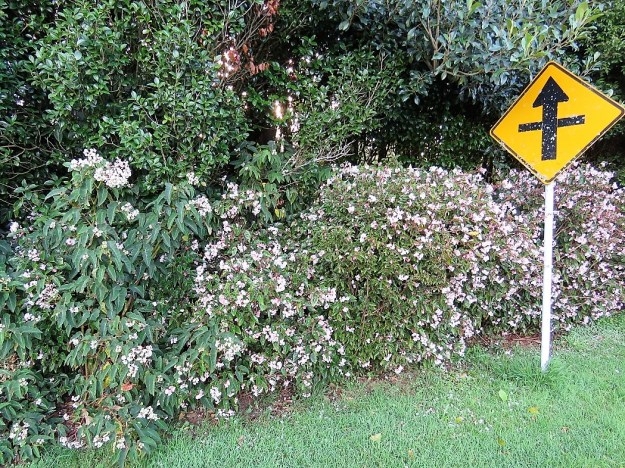
Mark has just declared that the sickle bar mower is otherwise known as the primary herbivore here. He has been reading about eco-systems and wondering what we could be introducing to NZ, given that our primary herbivore, the moa, is now extinct.

You can tell our climate is mild. We have begonias as a roadside hedge.

Late summer inspirations from the graveyard

I returned to the main cemetery of New Plymouth yesterday. As the season advances inexorably into what is already showing signs of late summer, I wanted to see what was in bloom. “Was She who is the Phantom of the Graveyard there?” Mark asked. He had a personalised tour last month from the bright and bubbly person who wishes to remain anonymous and unacknowledged but who has beavered away there for many years now. These days more volunteers have come forward to join her and it is a lovely place to visit.

Why go there rather than our public gardens to see what is in flower? I am delighted by what is the grown ups’ version of the miniature gardens our children used to make for Show Day in their junior school years. Grave-sized gardens, in fact, which are styled individually, often from donated plants. It is an interesting place to look at plant combinations, plant performance under a light maintenance regime (the area is huge) and incidents of serendipity.

I am planning a meadow for our new Court Garden but, influenced by the Pictorial Meadows excellence in the UK, I want to select plants that will bloom in succession from spring to autumn. At this time of summer, we are not as flowery here as earlier in the season and I was wondering what we could consider. There weren’t many answers for me as far as the proposed meadow is concerned because I think I want to at least start that with mostly annuals and biennials rather than perennials and bulbs in order to achieve the meadow look as opposed to herbaceous plantings. But there was plenty of other interest amongst the graves.

Canna liles star in these small, grave-sized gardens

Cannas and dahlias were the stars yesterday morning. I am not a fan of cannas. They are too big, dominant and blobby for our tastes here and they don’t die down gracefully. But they are certainly showy and the colour range surprised me – from whites and pale lemons through paler pinks to bright, vibrant showstopper blooms. I can admire them without needing to grow them. In fact, I prefer to admire them elsewhere.

Gaura – they do indeed dance like butterfies in the breeze

The gaura looked terrific. Ethereal even, waving in the light breeze like clouds of butterflies. I must try again with these now we have more open areas of garden in full sun. And as I admired the combination of pink lavatera and tall cosmos, I realised again that it is the lightness and movement that I want in our newer meadow and perennial plantings. The romantic prairie look, Mark just called it. That is why I am not so keen on the ponderous cannas.

Hibiscus trionum

One grave was covered in Hibiscus trionum and it was the most eye-catching display of this pretty plant that I have seen.

Lilium formasanum reaching two metres tall

We had been talking about Lilium formasanum the previous day. While it is regarded as a weed in this country and banned from sale, we are quite happy to let it pop up around our place. It is one of those plants that I think in time we may come to accept as a permanent addition to our environment. I assume its weed status is on account of its seeding ways and its ability to pop up in all sorts of situations. We are increasingly of the view that we must learn to live with many of these interlopers and only wage chemical warfare on those that endanger our natural flora – the likes of Clematis vitalba (old man’s beard), Japanese knot weed and, in the area where we live, giant gunnera and pampas grass. The Formosan lily was looking right at home and picture perfect amongst the graves. It is a beautiful flower, though without the heady fragrance of many other lilies.

The belladonnas were also in bloom, as they are on our road verges and wilder margins of the garden here. They are so common we take them for granted, but if you look afresh at them each season, they are a lovely late summer bloom.

Alstomeria flower on and on, seen here with plumbago

In terms of bangs for the buck, alstromerias work hard. I need more of these. Not for the meadow but for my hot summer border. And definitely not the modern over-bred varieties that have been shrunk down to be bedding plants. I want more of the big, tall ones in clear reds, yellows and orange colour mixes. They seem to bloom from spring to autumn and that is not to be sniffed at, as long as you can contain their wandering ways.

Rudbeckias!

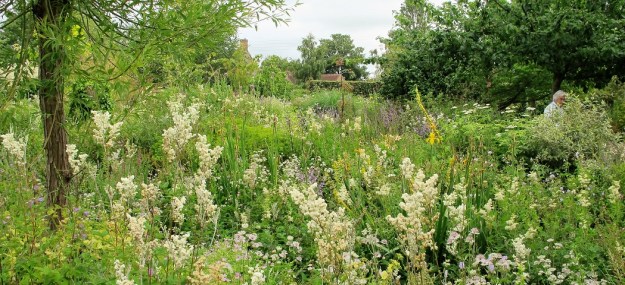
All I came up with for my meadow in the end were rudbeckias to go with the amaranthus that has already established itself as a naturalised wildflower here. I may use the Lilium formasanum, despite it being a bulb and I had already decided I wanted the white Japanese anemone in big swathes, despite it being perennial. I simply love the romance of the windflowers. They need to be managed. In a garden situation they can be thuggish and invasive but I think I can mange them in the meadow.

Butterflies, bees and no doubt a host of other insect and bird life inhabit these gardens

Graveyards can be austere, grim places and parts of the Te Henui are of this stark nature, maintained only by weed spray and lawn mowing. But the areas full of these small gardens, flowers and trees lift the spirits and it is clear the public love walking through. Each tap has a little watering receptacle for dogs which was an endearing sight. It is worth a visit and I hope our elected Council officers and paid staff appreciate the special character that the volunteers, led by the dedicated Phantom of the Graveyard, have bestowed upon this place of memories. Some of us even go there for inspiration. Life, growth, flowers and community engagement in amongst death.

Windflower romance – the white Japanese anemones