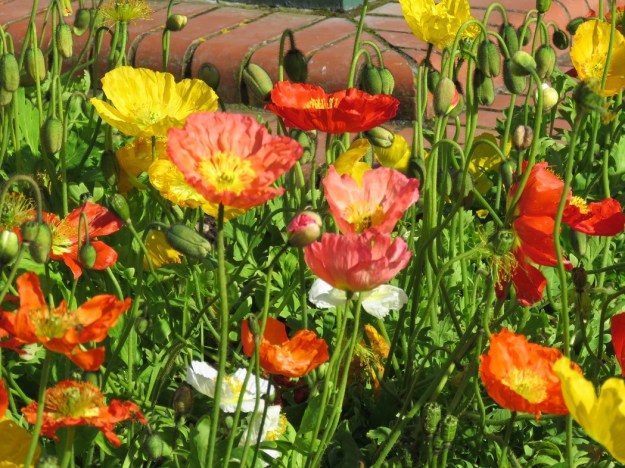
 I have never been a fan of Iceland poppies. They were the one flower I remember my mother buying when I was a child – a bunch of stems still in bud. She would burn the stems and then put them in a vase where they would open to what seemed garish and unappealing flowers to me. Tastes change and in recent years, I have found my eyes drawn to mass displays of these simple blooms. This patch is on a traffic island which holds the very modest clock tower in my modest local town of Waitara and it makes me smile when I pass.

The Waitara clock tower in a traffic island
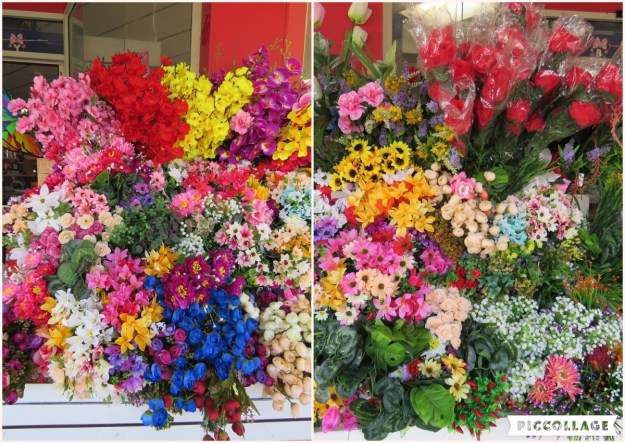
Ironically, on the opposite corner was this stand of fake flowers outside a Gold Coin shop.
Iceland poppies do not come from Iceland. I finally checked and in fact they come from the chilly areas of Europe, Asia and North America – sub polar territory, so presumably alpine meadows. In the wild, Papaver nudicaule (nude because of its bare stem which makes it a good cut flower) are pretty much all white or pale yellow. The other colours are recessive genes which have been brought out by plant breeding – presumably line breeding which is selecting down the generations of individual plants to pick out the stronger colours until those coloured genes have come to the fore.
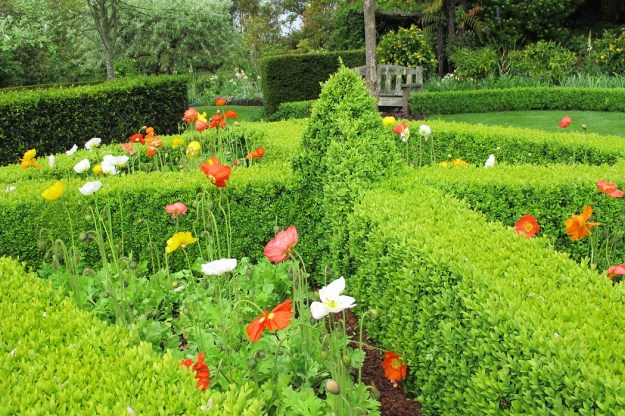
Puketarata Garden near Hawera
This is not a plant I have ever felt the need to grow myself but there is a simple appeal to a mass display. I remember being quite charmed by their use in the clipped buxus formation at Jen Horner’s garden, Puketarata, one spring. It is hard to beat the simplicity of a single poppy, or indeed a daisy flower. 
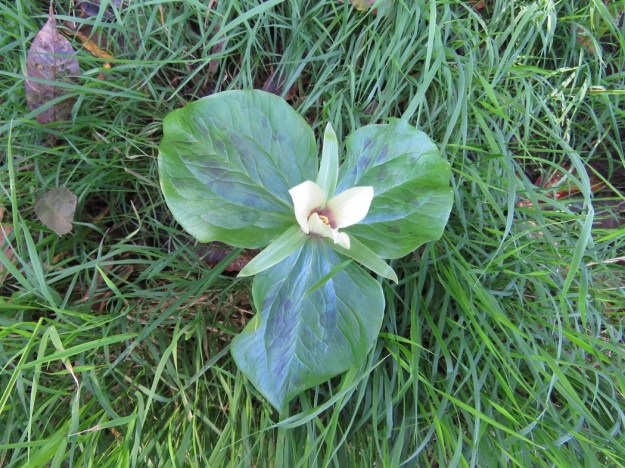
This poor little white one survived being taken off at the base with the strimmer last spring
These trilliums represent a minor triumph in Mark’s experiments with plants he can establish in meadow situations. We have plenty of trilliums in our woodland gardens but establishing them in a cultivated garden is different to getting them to naturalise on his bulb hillside. When I say “naturalise”, I mean that they are now sufficiently well established to return each year, able to compete with the grass and uncultivated soil. They are not actually increasing yet but they are at least established.
Mark has raised more seed and has about 70 pots of them in flower in the old nursery area. He is disappointed that most of them have come up white and said that he wants the red ones for planting in the meadow and he asked that the pale yellow ones be kept together as a group in one area. For him, this is all part of blurring boundaries in gardening again. He really likes the idea of trilliums thriving in managed garden conditions and then, as the garden becomes looser and more informal further out, the same plants popping up as wild flowers. Especially when it is something as choice as trilliums. Maybe I could surprise him with the surplus Paris polyphylla making an appearance on the bulb hillside, too. 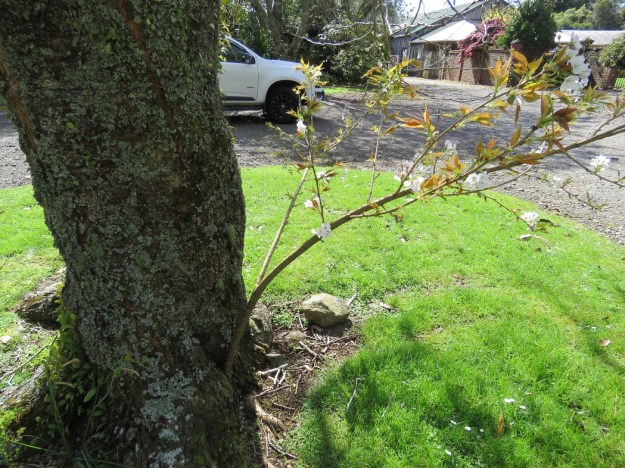
I photographed this small flowering growth on Prunus Pearly Shadows as an example of unwanted root stock shooting away, even on a very well-established tree. Many plants are budded or grafted onto other rootstock so that the desired cultivar can utilise the strength of strong growing root stock. Which is well and good when the rootstock is compatible and doesn’t escape. If you don’t cut off the root stock, it can overwhelm the grafted selection so it is best to see to it as soon as you spot it. How do I know it is rootstock? It is a single white; Pearly Shadow is a fluffy pink double and is not yet in flower.
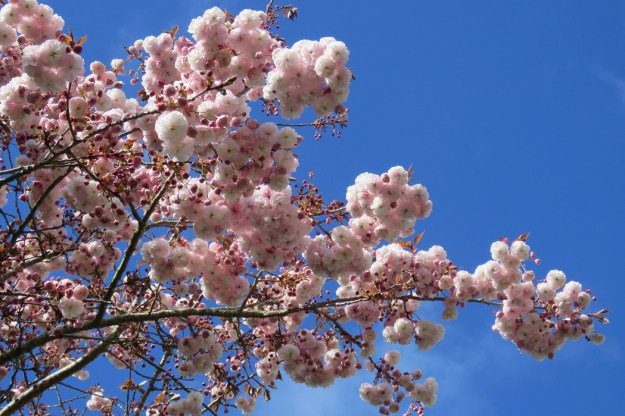
Prunus Pearly Shadows
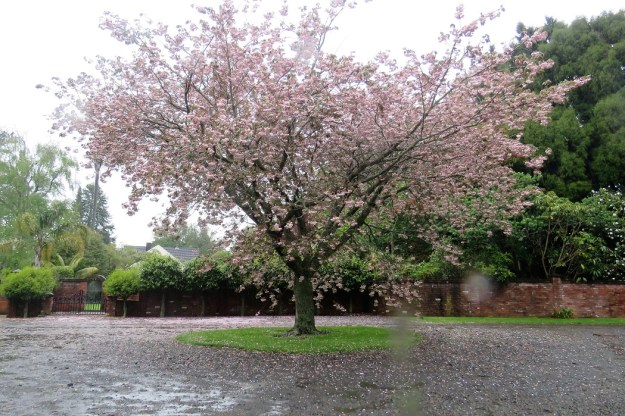
This particular tree is a splendid example of what is described as a ‘vase-shaped form’. It has not been shaped. It grows naturally in that upward Y shape. It is in our car park area and has so far attracted three reversing cars. I am not quite sure how people fail to see it in their rear vision mirrors. 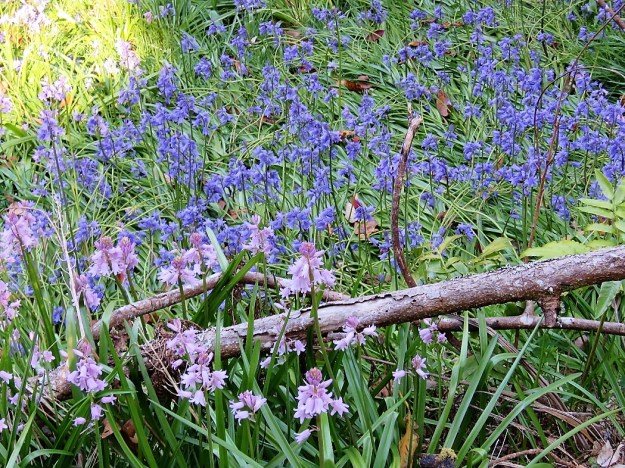
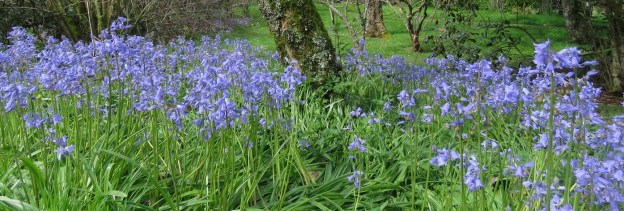
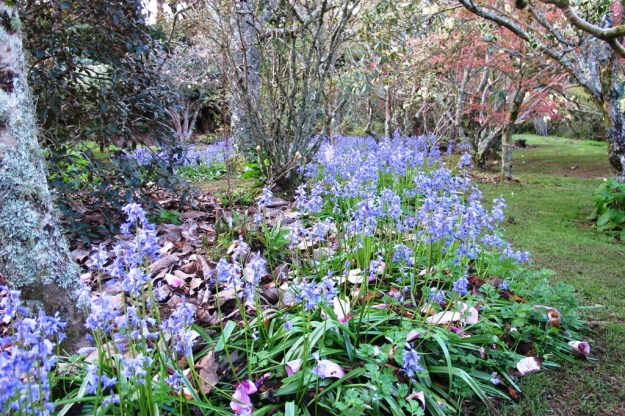
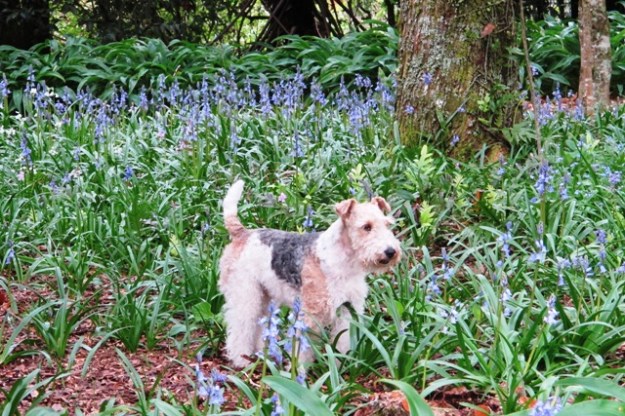
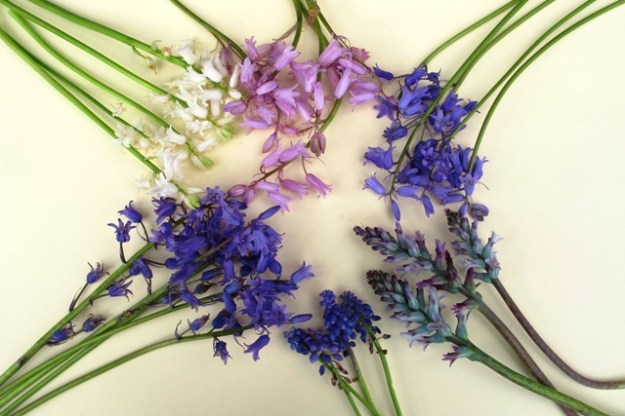
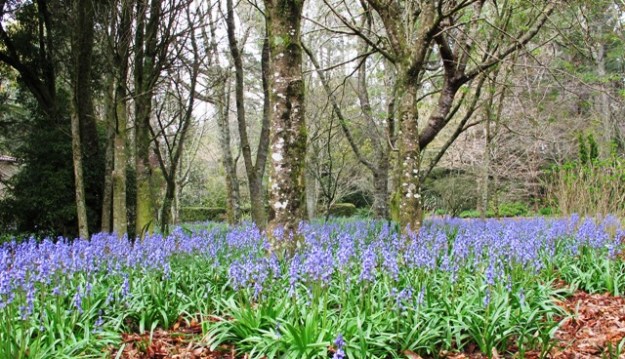
It is peak bluebell time in the park and even if these can be weedy, the drifts of colour are very pretty. Bluebells should, in our opinion, be predominantly blue. But the addition of a few white or pink ones amongst the blue gives a contrasting accent of colour that can lift the blue. The pink is also a strong grower, the white less so. We don’t want bluebells everywhere so I am removing them from some areas of the garden they are attempting to infiltrate but we are happy to let them spread in our meadows. 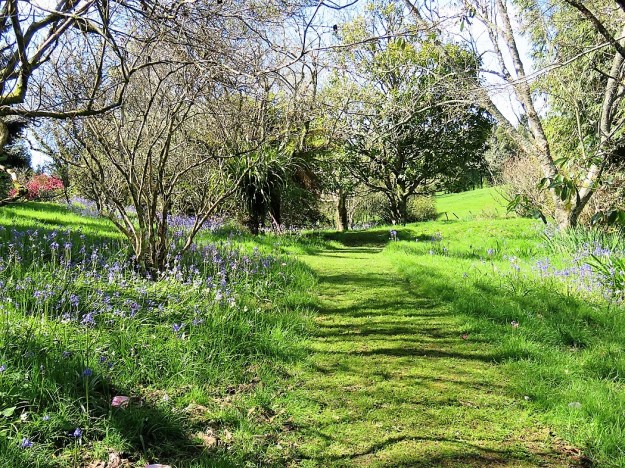
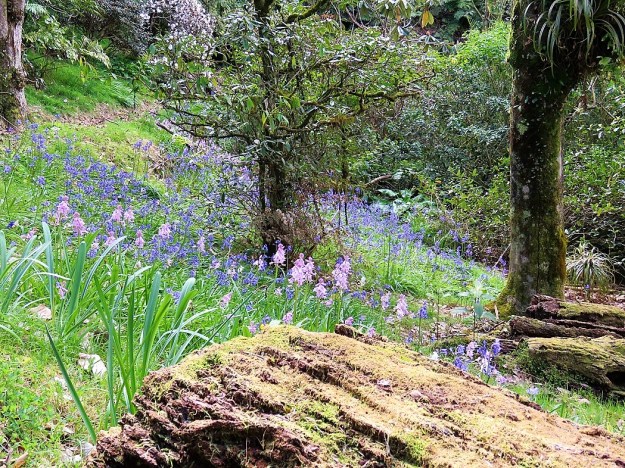
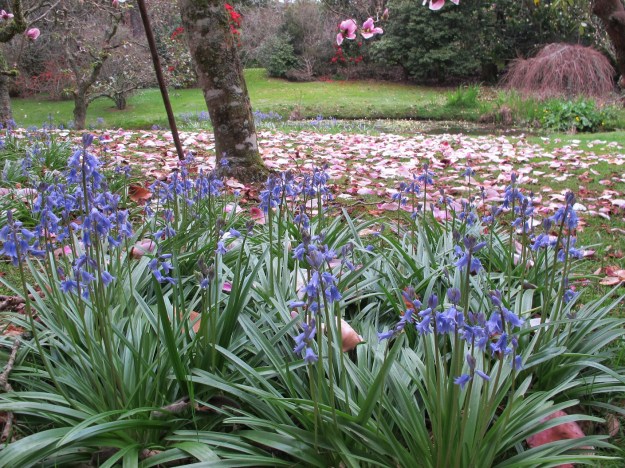 There is something wildly romantic about a proper bluebell wood. I have never forgotten being entranced by the haze of blue through woodlands near Castle Douglas in Scotland and that was more than two decades ago. Those particular bluebells and woodland trees are native to the area but this does not stop many of us trying to replicate the effect at home.
 It took UK writer Ken Thompson to demystify bluebell differences for me. The English Hyacinthoides non-scripta has sweetly scented, deep blue flowers on a droopy spike which means most hang to one side. Individual flowers are narrow tubes with reflexed tips. The Spanish H. hispanica is much stronger growing with an upright spike and flowers radiating all round. There is a greater range of colour from pale to dark blues and lilacs along with the pinks and whites. Individual flowers are bell-shaped and while the tips of the blooms flare out, they don’t reflex. They have little scent.
 A word about white or pink bluebells. While the English bluebell can occasionally throw a white mutant, given the rarity of H. non-scripta in this country, it seems likely that all colour variants we have are either Spanish or hybrids. The whites and pinks are charming mixed with the predominant blues, making a pretty scene. Isolate them out by colour on their own, and they become a novelty plant. Bluebells, by definition, should be mostly blue. A display of only pink bells would look awfully contrived for this simple flower while a mass of white bells might as well be onion weed, really. That is my opinion.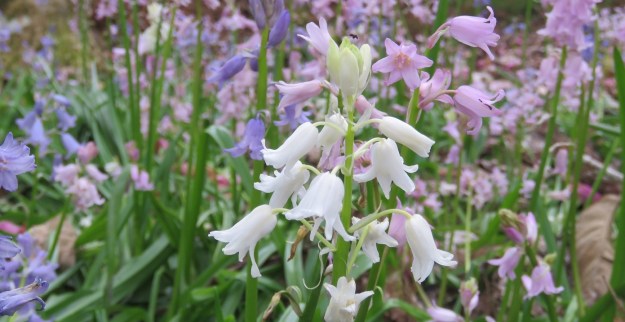
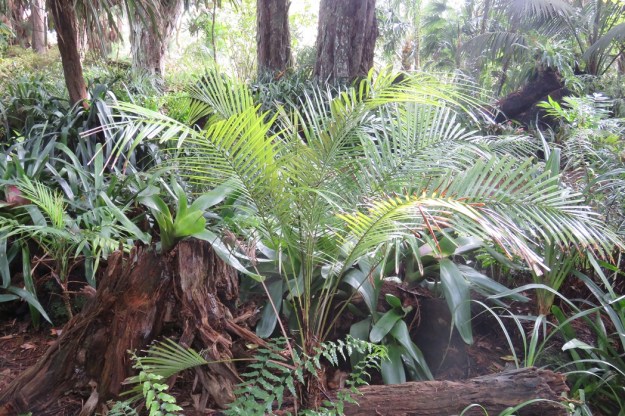 In the meantime, it is The Challenge of the Lytocaryum weddellianum. This is a very pretty little, feathery palm from Brazil, a close relative of the coconut palm but small. It is sometimes referred to as the wedding palm (presumably because it is favoured in pots as green decoration at wedding receptions?). There are a reasonable number of them sitting out in the nursery that Mark bought as baby plants years ago. It is doing particularly well in the subtropical gardens beneath the rimu trees.
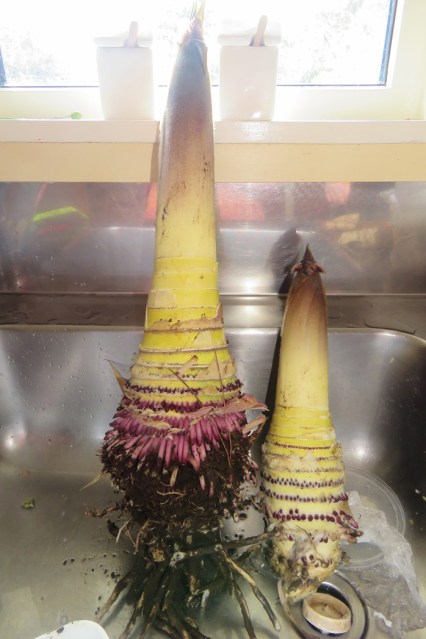
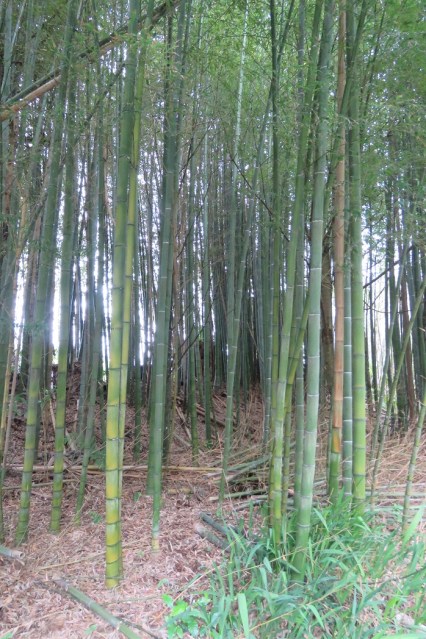 We have a relatively large forest of a giant bamboo – in this case Phyllostachys edulis. The neighbour wishes it was not on the boundary and we are trying to be vigilant this spring and doing a weekly round of jumping the fence to grub out the new shoots that insist on popping up in the farm next door. It is a handsome bamboo and of some use as cut lengths in the garden. It is also edible. Sadly, panda bears have not arrived to take advantage of the food source (further proof that the cargo cult does not work) but I am having another go at cooking the fresh shoots this year. To be honest, the bamboo shoots that you buy in tins taste more of the brine than anything else. And even fresh, they are more textural and a carrier of other flavours (as tofu is) than a taste treat in their own right. But they add variety to our diet and I can see a use for them in stirfries. “Please bring me some bamboo shoots for dinner,” I asked the other night. And he did. The big one is past cooking stage. The trick seems to be to harvest them just as they come through the ground and to prepare the white sections that are below the surface. I shall slice some, blanch them quickly in boiling water and then freeze them to see if we use them later in the year. The first batch I poached gently in stock before adding to the dinner that night and they were pleasant, if not life-changing.
 The deciduous magnolia season is over, bar
  Now it is bluebell time. It appears that ours are all Spanish bluebells or hybrids. The pink and white variants are a bit of a giveaway. Ken Thompson in
  Bluebell Woods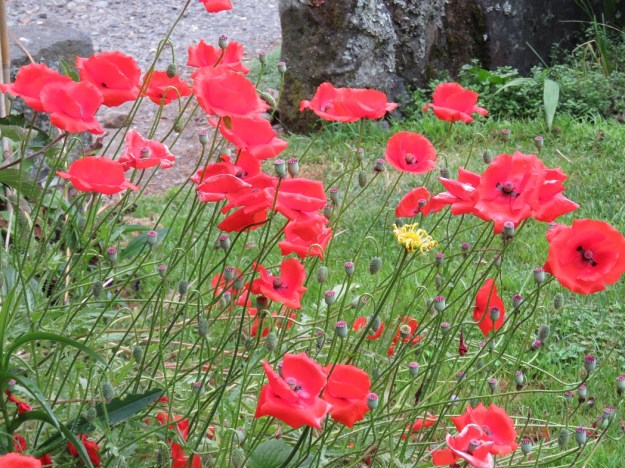


 Tikorangi The Jury Garden