

Soaring herons
The owners of this garden admitted to me that they were very nervous about what I would think of their garden, given my strong opinions about over-ornamentation. This did not stop them from urging me to visiting. They are opening their garden to the public for the first time this spring and want all the input they can get because they are determined to do things properly and ensure they deliver an exceptional visitor experience.

The garden is still having a lot of work done on it but the garden sculpture and decoration were a revelation. They have some really lovely pieces. I even coveted some myself and ,from an under-ornamented gardener, that is something. What made me stop in my tracks was the exceptional skill shown in placing these pieces so that they enriched the scene without dominating and without the transparent connivance of creating the dreaded “focal points”. To place an eclectic collection of art works so that they enhance and belong in the location is a rare skill. It made me realise that it is not that I don’t like sculpture or decoration in a garden. It is that it is rarely placed well to benefit the garden and the location as much as the work itself.
I think both garden owners (and they are clearly a close team) have an exceptional eye. A working life spent in upper-end retail must have assisted in developing skills in display and design. They also give credit to their architect son and placing these decorative pieces is clearly a matter that warrants considerable thought.
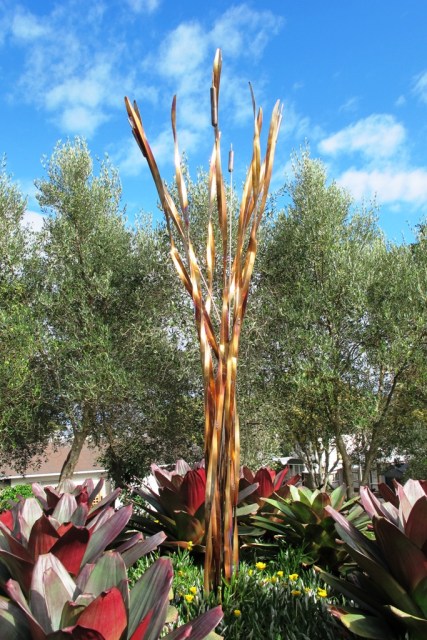
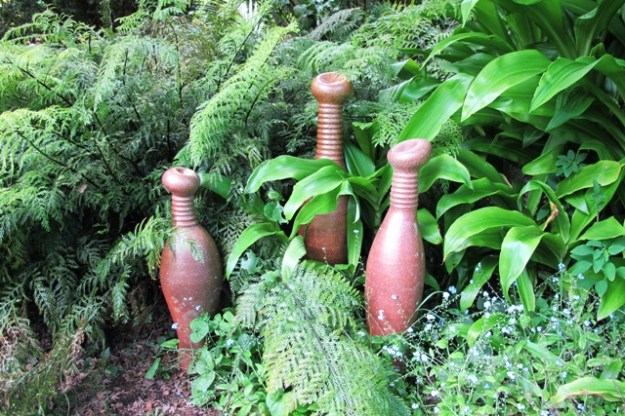
The one piece I really coveted was this structure from super-heated stainless steel. The reflections and colours were simply lovely. I would have this in my garden. I could also be be mighty tempted by the herons above. “Tell me you don’t have coloured ceramic balls,” I said. Over the years, I have developed considerable dislike for the use of these mass produced and thoroughly useless items from the villages of Asia which are widely sold in this country by purveyors of cheap ornaments. Blue has always been the most popular colour in the area where I live, but you can have red or orange, too, I found. I am unconvinced that these items justify the grandeur of a plinth but it all comes down to personal taste in the end. Yes, these people did have colour balls but they were not at all like this threesome I photographed in other people’s gardens



Theirs were considerably larger, hand crafted, detailed and placed discreetly.

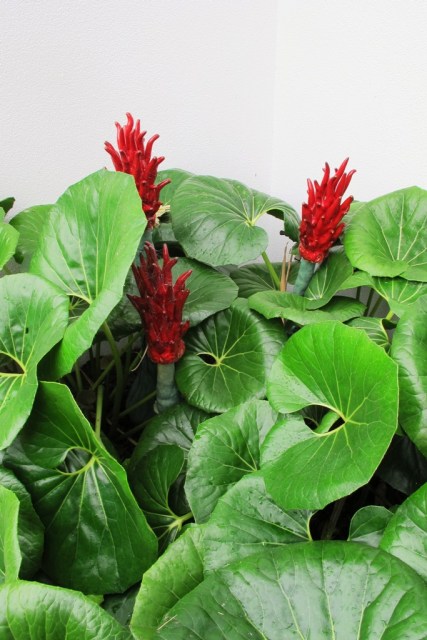 The ceramic detail amongst the simple planting of Ligularia reniformis, set against a stark white wall, added an understated detail that enhanced an otherwise predictable scene.
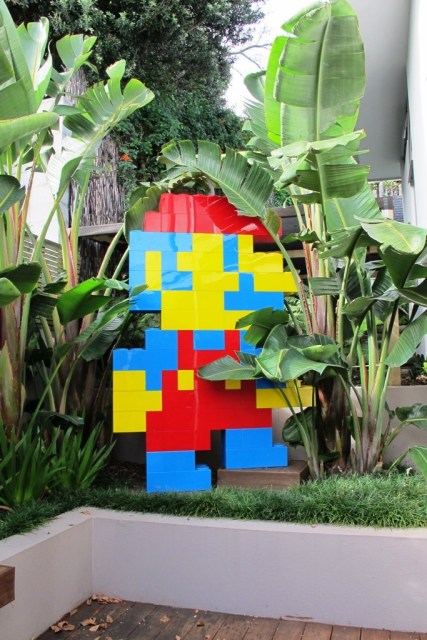 The large lego man was a pretty strong statement and not, I admit, one I could ever imagine in my own garden. But the owners love it. As parents of five children – all now adults – lego featured very large in their lives and this sculpture is placed in an intimate and enclosed section of garden which opens up from the family living area. Its placement was superb and it brought great delight to the owners.
In a setting with a large, modern, sharp-edged, architecturally designed house and a heavily structured garden, the decision to leave the old rusted garage in place as an installation was simply inspirational. It gave a tension to the scene which anchored the modern into its past. The owners commented that people either responded with horror at them leaving something so old and scruffy or they were delighted as I was.
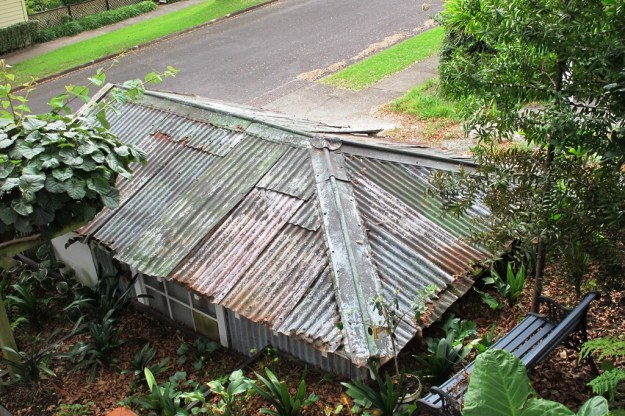
This garden is open for the Powerco Taranaki Garden Spectacular in the first week of November this year. Visitors might like to go and learn from their skills in integrating sculpture and ornamentation into the garden. It is done as well as I have ever seen and considerably better than most.
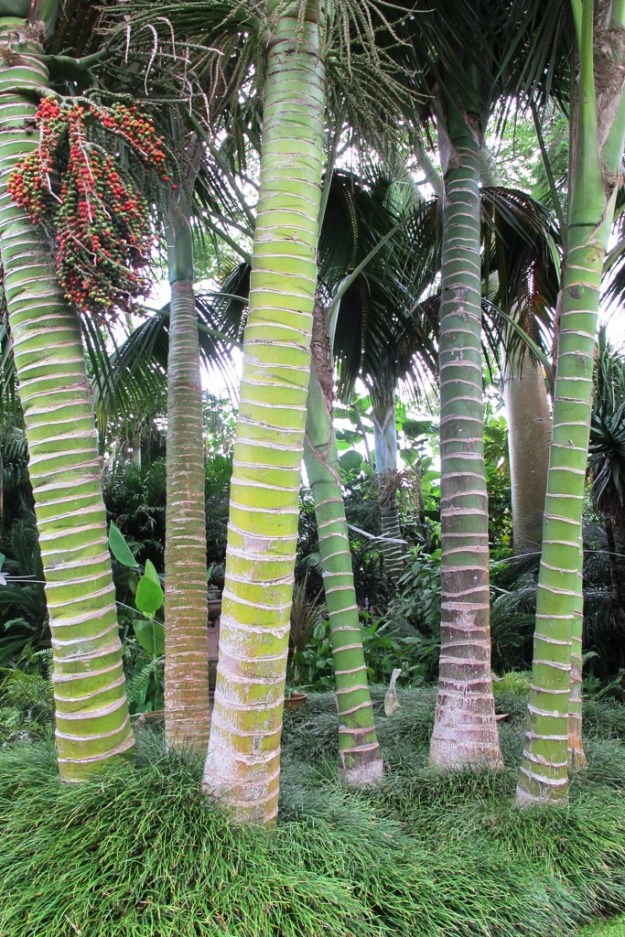 One of the delights I appreciated at the Heroic Gardens Festival was this quiet, simple green space in the back garden owned by photographer, Gil Hanly.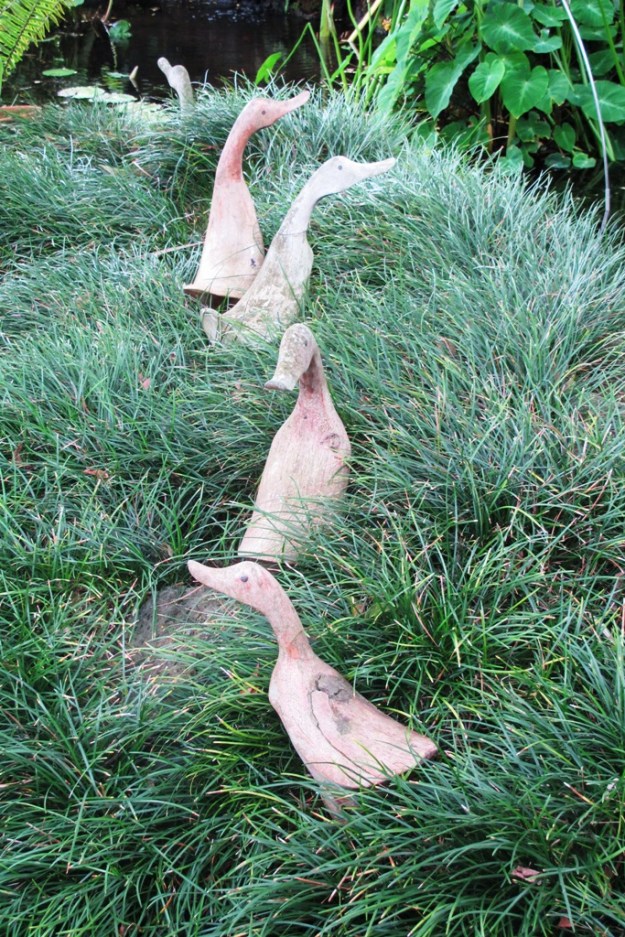
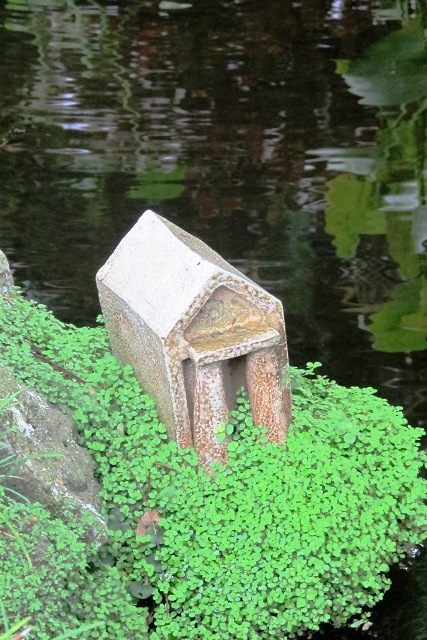
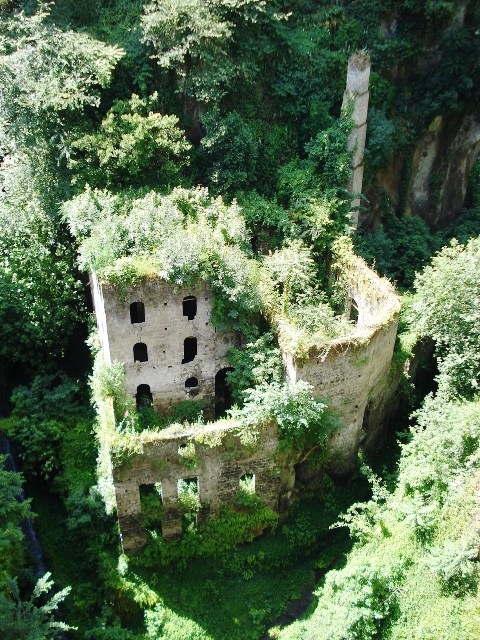 The little temple by the water (top) is, I am told, by artist, Bronwyn Cornish. For me it evoked the very old villa visible in a ravine in Sorrento in Italy (immediately above) which I photographed back in 2008. Anyone who has been to Sorrento (the jumping off point for Capri) will have seen this sight. In the Hanly back garden, the whole effect was understated but hugely effective.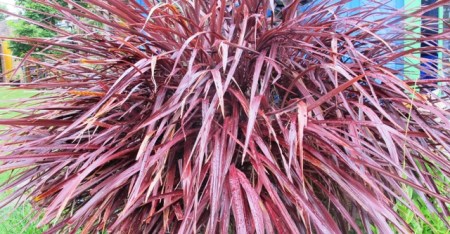


 3) I admired these rope balls constructed around a metal frame at Winterhome Garden near Kaikoura. Garden owner, Sue Macfarlane, told me she had made them herself because she wanted an avenue entrance for a wedding party. I saw something similar offered for sale recently – though smaller and made from recycled barbed wire, which gives a distinctly rural New Zealand flavour. However, because barbed wire is somewhat hazardous, these balls would need to be placed where nobody is likely to brush against them or hit their heads standing up after tending to any garden below.
 4) Personally, I am not a fan of classical-inspired statuary in New Zealand gardens. The cultural reference of such works is usually to Europe and to me it looks out of context here. I might be tempted to make an exception for this piece but it is the studied nonchalance of the setting with its long grass and the artfully casual placement which makes it such a romantic image. I also photographed it in an English garden, Gresgarth, where it looked wonderfully at home.
 5) Unable to hold back my didactic tendencies, I include this example as a message. Dear readers, a beautiful pot does not need to have a plant in it. It can exist as a decorative feature in its own right and will often look a great deal better for the absence of a plant. I don’t know the origins of this pot – it looks like a lime-washed oil jar – but I think the phallic trichocereus cactus spoils it, even without the plastic stake which is out of sight in the photo.
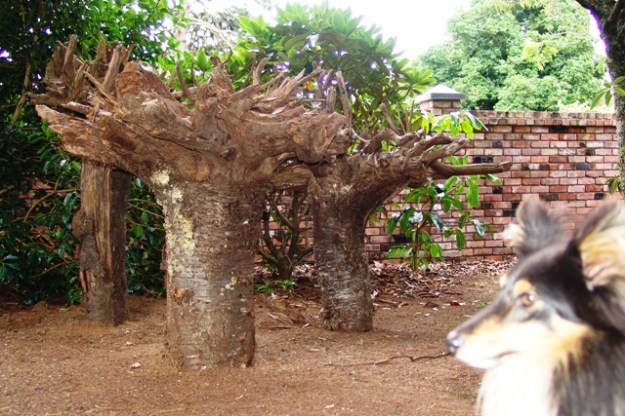 6) Finally from our own garden, I offer the inverted plum trees. These were dug up and reburied upside down to make the root systems the feature. We did not treat the trunks to preserve them. Eventually they will rot out and fall over but they have been in place at least a decade now and are still stable. The white stones were a gift from a geologist friend who gathered them from somewhere on the Marlborough coast. I bleach them once a year to remove lichen and discolouring and they just sit casually on a stone table.
 Tikorangi The Jury Garden