Tag Archives: gardening

Reviewing our mixed borders

The Ligularia reniformis were gratifyingly responsive to being dug and divided

The Ligularia reniformis were gratifyingly responsive to being dug and divided

Because I garden extensively, I have a lot of thinking time. Not for me the IPod and little headphones to fill the solitary quietness. I prefer to hear the birds and be aware of all my surroundings while I talk to myself and ponder.

My thinking this week has been coloured by a book I am reading. You will have to wait a little longer for the full discourse on “The Bad Tempered Gardener” by Anne Wareham. I am still digesting the contents but it has certainly focussed my attention on some of my least favourite areas of our garden. I had figured that in one area, the fact that I didn’t enjoy gardening it at all was an indication that all was not well there.

What got me thinking was the oft repeated message in the book that it was better to keep to a more limited plant selection and to shun the bits and bobs effect of one of this and one of that. This particular viewpoint is so much at odds with a great deal that I have written that it has taken some reconciling. I have often bemoaned the boring and limited planting schemes of so many New Zealand gardens and the simple fact is that neither Mark nor I have any interest at all in visiting a garden with a totally restrained use of a very limited number of different plants. Similarly, I have been critical of the ever diminishing range of plants on offer to the home gardener as nurseries continue to refine their production. To us, a garden that is all form and no plant interest is boring. To the author of this book, a garden that is all plant interest and no form is just as bad.

As always, the answer lies somewhere in the middle. And that was what led me to A Revelation. The messy borders and beds I dislike maintaining and sometimes find myself walking past with eyes averted, are frankly messy beds with too many bits and bobs at ground level. The underplanting, in other words. Too often there has been a gap so I have tucked something in to fill the space – and ain’t that the way many of us garden? And all these areas are mixed borders.
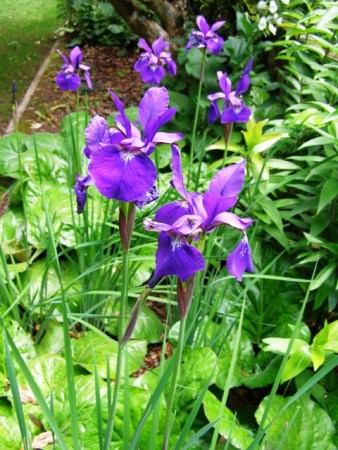
The combination of Siberian iris and Bergenia ciliata works very well

The combination of Siberian iris and Bergenia ciliata works very well

Mixed borders are by far the most common method of gardening – planting woody shrubs, maybe trees, and underplanting with herbaceous material and bulbs. I am not a huge fan of this style of gardening, though we have plenty of examples here. They are probably the least successful areas of our garden. But the remedy, I think, lies in revamping that bottom layer of mostly herbaceous material and getting more unity and harmony in managing the combinations.

Not carpet bedding. It is only a short step up the social scale from bedding plants on roundabouts to carpet bedding nepeta (catmint) beneath your roses, or swathes of uninterrupted mondo grass around your topiaried bay trees. It is just as utility and unimaginative, merely in better taste than marigolds.

That is where my thinking, coming from the other end of the spectrum to the author, met up with hers. The magic is in the plant combinations. If you are going to narrow your plant selection, it matters a great deal more which ones you choose and how you put them together.

I am revisiting my intense dislike of mass plantings. I realise now that my out of hand dismissal had much to do with all those Bright Young Landscapers who dominated the garden scene in this country in the decade through to the global financial downturn. Often with big budgets and other people’s gardens, they rejected plantsmanship in favour of form. Lacking any technical knowledge of plants themselves, or indeed any interest in plants beyond their role as soft furnishings, they claimed superior status as they used some of the dullest plants on earth to create gardens which ideally looked the same for twelve months of the year.

The hallmark of good gardens, in my opinion, is the ability to combine both form and detail, which involves thoughtful and original plant combinations. They don’t all have to be wildly unusual plants. One of my successful recent efforts was a cold corner where I used Bergenia ciliata (that is the one with big hairy leaves and pink and white flowers in spring) with deep blue siberian irises. It is unusually restrained for me, but the combination of the narrow upright leaves of the iris and the large but low foliage of the bergenia looks good even without flowers. I hasten to add, I only have about six square metres of this planting. Had I done the entire length of the border the same, it would have been over forty square metres and that I would have found extremely dull.

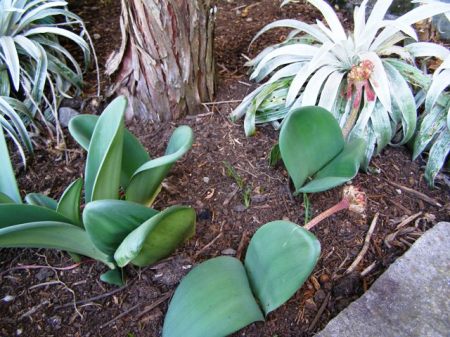
The same principle of contrast applies to an area where I dug and divided Ligularia reniformis (that is the enormously popular tractor seat ligularia). It was so grateful it romped away and stands large, lush and over a metre tall. With a backdrop of a common plectranthus which has pretty lilac flowers at this time and interplanted with the narrow, upright neomarica, it is simple but pleasing to the eye.

Now my mind is focussed on the messy borders that don’t work. I am pretty sure that if I refine the bottom layer of plantings, that will set off the upper layers. I can’t wait to start.
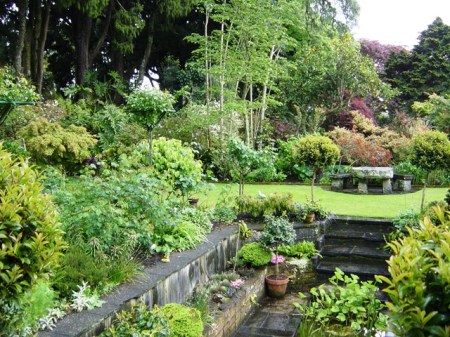
First up for a revamp

First up for a revamp

First published in the Waikato Times and reprinted here with their permission.
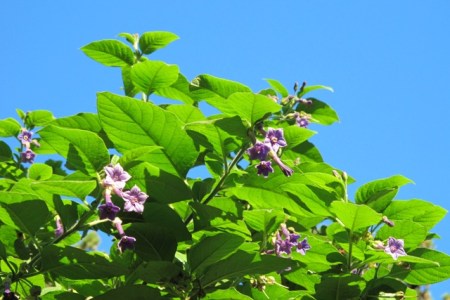
Plant Collector: Iochroma grandiflorum

Our Iochroma grandiflorum on a magical late autumn day

Our Iochroma grandiflorum on a magical late autumn day

We were looking out at our iochroma this week, marvelling that it was still in flower and making a wonderful picture in the late autumn conditions. We tried to remember when it started flowering and we are pretty sure it was in bloom by late October. A plant which flowers for seven months is not to be sneezed it. Technically it is a shrub, though at over 3 metres high it is a large one, yet it never gets very woody. The stems are quite brittle. Iochroma hail from Central and South America – this one is mainly found in Ecuador. It doesn’t mass flower but keeps producing an apparently inexhaustible supply of these pretty blue trumpets which are about 10cm long.

Iochromas belong to the solanaceae family (think solanums, like tomatoes and aubergines) and you may see a resemblance to its pest cousin, woolly nightshade. The leaves are large, soft and almost felted. Being large growing, brittle, soft foliaged and from warmer climes, you might think it is not a starter for colder, frost prone areas but it is remarkable resilient. Wind, frost, cold and heavy rain will knock it about, even defoliate it at times, but as long as it is well established, it can return to fine form very quickly as soon as temperatures rise. It sets its flowers on new growth so as long as it is warm enough to keep the plant growing, it continues to produce blooms. However, it is not a tidy little plant suited to immaculate little gardens but sits more as a large border plant in similar conditions to abutilons. Tui are reputed to love it feeding from the flowers.

First published in the Waikato Times and reprinted here with their permission.
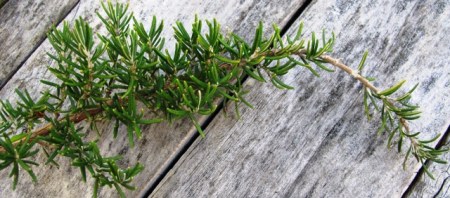
Grow it yourself: rosemary

Such a pretty name for this herb (botanically Rosmarinus officinalis) which has had a resurgence in popularity in modern cooking. It is no longer reserved for roast lamb but is widely used to give that southern European flavour, especially when sprinkled over roasting potatoes. There is no reason at all to use the dried, often stale product from the supermarket when every good home can have a rosemary bush to provide year round fresh flavour.

The key to growing rosemary successfully is to remember that it is a Mediterranean herb which means it is used to poor, dry soils and hot sun. So don’t be too kind to it. I recently killed an established prostrate rosemary in a large pot by giving it a topdressing of compost. If I had just left it alone, it should have been fine. Waterlogged soils will kill it even faster.

Rosemary is easy enough to root from cutting (choose new growth which has hardened so it is not floppy) or you can buy a plant. If you get a shrub, it will get some size to it and may even reach close to 2 metres over time if you don’t clip it. You should also have a choice of prostrate or dwarf forms which are more suitable for containers. If you don’t give the plant a haircut from time to time, it will get woody and gnarly rather than staying bushy. You can prune your bush right now. Most rosemary have blue flowers in summer which bees find irresistible.

If you have a dog, make sure you site your plant away from corners and edges where the dog is likely to mark its territory by peeing on your herb. I speak from experience here….

First published in the Waikato Times and reprinted here with their permission.

In the Garden – May 24, 2012

A fortnightly series first published in the Weekend Gardener and reproduced here with their permission.
Sanvitalia procumbens planted for the monarch butterflies here

Sanvitalia procumbens planted for the monarch butterflies here

It has not been a good year for monarch butterflies. We put this down to the unusually cool, wet summer but find it worrying how just one season can almost wipe out the population. We don’t just grow one or two swan plants (usually Gomphocarpus fruticosus). We plant them in succession throughout the season, like green beans and sweet corn, to ensure continued supply because it is the end of season caterpillars we target so we can have them wintering over. Usually we will have monarchs visible in the garden at any time of the year, but they are a rare sight this season so it is not looking good for winter and the early flush in spring. It is not for want of food – there are untouched swan plants in abundance.

In order to provide plenty of food for the butterflies in autumn, Mark fills any spaces in the vegetable garden with nectar rich annuals. We don’t do a lot with annuals in the ornamental gardens beyond self sown pansies and love-in-the-mist (Nigella damascens), but the autumn vegetable garden resembles a meadow mix these days. The gem this year has been a miniature zinnia relative, Sanvitalia procumbens “Mandarin Orange” from Kings Seeds. While the flower colour could be a little cleaner, it is such a tidy, little filler plant it has been promoted out of the vegetable garden and into the rockery.

Winter food is also necessary to keep these monarch delights at home. The most successful plant we have is the yellow daphne (Edgeworthia papyrifera) which attracts them from a considerable distance. As a general rule, it is single flowers which are rich in available nectar. The fancier and fuller the bloom, the less likely it is to feed butterflies and nectar seeking birds like tui. There is plenty of information on http://www.monarch.org.nz if you wish to know more about encouraging butterflies in your garden.

Top tasks:

1) Mark is relocating the late season monarch caterpillars into the warmth of his glasshouse to give them a better chance of reaching maturity before the winter chill. Every caterpillar is precious this year.

2) Cut off the Love Lies Bleeding (Amaranthus caudatus) in the rockery. We let these naturalise for autumn height and colour, but they set vast amounts of seed and there is a narrow line between naturalising and taking over.

Outdoor Classroom: guide to garden mulches

There are five good reasons to mulch your garden:
a) Mulches suppress weeds when laid to a depth of around 6cm (but the mulch itself needs to be free of weeds).

b) Mulches stop soils from drying out as quickly by slowing evaporation. However they should not be laid on ground which is already dry because they will act as a barrier to stop water soaking in easily when it rains.

c) Some mulches will feed the soil and add valuable carbon content.

d) Mulches protect your soil from wind, torrential rain and erosion and may slow the leaching out of goodness.

e) Most mulches make a garden look much more attractive and reduce dust.

ORGANIC MULCHES

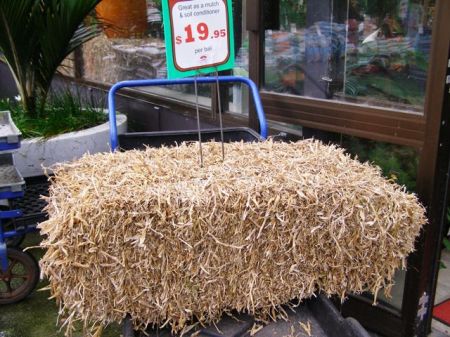
1) Pea straw is popular but when used in areas where peas are not grown commercially, it has a heavy carbon footprint in transporting it. It should be weed free. It adds carbon content to the soil but it is a myth that it fixes nitrogen (peas store the nitrogen in their roots but you are only buying the harvested tops of the plants). It is better in the edible garden, and great for strawberries, but not very aesthetic in the ornamental garden. A bale should cover about 6 sq metres. Water it well or the dry straw may blow away. Oat straw and barley straw are suitable substitutes.

2) Composted bark is widely used and lasts a surprisingly long time. Compounds in the bark stop it rotting down quickly. It adds carbon over time, it should be free of weeds and it is visually discreet in the garden because it is dark brown. Buy pre-composted bark if you can – it does not rob the soil of nitrogen as it breaks down. You can buy small bags but it is cheaper in bulk. A cubic metre should cover about 15 square metres.

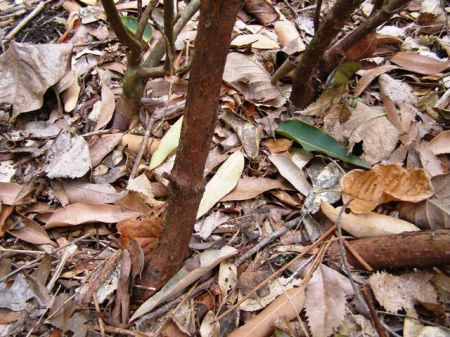
3) Leaf litter is readily available and free in autumn. You can either disperse the litter over the garden beds immediately or you can rake it into piles and let it start to decompose first. A leaf rake makes this task much easier than trying to use a garden rake. Leaf litter will enrich the soil but it may look a little untidy in some garden situations.

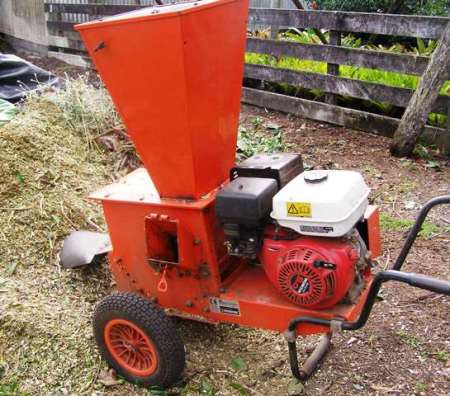
4) Wood chip, sawdust, and wood shavings are not composted so must be laid on top of the soil and never dug in until they have rotted. This is to avoid them depleting the soil of nitrogen as they break down. Sawdust or shavings must be from untreated timber (tanalised timber is toxic) and fresh sawdust can look garishly orange on the garden. We use the fine wood chip from our mulcher extensively, raking it out immediately to a layer of about 6cm.

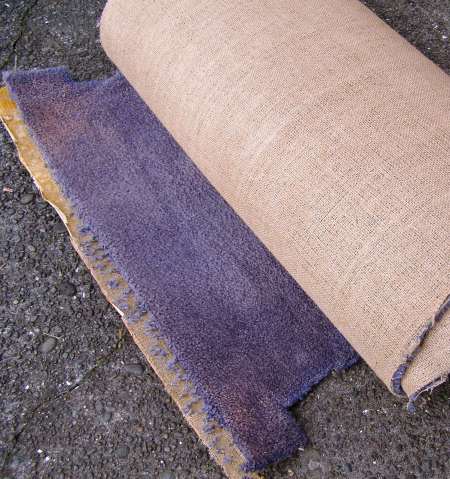
5) Old carpet must be natural fibre (generally wool), not synthetic. Test it with a flame – if it melts, it has synthetic fibres. Cutting with a Stanley knife is probably the easiest way to get manageable pieces. It may be best in the vegetable garden because it is not attractive. Lay it with the hessian backing side upwards and you can camouflage with leaf litter. Similarly, newspaper is not an attractive looking option, but it will work if you lay down a thick layer of maybe ten sheets at a time. Coloured pages are fine but avoid any glossy paper. It needs to be weighted down and covered with other garden litter to keep it moist. It represses weeds and adds carbon content.

6) Compost is our preferred option by a country mile but if you are using your own compost, you need to make sure it is as free of weed seeds as possible. Compost adds most of the nutrients the soil needs and is excellent laid as a mulch on top. Let the worms gradually incorporate it into the soil. It looks unobtrusive while nourishing and protecting the soils.

INORGANIC MULCHES

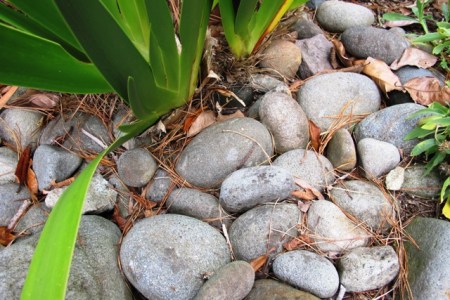
7) Stones are heavy to handle but can be visually effective in the right setting. They also store warmth for plants which prefer hotter conditions. They are best used with permanent plantings where the ground will not need to be cultivated (dug over) as you do not want to have to move the stones. Use a leaf blower to keep the build up of litter removed.

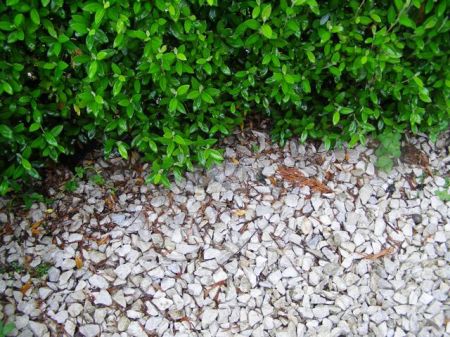
8) Limestone chip can be quite a stark white when first spread but this sometimes suits modern gardens. It is weedfree but it adds nothing to the soil. Once you have laid it on the garden, you will never get rid of it. Acid loving plants like rhododendrons and camellias will turn yellow because the alkaline lime will leach out. The same goes for crushed shell, which is also alkaline. The only way to keep these mulches clean and smart is to use a leaf blower to remove detritus.

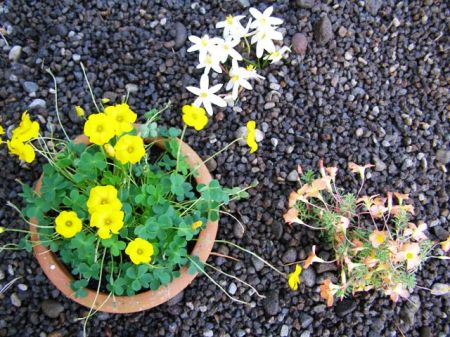
9) Fine gravel and scoria are similar options. Fine gravel is a traditional mulch for rockeries and alpine plants because it is free draining and a neutral material. It can look a little industrial or utility in other settings. Scoria will give a decidedly retro 1970s’ look.

10) Weedmat is a commercial product designed predominantly for nursery use. It suppresses weeds and allows rain to penetrate while preventing excess evaporation. It should be laid taut and secured with wire hoops. It has no aesthetic value at all and looks uniformly unattractive when used in home gardens. It is at least better than its precursor, black polythene, which should never be used as a mulch because it sours the soil. Weedmat is bought by the roll and widths vary but it should price out around $1.25 a square metre.