Tag Archives: gardening

Not all wheelbarrows are equal

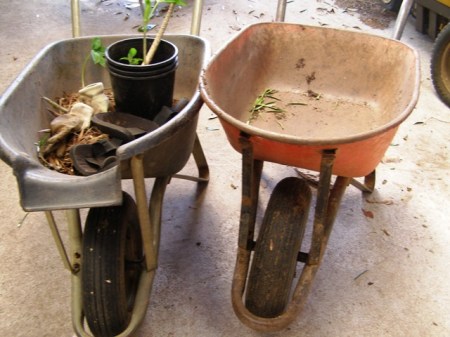
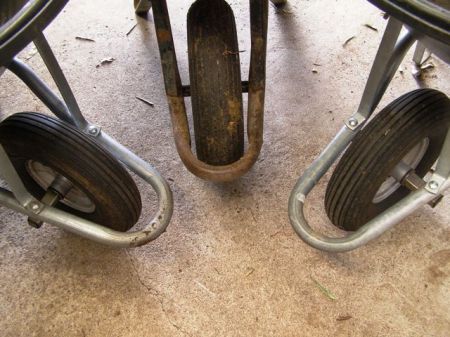
1) Contractor’s barrows tend to be larger, more solidly built, heavier and more expensive than garden barrows. Better quality barrows can cost from $200 but these two barrows have been used on an almost daily basis here over 10 years. Some women may find the handles too thick to use comfortably and the barrow too heavy.

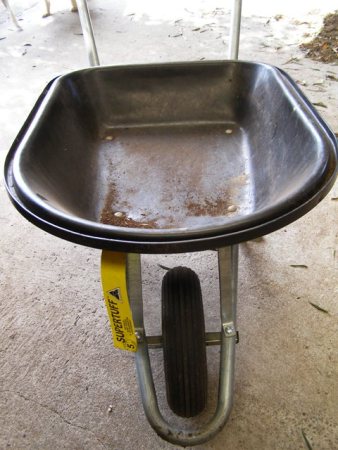
2) Metal or plastic tray? Metal trays can last the distance if you look after them and don’t leave them out in the rain or full of debris. Because I am guilty on all counts, I strongly prefer a plastic tray with galvanised steel frame, neither of which will rust, but this is considerably more expensive. This garden barrow is pretty much top of the range, costing around $180 but I like its wider shape and its stability and I have two of them.

3) Cheap barrows are usually in the $38 to $60 range and commonly have a light metal construction which is prone to rust if you don’t look after them. They also have a tendency to tip back if you don’t load them properly. However, with some care, the much cheaper price may be sufficient to offset those disadvantages.

4) Most wheelbarrows are sold in flat packs. Make sure you try out an assembled one in the store before you buy so that you know that you will find it comfortable to use and that it has acceptable stability. If you assemble the barrow at home and find that the wheel is loose with no means of adjustment, return it to the store. A wobbly wheel is a major weakness from the start. If you ever come across barrows with small or narrow wheels, shun them. You need a robust wheel to support the weight of a load.

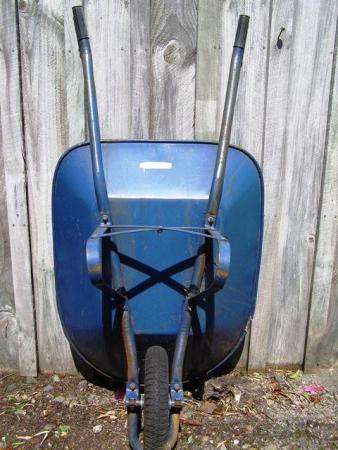
5) If you store your barrow leaning against an outside wall, make sure that rain can not get down the handles because it will pond in the pipes and quickly rust from the inside out.

6) I have never tried the new tub style of barrow and can’t see that they have any advantage over the traditional barrow which has been around in more or less the same form for 800 years in Europe and up to 2000 years in China where they were invented to carry military supplies. However, should any readers swear by this new design, I would be happy to hear. Otherwise, I suggest you borrow one to try before you spend between $75 and $150 on buying one.

Propagating cordylines: step-by step guide

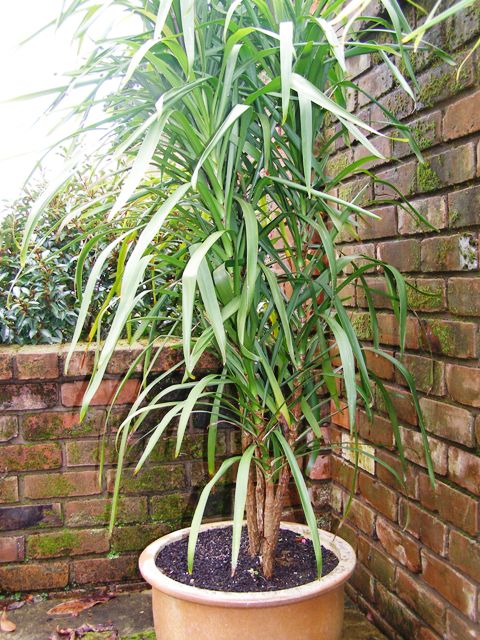
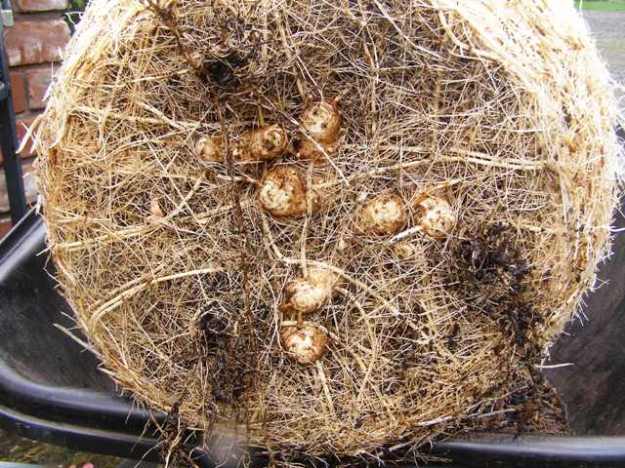
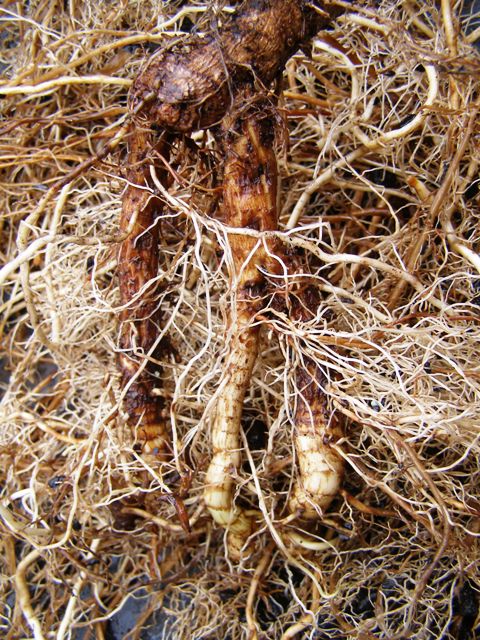
1) Most cordylines or cabbage trees grow a solid, fleshy tap root below the soil and it is easy to increase plants from sections of these roots, commonly called toes. This particular cordyline is an Australian species, stricta, but it shows similar structure below ground to our most common NZ cordyline which is confusingly named Cordyline australis.

2) Taking the toes off this cordyline will reduce the size of the root mass and allow me to replant it back to the same pot with fresh mix and fertiliser. Container plants are best repotted annually if possible and will generally deteriorate badly if you leave them any longer than three years without repotting.

3) Shake off the mix. Wash it off if necessary so you can see what is there. The same steps apply if you are lifting a cordyline out of the garden. We have never tried taking the toes off a large, established plant while leaving it in the ground although you can presumably do it without killing the plant because Maori used to harvest the toes as kauru – a form of starch similar to root vegetables. Try digging in from one side of the plant only if you plan to try this.

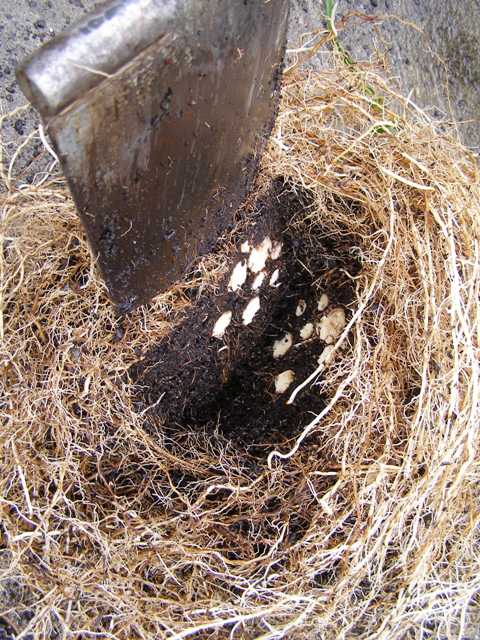
4) Because the toes can be very tough, a sharp spade or saw may be needed to cut the lower section off. We cut around 15cm off the bottom of the central root system of the plant.

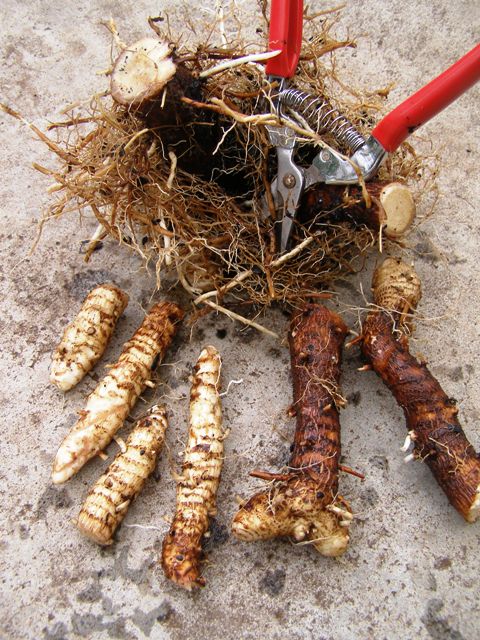
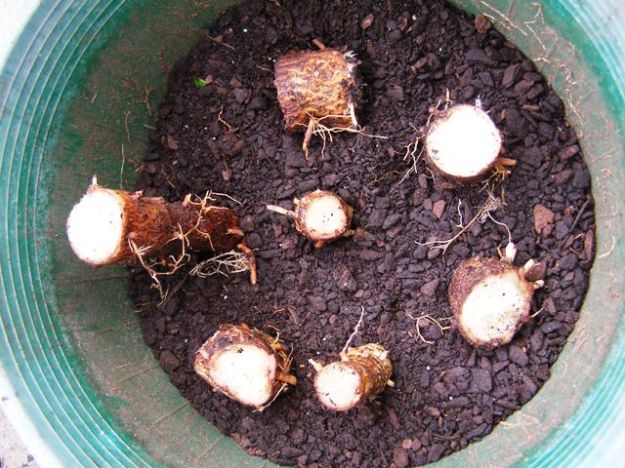
5) If you wash the cut section, you are better able to see what you are doing. Cut the roots off the toes. They will die back anyway. If you want plenty of plants, cut the biggest toes into sections but don’t go much smaller than about 3cm in length.

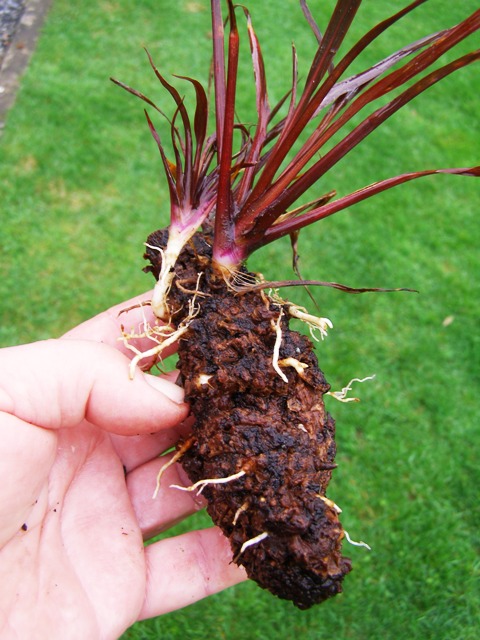
6) Pot the toes fairly close to the surface, either flat or on end (cut side up on the whole toes because that is the top) in seed raising mix (low nutrient potting mix). Do not let them get too wet or they may rot. Within a few months, they will be sprouting afresh as shown on this toe of Cordyline Red Fountain.

Outdoor Classroom: Moving large plants, a step-by-step guide

???????????????????????????????1) This tree aloe (Aloe thraskii) is in the wrong place and has been for at least fifteen years. Large plants can be moved, but this involves taking a large enough root ball to support the top. It is best carried out between late autumn and early spring so that the plant has a chance to settle in and put out new roots before summer.

??????????????????????2) A large trench needs to be dug out, wide enough for you to stand in. This trench is around 60cm deep. Dig it with straight sides to start with. It allows you to look at the plant’s roots and to get access right underneath the plant. Keep it well out from the plant because you can make the root ball smaller but you can’t make it larger again.
???????????????????????????????3) Standing inside the trench, start digging to excavate right underneath the plant. We wanted to keep the root ball relatively whole to act as an anchor because this plant is very top heavy. Gradually reduce the size of the clump, removing excess dirt, keeping a close eye on the root system. If it has a huge root system, you don’t want to be cutting into it too much. If it has a smaller root system, you can reduce it to a size that is more easily managed. We were surprised at how small the root system was on this plant and they were mainly on the surface.
???????????????????????????????4) Get some heavy plastic, sacking or old weedmat underneath the plant. Do this by rocking the plant to one side and getting the wrapping right underneath it. This usually requires more than one person. Do not let the roots dry out at any stage. With very big plants, the plant can be raised out of the hole by tilting it to one side and backfilling that side. Then rock the plant back and put dirt in on the other side. Repeat the process until you have raised the plant to the level where you can lever it out of the hole more easily. We moved this plant on the front bucket of our baby tractor. You may need to do it by trailer.
???????????????????????????????5) In this process, we had an accident and the heavy top was knocked out so we were forced to cut the the poor aloe back but there is no reason why it should not recover. Get the planting level as close as possible to where was. Measure the depth of the root ball and the depth of the hole before planting by placing a board across the hole and measuring from that. Put the stake or stakes in before the plant so that you do not cause more damage to the roots by driving the stakes through them later. We have gone for one very strong stake and a flexible tie.
???????????????????????????????6) Two years later and the plant is recovering well although the foliage has yet to reach its former spread. It should now be safe to remove the stake.

Planting an easy-care hanging basket of succulents: step-by-step with Abbie Jury and Chris Sorensen

If you are an admirer of other people’s hanging baskets but lack the resolve to feed weekly and water up to three times a day in the height of summer, you may enjoy constructing one from easy-care succulents.

photo-1-copyphoto1a-copy

1) You can use solid plastic hanging baskets or you can chose to use wire baskets with a coconut fibre lining which allow you to plant all around the basket surface. You can even tie two hanging baskets together to create a round ball. It doesn’t matter whether your pieces of succulent plants have roots or not but if they are just cuttings, it can help to cut them a day or two early and let them dry

2) Cut slits or holes at random intervals all over the basket lining. Turn the basket upside down for planting.

step3-copystep3a-horizontal-copy

3) Poke the stems of the succulents through the holes. If you have rosettes without stems, bend flexible wire to make hoops around 8cm long and use these to skewer the rosettes into place. Smaller rosettes are not as heavy so are less likely to fall out.

4) Supporting the plants with your hand, turn the basket up the right way and gently hold it in a suitable sized bucket. Fill the basket with a free draining potting mix containing slow release fertiliser. Succulents can survive in poor, dry conditions but they will grow better with food and water. However be mean, rather than generous if you are adding the fertiliser yourself.

5) Plant the top of the basket with some trailing types of succulents so they can hang over the side. You may wish to include one or two flowering plants such as impatiens to add seasonal colour.

6) This basket was planted about three months ago and already looks well furnished and healthy.

Finally, as a modern postscript from 2017 (because I see people are still looking at this post), I give you the succulent display to celebrate the 10th anniversary of the new glasshouse at RHS Wisley Gardens in the UK. Not exactly a hanging basket but showing a similar basic technique.

Winter pruning apple trees: step-by-step guide Abbie Jury and Colin Spicer

Apple trees benefit from a little attention in winter and in summer – easy care summer strategies for apples.

1) This dwarf apple tree has not has not had any attention other than a light haircut in winter and again in summer for many years. It is congested and overgrown and while it still fruits, the quality of the crop will improve in better conditions.

2) Select the branches which will give the tree its framework. Keep the main leader in the centre of the plant and choose branches which are well spaced to allow for air movement and maximum light. Remove all surplus growth not needed for this framework, including branches which cross each other. We are pruning for a tree which is more or less an espalier shape – two dimensional with height and width but little depth because it grows in a narrow border beside our driveway.

3) Now that the basic shape of the tree has been restored, thin out the clusters of fruiting spurs. Apples will continue to set fruit on old spurs for several years, but best results will be on growths from one to three years old. Where a spur is cut off, the plant will usually push out a fresh growth in spring.

4) This shoot shows two years of growth. The lower half was new growth made in spring two years ago and the upper half is growth from last spring. You can see the fruiting spurs forming on the 2008 growth. These will flower and set fruit this year. If you make the mistake of always pruning by trimming off the long whippy new growths, you are cutting off all the fresh fruiting spurs. Try to get a mix of fresh spurs and already established spurs so that you are encouraging gradual replacement.

5) Sealing the cuts is optional but strongly recommended by our visiting pruning expert. He applies Bacseal which is an antibacterial sealant. Avoid getting this on your hands and always wait until you have finished all the pruning to avoid brushing wet surfaces with your skin or clothing.

6) A spray of lime sulphur will clean up the heavy lichen infestation. Follow up with a copper spray at winter strength in three weeks time to get the tree into a much healthier state. Follow the instructions on the containers for dilution rates for both sprays.