
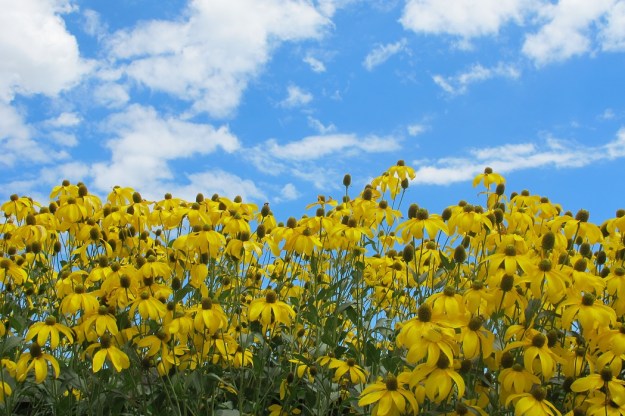
 I garden so I have a lot of thinking time. And it struck me this week that the reason why good summer gardens are a rare occurrence in this country is because most New Zealanders start a garden by planting out the trees and shrubs, then the hedgings and edgings. Herbaceous underplanting is more of an afterthought, not unlike adding cushions to a sofa. A filling in of remaining spaces.
If you want a good summer garden, start with the herbaceous planting and build from there. That was my moment of clarity.
New Zealand does great spring gardens. Magnolias, flowering cherries and crab-apples, soft foliaged Japanese maples, azaleas, rhododendrons and a host of other pretty trees and shrubs grow with a lushness and froth of bloom. You would be hard pressed to find prettier spring gardens and that takes in the length of the country.
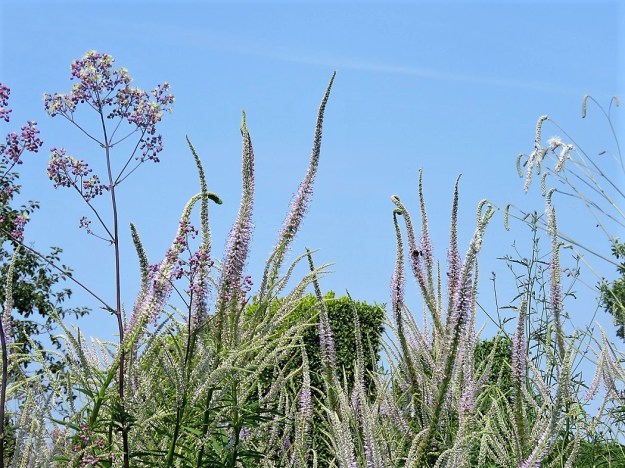
Le Jardin Plume in Normandy
Northern New Zealand also does year-round, sub-tropical gardens very well. All the lush greenery of palms, cycads, bamboos and some lesser known small tropical trees with many ferns, clivias and bromeliads – albeit often sustained by irrigation or misting units over the hotter summer months.
Good summer gardens are a scarce event in this country and I think it is because we start with the trees and shrubs. There aren’t that many woody plants that flower in summer. Hydrangeas and jacaranda do but even so-called repeat-flowering roses peak in spring and then rather stagger on from there without ever achieving that mass, new season glory again. There is a very limited selection if you want summer-flowering woody plants.
New Zealanders generally want gardens that ‘have interest’ all year round. Some gardens boast of being a garden for all seasons when in practice they are spring gardens with spots of bloom and colour at other times.
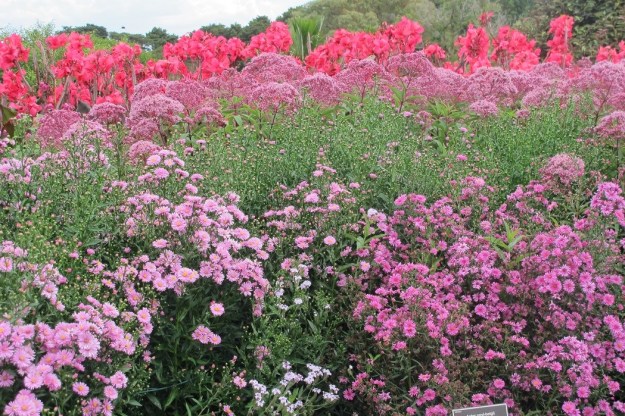
Summer at Auckland Botanic Gardens
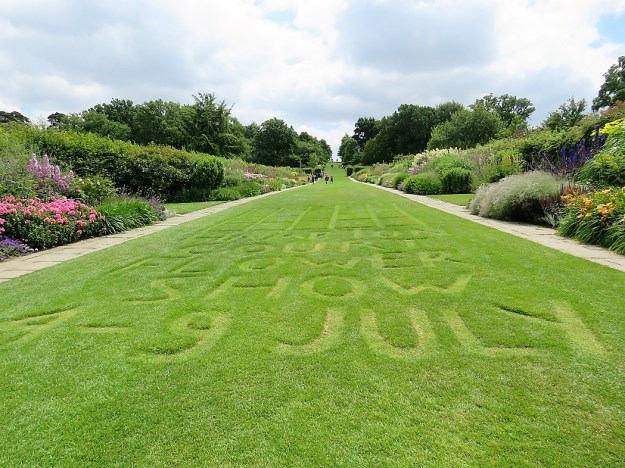
Classic twin herbaceous borders at RHS Wisley Gardens
I have seen impressive summer herbaceous plantings at Auckland Regional Botanic Gardens but those are large-scale, public plantings which are different to home gardens. They are probably worth a visit right now if you are in the area. I have also seen a fair number of classic, twin herbaceous borders, but mostly overseas. They are more commonly classic twin mixed borders in New Zealand, where the shrubs will dominate over time. It is not the herbaceous borders that have made me do a double take of envy. It is the more contemporary herbaceous plantings with fewer rules, considerably less maintenance but more colour control that inspired both of us. We won’t know if we have succeeded here for another year or two and then the proof of sustainability is if it still looks good a decade later, but I am optimistic at the early results.
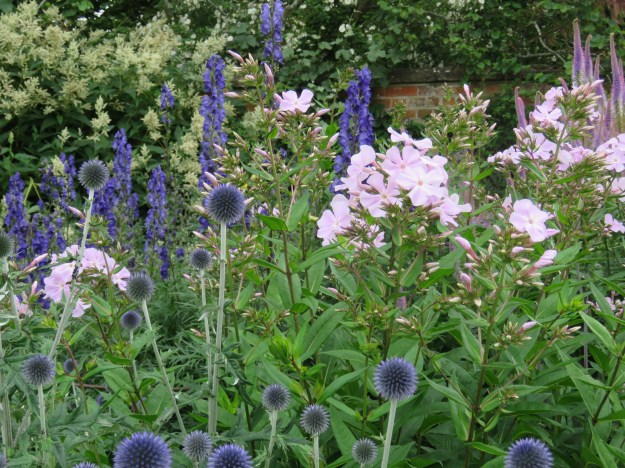
Bury Court – superb planting combinations by Piet Oudolf
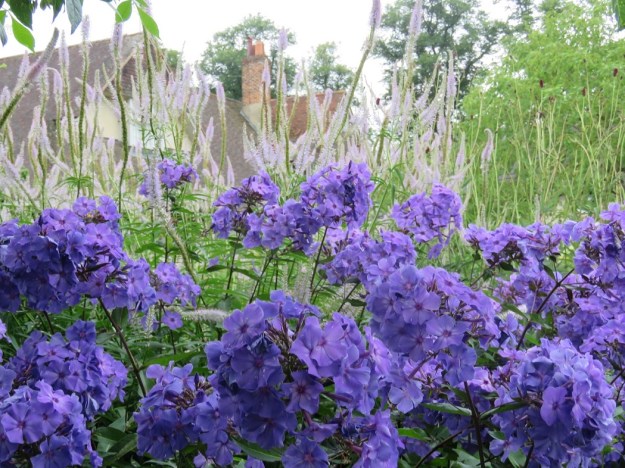
More Bury Court
So far, I can say that a good summer garden needs full sun with open conditions. My plantings started with the herbaceous plants and bulbs. These are plants that like well cultivated soil so it is easy for them to spread their roots. There are some trees and shrubs, but mostly used to give definition and form to the area without intruding into the herbaceous plantings and without the potential to cast shade where shade is not wanted. It is a very different style of planting and management to the rest of the garden. Once the principles and techniques are mastered, the fun comes with plant combinations. Our conditions are so different that we need to trial plant material and work out our own combinations rather than working from overseas plant lists and examples. But we have learned from looking at some highly skilled combinations and the difference between cobbling together plants based primarily on flower colour and the genuine flair of knowledgeable gardeners is noticeable once you get your eye in. It is the detail that is possible in private gardens that often makes a huge difference.

Wildside in Devon
That is what we have travelled overseas to look at and to reinterpret for our conditions at home.

Our blank canvas three years ago with just the foundation shrubs and trees to define what will remain open space


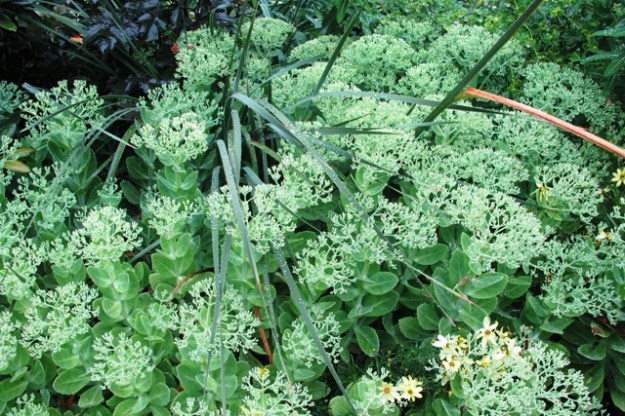


 Tikorangi The Jury Garden