
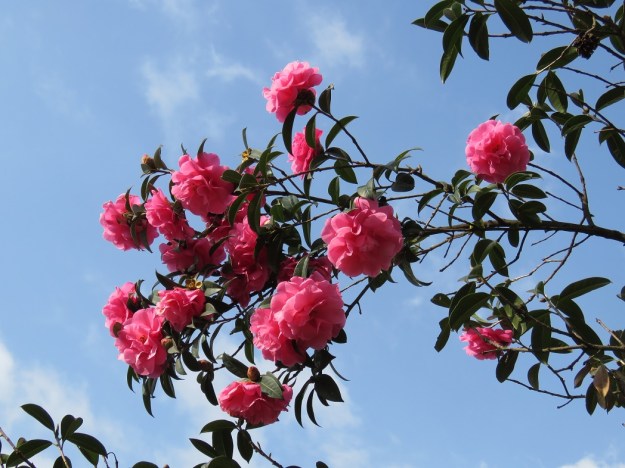
A reticulata hybrid bred from C. lindl and named ‘Liuye Yinhong’, photographed at Kunming Botanic Gardens
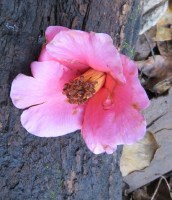
C. lindl
There is a special thrill to seeing a plant in its natural habitat. The species are often very different to the plants we know and grow in our gardens. So it was with the reticulata camellia known as ‘lindl’ that is indigenous to the forests on Baotai Mount in Yongping County, south-west China. It may be the parent of many of the named reticulatas grown as garden ornamentals, but in itself, it is not a showy garden plant. It is a naturally occurring forest tree – and by tree, I mean anything up to 18 metres high.
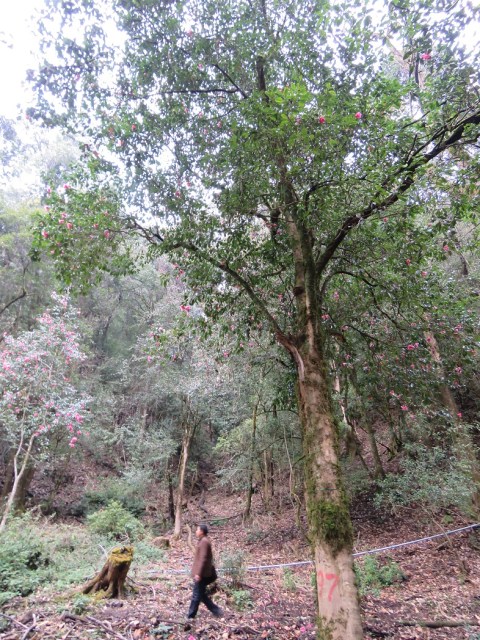
C. lindl is the is the dominant indigenous reticulata camellia species on Mount Baotai.
The city of Dali in the Yunnan Province of China proudly proclaims itself as the homeland of camellias so it was only appropriate that they hosted the International Camellia Congress in February this year. Their literature claims records show that camellias have been cultivated for as long as 1500 years and based on what we saw, you would be hard pressed to find anywhere in the world where they are cultivated more extensively than in their home territory. They are a commercially significant plant – to the envy of every nurseryperson who attended the congress.

A private courtyard garden in the village of Longxiadeng
Public plantings in parks and temples featured reticulata camellias- or retics, as they are often called by camellia folk. Domestic gardening we saw was largely based around courtyards, densely furnished with container grown plants and the retics were dominant. Ordinary folk walking down the street carrying a plant home were carrying retics in bloom. We saw extensive bonsai being carried out on big old reticulatas that have been dug up and brought in to remodel in a new way.
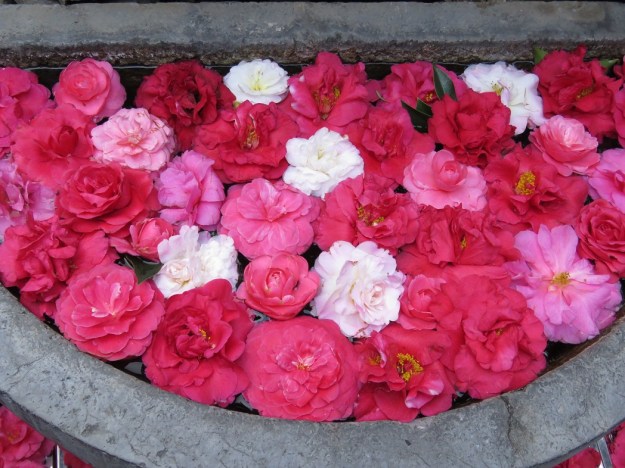
Zhangjia Garden – a modern recreation of traditional vernacular architecture with extensive displays of camellias (10 000, apparently), almost all grown in containers in the five internal courtyards. The majority are reticulatas, as can be seen in this temporary display in a stone trough.
There is not a big range of different named cultivars. Mark, who finds interest in variety and difference, found the dominance of maybe six to ten varieties began to pall a little. Some are the same as selections seen around New Zealand, although they have been renamed by Western gardeners. There do not appear to be dramatic new breakthroughs in colour, flower form or growth habit in this branch of the camellia family. They just are. And they are celebrated for what they are and given pride of place in the local culture.
The reticulata camellias in our garden are far more recent with most dating back a mere 50 years or so. In that time they have made small, open trees, maybe 4 metres high. Every year they flower in abundance with blooms that can be up to the size of a bread and butter plate. I mentioned the curse of petal blight in my June column and it is true that reticulatas also suffer from this unpleasant affliction. However, the sheer weight of the large blooms means that most will fall cleanly, rather than hanging about attached to the plant as the japonica camellias tend to.
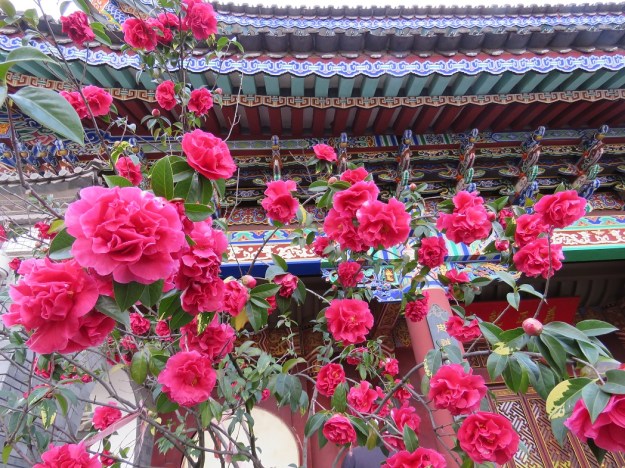
Reticulata camellias are used extensively in public plantings in the Yunnan, such as this one at a temple in Dali.
Reticulatas used to be part of the usual camellia offering in this country. Sasanquas for hedging and autumn colour, japonicas and hybrids for mass blooming from mid winter to spring and reticulatas for their big show-off blooms. Sadly, no more and that is a reflection of the downward pressure on plant pricing and the move to plants that can be more easily produced in larger numbers. The issue is that very few reticulatas grow on their own roots so they are not able to be grown from cutting. They need to be grafted onto rootstock and they are not easy to graft successfully. The prized variegations that can give bi-coloured blooms and, at times, foliage are indicative of virus in the plants and that virus weakens plant growth and makes them harder to graft.
If you see any reticulatas offered for sale, buy one or more on the spot if you want them. You can always hold them in a container until you have their garden position prepared. You may not see them again if you wait until you are ready. The only alternative is to go back to the ways of an earlier generation and learn how to do your own grafting.
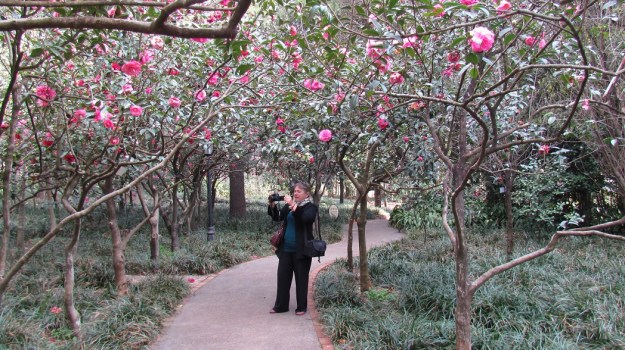
Yours truly in the Kunming Botanic Gardens (photo: Tony Barnes)
First published in the August issue of New Zealand Gardener and reprinted here with their permission.



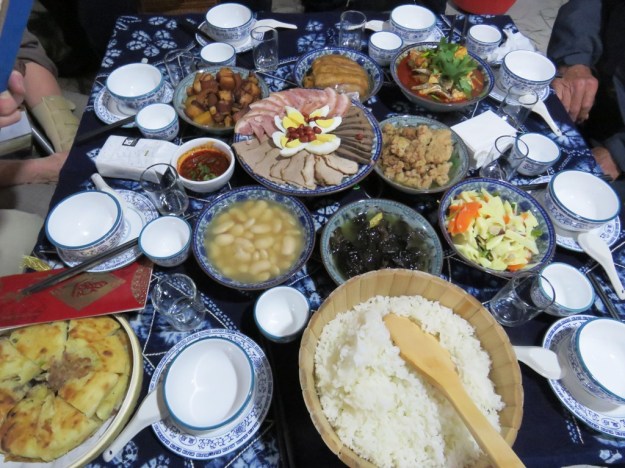

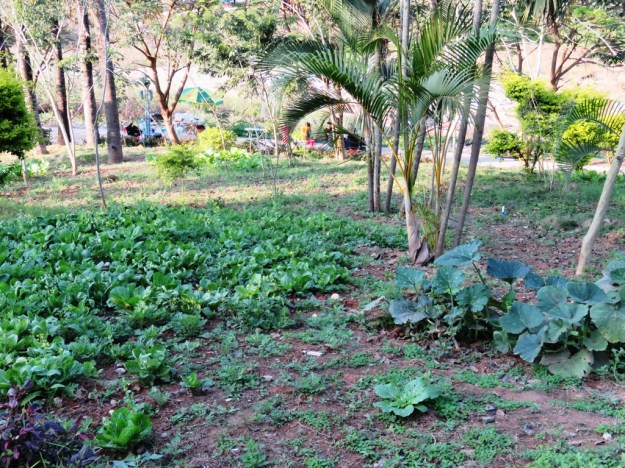
 Finally a few snippets: If there is one thing I absolutely loathe on purchased fruit, it is the sticky little labels which do not even break down in the compost. I often peel them off in the shop and leave them behind. These apples solved the problems of labels but we have no idea how imprinting the branding on the skins is achieved.
 I do not know if children’s Saturday sports matches continue to serve up segments of orange as half time refreshments (this may be a tradition that has died out at Saturday netball, rugby and hockey), but if they do, I feel that we could practice more class in the presentation….
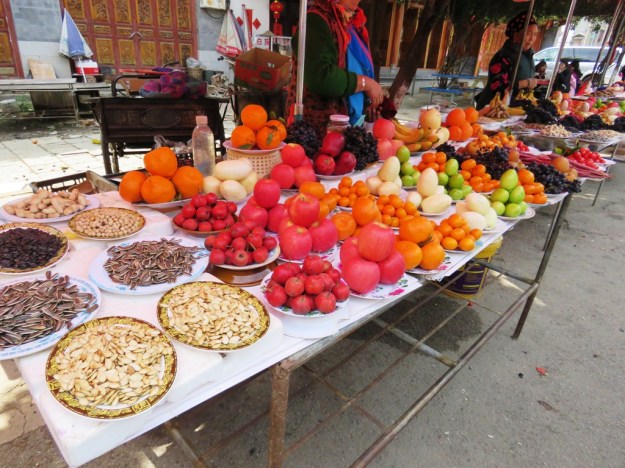 Similarly, the displays of fresh produce in New Zealand can leave a lot to be desired when compared to the care taken with the street stalls that lined a road near Dali.
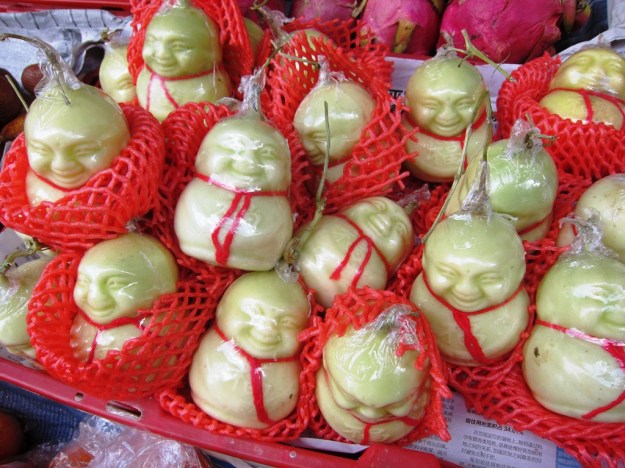 Buddha fruit! Not carved. Grown in plastic moulds, the ever-useful internet tells me. There is a labour intensive way of growing a novelty crop. These may be pears. If your curiosity is whetted, there are many
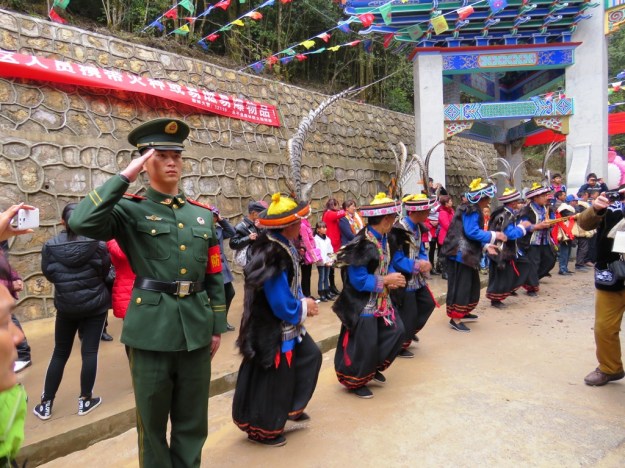
 The International Camellia Congress in China was certainly an extraordinary experience.
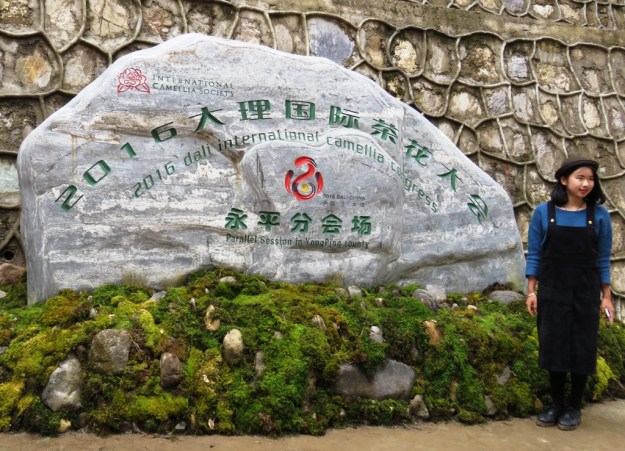 The day promised a four hour journey to Baotai Mount, the unveiling of The Stone Monument, tour of primitive camellia forests, mountain azalea, red lotus flowers and more in the natural landscape. The unveiling happened at lightning quick speed as most of us strolled up to the vibrant welcome. With a huge turnout of locals, it began to dawn on some of us that maybe WE were the exhibits, the sight to see on this occasion. China is a country driven by huge domestic tourism where foreigners still have novelty value.

 After lunch, we wandered in the woods of ancient reticulata camellias – primarily Lindl. Most of the wander was on a four metre wide paved walkway, but it is different in a country with a massive population. There wouldn’t be much nature reserve left if thousands, hundreds of thousands or more feet were able to trample root systems in the wild.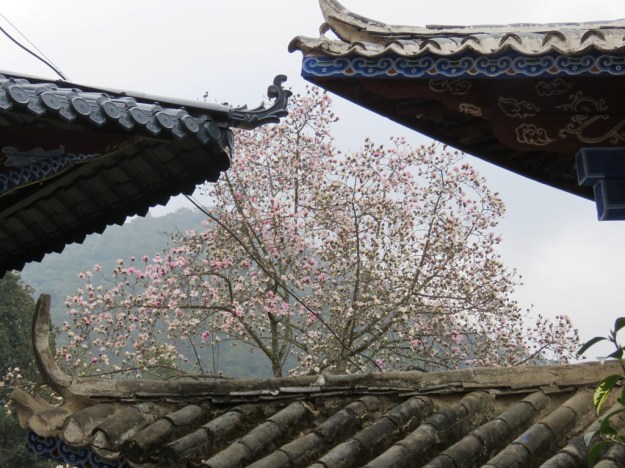
 We never did see mountain azalea and red lotus flowers though Mark was pleased to see a little Daphne bholua growing in the wild. Sometimes you just have to go with the flow and embrace the unexpected. Botanical variety may have bypassed us on this occasion, but I will never forget the unexpected sight of four soldiers (Red Army?) marching through the ancient camellia woods on Baotai Mount. You don’t see that sort of thing back home in Tikorangi.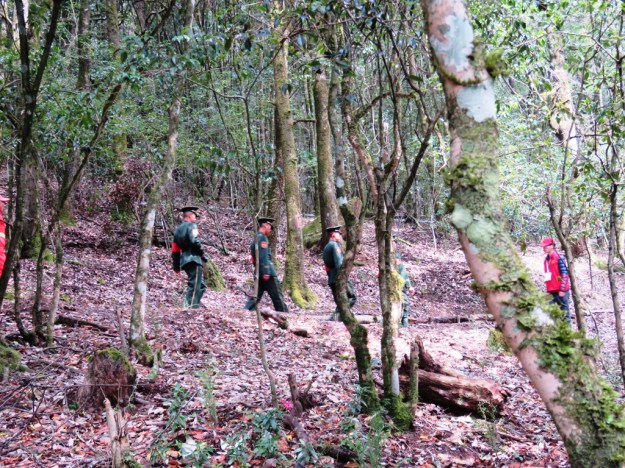
 Tikorangi The Jury Garden