Tag Archives: Lachenalia aloides

Bulbs of September

Hippeastrum aulicum – we plant it in semi shade to shaded areas because it will still flower and the dreaded narcissi fly only attack plants in sunny spots

Maybe I will do a monthly post on the bulbs in flower here during each month, I thought in August. I am pretty sure that we have bulbs, corms and tubers of one sort or another flowering twelve months of the year. But August came and went and here we are, well into September and peak spring.
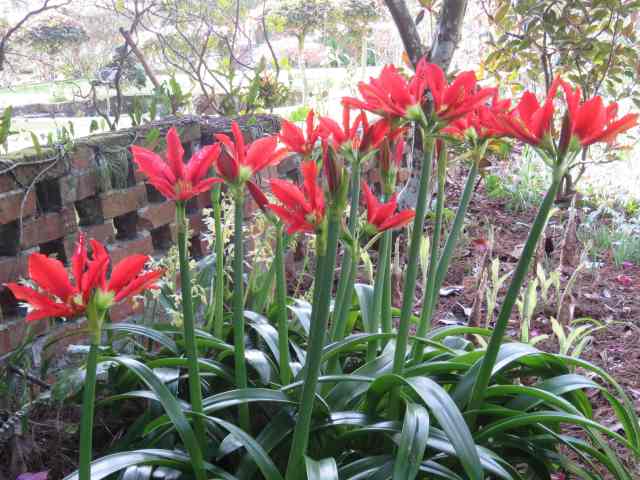
Hippeastrum aulicum

Ah well, there is always some crossover. The narcissi and the Hippeastrum aulicum both started in August and are still in full bloom. The aulicums bring us great pleasure and are a significant feature as winter breaks to spring in our garden but are probably beyond the reach of most people. It is not that they are difficult to grow but they are not widely available and, purchased individually, they will be expensive. Mark’s dad probably started from one or maybe three bulbs, as was his and now our way, and the results here have been achieved over about seventy years of quietly lifting, dividing and planting around the garden, now with many hundreds of bulbs in various locations. Not every gardener has the time, patience and willingness to achieve this, let alone the longevity of stay in one garden location.
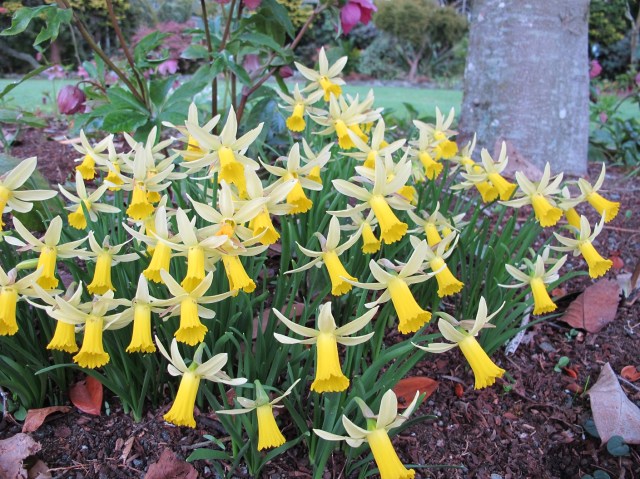
Narcissus Twilight

The narcissi are more achievable and will give a quicker result. We grow as many different types as we can, bar the modern hybrids (the King Alfred types) that are most commonly sold. They are better as cut flowers (the weight of the bloom often bends them over in the garden) and are better in places that don’t have issues with narcissi fly. We favour the earlier flowering dwarf narcissi. Growing a range of different species, named hybrids and seedlings raised here on site extends the season into many weeks from early August right through September.
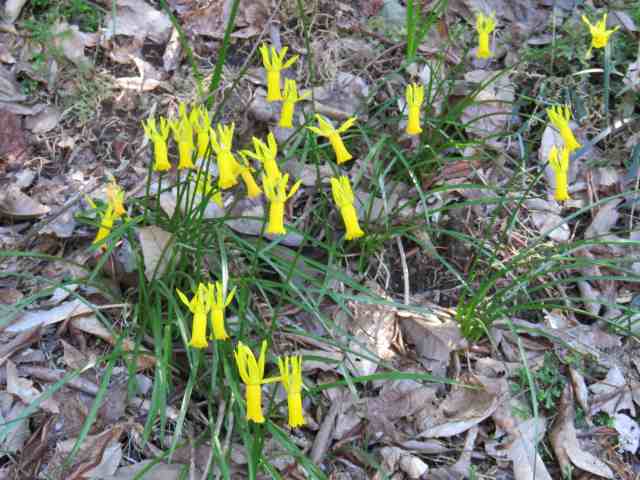
Narcissus cyclamineus seedlings growing on one of our bulb hillsides

We use narcissi everywhere really, the major consideration of sites being that they won’t get swamped by larger growing plants and that they will star as rays of sunshine in their time each year.
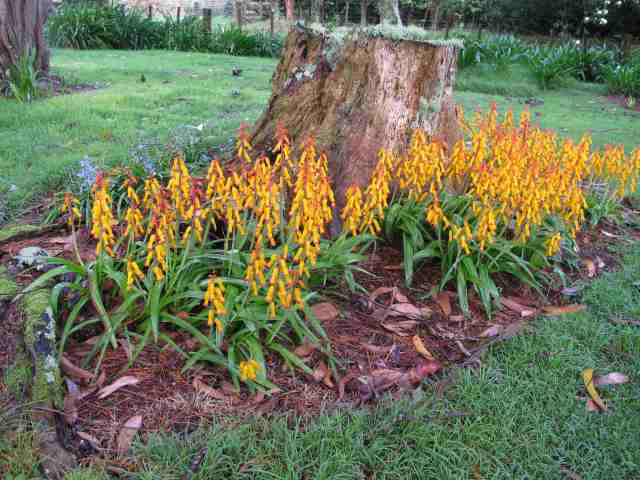
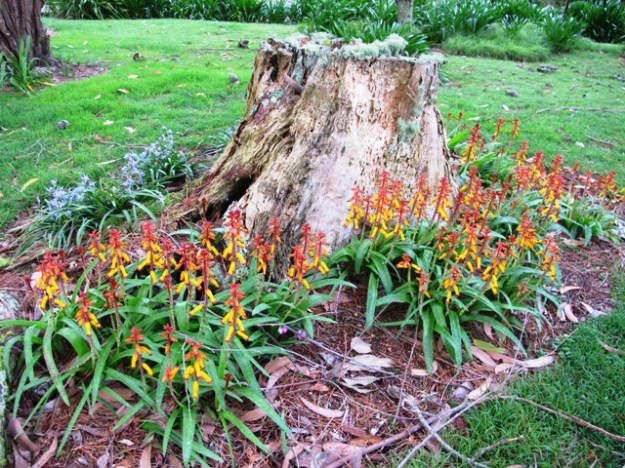
Lachenalia aloides

The lachenalias also star through spring. It is the boldest and the brightest that bloom first. Lachenalia aloides is the common form that is widely grown. Cheap and cheerful, might be the best description. Placement is everything when it comes to this bulb. I don’t like it as a garden plant but I think it is great on the margins and in wilder areas.
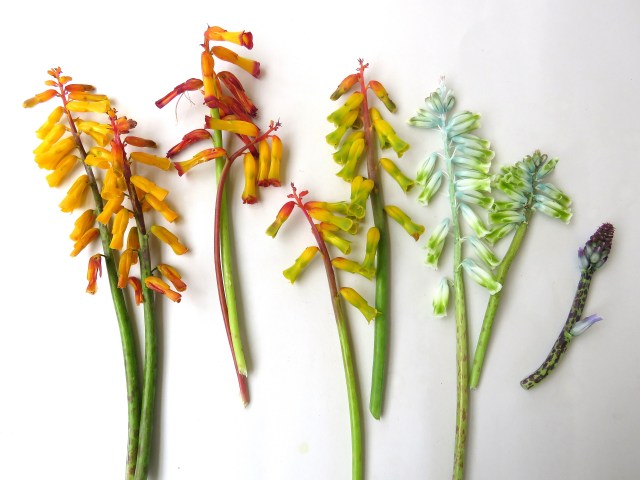
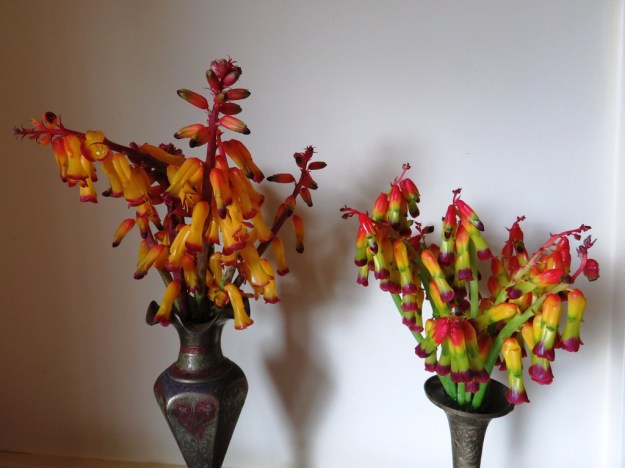
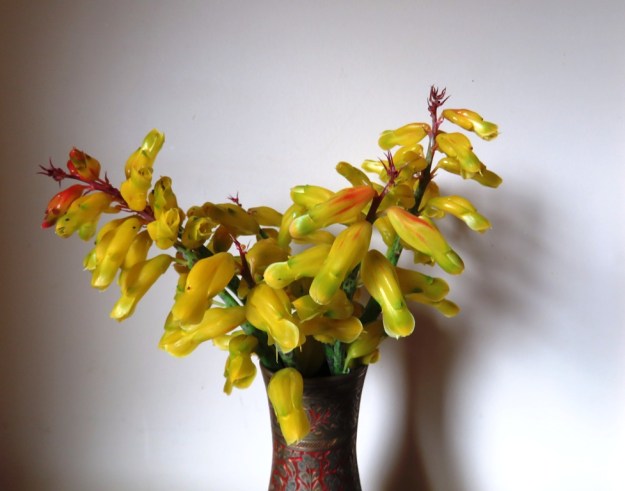
I am officially giving up on trying to understand the plant classification and nomenclature of lachenalias. Last time I looked, these were all forms of the species L. aloides. I even staged a photo to support my comment that a single species can be very variable. So we have straight aloides, quadricolor (already passing over – it is even earlier), tricolor, vanzyliae and glaucina which was barely opening a week ago. Now I look and I see they have been split. Glaucina is back with L. orchiodes, while quadricolor and vanzyliae seem to have been elevated to the status of being in species classes of their own and I have no idea where tricolor sits. They can remain a mystery for me.
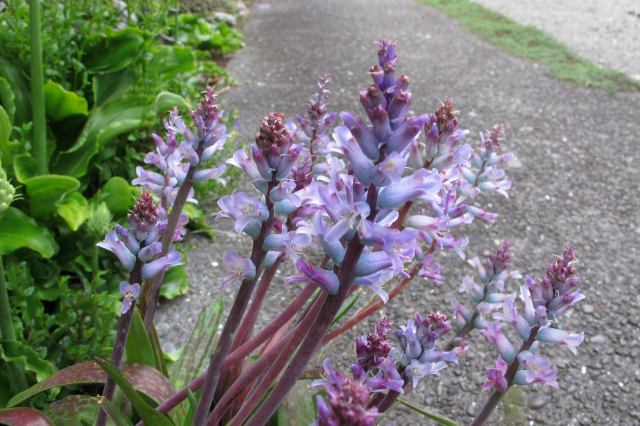
Lachenalia glaucina

From a garden perspective, I always notice that it is the orange, yellow and red lachenalias that flower first (the yellow being Mark’s reflexa hybrid, the red we have is bulbifera). The most desirable so-called blues come later. I say so-called blues because that casual grouping takes in those with the faintest blue genes that are really shades of cream, pink and lilac as much as pure blue. We have gathered every one we could find over the years and by far the most reliable is the aforementioned L. glaucina.

And without writing a book on topic, I can only continue by listing bulbs that I spotted on a perfunctory wander around the rockery and areas where we have done informal swathes of different bulbs. We find the bulbs add depth and detail which we value highly.
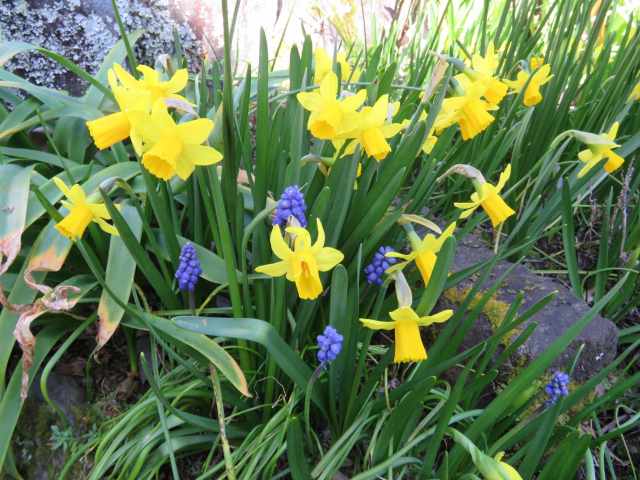
A touch of grape hyacinth is enough. Seen here with Narcissus Tete a Tete.

We are not too snooty about the common bulbs. While the snowdrops finished last month, the undervalued snowflakes (Leucojum vernum) flower on. We are thinning out both the grape hyacinths (muscari – foliage to flower ratio too high in our climate and spreads a bit too much) and bluebells (way too invasive) but not aiming for total eradication.
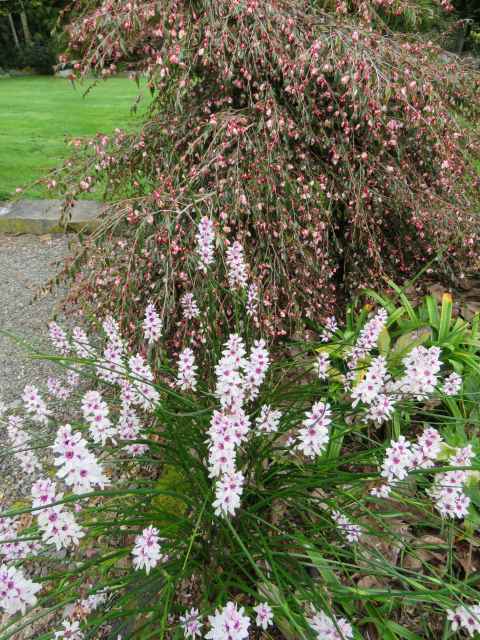
Once was dipidax, then onixotis but now, apparently a wurmbea
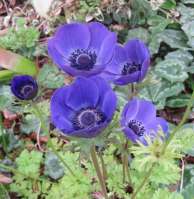
Seedling anemone

The blue anemones seed down and have quietly naturalised in the rockery without being a problem. I once planted a couple of bags of anemones and ranunculus and they all flowered the first year. From then on the ranunculus, the double anemones and all colours except blue quietly faded away but I like the simple blue and I like even more that they are self-maintaining. The Wurmbea stricta which we used to know as an onixotis and before that was a dipidax is another common bulb but one without a widely-used common name so most often greeted with words to the effect of “Is that what it’s called? My mother used to grow that – I never knew its name.” Dutch iris are another early spring option. I like my blue ones but I am not a particular fan of the family generally.
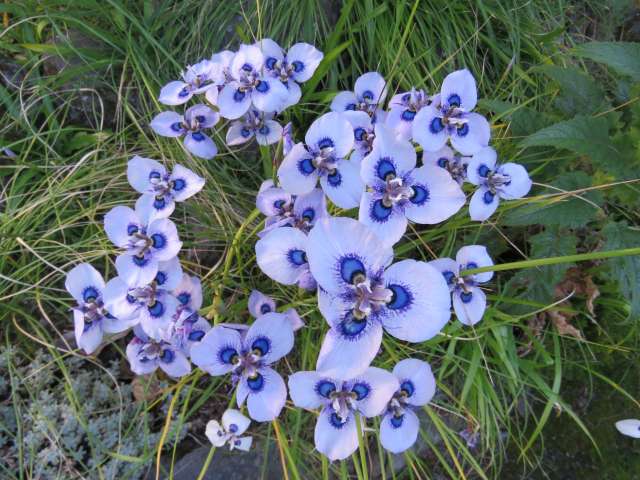
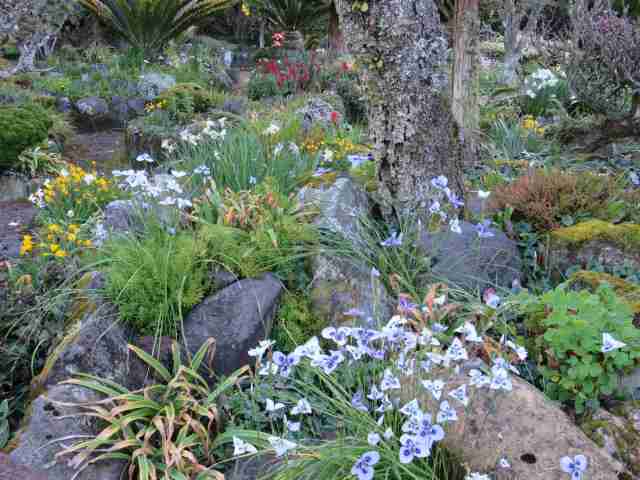
The blue moraea villosa are the most desirable but the white with blue eye are the most common

There is a large group of somewhat messy bulbs that are terrific in flower but their seasonal foliage is often dying, either just before they bloom or while they are in flower. So they are not nice, tidy, neat bulbs but they are generally showy. The Moraea villosa float like ethereal eyes of the peacock feather, moving in the breeze and they are a delight, even though I may feel irritation at their messy foliage in a few weeks’ time. The freesias (plain cream ones here), sparaxis, valotta, tritonia, Gladiolus tristis and babianas all fall into the same category and are flowering now. We grow them all, but more in the rockery for choicer ones and in meadow plantings for vigorous ones. Their foliage issues are less intrusive than in a tidy border planting.
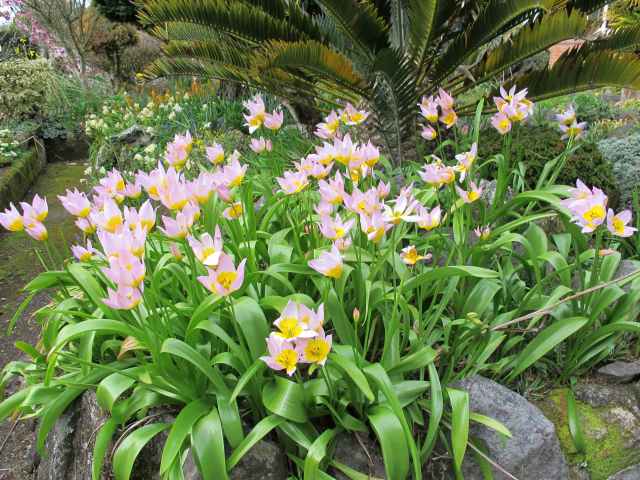
Unlike the Dutch hybrids, Tulipa saxatilis just keeps quietly increasing and returning to bloom every year

Tulips – we don’t grow the Dutch hybrids but we are enamoured with the Cretan species Tulipa saxatilis. And we have a dainty yellow species that may be a form of T. sylvestris, or it may not. Amongst Mark’s parents’ slides, there was a photo of it in the newly constructed rockery so around 1952 or so. Amusingly, seventy years on, we still have it but only in similar quantity to that in the early photo. It is clearly not going to naturalise and reproduce much here.
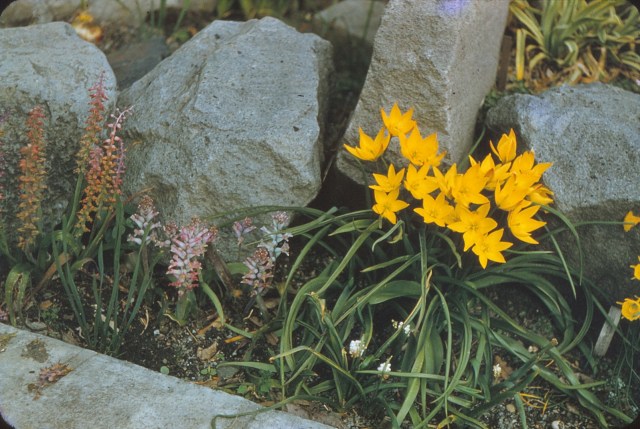
We know this is a very early photo because the rocks have not a skerrick of moss or lichen on them.
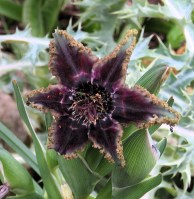
Ferraria crispa

Then there is the Ferraria crispa, the starfish iris which is only worth the space if you are fascinated by oddities and freaks. Erythroniums, dog’s tooth violets which prefer colder, drier winters, are a seven to ten day wonder with us but charming and dainty for that time and no bother for the rest of the year. Veltheimias in pink and in cream are a mainstay for us in both sun and shade, the pleione orchids are coming into flower and Hippeastrum papilio has opened its first blooms – I could go on.

Why did I start with the month that is probably the busiest of the year in the varied world of bulbs? There will be more that I have missed. If I end up having to retire to a very small town garden, there will be no roses, lavenders or easy-care mondo grass. I am pretty sure I will be growing bulbs.
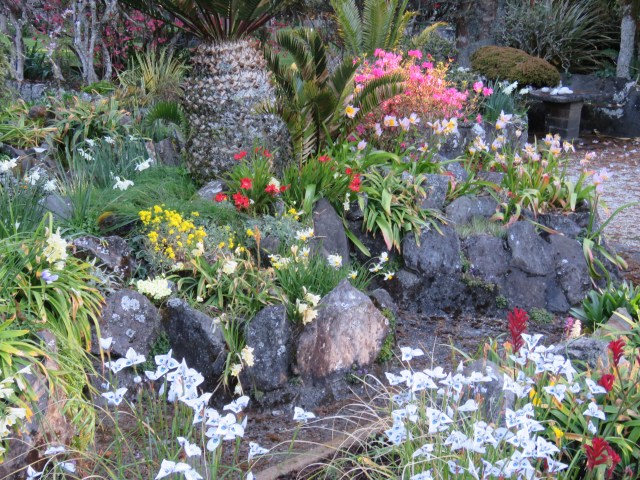
The rockery is at its busiest at this time of year

Lachenalias part one: the early bloomers

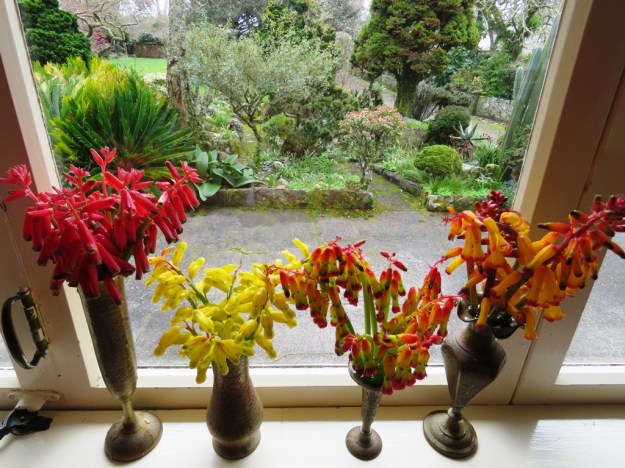
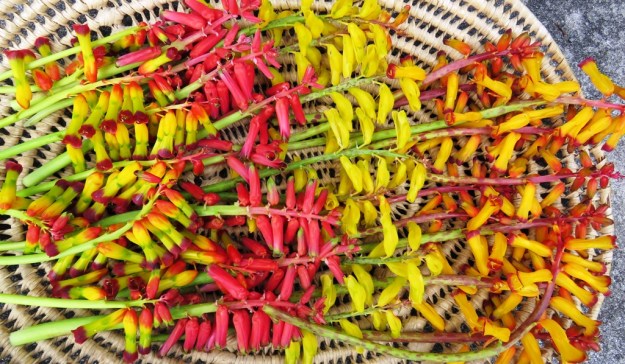
Left to right: Lachenalia aloides quadricolor, bulbifera, reflexa hybrid, aloides

Left to right: Lachenalia aloides quadricolor, bulbifera, reflexa hybrid, aloides

Pity the early-blooming lachenalias for none of them are blue. And the blues and mauves are the sought after members of this plant family. But as winter draws to a close, it is the cheerful red, orange and yellow combinations that light up a grey day. It is all in how you use them.
Nothing subtle about aloides but great in semi-wild areas

Nothing subtle about aloides but great in semi-wild areas

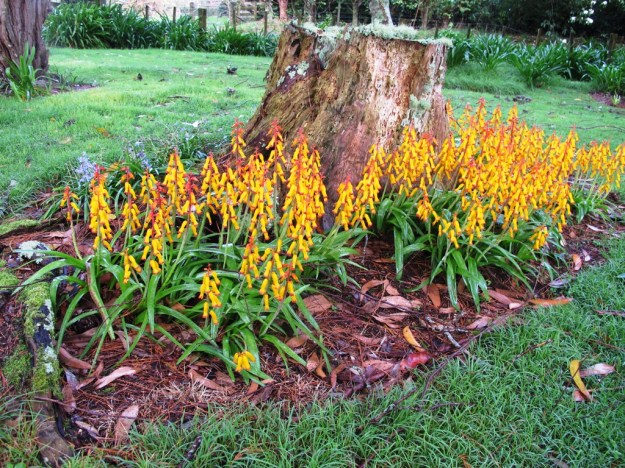
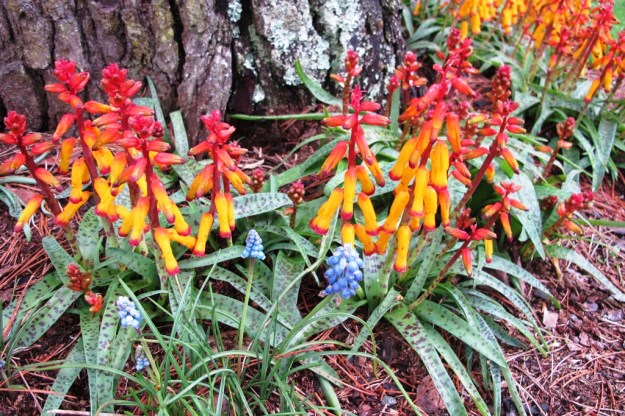
I had not been a fan of the most common form of Lachenalia aloides. It lacks refinement and reminds me of cheap, fake flowers. But when I relocated surplus bulbs out to an open area near our entrance, I changed my mind. They are a bright splash of colour around an old tree trunk which makes me smile. The addition of the undervalued muscari (grape hyacinths) that remind me of my childhood adds a splash of pure blue, making the colour seem even brighter, along with an early flowering scilla. We have a particularly strong growing form in New Zealand which you can still occasionally find under its completely incorrect name of Lachenalia ‘Pearsonii’. It is just a strong-growing, tall strain of aloides with its distinctive orange and red colouring.
Same species, aloides. Quadricolor to the right.

Same species, aloides. Quadricolor to the right.

L. aloides is a variable species and one of our early bloomers is another form – L. aloides quadricolor. It has a little more subtlety than its more vibrant, stronger sibling. The individual flowers are little smaller and finer, although still on a strong stem. Quadricolour refers to the four colours – red, yellow, green and interesting maroon or burgundy tips. There is a complexity to these flowers which counters the somewhat garish effect that can be evident in the more common form.

L. aloides tricolor flowers later for us and is smaller in size and basically green with red tips. The most desirable of this set is probably L. aloides var. vanzyliae but it is the one we are struggling to get growing well. I will keep an eye out for flowers as the season progresses because it is an unusual white with pale blue at the base and bright green tips and it is just as lovely as it sounds. When I find it again – and I have it in about three places – I will lift the bulbs because I think this one will be best kept to a pot.

Lachenalia bulbifera

Lachenalia bulbifera

Red L. bulbifera is the first of the season to come into flower for us. It is easy to grow and sets a multitude of little bulbs, though not to the extent that we have classified it as invasive or dangerous. It is another one that I like planted around the trunk of an old tree giving a bright spot of colour in the distance and drawing one over for a closer look.
Mark's reflexa hybrid is stronger growing than the straight species

Mark’s reflexa hybrid is stronger growing than the straight species

The yellow is Mark’s L. reflexa hybrid. Because we struggle with the dreaded narcissi fly, he was casting round for alternative yellows to daffodils for naturalising. While not quite a pure yellow (the tips can have a red tinge), it is a strong and reliable grower and gives the yellow carpet effect though we have yet to get a major drift established in grass conditions.

Lachenalias are South African bulbs, mostly from the Cape Province. Some are very easy to grow, others less so. Naturally the very choice varieties are the ones that are less amenable but that is always the way. Some are desert plants and we struggle with those, but the ones that grow in areas of winter rainfall are generally easy and reliable in our conditions. A few, like L. glaucina, are particularly frost tender. Lachenalias last very well as a cut flower and will out-bloom most other late winter and spring bulbs in the garden. L. bulbifera is already in bloom by the beginning of July while the white L. contaminata flowers through November. A family of easy-care bulbs which gives us a full five months of blooming across the colour spectrum – what is not to like?
041

Magic carpet

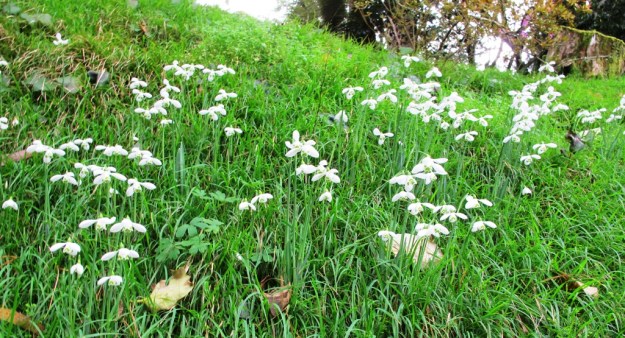
Snowdrops on a hillside

Snowdrops on a hillside

July may be the bleakest month of winter for us but it is also snowdrop time and these little charmers brighten the greyest of days. You can never have too many snowdrops in my opinion, and the varieties that do well with us are building up to a satisfying level. By definition, that is when we have enough to move them out of optimal garden or nursery conditions and start establishing them in carpets.

It is our interest in what we call “romantic gardening” – others refer to it as “naturalistic gardening” – that we derive as much, if not more pleasure from plants naturalised in meadow conditions as we do from cultivated, tightly maintained garden beds. It is a blurring of the edges in gardening, exploring how far we can replicate the simple charm of wildflowers but in a managed situation.

Lachenalia aloides and grape hyacinths (muscari) at the base of Pinus muricata

Lachenalia aloides and grape hyacinths (muscari) at the base of Pinus muricata

It is not as easy as it sounds. Many of the charming bulbs in their natural environment have conditions which are much harsher than here. Winters that are very cold and often dry mean that most growth stops, as do summers that are hot and dry. But in our dairy-farming heartland, soft conditions keep grass growing all year round and that growth will simply swamp most bulbs. It has taken us some years to learn to manage this. Selecting bulbs that will cope in our conditions has been trial and error.

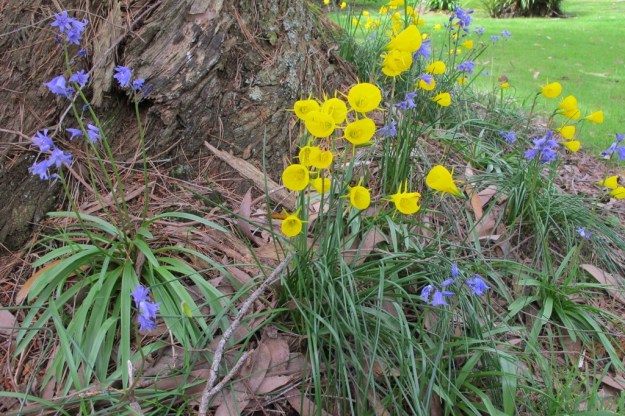
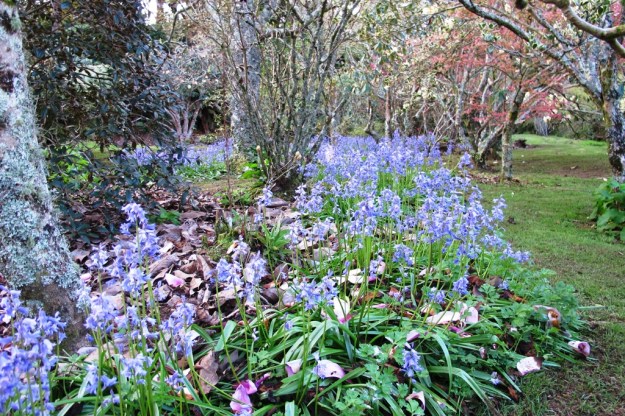
Bluebells and hooped petticoats (Narcissus bulbocodium) planted at the base of a eucalypt

Bluebells and hooped petticoats (Narcissus bulbocodium) planted at the base of a eucalypt

It also takes eleventy thousand more bulbs than you think it will. Even bulk buying a couple of hundred bulbs is not going to create much of a carpet in the short term. To get a quick result using large bulbs like daffodils or bluebells, planting at one every 10 square centimetres means 100 per square metre. I worked this out because I was planting a little mixed area. Using dainties like erythroniums, dwarf daffodils, snowdrops, crocus and rhodohypoxis, it took about 4 of these small bulbs per 10 square centimetres – or 400 per square metre. That is a large number and may explain why we don’t see many bulb meadows in this country, beyond well established fields of daffodils dating back many decades. Obviously, if you plant at greater spacings, you can cover a larger area but you will wait longer for the carpet effect.

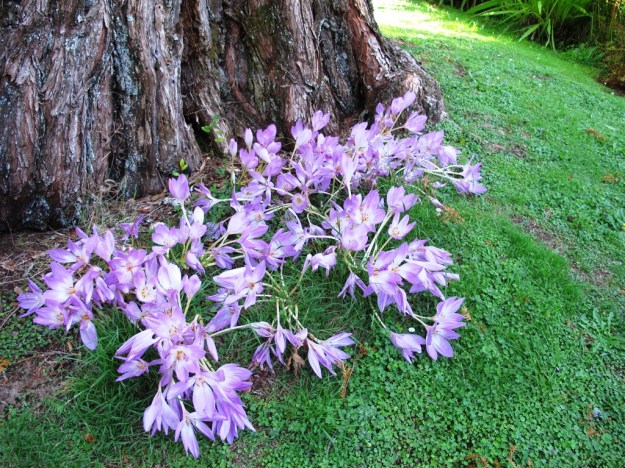
Colchicum autumnale flowering at the base of a metasequoia

Colchicum autumnale flowering at the base of a metasequoia

While planting around tree trunks is not the same thing as naturalising bulbs in a meadow situation, it proved to be a good place to start for us. We have many trees in fairly open situations where it is possible to establish easy bulbs beneath. Most bulbs need sun so these need to be trees with a higher canopy to allow light below. Planting amongst the exposed roots of established trees ensures the bulbs don’t get mown off or trampled as they surface and generally they get established with little competition. It is also an effective way of controlling some of the invasive bulbs like ipheions and ornamental oxalis.

Scattering seed is hit and miss and slower to give any results but much easier. We were delighted this year to see Cyclamen hederafolium showing its colours where Mark had scattered fresh seed several years ago. He had given up hope that it would work but lo, there are rewards for patient gardeners and the older we get, the more patience we seem to be developing.

 Bluebells planted on the margins, drifting through our park area

Bluebells planted on the margins, drifting through our park area

Bluebells are easy and we have used them in swathes around shrubs in the area we call our park. Because they are flowering at the same time as the full flush of spring grass growth, we have to keep them to the side of areas we need to mow. Bluebell, and indeed snowdrop, woods that we have admired in Britain are carpets beneath deciduous trees. Our woodland areas are heavily dominated by evergreens so we don’t get enough light to replicate those carpets here. That is why we have to opt for the margins instead.

The triumph of experience has been getting grassy banks with dwarf narcissi and snowdrops naturalised. To do this, Mark spent some years establishing the native grass, microlina. It is finer and less vigorous so doesn’t swamp the bulbs and can be controlled with minimal cutting – just a pass over with the weedeater from time to time. It is not quite the same as a bulb meadow, but we have learned to work with what we have here.

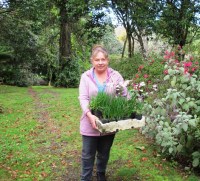
Carrying a tray of Nerine pudica, in case you are wondering (which I admit I planted in the rockery, not in meadows)

Carrying a tray of Nerine pudica, in case you are wondering (which I admit I planted in the rockery, not in meadows)

First published in the July issue of New Zealand Gardener and reprinted here with their permission.

Bulb meadows

Colchicums in the park

Colchicums in the park

The demise of two of our grand old pine trees a few weeks ago has necessitated a fairly large clean up. They were about 140 years old and had been on a major lean for much of that time. Clearly they passed the point of balance. But, as happens in gardens, their collapse also opened up an opportunity. Suddenly there was a nice little area which had been dense shade and more or less left to its own devices but was now light, open and clearly of potential.

“Bulbs,” I thought, “I shall plant it in a succession of bulbs to take it through the seasons.” I started with what was already there – a congested but large clump of snowdrops, a few cyclamen and some valiant pleione orchids which were battling on despite choking ground cover plants. Then I raided the nursery where we still had quite a few pots and trays of suitable bulbs, particularly dwarf narcissi of various types. By this point, I was already committed to using minis and dwarf growers which would co-exist and not choke out their growing companions.

So how many bulbs are needed to fill an area?

So how many bulbs are needed to fill an area?

    As I continue to raid suitable bulbs from wherever I could find them, I started to do the maths. We are not talking a large area here. It is maybe 10 square metres (5x 2) at the most. Do you have any idea of how many dwarf and mini bulbs are needed to fill that space? Allowing maybe 5 bulbs per 10cm square, that adds up to a massive …. 5000! Okay, so the cyclamen are not planted at that density, but many of the others are.

Had I chosen to start with larger bulbs of stronger growing varieties – full sized daffodils, bluebells, tulips, colchicums and the like – I could have planted them at maybe 10 cm spacings so would have only needed about 1000 bulbs. It is still a lot.

The lesson is that if you are besotted by bulbs, as we are, it helps to learn how to look after them so that you can increase the supply for other plantings. Having depleted the nursery of spare bulbs that are suitable for this situation, I am now taking apart beds in the rockery to thin the bulbs there and get the surplus for my new area. So far, as well as the types already mentioned, I have added rhodohypoxis, blue brodiaeas, various different lachenalias and crocus. I am aiming for mix and match in the hope that there will be something seasonal and dainty flowering in that particular section at all times of the year. It will take some tweaking over time to get it right.

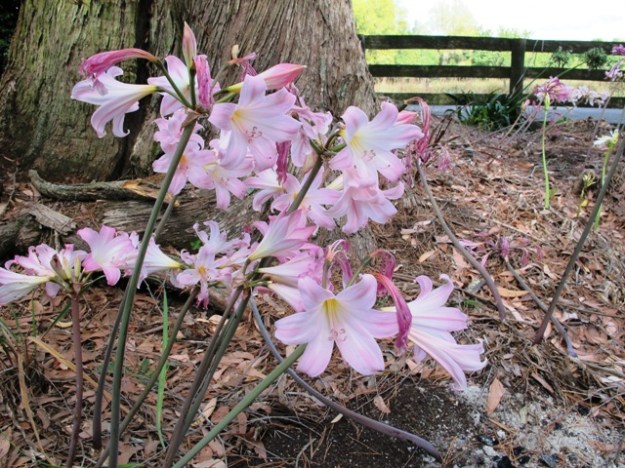
Belladonnas beneath the gum tree at our entrance

Belladonnas beneath the gum tree at our entrance

    I have a mix and match of large and some invasive bulbs beneath a huge old gum tree at our entrance. Invasive bulbs are easily contained there and there is room for sometimes scruffy performers like the belladonnas to put on a good show.

Bluebells to the left and common old Lachenalia aloides in front

Bluebells to the left and common old Lachenalia aloides in front

    Elsewhere, we have tended to keep our bulb plantings separated by variety. This may be our nursery background – keeping the option open to start selling bulbs again if need be. But a big show of a single variety can be striking. We sometimes use the root zone at the base of large, specimen trees, usually on the sunny side because most bulbs enjoy light but are adapted to surviving quite harsh conditions. This gets them out of the way of the lawnmower.

Drifts of bulbs are harder to manage here

Drifts of bulbs are harder to manage here

    But really what we covet most are drifts of bulbs – informal, randomly organised rivers of seasonal colour flowing through. In harsher climates where the grass stops growing in winter (too cold) and summer (too dry), it is possible to do it in grass. But not here. Without significant management, the strong growing grasses overwhelm the bulbs and need mowing before the foliage has had a chance to carry out its function of replenishing the bulb.

It is easier to work with bulbs which shed their foliage quickly. There are big differences in how long different types keep their leaves – anything from 4 to 6 weeks up to 11 months. Fortunately the pretty snowdrops (galanthus) are light on foliage, because what we really want over the next decade is to develop proper drifts of snowdrops. Not a few hundred. Thousands. They will be a fleeting wonder lasting a mere week or two each year. But it is the sheer frivolity of self indulgence that will spur on the snowdrop dream. At least we know which ones perform well in our climate – without snow or much winter chill – and we will just gently work on it by continually dividing and spreading the existing clumps. I am guessing the one clump of Galanthus viridapicis in my new little bulb garden yielded upwards of 300 bulbs. That is a good return.

First published in the Waikato Times and reprinted here with their permission.

Tikorangi Tui tui tui

Latest posts: Friday 17 August, 2012

1) Be bold with colour. White is not always right. Safe, but often dull.
2) The first a new series: Garden Lore. Quotes and hints – random and eclectic maybe, but I hope interesting and helpful.
3) Plant Collector this week is on pretty little Camellia Sweet Jane.
4) My first ever video on You Tube – two minutes of many tui in one of our campanulata cherry trees plus birdsong.

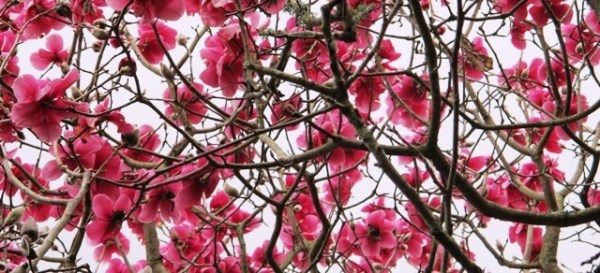
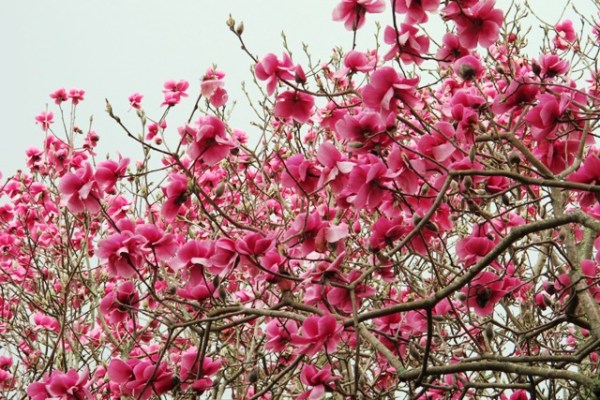
I figured yesterday, as I took these photos, that some (though fewer in number these days) favour floral wallpaper in their home. Here we have floral skypaper instead. Sometimes I worry that many of my magnolia photographs are taken from below, looking up to the sky whereas other people’s magnolia photos are taken looking down on the individual blooms. The reason is that so many of our magnolias are now achieving quite some stature so our close up view does tend to be looking upwards at them. But no matter which way you look at them, magnolias make a breathtakingly lovely display. We still have many which are just opening their first blooms or not even showing colour yet and we look forward to the season continuing right through September. Our early display, in full bloom now, is heavily dominated by the stronger coloured reds, purples and deepest pinks – the two photos here of unnamed seedlings – which we grow so well here. We appear to get deeper colours here than other parts of the world which is presumably related to soil conditions and to the quality of very clear, pure light we have. Mid and later season magnolias are more inclined to the pales and whites.

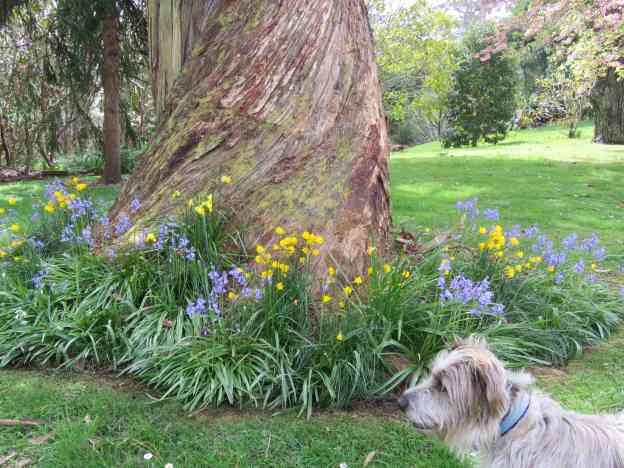
As a contrast to the candy pinks, I photographed the lachenalias and muscari (grape hyacinths) below which nestle in around the trunk of one of our old pine trees. The muscari evoke childhood memories for me. I admit that Lachenalia aloides is not my favourite lachenalia – they are a little garish, looking maybe as if they made from plastic and sold at a cheap store but they provide a cheerful splash of colour in a naturalised setting.