Tag Archives: Mark and Abbie Jury

For the sake of the birds

I love cats. But when our last cat was in her twilight years, Mark commented that he did not want another. I felt a twinge of sadness, resentment even. But I knew he was right and these days I make do with the cats of the internet.
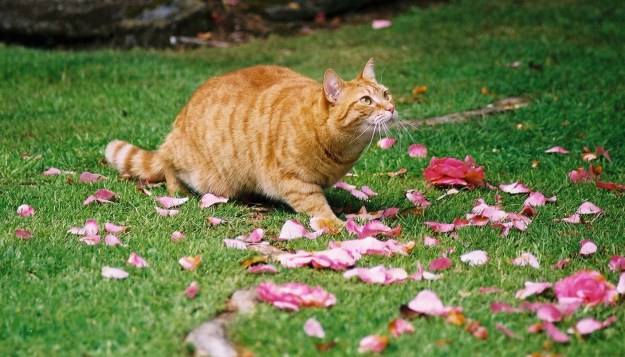
The late Buffy

The late Buffy

In our years together, we have had a succession of furry felines. Every one was both loved and ginger, male or female. To me, all cats should be ginger. Buffy, our final cat, was named by the children for the vampire slayer. She took her name seriously and slayed not vampires, but rodents, probably skinks, birds in abundance and she gave no quarter to visitors who thought they might stroke her without permission or – horrors – move her from a chair that they might sit there instead. Buffy met the world on her terms. And she was a killer.
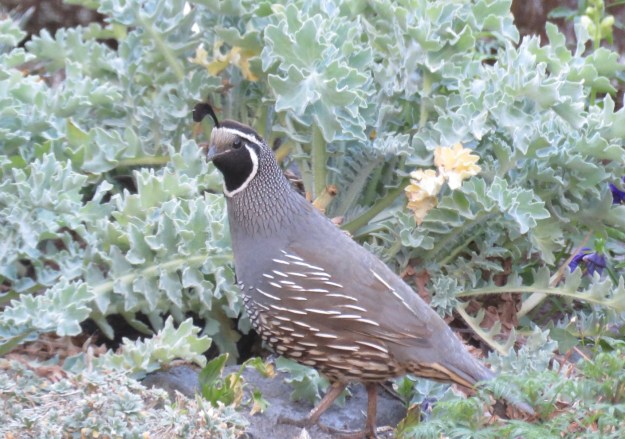
If we still had a cat, we would not have the ground-dwelling quail

If we still had a cat, we would not have the ground-dwelling quail

I believe Gareth Morgan when he says all cats are roaming killers, contrary to what their owners think. The hidden cameras prove him right. Urban cats may not achieve the same tally of bird kill but that is likely to be because of a lesser population of birds. We live rurally with no domestic cats in residence nearby. Mark maintains an ongoing rodent control programme, particularly against rats, and is on constant alert for other predators, including feral cats. We can never be predator free, but vigilance keeps the incidence lower than the norm.
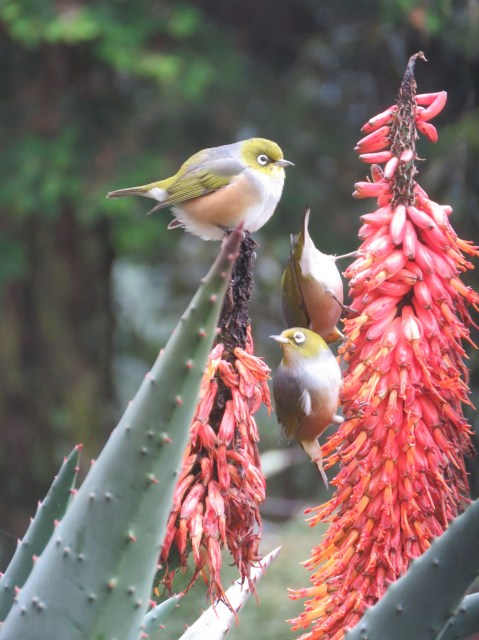
Waxeyes feeding from aloe

Waxeyes feeding from aloe

The rewards lie in the bird population. Everybody I know claims their garden is ‘full of birdsong’ and we are fortunate that there is a certain base-level bird population throughout most of the country. A friend who recently moved from a very large, cat-free country garden to a leafy town suburb commented how much she missed the birdsong. I bet if you asked her neighbours, they would be shocked and think this a gross misrepresentation. But the difference between that base-level population and an environment that is truly rich in bird numbers and variety is huge.  These days, our garden feels so alive. 
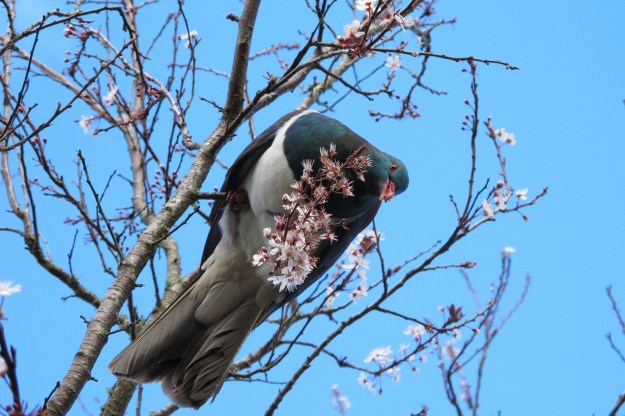
Our beautiful but lumbering native pigeon - the kereru

Our beautiful but lumbering native pigeon – the kereru

We have never set out to feed the birds. But on a property which is heavily planted in both natives and exotics with many different varieties, particularly flowering ones, across 25 acres, there is a succession of food all year round.

We have seen the kaka again recently so it appears to be resident in the area

We have seen the kaka again recently so it appears to be resident in the area

It is not that we have much in the way of rare birds, although the arrival of a kaka for two months in late winter was a thrill and we are on the feeding flight path of native falcons (karearea).  Mostly it is about the tui which we count by the score, the kereru that are permanent residents here, korimako (bellbirds), ruru (moreporks) at night, piwakawaka (fantails), white-faced herons, silvereyes, pukeko, shining cuckoos in season and all the formerly common birds of our bush and grasslands. Then are the introduced varieties. It is one of the delightful introductions that we know we would miss entirely if we had a cat. The Californian quail spend a lot of the time on the ground and nest at ground level so are extremely vulnerable to predation. These are charming additions to the garden, a gentle presence all the time. We do not eat them.
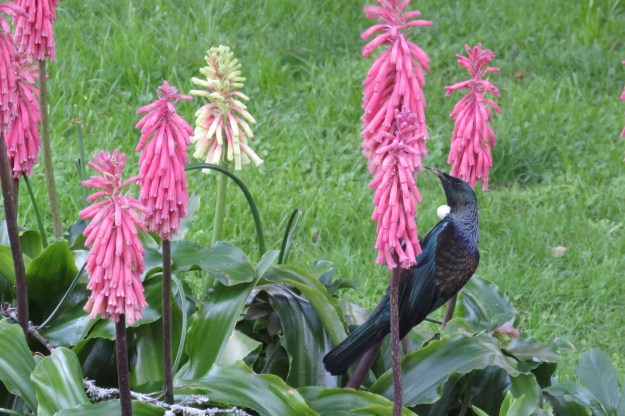
Tui feeding from veltheimia

Tui feeding from veltheimia

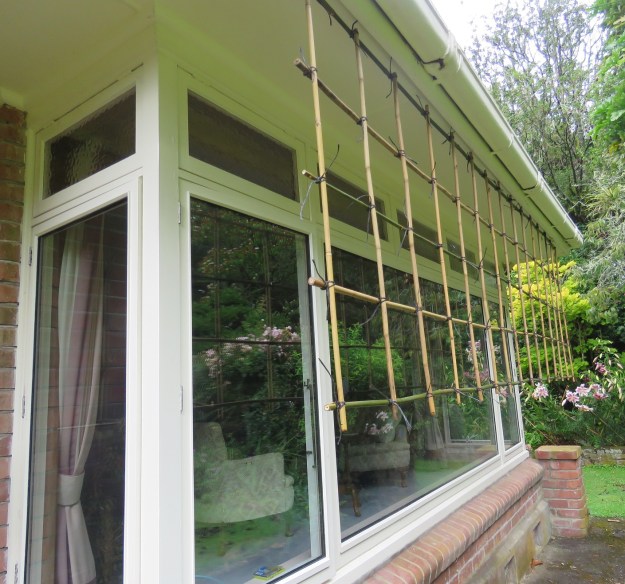
The one grief for us is the incidence of bird-strike on our windows, exacerbated by double glazing which turned the windows almost mirror-like. Because the reflection is all of sky and trees, too many birds think they can fly through. Window decals do not work. Believe me, I tried. A young kereru still died when it flew straight into one. Mark constructed an open bamboo grid that he suspended from the eaves in front of our very large picture window which claimed too many birds. It does not impede the view from indoors and we can still open the windows. Upstairs was more problematic because we lack eaves. Reluctantly – and I say reluctantly because we like the views – we have hung sheer curtains in the two worst affected rooms. These work – Mark has seen a young kereru take avoiding action when it registered the visual barrier.
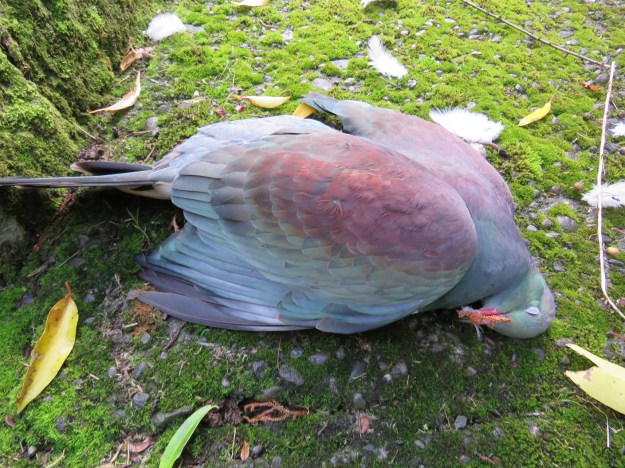
The grief of window-kill kereru
The grief of window-kill kereru

One solution to window-kill

One solution to window-kill

We place a high value on creating a sound eco system and the increasing bird population tells us we are succeeding. It is not just the birdsong. It is the movement, the interaction between the birds (we witness many a battle), the charm of different nests, even the falling feathers – all enrich our lives well above and beyond just having a garden. If the trade-off for us is forgoing the character and pleasure of a resident cat, then so be it. We would rather have the birds.

First published in the February issue of New Zealand Gardener and reprinted here with their permission. 
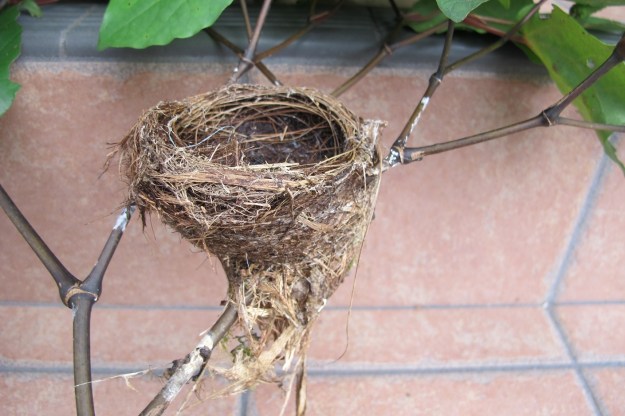
Fantail nest
Fantail nest

Garden diary February 5, 2017 – all about flowers this week

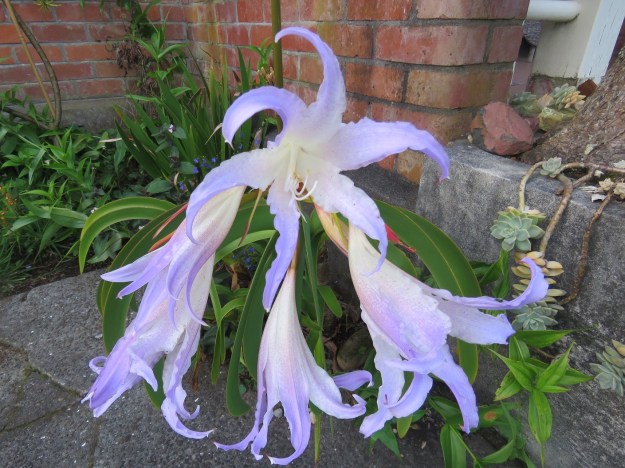
The exquisite Worsleya procera after all the rain

The exquisite Worsleya procera after all the rain

I shall ignore the weather, bar noting that we had over 100ml of rain on Thursday night and while we get some sunny days, this is not summer as we know it. As we enter February, we may just have to accept that full-on summer is bypassing us this year. In the meantime, large parts of the country are in drought.

At least the beautiful worsleya didn’t mind the torrential rain. Maybe it is used to heavy spray, given its natural habitat beside waterfalls in Brazil. W. procera now flowers every year for us – though rarely more than two flower spikes despite the fact we have more than two bulbs – but it never fails to wow us. This really is a most exotic bulb in a particularly unusual blue shade, though neither easy to source nor grow. Ours never set seed because they are all the same clone. It is always extremely slow to set offshoots from the bulb.

Not a Hippeastrum aulicum

Not Hippeastrum aulicum

...despite the label

…despite the label

While on bulbs, I shall be a little unkind and post this photo from my visit to Auckland Botanic Gardens last week. Hippeastrum aulicum? Ahem, I think not. For they are red and flower in August and September. This patch looks mighty like belladonnas to me.

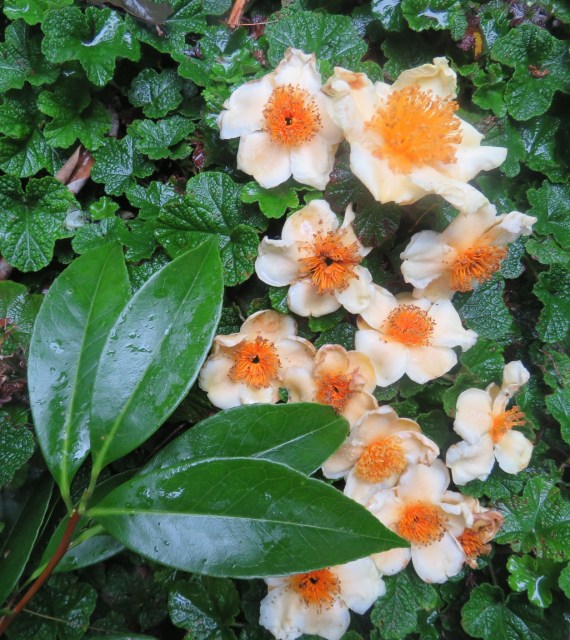
Not a camellia - a tutcheria, we think

Not a camellia – a tutcheria, we think

We went to visit a friend this week for a stroll around his garden – he is very strong on hydrangeas that go way beyond the commercial mop-top macrophylla types. But, while charmed by these, it was the yellow ‘camellia’ that excited us. Here, we thought, was an interesting summer-flowering yellow camellia that was far more sun tolerant than the yellow species we grow and that we had spent some time looking at in China last year. Ignore the background foliage which is the dreaded Rubus pentalobus (though not out of control in this shady spot). I just used it as a carpet to arrange the fallen blooms upon, with a leaf of the plant to the left. It certainly looked like a camellia in flower form, bud shape and texture and it was from a recent interesting plant collection in Asia.

I was about to email photographs to an Australia expert on yellow camellias for an identification when Mark saved us great embarrassment. Sometimes he surprises me with his knowledge, as when he came in and said he thought it was a tutcheria, not a camellia. It took a while to find the right spelling to enable a net search (he is better on names than he is on spelling) and it appears to be Tutcheria championii syn spectabilis and is found in woodlands of Hong Kong. Yes it looks like a camellia bloom and the habit of growth is similar but, like the gordonia, it is simply one of those related plants in the theaceae family which includes all camellias.

img_3969

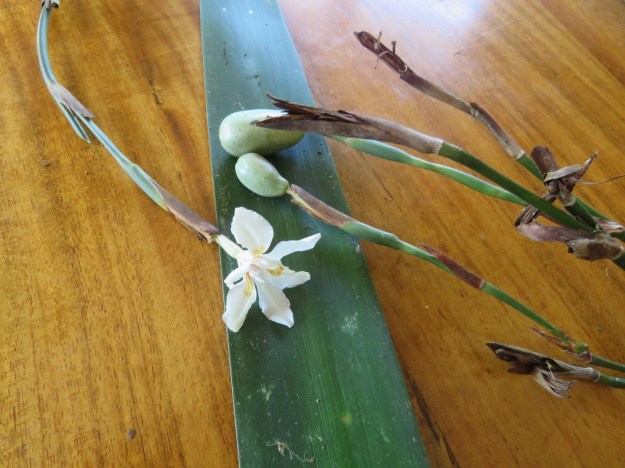
Probably Dietes butcheriana

Probably Dietes butcheriana

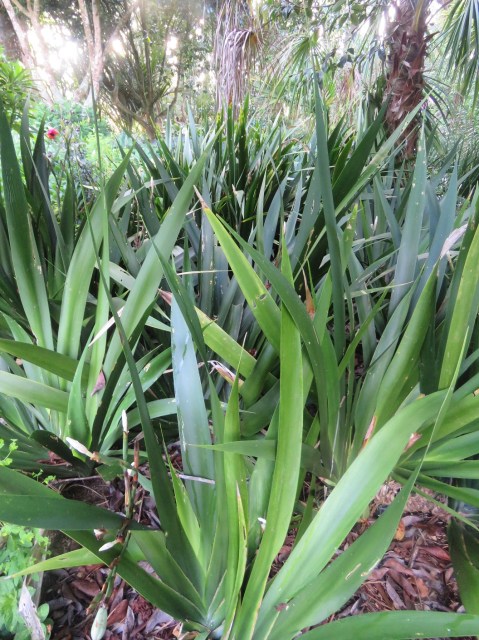
Another plant mystery was solved when we managed to get what we think is the right species name on this dietes. After finding our neomarica was not a dietes, I wasn’t entirely sure whether Mark was right that this was one, either. The foliage is more spectacular than the flowers, which are rather small in comparison and not at all showy. But it appears it is the lesser known Dietes butcheriana that has made itself completely at home in a shaded area of the garden.

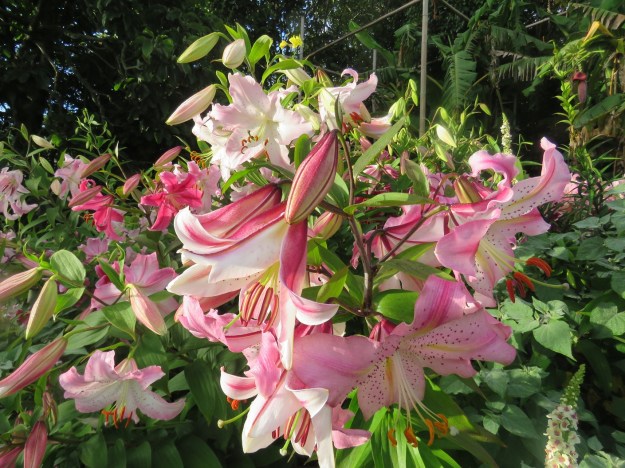
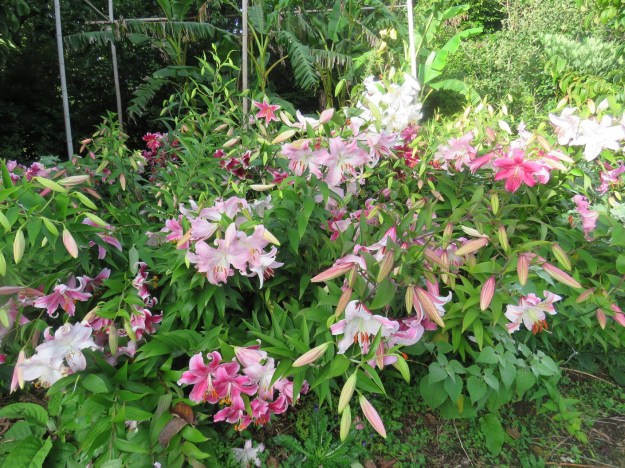
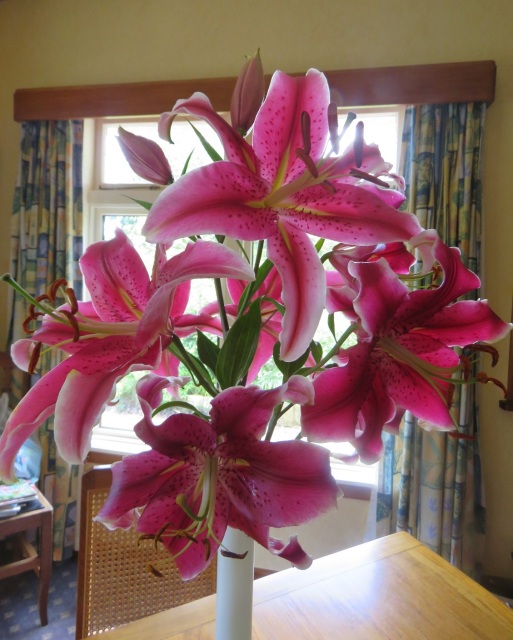
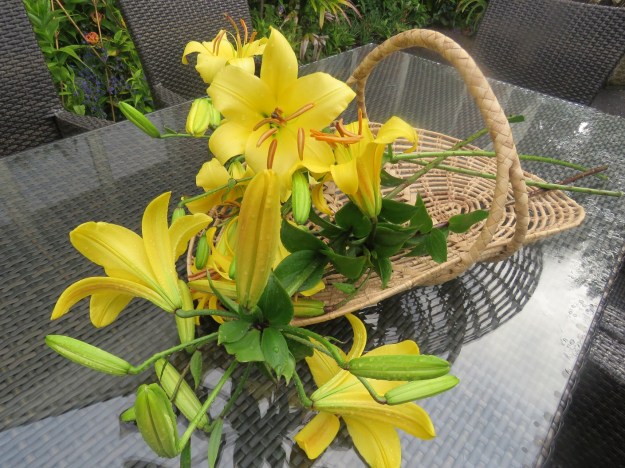
img_3976It is auratum lily season here and we have quite a few of these. I managed to get around staking the garden plants, in anticipation of the UK tour ten days ago – though they failed to flower on cue this summer. I don’t like to pick the flowers from the garden but… out in one of Mark’s vegetable patches, we have a large number of auratum lilies of many hues which Mark has hybridised and raised from seed in preparation for a new garden under construction. This has taken longer than anticipated so the lily patch has expanded and I can cut these to my heart’s content to bring indoors or give away.

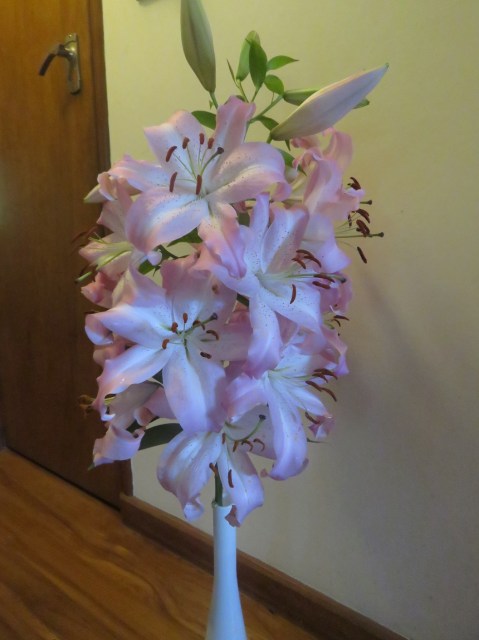
Just a one-off auratum seedling

Just a one-off auratum seedling

This soft pink specimen is decidedly over the top. With 20 separate blooms, the flower spike is much too heavy to ever make a good garden plant and indeed it looked a bit gross out in the lily patch. But it looks splendid cut and put in a vase. You may notice the outward facing blooms. Florists prefer upward facing blooms and many of the auratums offered for sale are upward facing. Felix and now Mark started breeding for outward facing blooms because these make much better garden plants. They are hardier to weather conditions, do not gather debris and suffer less from pollen staining when grown in open conditions. Like many of Mark’s efforts, these are not oriented to commercial production, just to get better plants for our own garden. But oh we do get such a lot of delight from these summer flowers.

The lily patch in the vegetable garden

The lily patch in the vegetable garden

Garden diary, January 22, 2017: weather bombs and little green apples

It is indoors sort of weather

It is indoors sort of weather

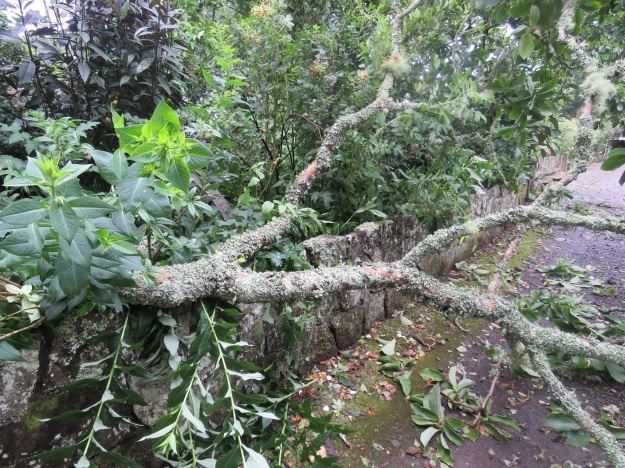
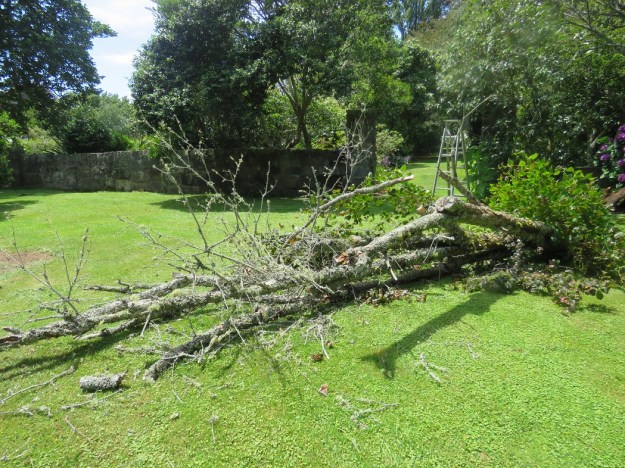
A friend on Twitter commented yesterday that she preferred global warming to climate change. And indeed we could do with some warming here – summer has still to arrive this year but we are certainly getting extreme weather events. These, I notice, are now styled as “weather bombs” and it was a fairly remarkable weather bomb that passed through overnight. Mark had to get the chainsaw out to clear the driveway from the fallen branch of Magnolia Iolanthe. Fortunately, it did not break the meandering but wafer-thin stone wall that edges our driveway.

img_3763We had the next three days planned for a concerted swoop through the garden in preparation for a small UK gardening tour due on Thursday. While the garden is generally closed, this tour is coming through the Royal Horticultural Society – an organisation to which we have a few personal links and which has resulted in some really interesting and enjoyable garden visitors in the past. We maintain the garden at all times, but there are final grooming tweaks that make all the difference in presenting it well to paying visitors. We may be scrambling for the next few days with the added storm damage. Unless we get some of the elusive commodity this summer – uninterrupted sun – the lilies may not open in time to wow the visitors.
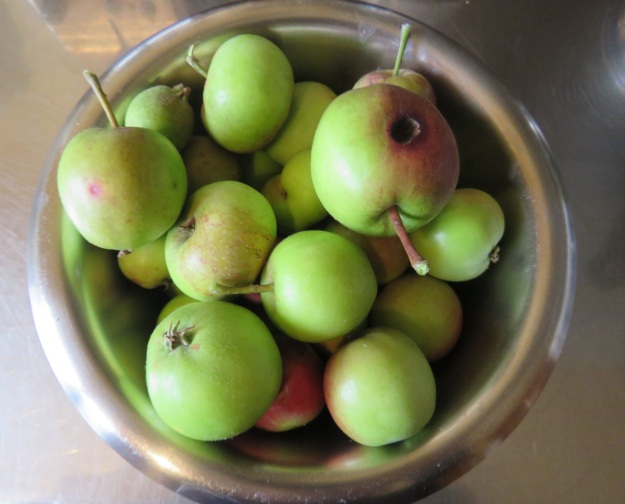
img_3752Yesterday was so miserable that I retreated to the kitchen, in part to deal with a surplus of Sultan plums. The tree is cropping very heavily this year but is not particularly flavourful. Mark put this down to his failure to thin the crop earlier in the season but I am sure the shortage of hot sun hasn’t helped, either. Jam, I thought. I shall make some Sultan plum jam, channelling my late mother-in-law who was the best jam-maker ever. These days I only make small batches – we are not great consumers of jam and a few jars for gifts are all I really need. I have learned that reducing the boiling time to set is what makes all the difference. Sometimes I resort to using the jam setting sugar which is, presumably, so heavily laced with pectin that it only takes 4 minutes of boiling to reach setting point. But I didn’t have any in the cupboard and it seems excessive to get in the car to drive to the supermarket for just one item. But fear not. I now know that one can make one’s own pectin by boiling up little green apples and those we have in abundance. I thinned some of the apple crops and chopped and boiled the fruit, using that liquid instead of water in the jam.
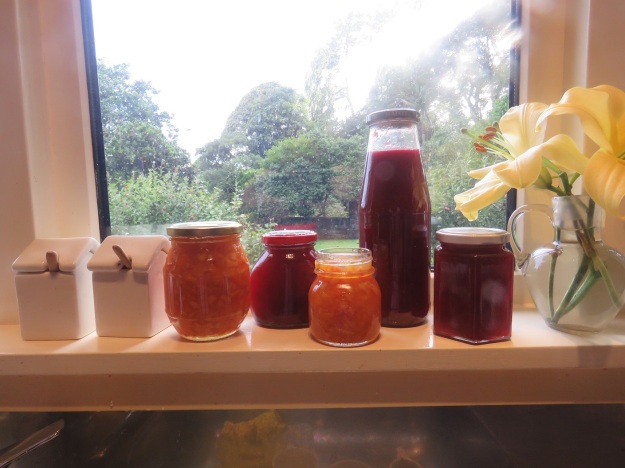
img_3755The result was a few jars of brandied Sultan plum jam though the brandy was a bit of a waste. I am not sure it is discernible except, maybe, to those with the most refined jammy palates. I then went onto fresh orange and ginger marmalade and finished up making some plum sauce. After all that, I felt so virtuous I opened a bottle of wine.
I wrote about the invasive, weedy nature of Commelina ‘Sleeping Beauty’ three years ago. Despite being vigilant weeders here, it is still making its presence felt. Not only is it a weed, it is a weed that is very difficult to eradicate. It has staged an appearance in odd places where it was never even planted. I found another three escapees of it this week.

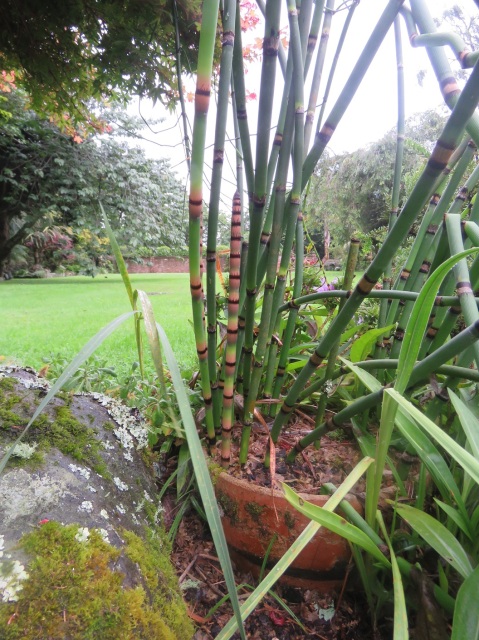
img_3760At least we knew the showy equisetum was invasive. I planted it in a pot because it was an interesting looking plant. It succeeded in breaking the first terracotta pot and making a bid for freedom but I was quick enough to nip that in the bud. This week, I will lift this second pot and get rid of it altogether. It is not good enough to keep sacrificing pots to the cause and it is a high risk plant. I asked Mark if he knew which species it was and he shrugged, saying he has zero interest in equisetums except he does know that it can be dried and used as a polishing agent, though we are talking about fine sandpaper polishing rather than furniture oil. We have another little equisetum that his father planted in the rockery and we have been attempting to eradicate ever since – for decades. We will not be inviting any more members of this ancient plant family into our garden.
But will the auratum lilies in the garden open in time for Thursday's visitors?

But will the auratum lilies in the garden open in time for Thursday’s visitors?

Garden Diary: January 15, 2017 – trees that are no more, pond weed, Maxim Brussels sprouts and the like

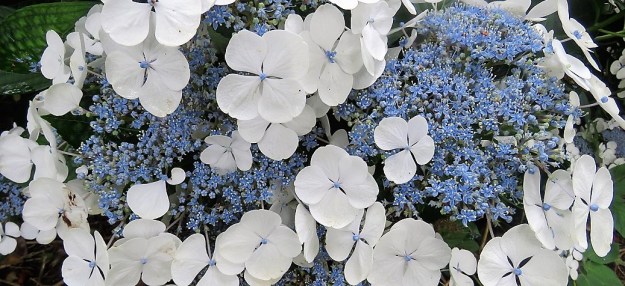
Hydrangea Libelle

Hydrangea Libelle

It is hydrangeas looking gorgeous here this week. If you are on Facebook, I posted an album of last week’s hydrangea images. We regard them as really easy here but it has been pointed out to me that in other climates they are nurtured treasures. Try telling a Taranaki person that when they are a roadside wildflower here.

The decidedly indifferent summer weather continues and we start to worry about whether Mark cleaned the swimming pool for no purpose this season. Neither of us have even been tempted to get in so far. The water temperature has reached a level I find acceptable (anything 24C or over is suitable, in my book) but the air temperature is hardly conducive to swimming. At least it is pleasant gardening weather and on the worst rainy day, I finally made myself sit down and rewrite the Garden section of this site.  I am as guilty as many others of leaving background material untouched and not updated. The next area that needs an upgrade is the one on Jury plant hybrids but if the summer continues in this manner, that may happen sooner rather than later.

I may, however, get diverted. I read the feature by Lynda Hallinan in the January issue of NZ Gardener magazine – ‘With the benefit of hindsight… 40 lessons learned in five years of country gardening’. There is a format I could purloin, I thought. 40 lessons from a country garden after 65 years of intensive gardening. Sure, not all those 65 years were by Mark and me (though if you combined our totals, we are getting close to that), but I could bring you the collective experience from Mark’s great grandfather – who goes back to 1870 and the first plantings here, his parents and now us. So 145 years in total but only 65 of those represent intensive gardening. I need to locate and scan in some of the early slides which, if my memory serves me right, show the development of parts of the garden at five and ten year intervals. Our 40 lessons may be closer to a book than a single article, however.

Cornus proved to be a pushover

Cornus kousa proved to be a pushover

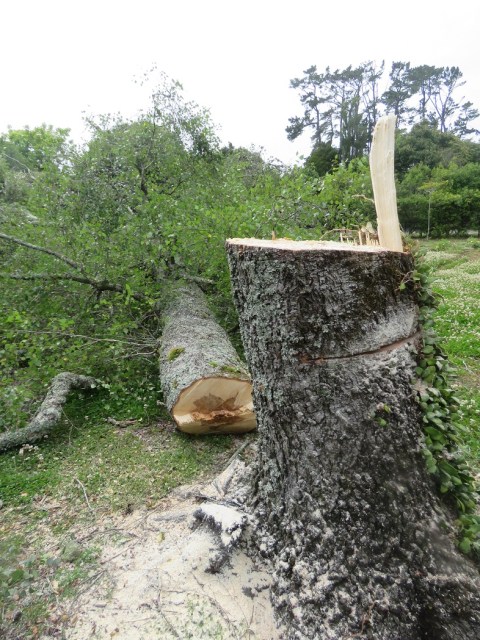
It has been a week of felling trees. The first, Cornus kousa, was a push-over. Literally. Formerly a fine specimen, over the years it had started to die back and I asked Lloyd to cut it back to live growth. He reported that it was very shaky and that he reckoned he could push it over by hand. So he did. Mark can no longer make the only slightly suggestive quip in his repertoire –  inviting people to admire his large kousa. The main trunks were rotten to the core so they didn’t even provide firewood.

Betula pendula is to be winter firewood

Betula pendula is to be winter firewood

The second tree gave Mark a few pangs as he felled it – a large silver birch. We don’t regard Betula pendula as a quality, long term tree in our climate, though they can be graceful and attractive in their time. This one paid the price for casting too much shade in the area where Mark is developing his long term vegetable garden and orchard. It will provide a lot of good firewood so will be appreciated in the burning but Mark couldn’t help but muse upon all the decades it had lived and the changes that have occurred all around it in that time. It is one thing when a tree falls of its own volition because it has given up its grip on life, quite another to fell it because it has simply become expedient. Though, it must be said that we do have plenty of other very large trees here.

On the vegetable front, I sourced three punnets of Brussels sprouts for Mark to plant yesterday – ‘Maxim’ variety, which is his preference. He rarely buys punnets of plants, raising almost all crops from seed but his Brussels are an exception. They are also one of the few brassicas he grows, along with some of the quick-maturing Chinese greens. I particularly dislike broccoli – a controversial opinion, I know. Neither of us are keen on cauliflower and we are terribly sniffy about the merits of cabbage. But both of us enjoy Brussels sprouts freshly harvested from the garden. Though last season, our Californian quail beat us to the crop. We had the first pick of the season’s green beans for dinner last night.

img_3727I spent a happy afternoon puddling in the goldfish pond. Every few years – well, maybe once a decade – Mark catches all the goldfish and drains the pond entirely to start again. In the interim, it needs a bit of ongoing maintenance and the pondweeds and plants were building up too densely. I try and keep the plants to a central strip. The goldfish need cover from circling kingfishers. The weed is problematic but it can be kept from reaching choking proportions by scooping with an old kitchen sieve. There are worse ways to spend a quiet summer’s day when the temperatures are not warm enough to warrant swimming.
Stachys Bella Grigio

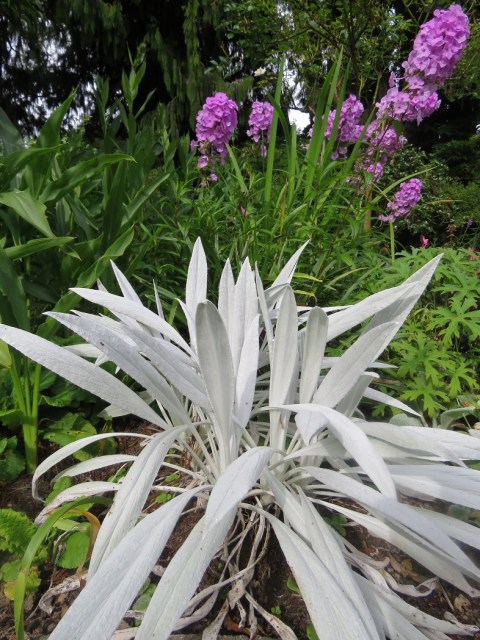
Stachys Bella Grigio

Sometimes good plants can be difficult to place. Take this Stachys ‘Bella Grigio’, new to the NZ market. It is very good – healthy, grows well, keeps its silver white colour, distinctive – so why does it stick out like a sore thumb in the garden? I saw it used extensively in somebody else’s garden a month or two ago and it didn’t look any better there, either. I just have not found the right place for it. The contrast with everything else around it is too stark and I do not think a stachys (otherwise known as lambs’ ears) should be shouting “look at me! Look at me!”. I will have to lift it soon or it will continue to annoy me. I am not convinced I am going to be able to place it here. Maybe it would just be happier in a much more contemporary, simpler garden of sharp contrasts, defined lines and limited colour range, rather than in our softer-edged, more fulsome, romantic style. The jury is still out on this plant, even though it is very good.

Our garden diary this week – from new year resolutions to lilies … to fracking (and bits in between). 09 January, 2017

Aurelian lily season has started

Aurelian lily season has started

We don’t do New Year gardening resolutions here. Much of our daily conversation revolves around gardening and environmental concerns and we know already that 2017 will see us heading further down the track of ecologically sound gardening – soft edged, romantic gardening in a more naturalistic style which adds to environmental eco-systems rather than battling with nature to keep a hard-edged, manicured garden. I am a bit worried that Mark’s growing tendency to embrace all aspects of nature may see him convert to Buddhism. I do not share his reverence for the lowly life forms like snails (he admitted he relocates these) and flies (which he liberates out the windows) but it is an extension of a gentler way of living. If we had a shared resolution, it would be to continue our efforts to tread more lightly on this land we occupy.

I did, however, decide I would discipline myself to keep garden records on a daily basis – in the old fashioned manner of a few simple notes in a diary. In days gone by, when I used to write for our local newspaper, I was contracted to provide a weekly list of advice on what to do in the garden. It often had us scrambling to follow our own advice. As a variation on that, I thought I would try a weekly post on what we have actually done in the garden. Retrospective, but recent, so to speak.

One of his vegetable patches. He calls this one his allotment.

One of his vegetable patches. He calls this one his allotment.

We arrived home from a very hot festive period in Sydney and Canberra to an unusually cool summer in Tikorangi. The lush green appearance of home struck us afresh. While I am hoping we will get some hotter days, temperatures in the low 20s Celsius are more conducive to gardening. Mark has been playing catch-up in his vegetable gardens – hoeing weeds, sowing corn (“have you sown my basil yet?” I keep asking) and thinning and tying in his tomatoes. The main daily harvests are salad vegetables and peas – I eat my daily portions of the latter raw while he prefers his lightly cooked. We consume large amounts of fresh vegetables – the Heart Foundation would nod approvingly, I feel. This is the first year he has grown daikon, the Japanese white radish. Delicious is our verdict, though each specimen is quite large for a family of two.
img_3307img_6655


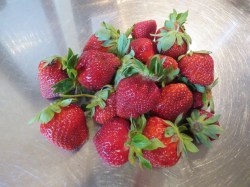
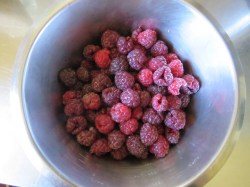
The raspberries are cropping a little late this year and I do not think we will get the usual volume that I freeze for later use. The strawberries are still producing but in smaller quantities and with smaller fruit.

On the rainy Tuesday, Mark summer pruned the grapevines which are grown under cover. I started the summer pruning of the wisterias – leave these to their own devices at your peril. The Higo iris in the park continue to flower and bring us great pleasure (nearing two months in bloom now) but it is the lilies coming on stream now. I picked the first of the Aurelian hybrids that Mark raised. These are currently in one of the vegetable gardens, pending the move to a permanent home in a new garden but in the meantime, I can cut them all I like without spoiling the display.

The floral display in late March

The floral display in late March

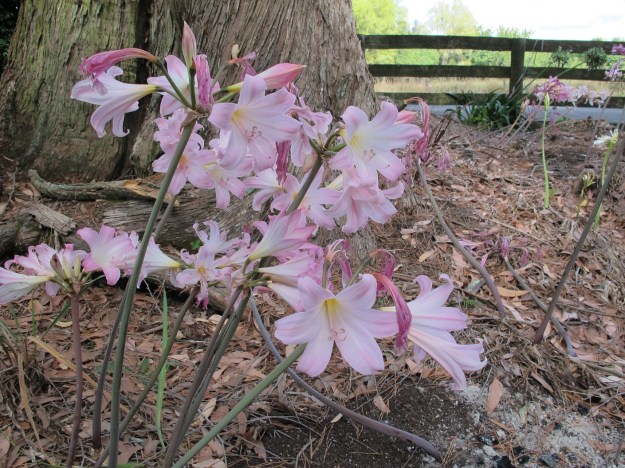
I have been lifting and replanting many of the belladonna bulbs by our main entrance. We grow these as a roadside wildflower. They are a bit strong and bullying to make a good garden plant and their flowering season is brief but they are an early autumn delight. The window of opportunity to lift and divide is narrow because they stay in growth for most of the year and I have been meaning to do this for some years. I discard all the small offshoots and bulbs. We don’t need more than we already have.

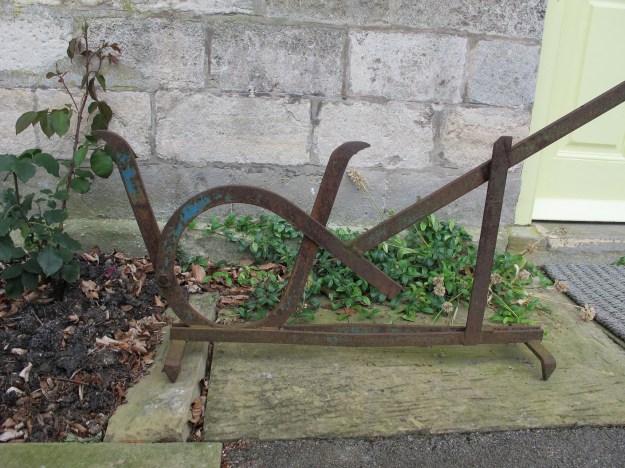
A vintage faggot binder

A vintage faggot binder

Because we have big clumps beneath a huge old eucalyptus that is one of the original trees here, replanting involves gathering up debris which we will use as fire-starters as winter. Some eucalypts shed a prodigious amount of stringy bark and twiggy growth. I want to say gathering faggots, for that is what the term used to be before the word became debased as sneering abuse. Because we lack the time-honoured faggot-binder that I photographed – enviously – in a Yorkshire garden, I stuff them in old sacks instead and stack them in the pine cone shed.

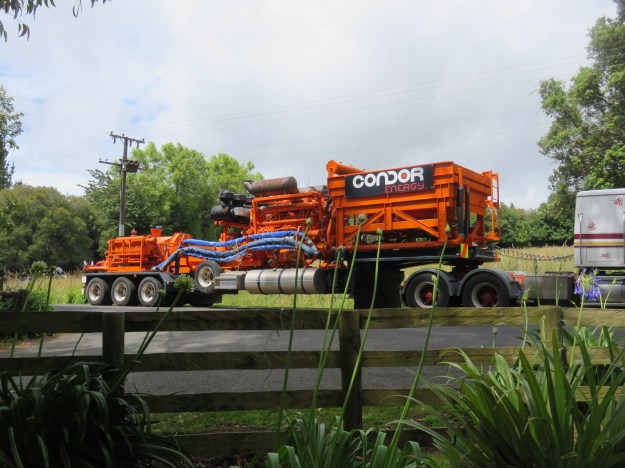
Loading out means many massive loads such as this one

Loading out means many massive loads such as this one

Finally, the omnipresent petrochemical industry. I haven’t written about this in recent times for two reasons. Firstly the pressure lifted somewhat with a decrease in activity due to low global prices for oil and gas (click on the *Petrochem* tab on the top menu bar for more information on how very bad it was at its peak). Secondly, we had to learn to live with it or it would break us, as it nearly broke me three years ago. I have learned to look inwards to our own place – circling the wagons, I call it. Others may call it practicing mindfulness. But the industry grinds inexorably on. Today, they are loading out all the equipment from the latest round of “repairs and maintenance” on Mangahewa C site. You or I may call this fracking and refracking – repeatedly – but in the parlance of this new age, we were assured that this is now called “behind pipe opportunities”. Alas I am not joking.

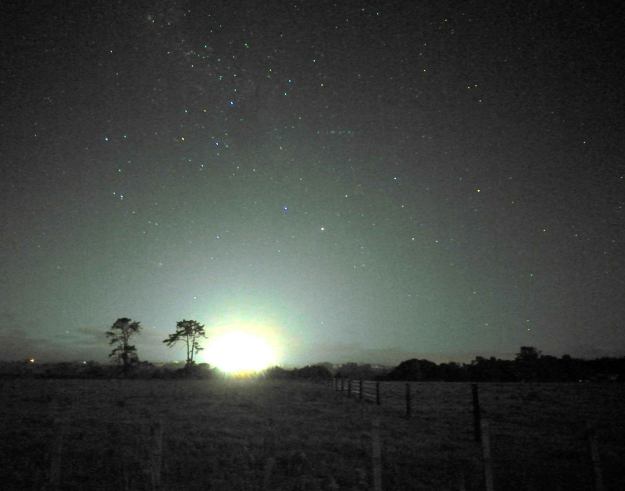
mhw-c

The Mangahewa C site flare last week. Photo: Fiona Clark

Fracking (to get the gas flowing again) is always followed by flaring and this wonderful image from last Saturday was captured by Fiona Clark. We live maybe 2km nearer to this site than she does so we get the benefit of the sound effects too. CO2 emissions and global warming, anyone? This is why I circle the wagons and look inwards to our own patch. The contrast could not be more extreme.

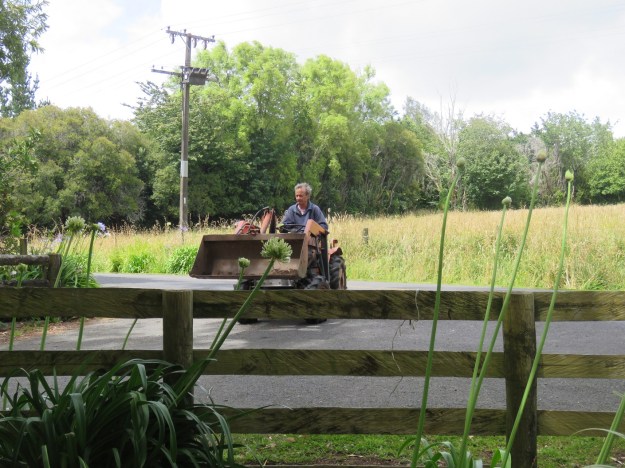
Not exactly circling the wagons - just Mark on our incredibly useful and long lived baby tractor.

Not exactly circling the wagons – just Mark on our incredibly useful and long lived baby tractor.