
Tag Archives: Mark and Abbie Jury

But where are the hollyhocks?

Bragging rights on the home grown pineapple

Bragging rights on the home grown pineapple

“But where are the hollyhocks? I can’t find any hollyhocks,” the garden visitor said last weekend. I can honestly say that that is a first here. Nobody has ever commented on the absence of hollyhocks before. But it is true. We have none. I haven’t tried growing hollyhocks since the children were young and school gardens were still a part of the gardening calendar. The problem with hollyhocks is that they are very prone to rust in our climate which spoils the look.

There are, of course, many other plants we don’t grow. I can’t think that we have any petunias and gerberas are notable for their absence. Sweet peas we lack. Ditto tuberous begonias and we are distinctly light on fuchsias. Some plants we do not grow because we don’t like them, others because they don’t like us. Some are not worth the effort and presumably at least some are because we have never even thought of growing them.
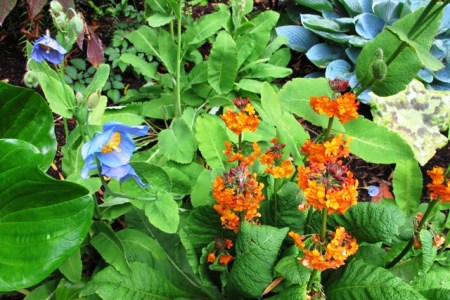
The cold border in the park with meconopsis and Inshriach primulas

The cold border in the park with meconopsis and Inshriach primulas

The challenge for many a keen gardener is to grow plants which are either very difficult or are well out of their natural zone. We certainly identify with this group. It is enormously satisfying to grow something which is not known in your local area. To this end, we are always trying to stretch the climatic boundaries and we do have options in a big garden. Mark put his cold border onto a south facing slope where temperatures are noticeably cooler and he has managed to get some of the plants which want a colder winter settled in. The blue poppies (meconopsis) from the Himalayas, less common but colourful Inshriach primulas from Scotland, the Chatham Island forget-me-nots and the deep coloured burgundy hellebores are all much happier in cooler conditions.

On the ridge above, the Marlborough rock daisy (Pachystegia insignis) and trickier forms of astelias perch in exposed conditions  compensating for our high humidity and mild temperatures. A different north facing slope gives us hotter conditions for the aloes and yucca plants that will rot out elsewhere.

Some highly desirable plants defeat us entirely. We’d certainly grow herbaceous paeonies if we could but they want low humidity, hot, dry summers and dry, cold winters to do well. There is no way we can simulate those conditions. Having had a Dunedin childhood, I loved the Bleeding Heart plant (now named Lamprocapnos spectabilis but formerly and widely known as Dicentra spectabilis). I bought several over a few years to try in different parts of the garden but they never returned for a second season. There was a little lesson there for me – just because garden centres sell a lovely looking plant in full flower does not mean that it is suitable for the local area. Oftimes they are shipped in from places where they do grow well. That is a lesson many others have learned, I am sure.

Where we draw the line is when it comes to having to spray in order to grow plants out of their normal climatic zone. We are not prepared to festoon sensitive plants in frost cloth either but that is because we can’t be bothered and we don’t want that ghostly presence of draped shapes in the garden. Chemical intervention is a step too far altogether.

I have never gotten over my shock when a very experienced gardener told me she kept her alpines alive in our conditions by drenching them in fungicide once a week. I can no longer look at her alpine area as an example of good gardening. Fungicides are not that good for the environment and in my opinion, good practice dictates they should only be used when absolutely necessary and not as a routine application. So no hollyhocks here – we are not going to spray to keep them healthy and we don’t want diseased plants sitting around festering.

If you are not a gardener who relishes the challenge of pushing climatic boundaries, then keeping to plants which are happy in your conditions is going to make life a whole lot easier. This does tend to mean you can’t have a sub tropical garden in Hamilton because winters get cold and frosty. Second daughter attended Waikato University a decade ago and she commented on the gardens she walked past which had clearly been “landscaped” in summer on a tropical theme. Come winter, the plants were blackened, looking very sad and often dead. If you are a novice gardener, take up walking. You can see much more on foot than you will ever see from a car window and noting what is growing well and is being repeated in gardens around your area is a good guide. It may also be an indication of what plants are available for sale.

For those of us who like a challenge, there is nothing quite like the bragging rights that come with… a pineapple! Yes, this was grown and harvested from our very own pineapple patch set against a warm brick wall. Not as sweet as a Dole one but not exactly a run of the mill crop for our area.

First published in the Waikato Times and reprinted here with their permission.
The last day of Festival 2012


Tomorrow marks the final day of the Powerco Taranaki Garden Spectacular for this year. While our garden remains open, the special flavour of Festival ends tomorrow. This means that after that, Mark and I will not be standing in attendance at the entrance all day, meeting and greeting and answering questions. Nor will there be tea and coffee available at all times. And plant sales end for another year.

This morning dawned grey and quickly deteriorated to the worst possible conditions – windy, cold and with torrential rain. Frankly, we were astonished that over 60 determined souls braved the weather to turn up and visit the garden in the morning. But by lunch, in typical Taranaki style, the sun came out, the rain stopped and all the flower and the garden is looking its smartest.

We are open from 8.30am until 5.00pm daily. Admission to the garden during Festival is $12.00 or 3 x Festival tickets. Garden entry includes tea and coffee at this time. We are open from 8.30am with final garden entries at 5.00pm each day. Plant sales end tomorrow.

589 Otaraoa Road, RD 43, Waitara 4383, New Zealand
Email: jury@jury.co.nz | Tel & Fax: +64 6 754 6671

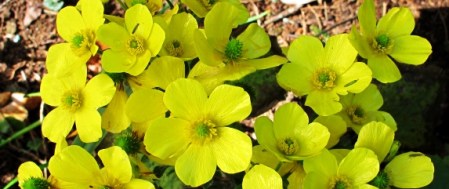
Not a common buttercup - Ranunculus cortusifolius from the Canary Islands

Not a common buttercup – Ranunculus cortusifolius from the Canary Islands

Plant Collector – celmisia

Celmisias - New Zealand's mountain daisies

Celmisias – New Zealand’s mountain daisies

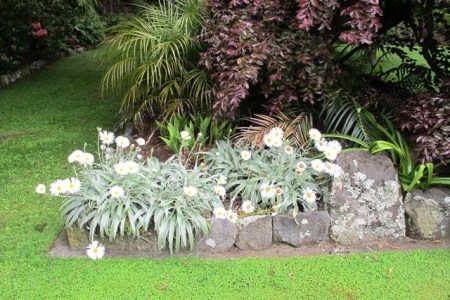
Sometimes nature needs a small helping hand and getting these New Zealand mountain daisies to grow in humid and mild coastal conditions is one such case. These are celmisias and to get them to survive here, we have had to cross two species. That gives hybrid vigour to the offspring and means they don’t die out in the first summer though it has to be admitted that they are still not long lived here and often die out by the fifth or sixth summer. It is perhaps easier to understand when you consider that one of the parents is Celmisia coriacea which is common in Fiordland and also found around Mount Cook in the scrub above the bush line and into the alpine meadows. It is coriacea which brings the lovely silver leaves which are so desirable.

The other parent is Celmisia hookeri which is an Otago species, found from coastal to montane areas so it has more tolerance of lowland conditions. Its foliage is greener rather than grey but it brings more vigour. Why do we bother? Because they are lovely daisies which mass flower in spring for us and look good all year round with rosettes of slightly furry silver foliage. We like to integrate out unique native flora with other plants and it is particularly satisfying to see the celmisias growing beneath our rimu trees.

First published in the Waikato Times and reprinted here with their permission.
Powerco Taranaki Garden Spectacular update

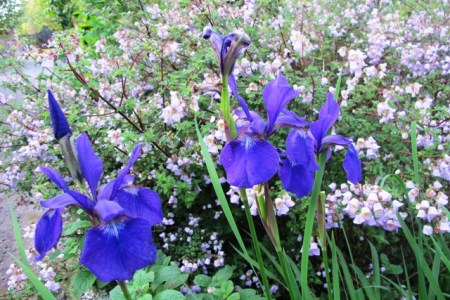
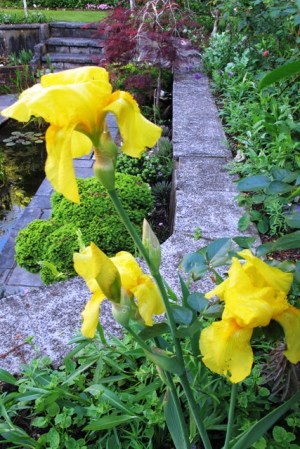
Iris sibirica and Jovellana punctata

Iris sibirica and Jovellana punctata

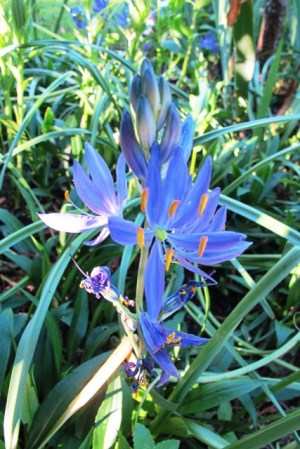
Blue cammasia

Blue cammasia

There are a mere three days to run for this year’s garden festival – the Powerco Taranaki Garden Spectacular. The pattern here has been very busy mornings and much quieter afternoons. Tomorrow is the last of our guided walks at 11am – the popularity of these has become a standing joke here. The agreement is that if there are under 10 people, Mark will lead them, over 10 and it is mine. So far, this year and last, they have all been mine. Mark is now threatening to pressgang unwilling participants should any look to fall short of the magic 10. It was closer to SIXTY on Tuesday. That was a minor challenge.

We are open from 8.30am until 5.00pm daily. Admission to the garden during Festival is $12.00 or 3 x Festival tickets. Garden entry includes tea and coffee at this time. We are open from 8.30am to 5.00pm each day. Plant sales continue until Sunday only.

589 Otaraoa Road, RD 43, Waitara 4383, New Zealand
Email: jury@jury.co.nz | Tel & Fax: +64 6 754 6671

Powerco Taranaki Garden Spectacular- day 2


Day 2 of our annual festival has passed. For us the highlight was having Guitarra playing in the garden – a wonderful blend of classical guitar with Spanish and South American influences. The gentle melodies wafting through the upper garden was a delight for garden visitors. At the time we had the Galston Garden Group from Australia visiting. I suspect there were a few ring-ins with them – can’t think that the Galston group has a catchment from Sydney to Perth.

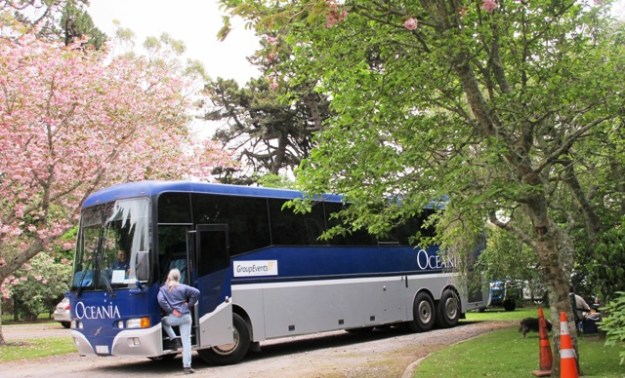
Our Lloyd, the keeper of the carpark and manager of parking at peak times, kept the coach driver entertained.

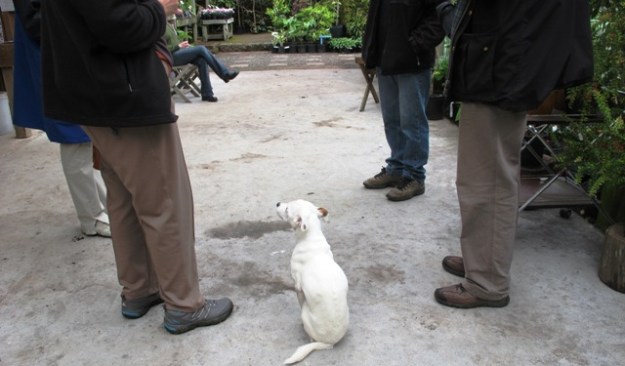
The dogs had a busy day. Spike was an attentive participant in the conversation of one group of visitors.

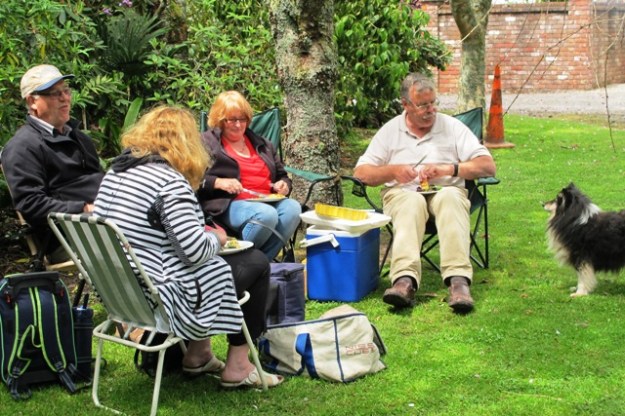
Zephyr was more interested in joining another, well organised group for their luncheon in the carpark.

If you are in the area, admission to the garden during Festival is $12.00 or 3 x Festival tickets. Garden entry includes tea and coffee at this time. We are open from 8.30am to 5.00pm each day.

589 Otaraoa Road, RD 43, Waitara 4383, New Zealand
Email: jury@jury.co.nz | Tel & Fax: +64 6 754 6671