Tag Archives: Mark and Abbie Jury

Tikorangi Diary, September 9, 2011

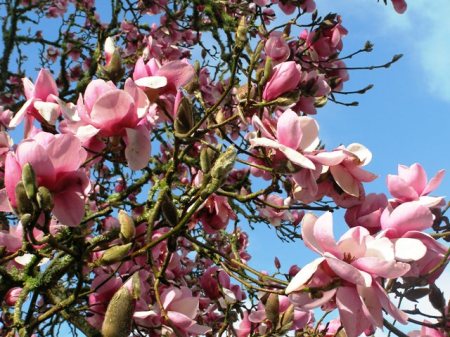
Magnolia Felix Jury in its glory now

Magnolia Felix Jury in its glory now

Latest Posts: Friday 9 September, 2011
Back in business! Today sees the resumption of weekly series of posts, but this time first published in the Waikato Times. It feels good to be back into regular writing to deadlines, believe it or not.

1) Plant Collector – campanulata or Taiwanese cherry trees and a photo of a feeding tui which represents about the 40th attempt to capture the moment.

2) Blighted! I don’t even like buxus hedging, but in deference to all the searches I see looking for information on wretched buxus blight, herewith the essential information as far as I can decode it.

3) Finocchio – the first of a new series looking at a different vegetable crop each week.

4) The constructions at Paloma Gardens – not from the Waikato Times, this one, but a piece I wrote for Weekend Gardener looking at the constructions and creations of the enterprising Clive Higgie. It was very interesting watching Alan Titchmarsh talking about the Victorian garden on TV last week. There is a shade of those Victorian gardeners to Clive – the flamboyance, the drive to be genuinely original and the passion for collecting plants which are different, new and interesting.

Prunus Te Mara and a seedling magnolia in our carpark area

Prunus Te Mara and a seedling magnolia in our carpark area

Tikorangi Diary: Friday 9 September, 2011

The abnormally cold weather of late winter may have taken out the early magnolia display (well, it did, to be more precise) but a week of mild weather has brought on the next flush of blooms and the garden is full of colour, flowers, fragrance and birds. This is when magnolias which flower down the stem (like Felix Jury) come into their own. The first blooms were taken out by the weather, but fresh flowers have opened and they look wonderful whereas cultivars like Lanarth, which only set buds on the branch tips and open all at once, was a non-event this year. If you want to see the magnolias and early spring garden, we are offering one free adult garden entry with each magnolia purchase today and this weekend. You can check out what we have available under Plant Sales.

Prunus Te Mara has never looked as good. This is a semi evergreen cherry and I had been threatening it with the chainsaw because I was underwhelmed by it. The winter chill this season took most of the foliage off and the flowering is considerably more impressive. I would guess that this is cherry better suited to areas with colder winters.

Moraea spathulata

Moraea spathulata

In the bulbs, it is Moraea spathulata which has been a minor triumph. It is not that it is meant to be difficult to grow, just that it has taken several attempts to find the right place for it in the garden. Apparently the front row of the rockery suits it just fine because it is flowering in a most obliging fashion. M. spathulata grows from a bulb which is similar to its more refined siblings, villosa and polystachya, but it is evergreen and its exceptionally long, strappy green leaves can be a little scruffy in the wrong place. I can forgive that when I see the delicate yellow iris blooms.

A Sign of the Times

We are amused. We have received a letter from the Taranaki Rhododendron Group advising us that as they no longer have competitive displays, the committee is looking at what to do with the trophies. There are, apparently, three options. The first is to return them to the donors or their families. The second is to donate them to the local museum (in which case, please would we supply full details of the horticultural achievements of the donor). Should the museum not want them, the third option is for the committee to decide on their disposal.

Quite some time ago, Mark went all out one year with exhibition blooms and, as far as we can recall, he won all but one of the trophies. In due course, a large carton arrived here with the engraved trophies for us to hold for the year. They were fairly extensive. Besides the usual cluster of silver cups, there was a very large barometer which did not work, a large crystal vase which made up for in size what it lacked in style, the odd tray or two, maybe a shield and a fairly remarkable, large wooden piece carved out of rhododendron wood in a freeform fashion, adorned with handpainted clematis. Maybe it also had Mount Taranaki on it. It was certainly a curious mixture of European folk art and traditional Maori carving designed to be the centrepiece of any room in which it was placed. I am sorry to admit that these trophies spent the whole year of our possession living, unseen, in their carton. I am sure it fell to me to clean the silverware before they were returned for the following year’s awards.

I banned Mark from ever entering again. Though, in his defence, he had already decided that it was not fair for amateur members to be competing against professionals and it would be poor form for him to try and repeat his successful performance.

Fortunately the silver cup which Felix donated (for the best maddenii hybrid bloom) is of modest proportions and reasonably inoffensive. We have advised the Rhododendron Group that it seems most appropriate to return it to us as part of our family history. I think we can spare the local museum from the problem of what to do with the Felix Jury cup.

Buxus alternatives for garden hedges

With buxus blight cutting a swathe through many gardens, it is clear the problem is here to stay. We set out to review some of the alternative plant options. The advantages of box for low hedging include:

• only needs to be trimmed once or possibly twice a year
• has a very small leaf which means that trimming with hedge clippers doesn’t leave unsightly half leaves visible
• good dark green colour
• sprouts from bare wood if trimmed hard
• so easy to root from cutting that it is cheap to buy and easy for the home gardener to propagate more plants
• will also tolerate a certain amount of shade

We have yet to find a proven like-for-like replacement, only plants that fit some of the criteria.

1) Lonicera nitida – ticks all the right boxes bar one, but that is an important one. Good dark colour, tiny leaves, easy to propagate, cheap… but it grows so rapidly that you will have to clip frequently. This may be as much as once a month in the growing season. It will get very twiggy and leggy if you don’t keep it tightly clipped. The same goes for teucrium which needs even more clipping and isn’t even green, though it does make an attractive hedge.

2) Myrtus ugni, usually referred to as the NZ cranberry. Little leaves, easy to strike from cutting, easy to train and can be kept low, delicious fruit but it develops bare patches. It is really only an option for the edible garden area and it won’t make a nice tidy little hedge that resembles buxus. It doesn’t like shade and can be thrip-prone.
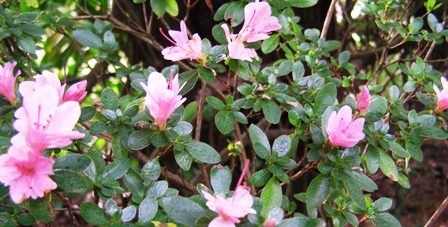
Kurume and Gumpo azaleas - there are also white flowered options for those with refined tastes

Kurume and Gumpo azaleas - there are also white flowered options for those with refined tastes

3) Gumpo or Kurume azaleas – these are the small leafed, low growing, evergreen azaleas. Good foliage, clip well, can be kept small though the leaves are larger than buxus and they have excellent shade tolerance. They flower, which some gardeners may not want. Gumpos tend to have larger flowers than the Kurumes. The big disadvantages are the expense per plant which will be prohibitive for many gardeners and the difficulty in sourcing large enough runs of the same variety. Some will get thrip (particularly the Gumpo types) so choose the variety with care. Evergreen azaleas are much easier to strike from cutting than most rhododendrons so keen home gardeners with a long term view, may want to try building them up at home.
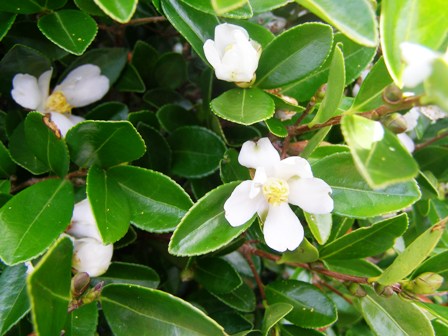
Camellia hedging options - C. brevistyla
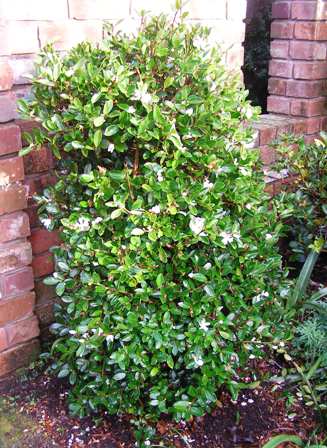
Camellia hedging options - C. brevistyla

Camellia brevistyla

Camellia brevistyla

4) Camellias – some of the slow growing, small leafed varieties are suitable though the leaves will still be larger than buxus. They trim well, resprout from bare wood and are a good colour. There is a limited number suitable for keeping down to a metre, let alone 30cm, so varietal selection is important. Camellias are not easy to root from cutting for the home gardener and can be expensive to buy. Microphylla and brevistyla set seed freely so could be raised from seed at home if you can find a parent plant. Itty Bit is a true miniature for low hedges. Night Rider is very slow growing, though ultimately larger in size. You could keep it to a metre but it will be expensive to buy. We have opted to go the camellia route in the event of our moderate metreage of buxus hedging getting blighted and have raised seedlings of C. microphylla in the nursery for replacement.
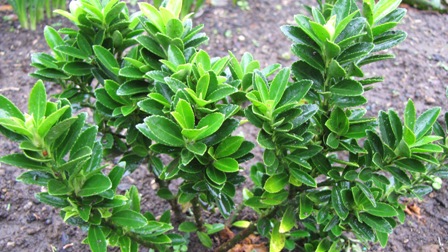
Euonymous

Euonymous

5) Euonymus – there are assorted selections of small leafed euonymus being hailed as buxus replacements, including one named Emerald Gem. These look promising but international reports are that euonymus are somewhat disease prone and local reports are that it can be thrip-prone which will rule it out for shady areas. We would recommend trying this as hedging in a modest way before getting too carried away and we have yet to be convinced of its long term merit. It should be relatively easy to root cuttings and is sometimes available in a hedging grade at a reasonable price.
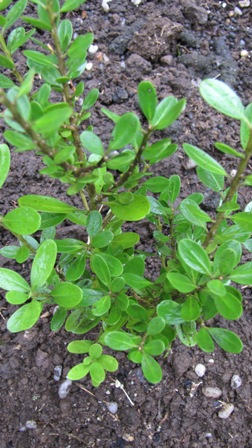
Melicytus obovatus

Melicytus obovatus

6) Our friend Tony is sold on Melicytus obovatus, a native from northwest Nelson which takes clipping very well. In the wild it will grow to 2 or 3 metres (but common buxus can become a huge shrub resembling a small tree left unclipped). Plantsman Terry Hatch at Joy Plants is very keen on this melicytus and produces it for sale. As far as we know, it has yet to be tested in the long term (by which we mean as a garden hedge past a decade) but it is worth a close look.

7) Selected pittosporums will make good taller hedges but you are fighting nature to keep them to the low level of edging buxus. Their leaves are also correspondingly larger. The compact pittosporums, Golf Ball and similar selections, make a quick option for clipping balls and topiary, if you don’t mind the paler shade of green. Keep them in full sun with plenty of air movement too.

8) Corokia will make a good hedge and there are dwarf selections available but they are harder to trim if the new growth is left to harden. If not cared for, they can develop bare patches.
Ilex crenata 'Helleri'

Ilex crenata 'Helleri'

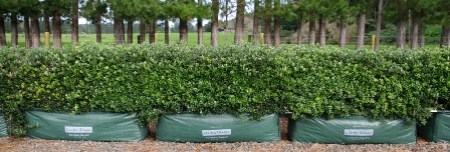
9) Twining Valley Nurseries in Pokeno are producing Ilex crenata ‘Helleri’ as a buxus sub. Ilex are the holly family and crenata is a small leafed species from Japan and Korea. It is recognised as a good hedging plant but I have only seen it in photographs and I don’t know how low it can be kept. It is worth investigating.
New Zealand totara - a long term prospect for hedging

New Zealand totara - a long term prospect for hedging

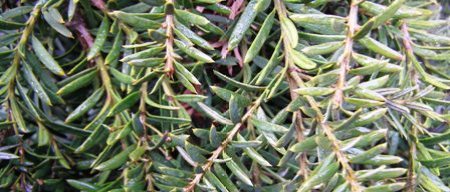
10) Our native alpine totara, Podocarpus nivalis, stays very low and can be clipped hard to get dense foliage. However, it is a long term option, it will be expensive to buy in quantity and it does not have the good green of buxus.

We have yet to hear of low hedges which have stood the test of time – by which we mean 10 years, not one year. Until there are more reliable reports, we would not advocate spending too much money and effort on major plantings of alternatives. There simply are no easy answers for a replacement for buxus and we keep coming back to the view that it may be timely to review the role of low hedges in New Zealand garden design.

For earlier articles on the topic of buxus blight and the role of buxus in a garden situation, check out:
* The appropriately named buxus blight
* There is life beyond buxus hedging
* Trouble with buxus
* DEBBO (that is: death by bloody buxus overload)

The ilex again

The ilex again

Tikorangi Diary: Thursday August 25, 2011

If you are in New Zealand and have Sky, don’t miss Alan’s Garden Secrets on the Living Channel at 4.30pm on Sundays (rescreened at 8am on Monday). It is the inimitable Alan Titchmarsh, a doyen of British gardening. Last Sunday he was tracing the history of seventeenth century English gardening – Tudor England. Buxus hedging, knot gardens, parterres and all that. It was absolutely fascinating, at least the first half was. It fell away a bit in the last section. But it gave much food for thought and has stimulated quite a bit of conversation here since. I am wondering whether the Waikato readers will be ready for some thoughts on how we have taken buxus hedging and suburbanised it. The new look garden pages get launched at the start of September and I will be back into regular, weekly contributions.

We have a profound respect for Alan Titchmarsh who has a wealth of experience. Coming up this Sunday is his interpretation of eighteenth century gardening and we will be watching it avidly. But it should come with a warning. Titchmarsh’s style is very much of the people – he is an unpretentious Yorkshireman. Unfortunately, in this series, that translates into little DIY segments. The thyme knot garden was bad enough, but the trompe l’oeil installation plumbed hitherto unsuspected depths of naffdom. Mark and I looked at each other in utter disbelief and laughed. What else could we do? Goodness knows whose idea it was to intersperse an otherwise excellent programme with demonstrations which would be more fitting to our local Fringe Garden Festival. When the credits rolled at the end, we realised that these demonstrations were taking place in the Old Vicarage Garden in Norfolk, which we have visited. We are now wondering if they left Alan’s trompe l’oeil in place after filming….

It was this TV show which spawned three tweets. If you don’t follow Twitter, the format may confuse you (the essence of Twitter is brevity). If you do follow Twitter, I tweetie under the name of Tikorangi.

#Gardenornamentation 1: If you can’t afford the real thing, you are better off with nothing (repro classical best avoided).
#Gardenornamentation 2: Anything armless or white – best shunned I think.
#Gardenornamentation 3: Hot trend prediction: obelisks. You too can make your garden look like everybody else’s. Just need a focal obelisk.

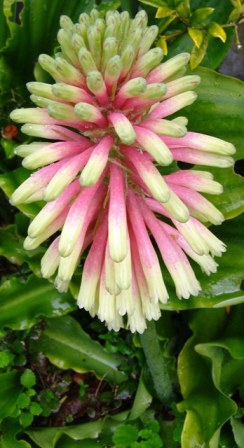
On the gardening front, a week of fine weather is helping the magnolias but we are still nowhere near peak display yet. The snow and frost hit the early varieties badly but the mid season varieties are untouched. We are open as usual for plant sales on Fridays and Saturdays, though we are around most times on other days. The garden is now open for the season but wait another week or two if you want to see a spectacular magnolia display. However, the daffodils, Hippeastrum aulicum, reticulata camellias, Prunus campanulata (complete with masses of tui) and early azaleas are all looking lovely.

Dividing calanthe orchids

1) We are besotted with calanthes which are an obliging ground orchid suitable for humus rich woodland areas which do not get too frosty or cold. Mark is out digging and dividing them right now, though he feels he should have been onto it in June or July. He is having to take great care not to break off the flower spikes which are showing now.

2) When the clumps are teased apart, it becomes clear that each section of foliage has a chain of rhizomes attached.

3) Break the rhizomes apart with care. Each will form a new plant. Discard any soft or mushy rhizomes. While these orchids will make a full set of new roots each year, leaving the old ones on at this time gives something to anchor the nubbly rhizome into place when you replant it.

4) The top rhizome of the chain will have the foliage attached. Leave this intact and attached to the first rhizome. Replant in well cultivated soil with plenty of compost or humus added. As the rhizomes tend to run along very close to, or on the surface, they only need to be lightly covered but they need well tilled soil below to get their roots down. The division with foliage will still flower this year. The dormant rhizomes should come into growth soon and some may flower next year, the remainder the year after.