Tag Archives: Nerine bowdenii

How many Nerine bowdenii did you say?

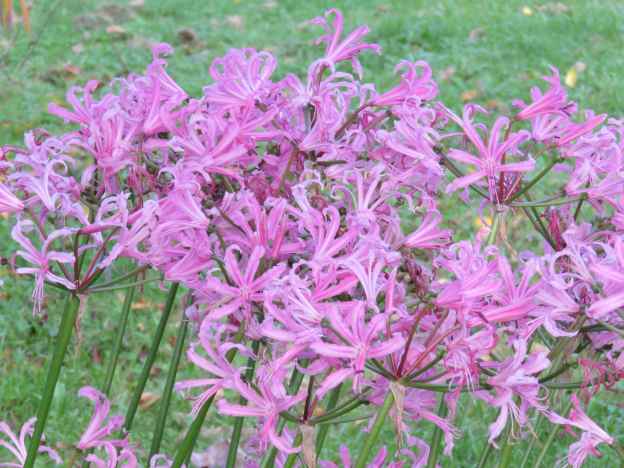
There is nothing too special about Nerine bowdenii. It is the last of the autumn season to flower for us. We have a particularly attractive patch which is a delight every year, planted on the edge of the main lawn, just beneath Camellia sasanqua ‘Elfin Rose’ which is more or less the same shade of sugar pink.
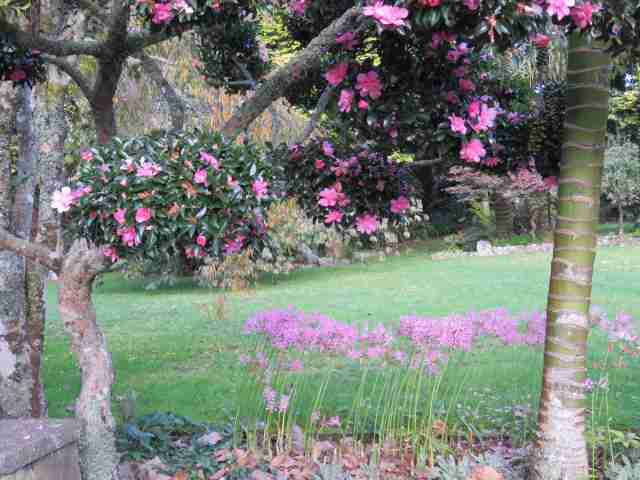
Camellia ‘Elfin Rose’ and Nerine bowdenii beside the drive

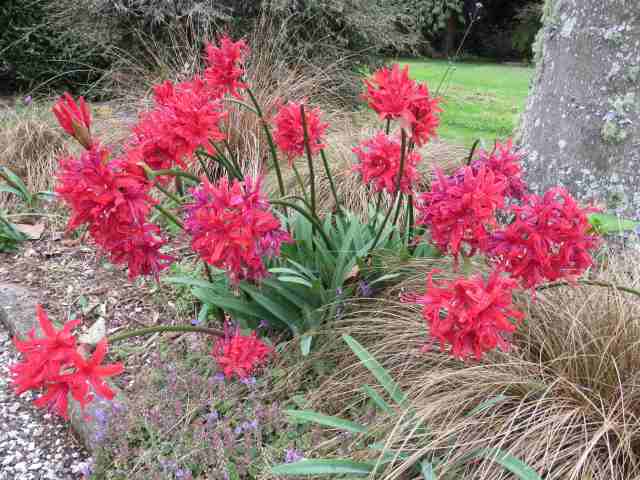
There were three large pots of N. bowdenii sitting on an area of mat left over from our nursery days which I thought I would gather up because I had a space to plant them in an area of the Iolanthe garden which I am working over. “There are more in the propagation house,” said Mark. Good, I thought. I have just the spot where they can star in autumn and be anonymous and unobtrusive for the rest of the year.

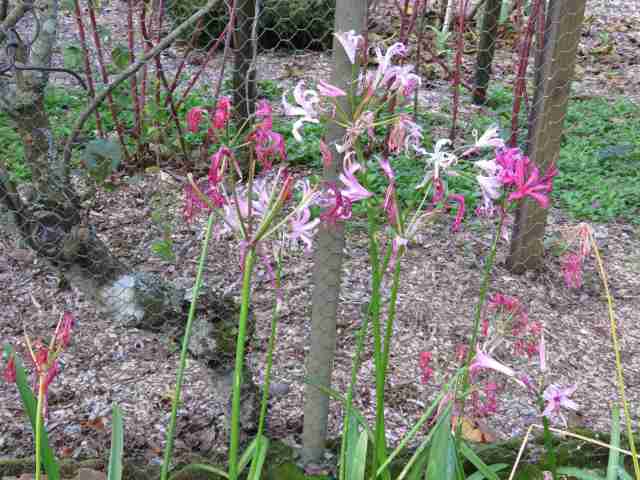
I don’t often go into the propagation house; it is basically Mark and Zach’s territory. So when I went to gather up the bowdeniis to plant, it came as a shock. Reader, there are seven trays of them with an average of fifteen pots per tray and many of those pots had multiplied up to be about five per pot. That is a lot of bowdenii.

More surprising to me was the variation within them and it dawned on me that these were not straight species bowdenii,  but Mark’s hybrids. Over twenty years ago, it had entirely escaped my notice that he was faffing around hybridising bowdenii. It is way easier to grow as garden plant and to keep flowering consistently than the more desirable N. sarniensis types and he was trying to see if he could combine that robust nature with the variations in colour and size of sarniensis.
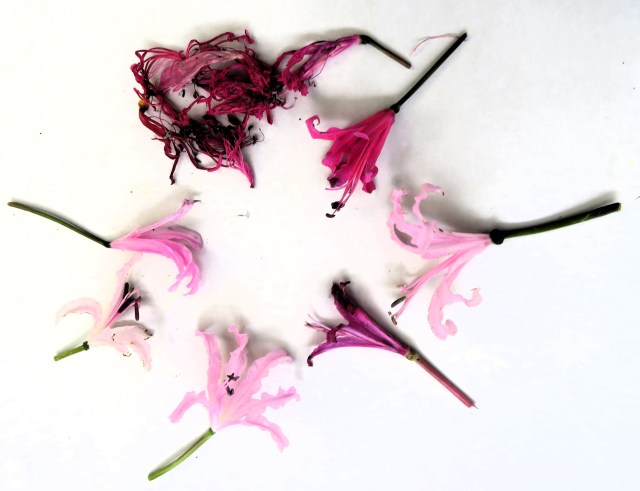
Not many flowers left as it is the end of the season but you get the drift

It was the deep colours that surprised me. The species can show variation but is commonly sugar pink. Indubitably sugar pink. Mark’s seedlings ranged from almost white, through pale pinks and bicolours to very deep pinks verging on red to some knocking on the door of the smoky shades that Felix was working on with his sarniensis hybrids.

Clearly, I will have to expand the area I was giving over to bowdenii in the Iolanthe garden and it is going to be a great deal more interesting than just a seasonal wave of sugar pink. I am looking forward to next year. In the meantime, my challenge is integrating hundreds of bowdenii hybrids into a garden that is perennial-cottage in style without turning it into what looks like a nursery trial bed. It may be more river than stream or wave.
Planting them in their new home beside the raspberry coop. I expect a good show next year.

In recalling the history of those nerines this morning, Mark tells me he was inspired to start experimenting with bowdenii crosses when Auckland plantsman and nurseryman, Terry Hatch, showed him an impressive hybrid he had high hopes for. “But,” he added, “they are still eclipsed by the nerines created by Monty Hollows in Palmerston North”. I remember over 50 years ago, when we were both students at Massey University, that Mark took me out to see Monty Hollows’ astounding chrysanthemums but I never saw his nerines.

I had to look up Monty Hollows. Brother of more famous Fred Hollows, he died in 2019, aged 91, and is largely remembered as a giant in the local cycling scene. A man of many talents and enterprises, horticulture also featured and he exported nerines to Asia. Monty, others may remember you for your energy, enterprise and loyalty to cycling but Mark has never forgotten your achievements with nerines where you set a very high bar.

Notably nerines

Nerine sarniensis hybrids in the rockery

It is nerine season and they certainly put on a great display. I don’t love them in spring when the foliage is slow to die off and looks scruffy as all the spring bulbs light up the rockery, but, come April, all is forgiven.

I need to put a tie on the two pink ones which have inveigled their way amongst the orange-red so I can move them. While we are fine with the adjacent blocks of clashing colour, they look better to my eye if they are adjacent, not mixed together.

Most of our nerines are sarniensis hybrids which give the range of colours and full heads of flowers. Often referred to as ‘Guensey lilies’, their connection to Guernsey is solely due to the cut flower trade because they are native to the Cape area of South Africa.

One of Mark’s unnamed hybrids that matures to purple, planted amongst our native carex grasses. It is a very good head of flowers with long stems but the stems really need to be a little more sturdy to hold the big head upright.

The sarniensis hybrids need really good drainage, open conditions and sun. Because they are in leaf in winter, they aren’t suitable for areas that get heavy frosts. These are bulbs that want to grow where their bulbs can bake in the sun so the rule of thumb is to plant them to a depth of no more than half the bulb with the other half and the long neck above the soil. They are also happiest in a crowd and can form a clump above the soil. I will divide the clumps when they get too congested and I discard the many small bulbs before replanting the larger ones close together.

Smoky shades
Undeniably vibrant shades. I find the highlighter pink particularly so.

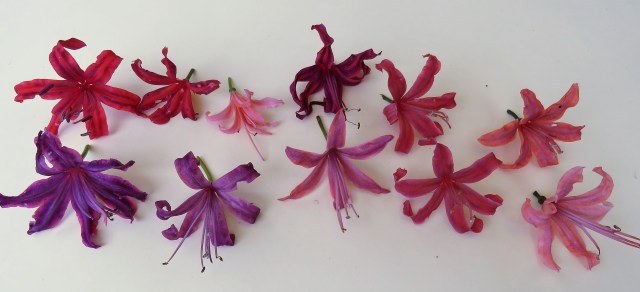
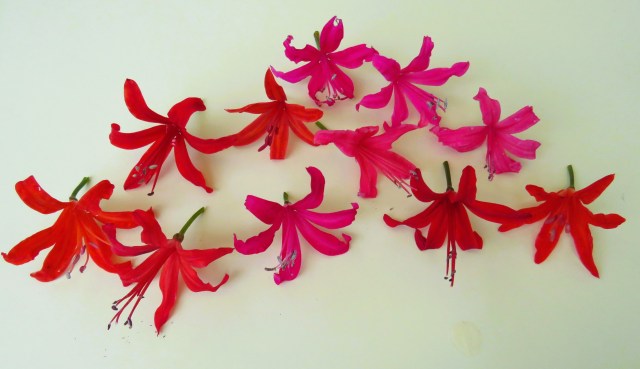
We have a few of the early Exbury hybrids and the rest are all the result of Mark’s dad, Felix, hybridising to get a wider range of colours, along with some by Mark in days gone by. Felix particularly liked the smoky shades and they have a subtle charm of their own, as do the ones that mature to blue-purple shades. That said, the vibrant orange, clear red and highlighter pink ones are unashamedly bold and make a loud statement of their own.

The sarniensis hybrids are not that easy to find for sale. Local readers might like to hop in their car right now and head out to the Inglewood Sunday car boot sale because I saw somebody selling a really good selection of different colours in bloom there last Sunday. It is likely they will be there again today and maybe next week while we are at peak bloom. Beyond that, I don’t know where they are available but don’t expect them to be cheap like mass produced daffodils and tulips.

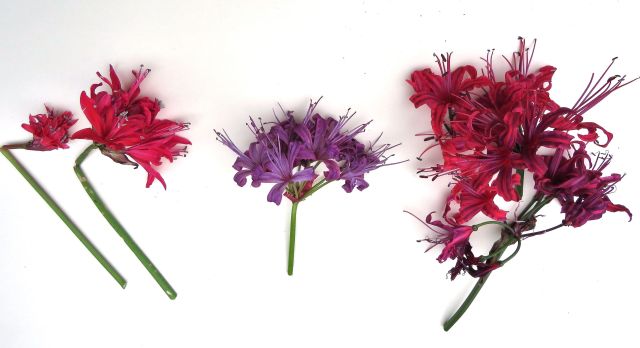
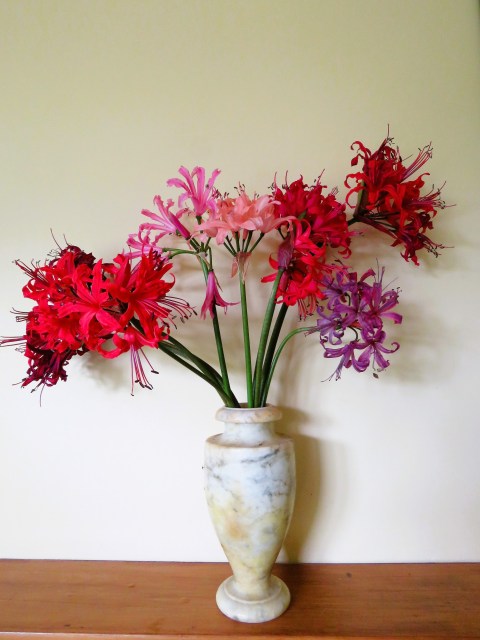
As I gathered single flowers to show the range of colours we have here, I picked up a few that had been snapped off. The one in the centre I think I can blame on Ralph dog who is no respecter of gardens. The ones on the right were clearly leaning over onto the grass where they fell victim to the lawnmower. The ones on the left are weevil damage on the rockery. If you zoom in on the second left, you can see the telltale damage on the stem which eventually weakened it to the point of breaking and flopping near the flower. Notwithstanding an exuberant dog, lawnmower and our localised patches of weevils, there isn’t much else that attacks these plants.

Nerine pudica on the left and bowdenii on the right

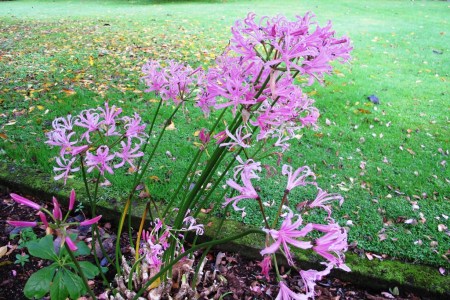
While we favour the sarniensis hybrids as garden plants, we also have a fair swag of N. bowdenii seen here on the right. There was only stem open so far two days ago when I took these photographs because it comes into bloom a little later than the sarniensis. It is easier to grow with stems that are strong enough to hold up the truss of flowers and is certainly more widely available than most others. On the downside, its truss is not as full of flowers and it basically comes in shades of hot pink although there is a white form, the internet tells me.

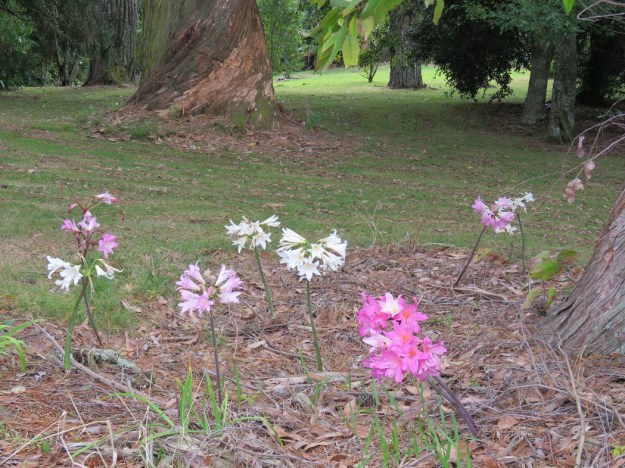
On the left in the photo above is N. pudica which I had forgotten about until this stray pot in the nursery opened its blooms. Several years ago, I planted a whole lot out, mostly in the rockery, and I had forgotten about them because I can’t recall them ever flowering there. I think I have found one patch of them which I shall watch to see if they do bloom. The same thing happened with the Lycoris aurea that I planted in the rockery a decade ago. They have never flowered again which is a pity because they were lovely – a most attractive shade of yellow and looking just like a yellow nerine except they are a lycoris, not a nerine. I live in hope that they are still there and pretending to be a mound of non-flowering nerines, so they can spring forth one year and delight me.

A range of the colours we have from pure white (named ‘Sacred Heart’ from memory) through soft pinks to alarmingly bright pink, coral, smoky shades, blue tones, reds through to bright orange

Nerines became popular as a cut flower because they have long stems and last well in a vase – hence the ‘Guernsey lily’ moniker. I rarely pick them because they last longer in the garden and, when a bulb only puts up one flower stem, it feels like flowercide to cut it to bring indoors to die. They are not as easy to produce as many other flowers for the cut flower trade so I would not expect them to be cheap to buy.

Day 3 of lock down and a minor mystery is solved

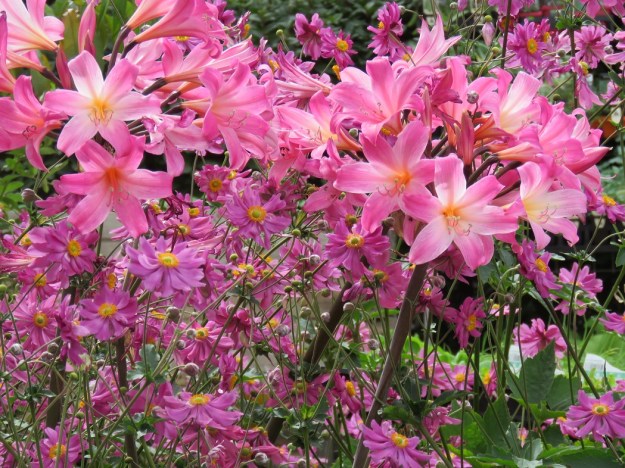
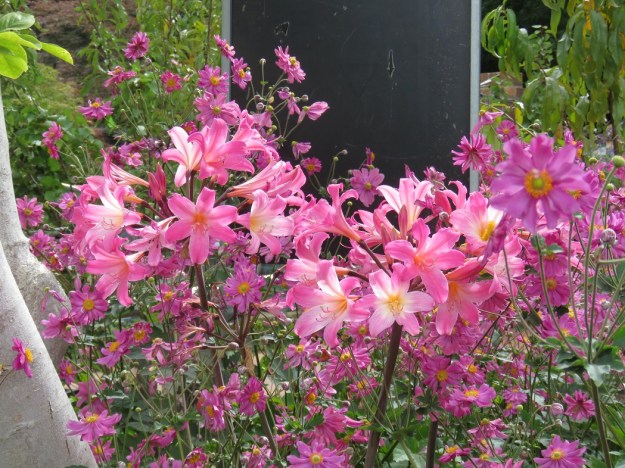
As we adjust to lock down and our personal worlds become so much smaller, I did at least solve a small mystery yesterday. I saw a lovely combination of vibrant pinks when we visited Cloudehill Gardens in the Dandenongs outside Melbourne last year. I can repeat that in my new perennial meadow, I thought.
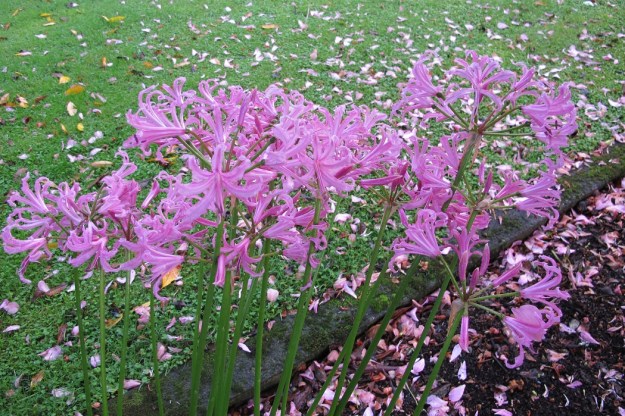
Nerine bowdenii flowering in late May here 

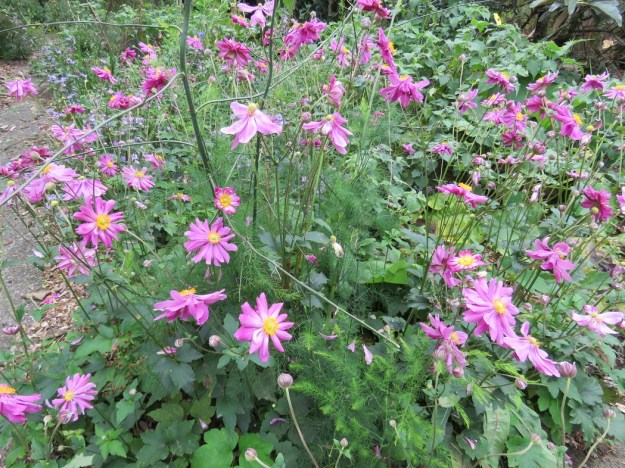
My perennial meadow planting with hidden N. bowdenii

In my mind, I had it as a combination of the deep pink Japanese anemone and Nerine bowdenii. As the anemone came into flower, I found myself wondering where the nerine was before realising that of course it flowers much later here. I considered the possibility that Cloudehill had a selection that flowered much earlier in the season and kicked myself for not checking the flowering times here – easily done in these days of digital photo files that give dates. There seemed to be a story in there about not assuming that combinations seen in different climates will also work at home. I found my photos.

Belladonnas at Cloudehill! Of course. Not N. bowdenii. But then the Japanese anemone actually comes from China. The world is looking more confusing by the day.

Eagle-eyed readers will have already spotted my mistake. It was my memory. Not Nerine bowdenii at all. Those are belladonnas. That explains it. I am not sure that I want to bring big, thuggish belladonnas into the garden. We have them in abundance on the roadside and on our margins but they aren’t the best garden candidates. In fact we already have both on our roadside and all I need to do is shuffle some of the right pink tones closer to the anemone there.

I just need to relocate some pink belladonnas in the right tones on our roadside and I will have that combination.

As Mark and I had a leisured start to our morning on day two of lock down, he quipped that half the houses around the nation were currently undergoing paint jobs. Lloyd, our garden staffer, had gone in to a Mitre10 Mega on Tuesday and reported that everybody else was in there buying paint and they had sold out entirely of his preferred brand.

We are in the garden so there is no major change for us, except the absence of Lloyd during the week. I have found, however, that my focus and concentration are scattered all over the place. I am telling myself that there is plenty of time – a whole month at least – and it is fine to allow myself a few days to mentally settle into the peculiar new reality we are all facing. Friends have noted the same phenomenon. It doesn’t matter if major tasks get left for a little while.

Fiddly faddling on the Magnolia laevifolia. But where is Lloyd when I need him? He is always most obliging about dealing to my piles of prunings.

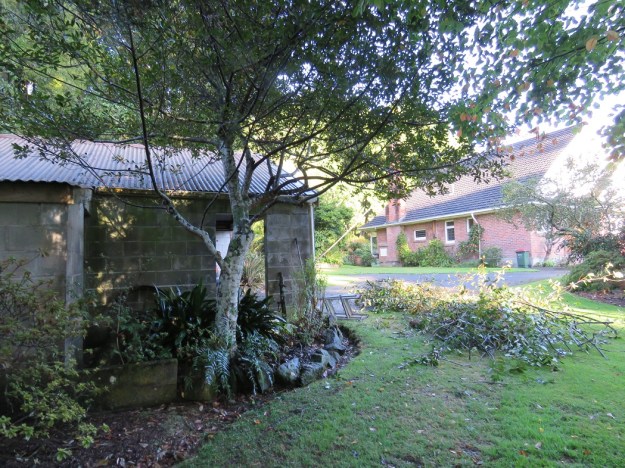
This is why I spent yesterday entirely distracted by a very small garden with an untidy Magnolia laevifolia draping itself over the garage roof, leading to a build-up of leaf litter composting on the corrugated iron roof. It is a smaller, defined project that I can complete before my scattered brain gets distracted elsewhere. Fiddly-faddling, I call it. Mark describes it as montying – a reference anybody who watches BBC Gardeners’ World will understand. May you all fiddly-faddle or monty in tranquil safety wherever you are.

Belladonnas we have a-plenty in a variety of hues but their flowering season is brief and their season is full, smothering leaf is very long


Suddenly it is winter

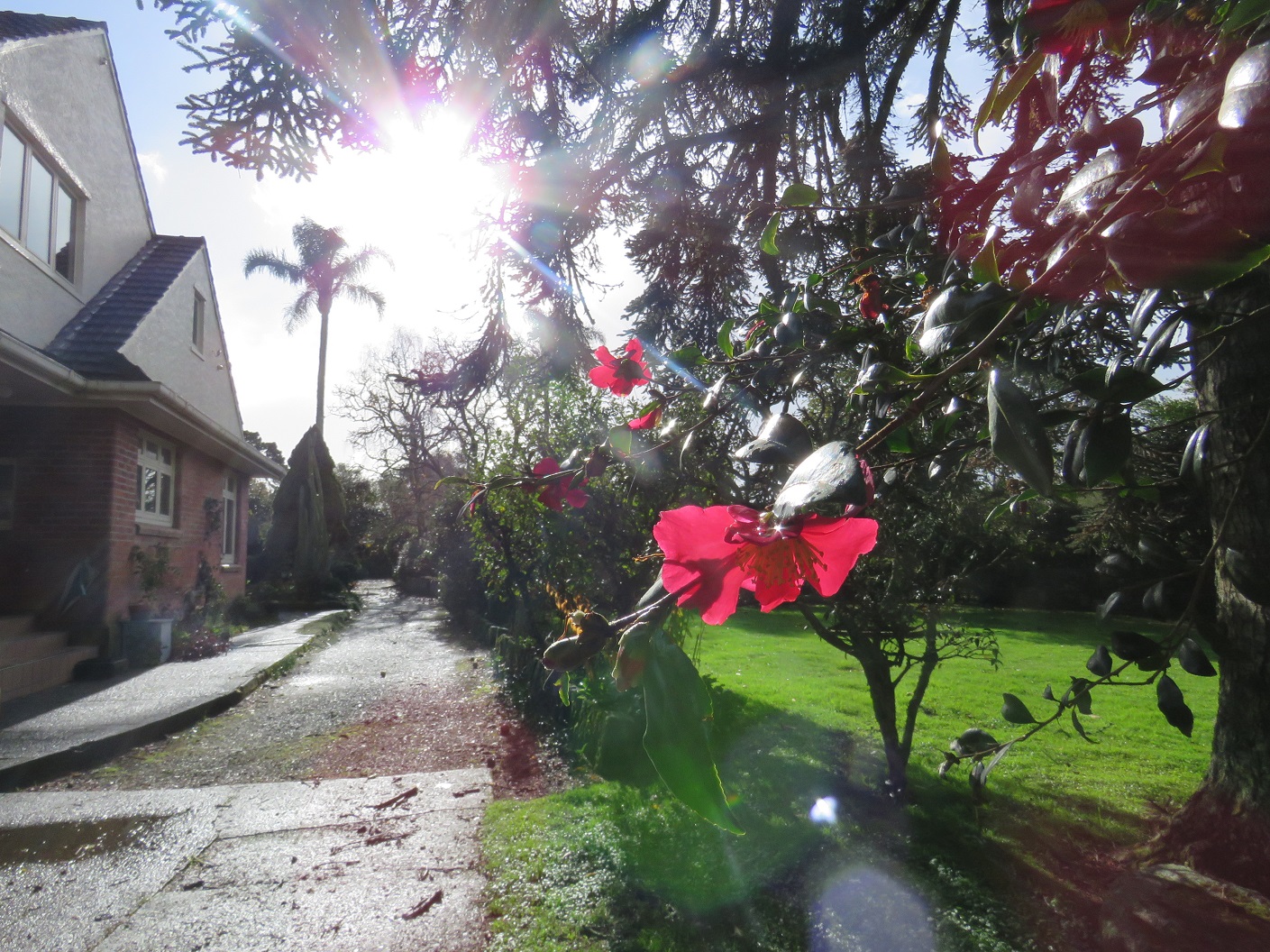
The first blast of winter arrived yesterday. Camellia sasanqua ‘Crimson King’ in the foreground.

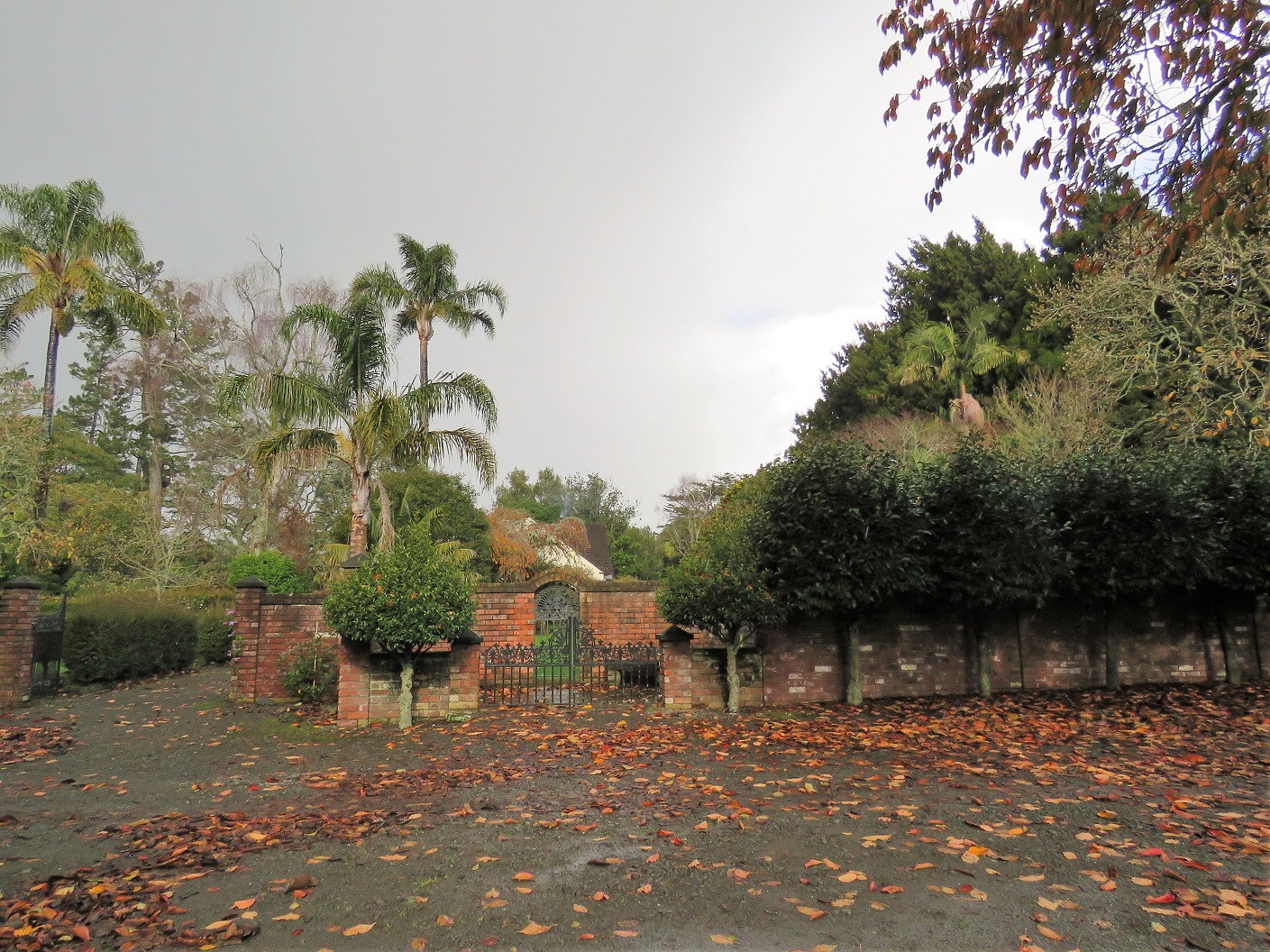
Fallen leaves and a leaden sky

While our climate is generally benign, the first serious winter chill arrived, appropriately enough, on the first calendar day of winter in New Zealand – June 1. The winter fronts come straight up from the Antarctic. Our mellow, extended autumn with calm, sunny weather and temperatures sitting around 18 or 19 degrees Celsius disappeared overnight.

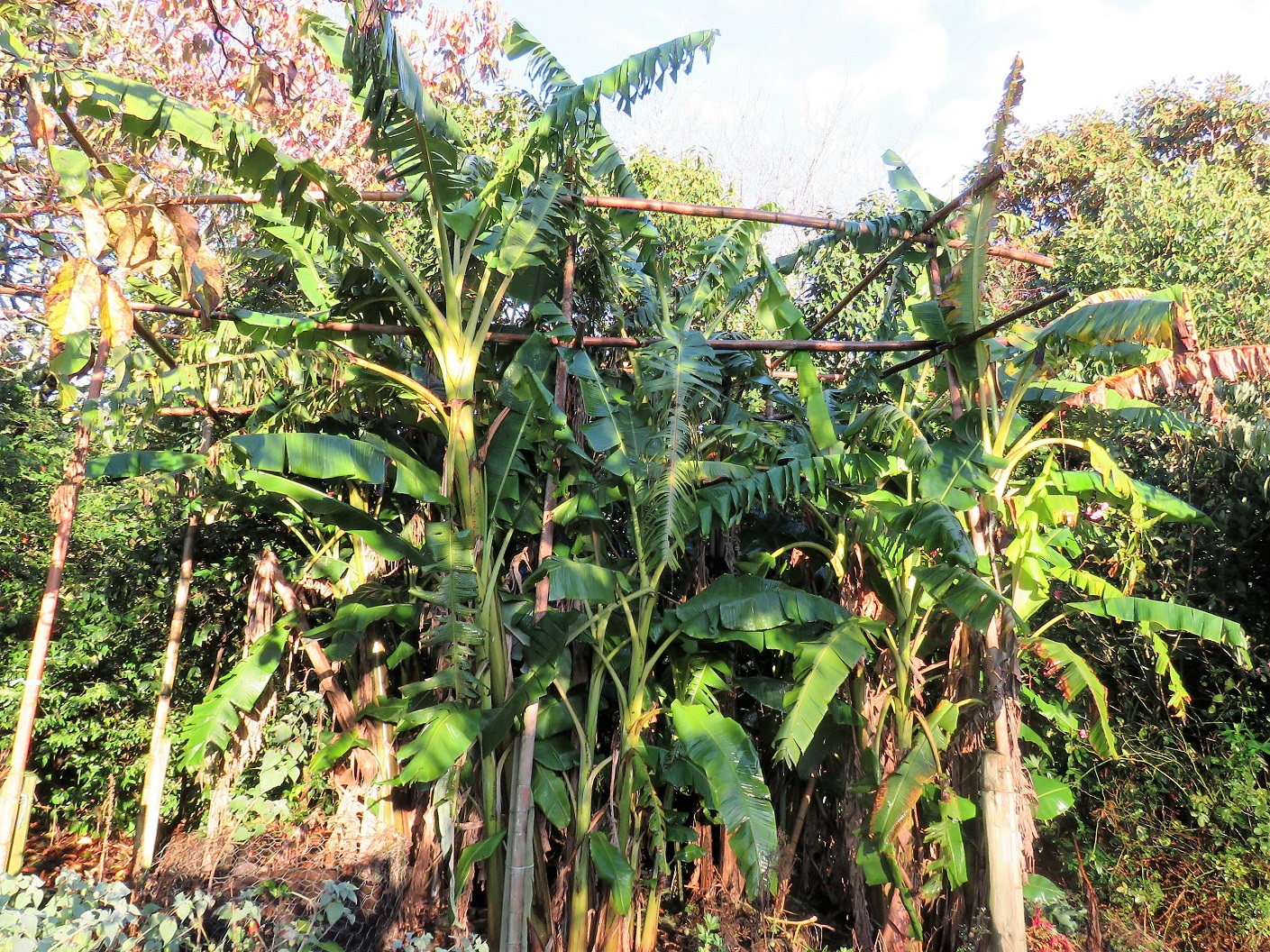
This too will pass. Generally the worst of our winter weather hits after the winter solstice – June 22nd to be precise – and today, June 2, has dawned fine and sunny, albeit with a chilly temperature. Mark is taking heed of this sudden drop. Today’s task, he declared, is to cover the bananas. You can see the semi-permanent bamboo frame in the photo. He needs the extension ladder these days to get the windbreak sheltering cover in place for the bananas have grown to a substantial size. At least we get a crop from them these days but we wouldn’t if he didn’t spend a day shrouding them for winter. That is as far as battening down the hatches goes here. We don’t wrap anything else up for winter.
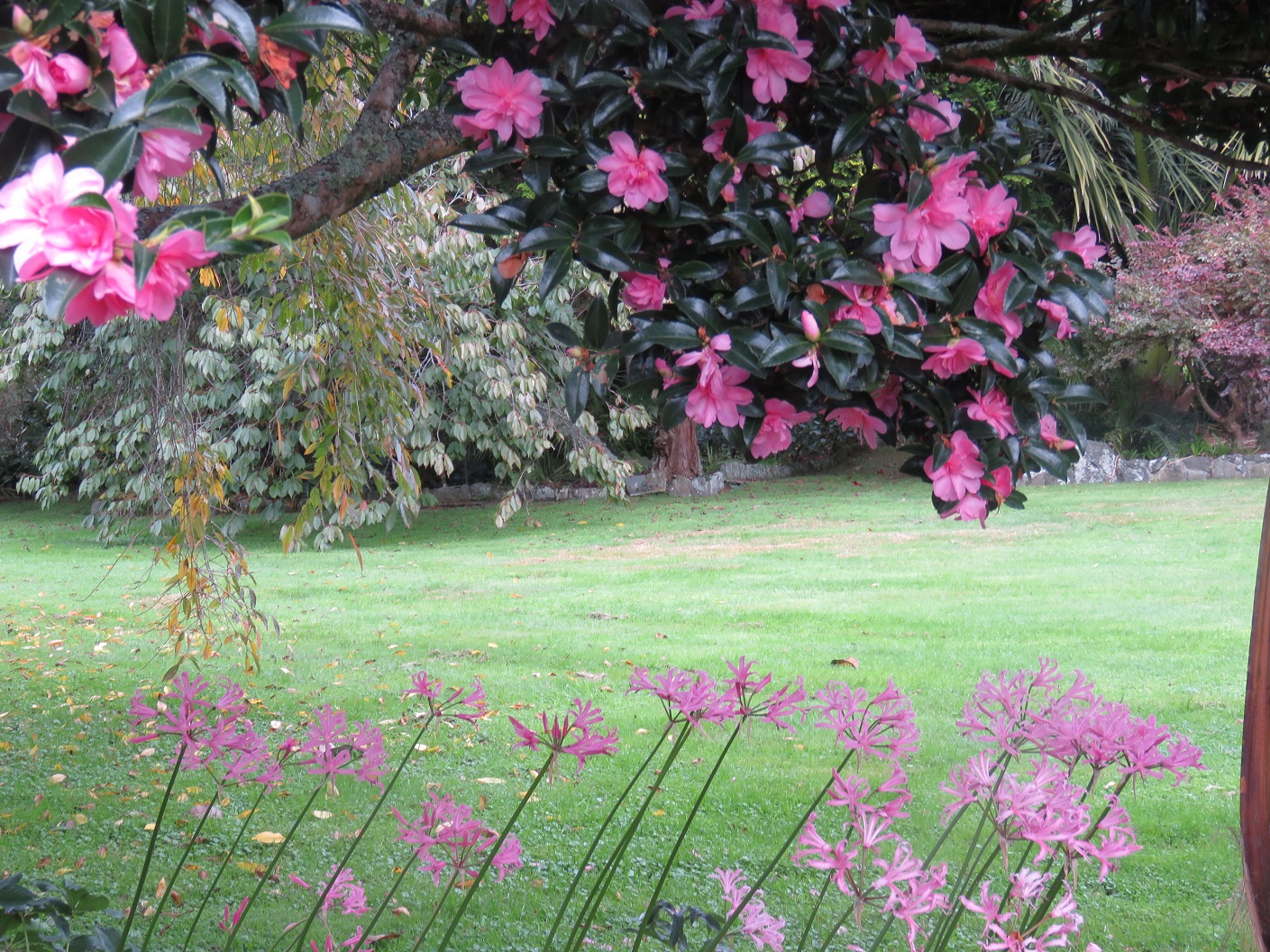
Camellia sasanqua ‘Elfin Rose’

with Nerine bowdenii at its feet

Winter it may now be, but this does not mean bare branches bereft of leaves and an absence of flowers. The sasanqua camellias are at their peak, many of the species camellias are opening along with the first flowers on the early japonicas and hybrids. ‘Elfin Rose’ has been a particular delight this week, with the colour-toned Nerine bowdenii below. We cloud prune ‘Elfin Rose’ into stacked layers, both to restrict its growth and to make it a feature shape all year round. This annual clipping takes place as it makes its new growth after flowering – so some time between mid winter and mid spring. Clipping later would remove next season’s flower buds and we want both the form and the flowers.

It is perhaps a good indication of our generally mild conditions that vireya rhododendrons also feature large in late autumn and early winter. These are, of course, frost tender. Many are very frost tender – especially the big, scented cultivars with heavy, felted foliage. The one above, where we have a bank of maybe five of them beneath the mandarin tree, is ‘Jiminy Cricket’. It was bred by the late Os Blumhardt and is a full sister seedling to the more widely marketed ‘Saxon Glow’ and ‘Saxon Blush’ (not marketed by us). In our opinion, it is also superior to those two but all of them show more hardiness than most vireyas on account of having the relatively hardy species R. saxifragoides as one breeder parent

Vireya rhododendron ‘Sweet Vanilla’ with ‘Golden Charm’ in the background

We place the more tender vireyas with greater care, on the margins where they get plenty of light but adjacent overhead cover will give them protection from most frost damage. This is one of Mark’s breeding  which we released as “Sweet Vanilla”. Big flowers and exotic fragrance to delight, even on the coldest days. We have no idea if it is still in production and commercially available – it is not a plant we kept under our management with intellectual property rights so anybody can produce it if they wish – but I hope it is because it has stood the test of time as a garden plant.

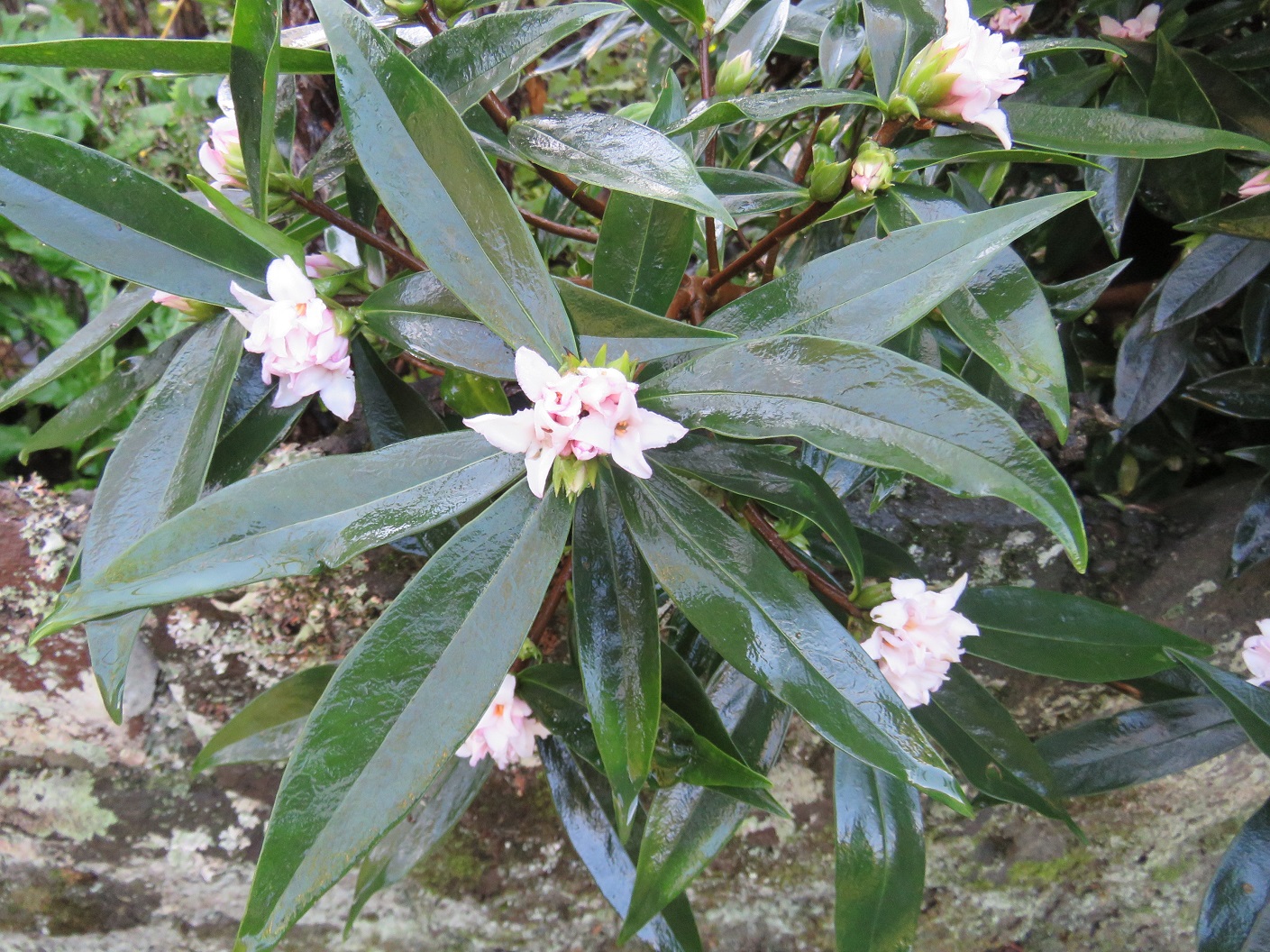
Daphne ‘Perfume Princess’

Also hitting its stride is Mark’s Daphne ‘Perfume Princess’, aka Mark’s Retirement Fund. It was opening its first flowers at the end of March but they were just a teaser. As we enter winter, it will bloom through until early spring and bring us scented pleasure all that time. It is not big and showy like most of his deciduous magnolias, but it is a cracker of a plant in the smaller world of daphnes.

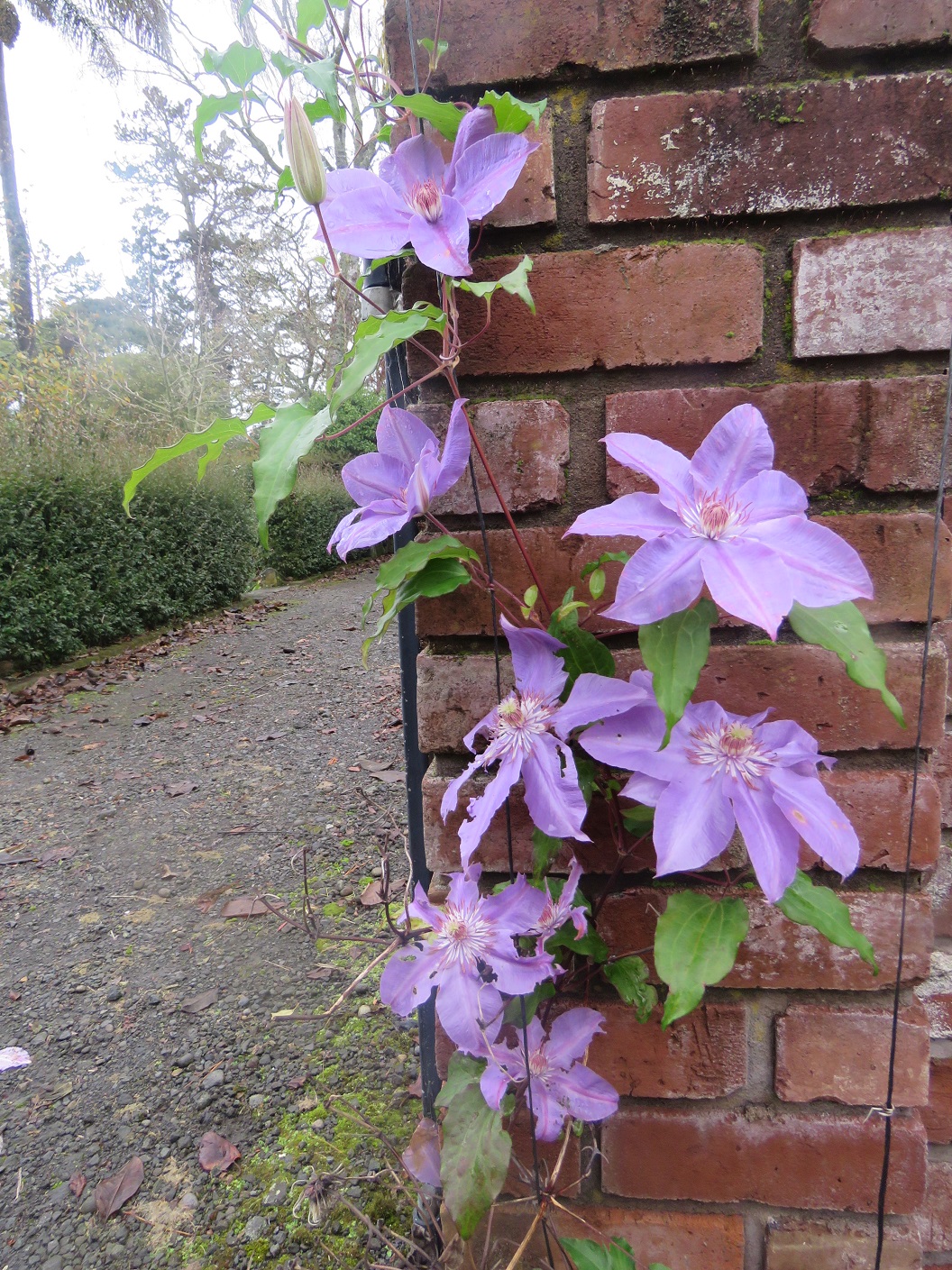
A seedling clematis at our entrance way having a late season revival this week

While we are not expecting the full onslaught of winter until June 22 – give or take a few warning episodes prior to that – by late July, the first of the magnolias will be opening along with the snowdrops. Temperatures will start to rise in August. Our winters are not as long and bleak as experienced in many other places but human nature being what it is, we probably moan just as much about the cold and winter storms.


Tikorangi Notes: June 11, 2015 From Nerine bowdenii to homeopathic gins


Nerine bowdenii on May 11

Nerine bowdenii on May 11

And a month later on June 11

And a month later on June 11


Without a camera, I may never have tracked the flowering time of Nerine bowdenii. It is a species and we have valued it for being the last of the season to flower without being too excited by it. But a MONTH at least in full bloom through autumnal storms and wind – that is an astoundingly long time for a bulb that only puts up one flower head, as opposed to successional flowering down the stem. We are now thinking we will use it more widely beneath deciduous trees where we had been relying on belladonnas. The latter flowers early in autumn when the leaves are still on the trees and the blooms don’t last anywhere near as long. Fortunately, N. bowdenii multiplies up extremely well and is probably the easiest of the nerines we grow.

The Kurume azaleas, underplanted with Cyclamen hederafolium

The Kurume azaleas, underplanted with Cyclamen hederafolium

I have been cleaning out the azaleas. Oh how easily those words trip off the tongue but I tell you, doing the first of two blocks is probably 20 or 30 hours work. It must be a sign of the leisured pace of my life at the moment that I can spend that amount of time on one task. Years ago, we limbed up these tiny leaved Kurumes to make the most of their interesting form and to enable us to look through them. Sculpting them, we call it. It is more common to clip and mound them, keeping them much lower to the ground. These ones are planted on the margins of our enormous rimu trees and they catch a fair amount of litter falling from above. They also shoot from the base and we try and rub off those new shoots before they get large. But once every five or ten years, a major clean out of the dead wood and the canopy makes a major difference. It just takes time. A lot of time. I am reminded of something we once heard Christopher Lloyd say (it must have been on the telly because I can’t find it in print): “People are always looking for low maintenance and easy care gardens. Personally I am of the view that if you love what you are doing, higher maintenance is more interesting.” 

I lack a photo of passionfruit at the purple stage  of ripening

I lack a photo of passionfruit at the purple stage of ripening

But at least I have red tamarillos on file

But at least I have red tamarillos on file

On the home harvest front, we are now experimenting with homemade juices. Not using the mechanised juicing machine that we inherited from our daughter when she left to live overseas. She assured us it made good carrot juice but we have not had a surplus of carrots yet. Mostly I use it for grape juice or melon juice. It takes a prodigious quantity of fruit for a pretty small liquid yield but then so do the fresh squeezed orange juices we often make – 5 or sometimes 6 fruit per glass. No, it was the surplus of passionfruit and upcoming tamarillos that were worrying me and I didn’t want a juicing system that ground up the seeds. Mark scooped a bucket of passionfruit out. The quantity immediately reduced to medium sized basin. I added some water and brought it to the boil with a little sweetener because the fruit was rather too tart. Do not laugh. It was only because I had agave nectar in the cupboard (bought when I was test cooking a recipe book sent for review) that I used it as a sugar substitute. I simmered the fruit for a short while before straining it off. The original bucket of fruit yielded just a litre of juice. Liquid gold. We will savour it, diluting it 50% with soda water in lieu of our weekday homeopathic gins.

What, you may ask, is a homeopathic gin? Here, it is lime and soda served in a nice glass which holds the memory of gin. When we decided, in a burst of wholesome living, to manage alcohol consumption by not drinking from Monday to Thursday, we realised that it was in part the ritual of sitting down together with a drink before dinner that we enjoyed. Hence the homeopathic gins. The logical extension of wholesome living seems to be the shunning of synthetic lime juice in plastic bottles, replacing it with our own fruit juices. Virtue expires on Friday evenings, I admit.

007

Blame the quail

Blame the quail

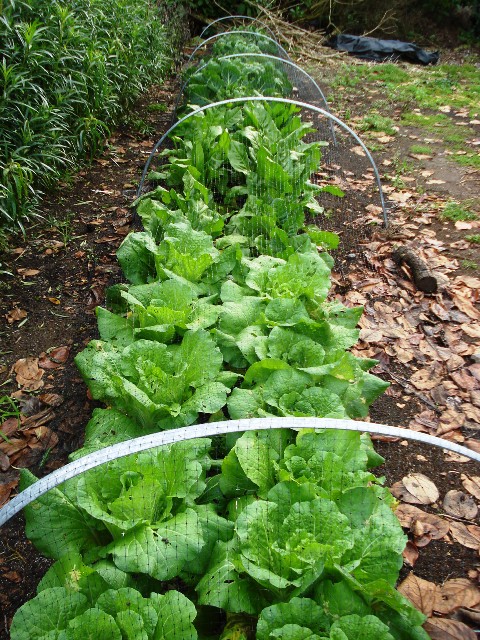
Mark has been busy in his vegetable gardens. He has now resorted to covering all the brassicas and leafy greens as well as all seedlings, in order to protect the crops from birds. He blames the cute resident quail for attacking the Brussel sprouts but there are plenty of candidates. It may just be that the quail, being predominantly ground birds, are the most visible. The strawberries are planted for spring and the garlic is already above ground.


Lovely in bloom, huge, but what is it?

Lovely in bloom, huge, but what is it?

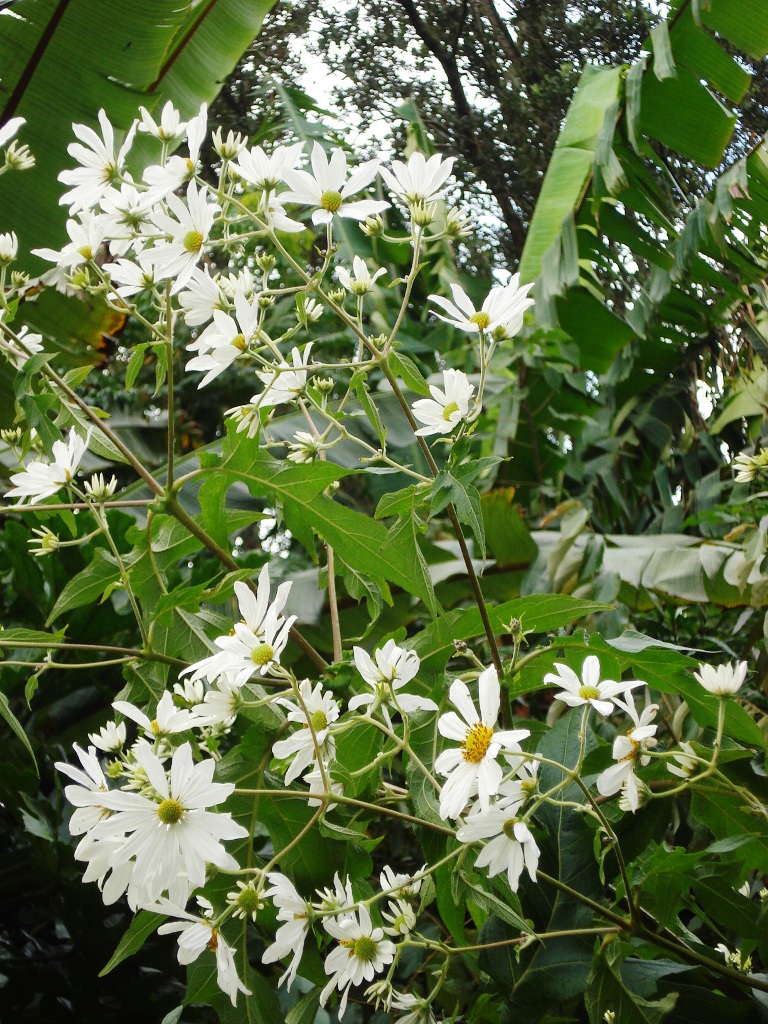
Finally, if any reader can give us the name of this enormous perennial, we would be most appreciative. It is of similar stature to a tree dahlia – about 4m x 4m – so taking up a lot of space. Currently it is smothered in white daisies and has survived a frost but cold weather can cut it to ground. It is very late in the season for what is presumably an autumn flowering perennial. We will enjoy while we can, but we would like somebody to remind us of its name.

Postscript: That didn’t take long. A reader has identified this as Montanoa bipinnatifida which I see is commonly known as the Mexican tree daisy, a member of the asteraceae family. No wonder we were struggling to come up with a name – I don’t think either of us have ever heard it before. And it is not a perennial but a shrub. It must be that ours gets cut back so often by the winter chill that it resembles a huge perennial rather than a shrub.