Tag Archives: nerine sarniensis

‘Autumn is icumen in’

It is not ‘sumer’ that is icumen in here, but very much autumn that has announced its arrival.

It seems a lifetime since I studied English literature at university. I guess it is almost a lifetime ago and I have long since lost my ability to read texts such as Chaucer’s tales and ‘Sir Gawain and the Green Knight’ in their original Middle English. But how have I reached this age without ever knowing about the farting billy goat in ‘Sumer is icumen in’? (see below) I only found it this morning when I looked up the lyrics. It is perhaps a sign of times that were more bawdy than vulgar.

‘Icumen in’ does not translate to ‘is coming in’. It means it is here and nothing makes that seem more real than the end of daylight saving. I used to find the onset of autumn somewhat depressing, describing myself as a summer bunny. But now that I garden, it heralds the start of a new season with all the freshness of new season flowers.
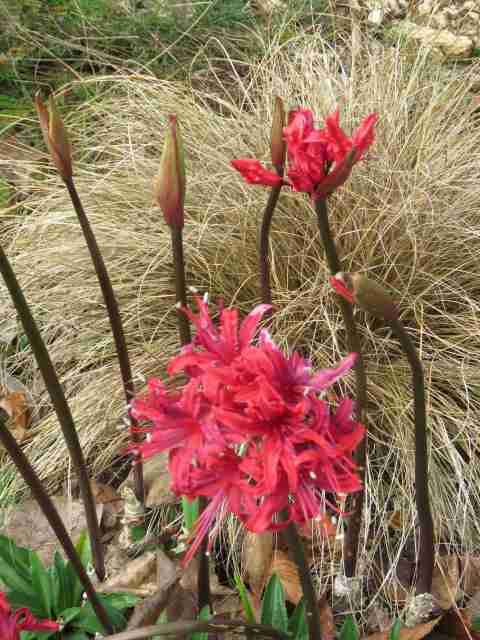
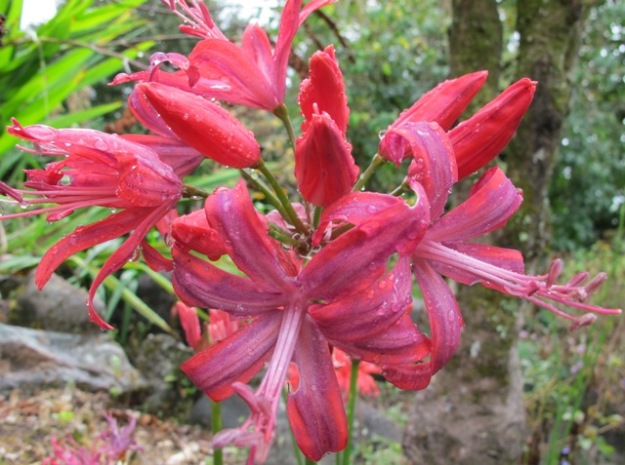
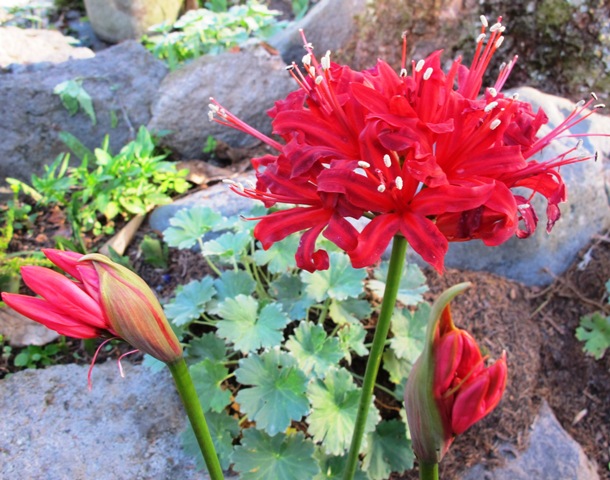
Nerine sarniensis season! This is one of Mark’s hybrids – the long stems mean it would probably be better grown as a cut flower than a garden plant. The weight of the head can drag the stems down but we don’t do cut flowers so we just persevere with it in the garden.

In our climate, it also heralds the time when we can get back to planting, digging and dividing and renovating parts of the garden that are crying out for more drastic action. We still have up to two months of the growing season left here; the ground doesn’t get cold enough to stop plant growth until June. Indeed, for those people who live in areas with hotter, dry summers, autumn planting is often a much better option than spring planting because the plants can settle in and get their roots out before the stress of summer conditions sets in. Spring planting is the better option for those who live with harsher climates where the ground can freeze or is waterlogged and very cold in winter but most of our country can happily plant away in autumn,  safe in the knowledge that that the plants will over-winter and leap into new growth in springtime.
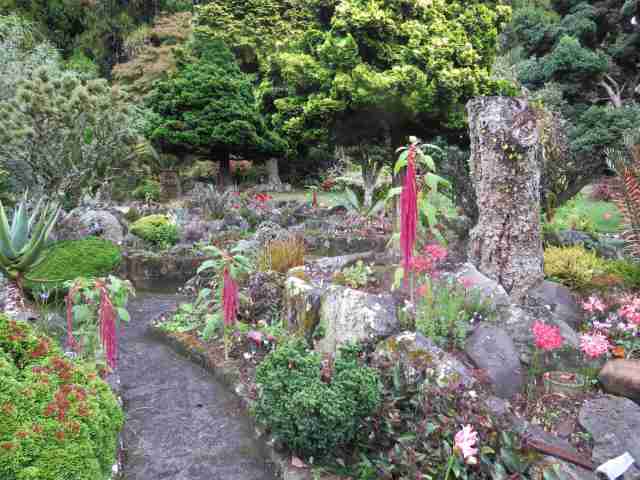
Autumn is the second season for the rockery. While there is always something of interest flowering 52 weeks of the year, autumn and early spring are when it bursts with colour and variety. Nerines feature large, particularly the sarniensis hybrids.
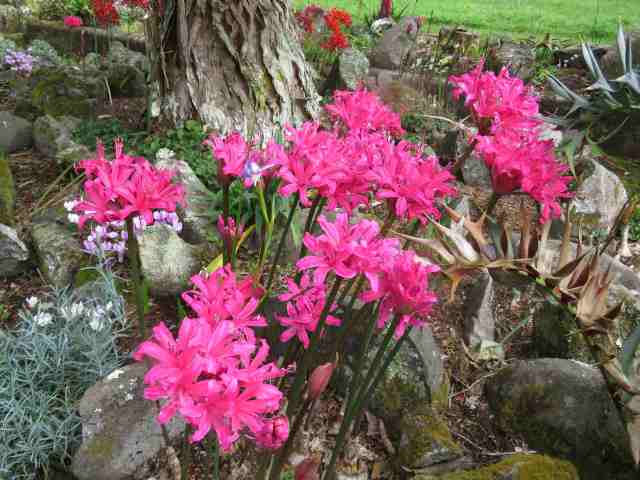
Most of our nerines are hybrids from both Felix and Mark’s efforts. We once named and sold a few but nowadays they mostly just exist in our garden. Every year, my camera fails to capture the truly startling shade of highlighter pink in this clump.
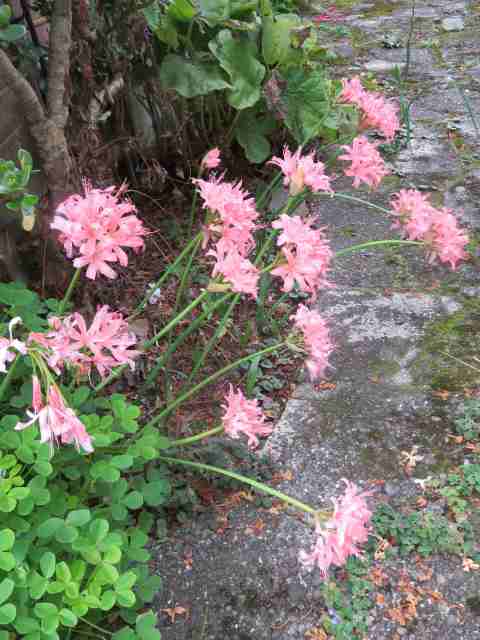
Felix started with a few named ones from Exbury. This is ‘Inchmery Elizabeth’ and has proven to be such a pretty and reliable performer down the decades.
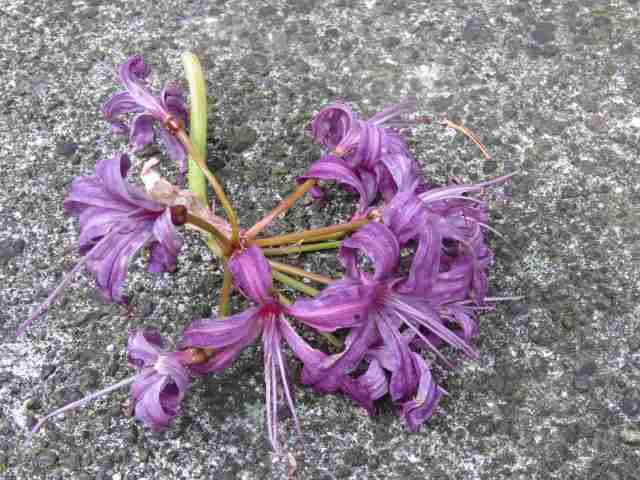
I found this one snapped off, which may have been due to slug chomping on the stem or it may have been Ralph the dog who is no respecter of gardens but ploughs in when pursuing a fly, bee or wasp. What I think is interesting is the shade of purple it is fading to; presumably there are enough blue genes in there to indicate it is only a matter of time and determination by somebody to get to true purple and blue hybrids in the future.
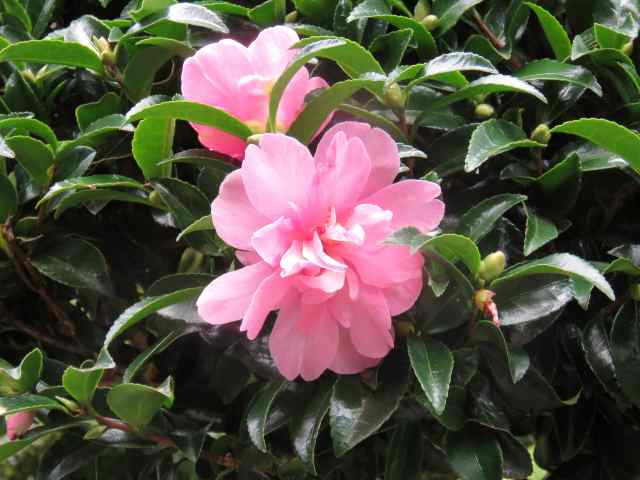
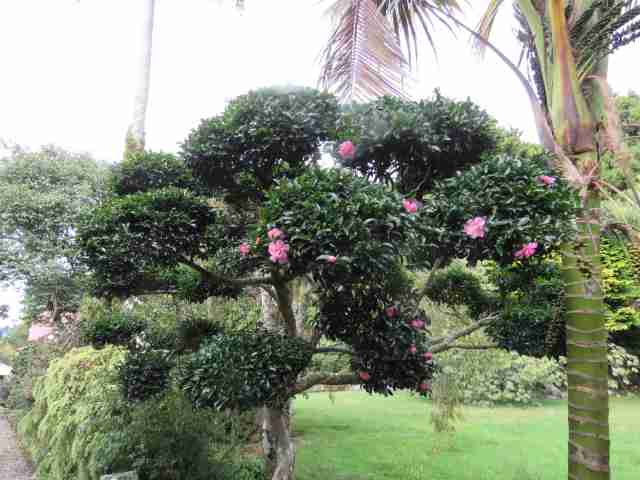
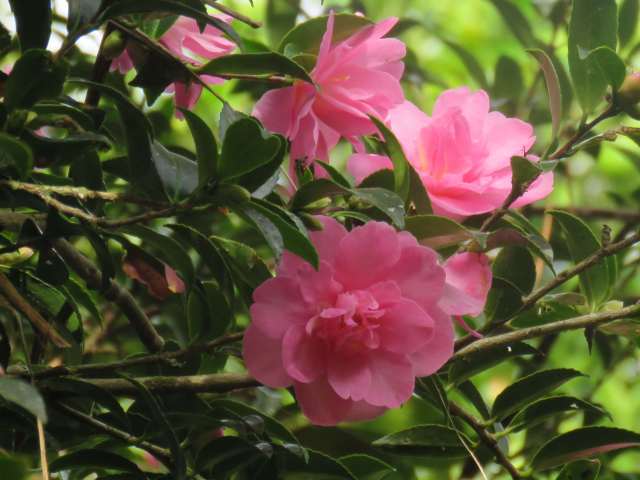
Camellia sasanqua ‘Elfin Rose’

Autumn is sasanqua camellia season. This is sweet little ‘Elfin Rose’, which we cloud prune. Sasanquas don’t have to be white, as per the long-running fashion in this country.
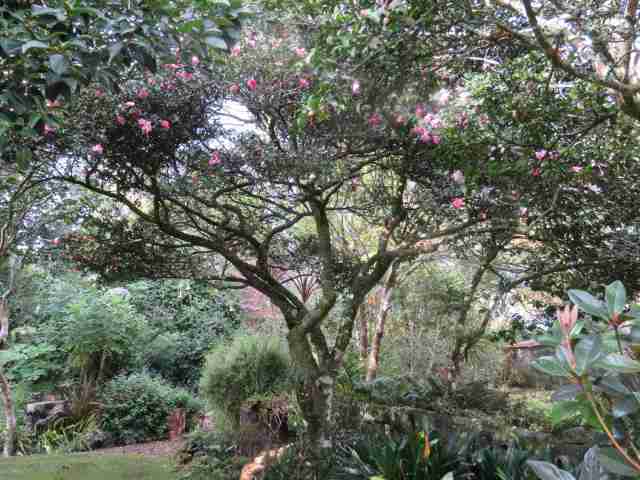
Camellia sasanqua ‘Sparkling Burgundy’

The flower on ‘Sparkling Burgundy’ is not so very different to ‘Elfin Rose’ but the habit of growth is. This plant is decades old, maybe 50 years or so. We lifted it and thinned the canopy to turn it into a graceful, open small tree rather than a bushy shrub.
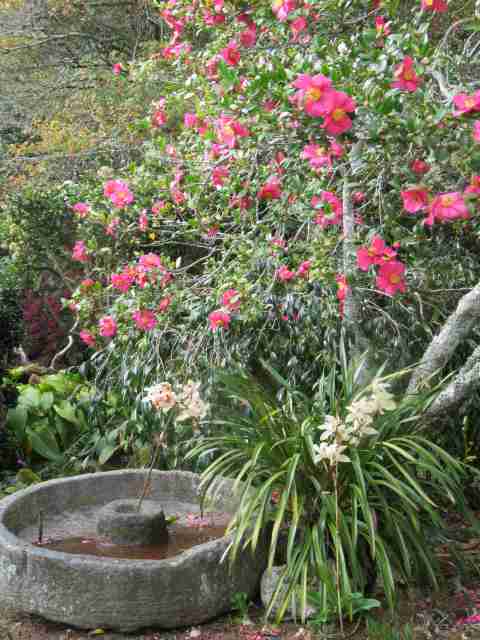
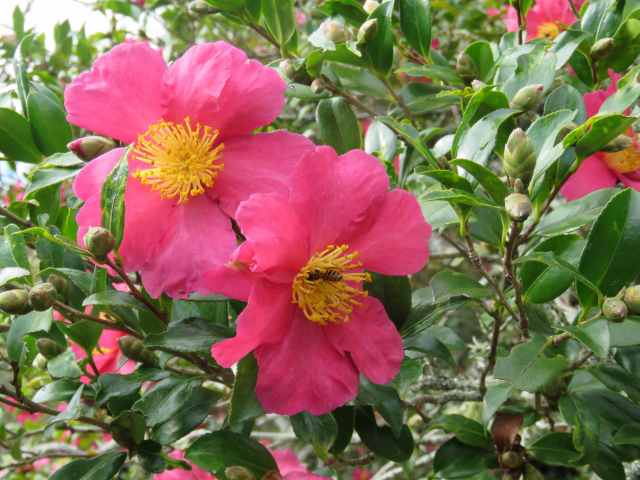
Camellia sasanqua ‘Crimson King’

Sasanqua camellias have softer flower forms and laxer growth than the more common japonica and hybrid camellias that flower in winter and spring but they don’t get petal camellia and we have grown to appreciate their relaxed informality of flower form. Alas that is a wasp feeding on the flower above but they are equally a source of food for the more desirable bees. Exposed stamens and pollen are the key to feeding bees.

The lyrics to ‘Summer is icumen in’, courtesy of Wikipedia. Composed, it seems, to be sung as a round. Spot the farting billy goat (and the politer alternative).

Middle English
Sumer is icumen in
Lhude sing cuccu
Groweþ sed
and bloweþ med
and springþ þe wde nu
Sing cuccu

Awe bleteþ after lomb
lhouþ after calue cu
Bulluc sterteþ
bucke uerteþ
murie sing cuccu

Cuccu cuccu
Wel singes þu cuccu
ne swik þu nauer nu

Sing cuccu nu • Sing cuccu.
Sing cuccu • Sing cuccu nu
Modern English
Summer[a] has arrived,
Loudly sing, cuckoo!
The seed is growing
And the meadow is blooming,
And the wood is coming into leaf now,
Sing, cuckoo!

The ewe is bleating after her lamb,
The cow is lowing after her calf;
The bullock is prancing,
The billy-goat farting, [or “The stag cavorting”]
Sing merrily, cuckoo!

Cuckoo, cuckoo,
You sing well, cuckoo,
Never stop now.

Sing, cuckoo, now; sing, cuckoo;
Sing, cuckoo; sing, cuckoo, now!
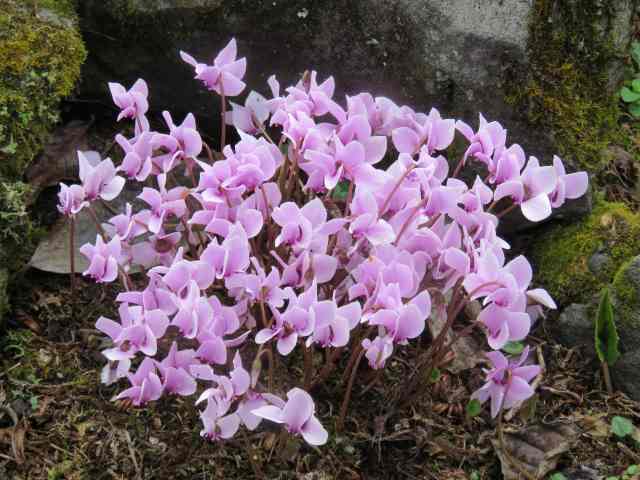
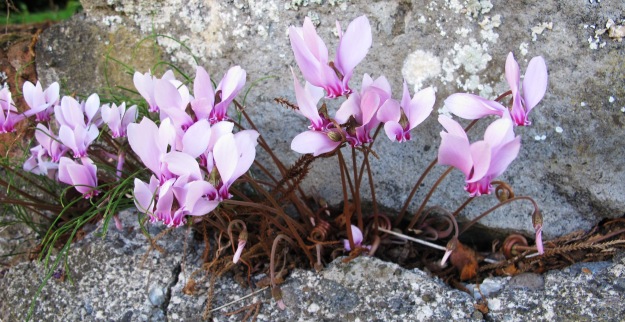
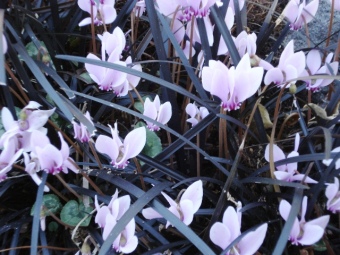
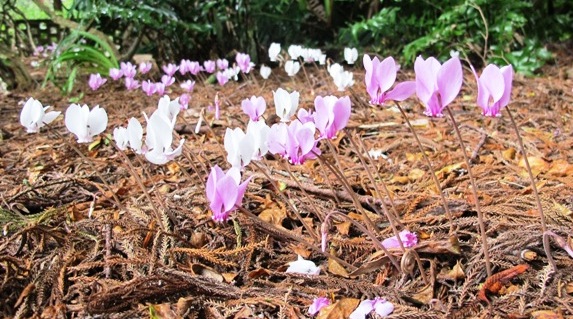
What is there not to love about Cyclamen hederafolium. First the pretty, dainty blooms and then the lovely marbled foliage to carry through winter.
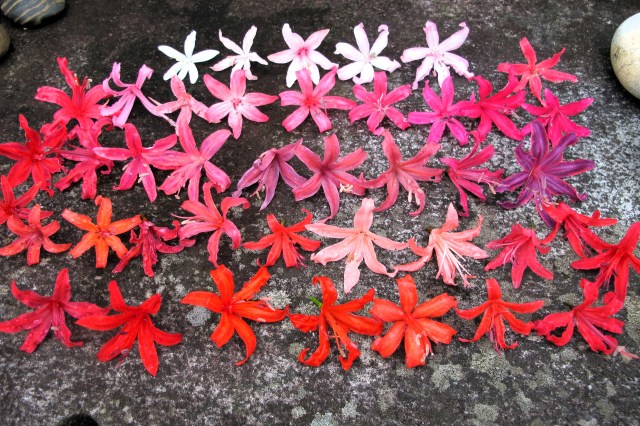
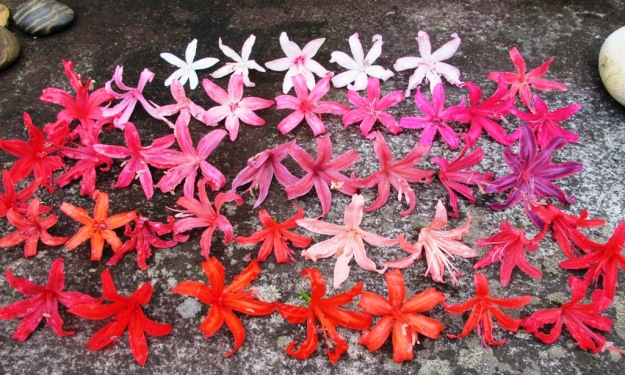
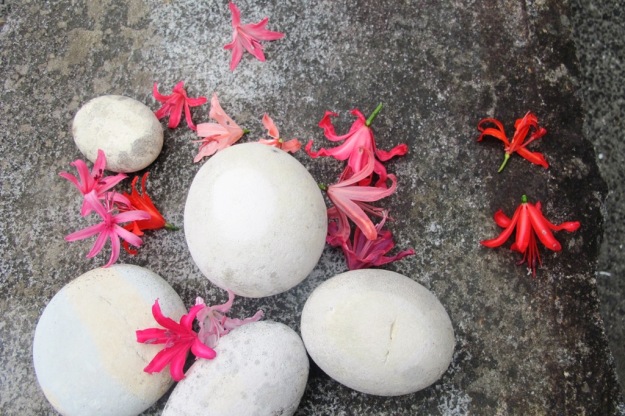
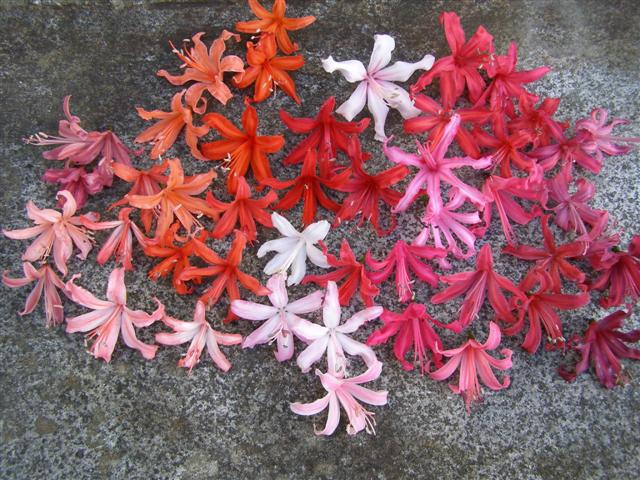
A flower lay I prepared earlier, showing the various hues of nerines in the rockery at the time

Rock on – our rockery in autumn

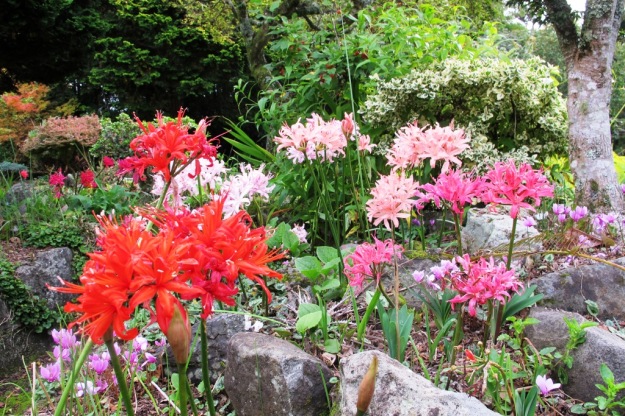
Nerine sarniensis hybrids blooming in the rockery

Nerine sarniensis hybrids blooming in the rockery

When I am old and maybe decrepit, needing to draw in the boundaries of the garden, I shall fluff around in the rockery. I really enjoy this area and, as we enter autumn, my heart sings with the new season blooms.

Traditionally, rockeries are for growing alpines and sometimes retaining banks. However, we can’t grow alpines in our climate and our rockery is on the flat. It is pure 1950s vintage, built from a combination of rocks of various sizes, concrete and some brick, with sunken paths and raised beds divided into many hundreds of little pockets of soil. It is designed for highly detailed gardening and at about 20 metres by 10 metres, it is relatively large.

The purpose of the multitude of small beds is to keep bulbs separate and to confine the more invasive ones. Most of the pockets have two or three different types of bulbs in them to give seasonal interest.

There is always something to see, though summer is the toughest season. Because there is so much stone and the beds are elevated, parts of it dry out almost to dust. We have dwarf conifers, cycads, and a few other small shrubs to give both all year round structure and summer shade. There are a few smaller perennials and a limited range of annuals and biennials but generally, the rockery is about the bulb collection.

The range of nerine colours at one time

The range of nerine colours at one time

As we enter autumn, it is as if the rockery heaves a sigh of relief and leaps back into life. All the bulbs whose growth is triggered by autumn rains start to move.

As a general rule, we find that the species bulbs look better. They are usually smaller flowered and more delicate in appearance than the showy hybrids which can look out of scale and even vulgar in this particular context. The exception is the nerines which peak this month. While we grow some nerine species, it is the sarniensis hybrids that dominate. A few of these are of Exbury origin but most are the result of breeding efforts by both Felix and Mark Jury. The colour range is delightful – from white, through every shade of pink including near iridescent highlighter pink, to purple, corals, almost apricot, oranges and reds. Unlike the floristry business, we want shorter, squatter stems so that the heavy heads are held upright even through autumnal weather.

Cyclamen hederafolium

Cyclamen hederafolium

Also lighting up the autumn is Cyclamen hederafolium (formerly known as C. neapolitanum) which hails from southern Europe and Turkey. This is the easiest of the dainty species cyclamen to grow and it has gently naturalised itself here. It throws its first brave flowers up in January but peaks this month. It is one of a number of autumn bulbs that bloom first before the leaves appear. Others are most of the nerines, colchicums and Haemanthus coccineus.

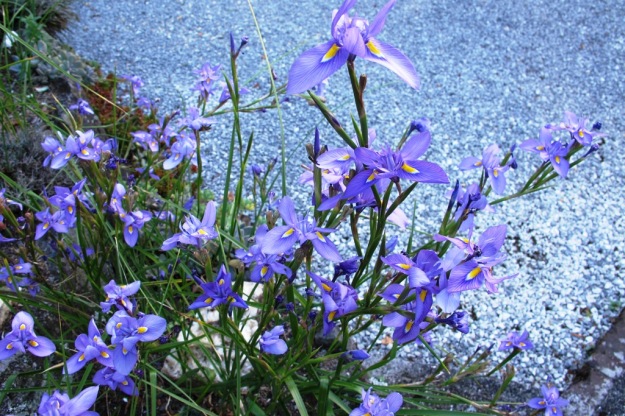
Moraea polystachya

Moraea polystachya

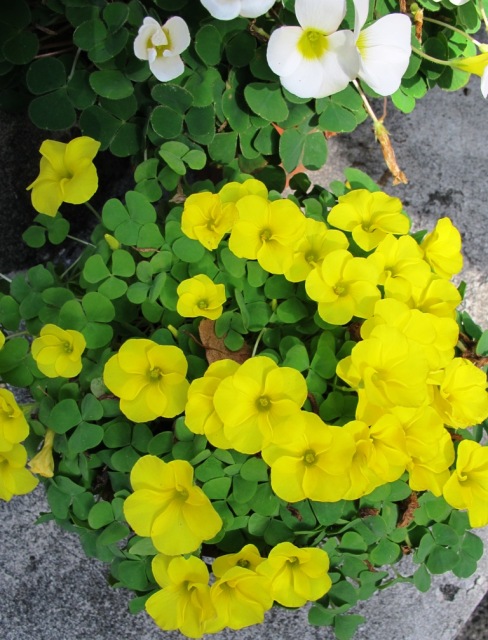
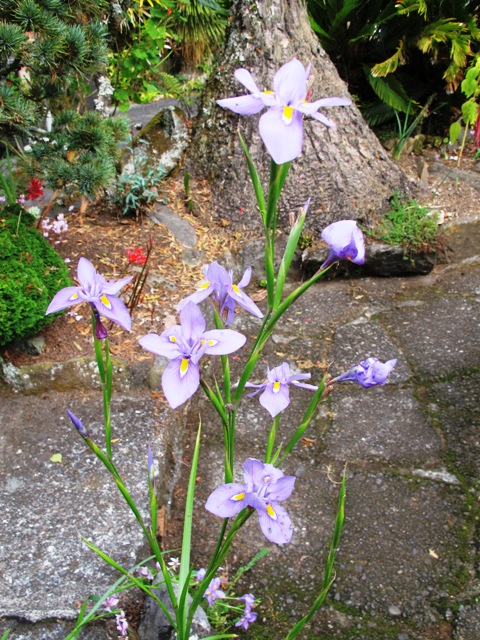
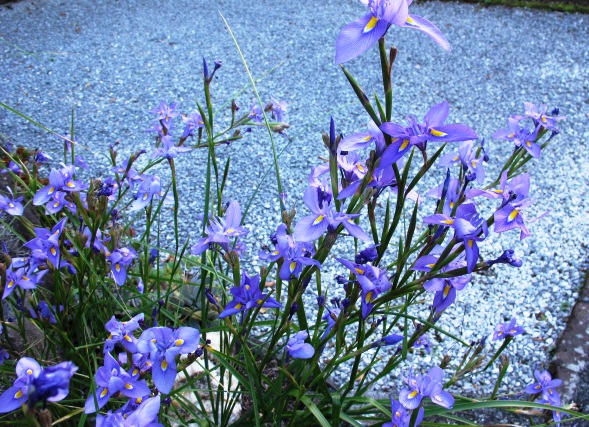
The pretty autumn flowering peacock iris, Moraea polystachya, outdoes almost every other bulb with its long flowering season. It seeds down gently into the cracks between the rocks without becoming an invasive menace. Some of the ornamental oxalis also give extended displays of colour but not all oxalis are born equal and neither are they all born with good manners. The most reliable performers in our rockery are O. purpurea ‘Alba’, O. luteola and O. lobata. They have been here for decades and never looked threatening.

O. luteola and purpurea 'Alba'

O. luteola and purpurea ‘Alba’

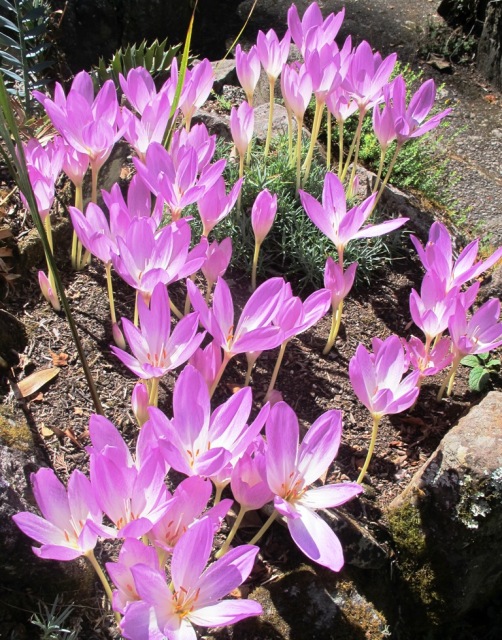
Colchicum autumnale

Colchicum autumnale

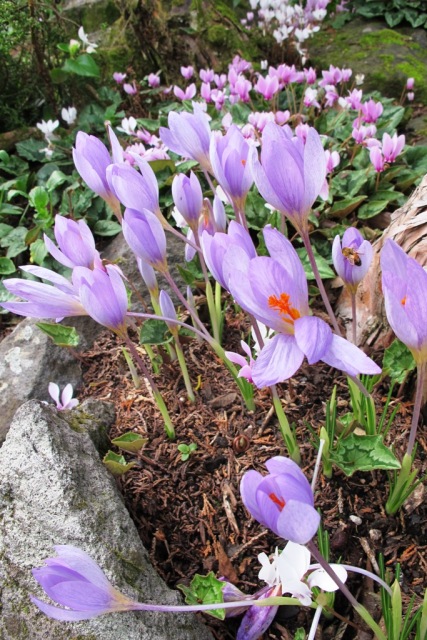
Then there are the bulbs with a much shorter season. Colchicum autumnale makes a bold statement with its big lilac chalices held above bare soil. Hippeastrum bifida is a transient delight for us. We have it in both pink and red and the blooms look as if they have been touched with gold leaf when the sun shines through. The autumn flowering leucojum is one of the daintiest and prettiest of tiny blooms and the crocus also delight.

Autumn crocus (species unknown) with cyclamen hederafolium

Autumn crocus (species unknown) with cyclamen hederafolium

The rockery is not what I would call low maintenance. The more time I put into it, the better it looks. In spring I completely replaced the soil in maybe a dozen pockets in my efforts to eradicate the pretty but invasive Geissorhiza aspera. I do not lie when I tell you that we have battling it for well over 25 years, hence my extreme action in replacing the soil in the worst affected areas. We have to be vigilant on weeds, slugs, snails, narcissi fly and weevils. I wire brush the rocks from time to time to stop the moss growth from hiding their shapes. There is plenty there to keep me busy in my dotage and, with the raised beds, I can do a lot of it sitting on a stool. Sometimes it is the detail and the little pictures in the garden that delight.

024First published in the NZ Gardener April edition and reprinted here with their permission. 
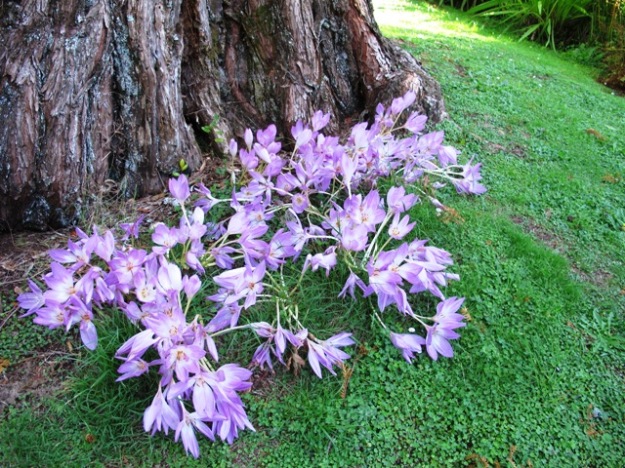
At the end of a golden summer come the autumn bulbs

Colchicums, not autumn crocus

Colchicums, not autumn crocus

Autumn. It is indubitably autumn. I can no longer pretend it is just the summer slowly waning and that winter is still a long way off. For most people, autumn is synonymous with leaves colouring to fiery hues.

However those of us in coastal areas may carry that mental image but the reality can fall well short. Inland areas get much better autumn colour because the nights cool down more rapidly and it is the sharp drop in temperatures which triggers the colouring response in most deciduous plants as much as the declining day length. The moderating effect of the sea means we drift far more slowly between seasons and the leaves are inclined to turn brown and fall, skipping much of the colouring process.

Our extensive use of evergreen plants in this country also mitigates against fantastic mass displays of autumn colour. Our native plants are all evergreen and in a generally benign gardening climate, we tend to favour evergreen exotics as well. I have met many gardeners who shun deciduous plants because they are allegedly messy and lack winter interest, which has always seemed a bit myopic to me. We are never going to rival countries like Canada with its native maples when it comes to a mass blaze of autumn tones.

It is the autumn bulbs that signal the change in season for me. There are so many pretty seasonal flowers coming through now. These are triggered into bloom by a drop in temperature, declining day length and some by late summer rain – don’t laugh at that last one.

The charm of carpets of Cyclamen hederfolium

The charm of carpets of Cyclamen hederfolium

Gardeners in this country tend to focus on the spring bulbs – from the early snowdrops through the snowflakes, bluebells, tulips, daffodils, anemones and ranunculus. These are readily available and marketed widely. They also flower at a time when the majority of trees and shrubs are blossoming forth.

The autumn bulbs have never captured the market in the same manner yet they bring freshness to the garden at a time when many plants are looking tired or passing over. I find them a wonderful antidote to the autumnal despondency of declining day length. There they are, all pretty and perky, just coming into their prime.

I often feature selected autumn bulbs in Plant Collector because this is their time to shine. As I wander around the garden, I see carpets of Cyclamen hederafolium (flowers only so far – the leaves have yet to appear) and taller spires of the autumn peacock iris, Moraea polystachya, which is inclined to seed itself around a little. This lovely lilac moraea has one of the longest flowering seasons of any bulb I know. The common old belladonnas are already passing over but I enjoy their blowsy display while it lasts. We use them in less tamed areas on the road verge.

Moraea polystachya - the autumn flowering peacock iris

Moraea polystachya – the autumn flowering peacock iris

Over the years, I have waged a campaign to convince people of the merits of the ornamental oxalis, many of which are autumn stars. Call them by their common overseas name of wood sorrel, if the mere mention of oxalis makes you shudder. The range of different species is huge. By no means are all of them nasty weeds and many are not the slightest bit invasive. We have them flowering in white, yellow, apricot bicolour, a whole range of pinks, lilac, lavender and even crimson. Some are perfectly garden-safe. I can vouch for their good behaviour after decades in the garden here. Others I keep in pots – preferably wide, shallow pots for best display.

We are big fans of the Nerine sarniensis hybrids

We are big fans of the Nerine sarniensis hybrids

And nerines are the major feature of our autumn rockery. The majority of these are sarniensis hybrids with big heads of flowers. By no means are all of them the common red of Nerine fothergillii or the strong growing pink Nerine bowdenii which comes later in the season. We have some lovely smoky tones, reds deepening to violet hues, a remarkable lolly pink – the colour of a highlighter felt pen, two tone sugar candy and even heading to apricot. Nerines are renowned as a good cut flower but I never cut them. There is only one stem per bulb and I would rather admire them in the garden than indoors.

Then there are the bold colchicums which, contrary to popular belief, are not autumn crocus but certainly put on a splendid show with a succession of flowers from each corm. You have to go a long way back in the botanical family tree to get any relationship between colchicums and the proper autumn crocus. The latter is a much more delicate and transient performer whose flowers appear at the same time as its foliage. Currently, we are enjoying both in bloom.

Some bulbs are quite transient in flower but no less delightful for all that. If I am ever forced by declining health and aged frailty to trade down from a large garden, I can see that it would bulbs that I would chose to grow. I love the way they mark the seasons and how there can always be a different one coming into its time to star.

First published in the Waikato Times and reprinted here with their permission.
In the garden this fortnight: April 26, 2012

A fortnightly series first published in the Weekend Gardener and reproduced here with their permission.
The pretty Moraea polystachya has a long flowering season

The pretty Moraea polystachya has a long flowering season

We are not noted for autumn colour here. I can’t think that anybody has ever said: “Oh but you simply must go to Taranaki to see the autumn display.” The trigger to deciduous plants to turn is temperature related and we drift so imperceptibly from summer through autumn to early winter, that even plants renowned for their capacity to blaze with colour are usually a disappointment. Besides, we are so verdant and green and our native plants are all so resolutely green that all we can do is to admire the occasional single deciduous specimen. Generally it is inland areas with drier climates and much sharper variation in seasonal temperatures which put on the big displays.

However, our autumn is marked by much smaller, pretty pictures of autumn bulbs. We garden extensively with bulbs. In a large garden with some huge trees, it is the dainty, often ephemeral pictures which give the charm and detail. Autumn flowering bulbs are harder to find for sale because most people don’t think beyond the more common spring bulbs.

Cyclamen hederafolium - the easiest of the species in our climate

Cyclamen hederafolium - the easiest of the species in our climate

At the moment, it is the pink and white Cyclamen hederafolium, blue Moraea polystachya (autumn peacock iris), a rainbow of colours in the ornamental oxalis, bold lilac colchicums (often incorrectly referred to as autumn crocus), the real autumn crocus and the beautiful hybrid sarniensis nerines which are carrying the season in the rockery. Out on the roadside, the belladonna lilies are in bloom. Some, like the colchicums, do not flower for long but are very showy. Moraea polystachya is a gem of a bulb. It flowers down the stem so it has an exceptionally long season stretching into months rather than weeks. It can seed down but is easy enough to thin out if necessary.

Cyclamen hederafolium (formerly known as neapolitanum) is the easiest and most reliable of the species cyclamen. It too has a long flowering season, followed by attractive, heart shaped leaves with white markings. It combines very well with black mondo grass and in places we have English snowdrops (galanthus) to come through in late winter, extending the seasonal interest amongst the cyclamen foliage.

Top tasks:
1) Cut off all last season’s leaves on the Helleborus orientalis and remove them to the compost heap. We have done this for many years now, following the advice from Terry Hatch at Joy Plants. It removes any build up of aphids and it means that the flowers are highly visible as they come through with just delicate new leaf growth. As the season progresses, the new foliage takes over and fills the whole patch. Timing is important – if you leave it too late, you have to trim carefully around all the emerging flower stems.
2) After raking off the hellebore foliage, I will weed out the rash of germinating seedlings and then cover the whole bed with a mulch of compost to a depth of about 3cm. This feeds the soil and discourages weeds. Hellebores are one perennial that is best left undisturbed. It is better to raise seed than to try and divide existing clumps. They can sulk for years before recovering.

The Nerine sarniensis hybrids are a real autumn feature in the rockery

The Nerine sarniensis hybrids are a real autumn feature in the rockery

Tikorangi notes: April 23, 2010

Latest posts.
1) Nerines, mostly sarniensis hybrids, are a mainstay of our autumn rockery.
2) Instead of thinking buxus hedges, think instead about lines and definition in the garden. There are other ways to achieve a similar outcome without the blighted buxus hedge – Abbie’s column.
3) Our mild and dry autumn continues – weekly garden tasks and hints.
4) It may be six months until our annual Garden and Rhododendron Festival here in Taranaki, but dedicated garden openers are hard at work and counting down already.

Autumn in the rockery at Tikorangi

Our rockery has two main periods when it is at its fullest and most colourful – in the early spring when dwarf daffodils, snowdrops and many other tiny treasures bloom and right now in autumn when the nerines and cyclamen hederafolium are at their best. My summer mission taking apart every pocket in the rockery has borne fruit with renewed vigour apparent throughout. Some may think the nerines on the garish side but we love their autumn display. We have a whole range of colours now from nearly apricot through coral, orange, reds, pastel pinks to highlighter pink and deeper, smoky colours bordering on purple. Felix Jury worked with the nerines, mainly sarniensis hybrids and he acquired some of the Exbury hybids over 40 years ago. Most of the cultivars in our garden are unnamed hybrids from that time although Mark has also had a play in his turn and did name one, Coral Star, which we have sold in the past. Felix’s preference leaned towards the smoky plum colours and he named two: Smoky Queen and Nelson’s Blood.

From near apricot to near purple with plenty of oranges, reds and pinks between