Tag Archives: ornamental oxalis

Autumn delight

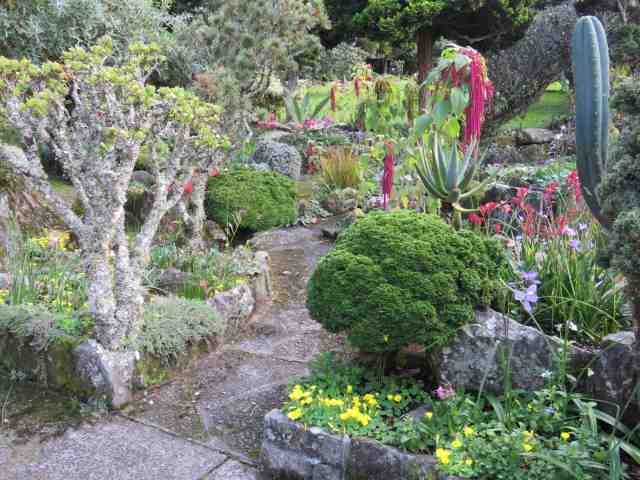
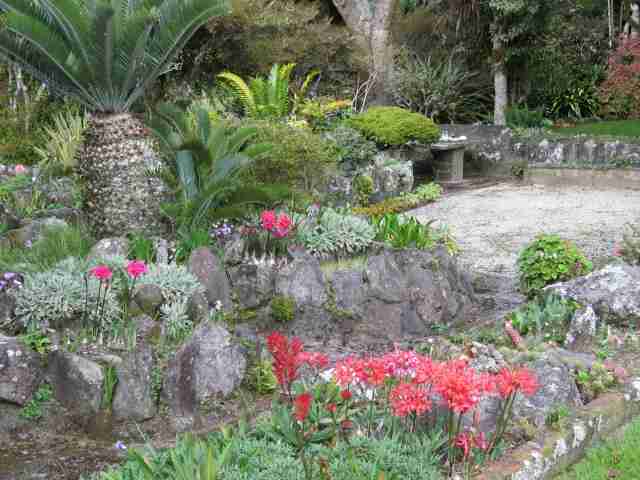
The rockery plantings are complex and varied but that is what makes it all the more interesting to us

I am not quite gone yet; on Wednesday I start the long haul over to Barcelona and then the south of France.  In the meantime, the rockery has been bringing me much pleasure. If I ever have to downsize both house and garden, I might be tempted to turn any new, smaller garden into rockery.  Rockeries lend themselves to highly detailed, high-interest level gardening and I can see I could be quite happy pottering in a rockery – as indeed was Mark’s dad, Felix, in his later years. It is a particularly absorbing area to garden, even if there are times I regard it as the gardening equivalent of micro-surgery.

There was quite a bit of excavation and construction that went into our rockery, especially given it was a blank canvas and largely flat to start with.

Ours is a raised rockery with different levels so it has detail in its design, not just in its plantings. Mark’s mother always used the plural ‘we’ when she talked about building the rockery, but we think it more likely that she designed it and then supervised Felix in its construction, which included some excavation to achieve different levels. Every original garden structure here was done by hand or, on occasion maybe, using horse power. Felix did not have a tractor or access to any of the machinery we can call on these days.
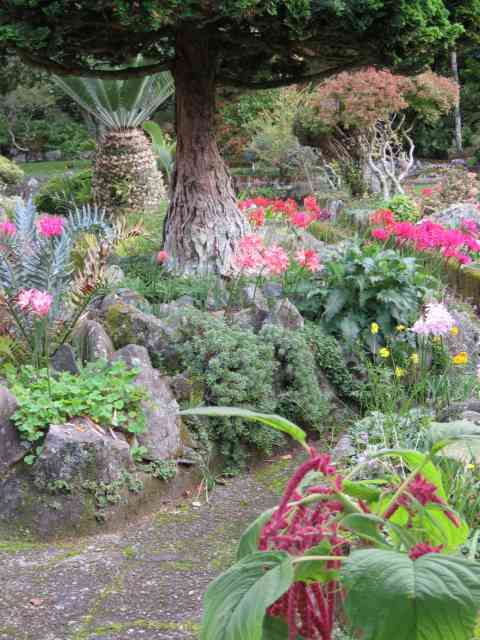
As our rockery measures some 20 metres by 10 metres, it is not small and it is certainly not low maintenance. Because it is largely raised beds and pockets of soil for separate plantings, it dries out and heats up in summer. Our frequent heavy rains drain quickly but that also leaches a lot of the nutrients out of the soil in the process. Bulbs generally need excellent drainage and many thrive in poor soil so they are quite happy in this environment. We try to get around with a thin layer of compost every spring and when I excavate a pocket to sort out its contents, I will add compost when I replant. But the soil overall is pretty impoverished and generally lifeless in the summer heat. There are almost no earthworms in summer but they seem to return as temperatures cool.

Rockeries are traditionally a re-creation of rocky mountain slopes to grow alpines. We can’t grow alpines here where our conditions and climate are anything but alpine. Our rockery basically consists of elderly dwarf conifers of considerable character and a few cycads giving all year round structure, offering some shadier areas beneath for bulbs of many descriptions. Smaller bulbs and many species rather than bigger hybrids which look out of scale, with one notable exception.

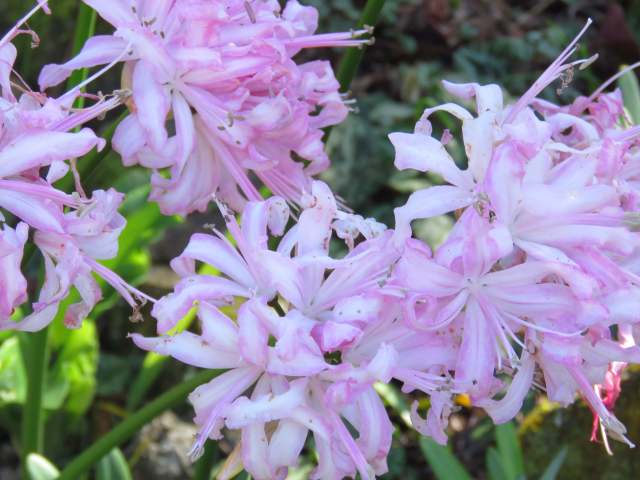
Nerine sarniensis hybrids

That exception is the Nerine sarniensis hybrids, most of which were bred and selected here although we have a few of the early Exbury ones and some of the species nerines. They are sensational at this time of the year. Along with Cyclamen hederafolium and the ornamental oxalis, they keep the autumn rockery full of blooms and colour.

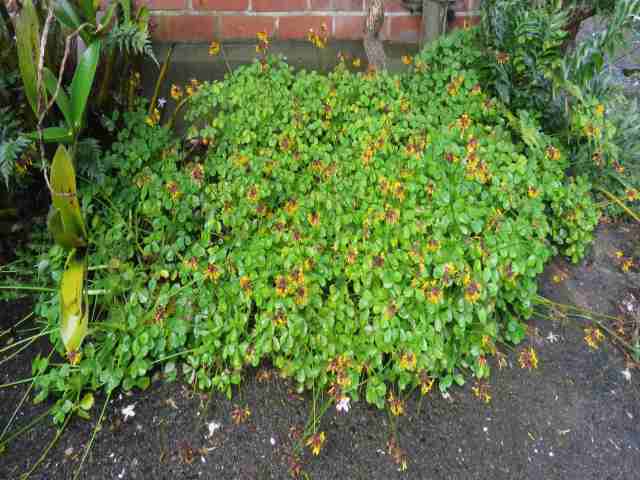
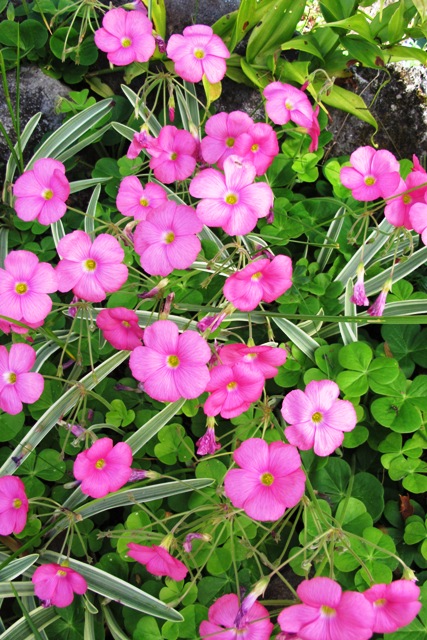
Not all oxalis are equal. Some are much more floriferous and better behaved than others. This is O, luteola and it makes an excellent garden plant,

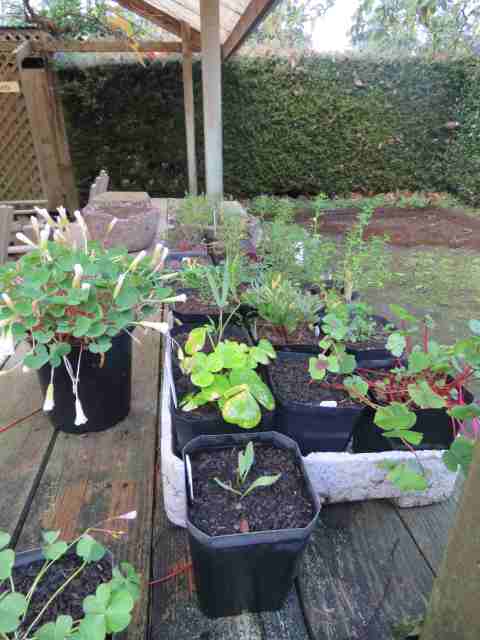
Last year, Zach reassembled the oxalis collection. Years ago, I planted them all out because I didn’t want to be repotting them every year and he set about retrieving some of each. We had only lost one or two inbetween times and he now has over 30 varieties in pots – most from the garden and a few extras he has picked up from local markets.
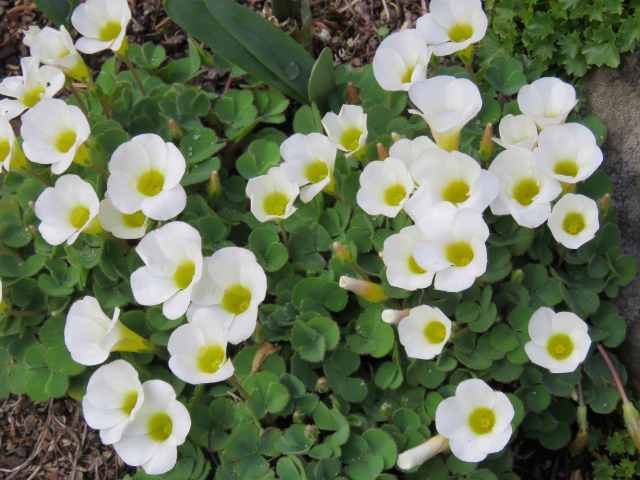
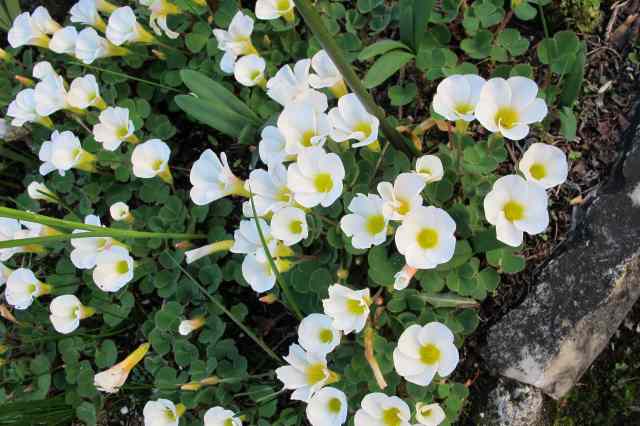
It is hard to fault Oxalis purpurea alba with its long flowering season, mass blooming and non-invasive ways.

A much maligned genus, the oxalis shine at this time of the year. We are only a few months off the short snowdrop season and the start of the dwarf narcissi and lachenalias. There is always something of interest going on in the rockery and it is constantly changing as different bulbs and plants take their time to shine. Always, Mark and I remember Christopher Lloyd saying in conversation on a TV programme, “I think you will find high maintenance is a great deal more interesting.” We could not agree more.
Oxalis – by no means all bad

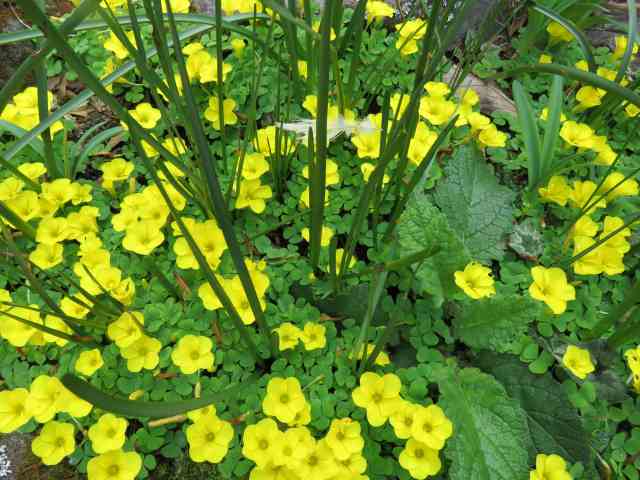
Sunny Oxalis luteola. These bulb oxalis only open their flowers in the sun.

It is easier to maintain specific plant collections when you have a nursery. In that situation, special plants are maintained under nursery conditions and given more individual attention and care than in general garden collections. We used to carry a large array of different bulbs when we were doing mailorder and they were repotted on an annual basis, or at least every two years. We only listed bulbs if we had enough stock reserved to keep going for the following years.

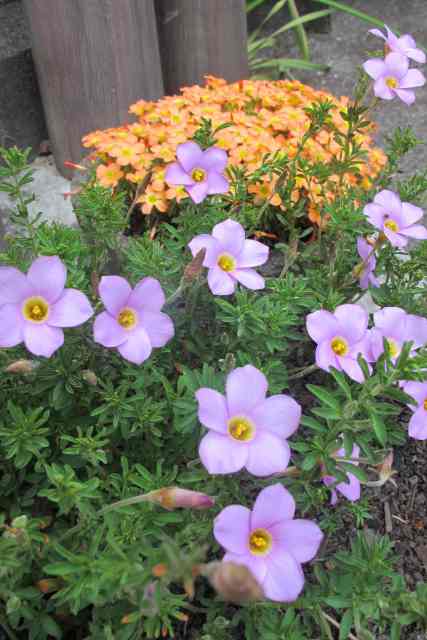
Lilac O. hirta with apricot O. massoniana behind

We put out our last mailorder catalogue in 2003 – twenty years ago – even though I still get email and phone requests from people wanting to order plants from us! In the years since, I have planted most of the good bulbs in the garden, scrapped some that may have been botanical curiosities to half a dozen afficionados throughout the country but were of little merit as garden plants and the rest have languished under a regime best described as benign neglect. Some have not survived this laissez faire approach but, with an extra pair of hands, we are starting to salvage what has.

Zach’s oxalis collection is continuing to grow

Our gardener, Zach, is doing his apprenticeship and one of his modules is on plant collections. I suggested the ornamental oxalis as a well-defined collection he could assemble in one place. There is no doubt that most of these thrive and look their best in containers. I have never forgotten Terry Hatch’s magnificent display of oxalis in pots at Joy Plants and that must be 30 years ago.

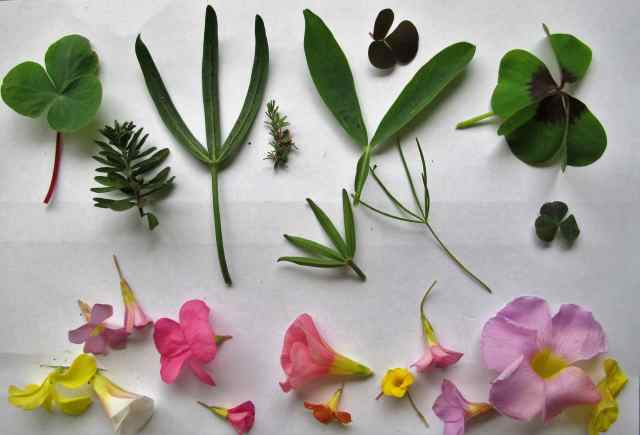
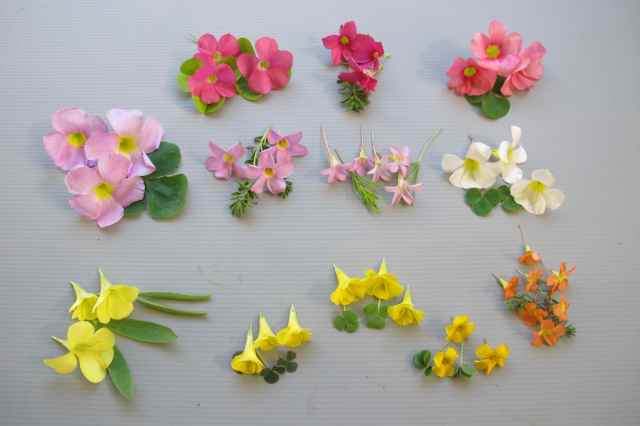
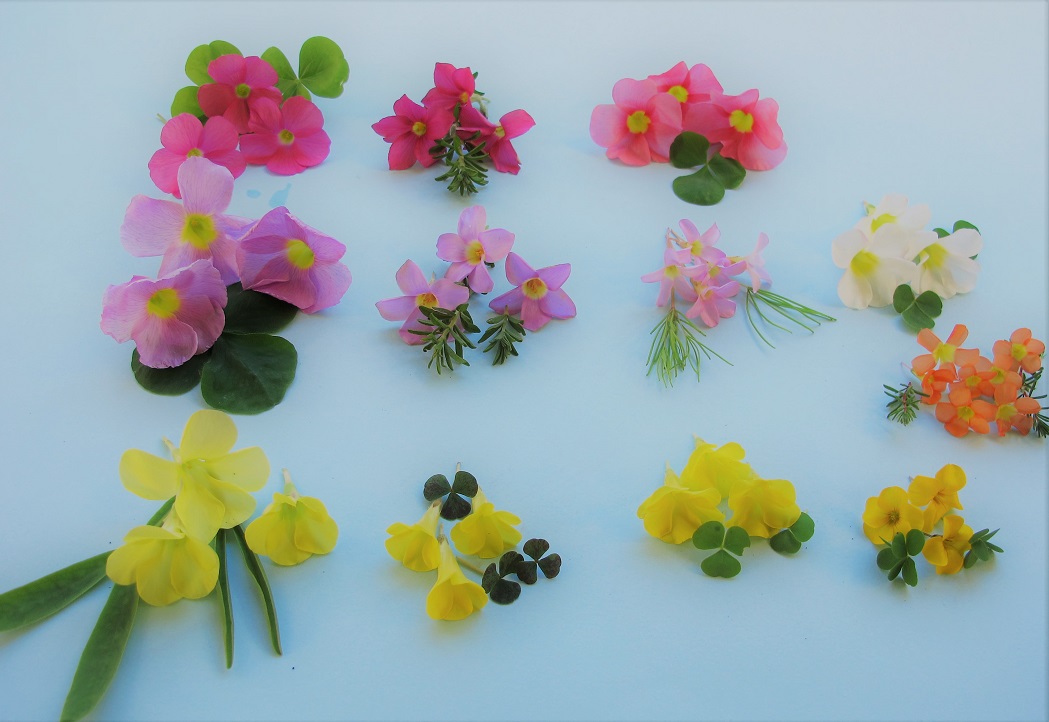
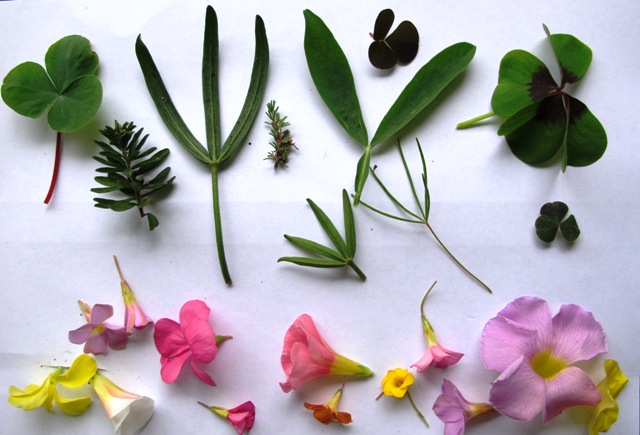
13 different flowers and 10 different examples of oxalis foliage.

For years, I maintained a collection of my favourite oxalis in pots to be brought out when they look their best in autumn and early winter. I hate plastic pots in the garden so they were all in terracotta, ceramic or vintage concrete pots and truly, I just got fed up carting these heavy pots out of the nursery and into the garden and then back again when they were over, not to mention the annual repotting. I gave up and planted them out and let them fend for themselves. The most invasive of them, I put in shallow pots and sank the pot in the garden, but I rarely repotted them.

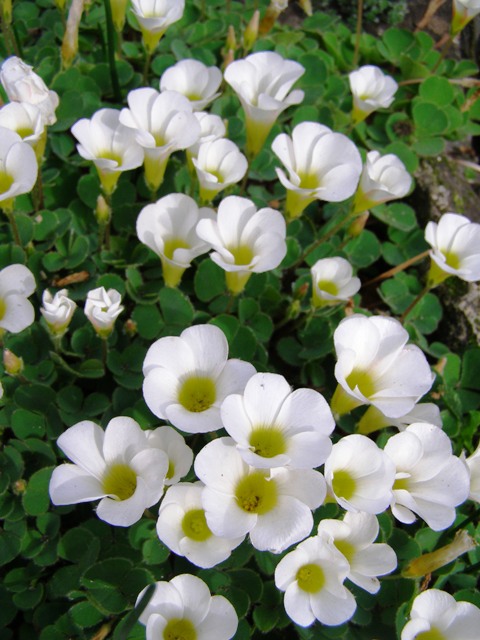
One of the very best oxalis when it comes to good behaviour and generous flowering over a long period of time – O. purpurea alba

Zach has so far isolated 23 different forms of ornamental oxalis that grow from bulbs. Most are from the garden here and a few he has added from his own stash of plants at homes. (Note: he has just sourced another five from a local market, he tells me.) Amazingly, I think we only lost two varieties in the years between my getting them out of the nursery and him getting them back in again and they weren’t a great loss. I suggested that he also pot up the weedy ones we battle all the time. The creeping oxalis – O. corniculata – which we have in bronze and green is the worst and we have a pink one in a patch of grass that may be O. corymbosa.

O. bowiei

Then there are the more herbaceous oxalis. The best known of these is probably what we call a yam in Aotearoa New Zealand, although technically it is growing from a tuber. Commonly known as oca in Spanish, it is a food crop and one we grow ourselves, semi naturalised in the vegetable garden. Botanically it is Oxalis tuberosa.

Oxalis peduncularis

We have Oxalis peduncularis growing in one of those awkward, narrow borders against the house and it looks and grows more like a succulent, flowering for most of the year. Now that I am getting my eye in again, I have spotted another plant that is like a dwarf peduncularis but I have never even thought about what it is because it has just always been there, in its place. It must be another oxalis.

The family is huge overall with somewhere over 550  different species in the wild across most of the world except the polar areas. I have only just discovered that we have a native one – Oxalis exilis. It is a small creeping one and I think it is probably one that I assumed was corniculata, too.   

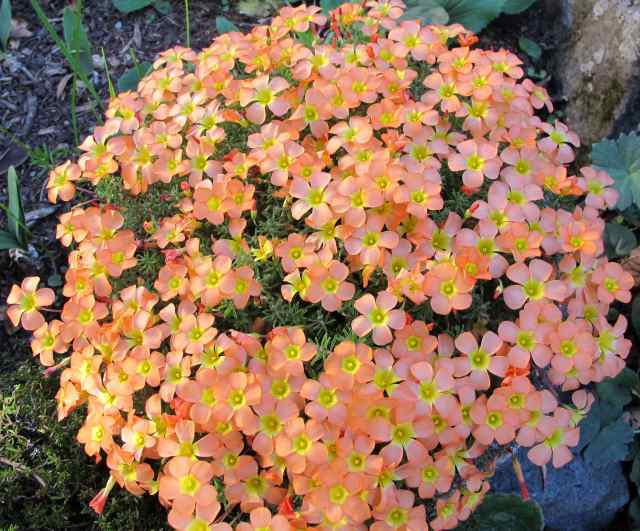
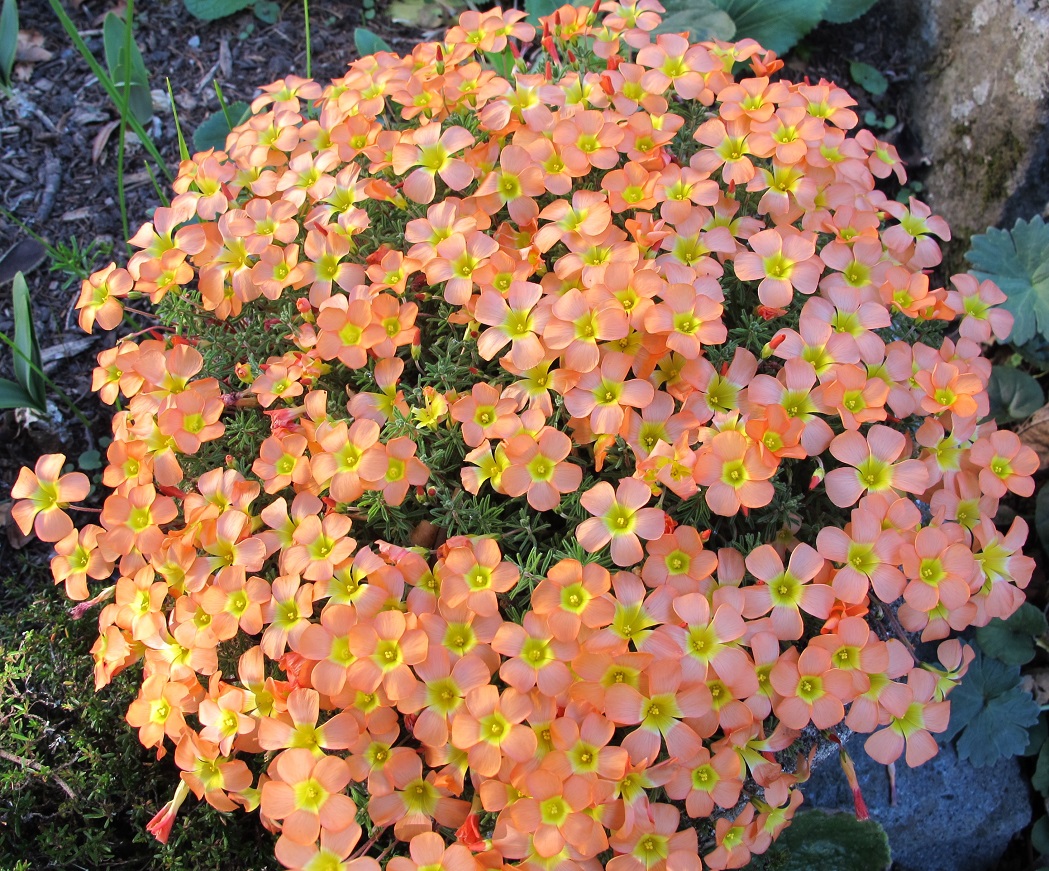
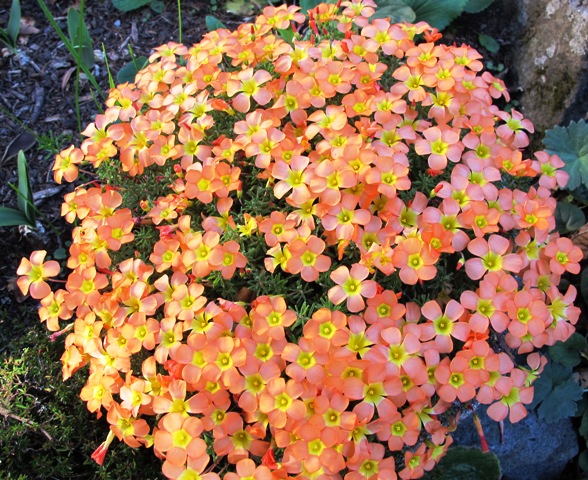
Oxalis massoniana – one of the prettiest in colour and because of its compact growth, it can form a tidy mound

The thing about plants is that the more you learn about them, the more interesting they get. There are many worse rabbit holes in life that one can go down than the intricacies of the oxalis genus. I can see that Zach’s oxalis collection will probably continue and expand long after he has fulfilled the requirements for his level 4 apprenticeship.

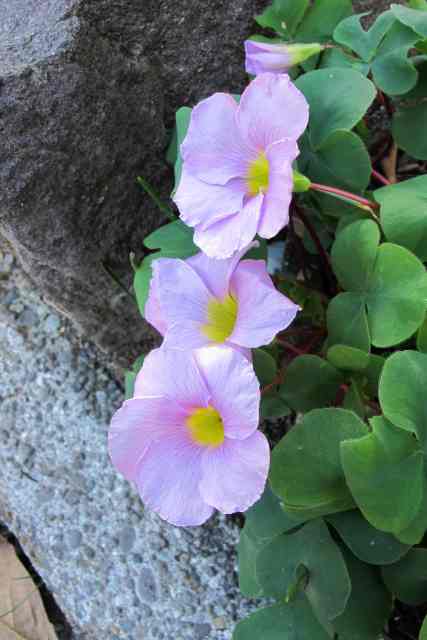
O. eckloniana – probably the largest flower one we have

I am wondering now whether I can get him onto isolating and sorting the intricacies of the lachenalia collection next. That went pretty much the same way as the oxalis collection when we retired from mailorder but is more complicated because of their readiness to cross with each other and produce natural hybrids. He doesn’t need to do it for his apprenticeship but I think he would find it very interesting and it would be satisfying to sort it out again. At least all the lachenalias are bulbs and there are only about 133 species so that makes it more tightly defined.

Judge not by the worst members of the family

The ornamental oxalis

The white form of Oxalis purpurea – the best of them all

Back in our nursery days, we had a large range of ornamental oxalis. I see in our old mailorder catalogues that we offered over 20 different varieties that we had in production at the time and I wrote extolling their autumn merits for several publications.

Twenty years on and the oxalis collection has refined itself down. It is the difference between gardening in containers and gardening in the soil. Some of those varieties were so delicate and touchy that we have lost them. Others needed to be kept confined because of their invasive proclivities. Some flowered prettily enough but their season was so short that it was hard to justify their place in the garden. I decided years ago that I was not going to fluff around with plants in containers. We have quite enough garden with many different micro-climates. If plants couldn’t perform in the garden, I didn’t have the time or inclination to nurture them in controlled conditions in containers.

These days, the oxalis we still have are the stand-out performers (and a few of the nasty weed ones that most of us battle – particularly the creeping weed which I think is Oxalis corniculata). The star has always been and still is the beautiful, well-behaved Oxalis purpurea alba. Large white flowers in abundance over a long period of time and not invasive. At this time of the year, I am more than happy to use it as ground cover in sunny positions. Oxalis flowers don’t open without the sun so they need to be in open conditions.

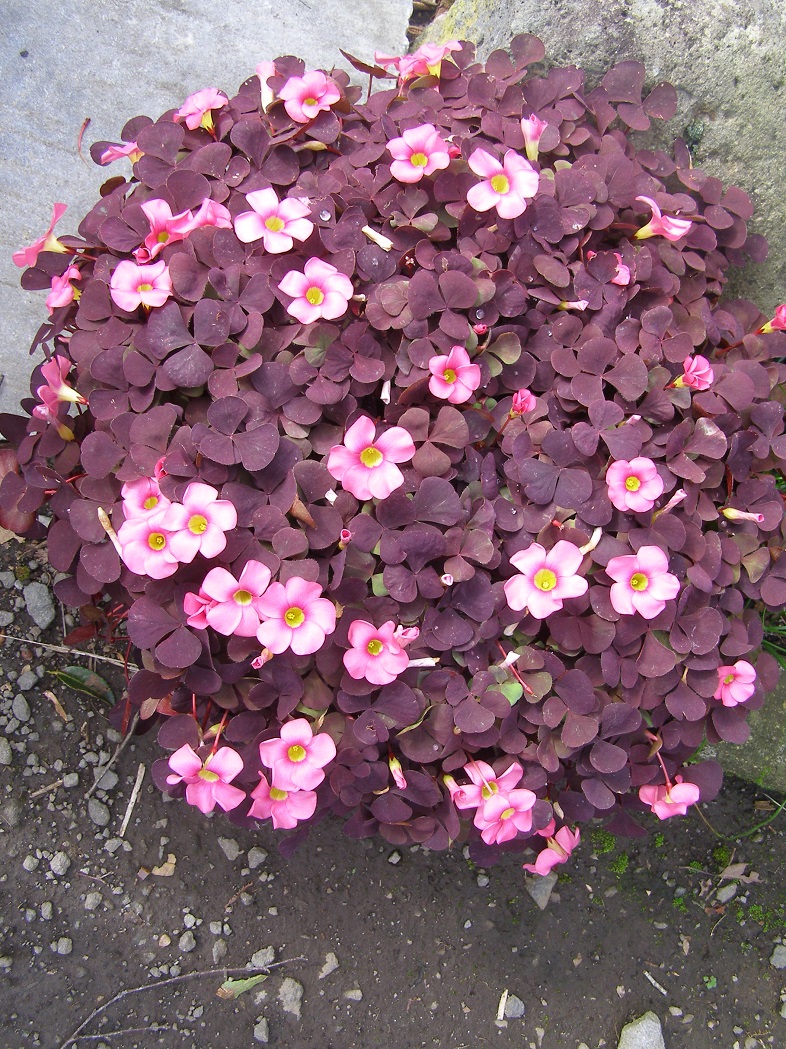
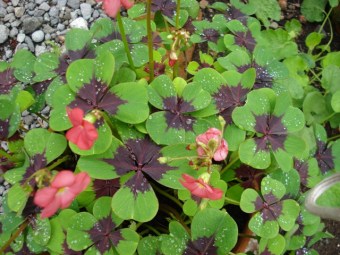
Oxalis purpurea nigrescens

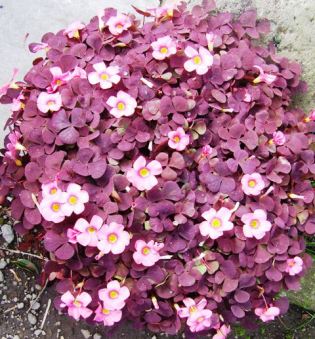
O. purpurea is a variable species. The striking red-leafed form (O. purpurea nigrescens) with pink flowers comes a bit later and is invasive so needs to be kept confined. We also have a strong-growing (somewhat invasive) green-leafed form with very large pink flowers which is worth keeping and also has a long flowering season. Back in the days, I recall more than one person telling me that there was a red leafed form with the large white flowers but I have never seen it so I rather doubt its existence.

Oxalis luteola as runner-up in my best garden oxalis list

The standout yellow is Oxalis luteola. It, too, is well behaved and forms a gentle, non-invasive mat that flowers for a long time in mid- autumn, combining well without competing with other bulbs like the dwarf narcissi that are in growth but won’t flower until late winter and early spring. It leaves the rabbit-ear Oxalis fabaefolia in the dust for length of flowering time. Both have large, showy yellow flowers but the latter’s flowering time can be measured in days rather than weeks.

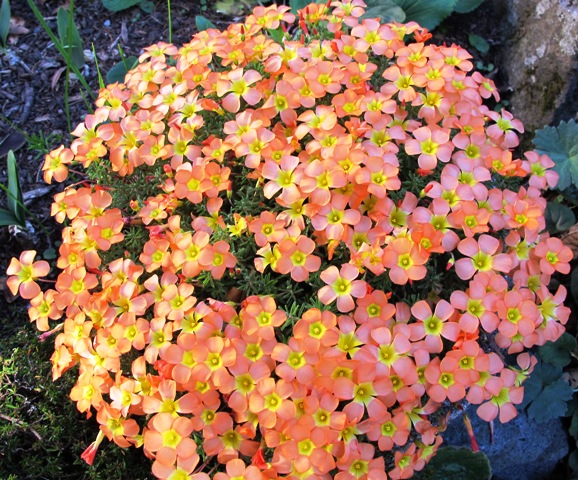
Oxalis massoniana

I am very fond of little Oxalis massoniana with its dainty apricot and yellow blooms but it needs a bit of nurturing to keep it going. The popular old candy-stripe O. versicolour is happy left to its own devices in the rockery but will not come into its season for a few weeks yet. It is the only one I know that looks more interesting when its flowers aren’t open because the striped buds disappear into a fairly ordinary white flower on sunny days.

I have hung onto the strong-growing O.eckloniana for its large lilac blooms but I keep it confined to a shallow pot sunk into the rockery. I could rustle up a few of the others from around the garden, like O.hirta in both lavender and pink, O. bowiei, O, lobata, the unusual double form of O. peduncularis  and O.polyphylla but they are not the star performers that luteola  and purpurea alba both are.

If you are into container gardening, a collection of different ornamental oxalis species give interest on a sunny terrace or door step from autumn to mid-winter. I saw somebody listing a whole range of different oxalis on Trade Me at one stage. In fact, it looked like somebody had bought our full collection all those years ago and kept it going so they are still around. If somebody offers you O. purpurea alba or O. luteola, don’t reject them just because they are oxalis. They are worth having.

Oh look! Here is a little display board I prepared earlier of under half of the oxalis that we used to grow

In praise of ornamental oxalis (or wood sorrel, if you prefer)

Oxalis show considerable variation in leaf form (and in flower colour)

Oxalis show considerable variation in leaf form (and in flower colour)

Most people shudder at the mere mention of oxalis. The bad reputation of a few has tarnished the entire population. We would not be without the cheerful sight of them blooming from early autumn through winter, but the most common reaction from others is complete dismissal. I have even resorted to their colloquial name overseas – wood sorrel. It sounds so much prettier and more acceptable than oxalis.

Over the years, we have gathered up around 30 different ornamental varieties but these are a mere drop in the bucket. The oxalis family is huge. In the wild, the number of different species is into the late hundreds. That is not to say that they are all of great merit. Nor are they all bulbs. Equally, not all are invasive.

O. deppei "Iron Cross" grows and flowers in the opposite seasons to most ornamental varieties

O. deppei "Iron Cross" grows and flowers in the opposite seasons to most ornamental varieties

Most oxalis are native to either South Africa or South America, though it is the former that gives us the majority of varieties which have garden merit. Most are triggered into growth by late summer rain, so they come into flower around this time of year. The two notable exceptions we have in our collection are both from South America. Oxalis deppei “Iron Cross” (named for the markings on its leaves) is from Mexico and going dormant now, to return to growth at the start of November. O. triangularis, with its triangle shaped leaves in deep burgundy, is Brazilian and also flowers in summer. I bought this one at a car boot sale where I commented that it was an oxalis that I did not have. “No,” protested the vendors. “It is not an oxalis. It is a triangularus.” I didn’t argue.

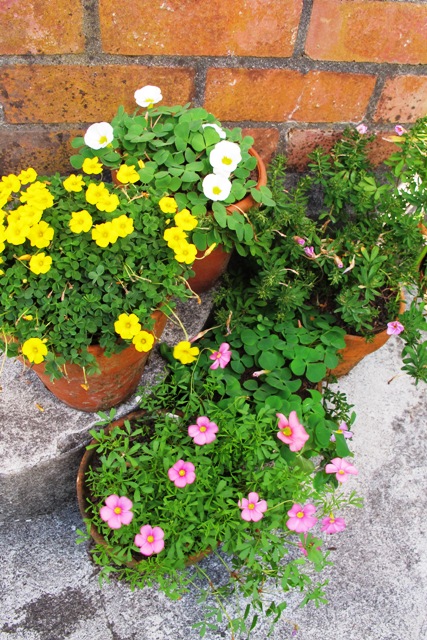
Some of these oxalis are perfectly safe in the garden. I can vouch for this after decades of growing them in the rockery where they have never threatened to become a weed. Others are downright dangerous. Turn your back and they will invade at alarming speed. Such wayward habits don’t mean you have to shun them. Keep them in pots. You can either plunge the pot into the garden (which reduces the need to water it), or have a collection on a sunny doorstep. Oxalis only open their flowers in the sunshine. When they have ceased being attractive, you can move the pots out of sight for the rest of the year. We have not had problems with them setting seed so as long as the bulbs are confined, they rarely escape.

My all time favourite - O. purpurea alba

My all time favourite - O. purpurea alba

Same species but different form and very different behaviour. Keep O. purpurea "Nigrescens" confined to a pot

Same species but different form and very different behaviour. Keep O. purpurea "Nigrescens" confined to a pot

My all time favourite is the pristine white O. purpurea alba. It has an exceptionally long flowering season and is extremely well behaved in the garden. A mat of this plant opening up its large blooms to the sunshine is a delightful sight. Each flower has a golden eye. Purpurea is a variable species. The green form (same clover-like leaves but with large pink flowers) also has an excellent length of flowering but I haven’t had it long enough to know whether it is garden safe or not so I still keep it in pots. The reason for my caution is that O. purpurea ‘Nigrescens’, highly desirable for its deep burgundy foliage and big pink flowers, is dangerous. I have seen it invade an Auckland garden on heavy clay. It was as bad as the weedy varieties, just more ornamental. Keep it confined at all times.

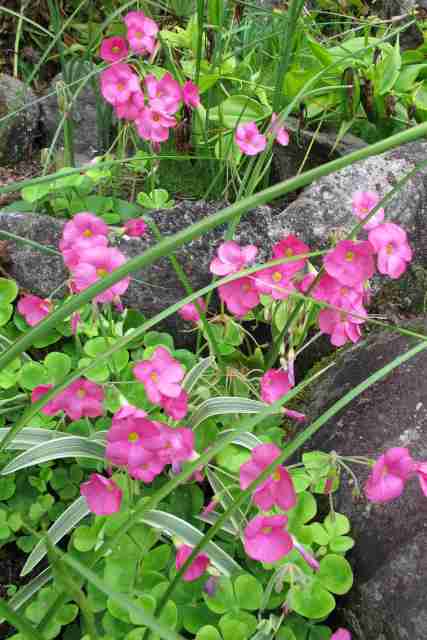
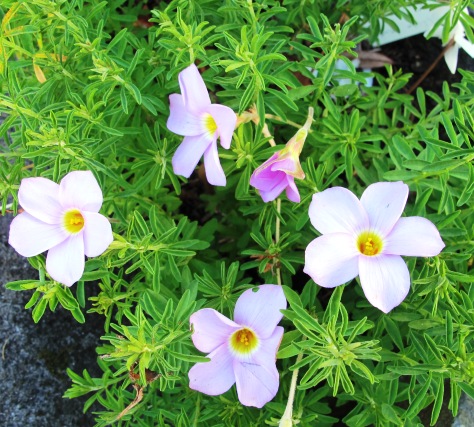
My second place favourite is the lavender O. hirta. We also have a bright pink form of it, but the pastel lavender is prettier. This has very different foliage – trailing clusters of leaves. The range in leaf form is surprising. O. fabaefolia is often called the rabbits’ ear oxalis because its leaves look like pointed rabbits’ ears. It has a big yellow flower but a very short season.

O. luteola - an excellent garden variety

O. luteola - an excellent garden variety

Oxalis luteola, with its neat mat of clover-like leaves and masses of sunshine yellow blooms over many weeks, is another tried and true garden plant here. It has never been a problem in the rockery and gently grows amid other plants without ranging far afield. O. lobata is like a miniature form of O. luteola and equally garden safe.

Oxalis flower in colours from white, through the full gamut of pinks and lavenders to the crimson red of O. braziliensis, yellow, and apricot-orange tones. The well known O. versicolour has a pointed bud which is candy striped pink and white, like a traditional barber’s pole, though in the sun the flowers open to white. It is the only one I know which is showier when it is not open.
Oxalis (or wood sorrel, if that sounds better) are easy and fun to grow for a bit of cheer as the autumn draws in.

We keep O. eckloniana in a pot plunged into the garden

We keep O. eckloniana in a pot plunged into the garden

Growing oxalis in containers:

If in doubt, keep oxalis confined to pots in sunny positions.
• Pots can be plunged in the garden to reduce watering.
• Repot every year or two.
• Empty the pot onto newspaper and choose only the best looking bulbs. You will see which varieties have dangerous tendencies – either masses of tiny bulbs or long runners with too many bulbils attached. Throw the rest out with household rubbish to prevent any escaping.
• Free draining potting mix is recommended.
• If you have used a commercial potting mix, it will have fertiliser already added. If you are not repotting every year, the time to feed is as the bulbs are coming in to growth.
• Wide, shallow pots give the best display.
• Keep pots dry when bulbs are dormant to stop them from rotting out.

Perfect for sunny doorsteps

Perfect for sunny doorsteps

Dealing to the weedy ones:

There are no easy answers when it comes to getting rid of the weedy oxalis in gardens and lawns. O. corniculata is a creeping plant which doesn’t have a bulb so it can be weeded out. It spreads rapidly from seed and matures quickly so it pays to be vigilant and to dispose of plants in the household rubbish to avoid dispersing the seed. It can be green or red-brown in leaf and has tiny yellow flowers.
The pink or yellow flowered weedy bulb forms are more problematic, especially if they are growing through other plants. Glyphosate will kill them eventually, if you keep applying it every time you see leaves reappearing. I have never tried Death to Oxalis but it appears to need frequent reapplications as well. If you can lift all the other plants out of the garden border, you can sieve the soil or even replace it all. If you cover the area in black plastic and let it bake throughout a hot summer, it will sterilise the soil to some extent. Failing that, you just have to be persistent and vigilant, getting rid of every little bit you see.
First published in the Weekend Gardener and reproduced here with their permission.

O.hirta lavender - second place favourite

O.hirta lavender - second place favourite


O.massoniana - massed in a wide, shallow container in full sun

O.massoniana - massed in a wide, shallow container in full sun


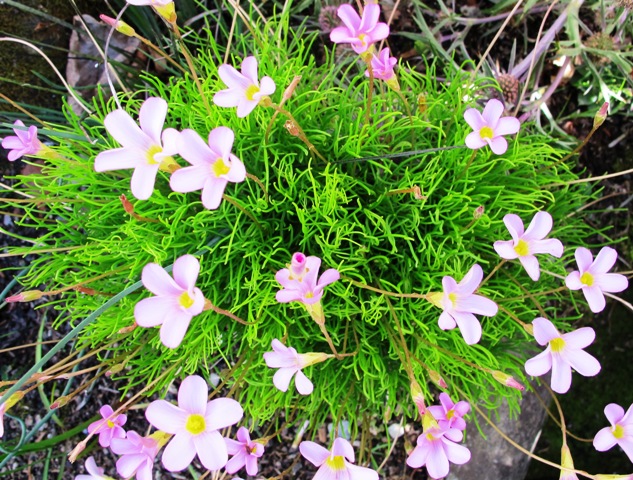
O. polyphylla shows very different foliage

O. polyphylla shows very different foliage


O. bowiei - bold and showy very early in the season

O. bowiei - bold and showy very early in the season

Plant Collector – Oxalis massoniana

Oxalis massoniana

Oxalis massoniana

Envy the gardener who has not had to battle invasive oxalis. Most of us know only too well how difficult it is to eradicate the weedy ones. But there are only a few villains in a very large family and unfortunately, most people shun the lot because of those few. We wouldn’t be without the decorative oxalis and O. massoniana is just one putting on a splendid display at this time.

I think we must have around 30 different oxalis in pots and in the garden here and they are just a drop in the bucket of the many hundreds of different species. Flower colour ranges from white, through the gamut of pinks, lilacs and lavenders, crimson red, yellows and oranges. The foliage is also varied from the clover type leaves to fine and feathery, trailing and even miniature palm leaves. We must have them flowering for six to eight months of the year. I should comment that some have a flowering season lasting a long time, while others are a bit of a flash in the pan.

Some oxalis are garden safe but if in doubt, keep them in pots where they are wonderfully forgiving of benign neglect. The flowers only open in the sun so the pots make a lovely seasonal feature on a sunny doorstep. I have tried massoniana in the garden but it seems to be happier and showier in a big, shallow container.

The apricot and soft yellow two-tone colouring is very pretty and the flowering season lasts a good length of time. As with most of the autumn and early winter flowering oxalis, it is native to the bulb wonderland of South Africa. If you can’t bear the thought of growing oxalis, just call it by its more romantic sounding common name overseas – wood sorrel.

First published in the Waikato Times and reprinted here with their permission.