Tag Archives: snowdrops

The delight is in the detail

We like a detailed garden, we do. It is not just the big views that catch our eye. Often it is the little delights – tiny, even – that focus our eyes on the close-up. It is possible to have a highly detailed garden without it descending into fussy clutter.

Here we are in midwinter and the small bulbs are bursting into flower. No, this is not early; nor is it a sign of climate change. It is on cue for an area where our winters tend to be mild and lacking in extremes. Goodness knows, we complain as much as anybody about cold weather, dreary days, rain and wind but the plants tell us that it is not as bad as we think.
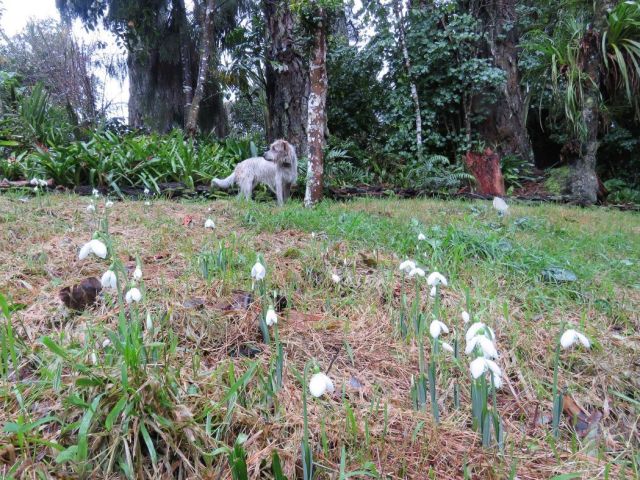
In the days when I used to write for the Waikato Times, we had a sheltie dog who quietly photo-bombed many a picture. Now we have Ralph channelling the spirit of the late Zephyr, except he is a boisterous photo bomber.

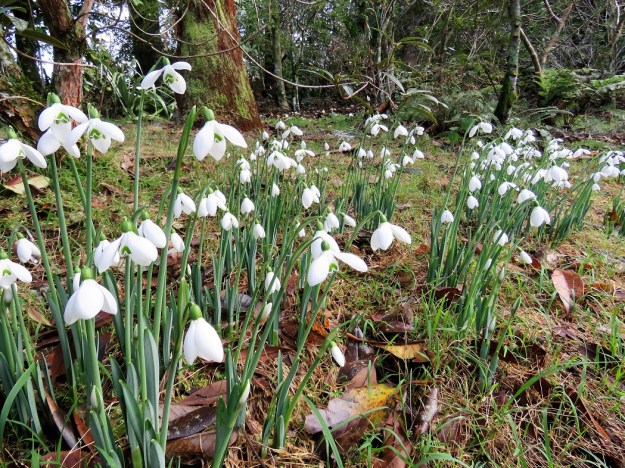
The swathes of snowdrops and dwarf narcissi that we have in areas of the park are only just showing first colour because it is colder on the south facing slopes but there are plenty out in the cultivated areas of garden that are noticeably warmer.
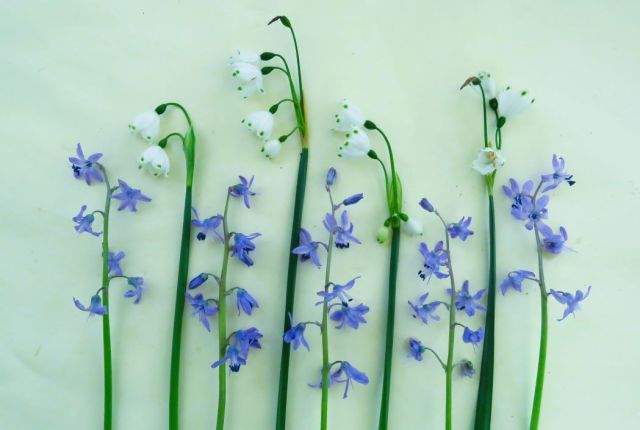
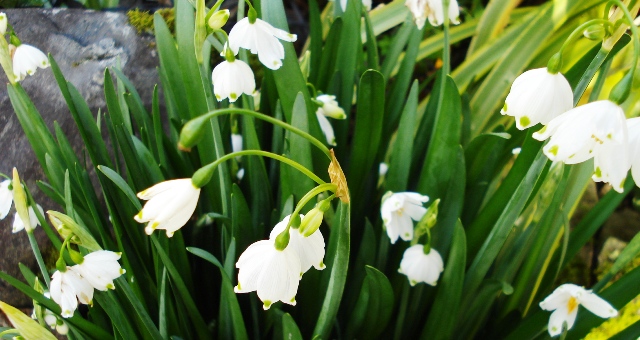
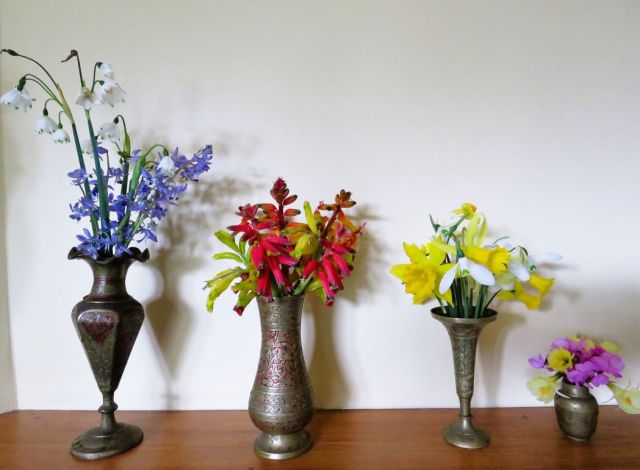
I started with the snowflakes and an obscure scilla that flowers earlier than the more common bluebells. The snowflakes – leucojums – are often taken for granted as robust survivors that are inferior to the more desirable snowdrops (galanthus). This is unfair to them because they are very different as a garden plant and under-rated, especially when we consider their extended flowering season.

I am fine with under-rating this particular scilla. Its only redeeming graces are that it is pretty to pick and it is the very first to flower. It isn’t worth garden space – far too much foliage for the number of flowers – so it has been banished to the wilder margins. We used to have a collection of species scillas – there are a lot of different species – with names like greilhuberi, hohenackeri and litardierei but I think they came to us under incorrect names even before we lost the names. I have no idea which one this is.
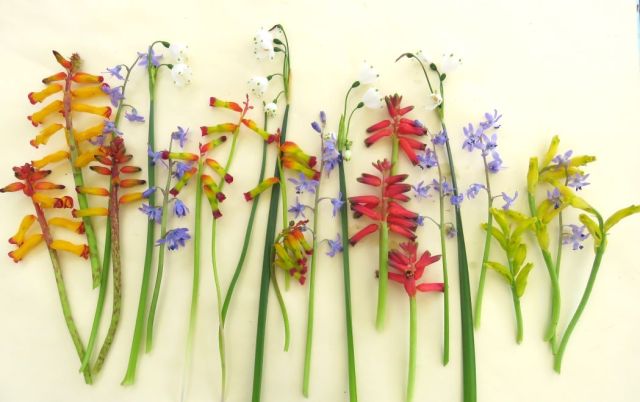
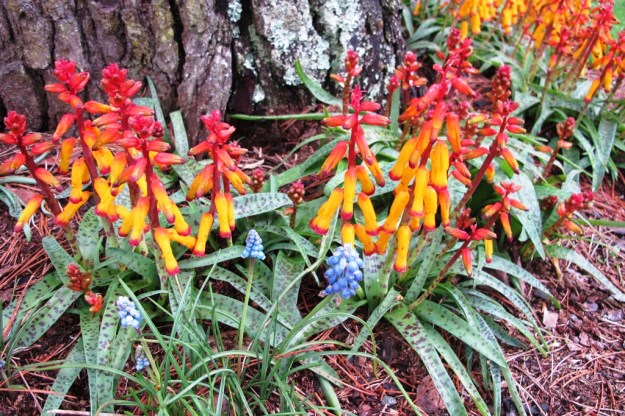
I added in the early flowering lachenalias to the flower lay. We still have an extensive lachenalia collection which flowers for us from now through to early November. Some are much easier to keep going in the garden than others but these early ones are toughies which will withstand competition and meadow conditions. The more collectable blue and lilac forms flower later. From left to right we have the most common, robust, cheerful but vulgar Lachenalia aloides (still sometimes to be found mislabelled as Lachenalia pearsonii),  the somewhat more refined Lachenalia aloides quadricolour (quad = four colours, in this case orange, yellow, green and burgundy), the red Lachenalia bulbifera and finally the yellow of Mark’s L.reflexa hybrid.
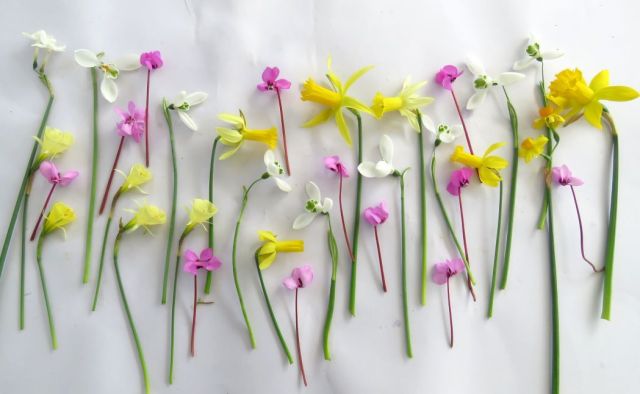
Sometimes I think I would have enjoyed being an illustrator or a graphic designer specialising in pretty florals but nothing can compare with the ephemeral charm of living flowers.

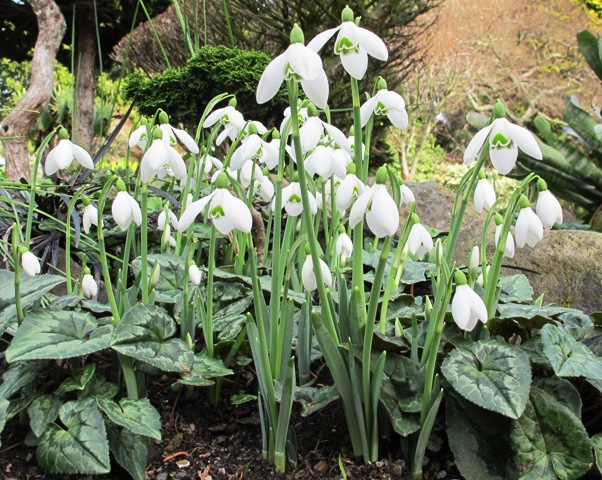
In a world where the news just seems to get more complicated and worse by the day, where things feel as though are spinning out of control, I find dainty flowers can be a welcome diversion. They don’t come any prettier than snowdrops, cyclamen and little narcissi. The snowdrops are a mix of Galanthus ‘S Arnott’ and G. nivalus which are our two mainstay varieties that perform in our area where we don’t get much winter chill, let alone snow. The cyclamen is C. coum which, according to Wikipedia, has the common name of ‘eastern sowbread’. I am not even going to ask who calls it that and why. While they might have wild sows in its native habitat around the Black Sea, the corms are so small and its rate of increase slow so it is unlikely that would ever make much of a food staple for browsing animals.

The narcissi are a mix of species and hybrids. My preference is for the cyclamineus types with their swept-back, reflex petals but the earliest jonquils in both yellow and white are deliciously fragrant and the bulbocodiums or hooped petticoats are also very charming.
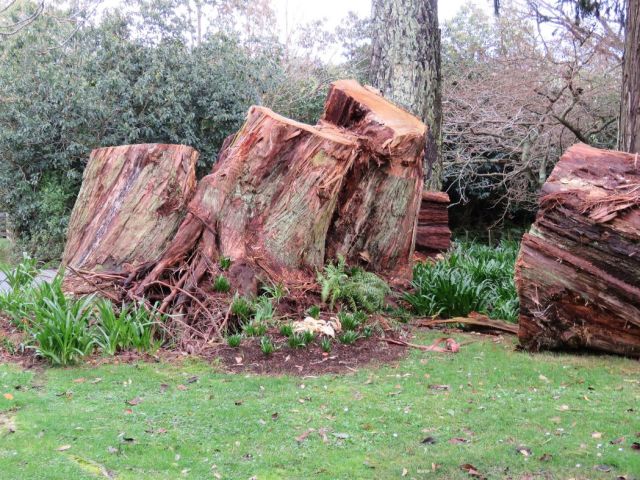
Zach has been lifting surplus bluebells to make way for more desirable snowdrops and baby daffs in the area we refer to as the hellebore border. I suggested he could rehome some of the bluebells – thugs that they are – into the area by our gate where the giant eucalypt came down in February’s Cyclone Dovi. Over the years, I had planted a fair swag of surplus bulbs around the base of the old gum.
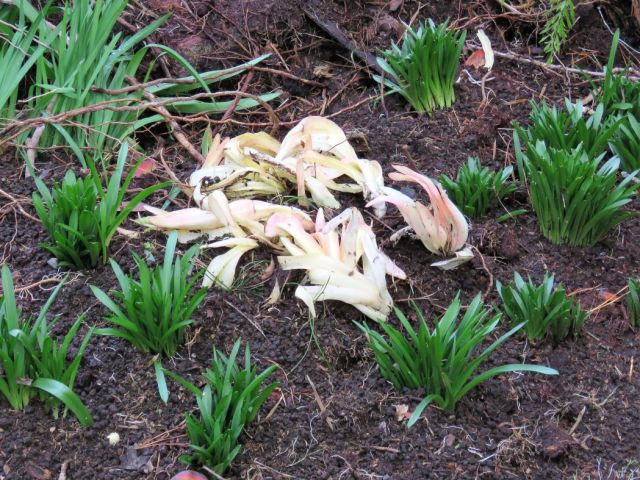
When he had finished, I couldn’t work out what the white patch was until I got up close. Buried bluebells, obviously from an earlier planting. Deep beneath the soil that had become displaced by the falling tree, some had leaves 30cm long and still not breaking the ground into the light.  I knew they were tough but that shows a high level of survival skills.

I have spent some time in the past working out the differences between the highly desirable, scented English bluebell and the dominant Spanish species and came to the conclusion that what we have are predominantly Spanish (Hyacinthoides hispanica), maybe with some Spanglish hybrids. They will not flower until mid spring.

We still have the worst of winter to get through but the earliest spring bulbs are a daily reminder that we are on the right side of the solstice already.

Finally, welcome to new subscribers who came this week after reading this recommendation from Julia Atkinson-Dunne. May you enjoy what you read and see.
Tikorangi Notes: Flowers great and small. With added lemons.

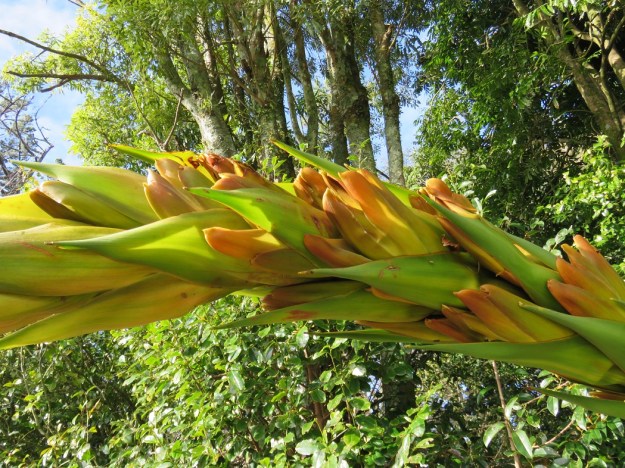
Doryanthes palmeri or giant spear lily. Certainly shaping up to be giant

Behold Doryanthes palmeri! The giant spear lily from eastern Australia. It has never flowered for us before so the three metre, sturdy flower spike is a thrill even though it has yet to open. This particular plant is a nursery relic, by which I mean that it was not planted in this position. More, cast aside from nursery crops (we once produced a few to sell) and left to its own devices. Now the grass garden is planted beside it and it looks quite at home. This is just as well; each pleated leaf is about one and a half metres long and I don’t fancy moving it. I am hoping the flowers will open in the next week or so.

Snowdrop season! Galanthus S. Arnott

From the massive to the tiny, it is snowdrop season here. We are not really-o truly-o good snowdrop territory and Galanthus ‘S. Arnott’ and G. elwesii are the two main varieties that perform consistently well and multiply for us. Mark would dearly love some later flowering ones to extend the rather short season but while he went through a stage of gathering various different varieties, none of the later ones have thrived. Undeterred, he is trying some hybridising to see if he can get some variety but these projects, you understand, never yield instant results. It is more like a ten or twenty year plan, all to get the extended snowdrop season.

Luculia Fragrant Cloud keeps on flowering this season

It was a full month ago that I wrote about luculias. The bright pink ‘Early Dawn’ is well finished, white ‘Fragrant Pearl’ still has a few blooms but the main specimen plant needs some attention (a bit more judicious pruning and more light – it has flowered better in the past). But ‘Fragrant Cloud’ has been in full flight ever since and still looks good. This is the very best I have ever seen it and the scent is divine.

Daphne Perfume Princess

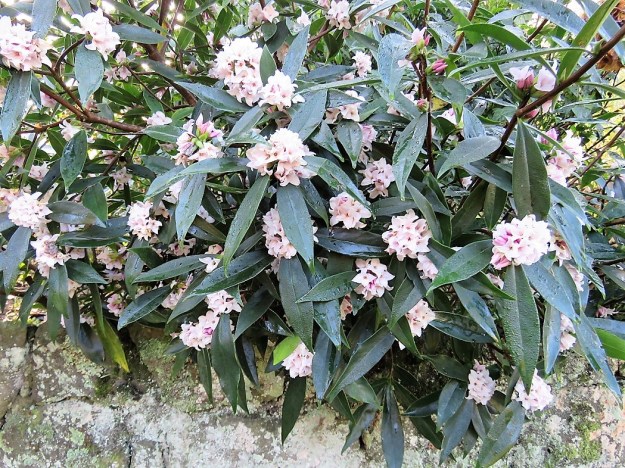
Equally fragrant are the daphnes in full bloom. We grow a number of different daphnes but a fair amount of them are our own ‘Perfume Princess’. Mark has bred other plants that are showier and more spectacular (especially the magnolias), but this obliging daphne represents a breeding breakthrough in some aspects and may well end up as the one he is best known for internationally. It is certainly the one that enabled us to retire early. Given that, we are deeply relieved as each year it proves itself again as a garden plant and a superior daphne which will stand the test of time.

I admit that as this post goes live, we are far from Tikorangi. Well, not that far. Just ‘across the ditch’, as we say, in Australia. While we need passports to travel to Australia it never feels overseas as further, oft more exotic, destinations do. It is just that all three of our children live in Australia these days and we are all joining the celebration of the second birthday of our only grandchild. So not a garden or plants-focused visit but I am sure we will find matters botanical of interest on the way. While I love the place we live, I have been missing the stimulus of travel this year. I need to find somewhere interesting and new for a trip next winter. By the time we arrive home, we should have the first colour showing on Magnolia Vulcan and M. campbellii should be in full bloom in the park. Winter will feel as though it is on the wane.

Preserved lemons – the liquid is opaque because some of the salt has yet to fully dissolve

Before we left, I made another jar of salted lemons, having noticed a heavy crop and smaller fruit on our main tree. Smaller fruit fit in the jar better. I prefer to make salted limes but the lime tree is having a year (or two) off fruiting. They are dead easy to do, store for many months in the fridge and are very tasty as a flavour addition. They can make couscous flavourful (though I have gone off couscous since I realised how highly processed this product is), add taste to rice and all manner of stuffings or savoury dishes. I resorted to buying lemons one year, in the absence of a good lemon crop at home, but if you are buying fruit, pour boiling water over them and stand them for a few minutes first. Some are, I read, coated (in wax?) to help their storage life and you need to get rid of any coating or spray residues before preserving them.

Just looking at the jar is like looking at a ray of Italian sunshine on a winter’s day in Tikorangi.


Magic carpet

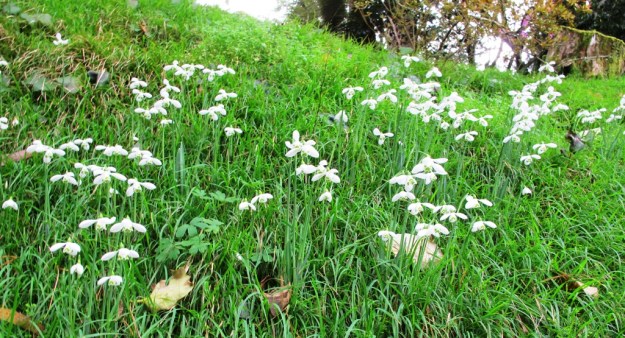
Snowdrops on a hillside

Snowdrops on a hillside

July may be the bleakest month of winter for us but it is also snowdrop time and these little charmers brighten the greyest of days. You can never have too many snowdrops in my opinion, and the varieties that do well with us are building up to a satisfying level. By definition, that is when we have enough to move them out of optimal garden or nursery conditions and start establishing them in carpets.

It is our interest in what we call “romantic gardening” – others refer to it as “naturalistic gardening” – that we derive as much, if not more pleasure from plants naturalised in meadow conditions as we do from cultivated, tightly maintained garden beds. It is a blurring of the edges in gardening, exploring how far we can replicate the simple charm of wildflowers but in a managed situation.

Lachenalia aloides and grape hyacinths (muscari) at the base of Pinus muricata

Lachenalia aloides and grape hyacinths (muscari) at the base of Pinus muricata

It is not as easy as it sounds. Many of the charming bulbs in their natural environment have conditions which are much harsher than here. Winters that are very cold and often dry mean that most growth stops, as do summers that are hot and dry. But in our dairy-farming heartland, soft conditions keep grass growing all year round and that growth will simply swamp most bulbs. It has taken us some years to learn to manage this. Selecting bulbs that will cope in our conditions has been trial and error.

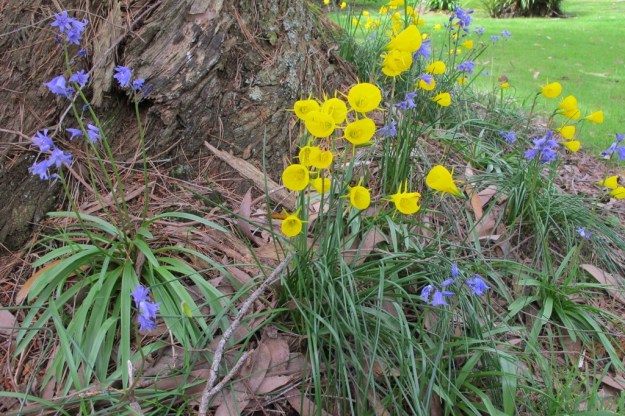
Bluebells and hooped petticoats (Narcissus bulbocodium) planted at the base of a eucalypt

Bluebells and hooped petticoats (Narcissus bulbocodium) planted at the base of a eucalypt

It also takes eleventy thousand more bulbs than you think it will. Even bulk buying a couple of hundred bulbs is not going to create much of a carpet in the short term. To get a quick result using large bulbs like daffodils or bluebells, planting at one every 10 square centimetres means 100 per square metre. I worked this out because I was planting a little mixed area. Using dainties like erythroniums, dwarf daffodils, snowdrops, crocus and rhodohypoxis, it took about 4 of these small bulbs per 10 square centimetres – or 400 per square metre. That is a large number and may explain why we don’t see many bulb meadows in this country, beyond well established fields of daffodils dating back many decades. Obviously, if you plant at greater spacings, you can cover a larger area but you will wait longer for the carpet effect.

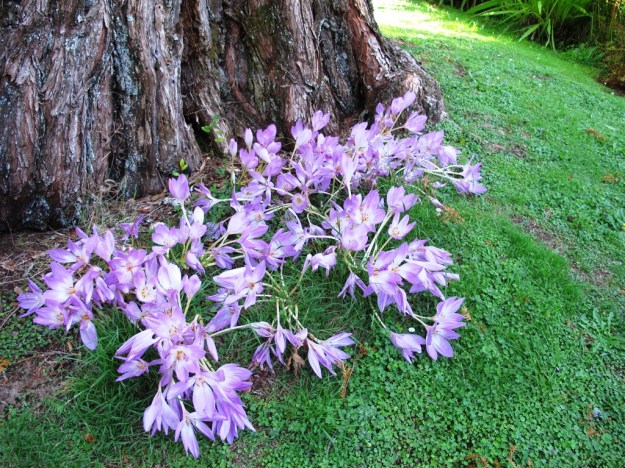
Colchicum autumnale flowering at the base of a metasequoia

Colchicum autumnale flowering at the base of a metasequoia

While planting around tree trunks is not the same thing as naturalising bulbs in a meadow situation, it proved to be a good place to start for us. We have many trees in fairly open situations where it is possible to establish easy bulbs beneath. Most bulbs need sun so these need to be trees with a higher canopy to allow light below. Planting amongst the exposed roots of established trees ensures the bulbs don’t get mown off or trampled as they surface and generally they get established with little competition. It is also an effective way of controlling some of the invasive bulbs like ipheions and ornamental oxalis.

Scattering seed is hit and miss and slower to give any results but much easier. We were delighted this year to see Cyclamen hederafolium showing its colours where Mark had scattered fresh seed several years ago. He had given up hope that it would work but lo, there are rewards for patient gardeners and the older we get, the more patience we seem to be developing.

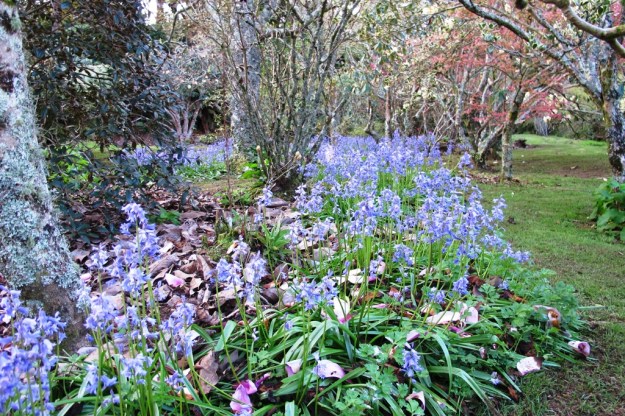
 Bluebells planted on the margins, drifting through our park area

Bluebells planted on the margins, drifting through our park area

Bluebells are easy and we have used them in swathes around shrubs in the area we call our park. Because they are flowering at the same time as the full flush of spring grass growth, we have to keep them to the side of areas we need to mow. Bluebell, and indeed snowdrop, woods that we have admired in Britain are carpets beneath deciduous trees. Our woodland areas are heavily dominated by evergreens so we don’t get enough light to replicate those carpets here. That is why we have to opt for the margins instead.

The triumph of experience has been getting grassy banks with dwarf narcissi and snowdrops naturalised. To do this, Mark spent some years establishing the native grass, microlina. It is finer and less vigorous so doesn’t swamp the bulbs and can be controlled with minimal cutting – just a pass over with the weedeater from time to time. It is not quite the same as a bulb meadow, but we have learned to work with what we have here.

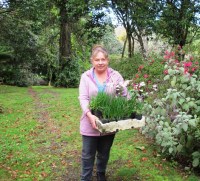
Carrying a tray of Nerine pudica, in case you are wondering (which I admit I planted in the rockery, not in meadows)

Carrying a tray of Nerine pudica, in case you are wondering (which I admit I planted in the rockery, not in meadows)

First published in the July issue of New Zealand Gardener and reprinted here with their permission.

Winter whites

Ripples on the ice formed on a farm trough

Ripples on the ice formed on a farm trough

July is our bleakest winter month here. We feel the cold, especially this week with three sharp frosts in a row which is unusual for us, but the daytime temperatures rarely drop below double figures (Celsius). The ice photo is from a water trough on the coldest part of the property. Mark was very taken with the patterns.

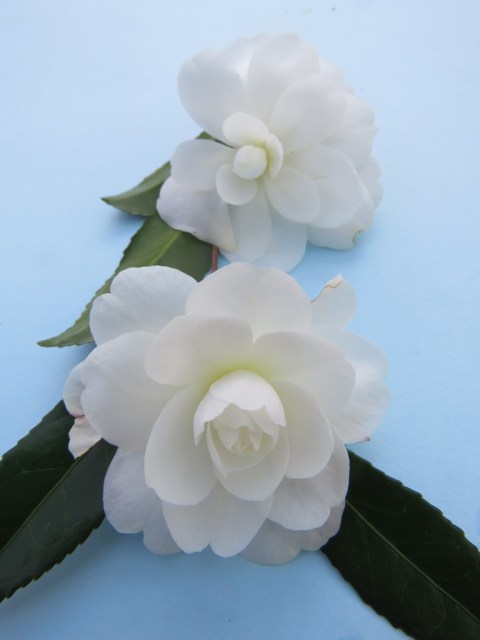
Early Pearly - the loveliest of sasanqua camellia flower forms

Early Pearly – the loveliest of sasanqua camellia flower forms

But cold is a relative thing and a winter here in Taranaki remains full of flowers. I was playing around with white camellia blooms because I had been reminded of our love affair with white flowers in this country. The ‘any colour is fine as long as it is white” syndrome, perhaps. I am sure gardeners in parts of the world which spend many weeks or months or under snow might find this national obsession with white flowers puzzling. I suspect it may derive from a sense of social envy – Sissinghurst’s white garden has a lot to answer for here in the antipodes.

As I progressed on my white flower assemblages, often having to pick the flowers because it has been raining or windy, I began to feel positively bridal despite the winter chill.
029
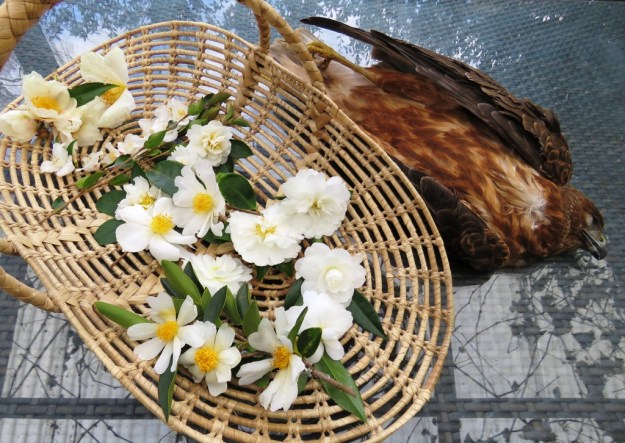
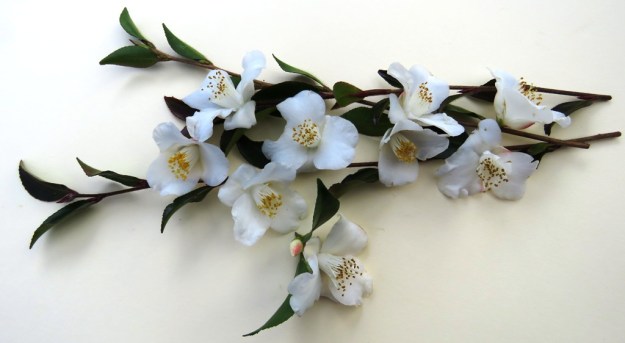
The Montanoa bipinnatifida has passed over and the monarch butterflies have moved onto an obscure michelias species that is flowering. The frosts have dealt to the Dahlia imperialis alba this week and Luculia ‘Fragrant Pearl’ is passing over, but there is plenty of white in evidence. Yes, it is a dead harrier hawk above – killed on the road but passed on to a Maori weaver to use the feathers. In the basket starting at the back is one of the gordonias. They have been particularly good this season. Then the small flowers are Camellia transnokoensis  which we rate highly as a small leaved, miniature flowered species which we are using as hedging. We replaced some buxus hedging with this camellia. For, Mark reasoned, how much better to have a hedge that has pretty flowers which make a contribution to the ecosystem by feeding birds and insects. Next is another species, Camellia gauchowensis, Camellia sasanqua Mine No Yuki, Early Pearly and at the front Camellia drupifera. 

Camellia transnokoensis

Camellia transnokoensis

Picked in the rain today

Picked in the rain today

Daphne bholua

Daphne bholua

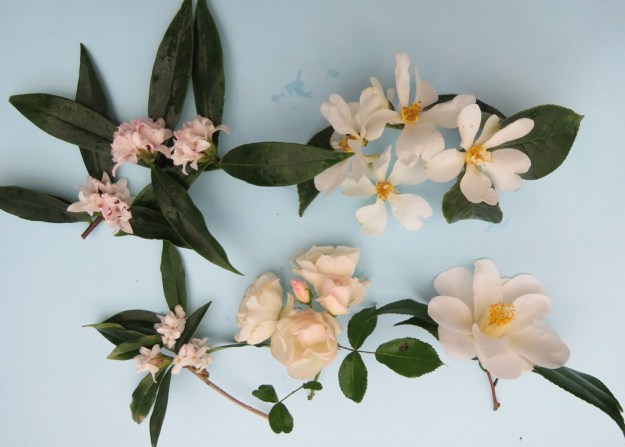
At the top we have Mark’s new Daphne Perfume Princess – not pure white by any manner of means but the overall display is more white than coloured. Next to it is one of our favourite species, Camellia yuhsienensis, whose flowers are like the michelias of the camellia world. Below is the Himalayan daphne,  Daphne bholua  , which has the sweetest perfume of any daphne we know but suffers from scruffy growth and badly behaved habits of suckering and seeding. Next is Rose Flower Carpet White (does it ever stop blooming?) and then the pretty bloom of Superstar – another white camellia which we rate highly on garden performance and weather hardiness – at least when compared to most larger flowered whites.


Galanthus - the winter snowdrops
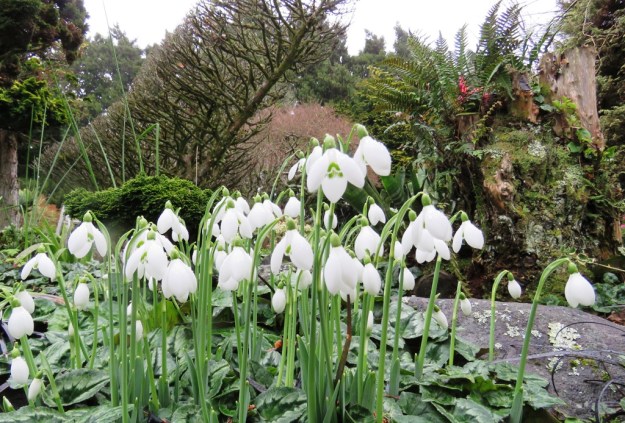
We may not get a long season from the galanthus and they certainly don’t peek through the snow here, but the simple charm is constant. Galanthus elwesii and Galanthus ‘S Arnott’ are the most reliable performers in our conditions. Although we grow some other varieties, these two are our mainstay.

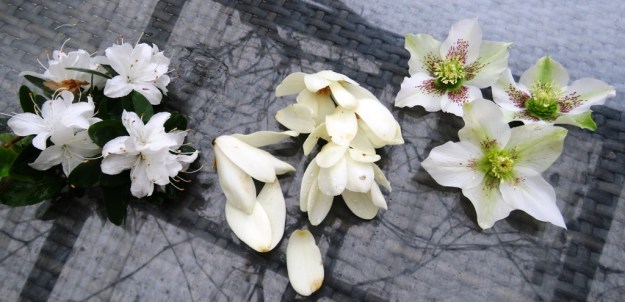
067Finally today, I headed out into the chill to find the white evergreen azaleas, the very first of the new season’s michelias (deliciously fragrant) and white hellebores. By this time, I found my eyes being drawn to colour and red blooms were demanding my attention. I would find a monochromatic garden soon palled but the colours  will have to wait for another day as I end with the simple perfection of Camellia Superstar below.
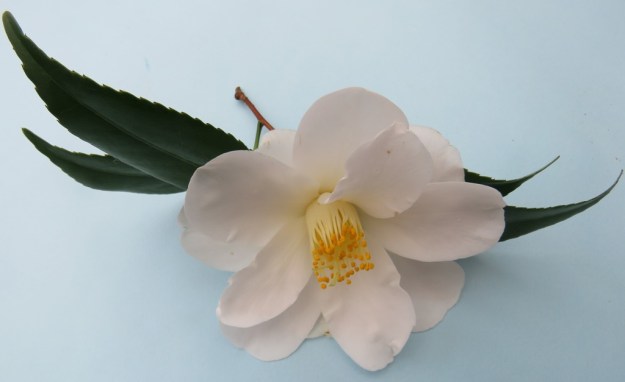
Superstar (6)

Pink & white parade

April is the cruellest month, wrote T.S. Eliot in his famous poem, The Waste Land. Not, I have to say, out of fear of late frosts in a northern hemisphere spring, as one gardening wit thought. Here, it is July that brings us the bleakest days of winter.

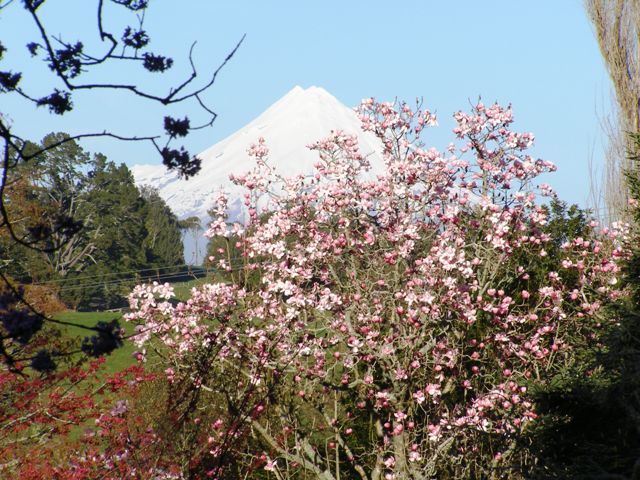
But as July progresses, it also heralds the start of a new gardening year. Magnolias and snowdrops mark the passing of winter into spring.

Magnolia campbellii

Magnolia campbellii

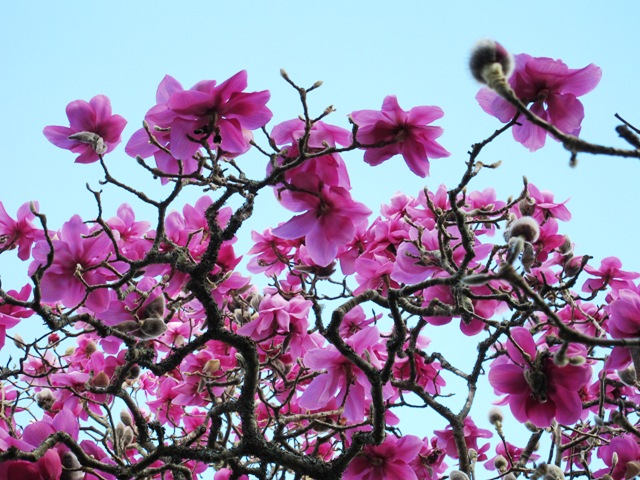
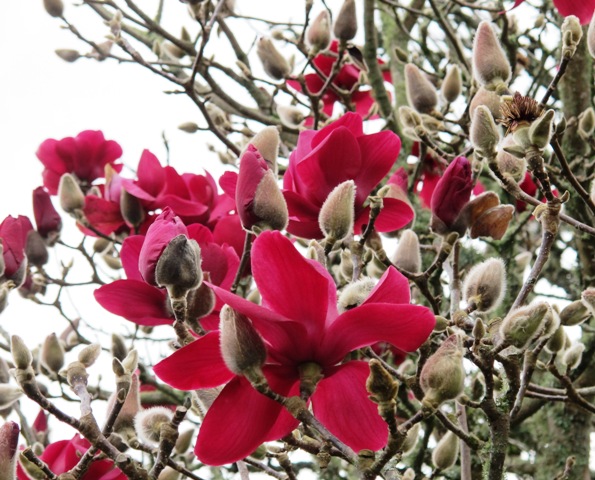
The first deciduous magnolia of the season to open is always M. campbellii. There is an attractive group of them in New Plymouth on Powderham Street and the first flowers on those appear in late June, sometimes before all the leaves have fallen. Asphalt and concrete in cities raise temperatures enough to trigger flowering earlier than in country areas. M. campbellii is not a great option in colder parts of the country because frosts can take the early blooms out but where space and climate allow, it is beautiful. Our tree was considerably larger until a falling Lombardy poplar took out half of it, but it is staging a comeback. There is a white form too, but the pink is generally regarded as superior.

Magnolia Vulcan

Magnolia Vulcan

July also sees the first blooms opening on Magnolias ‘Lanarth’ and ‘Vulcan’. The latter was bred here by my late father in law, Felix Jury, and marked the first of the new generation red-toned magnolias. For several years after we first released it, we used to be able to track it flowering down the country by the phone enquiries. It opens in Northland much earlier than it shows colour in Otago and Southland.

Magnolia Lanarth

Magnolia Lanarth

Lanarth (technically M. campbellii var. mollicomata ‘Lanarth’) remains the best purple available, in our opinion, even though its flowering season is brief because it only sets flower buds on the tips and they all bloom at once, rather than in sequence down the stems. It is worth having in a large garden because it will take your breath away for two or three weeks in late July and early August but smaller gardens probably need trees with a longer season.

Galanthus  S. Arnott

Galanthus S. Arnott

At the other end of the scale, we find snowdrops enchanting. We have tried growing a wide range of different species but in the end it is Galanthus nivalus ‘S. Arnott’ that is happiest here in the mid north, although we also get a good run from the larger leafed G. elwesii. Gardeners in cooler, southern areas will have a bigger selection to choose from but we have to go with what performs here.

Snowdrops are one of the few bulbs where the standard advice is to lift and divide in full growth – usually straight after flowering although there is no reason why you can’t do it when they are dormant. They multiply satisfyingly well and we are on a mission to spread these charmers in huge swathes throughout the garden.
???????????????????????????????
What northerners often call snowdrops are not. They are leucojums, commonly called snowflakes. Proper snowdrops are much smaller and prettier. They have a central cup surrounded by three longer petals that look like dainty wings. Leucojums, on the other hand, just have the cup as a bloom and are much stronger growing with plenty of foliage that looks like daffodil leaves. You often see them growing in paddocks around old farmhouses. Some of the bigger flowered selections make good garden plants (Leucojum vernum ‘Gravetye Giant’ is the one we use), because they have a much longer flowering season than galanthus. But they lack the dainty refinement of the proper snowdrop. There can be little doubt about that.

First publshed in the New Zealand Gardener July issue and reprinted here with their permission.