
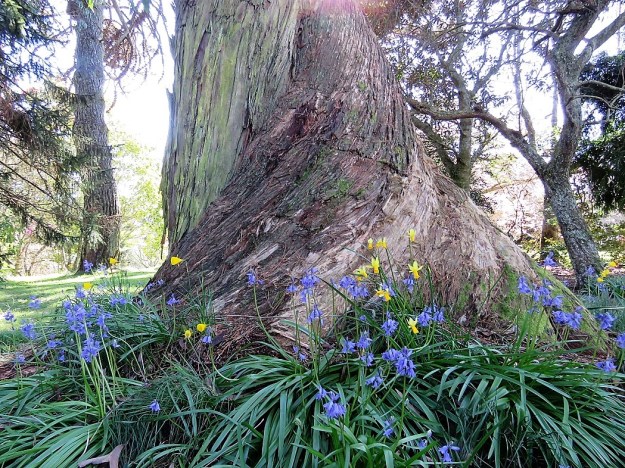
The little sights in the garden can bring me delight – bluebells and narcissi against the twisted trunk of a giant eucalyptus
I am feeling the pressure of opening the garden again after seven years. All I can say is that if you want to see it, you had better come this year to the Taranaki Garden Festival (October 30 to November 8) because they way I am feeling, we may not open again.
We maintain the garden all the time to a level that keeps us happy but that is not the same as the level needed to reopen after such a long time closed. With seven weeks to go, there seems to be so much to do. We will get there – we are experienced at this – but it does take away some of the pleasure of early spring.
Spring has long been associated with anxiety in my mind. For seven years, from the age of 15 to 22, it was the time of major exams that could change the course of my life. I had nightmares about it all for at least two decades after that. Then spring became a pressure time for us when we were in business with the garden open, retailing plants and the never-ending demands of nursery production work. The last seven years have been bliss. Bliss, I tell you. With no external pressures or expectations of us, we have been free to take all the time we want to enjoy the daily sights of spring abundance and beauty. Whether we continue to reopen after this year will depend on how much we enjoy the festival and sharing the garden with visitors. It will have to be quite a lot to reward me for all the effort going into it right now.

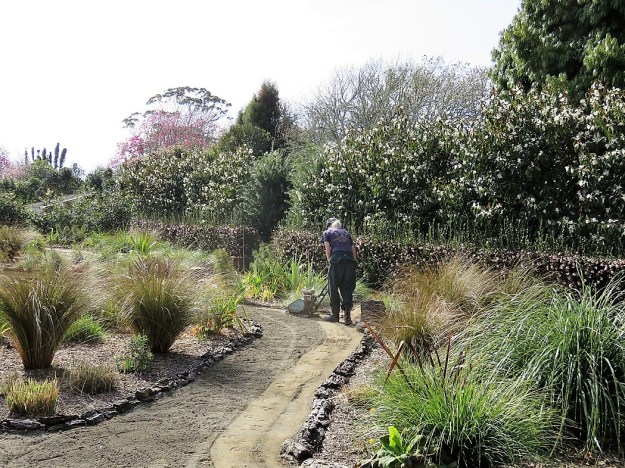
A daily routine here but I admit that the photo was taken earlier when temperatures were warmer. Mark is not one of those hardy men who wears shorts all year round.
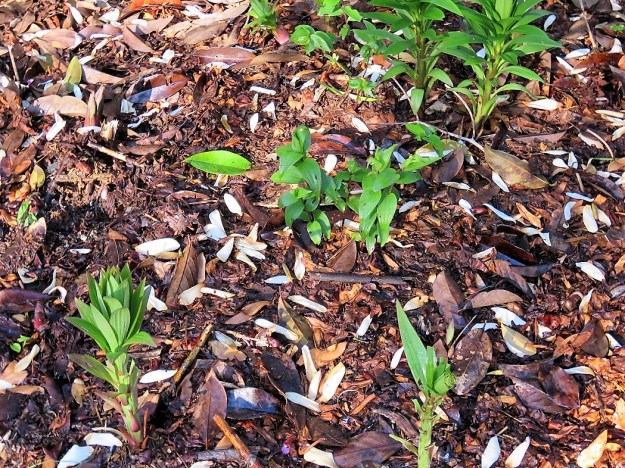
Emerging lilies. You won’t see the detail if you are reading this on your phone, but front right is the one rabbit-chewed shoot. In the past two years, all would have been attacked by now.
Regular readers may recall my despair at the rabbit predations this time last year. Mark and I were out sprinkling blood and bone after every rain to try and deter them. The auratum lilies are all coming through again and I am checking every morning. So far only one has been chewed off. This is testimony to Mark’s ongoing efforts with the gun. He has shot nearly 50 so far this year and that in a limited area of barely 2 acres. There are still a few around that need to be cleaned out and we dare not take our eyes off the ball – or the fluffy tails – because those few can increase exponentially (not unlike Covid, really) but man with .22 rifle appears to have the upper hand at this stage. In case you are wondering what we do with 49 dead rabbits, there is not much that the dogs enjoy more than fresh rabbit for breakfast.
I have tried cooking rabbit before – both casserole and pie but the only recipe I have really enjoyed is for rabbit and pistachio terrine (a recipe courtesy of Alistair Boyce) and it takes a bit of effort and pre-planning so I don’t make it often.
Lloyd in the process of compacting the base layer of pit metal. We borrowed the compactor from an obliging man up the road but they can also be hired.

We bought this little orchard tractor over 20 years ago and it was already old then. It has done a lot of work in the years since.
We have laid the base course of pit metal for the paths in the new summer gardens. I say ‘we’, but that is in the royal sense. This has been Lloyd’s project. It took about 19 cubic metres and he did it with our baby tractor and wheelbarrow. We had thought we would get a bobcat in but Lloyd pointed out that the paths, though appearing generous, were just too narrow for the bobcat and some of the turns too tight so he thought it better to take the time to do it himself with minimal disturbance.
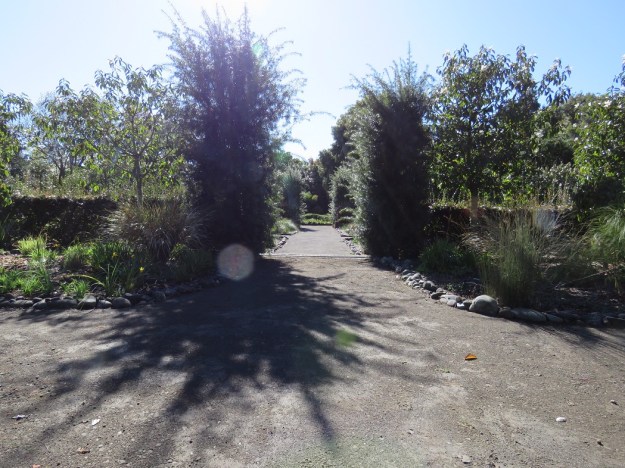
When it rains heavily, this path becomes the natural water course
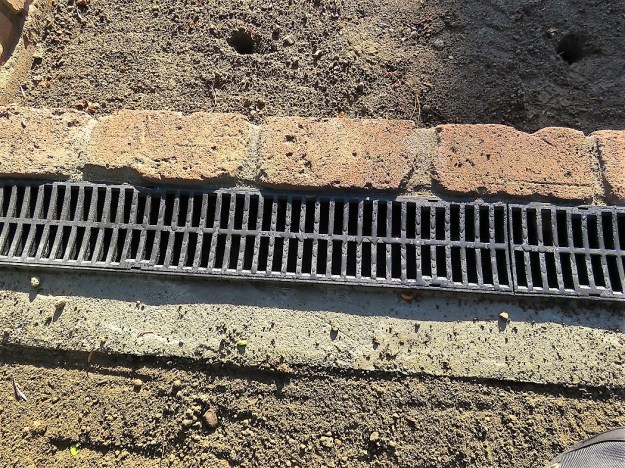
An off the shelf solution but it needs precise installation to make it work for the best outcome
He is only half way there. There is still the top layer of crushed limestone and shell to be laid but we are letting the base layer settle first. Heavy rains highlighted a problem: in one area, the run-off from downpours naturally flowed down one path and scoured out the newest set of steps every time. We can get away with quite a bit because our volcanic soils are very free draining and surface water is absorbed quickly (this never happens in clay soils). But our rains can be torrential and when that happens, the run-off will find its natural path. Lloyd is, by nature, a problem solver. He decided we needed a drainage channel in front of the steps, one that is safe to be walked on. Fortunately, this is an off-the-shelf solution. He has laid it with an imperceptible drop to one side (this is a man who makes a spirit level his friend) and then connected it to a length of holey, plastic drainage tubing hidden just below the mulch to disperse the water more widely. We are waiting for the next downpour but we expect the problem to be solved.
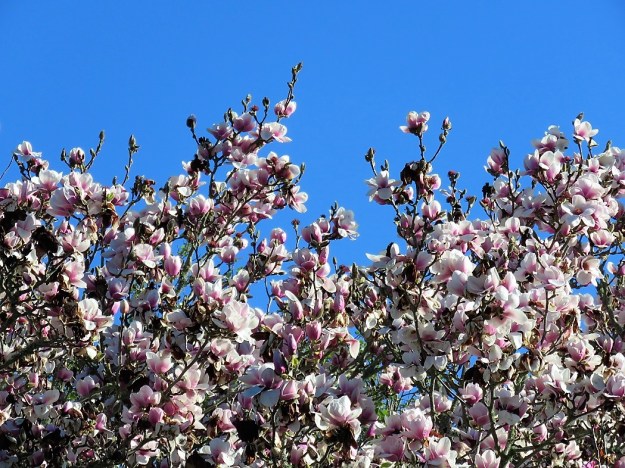
Magnolia Athene against the bright blue sky yesterday
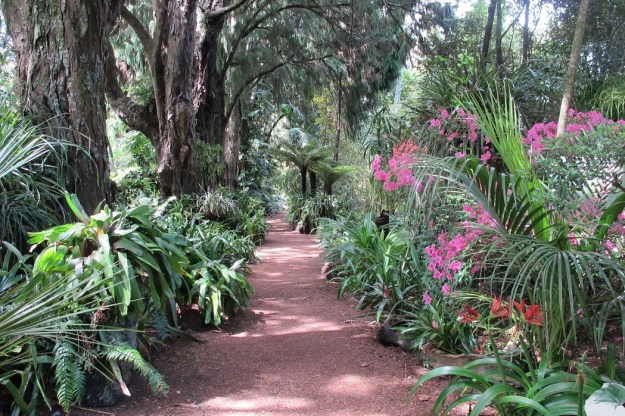 It is official. We are reopening our garden for the ten days of Taranaki Garden Festival – and only for those ten days from October 30 to November 8. In fact, we are garden number one in the programme. We attended the launch on Thursday evening and there were asparagus rolls. I only mention this because the asparagus roll shares a special position of nostalgia in NZ catering history on a par with Maggi onion dip and slightly less controversial than the Otago and Southland cheese roll. But I digress.
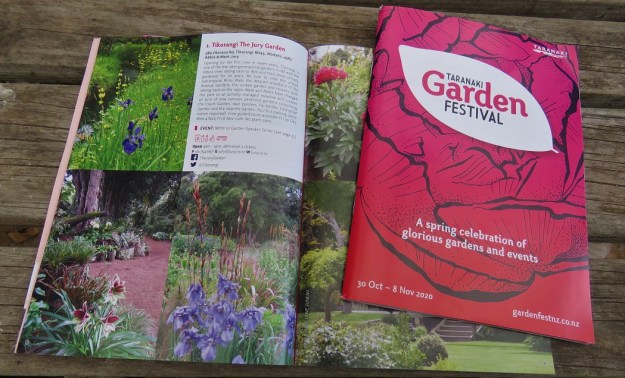 The printed programme is now out and the information is all
  New Directions with Sunny Perennials
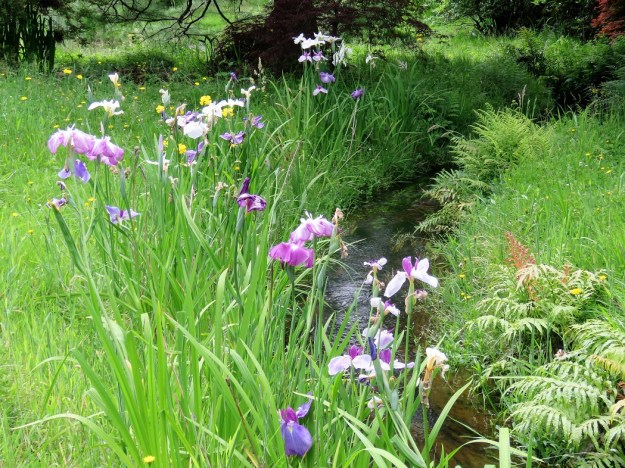 Meadow Theory 101
 Postscript for overseas readers: sorry, this is all of no relevance to you. Even if you wanted to, you can not come. Flights to NZ remain few and far between and you have to be a NZ citizen or permanent resident to get in (bar a few essential workers). Even then, all incoming passengers have to go into government quarantine for 14 days and it seems to be the luck of the draw as to whether you get confined in a five star hotel or one that is more modest. But we are now free of Covid, bar the quarantine cases at the border, and have been for over ten weeks. Life here is back to normal – no masks, no PPE, no physical distancing required, no restrictions bar those at the border. This situation has been hard-won and there aren’t many New Zealanders willing to risk the alternatives as we look at the grim situations around the world. It seems there is a long way to go in this pandemic yet. May those of you overseas stay safe and well.

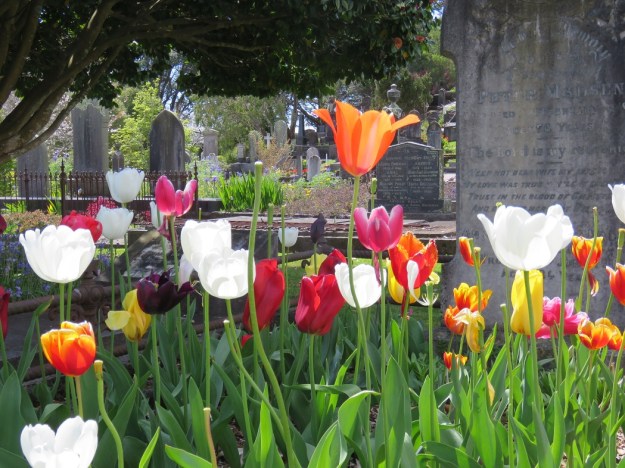
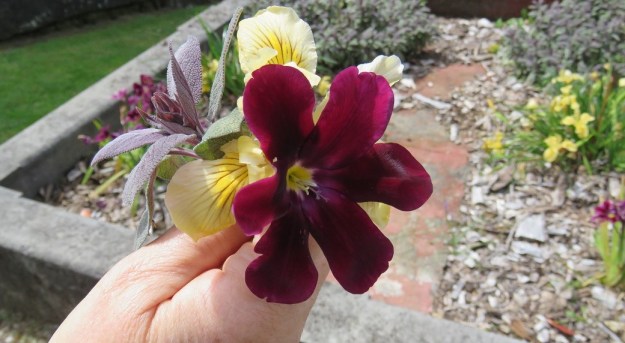
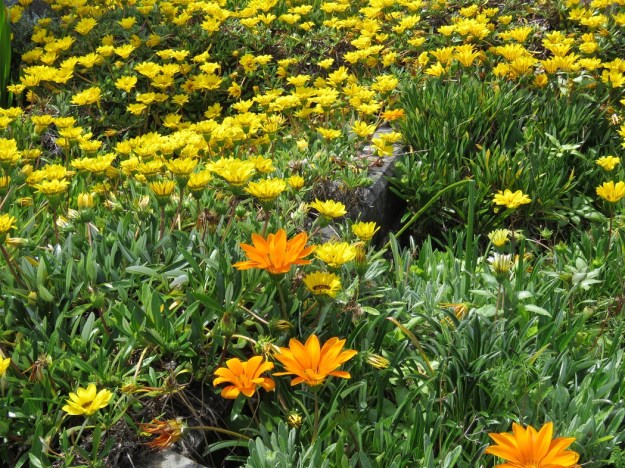 I don’t have any photos of sand saucers but if you Google images, you will find a resurgence on Pinterest. Where else? For anyone with a deprived childhood, it involves filling a saucer with wet sand and sticking the flowers into that to anchor them. The scope for imagination is limited. One memorable year, a junior teacher at the school our children attended – a woman who was not one for expending unnecessary effort – decided sand saucers were ‘messy’ so they decreed Vaseline saucers instead. For this, the saucer is used face down and coated in Vaseline with flowers stuck to it. This was a travesty of an idea, I tell you. Not the same at all.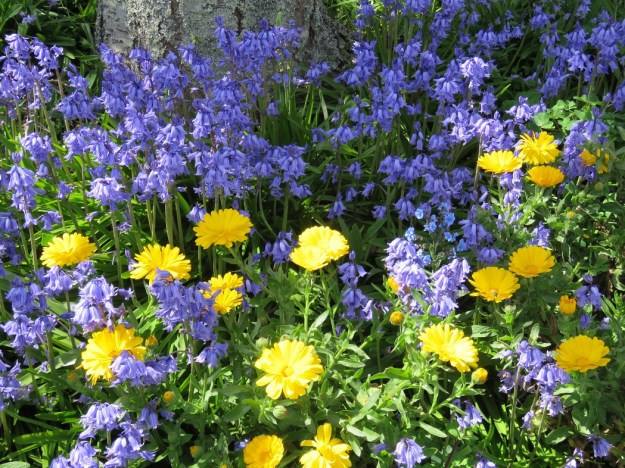
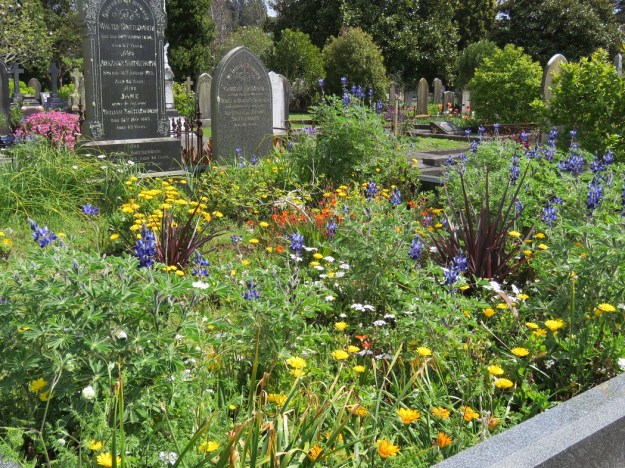
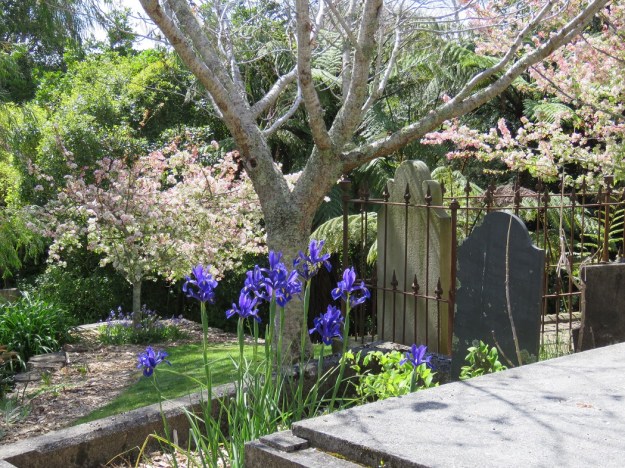
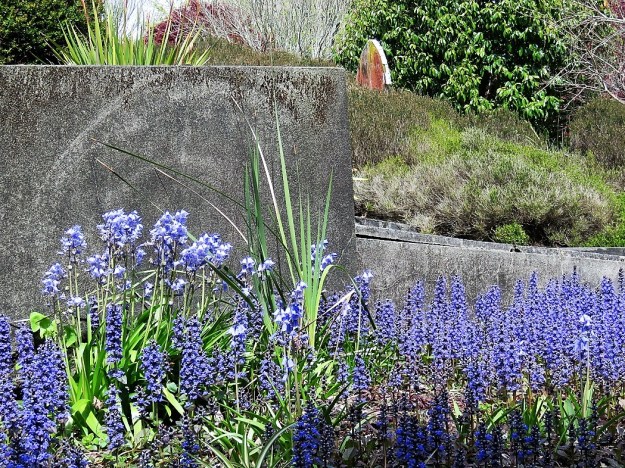
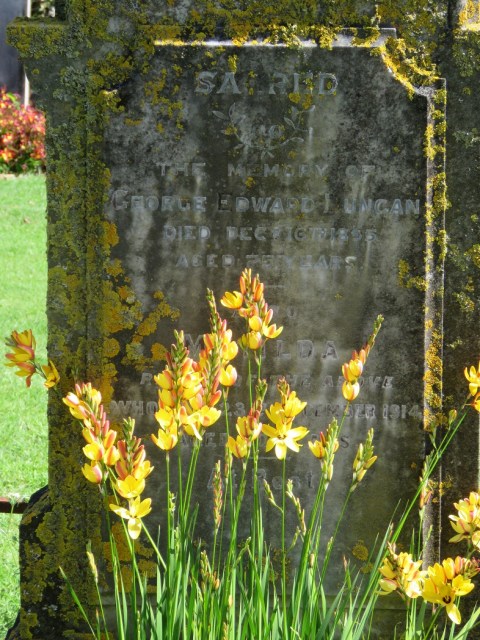
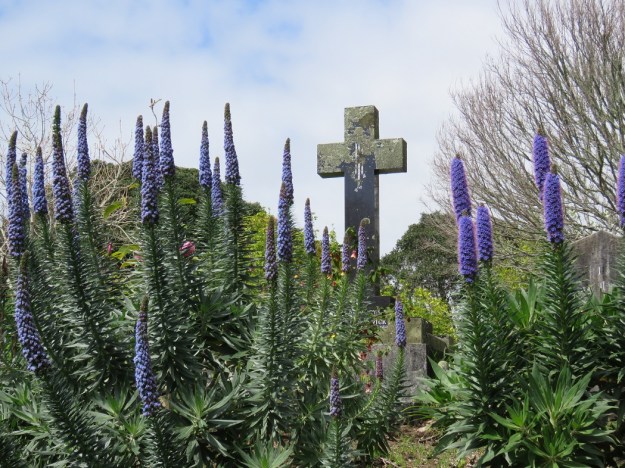
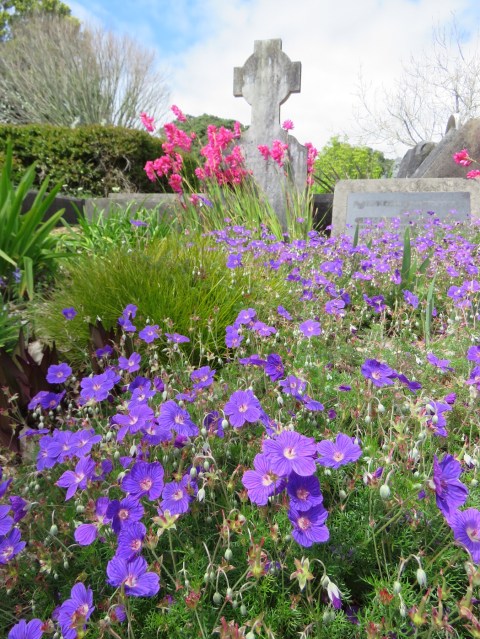 I quite like watching English real estate programmes (Kirstie and Phil assisting escapes to the country come to mind). They have many more little country churches complete with old graveyards surplus to requirements than we have. It is too late for me – and the wrong country – but the idea of creating a home within a traditionally sombre setting and a garden with all the hard landscaping features already in situ sounds appealing. These places may be there to remember the dead, but it does not mean that they must be sombre, morbid and gloomy. Death and taxes may be two of life’s certainties, but there can be life and colour wrapping around death and softening its raw finality, even if the same can not be said for taxes.
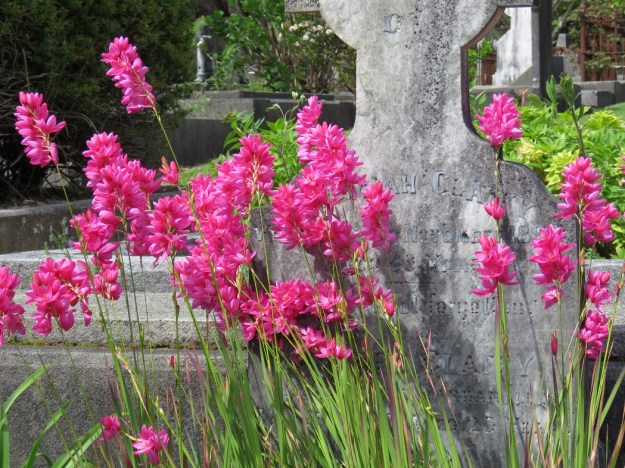 The one remaining mystery for me is why some families prefer to adorn their graves with fake flowers. It is a timely reminder, however, that some of these graves are intensely personal memorials with living descendants who choose to maintain the connection and to personalise the grave in their own way. It is just as well the volunteers are there to tend to the vast majority which would otherwise be largely forgotten and uncared for.
 Tikorangi The Jury Garden