Tag Archives: Tikorangi: The Jury garden

Plant Collector: Calliandra, probably eriophylla

Calliandra (probably eriophylla) - like a strawberry pink starburst

Calliandra (probably eriophylla) – like a strawberry pink starburst

Oh my but the calliandra has been putting on a wonderful impersonation of candy floss (fairy floss) in recent weeks. What is more, this is its second flowering for the season. We are impressed. This plant is in the never-never land of our former nursery area where it has survived on complete and utter neglect, having rooted through from its pot. It is beyond transplanting out to the garden but fortunately we have a few grown from cutting which we will be rushing out to prime spots after this summer’s performance. We just don’t have too many areas in the garden which are hot, dry, desert-like even, frost-free and bearing much resemblance to its homelands of Arizona, Texas and Mexico.

If we are right and it is C. eriophylla, its common name is Fairy Duster, though it is sometimes referred to Mock Mesquite. The flowers are clusters of stamens almost like starbursts. Calliandras are members of the legume family (peas, please) which is evident when you look at the fine, leguminous foliage. They are apparently most attractive to humming birds which is not a lot of help to us here, though we wouldn’t mind some exotic humming birds added to our list of introduced species. Some calliandras are herbaceous (leafy, clumping plants) but this is one of the woody shrub types. It is probably our long, hot, dry season this year which has seen it flower so very well in both spring and again in summer.

First published in the , and reprinted here with their permission.

About the butterflies and the bees

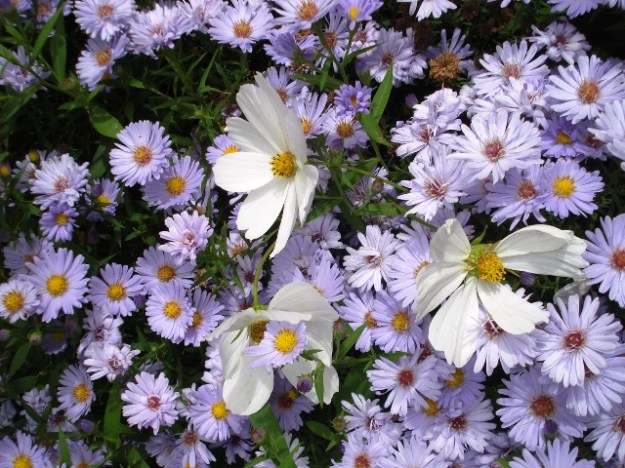
Single flowers like the white cosmos and semi doubles like the aster provide pollen and nectar

Single flowers like the white cosmos and semi doubles like the aster provide pollen and nectar

Were my Mark to have his life over again, he might equally choose to be a meteorologist or a lepidopterist instead of a plant breeder. But as he only has the one life, he is destined to remain merely a weather-watching butterfly enthusiast. It is butterflies this week.

As a country, we are a bit deficient in the butterfly stakes. Moths we have a-plenty and very beautiful many are but the jewel colours of butterflies are in short supply. I have even seen Mark, in a fan club of one, admire the fluttering of cabbage whites around the summer garden.

When he found a beautiful Blue Moon years ago, he became very excited and tried to make a home for it. I have only just looked it up and informed him that his Blue Moon was a male and could never have laid the eggs he hoped for. The females are modest brown but the male was gorgeous. We figured at the time that the Blue Moon had been blown over from Australia but I see they are now to be found in parts of this country so maybe they will turn up here to enrich our lives at some stage. Plant portulaca, though it needs to be the right one.

A stinging nettle turned up in a prominent spot of the veg garden this summer and we are pleased. It can stay and we may encourage a bigger patch of them to form because that is what is needed to bring in the admiral butterflies. We know next door but two had red admirals and was working on yellow admirals last year so we are optimistic. It is just a shame their host plant is so off-putting.
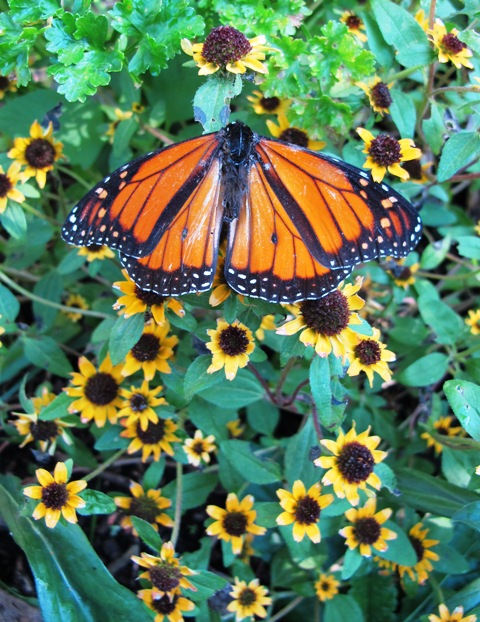
Monarchs, the most rewarding common butterfly on offer in this country

Monarchs, the most rewarding common butterfly on offer in this country

Essentially it is the monarchs which are the most rewarding of all and which have become part of our way of life here. The earlier obsession that saw Mark successionally sow swan plants by the kilometre (I am not exaggerating – I paced out his rows one summer) have passed. These days we have plants seeding down and naturalising with just a bit of topping up from fresh seed as required.
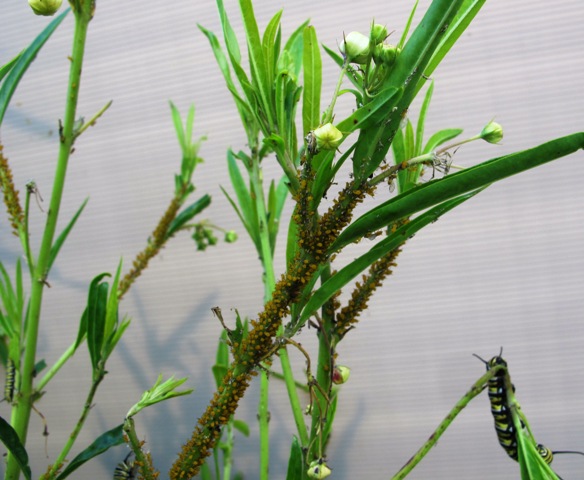
Nasty yellow aphids

Nasty yellow aphids

Nasty yellow aphids are an ongoing issue. They suck the sap from plants and can weaken them to the point of death. After trying various ways to control these critters, Mark is pleased to report that there is a spray that works. It kills the aphids without harming the caterpillars. Nature’s Way, a product from Yates. It is not organic, despite its reassuring name, but it is targeted and appears to be safe to use. Nature’s Way is a fatty based spray. In his capacity as my in-house technical advisor, he thinks that the organic canola oil-based Eco Spray from Tui should also work in a similar manner. Both sprays will need repeat applications every few weeks to achieve control. If you only have one plant and are vigilant, you can probably squash the aphids (digital control) but that is not practical on larger plantings or out of control infestations.

It is not the caterpillars that have exerted the greatest influence over our gardening here. Leaving swan plants to seed down in corners around the garden is the easy part. It is the next step – food for the butterflies.

The fashion for minimalist gardens (so last century now) which has morphed into the clean lines of prestigious modern landscaping using large swathes of the same plant in monochromatic monocultures, is one of the unfriendliest types of gardening as far as butterflies, bees and insects are concerned. Most insects need nectar and pollen and that means flowers with visible stamens. Green, sculpted gardens don’t do it.

If you follow the British garden media, you will have noticed a very strong drive to promote gardening which supports eco systems rather than imposing unfriendly garden styles on nature.
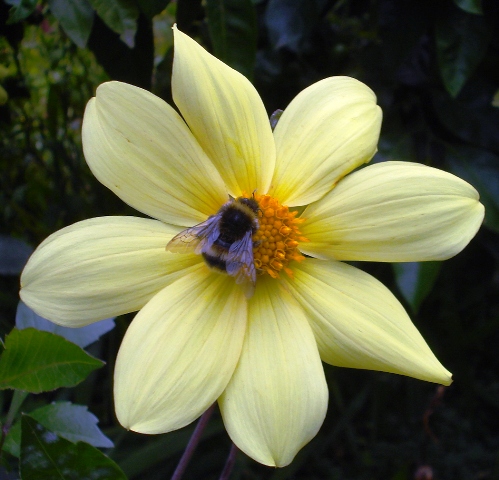
Single and semi double blooms offer the most to both bees and butterflies

Single and semi double blooms offer the most to both bees and butterflies

All this means flowers, particularly single and semi double flowers. A single flower form has one row of petals arrayed around a sunny centre of stamens which usually means pollen and nectar. A semi double has two rows of petals so looks to be a fuller flower but still has that life supporting centre. Full double flowers only have petals visible and are of very limited or no value at all to insects, including our butterflies and bees. This is not to say you should shun double flowers. You just need to make sure that you have a good representation of singles and semi doubles as well.

Generally, there is plenty in bloom during spring and early summer. We target flowers for summer, autumn and winter to keep the butterflies around. If you lack the food for them, they will just fly away. These days our vegetable patches are a major mix of flowers and produce. This tumble of plants may not appeal to ultra tidy gardeners, but our patch is full of bees and butterflies and many lesser appreciated but valuable insects. We are also factoring in the need for food for butterflies and bees in the ornamental gardens.

You know you are succeeding when you get monarch butterflies wintering over in your garden and when you have plenty of bees buzzing busily. Not only is it better for the balance within nature, it adds vitality to the garden.

First published in the Waikato Times and reprinted here with their permission.

Garden lore March 8, 2013

Lawns tell lies. The grass will almost certainly survive the current drought

Lawns tell lies. The grass will almost certainly survive the current drought

Surviving the drought
As the drought conditions bite deeper, keep to priorities for water use. Vegetables have the greatest need. Dry conditions can force plants to bolt to seed early (their instinct under stress is to survive by ensuring seed set) and in some cases the produce becomes bitter or woody. Water the soil, not the plant because it is the roots that achieve the best uptake. Watering in the evening reduces how much will evaporate immediately and when you are not watering the foliage, it won’t encourage diseases. If you overhead water by sprinklers, do it early in the morning to give the foliage time to dry.

Most of our common herbs are Mediterranean in origin so are well used to being dry in summer. Don’t waste time and water on them.

Lawns can survive a remarkably long time without water, despite their appearance telling lies. Annuals will bolt to seed early and perennials will pass over more quickly. Trees, shrubs and hedges should all be fine unless they were recently planted from mid spring onwards, in which case you may wish to give them a drink.

Do not mulch your garden now. It will slow down the absorption of water when good, steady rain arrives – which it will at some stage. Mulch can keep water out as well as keeping it in. Just take heed and get a good layer of mulch on at the right time next spring.

First published in the Waikato Times and reprinted here with their permission.

Garden lore

“ My garden is an honest place. Every tree and every vine are incapable of concealment, and tell after two or three months exactly what sort of treatment they have had.”

Journals by Ralph Waldo Emerson (published 1909-1913)

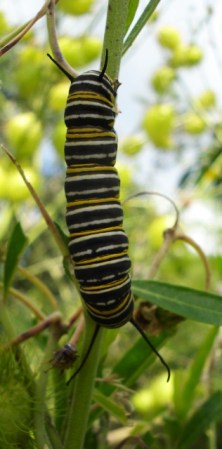
??????????????????????????????? The very hungry monarch caterpillars

There is something bravely optimistic in the sight of a diaspora of monarch caterpillars heading away from a swan plant they have totally stripped, in search of another food source. This is even more so if you know there are no more swan plants around and judging by online searches and discussions, the state of the monarchs’ food supplies at this time of the year is causing a great deal of angst.

Do not panic. Reach for slices of pumpkin instead. We have done it here in one crisis year with good success rates. The NZ monarch butterfly website (www.monarch.org.nz) tells me that you can also use cucumber and courgette. But these options are not a complete diet and are only suitable for caterpillars which are already half grown, or about 10 days old.

What we did was to confine the caterpillars to an extremely large carton (so they didn’t head off looking for swan plants) with plenty of twiggy sticks so they could pupate and hang as cocoons successfully. We replaced the sliced pumpkin every day or two. Being caterpillars, they feed constantly from one end and excrete from the other – their poos were an astonishing orange.

First published in the Waikato Times and reprinted here with their permission.

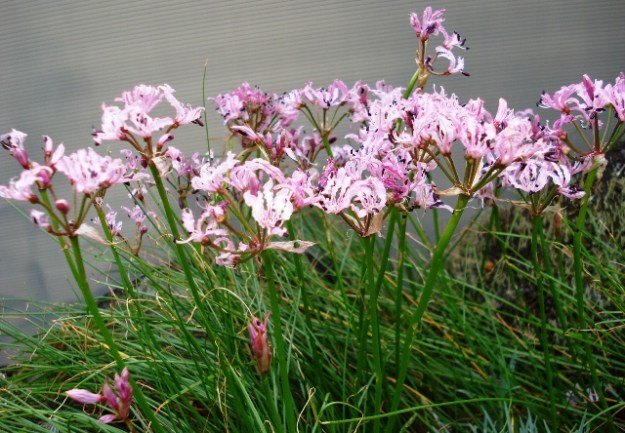
Plant Collector: Nerine filifolia

The daintiest of nerines - N. filifolia

The daintiest of nerines – N. filifolia

Nerines are a star of our autumn garden so the appearance of N.filifolia always arouses that slight sense of autumnal melancholy in me, coinciding as it does with the realisation that the days are getting shorter again. But the references tell me that in fact it is summer flowering and certainly it is always the first nerine to bloom here. It is also the daintiest member of that family that we have. It is tiny. While the stems can be about 25cm long, individual flowers are only a cm across at most with particularly frilly, waved petals in deep pink and nine flowers to each head.

The filifolia part of the name means fine foliage, grass-like in the vernacular. With us it is evergreen. In harder climates, it may lose its leaves. Like all nerines, it is a South African bulb, from the Eastern Cape area. It builds up easily and is not fussy in the garden, as long as it doesn’t get swamped by stronger growing plants.

Nobody could call it spectacular. It is just one of those little treasures that adds detail and seasonal interest to the garden. The problem will be sourcing bulbs. You will probably only find it from bulb specialists or other gardeners, though Trade Me is always worth watching for odd plants that are not widely available these days.

First published in the Waikato Times and reprinted here with their permission.