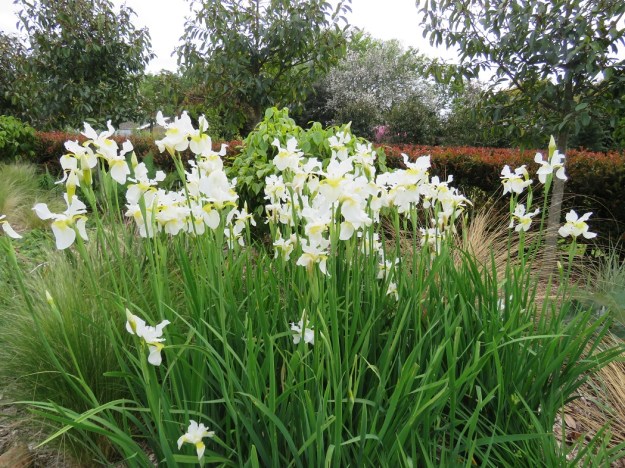
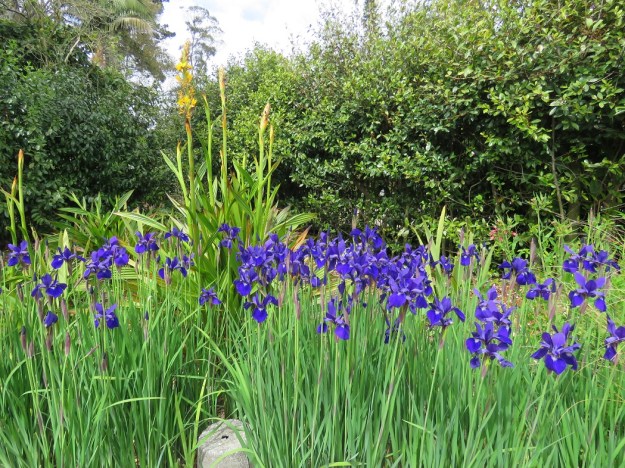
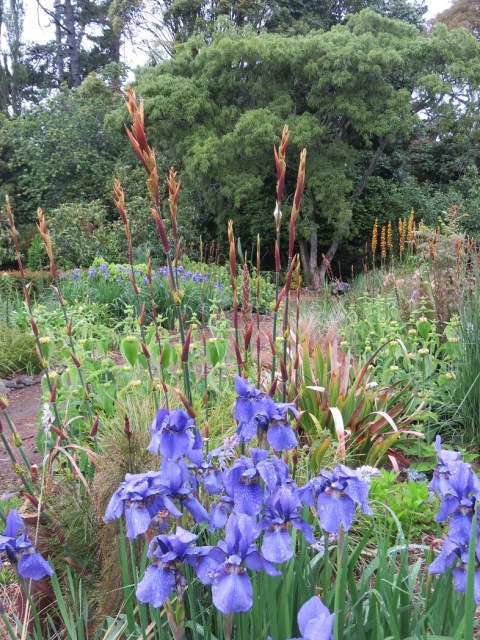
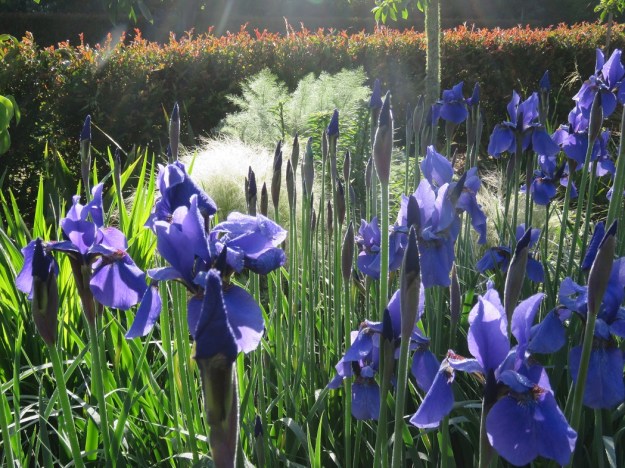
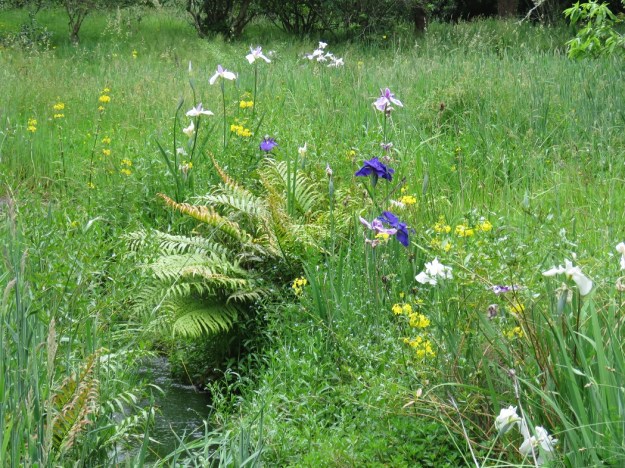
 We are now entering our sixth year of managing our park as a meadow. Note the word ‘managing’. This is not just leaving it to its own devices but a much lighter touch than the previous mowing and weed control we used to practice. And in December, as in previous Decembers, my heart just fills with joy at the sight of the Higo iris in bloom. I love all times of the year in the garden – there is always something that delights me – but never more so than the iris meadow in the lead up to Christmas.
We have learned a lot in the five years past and I am sure we will continue learning. I was disconcerted to see cleavers moving in to a couple of areas. I just looked up its botanical name – Galium aparine, which I have never even heard of before so I assume everybody knows them as cleavers. At least they are an annual weed that can be pulled out.
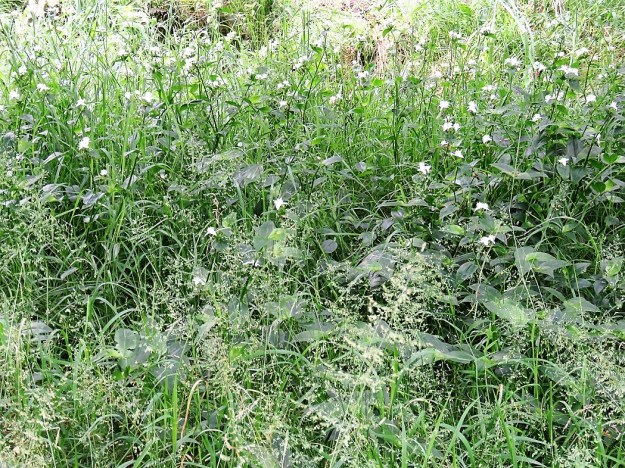
The tradescantia, pretty enough in flower, but arguably the worst weed of all
More alarming is the incidence of Tradescantia fluminiensis, better known as Wandering Jew. Mark has spent countless hours getting rid of this weed down the years. When we bought the property across the road 25 years ago, we acquired a stand of native tawa (Beilschmiedia tawa for overseas botanists) which was completely carpeted in tradescantia. It was a proud day when Mark announced he had beaten it with a programme of determined eradication. Alas, he may have beaten it on our properties but every time we get a flood, more washes down from further upstream and every, wretched little bit grows. When we kept the grass short, it was easy to spot and remove immediately but in long grass, it damn well hides until we suddenly find another patch that escaped our notice. This will be an ongoing battle.
 Having a stream flowing through brings responsibilities and these are weighing somewhat upon us. We worry that we are likely to be blamed for every escaped ornamental plant that establishes downstream, even if at least some are washed down from further upstream. The shiny leafed angelica, Angelica pachycarpa, somewhat more prized in overseas gardens but seen more as a weed here, has introduced itself from an upstream property. Don’t believe the website that declares: “This is a bizarre and wonderful species of Angelica from New Zealand, and still fairly new to North American gardens”. It hails from Portugal.
I removed all the flag iris from by the water when I found out what a dangerous weed it is here, capable of forming solid islands of floating vegetation, blocking streams and estuaries.
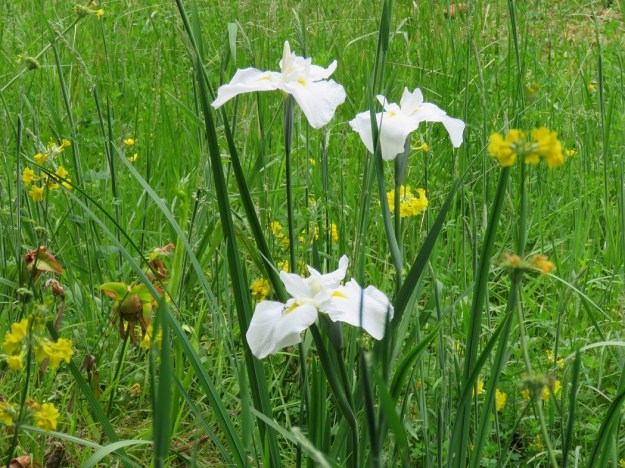 To be honest, we figure that if the beautiful Higo irises establish themselves downstream, that may not matter. They are no risk that we can see. We worry about the Primula helodoxa, which are enormously rewarding as flowering plants but set prolific amounts of seed. We try and dead head them but there are so many that it is a hit and miss process. We are now thinking we should pull out the ones growing in the stream banks and contain it further back on dry land so the potential to seed down in the water is reduced. I am not getting too obsessed about them though. We have them near where the stream enters our place and while there are a few plants appearing further down (still on our place) it is not such a thick carpet as to shriek ‘noxious weed’. Besides, above our helodoxas, we can see we have seedlings that can only have come down from upstream neighbours.

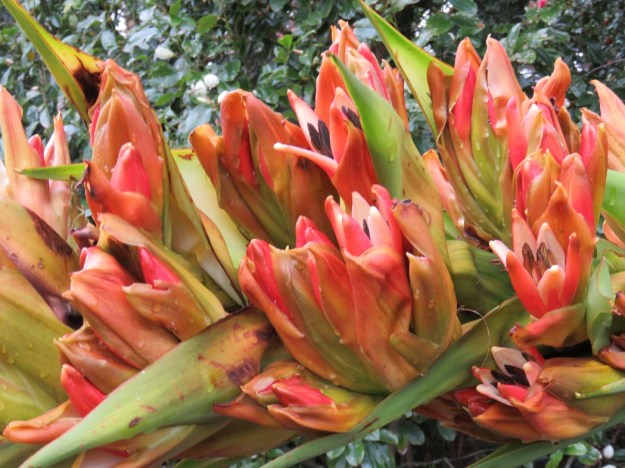
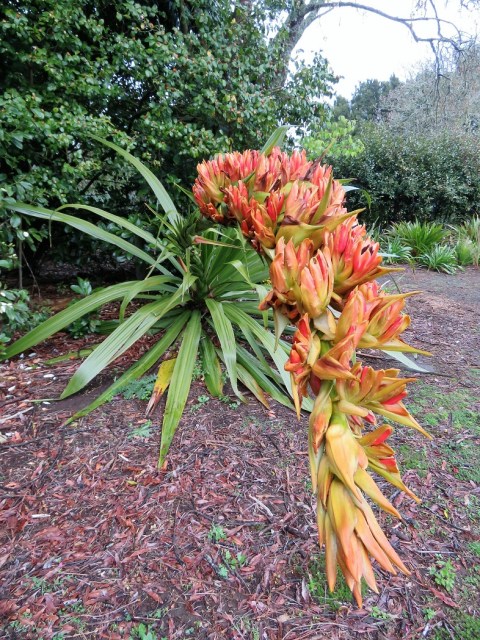
Wachendorfia thyrsiflora – a triffid
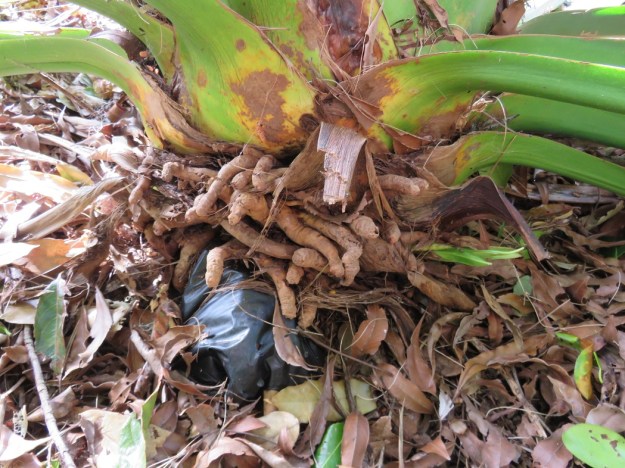
We are, however, worried about the weed potential of Wachendorfia thyrsiflora. It is very handsome, statuesque, even. There is no doubt about that. But it sets prolific amounts of seed and if you dig the plants out and leave them lying on the ground, they do not die. I discovered this. It is one we think we need to get back from the water. It is one thing managing a triffid of a plant on our place, it is another letting the seed fall into flowing water and potentially establish all the way down to the ocean.
Past experience has taught us that we can not get away with the traditional annual mowing of the meadow, just once a year in autumn. Our grass growth is so rampant that we have to do it twice and it seems that late January (so, mid-summer) and around June (mid-winter) are the optimal times.
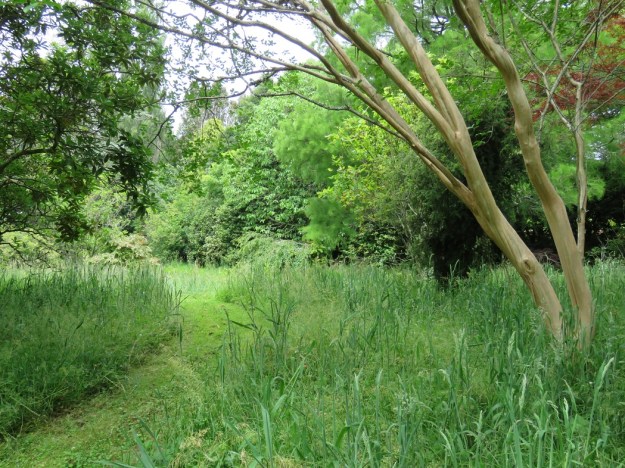
Mown paths through the meadow. The clean bark on the right is a crepe myrtle
We have not done much yet to enrich the meadow mix. We are still waiting and watching to see what establishes itself. But Mark mentioned Verbena bonariensis as meadow option. It has light airy growth which would fit the meadow look, flowers for many months and is much loved by the bees. And it is an enthusiastic seeder though it remains to be seen whether it will self-seed in such a competitive environment. And I want more big, white daisies. I am trialling one in another area of the garden to see if it will make a good meadow candidate. I wouldn’t mind if pretty Orlaya grandiflora could get itself established.
 Currently, I can be found in the afternoons down by the water, digging out the weedy carex and docks that are shooting up into flower, thinning the primulas and battling the wachendorfias. It is heavy work, sometimes muddy, but the setting is one to gladden my heart.
I have taken to describing our approach to gardening as similar to slow cooking – slow gardening. It is just that we measure it in years, not in hours or overnight.
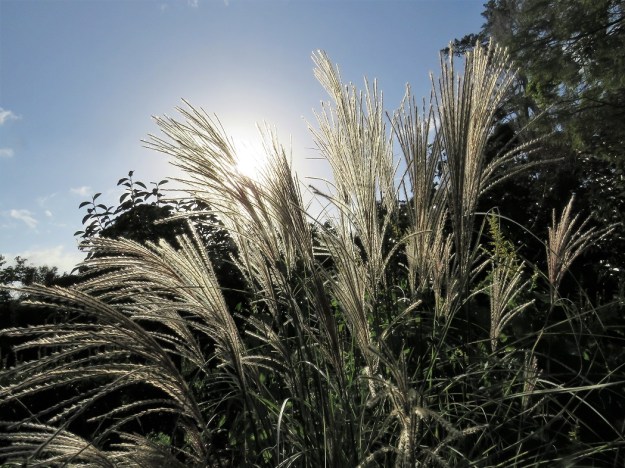
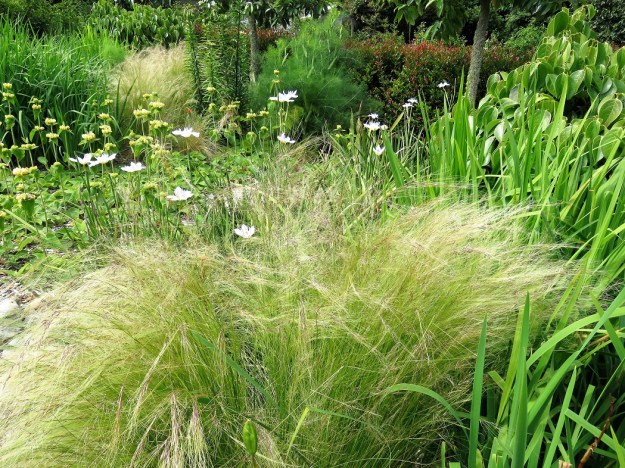 I was shocked. Really shocked. There I was in the supermarket and I picked up a gardening magazine I had no intention of buying. But as I skimmed it, I came across an article that told us to rip out all our grasses. The ‘Oudolf prairies’ and the entire New Perennials movement were out. Shrubberies are back.
 It did at least get me thinking on the difference between fashion in gardening and major gardening movements.
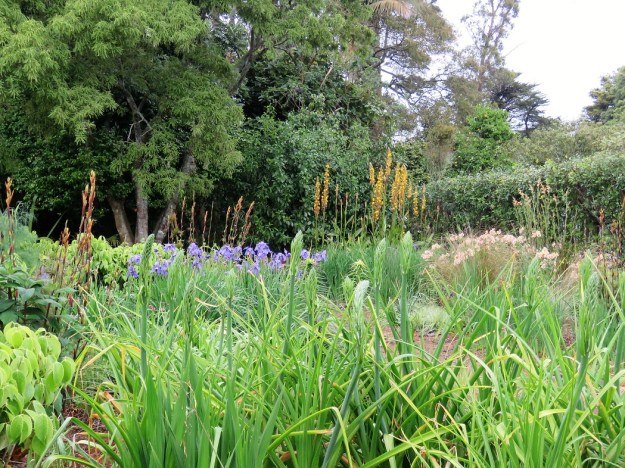 The idea of garden rooms has its most recent roots at Hidcote and then Sissinghurst. It made design – in this case, the design of a series of linked but separate spaces – applicable to the home gardener. Many people are still working to the garden rooms principles today.
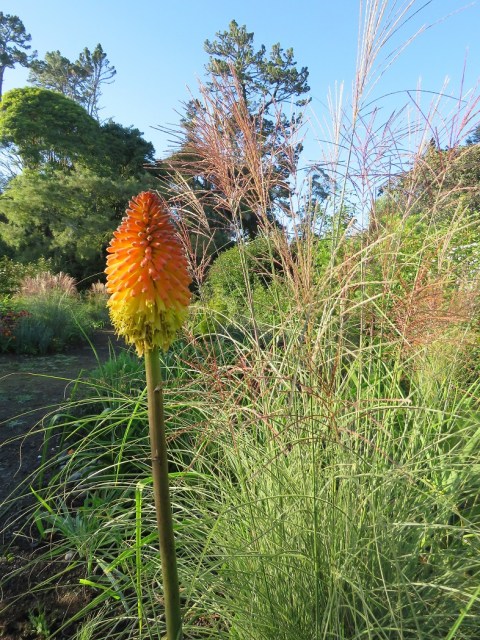 Crystal ball gazing, I would suggest that the contemporary tropical garden in more northerly areas of this country – the Balinese hotel style, as I have sniffily dubbed it, may turn out to be more movement than transient fashion. It fits the climate, the lifestyle, the aesthetic and the maintenance regime of many gardeners, particularly in Auckland city. Not so good down south, though, so it is quite localised.
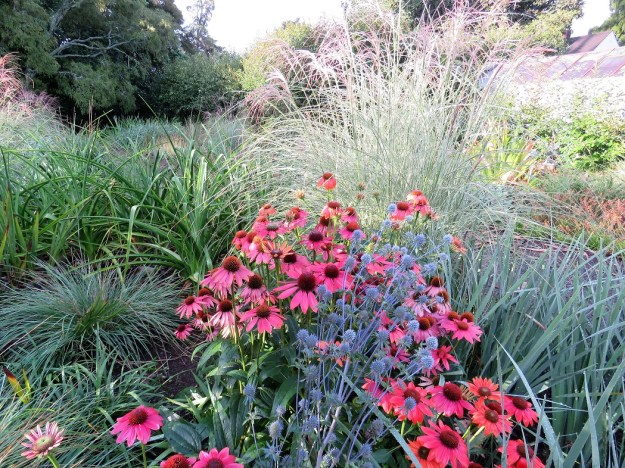
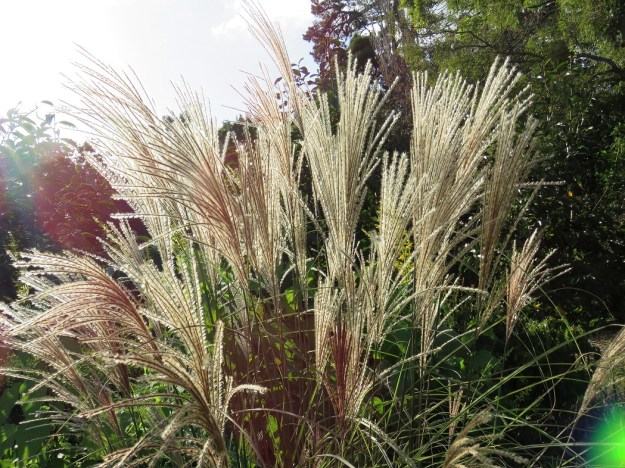
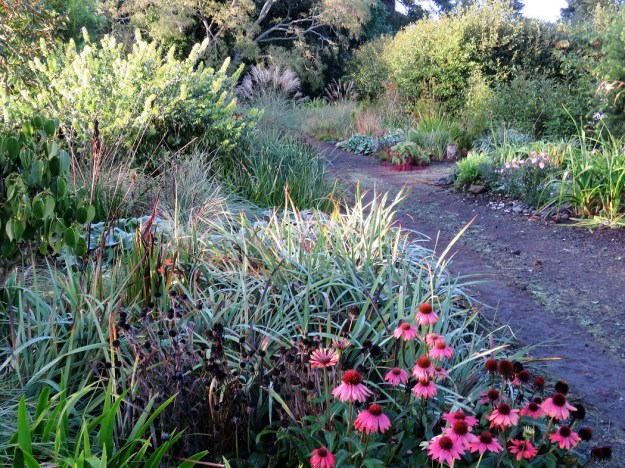
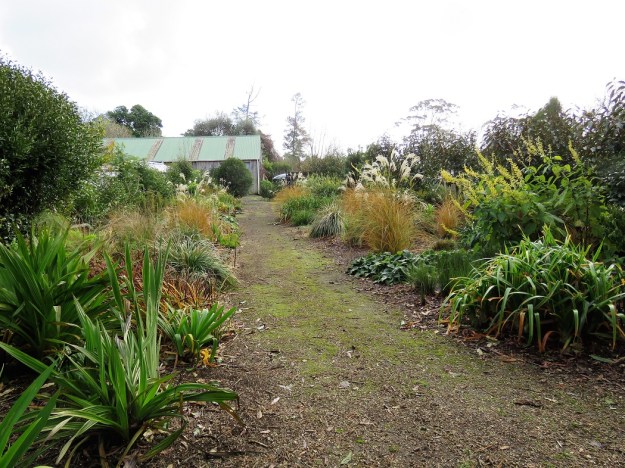
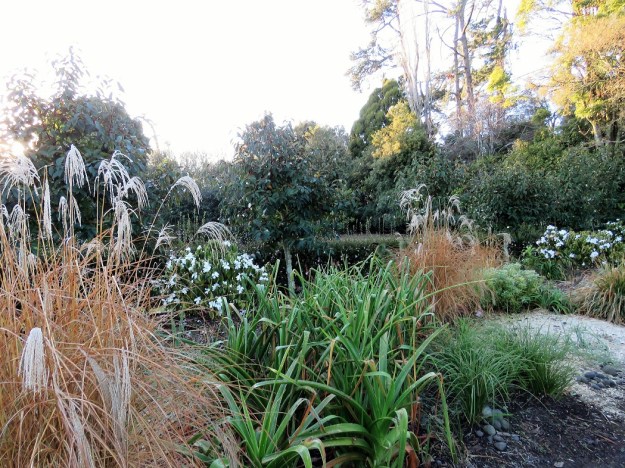
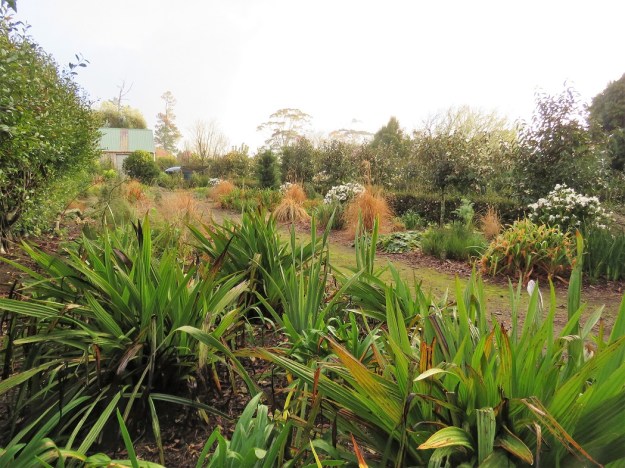
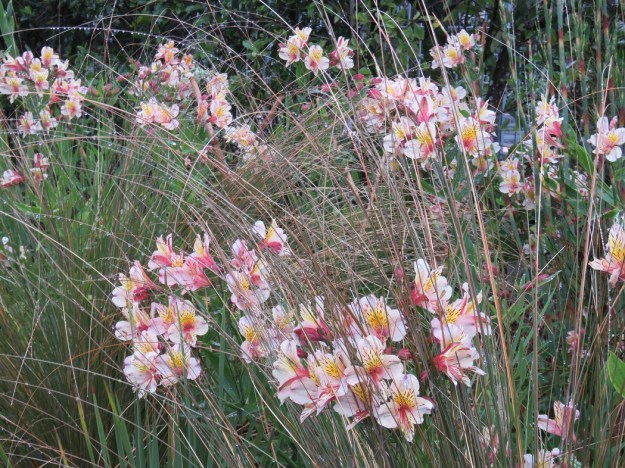 Which brings me to the ‘Oudolf prairies’ (he has done many things but never prairies) and the current fashion for plantings incorporating a fair swag of grasses. Movement, not fashion, I say. These are but one part of a major swing in gardening style towards a more naturalistic and sustainable approach. It is part of a whole spectrum which takes in meadows, even prairies if you have the right climate, the Sheffield School, environmentally friendly and sustainable gardening as practiced by a large swag of British, European and American designers and leading gardeners. It is soft-edged, should be lower maintenance, sitting comfortably with Nature as opposed to being imposed upon it, sustaining a healthy eco-system and a harmonious balance between the natural world and the aesthetic many humans crave. Enhanced nature, romantic gardening, naturalistic gardening – call it what you will. It is a movement, not a transient fashion because it is underpinned by a philosophy that goes well beyond the marketing of plants and landscaping accoutrements.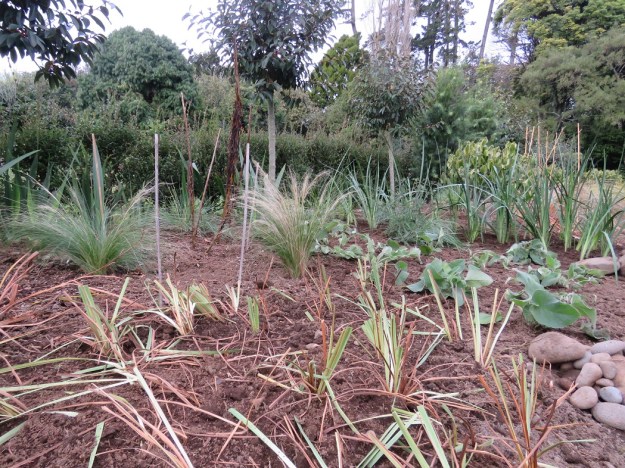



 “I think I prefer the sibiricans now to the bearded irises. Much easier care.” So spake a friend who will, for unrelated reasons, always be known as Cemetery Sue here, as we stood looking at my swathes of Iris sibirica in the new borders. In the second year since planting, their display has been fantastic.